The best villages in the Cotswolds
Twenty-two Cotswold villages worth the journey, grouped by valley: what to see in each, the walk that starts from it, and where to eat when you get back.
· 13 minute read
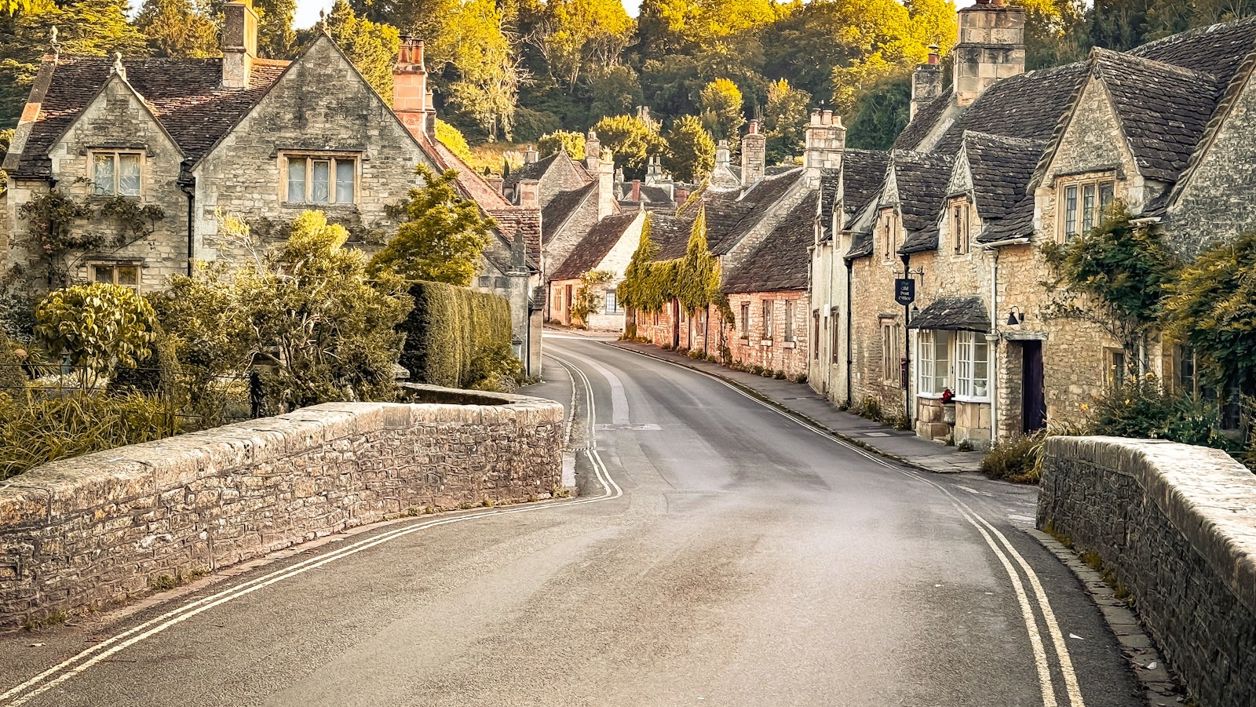
The best villages in the Cotswolds are the famous few, Bibury, Castle Combe, Bourton-on-the-Water and the two Slaughters, and a longer list of quieter places on the same rivers: Naunton, Guiting Power, Coln St Aldwyns, Eastleach, Stanton, Biddestone and Swinbrook. Below are 22 of them, grouped by valley, each with what to see, a walk from the village and a pub or tearoom for afterwards.
How we chose: every village here has a place guide, a walk or a sight page of ours behind it, built from Historic England's listings, the National Trust, the parishes and the businesses' own information. We have grouped them rather than ranked them, because the right village depends on the day: a famous one at 8am, a quiet one at noon on a summer Saturday. For the market towns between them, see our guide to the best towns in the Cotswolds.
Which are the prettiest villages in the Cotswolds?
The villages most often called the prettiest are Bibury, Castle Combe, Lower Slaughter, Upper Slaughter, Bourton-on-the-Water and Stanton. All are built of the local limestone and most stand on a stream. They are also the busiest: the county council puts Bourton's visitors at around 10,000 a day at peak times, and press reports put Bibury's at up to 20,000 on a peak weekend, so arrive before 10am or after 5pm.
If you want the same stone and water with fewer people, the quieter neighbours are the answer, and our guide to the Cotswolds without the crowds pairs each famous village with one nearby. With a car and one day, our one-day itinerary parks in Bourton at 8.30am and walks to both Slaughters before the crowds.
The Windrush valley and the Slaughters
This is the stretch most people picture: shallow rivers, low stone bridges and short field paths between villages, all within a few kilometres of Bourton.
Bourton-on-the-Water. The Windrush runs wide and shallow down the middle of the village under a run of low footbridges; Narrow Bridge, of 1756, is the oldest dated. Behind the Old New Inn is the Model Village, a one-ninth scale Bourton of the 1930s, and Birdland keeps King Penguins by the river. Park at Rissington Road before 10am, when it is free, and walk out on level paths with no stiles to Greystones Farm nature reserve, about five minutes from the village. The flat 3.2km Cotswolds National Landscape loop from the war memorial runs through it to the banks of Salmonsbury Camp. For a table by the river, the Croft serves from breakfast to afternoon tea. Our Cotswolds weekend with children spends a Saturday afternoon here, at the Model Village and Birdland.
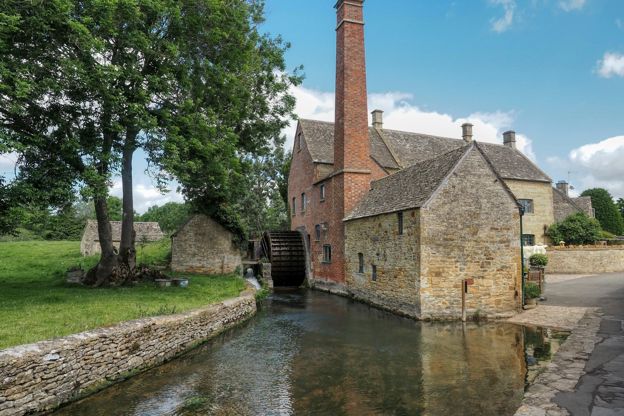
Lower Slaughter. A small village along the River Eye, crossed by simple stone footbridges, with the red-brick Old Mill and its iron water wheel at the top of the street. There is no public car park, so walk in from Bourton. The walk from Lower to Upper Slaughter is 3.1km there and back on the Wardens' Way, almost level, and takes under an hour. Walkers on AllTrails reported mud in the riverside fields through the winter of 2025 to 2026, so wear boots after rain.
Upper Slaughter. Stone houses round a ford, a twelfth-century church, St Peter's, and a gabled manor house of about 1600, seen from the lane. There are no shops. Cross the footbridge by the ford and look back from the churchyard. Lords of the Manor serves lunch and afternoon tea to non-residents.
Naunton. A long, quiet village on the floor of the upper Windrush, about 8km west of Stow, with about 350 people. Its sixteenth-century dovecote is still lined with about 1,200 nest holes inside and is open free in daylight hours, and St Andrew's has a stone pulpit of about 1500. The easy 4.8km loop from Harford Bridge passes the earthworks of a lost medieval village and passes the Black Horse in Naunton near the end.
Guiting Power. Fewer than 300 people live round its green, on the Wardens' Way and the Windrush Way. St Michael's is a Norman church of about 1180 with two carved doorways, and the Farmers Arms serves Donnington ales and food by a log burner. Walk the 10.1km circuit to Naunton and back; Adam Henson's farm park is a short drive away. At the end of July the village holds the Guiting Music Festival, ten days of classical music, jazz and blues.
Lower Swell and Wyck Rissington. Two small villages either side of Stow and Bourton. At Lower Swell, St Mary's keeps a Norman doorway with a Tree of Life tympanum, and Lutyens designed the war memorial on the green; the 5.8km loop from Stow passes both. At Wyck Rissington, St Laurence's is where Gustav Holst had his first post as organist, on the easy walk from Bourton.
The villages under the escarpment
In the north the wolds end in a steep edge above the Vale of Evesham, and the villages sit on the springs at its foot or on the top.
Broadway. Strictly a large village, of about 3,500 people, on the old coach road below the escarpment. It has two museums, the Broadway Museum and the Gordon Russell Design Museum, the Lygon Arms, first recorded in 1377, and the old church of St Eadburgha's out in the fields. The 6.5km walk to Broadway Tower climbs to James Wyatt's folly and comes back down the Cotswold Way.
Stanton. A spring-line village of about 190 people on the Cotswold Way, restored by Sir Philip Stott from 1906 (opens in a new tab), with a medieval cross and a Grade I church, St Michael and All Angels, with a rood loft and east window by Ninian Comper. Park by the cricket ground, not in the village. The 10.6km loop to Snowshill climbs through Shenberrow Camp and ends at the Mount Inn at the top of the street.
Snowshill. About 160 people high on the hill above Broadway, and almost everyone is heading for Snowshill Manor, Charles Wade's house of collected craftsmanship. The lavender fields flower from mid-June to early August, and the short, hilly Snowswood walk starts from Pipers Grove car park.
Blockley. A working village of former silk mills along a fast brook, about 5km north-west of Moreton. St Peter and St Paul has a Norman chancel of about 1180 and stood in for Father Brown's church on screen, and the Russell Spring is set into the High Street wall. Walk over from Chipping Campden on the 14.5km circuit and have lunch at the Great Western Arms, Blockley's Hook Norton pub, which serves lunch from Friday to Sunday.
The Coln and the Leach
South-east of the wolds two clear limestone rivers run down to the Thames, and their villages are some of the oldest and least changed in the Cotswolds.
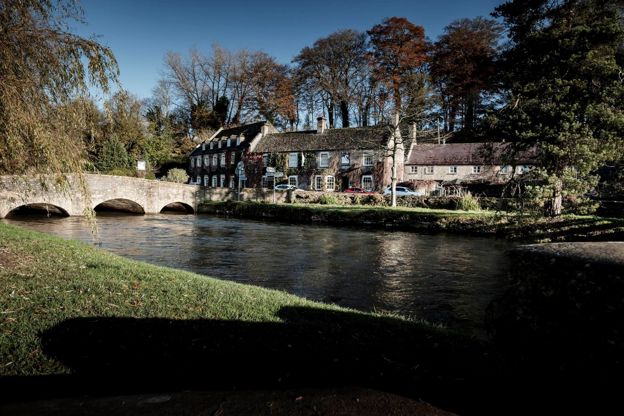
Bibury. Famous for Arlington Row, a terrace of stone cottages built as a wool store in the late fourteenth century and turned into weavers' homes in the seventeenth, owned by the National Trust (opens in a new tab) and still lived in. St Mary's is a Saxon church grown over five centuries. There is no council car park; come early, or on the 855 bus from Cirencester. The Swan stands by the bridge over the Coln, and the trout farm has fished the river since 1902.
Coln St Aldwyns and Quenington. Two villages facing each other across the Coln a few kilometres below Bibury, with a Norman church, St John the Baptist, and the Knights Hospitallers' gateway beside St Swithin's, with its two carved Norman doorways. The walk from Coln St Aldwyns to Bibury is 10.6km by the river and the Roman Akeman Street, with the New Inn and the community-owned Coln Stores at the end. Walkers in 2026 reported sheep and cattle in the fields, so keep dogs on leads.
Eastleach. Two hamlets, Eastleach Turville and Eastleach Martin, face each other over the River Leach, each with its own Grade I church: St Andrew's, with a carved Norman Christ in Majesty, and St Michael and St Martin. Between them the flat slabs of Keble's Bridge cross the water. The 7.1km walk up the Leach returns to the Victoria Inn, closed on Tuesdays.
The Oxfordshire villages: Evenlode and Windrush
On the Oxfordshire side the valleys widen, the railway runs through, and the villages have some of the best pubs in the Cotswolds.
Kingham. About 950 people in the Evenlode valley, with a station on the line from London Paddington, so one of the few Cotswold villages you can reach by train. The Kingham Plough is on the green and the Wild Rabbit on Church Street, and the walk to Daylesford crosses the farm's fields to the Evenlode. St Andrew's is an ironstone church with an old rectory of 1688 beside it.
Bledington. A village round a green, about 1.5km south-west of Kingham. St Leonard's keeps fifteenth-century painted glass, one panel dated 1470, and the King's Head, a sixteenth-century inn, faces the green. A few kilometres north, the Adlestrop railway sign from Edward Thomas's poem stands in the bus shelter.
Swinbrook. The Mitfords' village, by the Windrush about 3km east of Burford. Four of the sisters are buried at St Mary's, which has the stacked Fettiplace effigies in its chancel, and the Swan is on the river bank. The easy 6.9km loop goes by St Oswald's at Widford, a thirteenth-century church alone in a field.
Minster Lovell. A village on the Windrush with the ruins of a fifteenth-century manor, Minster Lovell Hall, free to visit in daylight, beside St Kenelm's. The walk to Crawley is an easy 6km, and the Old Swan serves food every day.
The southern villages: By Brook and Avon
In Wiltshire the hills soften towards Bath, and three villages close together make one good day. Our South Cotswolds weekend takes in all three on its Sunday, after a night in Malmesbury.
Castle Combe. One street running down from a medieval market cross past stone cottages to a three-arched bridge over the By Brook. Only about 50 people live in the centre. Park at the top on Dunns Lane and walk down, ideally before 10am. St Andrew's has a medieval clock with no face, and the White Hart, a fourteenth-century Wadworth pub, opens at 9am with pastries. The 7.2km walk from Ford comes into the village through the woods.
Biddestone. A large green with a duck pond made in 1661, a Norman church, St Nicholas', and far fewer visitors than Castle Combe a few kilometres north. The White Horse is on the green, and the 10.6km heritage trail runs out to Slaughterford and back down the By Brook.
Lacock. Mostly owned by the National Trust (opens in a new tab), just beyond the Cotswolds National Landscape, with Lacock Abbey, where Fox Talbot made the earliest surviving photographic negative in 1835, a fourteenth-century tithe barn and St Cyriac's. The George Inn says it dates to around 1361.
Slad and the Five Valleys
West of Stroud the valleys are steep and wooded, and the villages cling to their sides.
Slad. Laurie Lee's valley, the setting of Cider with Rosie. He is buried at Holy Trinity, opposite his memorial window, and Swift's Hill, a wildflower reserve, appears in the book. The Laurie Lee Wildlife Way is an 8.4km loop with his poems on ten posts, through Snows Farm and past Frith Wood. Over the ridge at Sheepscombe, the Butchers Arms was one of his pubs.
When to visit the Cotswold villages
The villages are at their best early in the morning, on weekdays and out of the school holidays. Summer weekends and bank holidays are busiest from late morning to late afternoon; before 10am and after 5pm the famous ones are quiet again, even in August. Spring brings blossom and lambs, autumn the colour in the beech woods along the escarpment, and winter the emptiest streets of the year. Our month-by-month guide to when to visit has the festivals and the dates to avoid.
Seeing the villages without a car
Several of the best villages are on a bus route or near a station, and walking between them is the best way to see them. From Moreton-in-Marsh station the 801 runs to Stow and Bourton, from where you can walk to the Slaughters; Kingham has its own station; and the X34 from Chippenham stops at Lacock. Our guide to the Cotswolds without a car has the routes. For three days without a car, our car-free itinerary is based at Moreton-in-Marsh station and reaches the Slaughters and Bibury by bus and on foot.
The Cotswolds Info newsletter
Events, new places and the best of the season, about once a month. Unsubscribe at any time.
Be a good visitor
These villages are homes. Park only where it is allowed and never across gateways or drives, keep to the paths in Arlington Row and on the Slaughters' footbridges, leave gates as you find them and keep dogs on leads near livestock. Many of the churches named above are open every day and run on donations; they are also some of the best buildings in each village, as our guide to the wool churches explains.
Mentioned in this story
The places, sights and walks in this story, each with a page of its own: what it is, when to go and how to get there.
-
The Swan Hotel
Hotel · Bibury
-
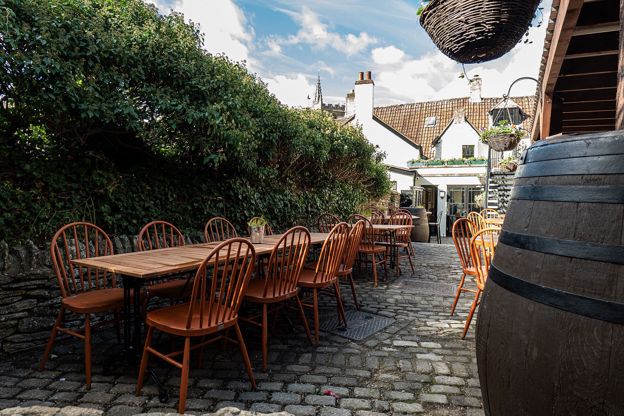
The White Hart, Castle Combe
Pubs · Castle Combe
-
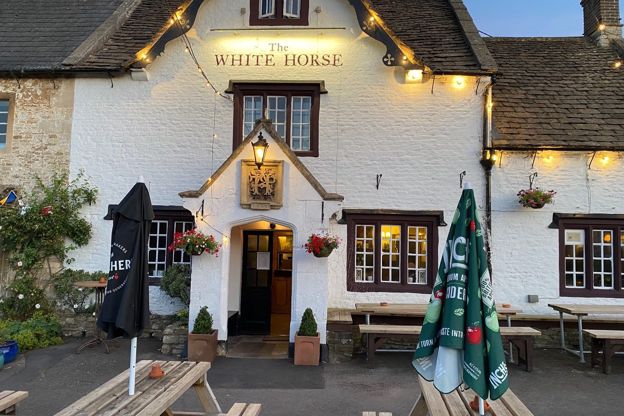
The White Horse, Biddestone
Pubs · Biddestone
-
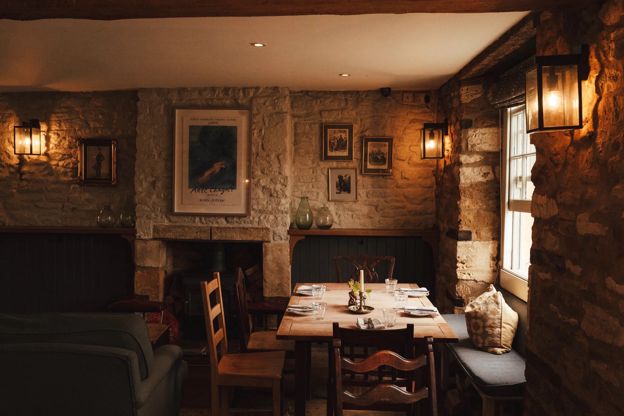
The Kingham Plough
Inn · Kingham
-
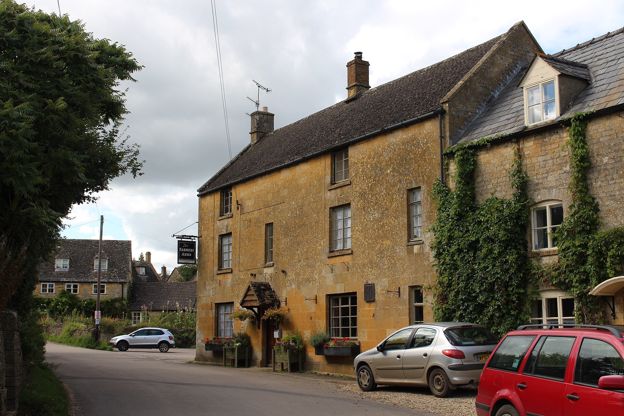
The Farmers Arms
Pubs · Guiting Power
-
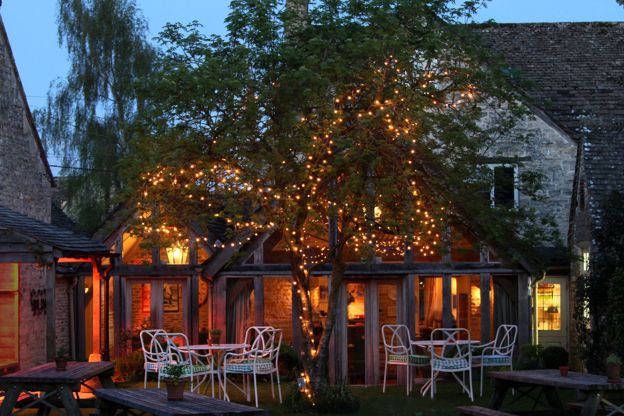
The Swan Inn, Swinbrook
Inn · Burford
-
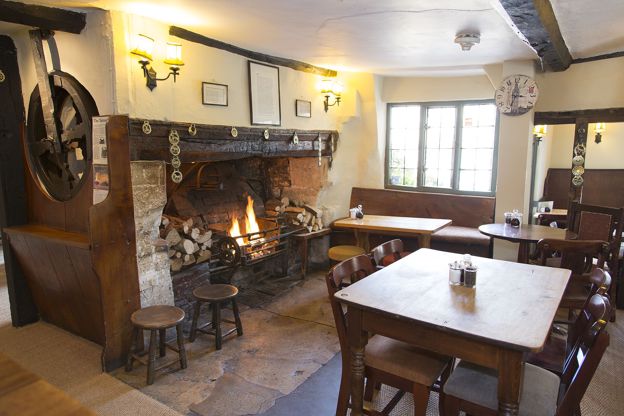
The George Inn
Pubs · Lacock
-
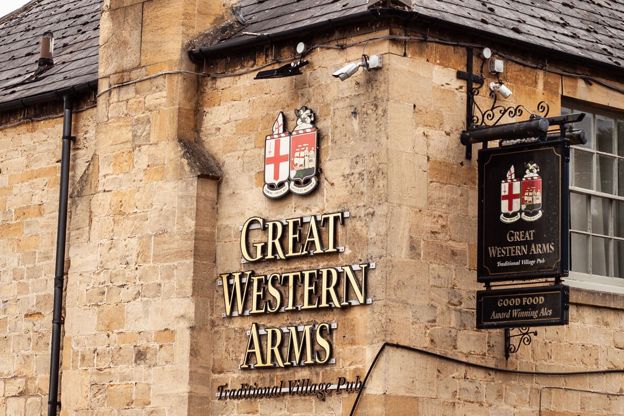
Great Western Arms
Pubs · Blockley
-
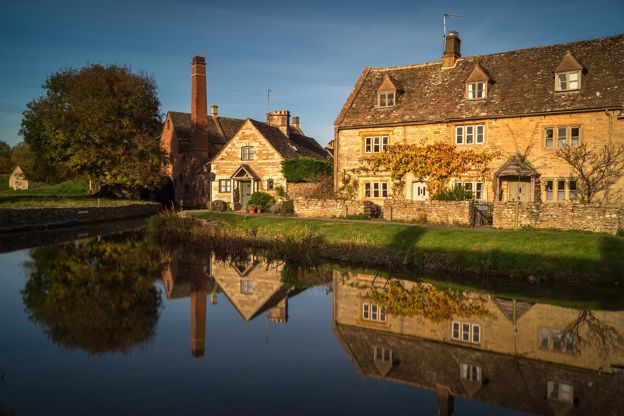
The Old Mill, Lower Slaughter
Sight · Historic building · Lower Slaughter
-
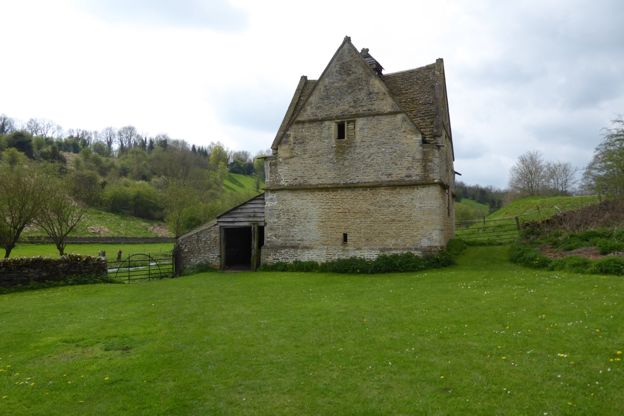
Naunton dovecote
Sight · Historic building · Naunton
-
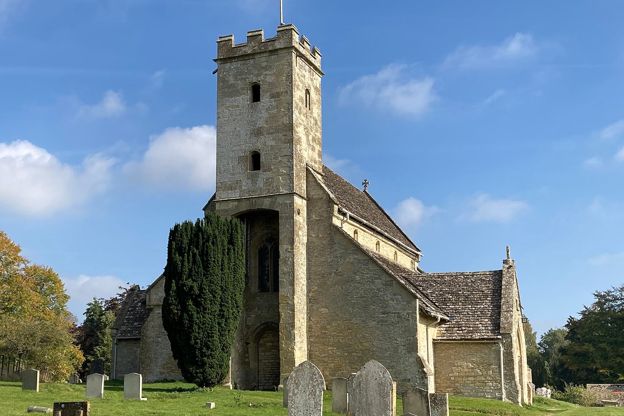
St Mary's Church, Swinbrook
Sight · Church · Burford
-
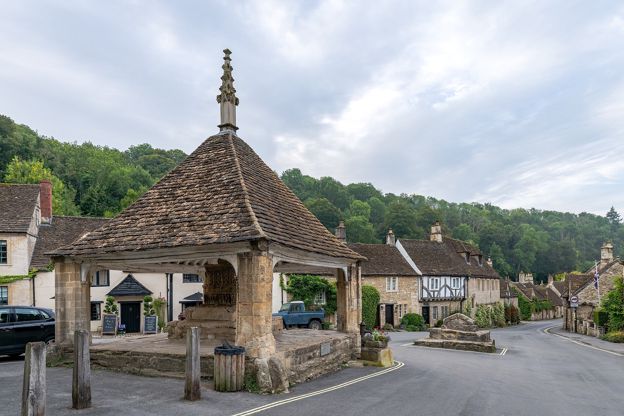
Market Cross, Castle Combe
Sight · Monument · Castle Combe
-
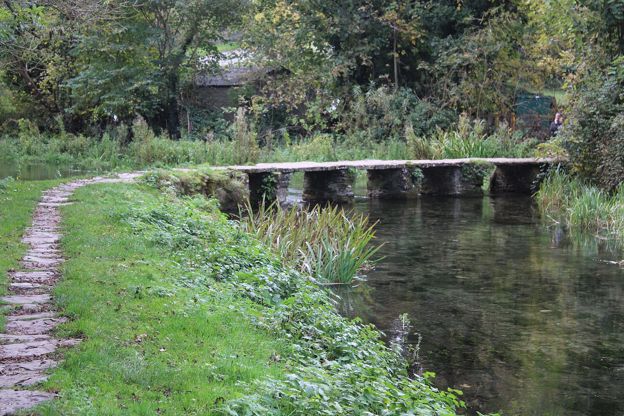
Keble's Bridge, Eastleach
Sight · Bridge · Cirencester and the Coln Valley
-
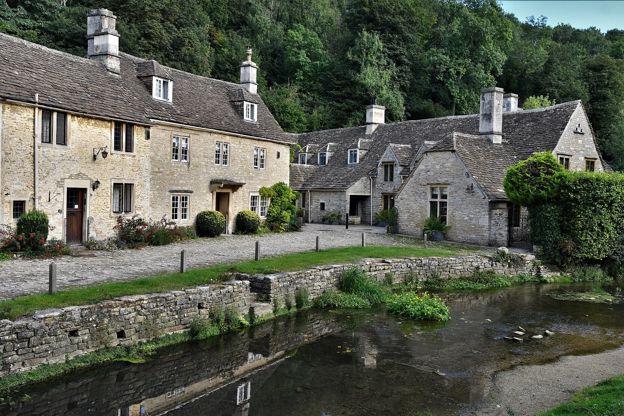
Ford, Long Dean and Castle Combe
Walk · Starts in Castle Combe · 2 hrs, 15 mins · Circular
-
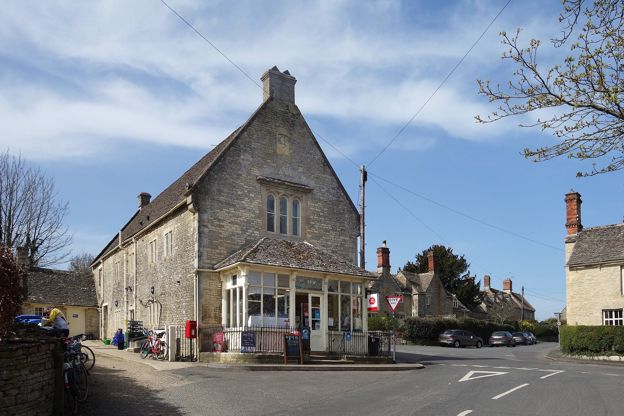
Coln St Aldwyns and Bibury
Walk · Starts in Coln St Aldwyns · 2 hrs, 45 mins · Circular · Dog-friendly
Places to stay near Lower Slaughter
-
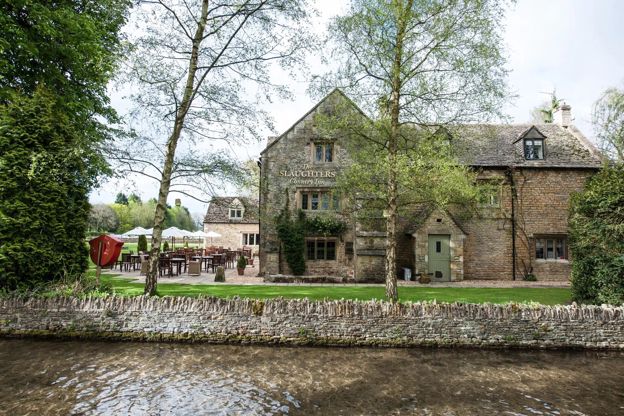
The Slaughters Country Inn
Inn · Lower Slaughter
An inn in Lower Slaughter, bought and renamed by the Brownsword family in 2011, with dog rooms and a Field Kitchen from April to September.
Dog-friendly · Family-friendly · Walker-friendly
Verified Oct 2026
-
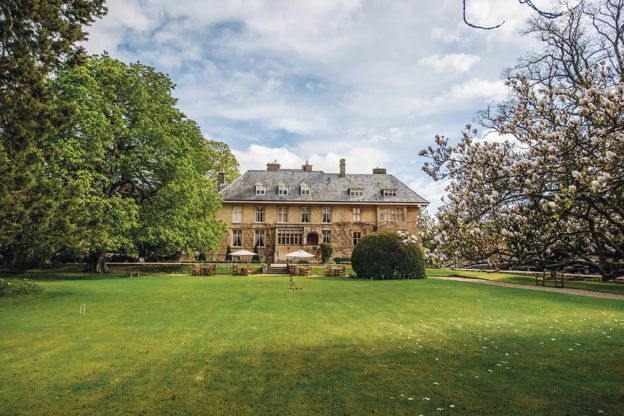
The Slaughters Manor House
Hotel · Lower Slaughter
A 17th-century manor house hotel with 19 bedrooms on Copsehill Road, Lower Slaughter, home of the Whitmore family until 1964, with dog rooms booked by phone.
Dog-friendly · Family-friendly · Wedding venues
Verified Oct 2026
-
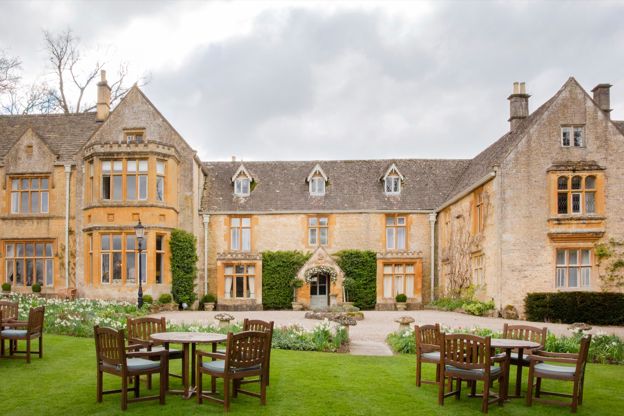
Lords of the Manor
Hotel · Upper Slaughter
A country house hotel with 25 bedrooms in eight acres of grounds in Upper Slaughter, in a house it dates to 1649, with dogs welcome.
Dog-friendly · EV charging · Wedding venues
Verified Oct 2026
Read next
-
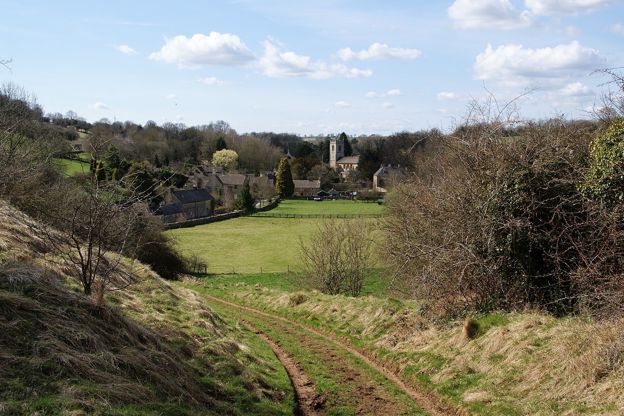
The Cotswolds without the crowds
Story · Guides · 15 minute read
Five Cotswold villages take most of the visitors: Bibury, Bourton-on-the-Water, Castle Combe, Broadway and the Slaughters. Here is when each is busiest, what the councils have done about it, the best and worst hours, and the quieter village on the same river or ridge.
-
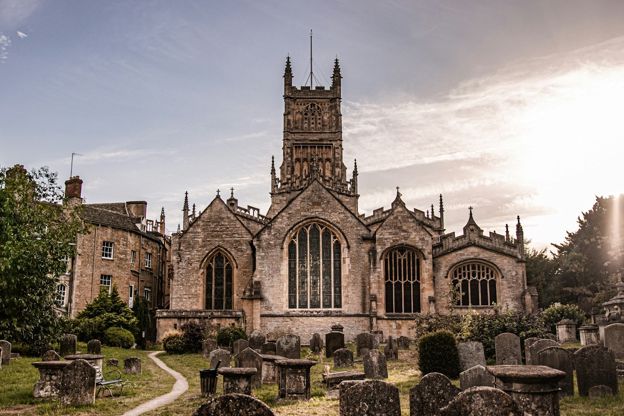
The wool churches of the Cotswolds
Story · Guides · 11 minute read
Northleach, Chipping Campden, Cirencester, Fairford, Burford and the other Cotswold churches rebuilt on medieval wool money: how the trade paid for them, what to look for in each, when they open and a route by car or on foot.
-
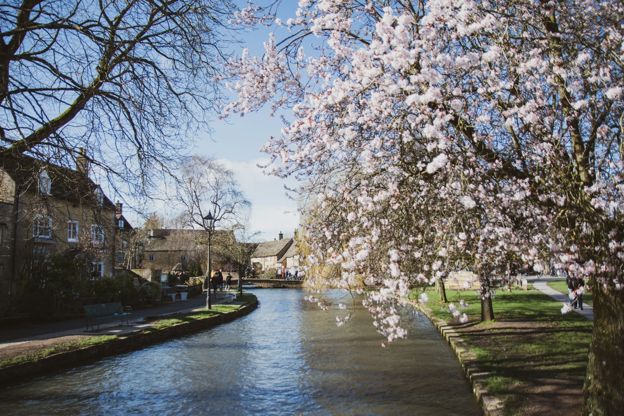
Getting to the Cotswolds without a car
Story · Guides · 12 minute read
You can see the Cotswolds without a car: trains from London Paddington reach Moreton-in-Marsh, Kingham, Charlbury, Kemble and Stroud in 70 to 90 minutes, and buses go on to Stow, Bourton, Bibury and Chipping Campden. Every station, its bus, the fares and the limits.