Richard Rogerson, CC BY-SA 2.0, via Wikimedia Commons
Bampton
A large village on the flat land between Witney and the Thames, with a Grade I minster church under a stone spire, three morris sides that dance every spring bank holiday, and the streets that played the village of Downton in Downton Abbey.
- Nearest station
- None; the 19 bus links Bampton with Witney and Carterton
- Parking
- Short-stay parking in the Market Square, up to four hours; Church Close by the church usually has space. Church View is too narrow to park in
- Best time
- The spring bank holiday Monday for the morris; a weekday for the Downton streets
- When it's busy
- The spring bank holiday Monday, when the morris sides dance from about 8.30am into the evening and the pubs fill; coach parties on summer weekdays
- Toilets
- Town Hall, Market Square (OX18 2JH), 7.30am to 7.30pm, 20p, accessible toilet free with a Radar key, no baby change
- Dogs
- Welcome in the churchyard on a lead; the Market Tavern takes dogs in the pub if you tell it in advance; ask at the others
About Bampton
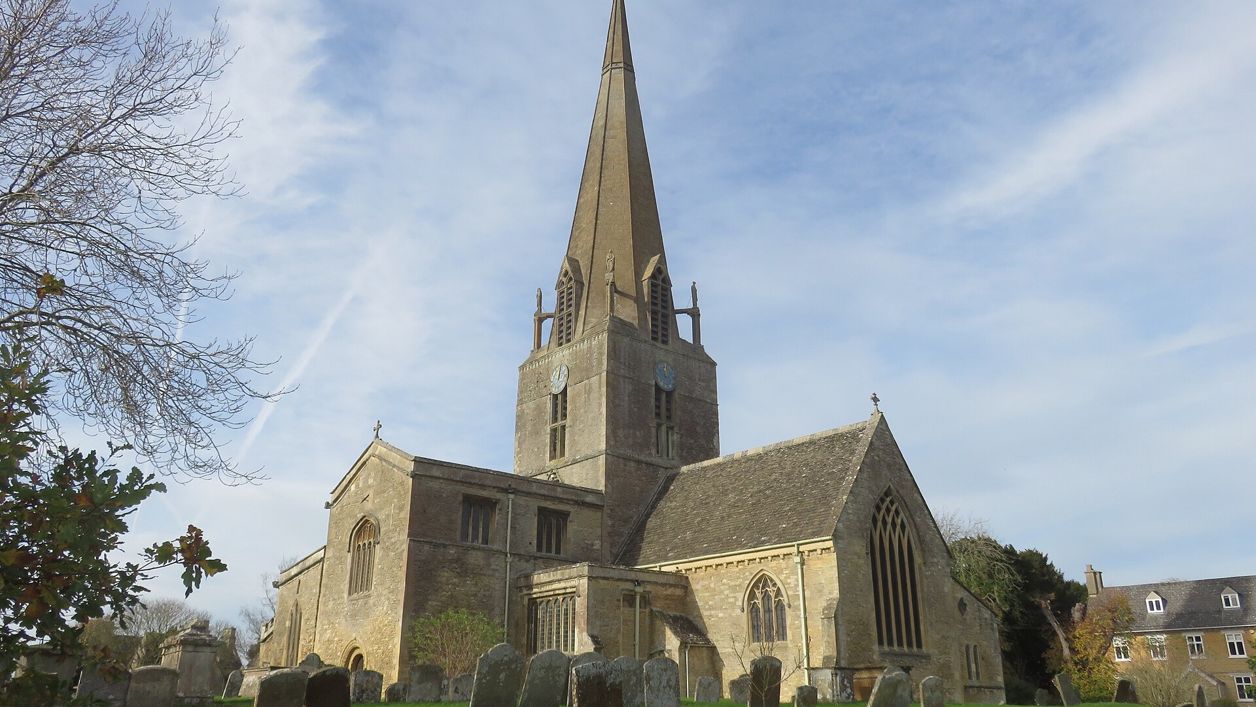
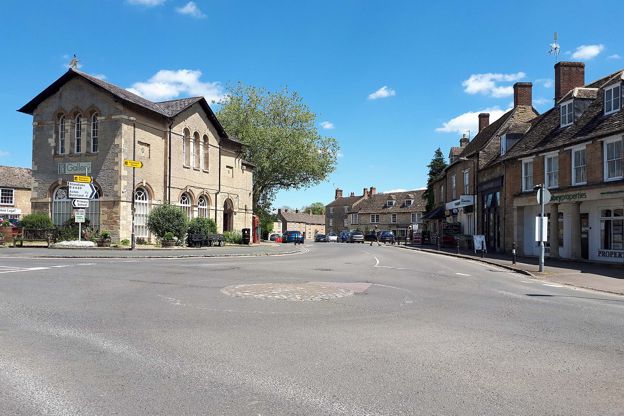
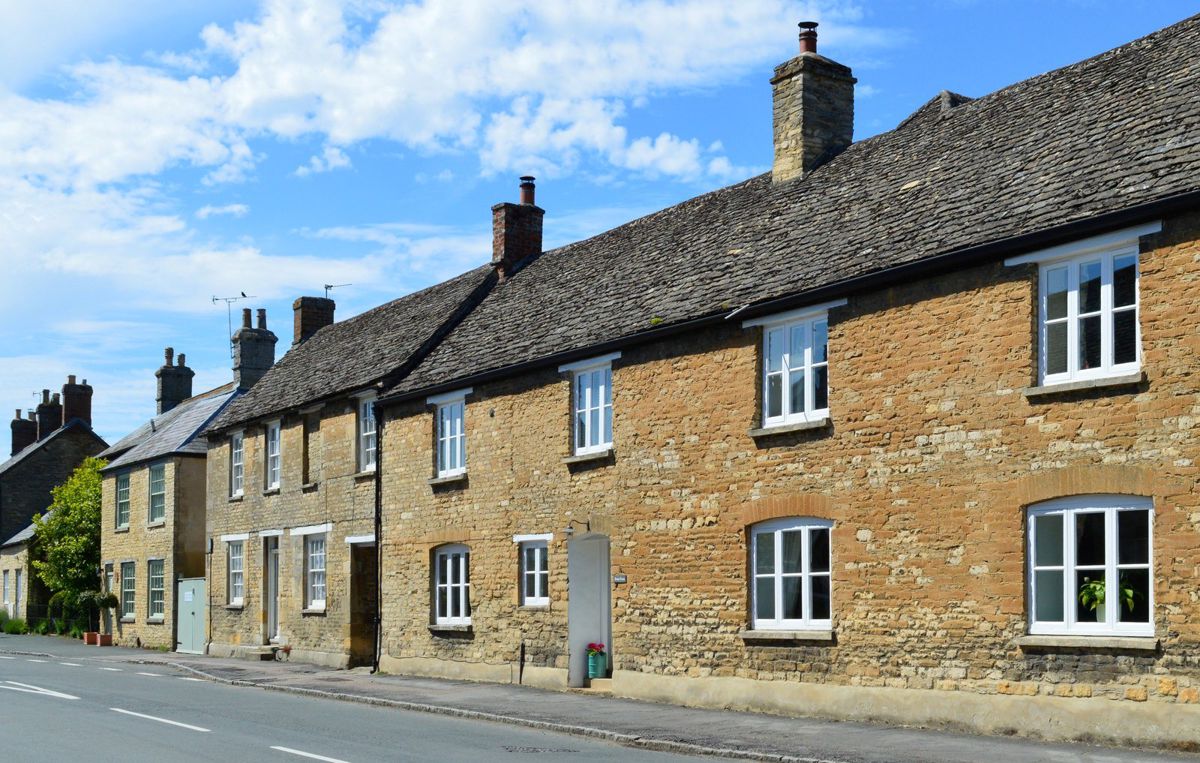
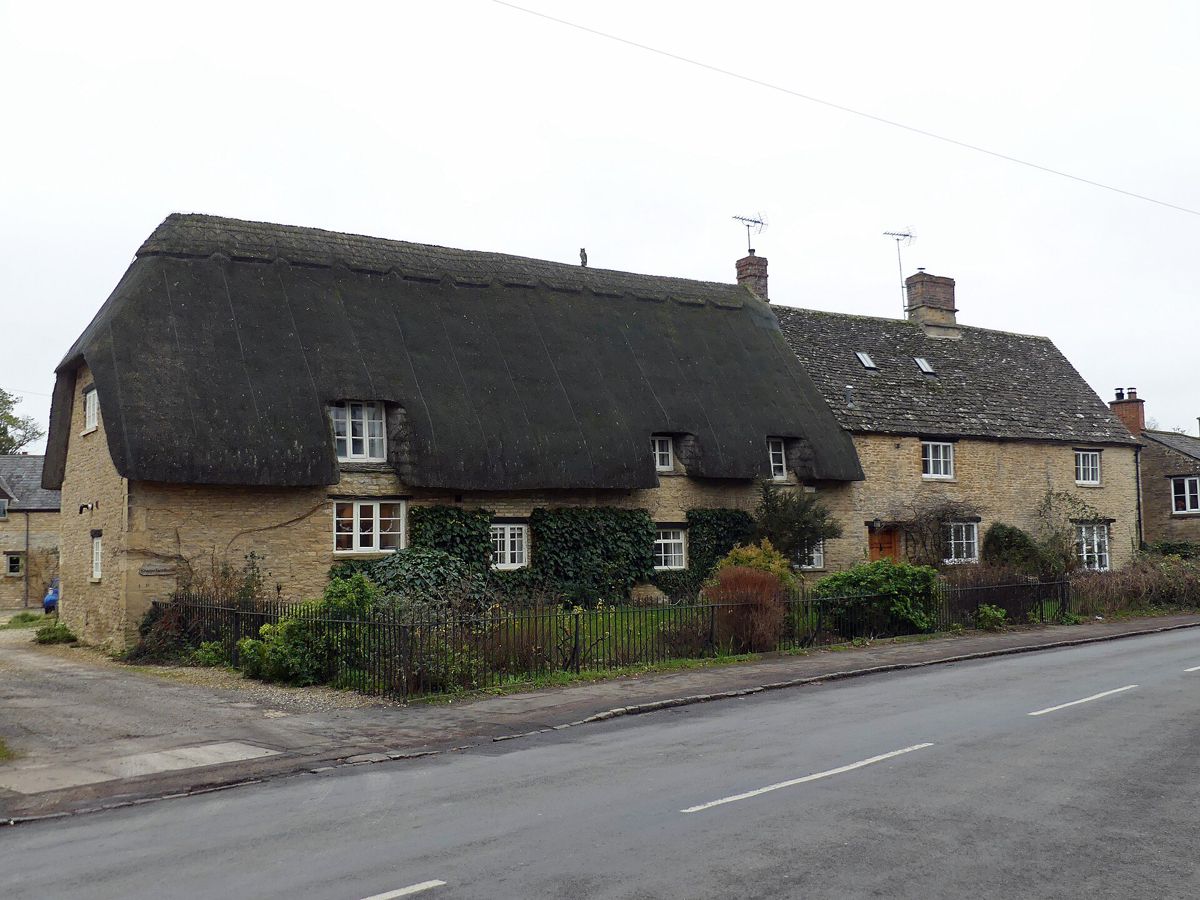
Bampton is a large village on the flat land south of Witney, where the Cotswolds give out and the Thames meadows begin. It was a market town once, and it still has the shape of one: a wide Market Square with the Town Hall in it, a High Street of stone and brick fronts, and a minster church under a tall stone spire. Since 2009 it has also been the village of Downton, and on a weekday you will share Church View with a few people holding the same map.
What to see
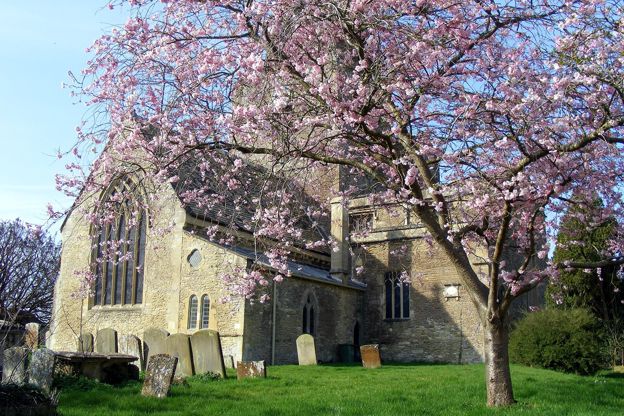
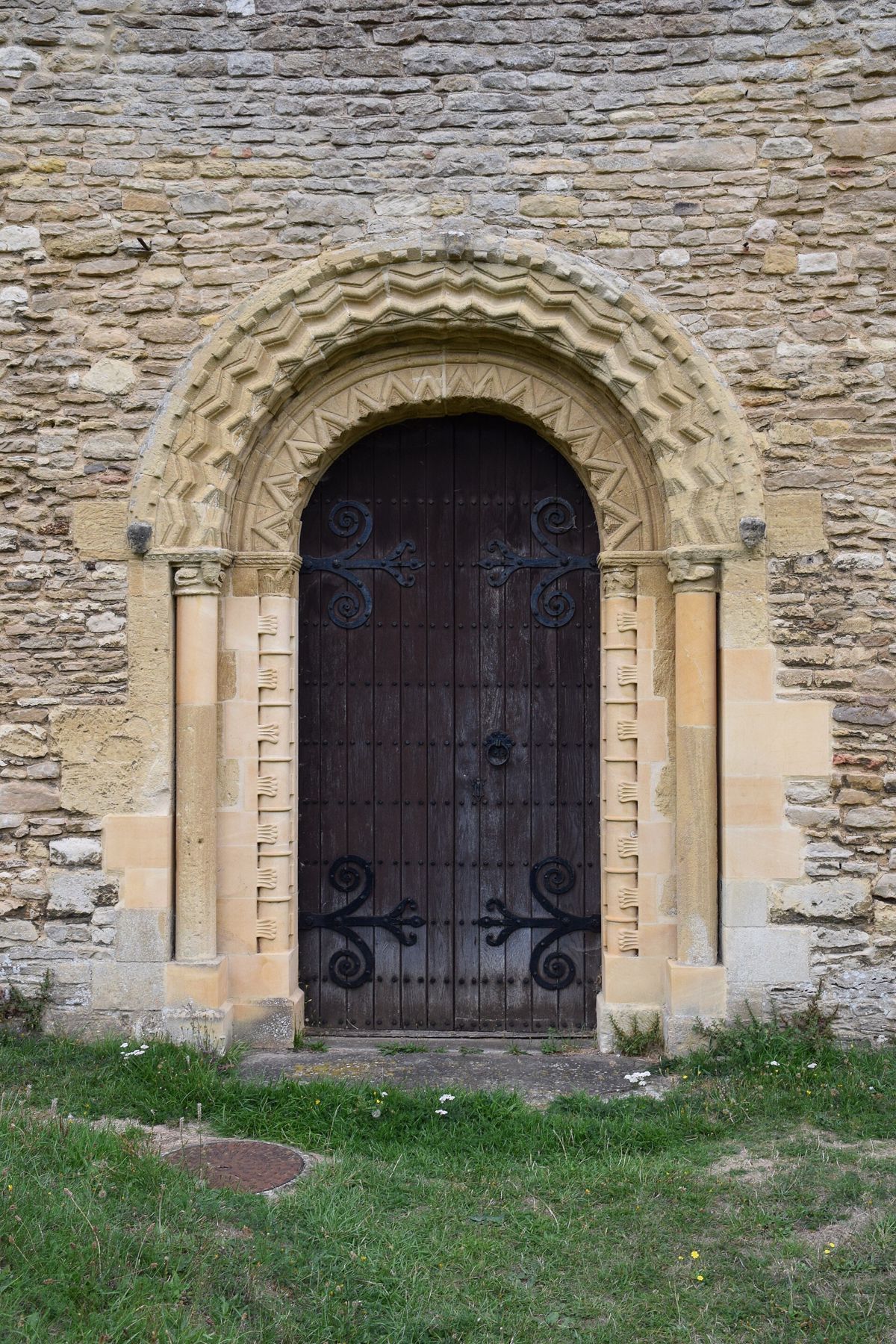
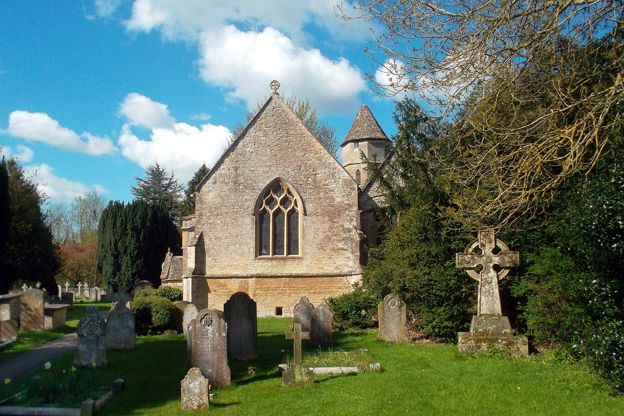
St Mary's is the thing to see, and it is older than it looks. Historic England's listing finds tenth- or eleventh-century herringbone stonework in the tower and its stair turret, the remains of the late Saxon minster that the Victoria County History says was already here by about 955. The church was rebuilt on a cross plan in the twelfth century, given its aisles around 1300, and restored by Ewan Christian in 1868 to 1870. The octagonal spire stands on the central tower with flying buttresses at its base and much-restored statues in niches. Inside, look for the effigy in the north chapel said to be Sir Gilbert Talbot, who died in 1419.
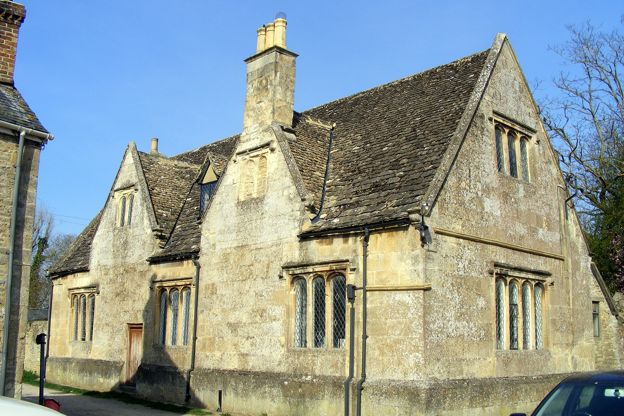
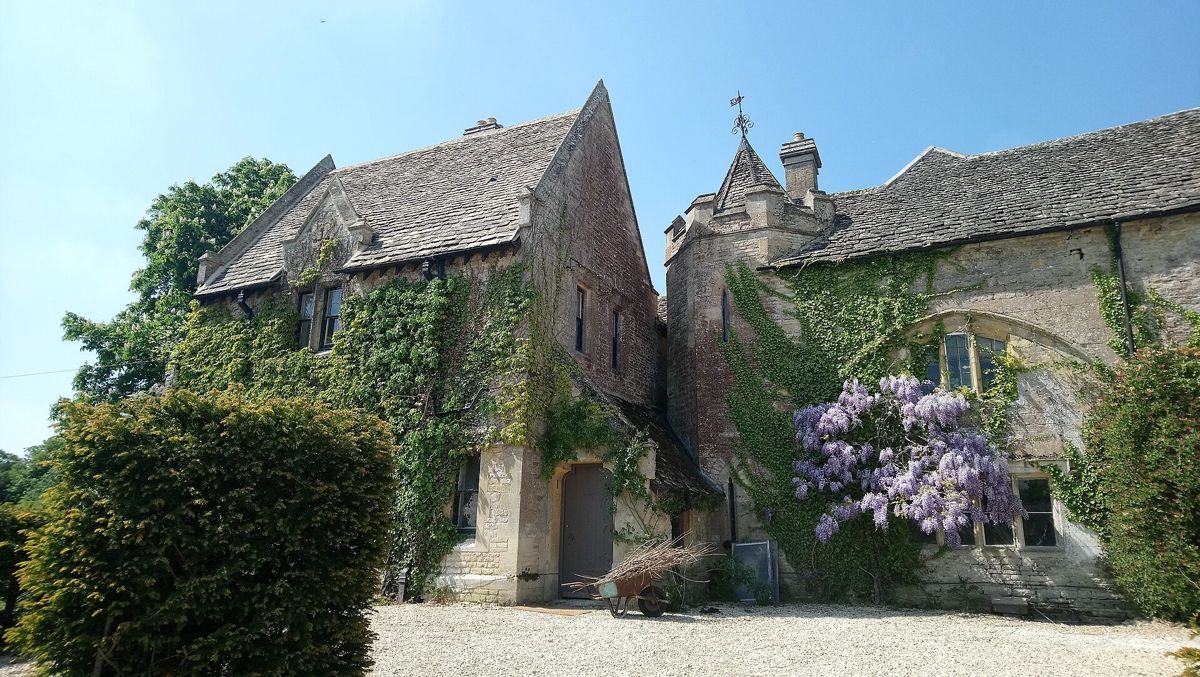
Across the lane from the churchyard is the Old Grammar School, a small ashlar building of the early 1650s. Robert Veysey of Chimney, whose will was proved in 1635, left money to endow a free school and another £100 for a stone building 'with ashlar work', and the first master was appointed by 1653. It took the village library in 1964 and reopened in May 2022 after a restoration that gave it back its upper floor. It now holds the library, the Bampton Community Archive, open daily from 10am to 4pm (it is run by volunteers, so it may occasionally be closed), and an exhibition room. The archive is where the village's history, and its Downton years, are kept.
Downton Abbey in Bampton
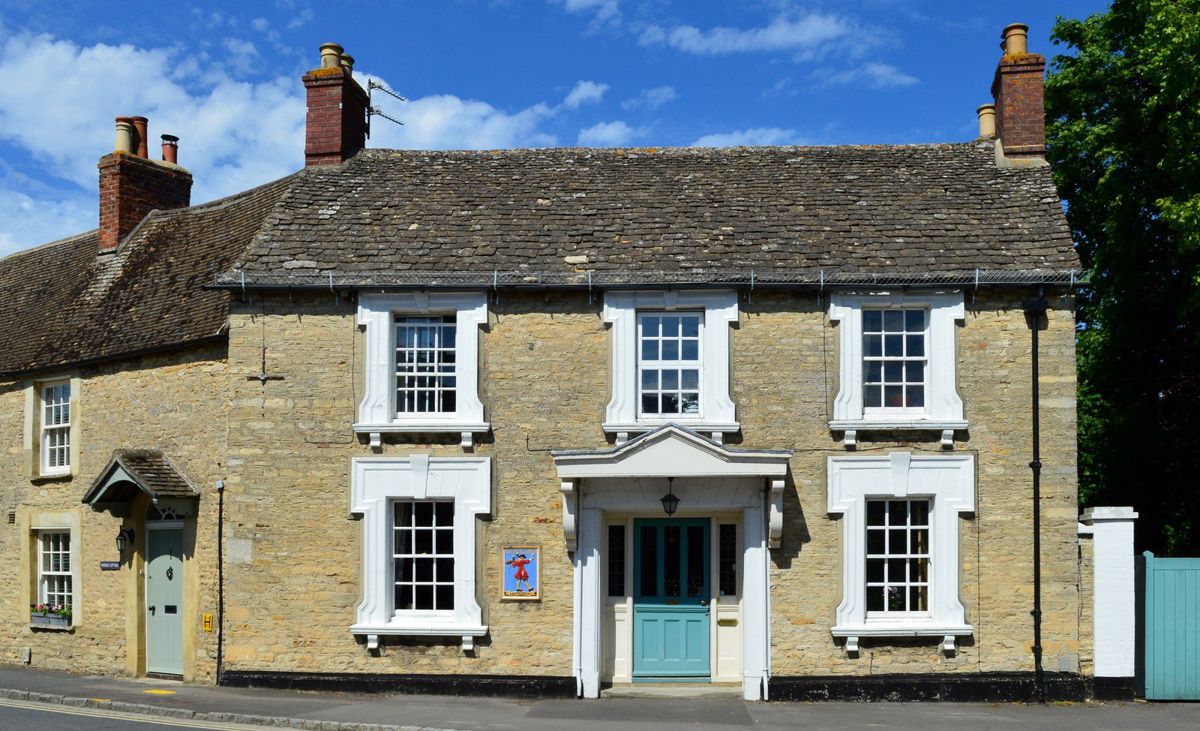
Bampton was the principal location for the village scenes of Downton Abbey from the first series, filmed in 2009, through the films. The Bampton Community Archive has documented the filming, and it is the only source we use for which building played what. The archive says the Old Grammar School was the Downton Cottage Hospital, and its catalogue files the filming under St Mary's church, Churchgate House beside the churchyard, and Church View, the lane between them. The archive's Downton Mile is a walk of about a mile past the places that appeared; the new map is a download from the archive's website with a £1 donation asked (2026), and the money pays for the archive's work. Everything else you will read about which cottage was whose is reported, not confirmed, and our guide to Cotswold film and TV locations says which claims stand up. The houses on Church View are lived in, so look from the lane.
A morning here
Park in the Market Square and start at the Town Hall, which has the public toilets. Walk up Bridge Street past the Market Tavern, the early nineteenth-century former house and shop that was long the Romany inn, and turn down to the church. Give St Mary's twenty minutes, inside and out, then cross to the Old Grammar School for the archive and the Downton map. Walk the Downton Mile from there: about a mile, flat, on pavements and quiet lanes. Finish on the High Street, where the Morris Clown's murals are worth a look through the window if it has not opened yet.
Walks
None of our walks starts in Bampton yet. The archive's website has a map of the parish footpaths and circular walks, which run out over flat farmland towards the Thames at Shifford and Chimney, hamlets of the old parish. For a riverside walk with a bus home, the meadows at Witney are 6 miles up the road.
Food and drink
The Morris Clown on the High Street is the pub to know about, and the one to plan around. It is a single-bar free house, run by the same family for two generations, with a log fire, two changing guest ales, cider in summer and murals of the family painted by one of its members. It opens at 5pm on weekdays, 3pm on Saturdays and 2pm on Sundays, closing at 10pm (11pm on Friday and Saturday), and it serves drinks only. The name rankled when Courage, the brewery, gave it in the 1970s (the village archive dates it to 1973), when it stopped being the New Inn: Bampton's morris jester is the Fool, not a clown.
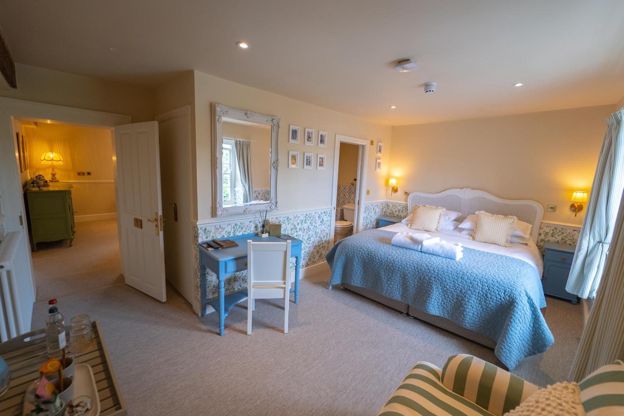
The Romany on Bridge Street, a Grade II former house and shop of the early 1800s, was sold in 2021 and now trades as the Market Tavern, a pub with nine bedrooms. Its own website gives breakfast from 8am to 11am, lunch from noon to 2.30pm (Sunday lunch to 4pm) and dinner from 6pm to 8.30pm (8pm on Sundays) every day, and dogs are welcome in the pub if you tell it in advance; listed on Booking.com, the rooms take no pets, with check-in from 3pm and check-out by 11am. The Talbot and the Horse Shoe are the other two morris sides' pubs; check hours before you rely on a meal.
The Cotswolds Info newsletter
Events, new places and the best of the season, about once a month. Unsubscribe at any time.
When to come
Come on the spring bank holiday Monday (31 May in 2027) for the morris. Bampton has three sides, the Bampton Traditional Morris Dancers, the Traditional Bampton Morris Dancers and the Bampton Morris Men, and all three dance round the village from about 8.30am until late afternoon, at pubs, in the square and in private gardens, with guest sides joining in the evening. Schedules go up in pub windows on the morning and on the Bampton morris guide (opens in a new tab). The Victoria County History traces dancing here to the early nineteenth century, probably the late eighteenth, and says the claim of more than 300 unbroken years lacks documentary support. On any other day Bampton is quiet, and a weekday morning gives you the church and the archive to yourself. Earlier in May, over the early May bank holiday weekend, the Lechlade Vintage Rally fills a field at Clanfield, near Bampton, with vintage tractors, miniature steam and classic cars (1 to 3 May is expected in 2027, to be confirmed by the club).
Last verified 1 November 2026 by our editors
Part of
The Oxfordshire Cotswolds
The Windrush and Evenlode valleys on the Oxfordshire side of the hills: Burford's High Street, Kingham on the railway, Witney's blankets and Woodstock at Blenheim's gates.
Things to do in Bampton
Museums and galleries · Bampton
Bampton Community Archive
Bampton's village archive in the Old Grammar School, the building that played Downton's cottage hospital, with an exhibition room, a shop and the Downton Mile map.
Where to stay in Bampton
-
The Market Tavern
Inn · Bampton
A pub with rooms by the Market Square in Bampton, with a restaurant, a bar and a garden, doubles and family rooms, and a cooked breakfast.
Family-friendly
Verified Nov 2026
-
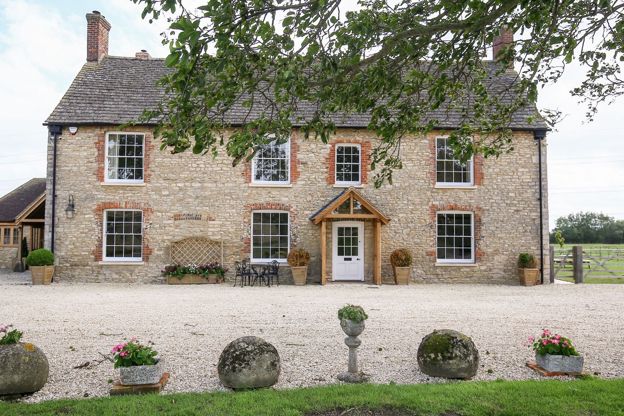
Shifford Manor Farm
Self-catering · Bampton
A listed seventeenth-century farmhouse in the Thames-side hamlet of Shifford, about 6 km east of Bampton, let whole for up to 13 guests in six bedrooms, with dogs allowed.
Dog-friendly · Family-friendly · Walker-friendly
Verified Nov 2026
Where to eat and drink in Bampton
-
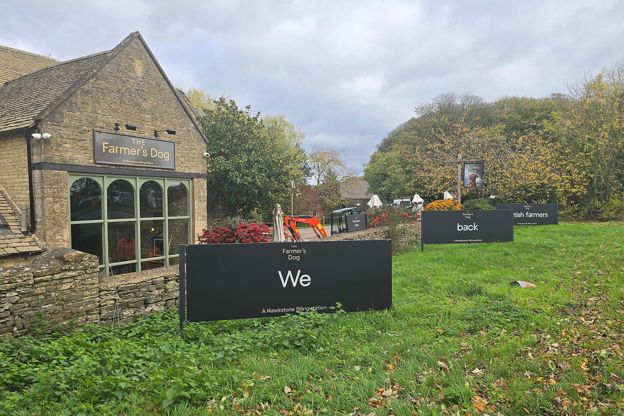
The Farmer's Dog
Pubs · Swinbrook and Asthall
Jeremy Clarkson's pub on the A40 at Asthall Barrow, near Burford, opened in August 2024, serving only British food and drink, with a food truck, a butcher and the Diddly Squat farm shop.
Dog-friendly
Verified Oct 2026
-
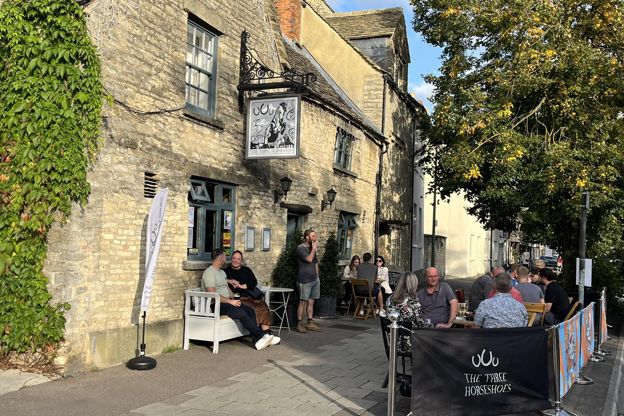
The Three Horseshoes
Pubs · Witney
A Grade II pub and restaurant on Corn Street, Witney, an early sixteenth-century house that became an inn, run by the BII Licensees of the Year 2025.
Family-friendly
Verified Nov 2026
-
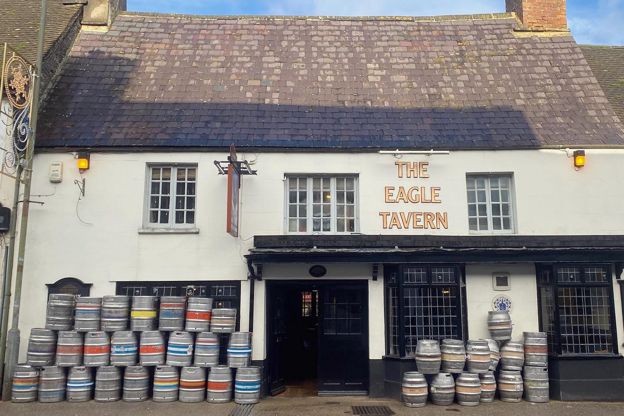
The Eagle Tavern
Pubs · Witney
A Hook Norton pub on Corn Street, Witney, in a building of the 1600s that has been a pub since 1756, with cask ale, live music, a monthly quiz and weekend lunches.
Verified Oct 2026
Walks in and around Bampton
-
Witney Lake and Cogges
Walk · Starts in Witney · 1 hr, 15 mins · Circular
A 3.2-mile (5.1km) easy, flat loop of about an hour and a quarter from the middle of Witney: down the Windrush through the meadows to Witney Lake, back by farm tracks and a lane to Cogges, its manor farm, café and church.
Stories about Bampton
-
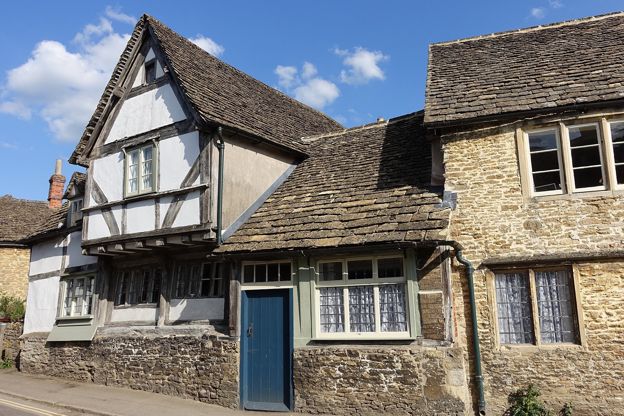
Downton Abbey in the Cotswolds: Bampton, Cogges and Lacock
Story · Guides · 7 minute read
The Downton Abbey locations you can visit around the Cotswolds: Bampton as the village of Downton, Cogges as Yew Tree Farm and Lacock's livestock show and royal parade, with what each custodian confirms.
Getting to Bampton
- By bus
- The 19 (Thames Travel and Oxford Bus Company) runs between Witney and Carterton through Bampton, roughly hourly in the daytime; the timetable from 30 August 2026 is on the Oxford Bus website.
- By car
- Bampton is on the A4095 between Witney and Faringdon, 6 miles south of Witney and 4 miles east of Carterton.
- Parking
- Short-stay parking in the Market Square, up to four hours; Church Close by the church; coaches drop off in the square and park at the sports pavilion on Buckland Road (OX18 2AA).
Access
The centre is flat and the Downton Mile is on pavements and tarmac; Church View, the lane past the Old Grammar School, is narrow with no footway. The Market Square toilets have an accessible cubicle on the Radar scheme.
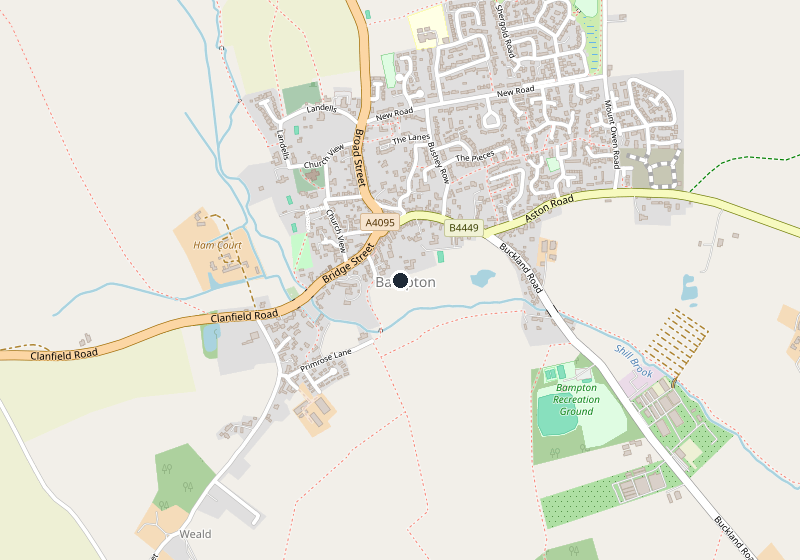
| Carterton | 4.3 mi |
|---|---|
| Witney | 6.2 mi |
| Burford | 8.1 mi |
| Lechlade | 9.9 mi |
| Kelmscott | 11.8 mi |
| Oxford | 19.3 mi |
Places near Bampton
-
 WitneyThe blanket town on the Windrush, just outside the National Landscape, with a Butter Cross, a long Church Green and Cogges manor farm, and free parking.
-
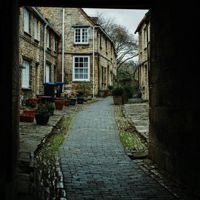 BurfordA wool and coaching town whose High Street runs downhill to a medieval bridge over the Windrush, with a Grade I church where the Levellers were held in 1649.
-
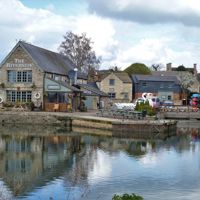 Lechlade-on-ThamesThe town where the Thames becomes navigable, with the highest lock on the river, a toll bridge and Father Thames, and William Morris's Kelmscott Manor 3 miles away.
-
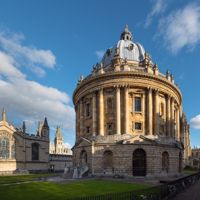 OxfordThe university city at the eastern end of the Cotswold Line, where the S3 leaves the station for Woodstock and Blenheim about every hour and the X52 runs the A40 to Witney and Burford. The hills begin about 20 miles west; the colleges are the day before them.