Fabian Musto, CC BY-SA 2.0, via Wikimedia Commons
Hailes and Didbrook
Two hamlets under the escarpment north-east of Winchcombe: the ruins of Hailes Abbey, a painted twelfth-century church across the lane, a fruit farm with a café, a halt on the steam railway, and the Cotswold Way climbing to Beckbury Camp.
- Nearest station
- Cheltenham Spa, about 11 miles; or Hayles Abbey Halt on the steam railway, where not all trains stop
- Parking
- Hayles Fruit Farm (GL54 5PB), £2.50 paid in the shop and taken off what you spend; Hailes Abbey has free parking for its visitors, next to the church
- Best time
- First weekend of the month, when the abbey opens; a bright day for the paintings
- When it's busy
- The fruit farm café at weekend lunchtimes; the abbey's tour days. The lane is quiet the rest of the time
- Toilets
- At Hailes Abbey (accessible) on its open days
- Dogs
- English Heritage lists assistance dogs as welcome at Hailes Abbey but gives no rule for other dogs, so ring the site (01242 602398) to check; on a lead on the Cotswold Way, which crosses pasture
About Hailes and Didbrook
Hailes is a lane under the escarpment about 2 miles (3km) north-east of Winchcombe, with the ruins of a Cistercian abbey on one side and a small painted church on the other. Didbrook, the village it belongs to, is a few fields away on the Toddington road. Neither has a pub or a shop, but a fruit farm with a café, a halt on the steam railway and the Cotswold Way bring more people here than the size of the place suggests.
Hailes Abbey
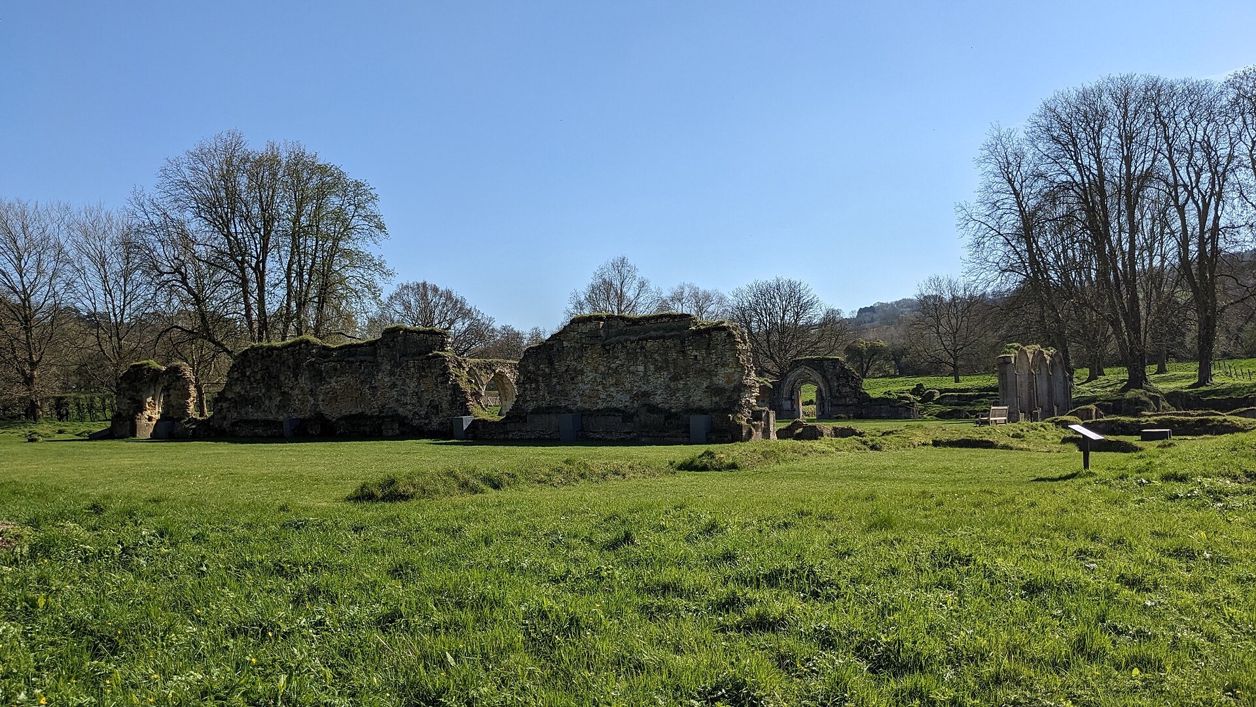
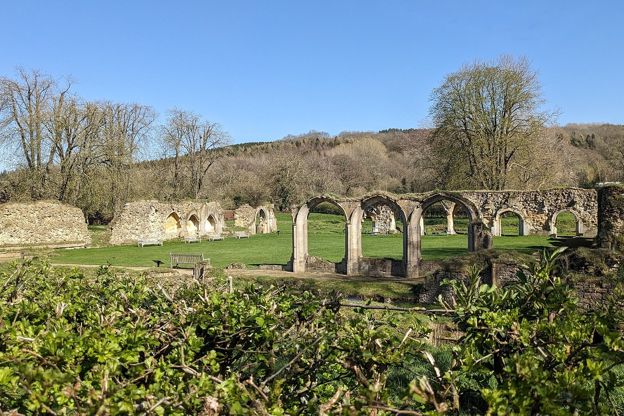
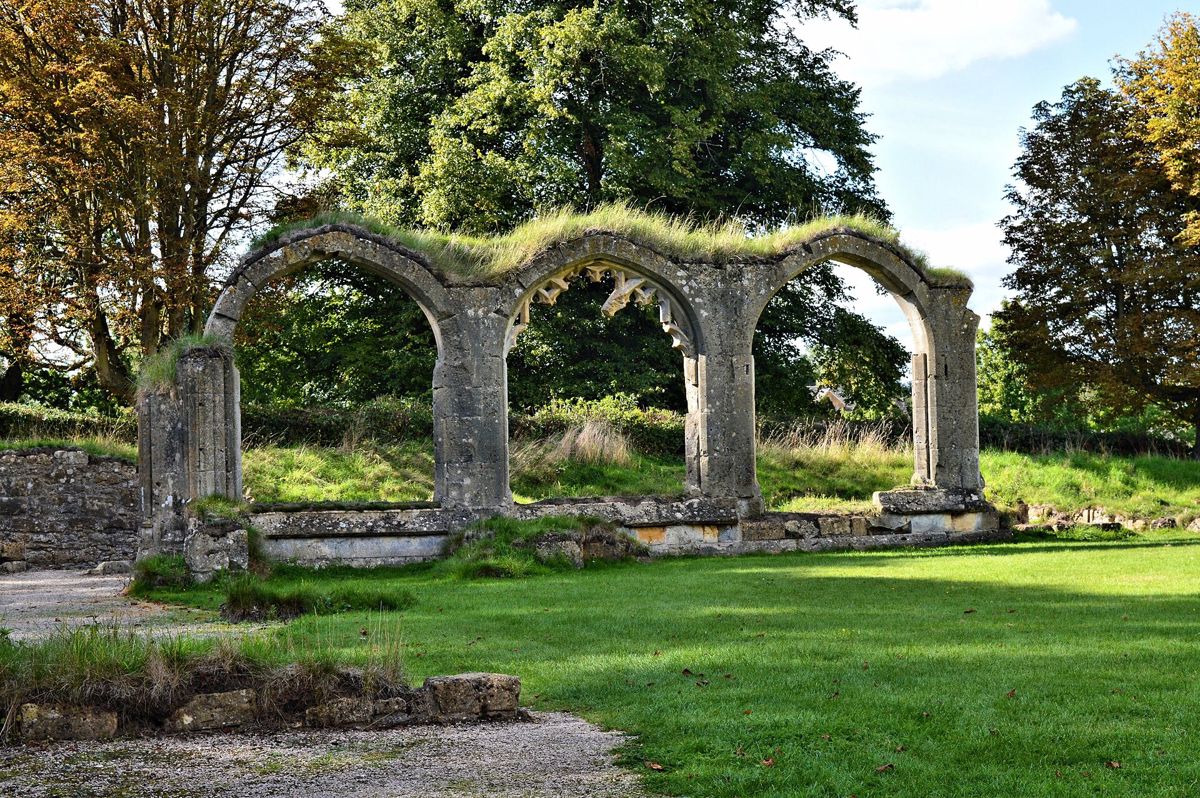
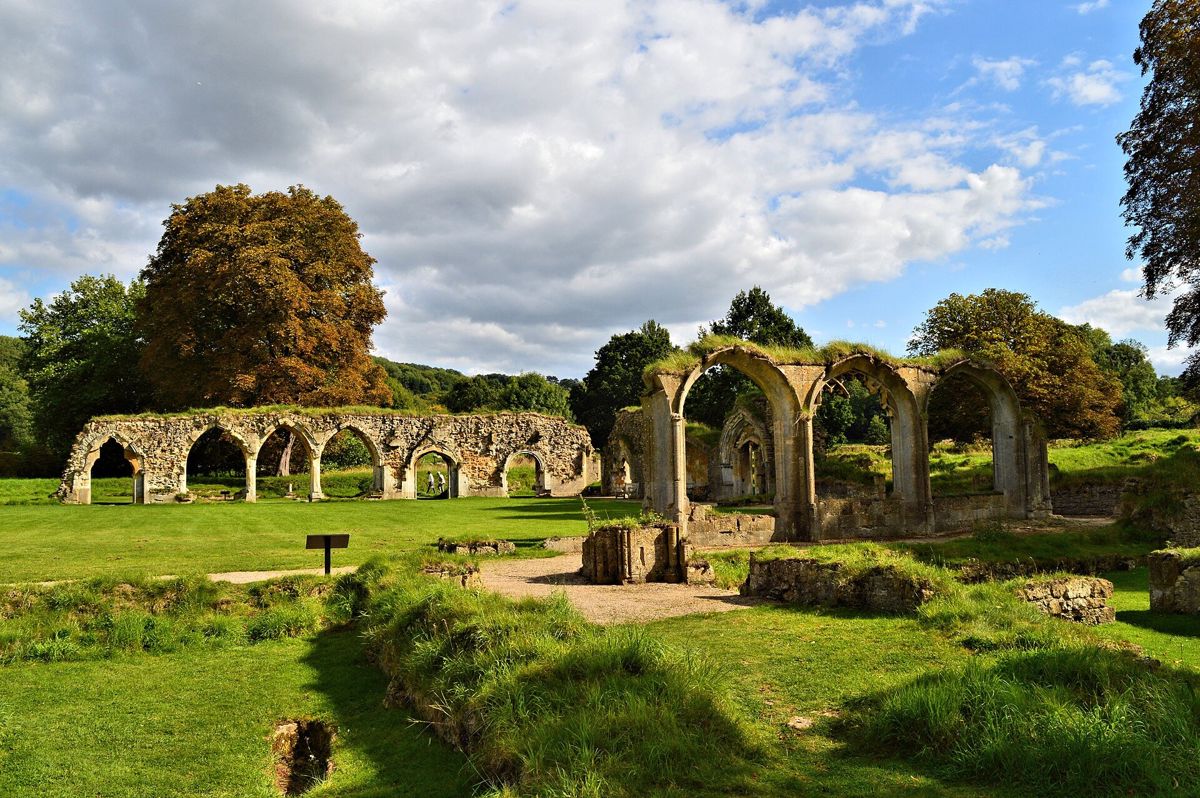
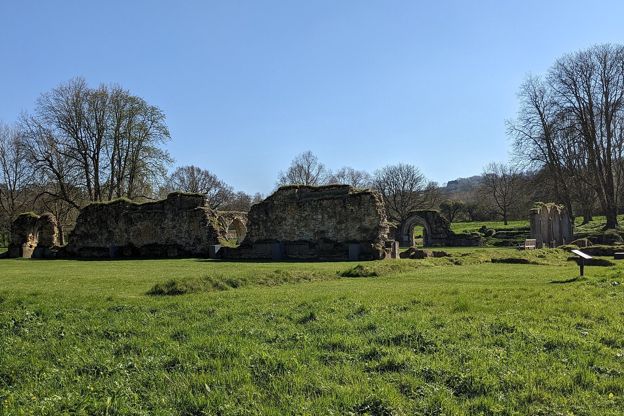
Hailes Abbey was founded in 1246 by Richard, Earl of Cornwall, after a vow made in a storm at sea, and from 1270 it drew pilgrims to a relic said to be the blood of Christ. The monks surrendered it on Christmas Eve 1539, and what is left, the cloister walls and the footings of the ranges around them, is listed Grade I. The National Trust owns it and English Heritage runs it, and the rule to know is that it opens only on the first weekend of each month, for tours booked online. National Trust members go free with a code given on the booking page, and must show their card on arrival. The museum has the heraldic floor tiles, carved stone and a fragment of a fourteenth-century monk's spectacles. English Heritage lists assistance dogs as welcome and publishes no rule for other dogs, so ring the site before you bring one.
Hailes church
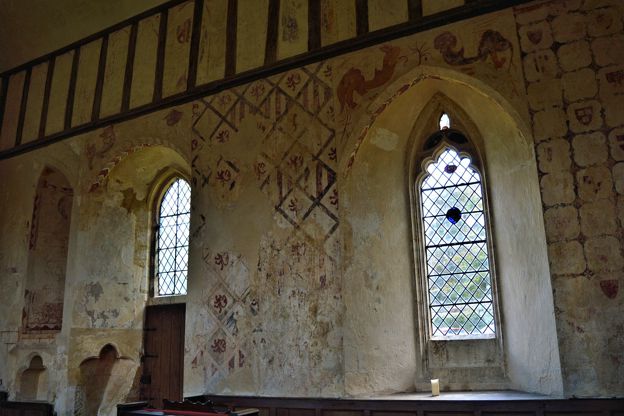
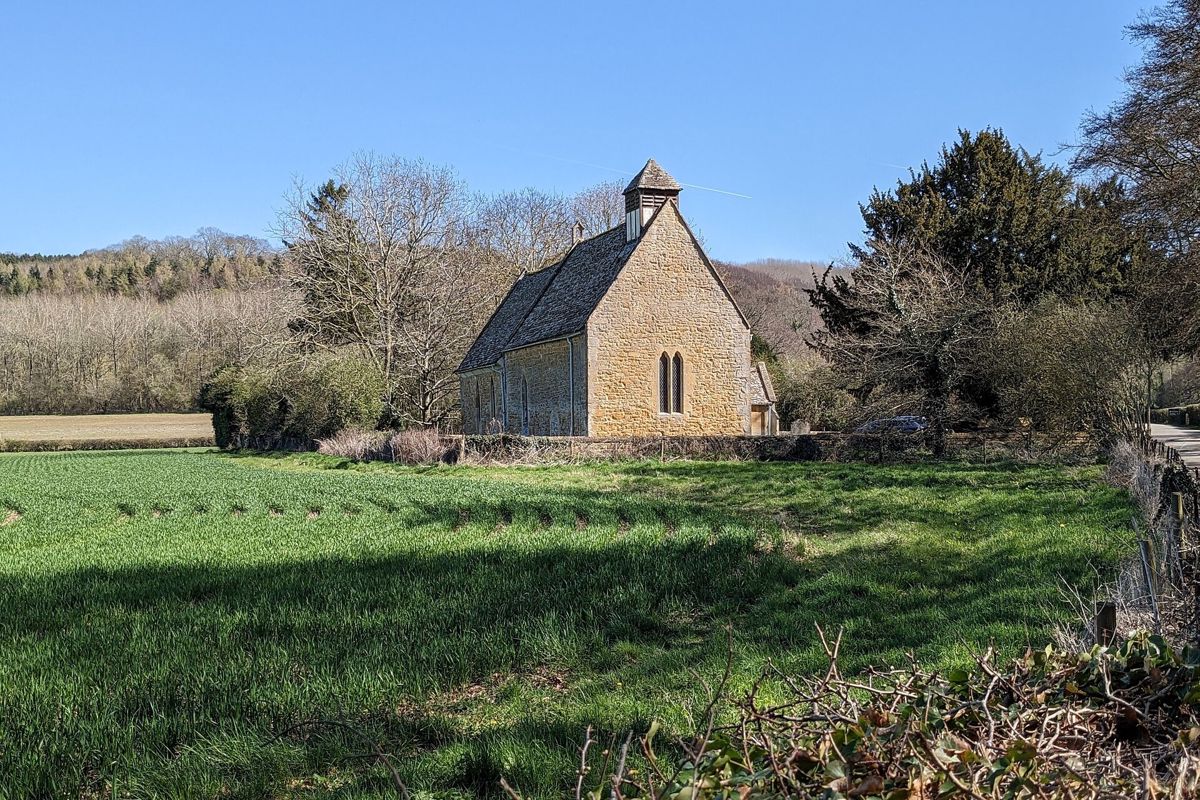
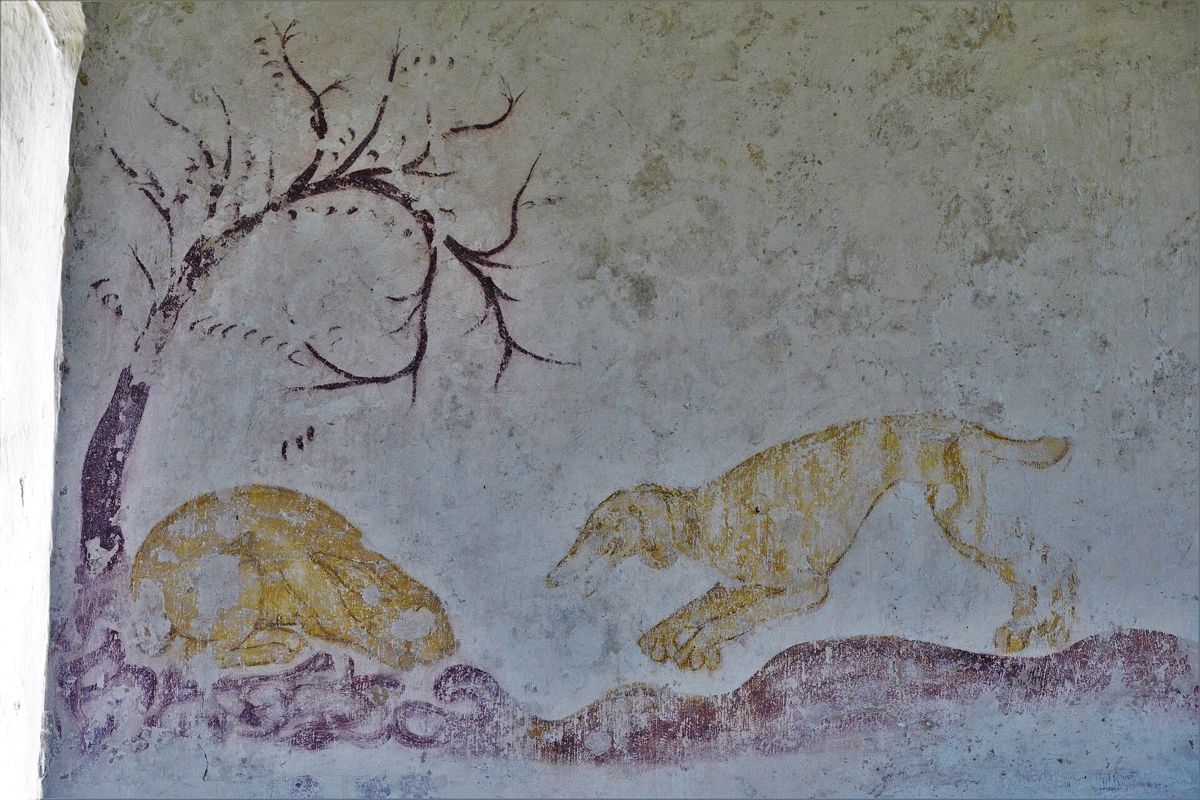
Hailes church across the lane is the older building, twelfth century and listed Grade I. Its walls carry medieval paintings: a giant St Christopher on the north wall of the nave, a hunting scene along the south wall, and in the chancel coats of arms, a saint and mythical beasts, which the listing dates to the fourteenth century. The floor has medieval tiles the walk leaflet says came from the abbey after the Dissolution, and the seventeenth-century pews stand against the screen in what the listing calls a Puritan arrangement. The paintings are faint, so a bright day helps. We have not confirmed its opening hours.
Didbrook, the halt and the hillfort
St George's at Didbrook is the parish church, listed Grade I. It is thirteenth century and was partly rebuilt about 1475 for William Whitchurch, Abbot of Hailes, with a wine-glass pulpit, a chancel arch with Roman Doric pilasters, seventeenth-century communion rails, medieval glass reset in the east window and a marble monument of 1735 to Richard Tracy of Stanway.
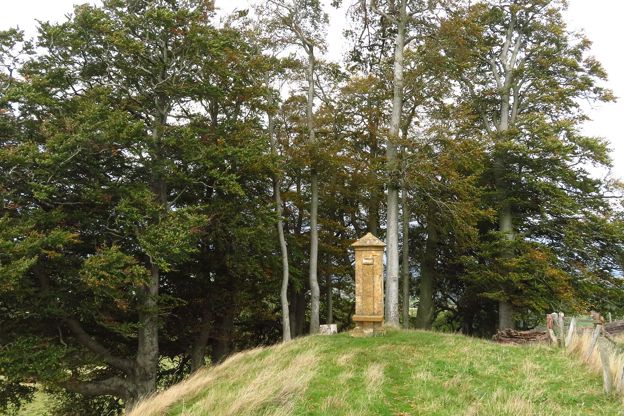
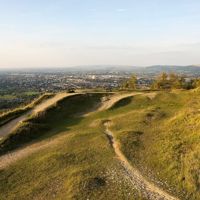
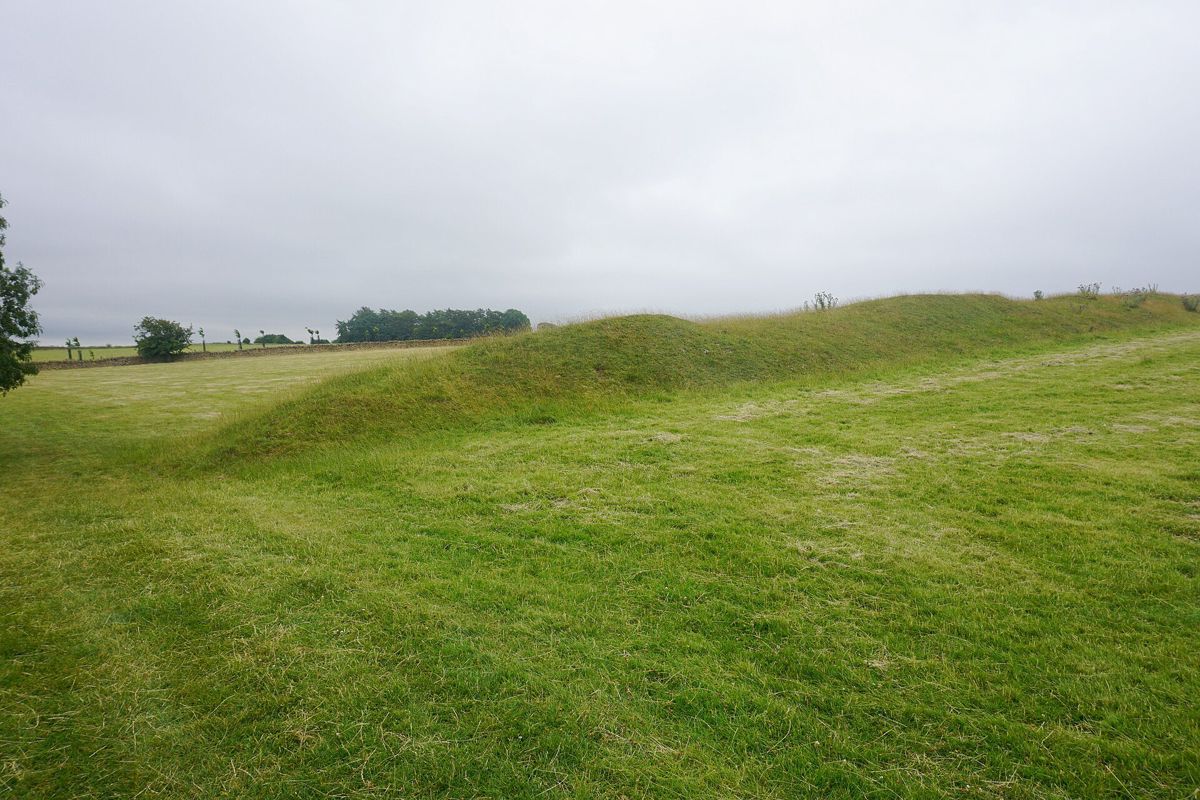
The Gloucestershire Warwickshire Railway's steam trains between Cheltenham Racecourse and Broadway pass along the foot of the hill, and Hayles Abbey Halt, halfway between Toddington and Winchcombe, is a few minutes' walk from the abbey. The railway warns that not all trains stop there and that services vary on special event days, so check its timetable and events calendar. The halt has no parking and no road access, which suits it to walkers. Above everything, on the skyline, a clump of trees marks Beckbury Camp, an Iron Age hillfort on the edge with a nineteenth-century stone monument where Thomas Cromwell is said, without evidence, to have watched the abbey burn.
A morning here
Park at Hayles Fruit Farm and pay the £2.50 in the shop. It comes off what you spend later. Walk the lane to the church first, while the light is good, then the abbey if it is a tour weekend. Climb the monks' track on the Cotswold Way to Beckbury Camp, come down by the wood towards Wood Stanway and back along the lane, and finish in the Orchard Kitchen. Allow about two and a quarter hours for the walk, as the leaflet suggests, and an hour for the church and the abbey museum.
Walks from Hailes
Our Hailes and Beckbury Camp walk is a 3.5-mile (5.6km) circular from the fruit farm, moderate, with three stiles on the way down. The Cotswold Way's third section, 5.4 miles from Wood Stanway to Winchcombe, comes down past the abbey gate. Its second section, Broadway to Wood Stanway, ends a mile and a half up the lane. The Winchcombe Way, a 42-mile figure of eight, also passes through.
The Cotswolds Info newsletter
Events, new places and the best of the season, about once a month. Unsubscribe at any time.
Food and drink
Hayles Fruit Farm is the only place to eat. Lord Sudeley planted its orchards in 1880, the same family has run it since 1950, and it presses its own juice and makes Hayles cider. The Orchard Kitchen serves breakfast and brunch until 3pm, then cakes, and the farm shop sells the fruit in season, with pick your own from strawberries in June to pumpkins in October. It opens Tuesday to Sunday, 9am to 5pm (to 4pm from 3 November 2026), and closes on Mondays, when the lane has nothing at all. Weekends are walk-in only. The nearest pubs are in Winchcombe.
When to come
Plan round the abbey's first-weekend rule if you want to go inside the ruins. The church and the hill are there every day. Pick your own runs from June to October, and the fruit farm is busiest then at weekend lunchtimes. In winter the bank of Beckbury Camp is easiest to read, the paintings are no fainter, and you may have the lane to yourself. Check the railway's calendar before relying on the halt.
Last verified 1 November 2026 by our editors
Part of
The Cotswold Edge
The western escarpment, where the wolds end in a wooded edge above the Severn vale: Winchcombe and Sudeley, Belas Knap, Cleeve Hill and the Cotswold Way along the top.
Things to do in Hailes and Didbrook
Historic houses and heritage · Winchcombe
Hailes Abbey
The ruins of a Cistercian abbey near Winchcombe, founded in 1246, once a place of pilgrimage, now open for booked tours on the first weekend of each month.
Where to stay in Hailes and Didbrook
-
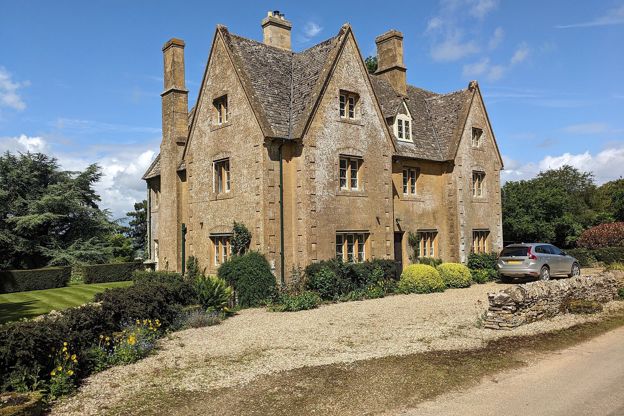
North Farmcote
B&B · Winchcombe
Bed and breakfast in a farmhouse above Winchcombe, built around 1840, its owners say, as a dower house for Lord Sudeley's mother.
Walker-friendly
Verified Oct 2026
Where to eat and drink in Hailes and Didbrook
-
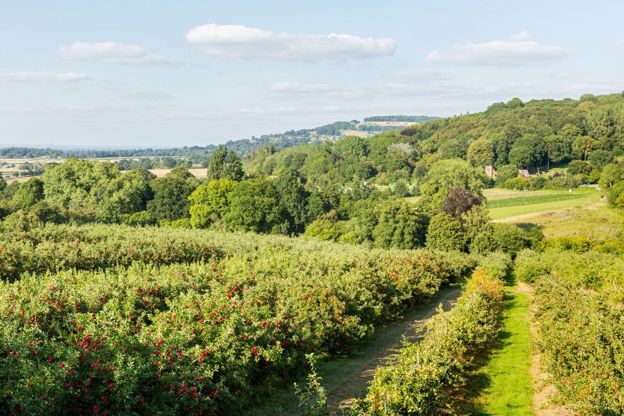
Hayles Fruit Farm
Farm shops and delis · Winchcombe
A fruit farm at Hailes, about 3 miles by road from Winchcombe, with a farm shop, the Orchard Kitchen tearoom, pick your own and its own Hayles cider.
Family-friendly · Walker-friendly
Verified Nov 2026
Walks in and around Hailes and Didbrook
-
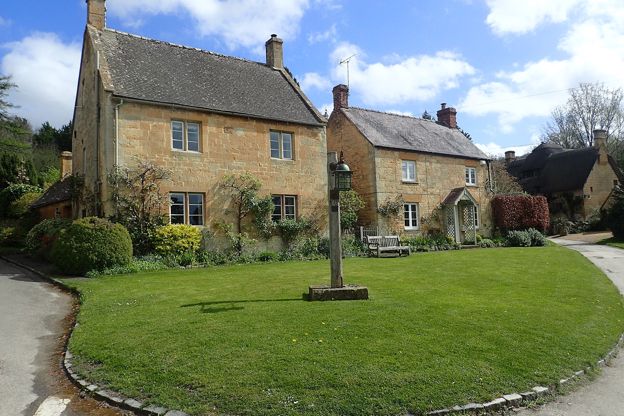
Cotswold Way: Broadway to Wood Stanway
Walk · Starts in Broadway · 3 hrs, 15 mins · Dog-friendly
A 6.5-mile (10.5km) one-way walk on the second section of the Cotswold Way, from Broadway's green, moderate and three to three and a half hours: a long climb to Shenberrow, a steep descent into Stanton, then field paths by Stanway's church and gatehouse to Wood Stanway.
-
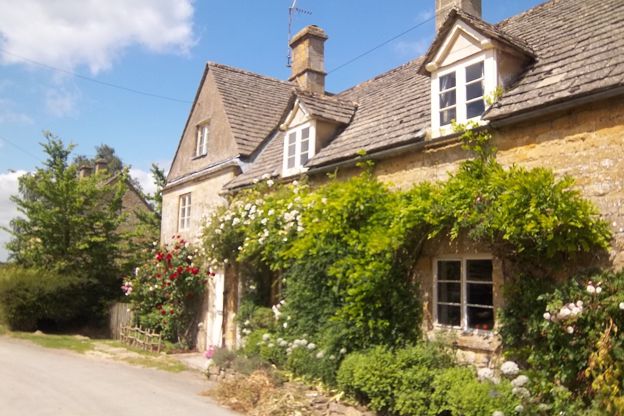
Cotswold Way: Wood Stanway to Winchcombe
Walk · Starts in Stanway · 3 hrs, 15 mins · Dog-friendly
A 5.4-mile (8.8km) one-way walk on the third section of the Cotswold Way, from Wood Stanway to Winchcombe, moderate and about three and a quarter hours: a steep climb to the top, Beckbury Camp, the old track down to Hailes Abbey, then lanes into the town.
Sights in and around Hailes and Didbrook
-
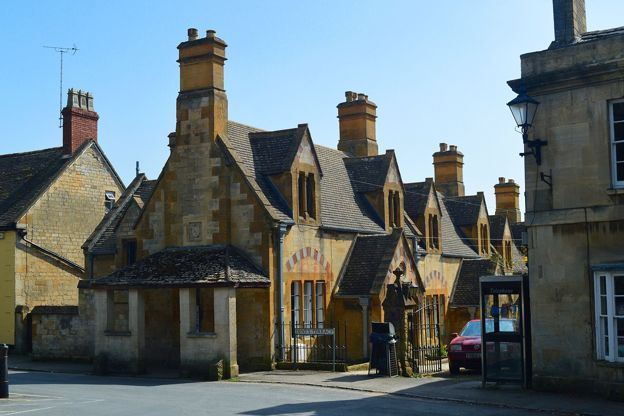
Dent's Terrace, Winchcombe
Sight · Historic building · Winchcombe
A row of ten almshouses of 1865 on Abbey Terrace, Winchcombe, by Sir George Gilbert Scott and J Drayton Wyatt for John and Emma Dent of Sudeley Castle: cream, yellow and pink stone under stepped gables. Grade II.
-
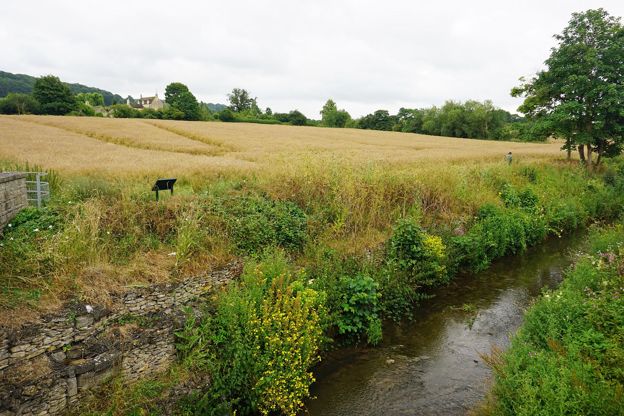
River Isbourne
Sight · River · Winchcombe
The River Isbourne rises at a spring on Cleeve Hill above Winchcombe and runs north past Postlip, Winchcombe, Toddington and Sedgeberrow to join the Avon at Evesham. A waymarked path of some 14 miles, the Isbourne Way, follows it.
-
Vineyard Bridge, Winchcombe
Sight · Bridge · Winchcombe
Vineyard Bridge is the single stone arch of 1891 that carries Vineyard Street over the River Isbourne in Winchcombe, the last work in the town of the architect J. Drayton Wyatt and the way to Sudeley Castle. Listed Grade II.
Getting to Hailes and Didbrook
- By car
- Signed off the B4632 between Winchcombe and Toddington, up a lane. Park at Hayles Fruit Farm (GL54 5PB) for £2.50, or at Hailes Abbey, free, on its open days.
- By train
- Hayles Abbey Halt on the Gloucestershire Warwickshire Railway is a few minutes' walk from the abbey. Not all trains call, so check the timetable.
- By bus
- Pulhams 606 (Cheltenham, Winchcombe, Broadway) stops at Toddington, about a mile from the lane, Monday to Saturday. No Sunday service.
Access
The abbey's ticket point and museum are level, by a ramp, and the grounds are gentle grass; accessible parking about 20m from the entrance on loose gravel. From the car park by the church you cross a narrow lane used by farm vehicles and cyclists. The short grass is slippery when wet. The walk to Beckbury Camp has steep sections and three stiles.
| Winchcombe | 2.9 mi |
|---|---|
| Toddington | 2.5 mi |
| Stanway | 3.6 mi |
| Stanton | 4.2 mi |
| Broadway | 6.5 mi |
| Cheltenham | 10.9 mi |
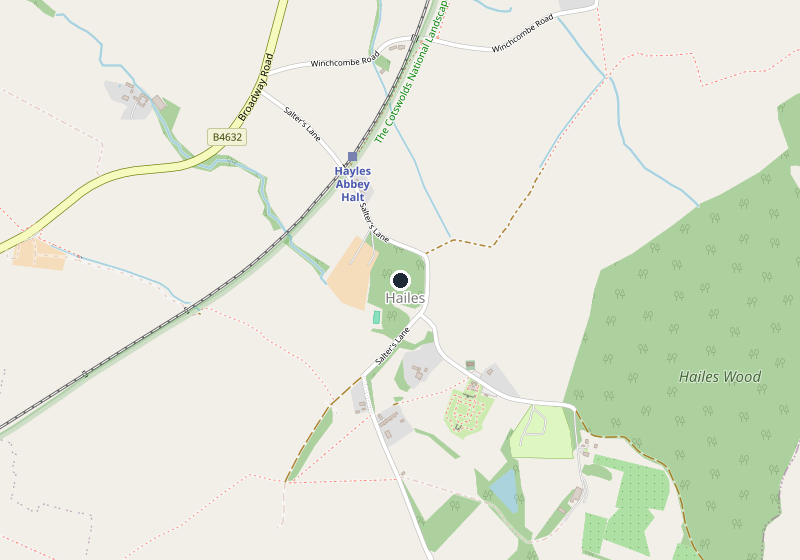
Places near Hailes and Didbrook
-
 WinchcombeA walkers' town below the escarpment, with Sudeley Castle and Katherine Parr's tomb, the ruins of Hailes Abbey, Belas Knap on the hill and a steam railway.
-
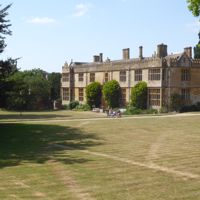 StanwayAn estate village at the foot of the escarpment between Stanton and Winchcombe, with a Jacobean manor that opens two afternoons a week in summer, a fountain about 92m high, a fourteenth-century tithe barn and a thatched cricket pavilion on staddle stones.
-
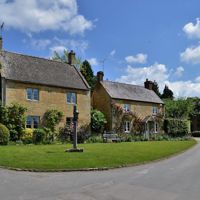 StantonA spring-line village on the Cotswold Way below the escarpment, restored by Sir Philip Stott from 1906, with a Grade I church and a pub at the top of the street.
-
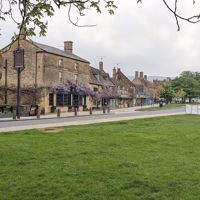 BroadwayA Worcestershire village below the escarpment, an old coaching stop with a long High Street, two museums, an artists' history and Broadway Tower on the hill.