Bill Boaden, CC BY-SA 2.0, via Wikimedia Commons
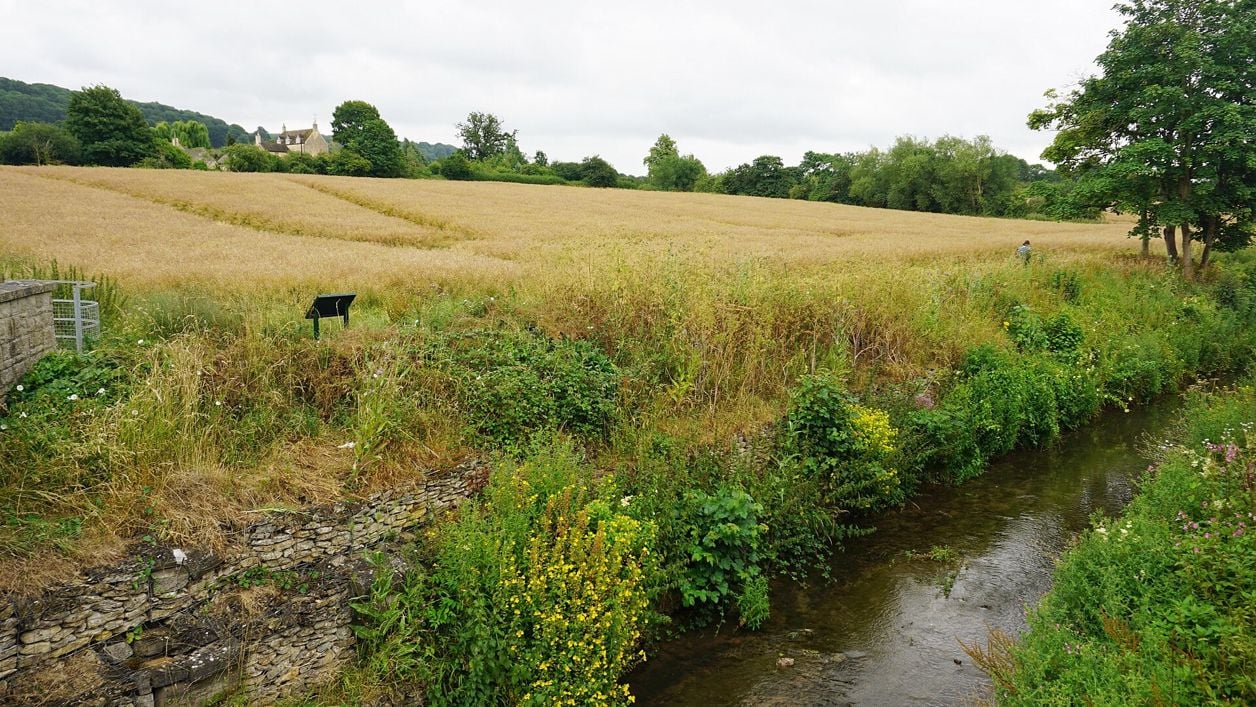
River Isbourne
The River Isbourne rises at a spring on Cleeve Hill above Winchcombe and runs north past Postlip, Winchcombe, Toddington and Sedgeberrow to join the Avon at Evesham. A waymarked path of some 14 miles, the Isbourne Way, follows it.
River
WinchcombeThe River Isbourne is the small river of Winchcombe. It rises at a spring on Cleeve Hill, runs north through a steep valley past Postlip and along the eastern side of the town, and then crosses the Vale of Evesham to join the Avon at Evesham. Walkers know it from Vineyard Bridge and the riverside path below the town.
The course of the river
The Isbourne begins high on Cleeve Common, the highest point in the Cotswolds at 330m, the Cleeve Common Trust says. Its source is a spring on Cleeve Hill about 200m up the valley above the Washpool, and the stream drops quickly into a deep valley. It passes Postlip, with its paper mill, Norman chapel and tithe barn, then curves round the eastern edge of Winchcombe under Vineyard Bridge and out past Sudeley Castle.
Below the town the valley opens. The river runs north past Toddington and Sedgeberrow, where the Environment Agency keeps river level stations, and joins the Warwickshire Avon at Evesham. The Winchcombe walk leaflet says the Isbourne is, allegedly, the only river in England to flow north. That is a local claim rather than a measured fact, though the river does keep a broadly northward line from Cleeve Hill to Evesham.
A working river
The Isbourne turned mills along its course, from Postlip above Winchcombe down to Sedgeberrow in the vale. Postlip Mill has made paper since 1733, Winchcombe's walkers' group says, and is still a working mill making specialist filter paper. Winchcombe's own history adds a curious crop: for about 60 years in the seventeenth century tobacco was grown in and around the town, and the town fought off the government's attempts to destroy it. The listing of the tithe barn at Postlip says the barn is reported to have been used to wet and dry the crop.
Vineyard Street, which crosses the river on Vineyard Bridge, was also known as Duck Street, the town walk leaflet says.
What to look for
- The spring above the Washpool on Cleeve Hill, where the river begins.
- The deep, wooded valley below the common, best seen from the Cotswold Way as it drops to Postlip.
- Vineyard Bridge, built in 1891 by J. Drayton Wyatt, at the bottom of Vineyard Street.
- The riverside path below Winchcombe, which follows the bank through gates towards Castle Street.
Visiting
The Isbourne is reached on public footpaths and road bridges, free at any time. The field paths by the river are muddy after rain; keep dogs on a lead near livestock. The best stretch for an easy walk is the riverside path below Winchcombe; for the source, allow a steep climb on to Cleeve Hill.
Getting there and walks
In Winchcombe, park at Back Lane car park (GL54 5PZ) or come on the 606 bus from Cheltenham, run by Pulhams roughly hourly from Monday to Saturday, with no Sunday service. Vineyard Bridge is a few minutes' walk from the High Street.
The Cotswold Way from Winchcombe to Cleeve Hill crosses the river twice, at Vineyard Bridge and again at Postlip before the last climb to the common, part of the full Cotswold Way. The Winchcombe and Belas Knap walk and the loop by Belas Knap and Cleeve Common cross it at the bottom of Vineyard Street, and the longer loop comes back down its valley by Postlip. For the whole river, the Isbourne Way, a route of some 14 miles launched at Winchcombe's walking festival in 2014 and waymarked with a mill wheel, follows it from the Washpool on Cleeve Hill to Evesham.
Nearby
In Winchcombe, St Peter's Church and Dent's Terrace are up the hill from the bridge, and the White Hart and the Lion Inn are on the main street. Up at the source, the Cleeve Hill Hotel is on the main road below the common.
Walks past River Isbourne
-
Cotswold Way: Winchcombe to Cleeve Hill
Walk · Starts in Winchcombe · 2 hrs, 45 mins · Dog-friendly
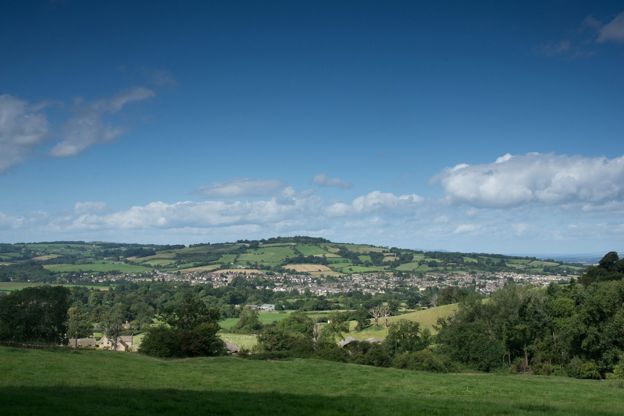
A 5.6-mile (9km) one-way walk on the fourth section of the Cotswold Way, moderate and two and a half to three hours: from Winchcombe by Sudeley up to Belas Knap, down through Breakheart Plantation to Postlip's Norman chapel, then up to the golf club on Cleeve Hill.
-
Cotswold Way: Wood Stanway to Winchcombe
Walk · Starts in Stanway · 3 hrs, 15 mins · Dog-friendly
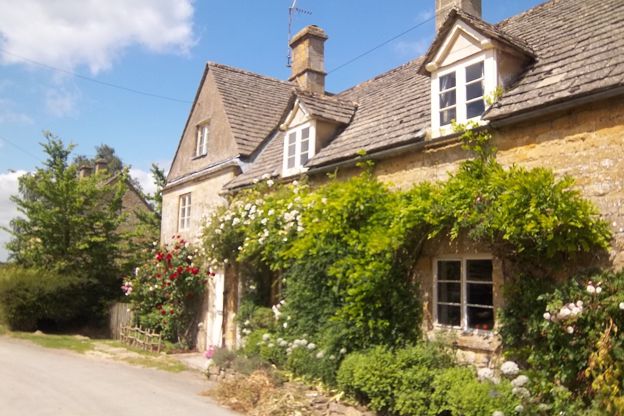
A 5.4-mile (8.8km) one-way walk on the third section of the Cotswold Way, from Wood Stanway to Winchcombe, moderate and about three and a quarter hours: a steep climb to the top, Beckbury Camp, the old track down to Hailes Abbey, then lanes into the town.
-
Winchcombe and Belas Knap
Walk · Starts in Winchcombe · 2 hrs, 45 mins · Circular
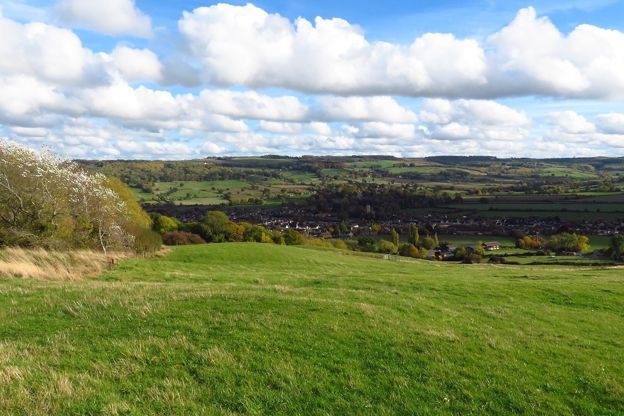
A 5.5-mile (8.8km) moderate loop of two to two and three quarter hours from Winchcombe, up the Cotswold Way and through the woods to Belas Knap, the Neolithic long barrow, then home on the Winchcombe Way by Wadfield Farm and Sudeley, with two stiles and a narrow road.
Stay and eat near River Isbourne
-
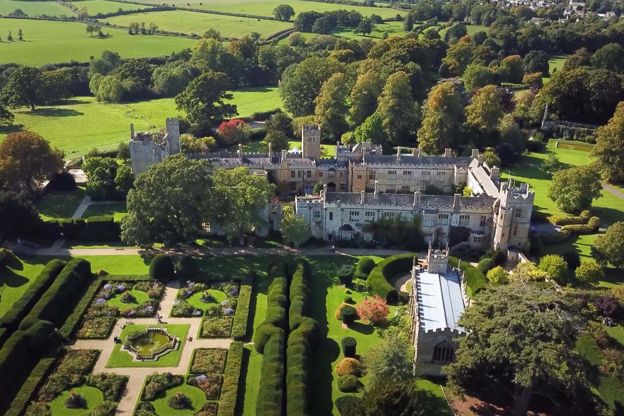
Sudeley Castle and Gardens
Historic houses and heritage · Winchcombe
A castle on the edge of Winchcombe where Katherine Parr, Henry VIII's last queen, is buried, with gardens, a Tudor history and the Dent family's home.
Family-friendly · Walker-friendly
Verified Nov 2026
-
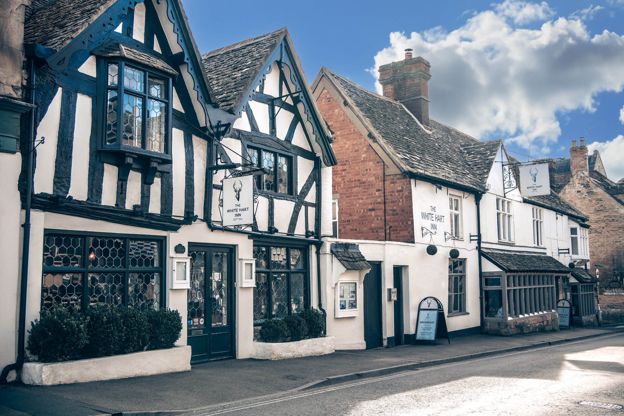
The White Hart Inn
Inn · Winchcombe
An inn with sixteen rooms on Winchcombe's High Street, with dog-friendly rooms and a restaurant and bar open all day to non-residents.
Dog-friendly · Wedding venues · Walker-friendly
Verified Nov 2026
-
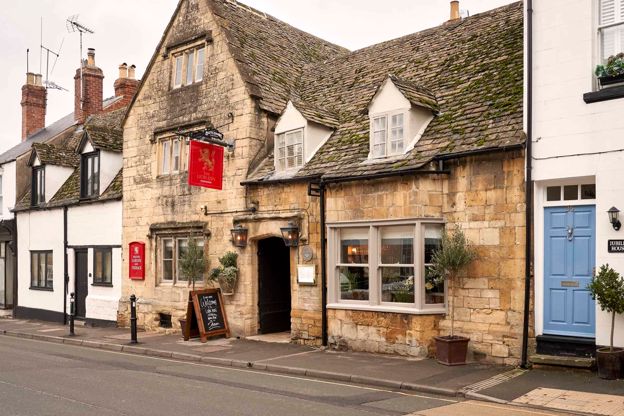
The Lion Inn
Inn · Winchcombe
A restored fifteenth-century coaching inn on North Street, Winchcombe, with nine rooms, run by Butcombe.
Dog-friendly · Walker-friendly
Verified Oct 2026
More sights to see
-

Vineyard Bridge, Winchcombe
Sight · Bridge · Winchcombe
Vineyard Bridge is the single stone arch of 1891 that carries Vineyard Street over the River Isbourne in Winchcombe, the last work in the town of the architect J. Drayton Wyatt and the way to Sudeley Castle. Listed Grade II.
-
St James' Chapel, Postlip
Sight · Church · Winchcombe
St James' Chapel is a small Norman chapel of about 1140 beside Postlip Hall below Cleeve Common, with a chevron-carved doorway, used as a farm building for centuries and restored for Catholic worship in 1891. Grade I; seen from the Cotswold Way.
-
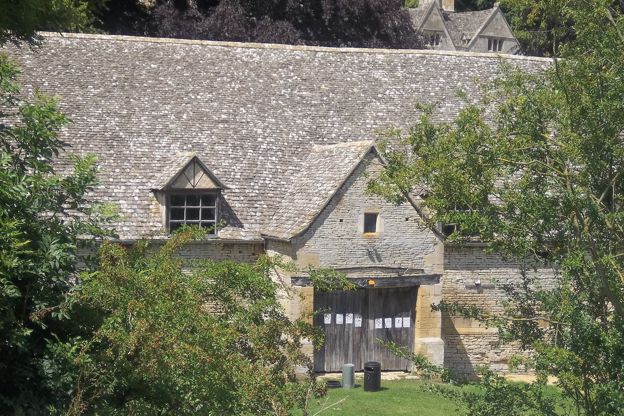
Tithe barn, Postlip
Sight · Historic building · Winchcombe
The tithe barn at Postlip is an eight-bay stone barn, probably of the fifteenth century, below Cleeve Common near Winchcombe, with raised crucks inside, said to have dried the town's tobacco in the 1600s and home every July to the Cotswold Beer Festival.