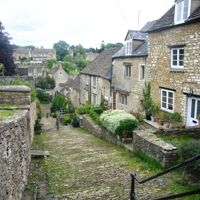
Ethan Doyle White, CC BY-SA 4.0, via Wikimedia Commons
Minchinhampton
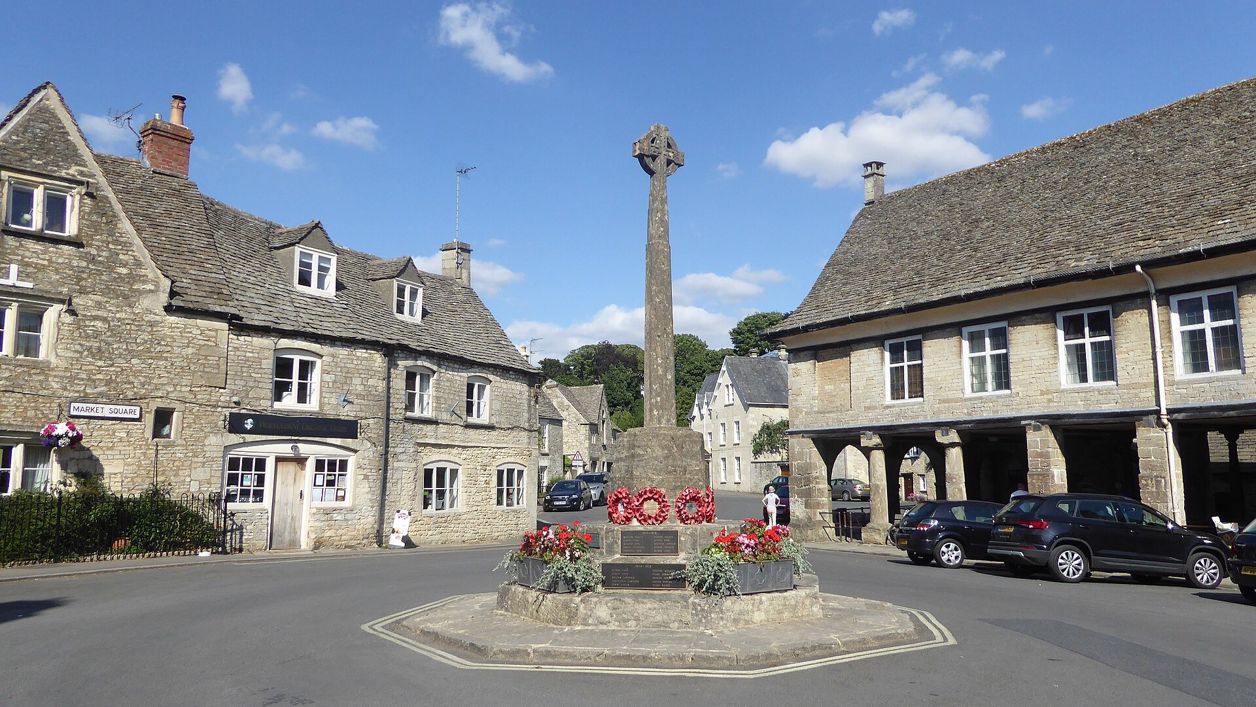
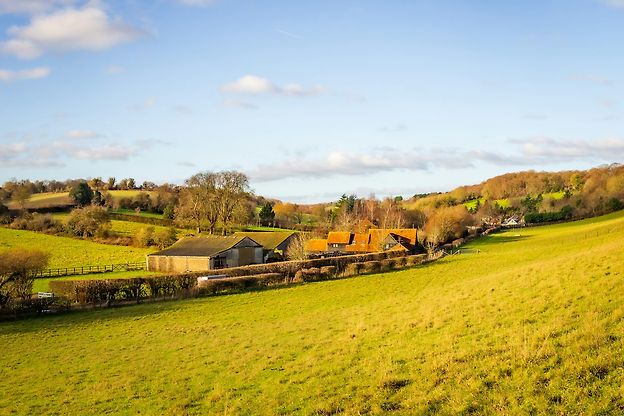
A small hilltop town above Stroud with a Market House of 1698, a church with a crown instead of a spire, and a great open common owned by the National Trust, where grazing cattle wander across the roads.
- Nearest station
- Stroud, about 4 miles (6km), then the 620 bus, Monday to Saturday; on Sundays the 63 to Nailsworth and walk up
- Parking
- Free: Friday Street (Parsons Court, GL6 9JL), long stay, 33 bays, none disabled; National Trust car parks on the common, dawn to dusk; never on the grass
- Best time
- Summer, with cattle grazing and the turf in flower; Wednesday morning market
- Toilets
- Bell Lane, opposite the church; the parish council does not publish hours
- Dogs
- Welcome on the common under close control; the National Trust asks for a short lead near livestock and from March to August, for ground-nesting birds; the Crown Inn is listed as dog friendly
About Minchinhampton
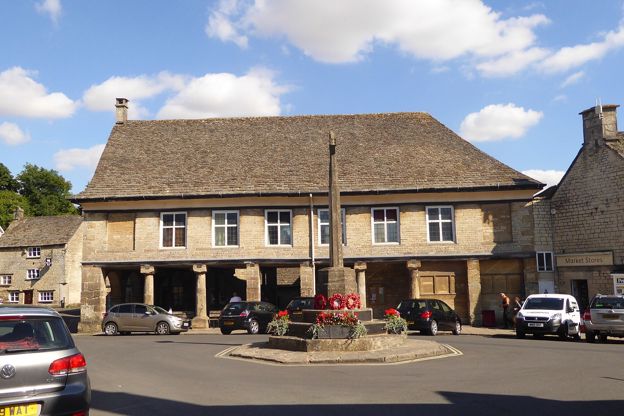
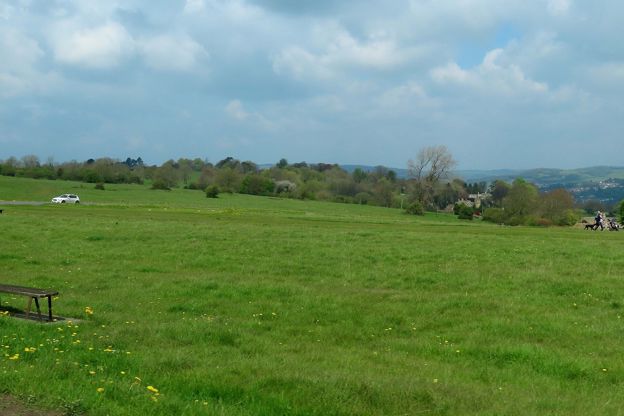
Minchinhampton is a small town of about 5,400 people on the plateau 3 miles (5km) south-east of Stroud, with valleys falling away on three sides. It has a Market House of 1698 on stone pillars, a church tower topped by a stone crown, and the common on its doorstep: more than 500 acres of open limestone turf that the National Trust has owned since 1913, where commoners' cattle wander across the roads in the grazing season. South-east, at Avening, the village keeps Pig Face Day every other September.
What to see
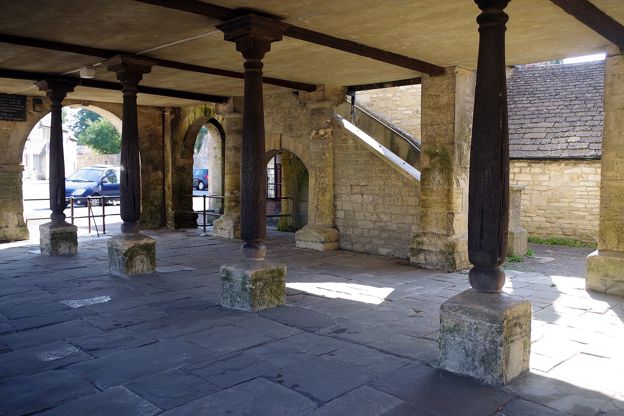
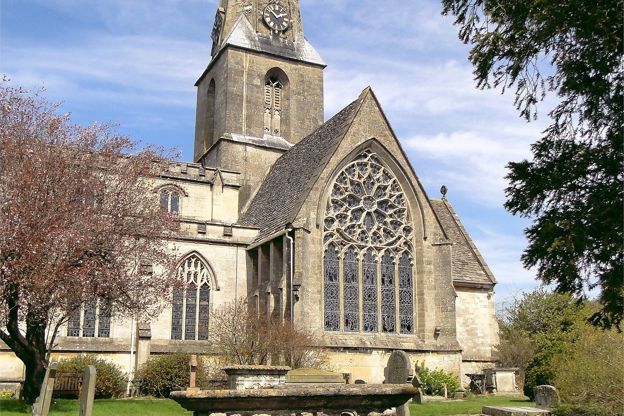
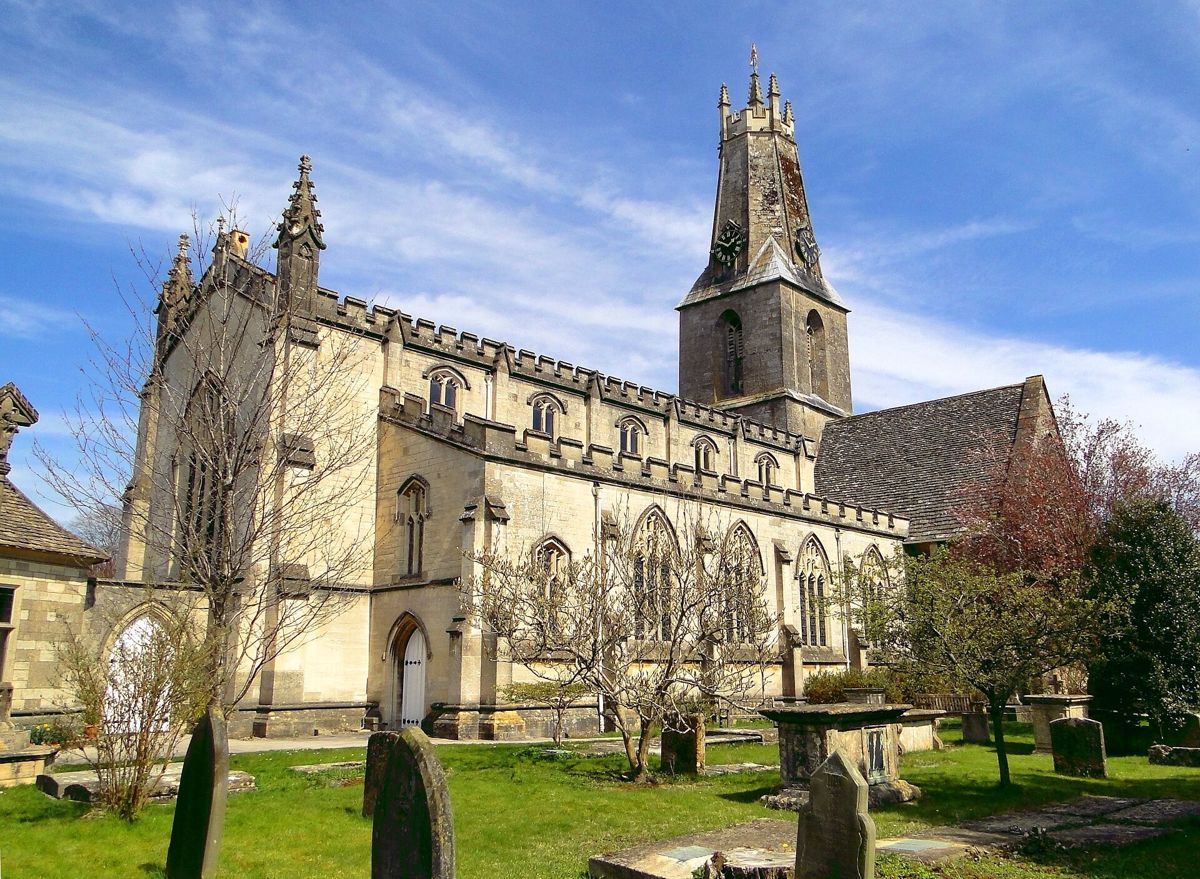
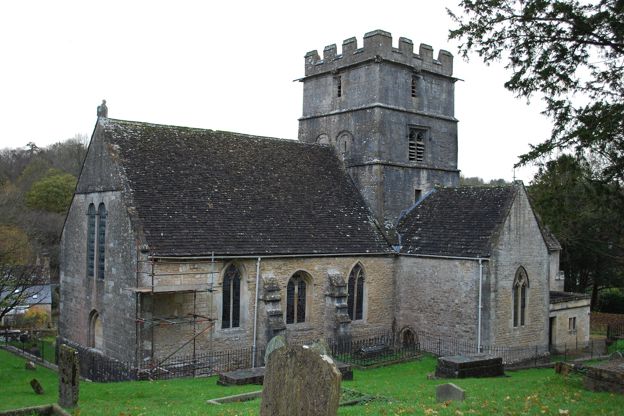
The Market Square and the common are the two things to see, and they are a ten-minute walk apart. Philip Sheppard, the lord of the manor, built the Market House in 1698 to make the town a centre for wool and yarn, and by 1702 it counted as one of the four chief wool markets of Gloucestershire, enough at first to threaten the old market at Tetbury. It is listed Grade II*, was given to the town in 1919 and restored in 1944, and the country market fills its open arcade every Wednesday from 8.30am to midday with plants, cakes and crafts. Across Bell Lane, Holy Trinity church, listed Grade I, keeps a fourteenth-century tower and transepts; the top of its spire was taken down in 1563 and the stump finished with a battlemented coronet, which is how you pick the town out from the common. The rest was rebuilt in 1842, and the astronomer James Bradley is buried in the churchyard.
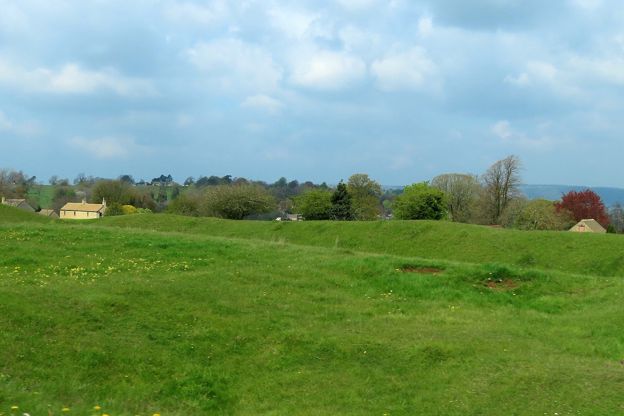
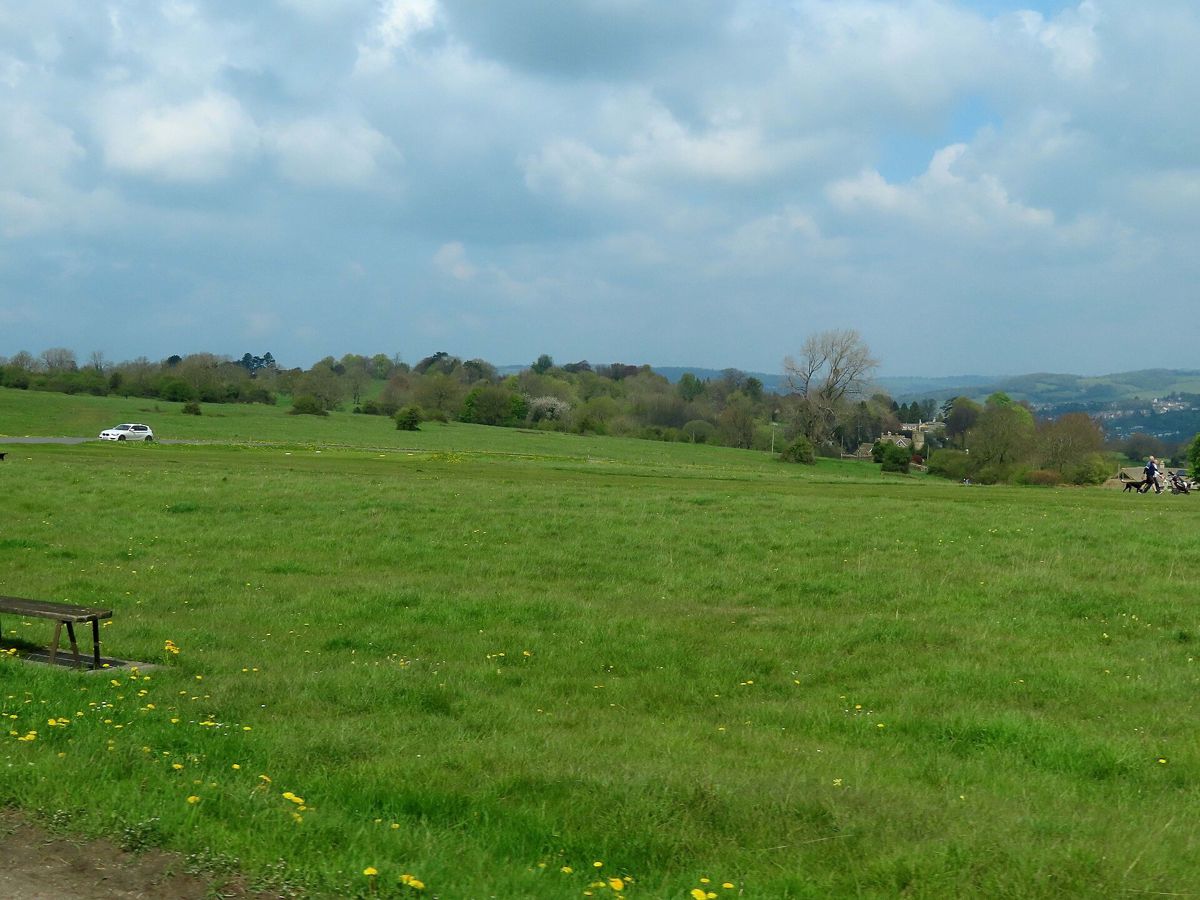
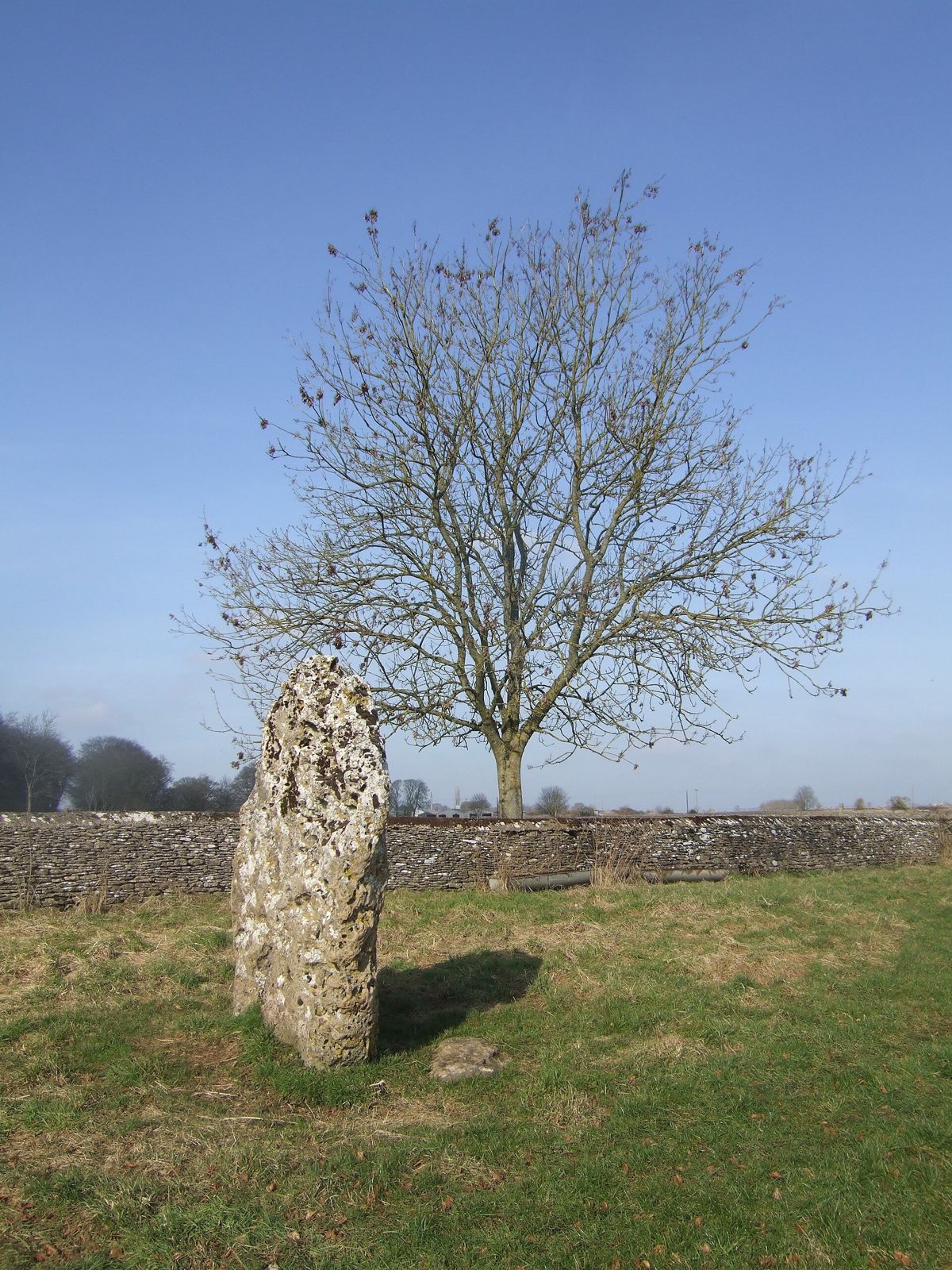
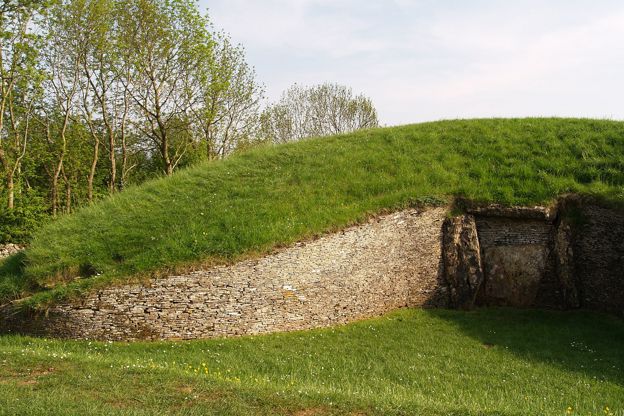
Minchinhampton Common begins at the end of Bell Lane. Its turf is a Site of Special Scientific Interest and one of the richest archaeological landscapes in the Cotswolds: the Bulwarks, a Late Iron Age bank 10m to 12m wide with its ditch, curves across it west of the town; Whitfield's Tump, a Neolithic long barrow on the north-west edge, takes its name, so tradition says, from George Whitefield preaching from it in 1743; and Historic England counts some 49 pillow mounds, 37 old quarries and 22 wartime anti-glider trenches in the grass. Tom Long's Post, the crossroads where the Tetbury road meets the roads across the common, is said to mark the burial of a suicide; the Victoria County History records it as a tradition, not a fact. Under a mile south-east of the town, beside the lane, stands the Long Stone, a pierced prehistoric standing stone up to 2.1m high; local tradition held that children passed through its holes would be cured of rickets.
A morning or a day here
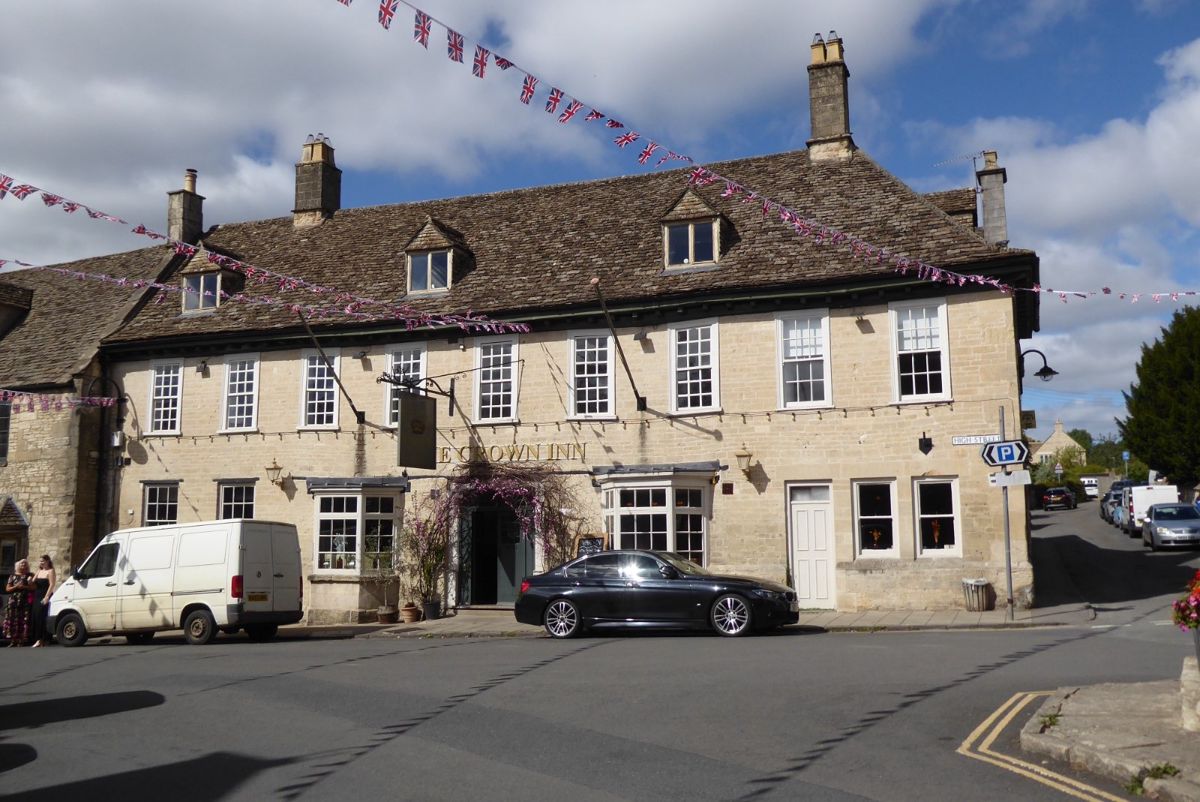
A morning is enough for the town; the common is a day. Come on a Wednesday if you can, for the market under the Market House from 8.30am. Walk round the square and up the High Street, where the Crown Inn, the town's principal inn by 1718 and once the terminus for the London coaches, is now a Young's pub, listed by CAMRA as card only. Look into Holy Trinity, then follow Bell Lane past the toilets onto the common, where the Bulwarks is the first earthwork you reach.
With a day, carry on across the common to the Old Lodge, a lodge built by the lords of the manor that became an inn by the early eighteenth century and the golf clubhouse from about 1895, and on to Amberley on the western edge, where the cottages were built on the margin of the common in the late eighteenth century and the Amberley Inn looks down the Woodchester valley. Winstone's, at Bownham on the Rodborough side, has made ice cream on the same spot since 1925 and is where every walk on the commons seems to end. Below the common at Nympsfield, Woodchester Mansion, a Grade I house left unfinished, opens on Fridays, weekends and bank holidays from Good Friday to the start of November (the 2026 season ends on 1 November), with a minibus from the National Trust's Buckholt car park when volunteers are available.
Walks from Minchinhampton
The walk to do is Minchinhampton Common and Amberley, 5 miles (8km) from the Market House, about two and a half hours, moderate and without a stile: across the common beside the Bulwarks, past the Old Lodge to Amberley, down through Houndscroft to the Bear and Winstone's, and back by Burleigh. Rodborough Common and the fort, on the next common to the north, is an easy 2 miles (3.4km), nearly level, to the battlemented folly of Rodborough Fort and back past the Bear.
For woods rather than turf, Woodchester Park and the boathouse is a 3.75-mile (6km) circuit from the National Trust car park at Woodchester Park, down past the mansion and along the chain of lakes, and Eastcombe and the Toadsmoor valley, across the Golden Valley, is a 6.5-mile figure of eight through steep beech woods. On the common itself you can wander the open turf freely, and the cattle will ignore you if you give them room.
The Cotswolds Info newsletter
Events, new places and the best of the season, about once a month. Unsubscribe at any time.
Food and drink
Minchinhampton's eating is pubs, and most of them stand on the common. The Old Lodge, in the middle of it, has six rooms and serves from breakfast at 8am until the evening every day. The Bear of Rodborough, a hotel whose oldest part is late seventeenth century, on Rodborough Common, welcomes dogs in the bar and garden. The Amberley Inn has 13 rooms over the Woodchester valley and serves dinner, with a dinner offer for guests who book direct. In the town, the Crown Inn on the High Street serves food from noon to 9pm (8pm on Sundays), with a quiz on the last Thursday of the month; the Ragged Cot on the Cirencester road at Burnt Ash, open as an inn by 1882, is close to the common and is listed by CAMRA as a free house with nine rooms. Ice cream is Winstone's. For a wider choice, Nailsworth, under 3 miles away, has the restaurants.
When to come
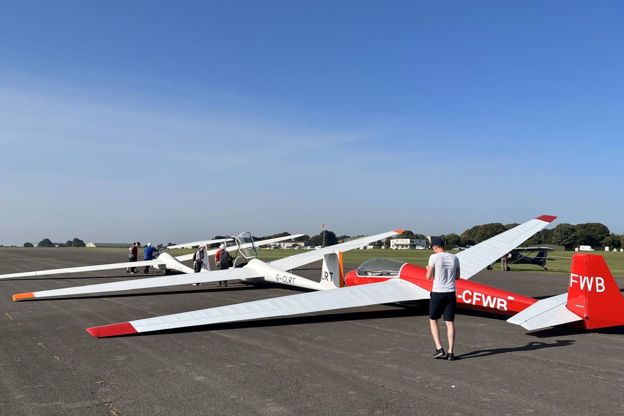
In summer, when the cattle are grazing and the common is in flower; in winter the plateau is bare and the wind comes straight across it. The National Trust manages the turf for its wild flowers and butterflies and has written about reintroducing the large blue, and asks for dogs on a short lead near the cattle and from March to August, when birds nest on the ground. Wednesday morning is market day. The town is rarely busy. Weekday evenings in late summer, when the light goes long across the Bulwarks, are the best time of all. For a view from above, the Cotswold Gliding Club at Aston Down airfield, between Stroud and Cirencester, offers air experience flights.
Last verified 1 November 2026 by our editors
Part of
Stroud and the Five Valleys
The steep valleys that meet at Stroud: old cloth-mill country, with Painswick's churchyard of yews, Nailsworth's mills and the commons above Minchinhampton.
Things to do in Minchinhampton
Historic houses and heritage · Minchinhampton
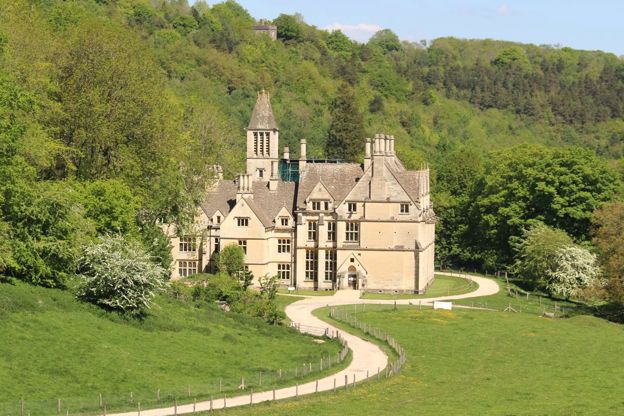
Woodchester Mansion
An unfinished Grade I house near Nympsfield, reached by minibus or a walk down a track, open Friday to Sunday from April to early November.
-
Cotswold Gliding Club
Sport and activity · Minchinhampton
One of the UK's larger gliding clubs, at Aston Down airfield between Stroud and Cirencester, offering air experience flights, motorglider flights and courses.
Verified Oct 2026
Where to stay in Minchinhampton
-
The Old Lodge
Inn · Nailsworth
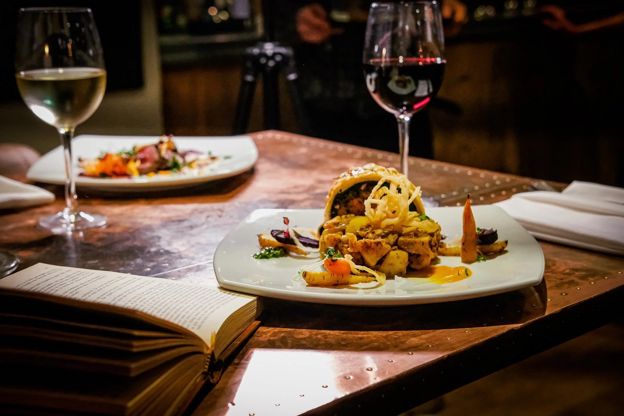
An inn with six rooms on Minchinhampton Common, about two miles by road from Nailsworth, breakfast included and food all day.
Walker-friendly
Verified Nov 2026
-
The Amberley Inn
Inn · Nailsworth
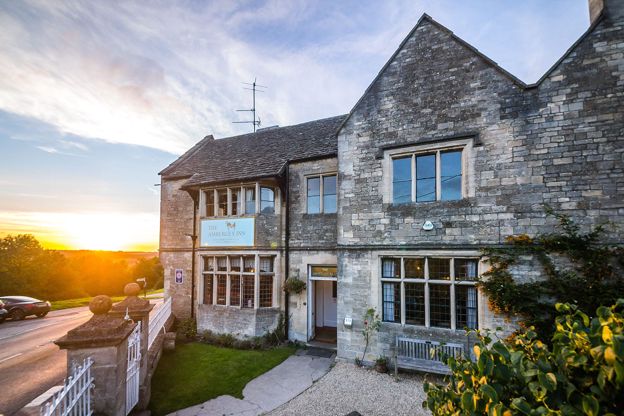
An inn with 13 en-suite rooms on the hillside above the Woodchester valley at Amberley, near Nailsworth and Stroud, which describes itself as a restored 16th-century inn.
Dog-friendly · Family-friendly
Verified Nov 2026
-
The Bear of Rodborough
Hotel · Stroud
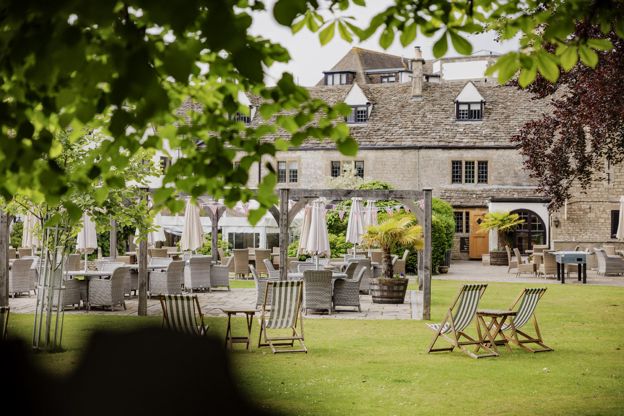
A seventeenth-century former coaching inn on the National Trust's Rodborough Common above Stroud, now a hotel in the Cotswold Inns and Hotels group, with dogs welcome.
Dog-friendly · Walker-friendly · Wedding venues
Verified Oct 2026
-
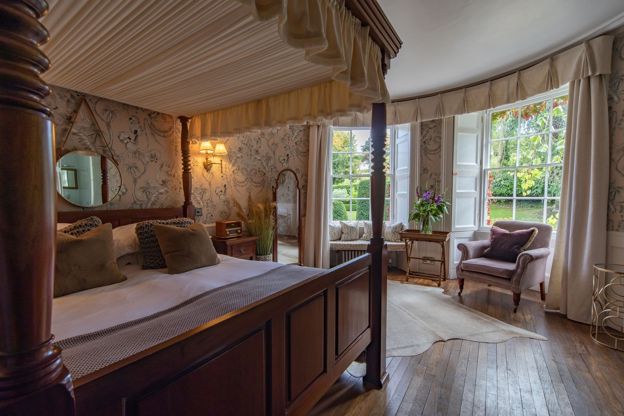
Burleigh Court
Hotel · Minchinhampton
A Grade II listed country house hotel below Minchinhampton Common, above the Golden Valley, with 18 rooms, a two-rosette restaurant and a garden spa with a sauna, hot tub and plunge pool.
Dog-friendly · EV charging · Wedding venues
Verified Oct 2026
-
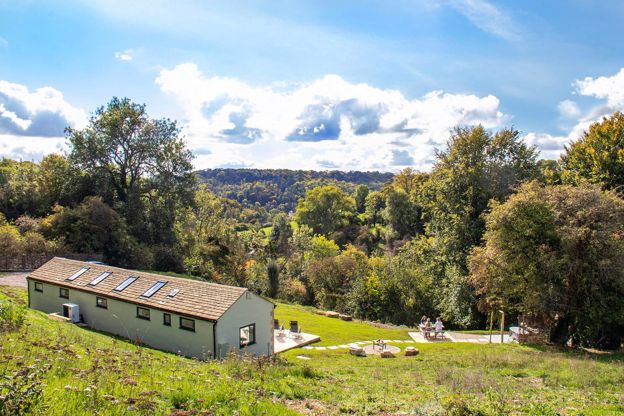
Wild View
Self-catering · Minchinhampton
A two-bedroom lodge for four in three acres of meadow at the end of a lane below Minchinhampton, with an outdoor bath, a fire pit and dogs welcome.
Dog-friendly · Family-friendly · Walker-friendly
Verified Oct 2026
-
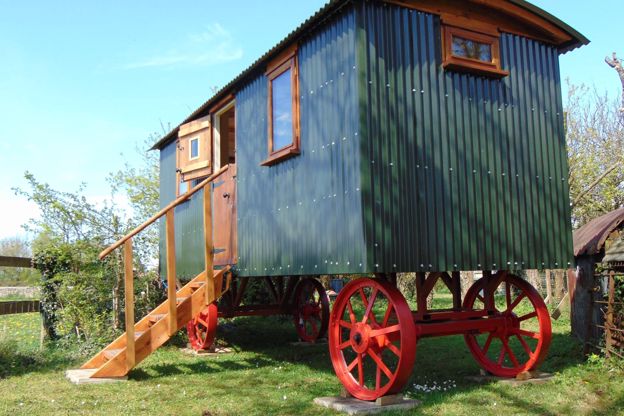
Burnt Ash Farm
Glamping · Minchinhampton
A small family-run stables a mile east of Minchinhampton with shepherd huts in an orchard and a small campsite for five caravans or motorhomes.
Family-friendly · Walker-friendly
Verified Nov 2026
Where to eat and drink in Minchinhampton
-
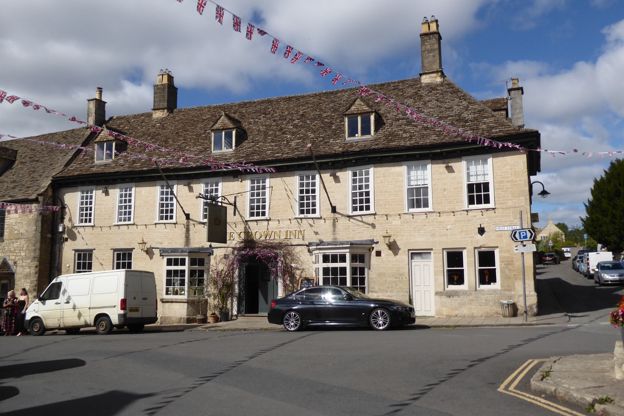
The Crown Inn, Minchinhampton
Pubs · Minchinhampton
A Young's pub in the old coaching inn on Minchinhampton's High Street, opposite the Market House, with a hidden garden, Sunday roasts and a monthly quiz.
Verified Nov 2026
-

Winstones Ice Cream, Rodborough Common
Cafes and tearooms · Minchinhampton
A family ice cream maker on the edge of Rodborough Common since 1925, whose parlour is open every day with 18 flavours, waffles, coffee and ice cream for dogs.
Dog-friendly · Family-friendly
Verified Oct 2026
-
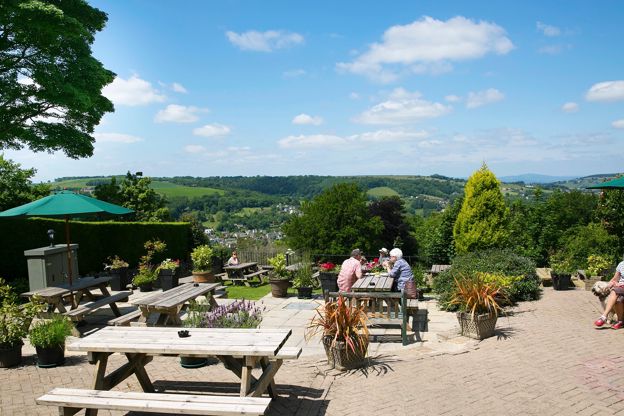
The Black Horse, Amberley
Pubs · Amberley
A traditional pub at Littleworth on the edge of Minchinhampton Common, with a conservatory looking across the valley, over 70 whiskies and food every day; children, dogs and muddy boots welcome.
Dog-friendly · Family-friendly · Walker-friendly
Verified Nov 2026
Walks in and around Minchinhampton
-
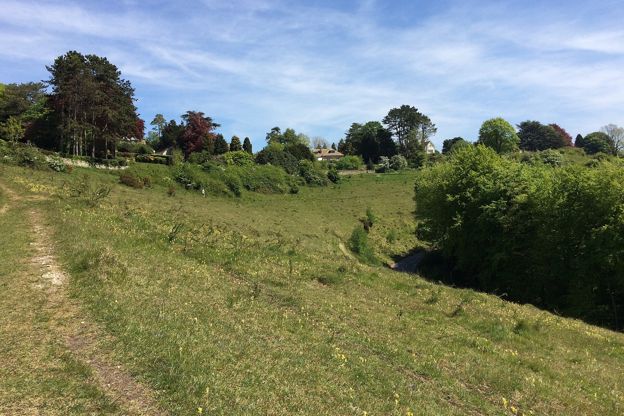
Rodborough Common and the fort
Walk · Starts in Stroud and the Five Valleys · 45 mins · Circular · Dog-friendly
A 2-mile (3.4km) circular walk on Rodborough Common above Stroud, easy, nearly level and about 45 minutes: up to the battlemented folly of Rodborough Fort, down the open western edge, and back past the Bear and an ice-cream stop. Grassy, and grazed by cattle.
-
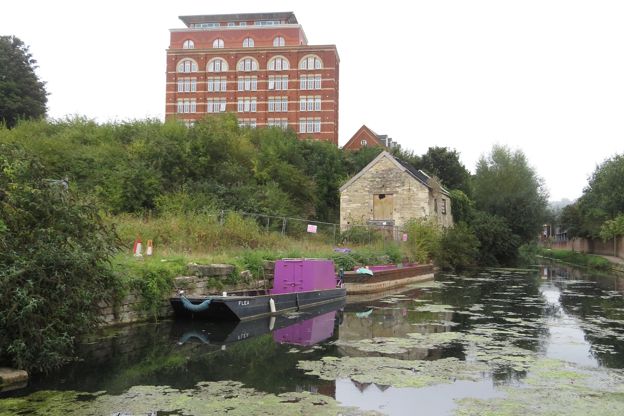
Stroud, Capel's Mill and Rodborough Common
Walk · Starts in Stroud · 1 hr, 30 mins · Circular
A 3-mile (5km) circular walk from the Subscription Rooms in Stroud, graded strenuous, of about an hour and a half: along the Frome Banks to the Capel's Mill viaduct, up over Rodborough Common past the fort, down through Butterow and back along the canal towpath.
Sights in and around Minchinhampton
-
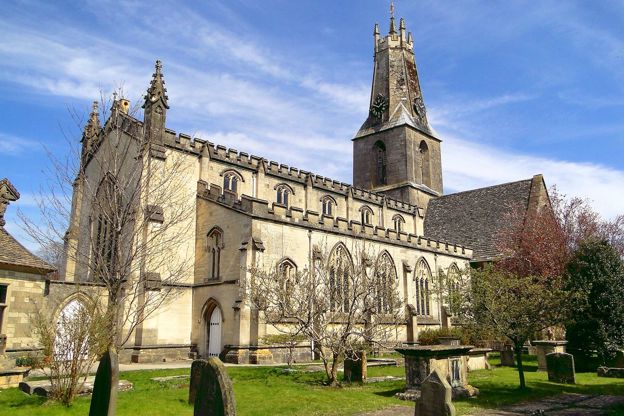
Holy Trinity Church, Minchinhampton
Sight · Church · Minchinhampton
Holy Trinity is Minchinhampton's Grade I parish church, known for its fourteenth-century tower whose spire was cut short in 1563 and crowned with a stone coronet, a south transept lit by a great rose window, and the grave of the astronomer James Bradley.
-
Market House, Minchinhampton
Sight · Historic building · Minchinhampton
Minchinhampton's Market House was built in 1698 by the lord of the manor, Philip Sheppard, for the wool and yarn trade: an open arcade on stone piers with a hall above. Listed Grade II*, it still holds a country market on Wednesday mornings.
-
Minchinhampton Common
Sight · Common or park · Minchinhampton
Minchinhampton Common is a wide sweep of limestone grassland above Stroud and Nailsworth, in the care of the National Trust since 1913, where commoners' cattle graze and an Iron Age bank, a long barrow, pillow mounds and wartime trenches lie in the turf. Free to wander.
Stories about Minchinhampton
-
Free things to do in the Cotswolds
Story · Guides · 11 minute read
Free things to do in the Cotswolds: open commons and viewpoints, Neolithic tombs and hill forts, ruins, wool churches, free museums in Malmesbury, Stroud, Woodstock and Burford, the Cotswold Way and Blenheim's public footpaths.
-
Pig Face Day at Avening
Story · Strange Things · 4 minute read
Every other September, Avening carries a pig's head in procession, a feast its legend ties to Queen Matilda, a spurned Saxon lord and the founding of its church.
-
The Cotswolds in November
Story · Guides · 8 minute read
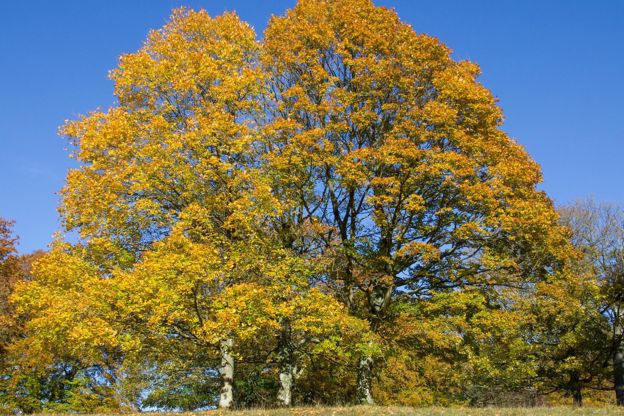
The Cotswolds in November: the wettest month and one of the quietest, the last of the beech colour, the November Meeting at Cheltenham, the light trails and late-night shopping that start Christmas, what stays open in winter, firm walks for wet weather and inns with fires.
Getting to Minchinhampton
- By bus
- Stagecoach West's 620 runs from Stroud (Merrywalks) through Minchinhampton and Avening to Tetbury and Bath seven times a day, Monday to Saturday, none on Sundays; the 128 once each way on schooldays.
- By train
- Stroud station is about 4 miles away; take the 620 from Merrywalks. On a Sunday the 63 to Nailsworth, every two hours, is the nearest you get, then a steep climb of under 3 miles to the town.
- By car
- Off the A419 at Brimscombe or the A46 at Nailsworth, both by roads that cross the common; drive slowly, cattle wander onto the roads.
- Parking
- Free, the parish council says. Friday Street (GL6 9JL) is long stay, 33 bays, 23-hour limit; the National Trust car parks on the common open dawn to dusk.
Access
On the common the National Trust's Reservoir car park is on level ground, with no marked bays, and the land beside it suits wheelchairs; Friday Street car park has no disabled bays, but Blue Badge holders may park free in any Stroud District Council bay
| Nailsworth | 2.5 mi |
|---|---|
| Stroud station | 3.7 mi |
| Tetbury | 6.2 mi |
| Cirencester | 10.6 mi |
| Kemble station | 12.4 mi |
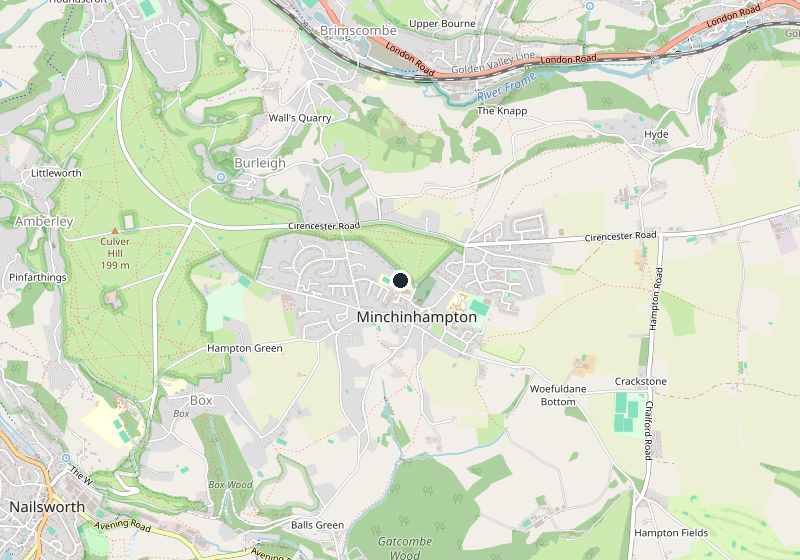
Places near Minchinhampton
-
 NailsworthA small valley town 4 miles south of Stroud with old cloth mills, independent shops and some of the best food in the Cotswolds, a 1952 clock tower, a level railway path to Stroud and the commons on the hill above.
-
 StroudThe cloth town where five valleys meet, with a Saturday farmers' market, a free museum in Stratford Park, a canal coming back to life and Laurie Lee's Slad next door.
-
 TetburyA wool market town with a Market House on stone pillars, a Georgian Gothic church, Highgrove's gardens nearby and Westonbirt Arboretum 3 miles away.