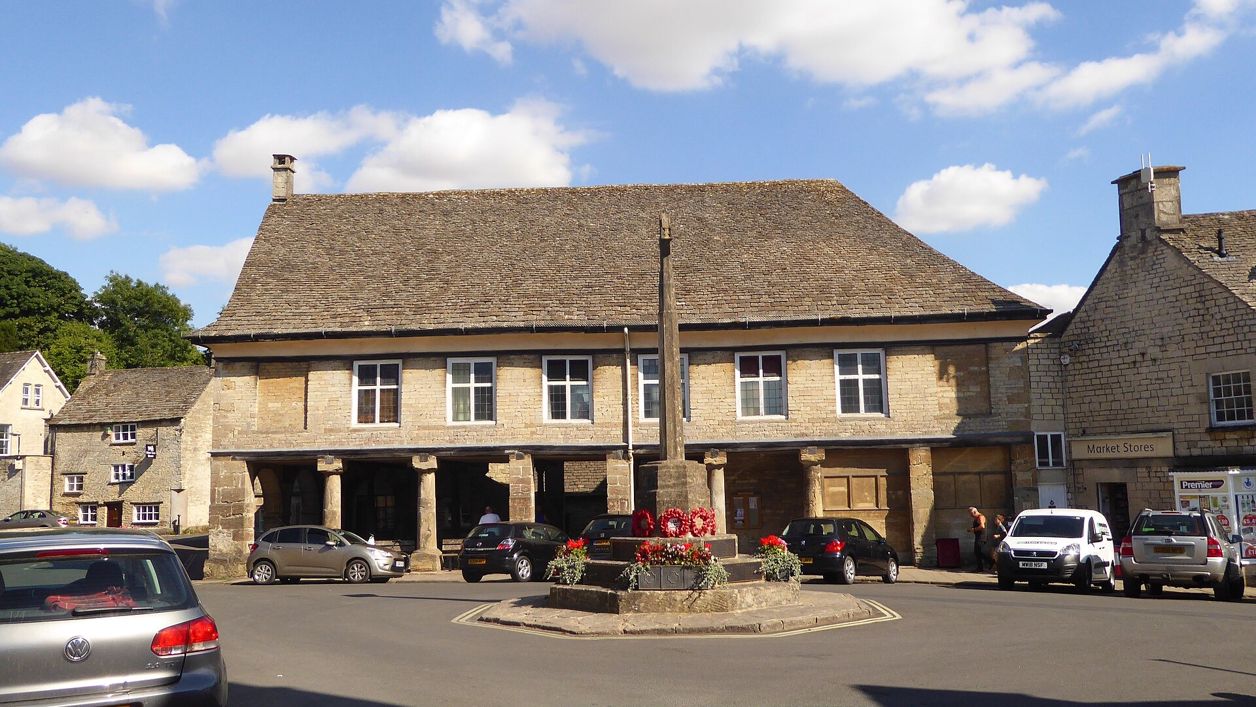
Ethan Doyle White, CC BY-SA 4.0, via Wikimedia Commons
Market House, Minchinhampton
Minchinhampton's Market House was built in 1698 by the lord of the manor, Philip Sheppard, for the wool and yarn trade: an open arcade on stone piers with a hall above. Listed Grade II*, it still holds a country market on Wednesday mornings.
Historic building
MinchinhamptonThe Market House stands on the south-east side of the Market Square in Minchinhampton. A datestone gives 1698, when the lord of the manor, Philip Sheppard, built it for the town's wool and yarn market. It is an open arcade on stone piers with a long hall above, listed Grade II*, and it still holds a market every Wednesday.
History
The Market House was built to serve a market that was already old. The nuns of Caen, who held the manor, had by 1269 a grant of a weekly market on Tuesdays and a yearly fair at Trinity, and the market rights passed with the manor to Syon Abbey, the Windsor family and, in 1656, to Samuel Sheppard. His son Philip put up the present building in 1698. An archaeological watching brief in 2022 found the walls and plastered cellars of older buildings beneath it, demolished and filled in to make room, and the archaeologists' report counts it the town's third market house, after two that stood in the middle of the High Street at Upper and Lower Island. The report also notes how closely it resembles the pillared market house at Tetbury, built in 1655, a little over forty years earlier.
The wool market
The new building did its job. By 1702 Minchinhampton was reckoned one of the four chief wool markets of Gloucestershire. The trade did not last: Tetbury took the lead as the wool market of the district, and the Market House lost its first purpose.
Plays, Quakers and a school
It found others. In 1732 the Bath Company of Comedians played three plays in the hall, and local tradition says Sarah Siddons once acted here; that is not confirmed, but her portrait hangs in the main hall. The Quakers were given leave to worship in it in 1746, and when the vestry took up a fire engine in 1755 it was first kept under the Market House. From 1816 to 1868 the Lancasterian School met here; David Ricardo, the lord of the manor, set it up and paid for poor children's schooling until his death in 1823. Gas came to the town in 1850, and with it events that could run into the evening.
The town's hall
After the First World War the building passed from the Ricardos to the people of the parish, around 1920. A memorial panel to the dead of the First World War was added in 1921 and one for the Second in 1950. The listing records a restoration in 1944, and the trust a renovation in 1975. Since 1979 it has been run as a charitable trust: the parish council holds it as custodial trustee, and a committee of management runs it. The square itself changed in the same years: the Lower Island, the last block of buildings standing in the market place, was cleared in 1919 and the war memorial put in its place.
What to see
The ground floor is the old market: eight bays by two. It stands on circular stone piers, many since replaced by square ones, with two open round arches at the north-east end and a row of bulbous timber balusters down the middle carrying the beams of the floor above. At the north-east end look for the datestone and a panel setting out the charges made by the lord of the manor for using the market. The enclosed part at the south-west end carries the war memorial inscription. Above is the meeting hall, lit by timber cross windows and reached by stone steps at the back. The iron railings round the arcade and its floor of Pennant sandstone flags are thought to date from 1858, when a later David Ricardo, then lord of the manor, paved the town's streets to mark his son's wedding.
Visiting
The arcade is open to the street and can be seen at any time for nothing. The best time to come is a Wednesday morning, when the country market fills it from 8.30am to noon with plants, cakes, crafts and home-made food. The hall upstairs opens for events and private hire, which the Market House trust lists on its own site. Public toilets are on Bell Lane, by Holy Trinity Church, a minute away.
Getting there
The Market House is in the middle of the town. The Friday Street car park at Parsons Court (GL6 9JL) is the nearest council car park, a few minutes' walk. The 620 bus from Stroud to Tetbury and Bath stops in the Market Square six or seven times a day each way, Monday to Saturday, with no Sunday service. On foot, the square is the natural starting point for a walk out onto Minchinhampton Common.
Nearby
Holy Trinity Church, with its stone coronet and rose window, is round the corner, and the Sheppards who built the Market House have their monuments inside. West of the town are the Iron Age Bulwarks and the open common, with the Old Lodge for a drink; south-east is the Long Stone. Our guide to Stroud and the Five Valleys covers the wool towns of the valleys below.
Stay and eat near Market House, Minchinhampton
-
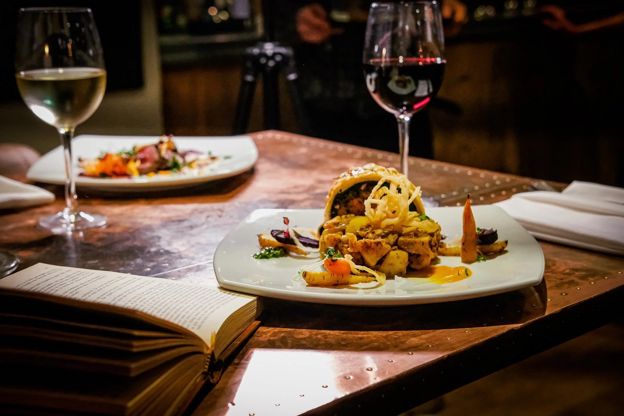
The Old Lodge
Inn · Nailsworth
An inn with six rooms on Minchinhampton Common, about two miles by road from Nailsworth, breakfast included and food all day.
Walker-friendly
Verified Nov 2026
-
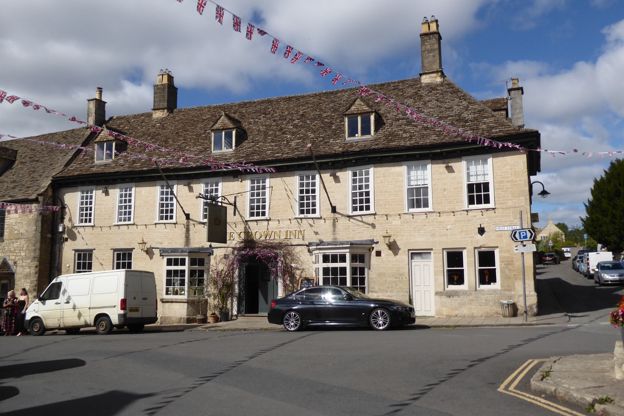
The Crown Inn, Minchinhampton
Pubs · Minchinhampton
A Young's pub in the old coaching inn on Minchinhampton's High Street, opposite the Market House, with a hidden garden, Sunday roasts and a monthly quiz.
Verified Nov 2026
-
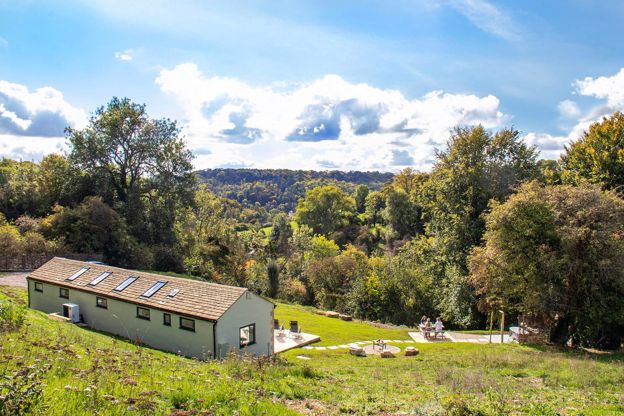
Wild View
Self-catering · Minchinhampton
A two-bedroom lodge for four in three acres of meadow at the end of a lane below Minchinhampton, with an outdoor bath, a fire pit and dogs welcome.
Dog-friendly · Family-friendly · Walker-friendly
Verified Oct 2026
Stories about Market House, Minchinhampton
-
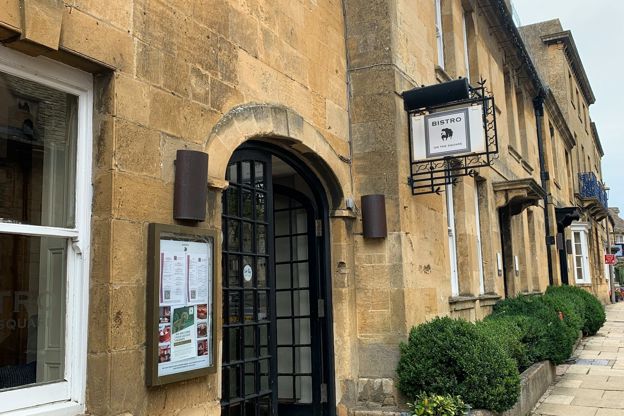
Why Cotswold stone is golden
Story · History · 9 minute read
The Jurassic limestone that built the Cotswolds, the iron that colours it honey in the north and grey in the south, the quarries at Taynton, Barrington, Guiting and Painswick, the stone slate roofs and the dry-stone walls, and where to see each.
More sights to see
-
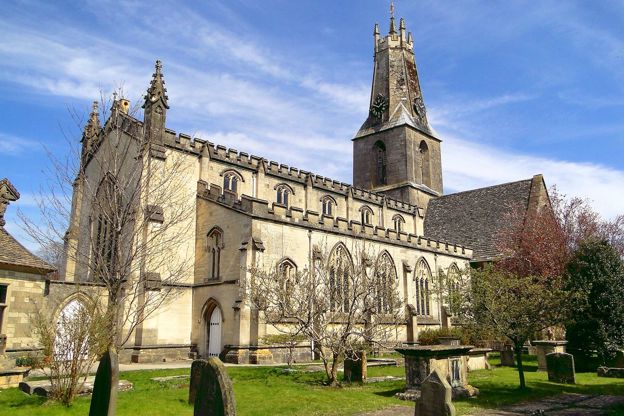
Holy Trinity Church, Minchinhampton
Sight · Church · Minchinhampton
Holy Trinity is Minchinhampton's Grade I parish church, known for its fourteenth-century tower whose spire was cut short in 1563 and crowned with a stone coronet, a south transept lit by a great rose window, and the grave of the astronomer James Bradley.
-
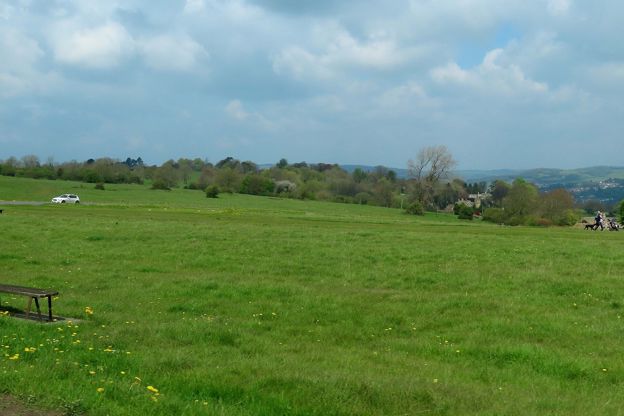
Minchinhampton Common
Sight · Common or park · Minchinhampton
Minchinhampton Common is a wide sweep of limestone grassland above Stroud and Nailsworth, in the care of the National Trust since 1913, where commoners' cattle graze and an Iron Age bank, a long barrow, pillow mounds and wartime trenches lie in the turf. Free to wander.
-
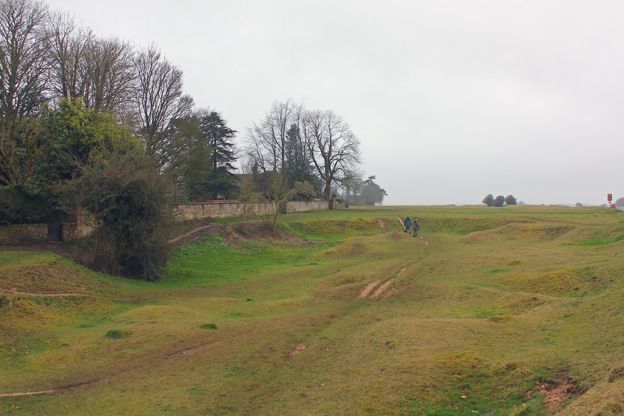
The Bulwarks, Minchinhampton
Sight · Hill fort or barrow · Minchinhampton
The Bulwarks is a Late Iron Age bank and ditch that sweeps across Minchinhampton Common north and north-west of the town: a bank 10m to 12m wide with a stone face, dated by pottery found in the 1937 excavation. It lies on free National Trust common land.