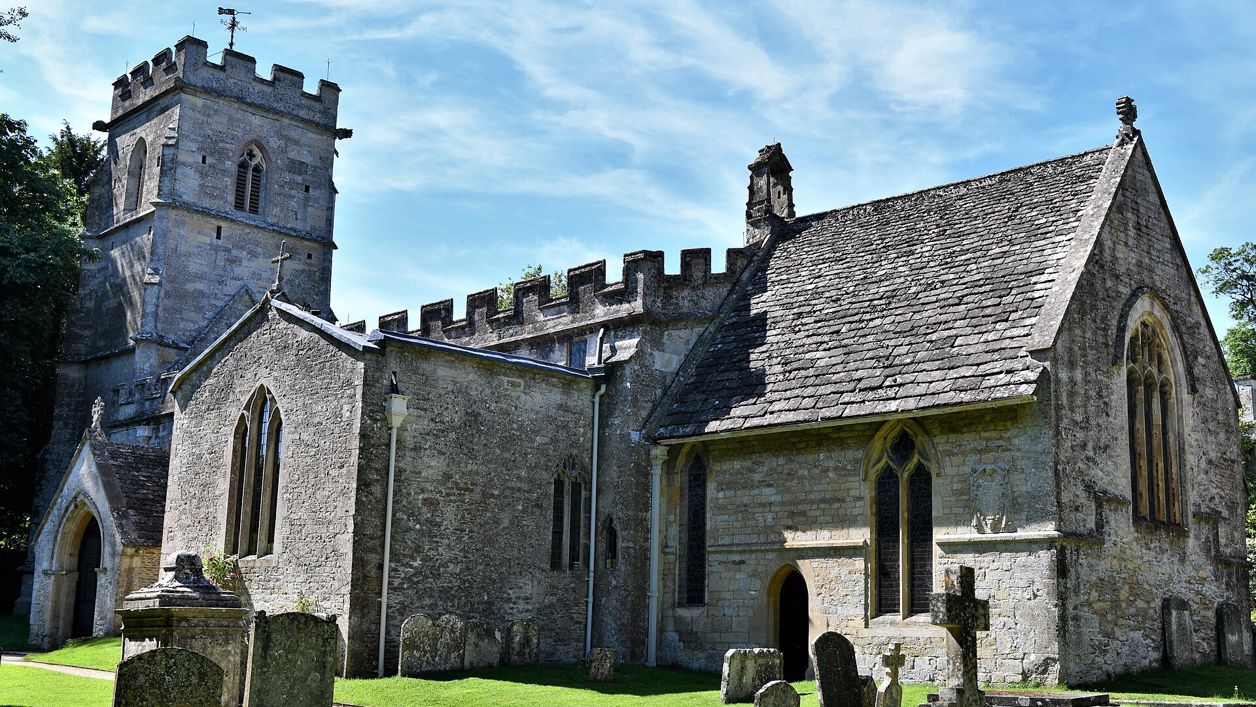
Michael Garlick, CC BY-SA 2.0, via Wikimedia Commons
Ampney Crucis
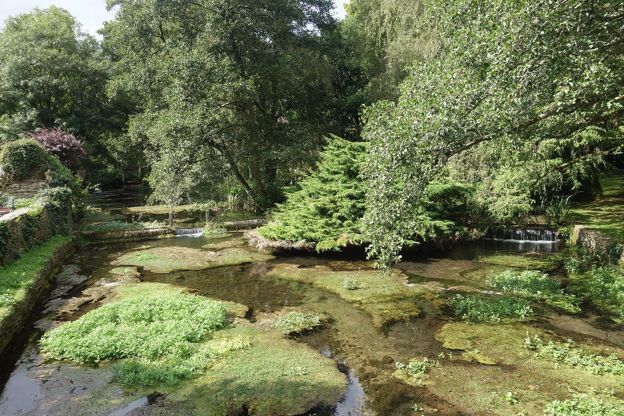
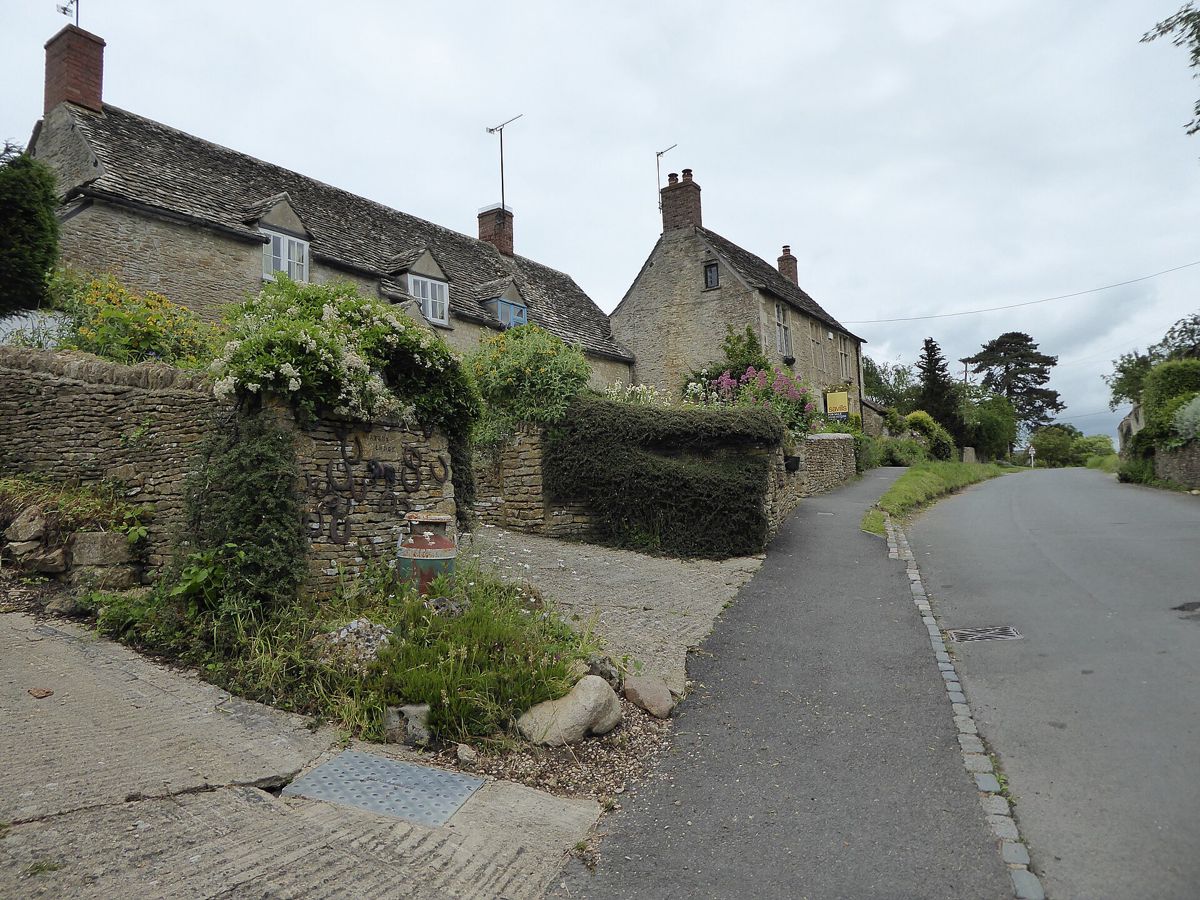
A village on the Ampney Brook 4 miles east of Cirencester, with Holy Rood church, its Grade I medieval churchyard cross and its wall paintings, an old coaching inn by the water and two smaller Ampneys a mile or so away.
- Nearest station
- Kemble, 9 miles, then the 882 bus to Cirencester and the 76 or 77 on to the village
- Parking
- No public car park; park on the village street, or ask at the Crown at Ampney Brook if eating there (Wild Thyme & Honey lists free parking on Booking.com)
- Best time
- Spring, for the full brook and the churchyard; a weekday for the church
- When it's busy
- Rarely busy
- Toilets
- None in the village; the nearest public toilets are in Cirencester, Forum car park (50p, 8am to 7pm in summer, 6pm in winter)
- Dogs
- Well-behaved dogs are welcome at the Crown at Ampney Brook, and Wild Thyme & Honey has pet-friendly rooms (£35 a stay); on leads on the lanes between the Ampneys, which have no pavements
About Ampney Crucis
Ampney Crucis is the first village east of Cirencester on the Fairford road, 4 miles (6km) out, where the Ampney Brook crosses under the A417 by a coaching inn. The street runs north from there, away from the traffic, and the church sits off it on its own with its medieval cross. Three Ampneys stand a mile or so apart along the brook, and together they make a morning that nobody on the way to Bibury stops for.
What to see
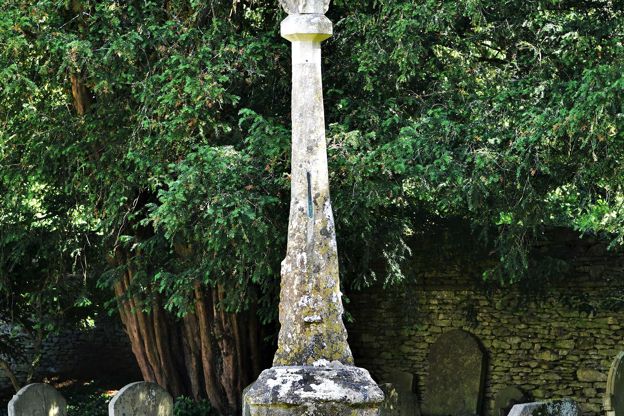
The churchyard cross (opens in a new tab) is listed Grade I. It is late fourteenth or early fifteenth century: two square steps, a base rising to an octagon, a shaft carved with leaves, and at the top a gabled head with a figure on each face, the Virgin and Child to the west, St Laurence to the south, the Crucifixion to the east and, to the north, Robert FitzHamon, the Norman lord who founded Tewkesbury Abbey. The head was found in 1860 hidden in the church's old rood stair and set back in its place on the shaft; the parish council's history of the church says it had been walled up there to save it from the iconoclasts of the seventeenth century.
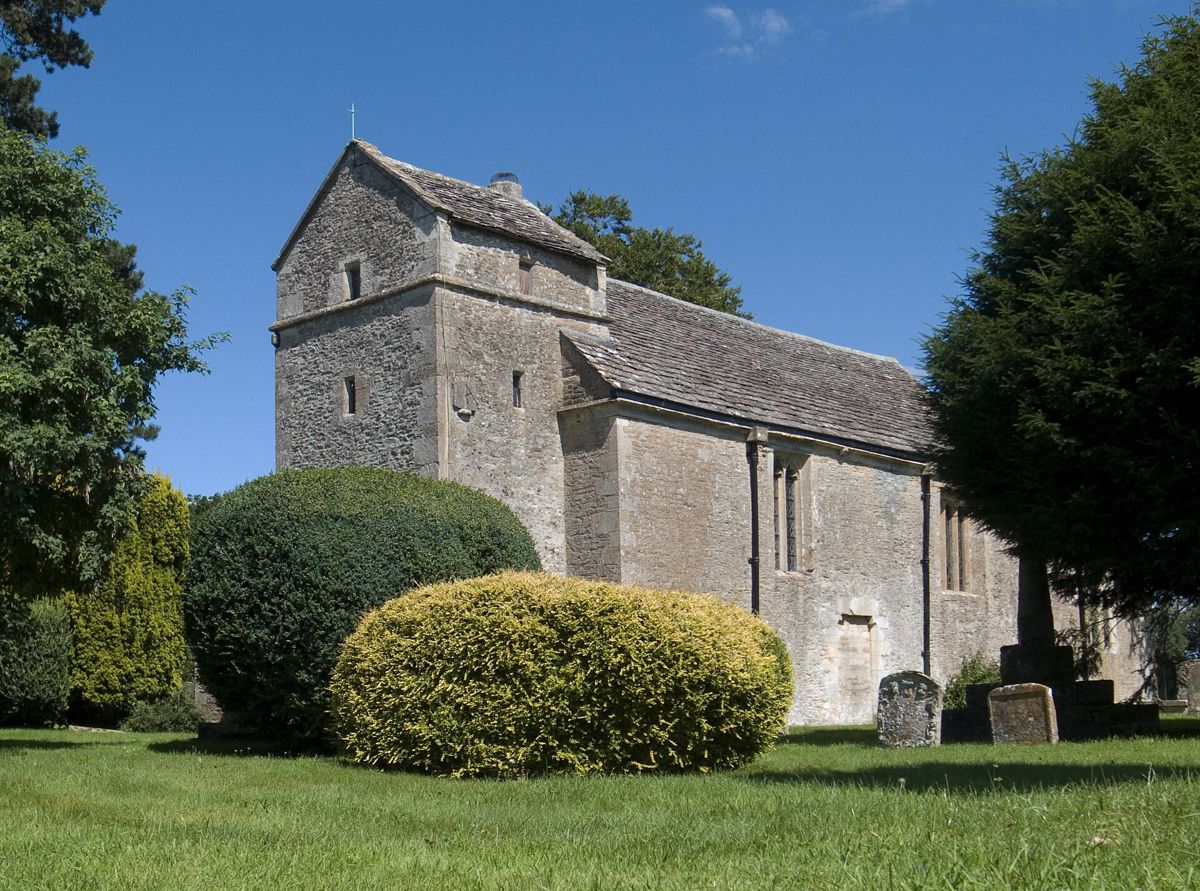
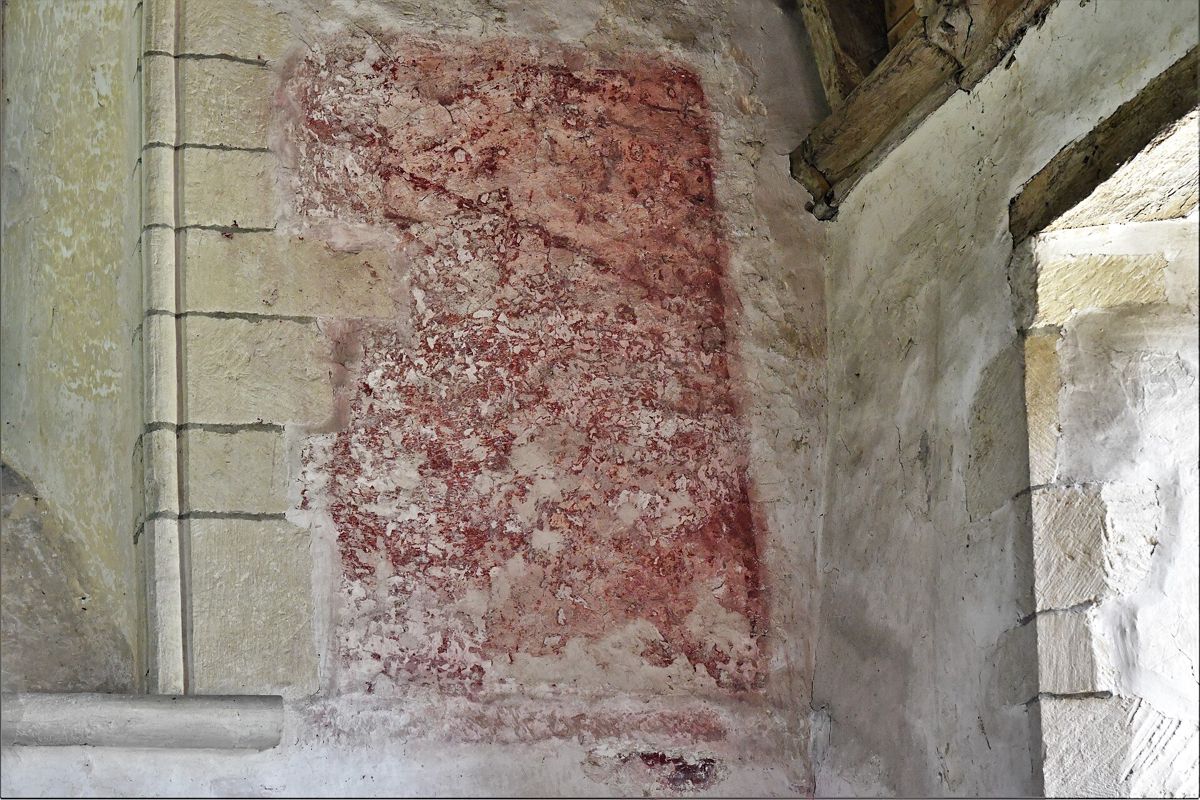
Holy Rood (opens in a new tab) itself is Saxon in foundation, with a blocked Saxon doorway in the north wall between two single-light Norman windows, a plain Norman font, a fifteenth-century tower and a Perpendicular stone pulpit. In the north transept are the remains of fourteenth-century wall paintings round the windows, and the tomb of George Lloyd and his wife, dated 1584 on the list entry, two effigies under a canopy on fluted columns. The church was restored in 1870. It is Grade I too.
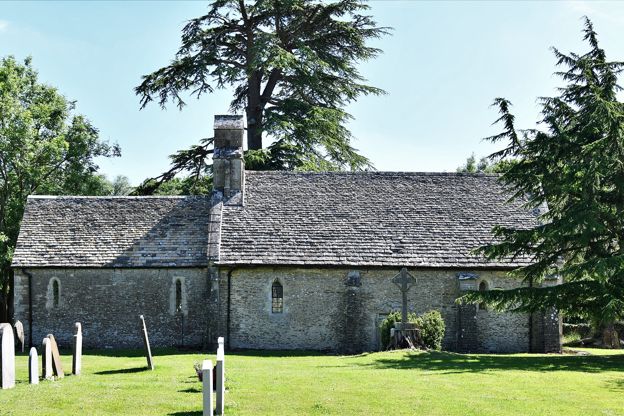
The other two Ampneys are a mile or so east. St Mary's, Ampney St Mary (opens in a new tab), stands alone in a field by the A417, because its village was abandoned after the Black Death and grew again on the far side of the road at Ashbrook; it has a Norman doorway carved with a lion and wall paintings from the twelfth to the fifteenth century, St Christopher and St George among them. St Peter's, Ampney St Peter (opens in a new tab) is late Saxon in origin, with an early Saxon carving on its north wall and an 1878 restoration by George Gilbert Scott. Both are small, and both are better than their size.
A morning in the Ampneys
Leave the car by the Crown at Ampney Brook or on the village street and walk up to Holy Rood, five minutes. Take the cross first, walking round it to find the four figures, then the church for the Lloyd tomb and the paintings. Back at the brook, follow the lane east to Ampney St Peter, a mile, for the Saxon carving, then cross the A417 with care to St Mary's in its field. Lunch at the Crown, and you have seen three Norman or older churches before two o'clock. The Red Lion at Ampney St Peter is a listed pub with a rare early tap room, open Thursday to Saturday evenings only, 5.30pm to 10.30pm, so it is no help for lunch.
Walks
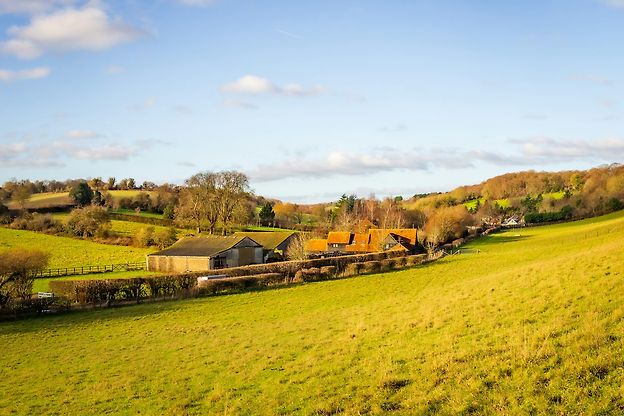
We have no walk of our own here yet. The lanes between the three Ampneys make an easy 3 miles, flat and mostly quiet once you are off the main road, and the Roman Akeman Street, which has a listed milestone on its line in the parish, runs north-east towards the Coln. For a proper walk, Cirencester Park is 4 miles west and the Coln St Aldwyns and Bibury loop about 6 miles north-east.
The Cotswolds Info newsletter
Events, new places and the best of the season, about once a month. Unsubscribe at any time.
Food and drink
The old coaching inn on the A417 by the brook, sixteenth century in origin by its own account, now trades as the Crown at Ampney Brook, the pub and restaurant of the Wild Thyme & Honey hotel, which has bedrooms; CAMRA's listing gives its old name, the Crown of Crucis. It serves every day from breakfast at 8am through to dinner, and it is the one place to eat in the village. The Red Lion at Ampney St Peter is a listed village pub, open Thursday to Saturday, 5.30pm to 10.30pm. We found no village shop; Cirencester, 4 miles, has everything.
When to come
Any season; the churches do not change and the village is never busy. Spring brings the brook up and the churchyard into leaf, and a weekday is quietest. The Ampneys are on the road to Fairford and Lechlade rather than to Bibury, which is why they are quiet, and why they are in our guide to the Cotswolds without the crowds. The 76 and 77 buses run from Cirencester Monday to Saturday only, and the little 50 loops out on weekdays. In summer, Poulton Hill Estate, a small family vineyard at Poulton, between Cirencester and Fairford, runs vineyard tours, with tastings in winter.
Last verified 1 November 2026 by our editors
Part of
Cirencester and the Coln Valley
Cirencester, the Roman town of Corinium, and the River Coln running past Bibury, Coln St Aldwyns and Fairford to meet the Thames by Lechlade.
Things to do in Ampney Crucis
Tours and experiences · Ampney Crucis
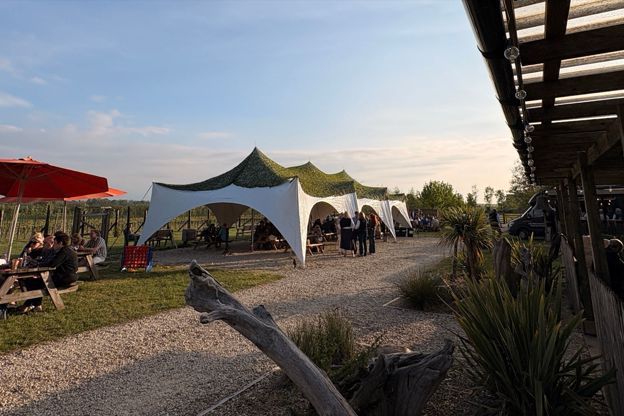
Poulton Hill Estate
A small family vineyard at Poulton, between Cirencester and Fairford, planted in 2010, with summer vineyard tours, winter tastings and a cellar door shop.
Where to stay in Ampney Crucis
-
THE PIG-in the Cotswolds
Hotel · Barnsley
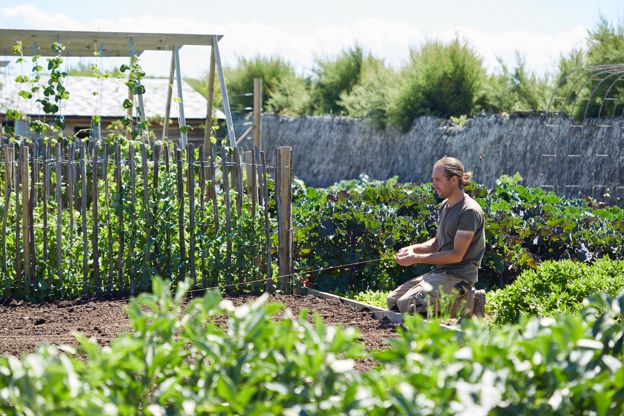
Barnsley House, the 17th-century house with Rosemary Verey's garden, now a 24-bedroom hotel in the PIG group, with a kitchen-garden restaurant and a spa, four miles from Cirencester.
Verified Nov 2026
-
The Village Pub
Inn · Cirencester
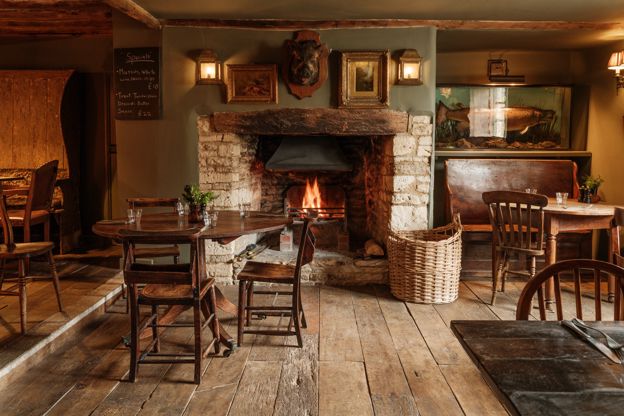
A pub with six bedrooms in the eaves at Barnsley, about four miles from Cirencester, part of THE PIG group, with gravity-fed ales and steak night on Thursdays.
Dog-friendly
Verified Oct 2026
-
Cotswold Hare
B&B · Cirencester
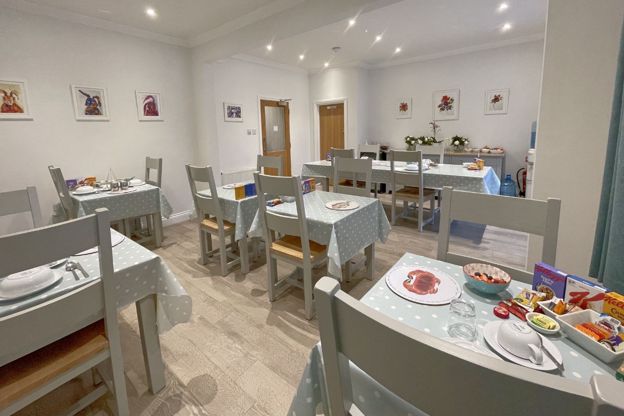
A bed and breakfast with seven en suite rooms on Victoria Road, Cirencester, with a parking space for every room, for adults and children over ten.
Verified Nov 2026
Where to eat and drink in Ampney Crucis
-
The Crown at Ampney Brook
Restaurants · Ampney Crucis
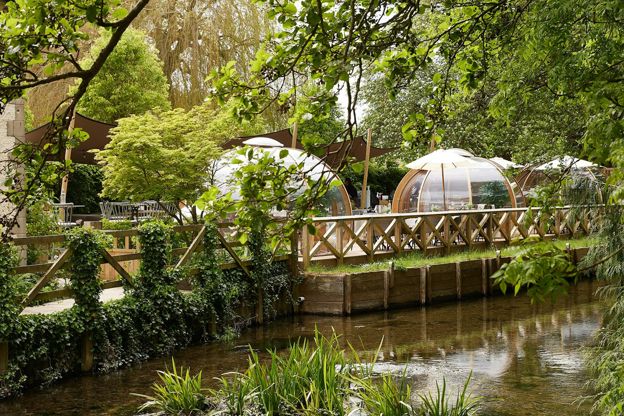
The pub and restaurant of Wild Thyme & Honey at Ampney Crucis, a sixteenth-century coaching inn by the Ampney Brook, formerly the Crown of Crucis, open from breakfast to dinner.
Dog-friendly · Wedding venues
Verified Nov 2026
Walks in and around Ampney Crucis
-
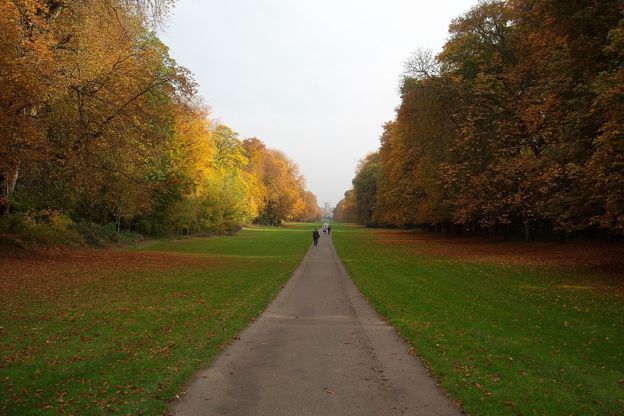
Cirencester Park, Pope's Seat and Stratton
Walk · Starts in Cirencester · 2 hrs · Circular
A 5-mile (8km) circular walk from Cirencester's parish church, easy and taking one and a half to two hours: up Cecily Hill and a mile along the Broad Ride to Pope's Seat, past the polo grounds to Stratton, and back by the streams past the open-air pool.
-
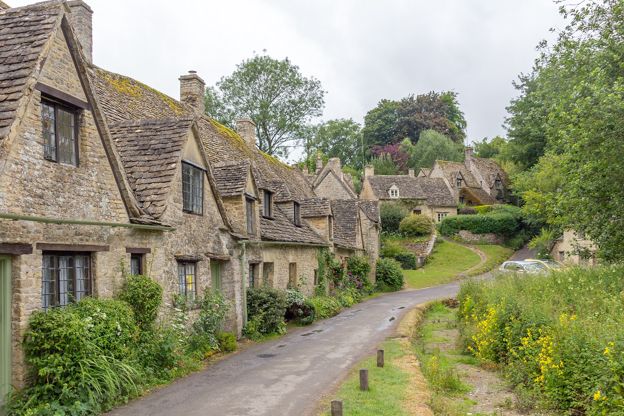
Bibury and Ablington
Walk · Starts in Bibury · 1 hr, 45 mins · Circular
A 5-mile (8.2km) circular walk from Arlington Row in Bibury, an hour and a half to two hours of moderate walking with a few stiles. It goes up Packhorse Lane and the Salt Way over open wold, down to Ablington and its Elizabethan manor, and back beside the River Coln.
-
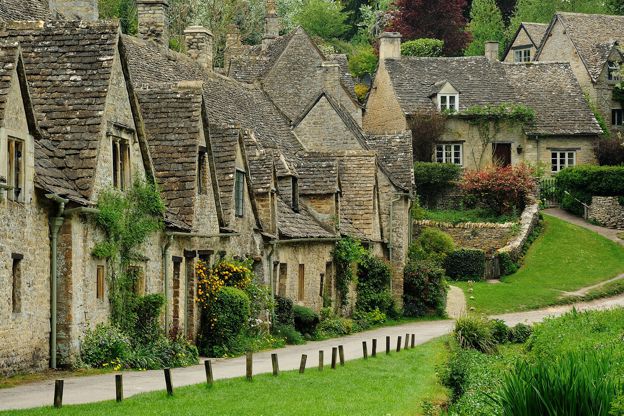
Bibury, Oxhill Wood and Akeman Street
Walk · Starts in Bibury · 1 hr, 45 mins · Circular · Dog-friendly
A 4-mile (6.6km) circular walk from the bridge by the Swan in Bibury, an hour and a half to two hours with a few short, steep climbs. It goes out by the church and up above the Coln to Oxhill Wood, along the line of the Roman Akeman Street and back over farmland to Arlington Row.
Sights in and around Ampney Crucis
-
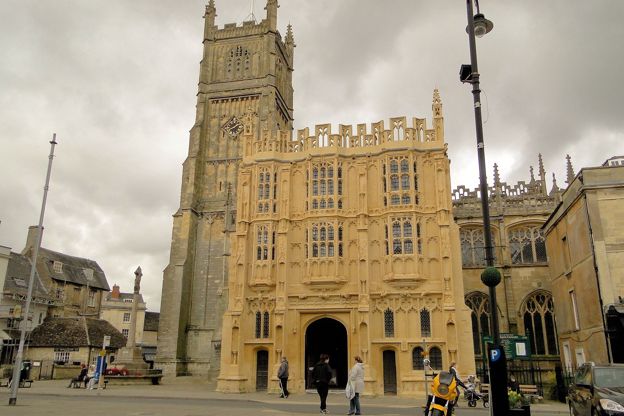
St John the Baptist, Cirencester
Sight · Church · Cirencester
Cirencester's great wool church on the Market Place, free to visit: a fifteenth-century tower you can climb on set Saturdays, a three-storey porch of about 1490 that served as the town hall, fan vaults, medieval glass and the Boleyn Cup. Grade I.
Getting to Ampney Crucis
- By bus
- The 76 and 77 (Stagecoach West, Cirencester to Highworth via Fairford) stop here Monday to Saturday, about 7 minutes from the Forum; the 50 (Cotswold Green) loops out on weekdays. No Sundays.
- By train
- Kemble is the nearest station, 9 miles; take the 882 bus or a taxi to Cirencester for the 76 or 77.
- By car
- On the A417 Cirencester to Fairford road, 4 miles from Cirencester. Park considerately on the village street north of the main road, or ask at the Crown at Ampney Brook if you are eating there.
Access
The village street is level; we have not confirmed step-free access to the church
| Cirencester | 3.7 mi |
|---|---|
| Fairford | 5.9 mi |
| Bibury | 8.7 mi |
| Kemble station | 9.3 mi |
| Lechlade | 9.9 mi |
| Cheltenham | 18.6 mi |
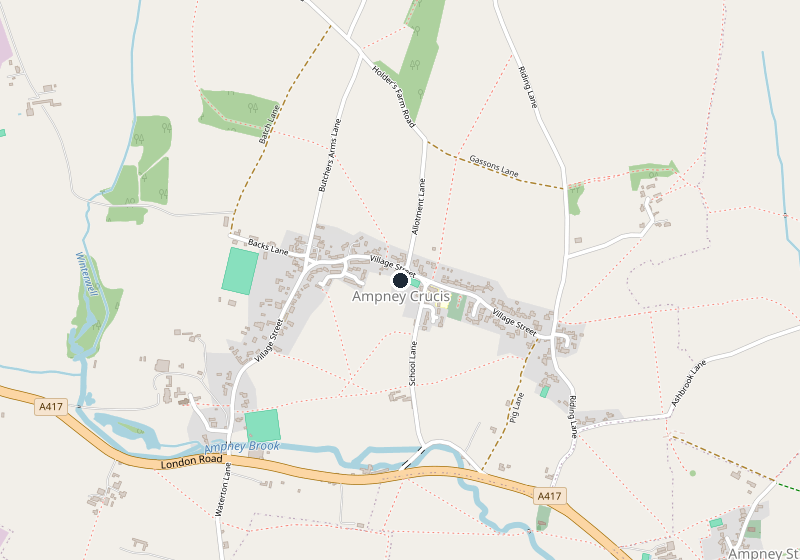
Places near Ampney Crucis
-
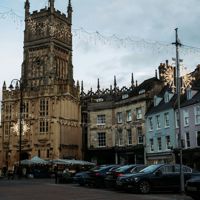 CirencesterThe Roman town of Corinium and the market town of the southern Cotswolds, with a museum of its mosaics, a great wool church, an amphitheatre and Earl Bathurst's park.
-
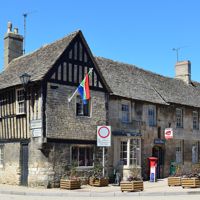 FairfordA small town on the River Coln with the only complete set of late medieval glass in an English parish church, and the home of the Royal International Air Tattoo.
-
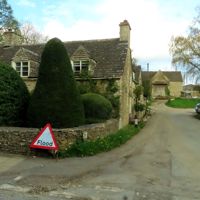 BarnsleyAn estate village of one street on the Cirencester to Bibury road, with Rosemary Verey's garden behind the wall of Barnsley House, a Norman church and a pub with rooms. Four miles from Cirencester, and quiet.
-
 KembleThe village with the station for Cirencester and the south Cotswolds, about a mile and a half from the source of the Thames where the Thames Path begins, with a church spire of 1824, the old RAF airfield and the Thames Head Inn on the A433.