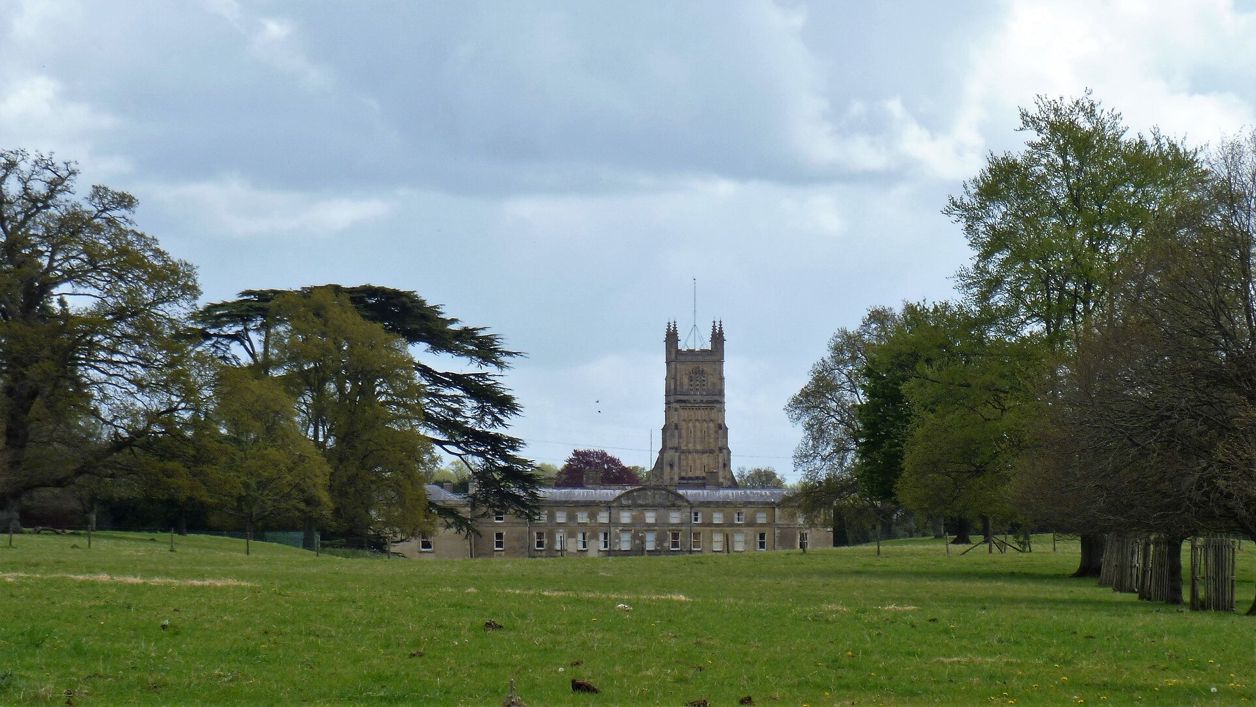
Michael Dibb, CC BY-SA 2.0, via Wikimedia Commons
Cirencester Park
The Bathurst family's landscape park on the western edge of Cirencester, planted from 1714 by the first Earl Bathurst with Alexander Pope: 8km of rides and woods along the Broad Ride, with Pope's Seat and Alfred's Hall. Grade I registered; a day pass is needed.
Common or park
CirencesterCirencester Park stretches west from the edge of Cirencester for 8km, about 1,050 hectares of woods, rides and parkland behind the Bathurst family's house. The first Earl Bathurst laid it out from 1714 with the help of his friend the poet Alexander Pope. It is registered Grade I, and visitors need a pass from the Bathurst Estate to walk in it.
History
The manor passed to Sir Benjamin Bathurst in 1695, and his son Allen, later the first Earl Bathurst, built the house in 1714 to 1718. Bathurst was Tory MP for Cirencester, and when the Tory government fell on Queen Anne's death in 1714 he retired early from politics and turned to the house and the park. In 1716 he added the manor of Sapperton, which let him carry his rides west across the plateau.
Bathurst and Pope
Pope first came to Cirencester in 1718 and worked with Bathurst on both the house and the park. Between them they made a landscape of long straight rides cut through woods, meeting at viewpoints and dotted with buildings. The register calls it an early and fine example of the extensive rural gardening that Stephen Switzer argued for. Bathurst lived to 91 and died in 1775 with the park still unfinished.
The buildings
The park's buildings span the century: Pope's Seat, a small pavilion of the early eighteenth century; Alfred's Hall, a sham ruin begun by Pope and Bathurst in 1721 and enlarged in 1732, probably the earliest Gothic sham ruin in England; the Hexagon, a covered seat of about 1736; and Queen Anne's Monument, a column of 1741. A lake of about 5 hectares in the Home Park, dug by Bathurst by 1736, was one of the first irregular pieces of water in English gardening.
What to look for
The Broad Ride is the spine of the park, running dead straight from the parish church for about 8km west to Sapperton, with a further stretch beyond. Along and beside it, look for:
- The Hexagon, at a crossing of the Broad Ride about 700m north-west of the mansion
- Pope's Seat at Seven Rides, by the Polo Ground, about 2km west of the house
- Queen Anne's Monument at the end of Elm Avenue
- The Horse Guards, a pair of pavilions on the Broad Ride
- Ten Rides, deep in Oakley Wood, about 5.5km out, with Alfred's Hall about 500m north-east of it
- The Round Tower and Square Tower, north of the Broad Ride between Seven Rides and Ten Rides
- Ivy Lodge, a house and farm buildings dressed as a Gothick eye-catcher
The way in from the town is a show in itself: Cecily Hill climbs past the mock castle of the Old Barracks, built in 1857, to eighteenth-century iron gates brought from Carshalton. The house itself is private.
Visiting
Cirencester Park is a private estate, open every day, and you need a pass to walk in it: a Day Pass (adults £4 in 2026), an Annual Pass, or a free Community Pass (with a one-off £10 deposit) for residents of listed nearby postcodes. Day Passes are sold online and at the ticket offices at Cecily Hill and Windsor Walk. Day Pass visitors can enter from 10am, annual and community passholders from 8am, and the gates close at 5pm, with last entry at 4.30pm. The estate sometimes closes the park for maintenance, bad weather or private family use.
Dogs are welcome on the marked routes, on a lead where signs say so and under close control, and some routes allow them off the lead; the estate's visitor map shows which. Cycling is not allowed, except for children under five on push bikes or scooters, and nor are drones, barbecues or large organised picnics. Small picnics are fine, and the Jubilee Arboretum at the Old Kennels has benches.
There are no toilets inside the park. At the Old Kennels, which is free to enter, there are two accessible toilets, disabled parking and the Roots and Seeds café; inside the park, the Beano Café needs park entry. Some routes are tarmac walkways, and the Cotswolds National Landscape's Cirencester Walks on Wheels route, a 2.5-mile pushchair-friendly tarmac circuit from the Waterloo car park through the Abbey Grounds, enters the park by gates off Barton Lane and leaves by the Cecily Hill gates; most of the rides are grass.
Getting there
On foot from the town centre, walk up Cecily Hill to the Cecily Hill gates; there is limited free parking at the top of the hill, and the Old Station car park is the nearest public one. By car, the Old Kennels car park (GL7 1UR, pay as you go) has direct access to the park along Windsor Walk. Buses reach Cirencester from Swindon and Cheltenham (Stagecoach 51, about hourly Monday to Saturday and every two hours on Sundays), from Gloucester (882, which goes on to Kemble station and Tetbury) and, twice on weekdays, from Stroud by Sapperton (Cotswold Green 54); Kemble, about 4 miles away by road, is the nearest railway station.
On foot, Cirencester Park, Pope's Seat and Stratton, a 5-mile (8km) circular walk from the parish church, spends a mile on the Broad Ride to Pope's Seat, then turns past the polo grounds towards Stratton. The 2022 route leaflet sends walkers with dogs on a signed diversion by the Ewe Pens Cottages.
Nearby
The Broad Ride starts at St John the Baptist's Church on the Market Place. The Corinium Museum, with the town's Roman finds, is a few minutes away, and the grass banks of the Roman amphitheatre are on the south-west edge of the town. For lunch, the Gilbertine and the Black Horse are in the centre, and the King's Head and the Corinium Hotel have rooms. Our stories on the Roman Cotswolds and the great gardens of the Cotswolds set the park in context, and our guide to Cirencester covers the town.
Walks past Cirencester Park
-
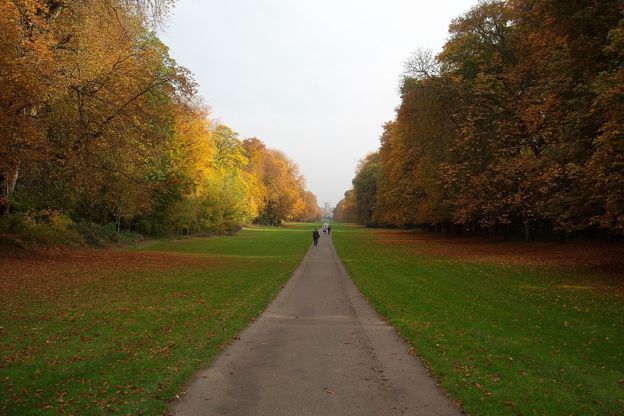
Cirencester Park, Pope's Seat and Stratton
Walk · Starts in Cirencester · 2 hrs · Circular
A 5-mile (8km) circular walk from Cirencester's parish church, easy and taking one and a half to two hours: up Cecily Hill and a mile along the Broad Ride to Pope's Seat, past the polo grounds to Stratton, and back by the streams past the open-air pool.
Stay and eat near Cirencester Park
-
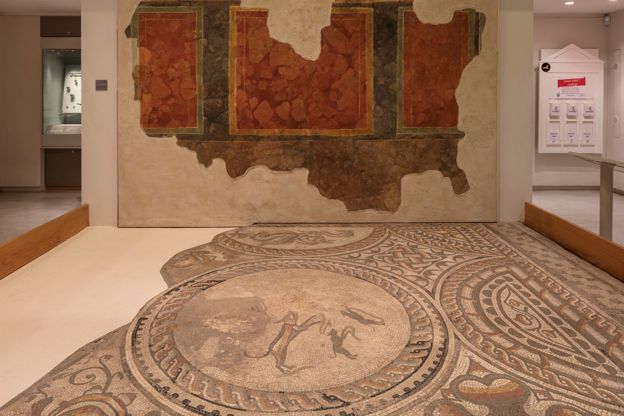
Corinium Museum
Museums and galleries · Cirencester
Cirencester's museum of Roman Corinium, with the Hare, Four Seasons and Orpheus mosaics, Anglo-Saxon grave goods and medieval sculpture.
Family-friendly · Rainy days · Car-free
Verified Oct 2026
-
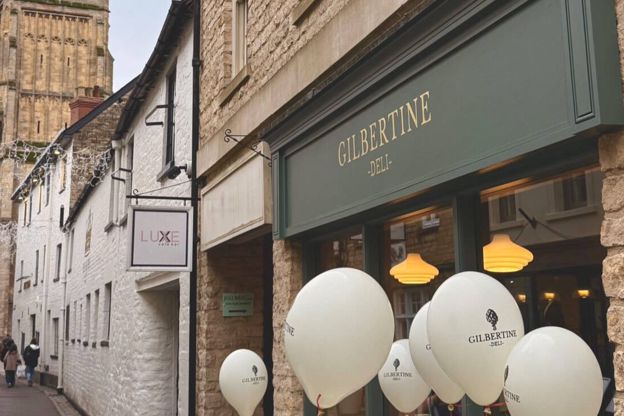
Gilbertine Deli
Farm shops and delis · Cirencester
A sandwich deli on Black Jack Street, Cirencester, from the team behind the Gilbertine Kitchen in Tetbury.
Verified Nov 2026
-
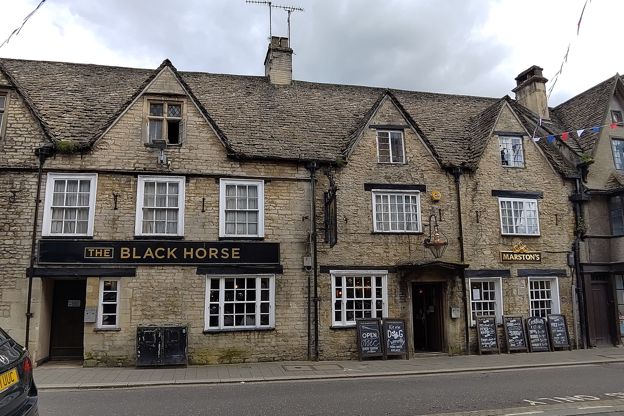
Black Horse
Pubs · Cirencester
A Marston's pub on Castle Street, Cirencester, with cask ale, a beer garden, three en suite rooms and dogs welcome.
Dog-friendly
Verified Oct 2026
Stories about Cirencester Park
-
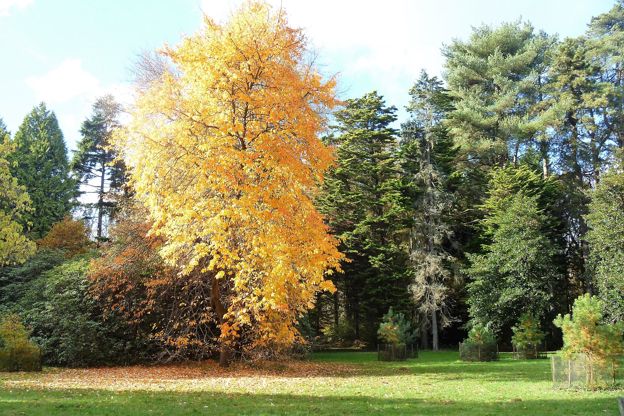
Autumn in the Cotswolds
Story · Guides · 10 minute read
Autumn in the Cotswolds, from Westonbirt's maples and Batsford to the beech woods of the escarpment, Blenheim's park and the Slad valley: when the colour comes, the best autumn walks, the October events, how to miss the half-term crowds, what to wear and where to stay for a fire.
-
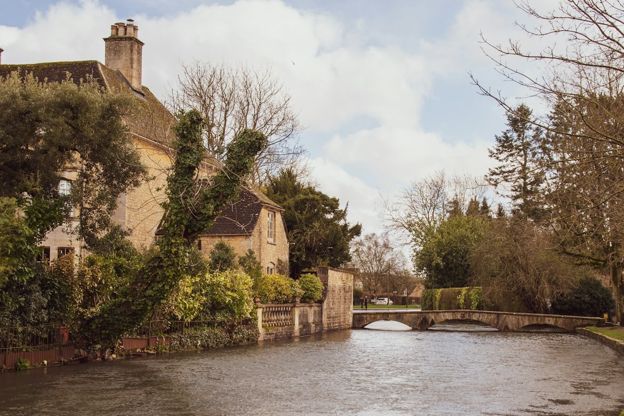
The accessible Cotswolds
Story · Guides · 12 minute read
The honest picture of access in the Cotswolds: which villages are level and which are cobbles and hills, the step-free days out, every Changing Places toilet we can confirm, Blue Badge parking, stile-free walks, accessible stays and getting about by train, bus and taxi.
-
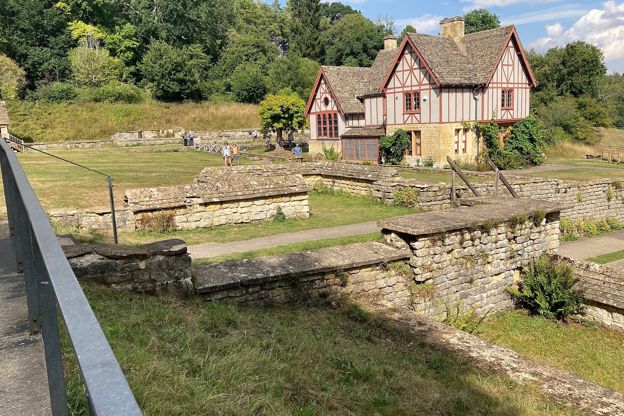
The Roman Cotswolds
Story · Guides · 10 minute read
Corinium at Cirencester, Chedworth Roman Villa, the amphitheatre, the Fosse Way and the villas you can and cannot see: where to find Roman Britain in the Cotswolds, by car and by train.
More sights to see
-
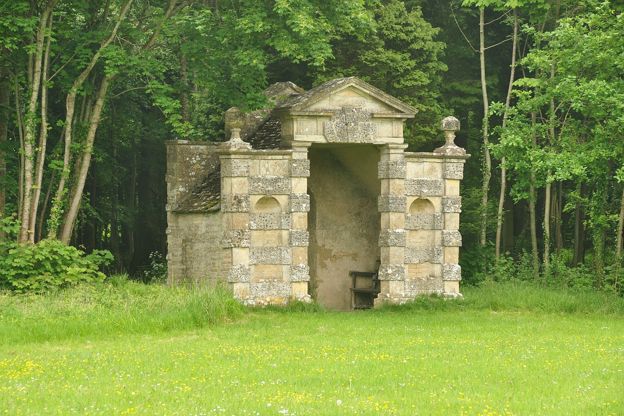
Pope's Seat, Cirencester Park
Sight · Historic building · Cirencester
A small stone pavilion of the early eighteenth century at Seven Rides in Cirencester Park, with a Doric portico and POPE'S SEAT cut in its pediment, named after the poet who helped Lord Bathurst lay out the park. Grade II*; a park day pass is needed.
-
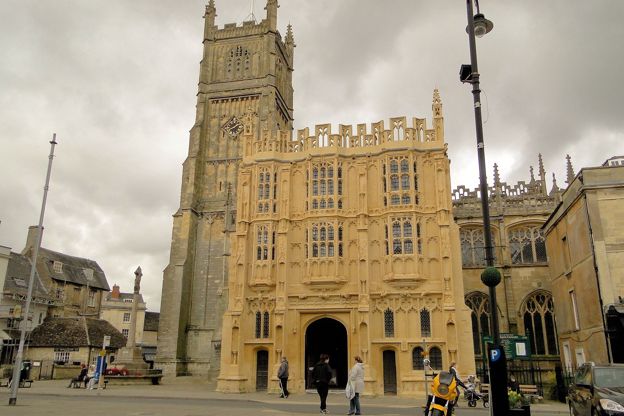
St John the Baptist, Cirencester
Sight · Church · Cirencester
Cirencester's great wool church on the Market Place, free to visit: a fifteenth-century tower you can climb on set Saturdays, a three-storey porch of about 1490 that served as the town hall, fan vaults, medieval glass and the Boleyn Cup. Grade I.