Autumn in the Cotswolds
The colour comes in mid-October and goes by early November. Where to see it, five walks through it, the October events and how to miss the busiest weekends.
· 10 minute read
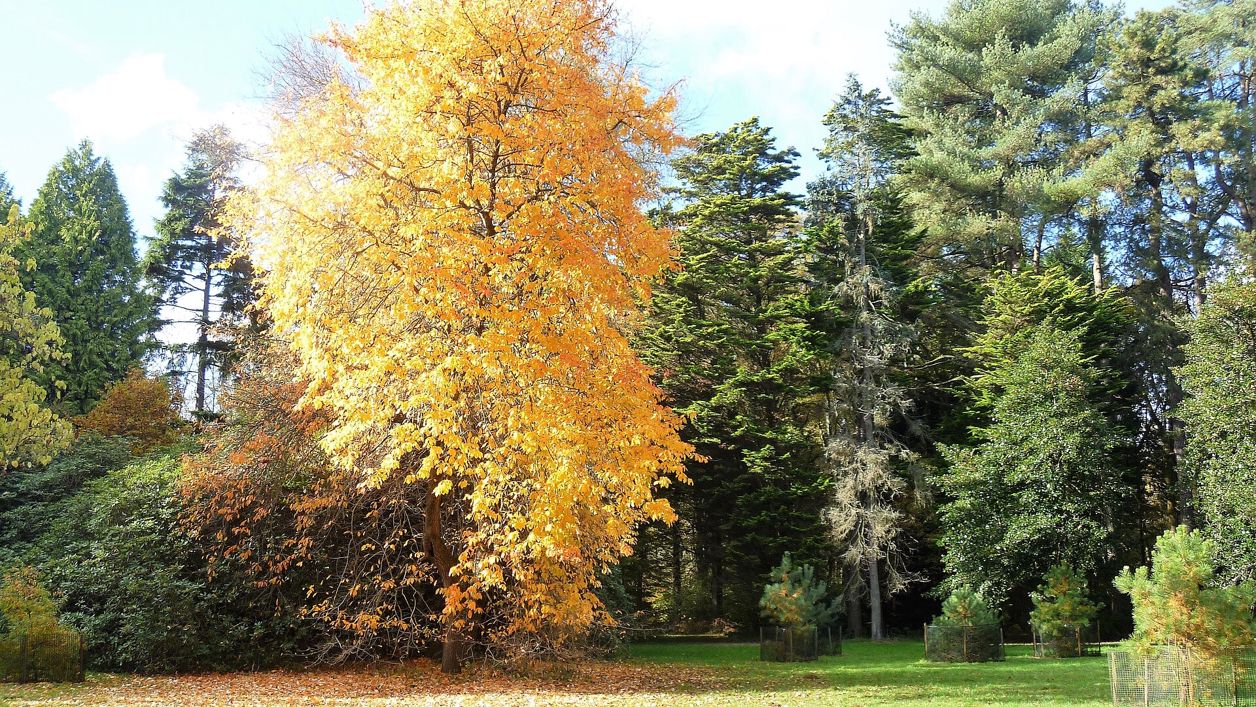
Autumn colour in the Cotswolds comes in the middle of October and is mostly down by the first week of November. The maples at Westonbirt, the National Arboretum near Tetbury, are the famous show, at their best in the second half of October; Batsford Arboretum near Moreton-in-Marsh turns at the same time; and the beech woods of the escarpment above Stroud and Painswick, which are free, go gold a week or two later and hold it into November. The rest of the season is the Cheltenham Literature Festival in the middle of October, Stow's October horse fair, apple days, mud, and the best pub fires of the year.
For the dates of any one thing, follow its link; prices and hours live on the listings.
When is autumn colour best in the Cotswolds?
The third and fourth weeks of October, for most trees in most years. Westonbirt runs its peak autumn season from the last week of September to the middle of November, which is the whole window; inside it, the Japanese maples turn in the second half of October, and the native beech on the escarpment follows from late October into the first days of November.
The order is maples first, then the beeches. Westonbirt's collection lights up from early October and is at its reddest in the second half of the month, and Batsford says its colour runs through the autumn months. The beech hangers of the Cotswold edge, from Cranham and Painswick down to Stroud and Wotton, are later and go in one movement, copper and gold for about a fortnight from the last week of October, which is why our Cotswold Way guide gives mid to late October as its colour. A dry, still October keeps leaves on the trees; the first hard gale strips the beeches overnight, and the Rococo Garden warns that it may close at short notice in high winds. Westonbirt's weekly Autumn Watch films, through the autumn, are the best live guide to timing.
Westonbirt: the maples and the walkway
Westonbirt is Forestry England's national arboretum, 600 acres with 17 miles of paths and 2,500 kinds of tree, and its autumn is the national collection of Japanese maple cultivars in Silk Wood and the older maples of the Old Arboretum. It opens every day but Christmas Day from 9am, last admission 4.30pm, and from late September to mid-November it charges more and asks you to book.
The peak season in 2026 runs from 25 September to 15 November, with an adult ticket at £19 on a weekday and £22 at a weekend or bank holiday, a child of 5 to 18 at £5, and a lower rate (£13 and £15.50) for students, 19 to 25s and anyone who arrives by bus, train or bike; from 16 November the adult price falls to £14 on a weekday and £19 at a weekend. Forestry England says booking ahead is strongly advised through those weeks to guarantee entry. Volunteers lead walks through the Old Arboretum at 11am, 11.30am and 2pm every day (no dogs on the guided walks), and the treetop walkway is 300 metres long and rises 13m into the canopy of Silk Wood, with no steps on or off, and is fully accessible for wheelchairs and mobility scooters. Dogs go off the lead in Silk Wood and not into the Old Arboretum. The 69 bus from Stroud runs to Westonbirt several times a day, and the 620 from Bath continues as the 69 from Old Sodbury.
Our Westonbirt walk is a 2.5-mile loop of Silk Wood from the walkway out to the Waste Gate and back, about an hour; add the Old Arboretum, without the dog, for the older maples. Tetbury is 3 miles for lunch.
Batsford and the north
Batsford Arboretum, on a hillside looking over the Evenlode valley a mile and a half from Moreton-in-Marsh, is the quieter arboretum: 60 acres of one of the country's most diverse collections of trees and plants, open daily 9.30am to 5pm (10am on Sundays), last entry 4pm, at £12 an adult with Gift Aid or £10.90 without (2026). Booking is optional, but it recommends booking ahead in October and November, when the queues are longer.
The arboretum promises outstanding autumn colour, and in October and November it suspends its free entry for RHS members, which is its own way of saying these are the weeks. Dogs come in on a short fixed lead, the café, shop and garden centre are free to use, and a Tramper scooter can be booked for the tarmac drive, since the slope rules out much of the hill for a wheelchair. Our Blockley and Batsford Park walk, 4.9 miles with deep mud in winter, passes the gate, and the stile-free Moreton and Batsford walk, 4 miles from the war memorial, runs along the deer park below the house and back by the lane to Dorn.
The beech woods of the escarpment
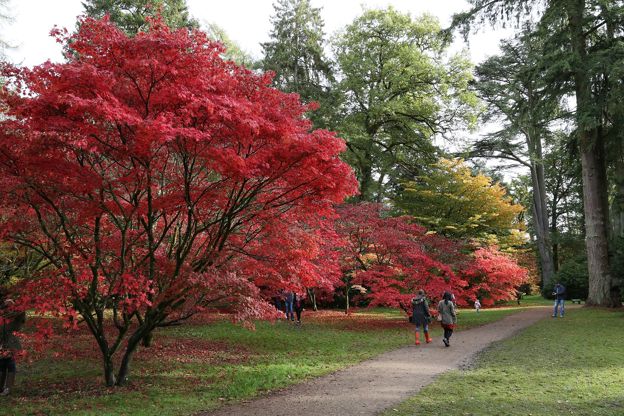
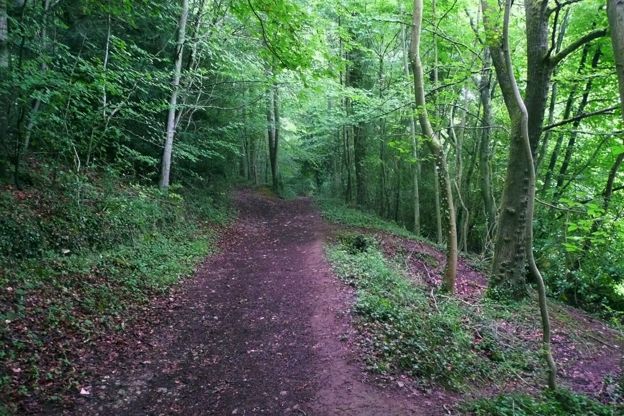
The free autumn is the beech. From Cranham and Buckholt above Painswick, through Frith Wood on the ridge between Painswick and Slad, to Standish Wood below Haresfield Beacon, the Cotswold edge is hung with old beech woods that turn copper in the last week of October and gold in the first of November, and all of them are open all the time.
Frith Wood is a Gloucestershire Wildlife Trust reserve of 24 hectares that the Trust says has been beech for more than a thousand years, with parking at Bulls Cross; Standish Wood is the National Trust's, with beeches more than 200 years old at Shortwood and a paid car park there. Cranham Common and Buckholt Wood, on the lanes between Painswick and Birdlip, are part of the Cotswold Commons and Beechwoods National Nature Reserve, free to walk, with steep unsurfaced paths. The Slad valley, Laurie Lee's, is the one to walk for the whole picture: beech on the ridges, limestone grass on the slopes and the Woolpack a short detour off the route.
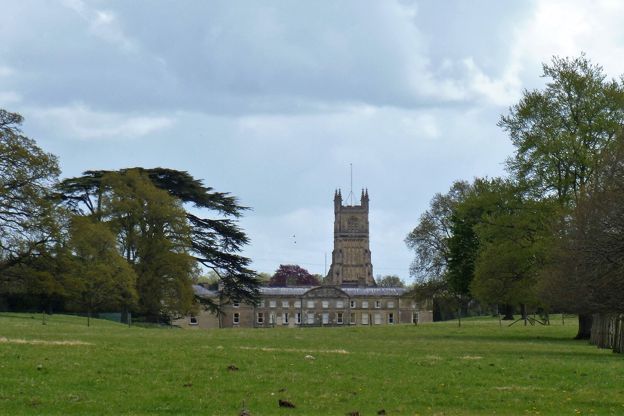
Cirencester Park, the Bathurst family's, is the other autumn walk in the south, stretching 8km west of the town from the gates on Cecily Hill, with a day pass at £4 an adult (2026) from the ticket offices or online, entry from 10am and last entry 4.30pm. Our Cirencester Park and Stratton walk goes a mile up the Broad Ride to Pope's Seat.
Blenheim, Minster Lovell and the east
In the east the autumn is water and parkland: Capability Brown's lake at Blenheim, and the River Windrush at Minster Lovell Hall, the ruined manor between Burford and Witney that is free in daylight.
Blenheim's park and gardens ticket was £31 online (2026) and converts to a pass for a year; dogs are not allowed in the formal gardens, and the public footpaths through the park from Woodstock and Combe are free. Our Combe and Blenheim Park walk uses those footpaths and a bridleway, 6.7 miles past Fair Rosamund's Well and the lake, though about 570m by the lake is on an estate road that is not a public right of way, so check the signs at the gates. The Queen Pool is the lake it passes. At Minster Lovell, our walk to Crawley and back is 3.7 easy miles along the Windrush to the ruins, the dovecote and St Kenelm's, wet underfoot by November; the Old Swan in the village serves food from noon to 9pm every day.
Five autumn walks
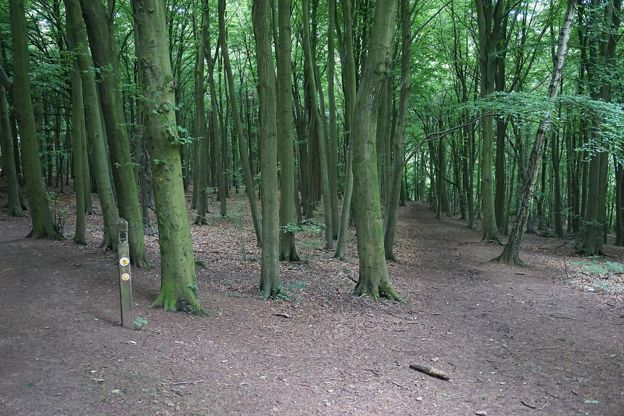
The walks that show the season best are the Westonbirt loop for the maples, Haresfield Beacon and Standish Wood for the beeches and the view, the Laurie Lee Wildlife Way for the Slad valley, Painswick and Painswick Beacon for the edge, and Combe and Blenheim Park for the lake.
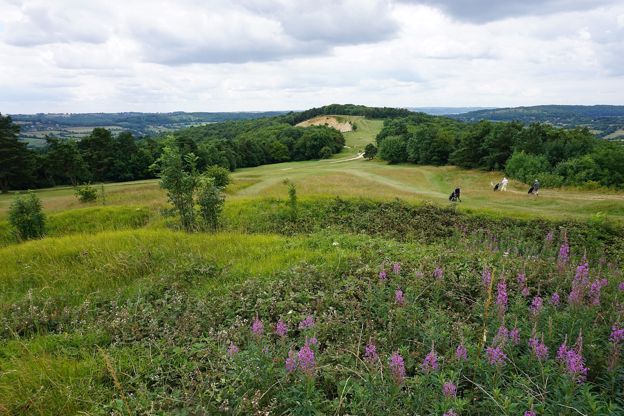
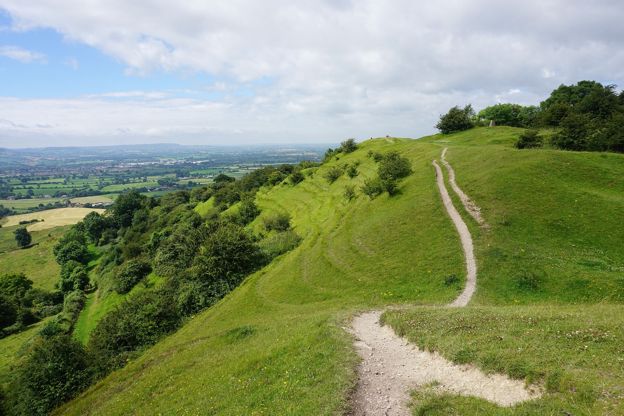
Each is above with its length and its mud. Walkers on the Haresfield walk reported double stiles that are hard to lift a dog over (January 2026), and on the Laurie Lee Wildlife Way, where the Wildlife Trust grazes cattle on the slopes, walkers met a field of cows in May 2026 and found the paths muddy and slippery in winter. The escarpment walks climb: Haresfield is 4.5 miles with a long pull back to the fort, and Painswick Beacon is 5 miles with 250m of up, so the shorter days matter, and by the end of October it is dark soon after five. The viewpoints earn the season. Cold, clear air after a front gives the longest views of the year from Painswick Beacon and Haresfield Beacon, across the Severn to the Forest of Dean and, on a clear day, the hills of Wales, and our best viewpoints guide has the rest.
The autumn events, as they fall each year
The Cheltenham Literature Festival (opens in a new tab) runs for ten days in the middle of October (9 to 18 October in 2026), Stow-on-the-Wold's October horse fair now falls on the third Thursday of the month (15 October in 2026), Heritage Open Days open buildings for free over ten days in the second and third weeks of September, and Apple Day is 21 October, with the orchard events on the weekends round it.
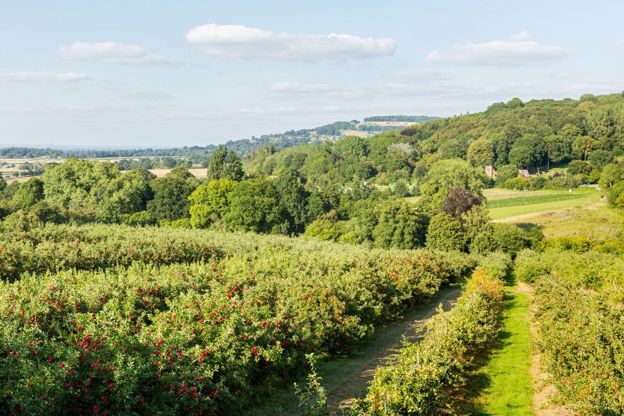
The Literature Festival is the big one, in Montpellier Gardens and the town's halls, and Cheltenham is busy over its two weekends, so book a room early. Stow's fair is held under a charter of 1476, in a field on Maugersbury Road, and its dates can move or be cancelled at short notice, so our Stow guide has the rule and the next date; the town's shops and roads are affected on the day. Heritage Open Days (opens in a new tab) is England's free festival of buildings, run by volunteers every September, and in the Cotswolds it opens churches, mills and private houses that are shut the rest of the year. Apple Day was begun by Common Ground in 1990 and is kept on 21 October, and Gloucestershire's orchard events cluster round it, from The Folk of Gloucester's Apple Day with the Gloucestershire Orchard Trust on a Saturday in mid-October to the pick-your-own apples at Hayles Fruit Farm, which runs from August to October, with Hayles cider on sale. Painswick clips its church on the third Sunday of September, and the Moreton Show is on the first Saturday of September.
Half term, and how to miss it
The October half term is the last week of the month in the council schools of both Gloucestershire and Oxfordshire (26 to 30 October in 2026; academies and some other schools can set their own dates), and it falls on Westonbirt's peak colour. Westonbirt charges more at weekends than on weekdays through the autumn and strongly advises booking, and Batsford recommends booking in October and November.
Go to Westonbirt on a weekday in the two weeks before half term, arrive for 9am, and walk the far end of Silk Wood first; or go after 15 November, when the price drops and the beeches are still gold even if the maples are over. Or skip the arboretum that week and take the free beech woods: Standish Wood, Frith Wood and Cranham are open all the time with no ticket to book, and Cirencester Park's rides run for miles. Bourton-on-the-Water and Bibury are as busy in half term as in August; our guide to the Cotswolds without the crowds has the alternatives.
The Cotswolds Info newsletter
Events, new places and the best of the season, about once a month. Unsubscribe at any time.
What to wear, and the mud
Boots, from the middle of October. The Cotswold paths are clay over limestone, the beech woods hold water, and every walk on this page has a stretch that is slippery after rain; the escarpment walks add steep grass. Waterproofs, a layer for the top of the hill, and a torch in the bag once the clocks go back, which is the last Sunday of October.
The arboretums are easier, with surfaced main paths and a tarmac drive at Batsford for a wheelchair or a Tramper, but the grass paths between the trees are leaf litter by November. In the villages the stone is slippery when wet, and on the Windrush paths at Minster Lovell walkers reported mud deep enough for wellingtons in December 2025 and fields too wet to cross in March 2026. Dogs come home the colour of the path.
Where to stay for a fire and a walk
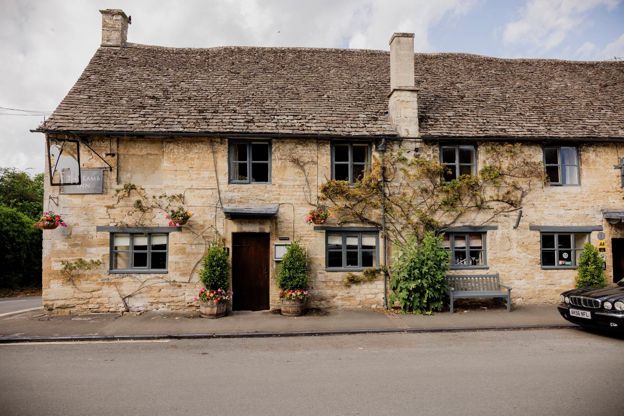
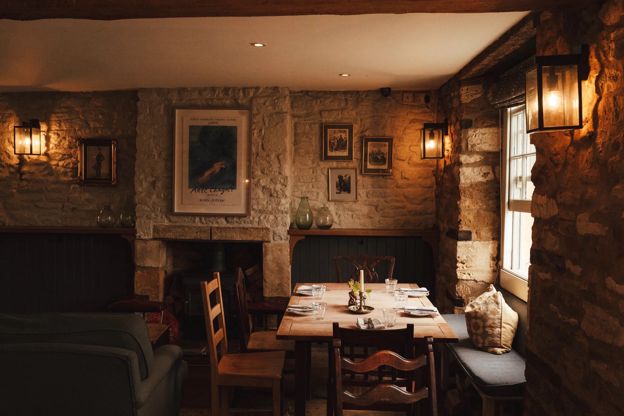
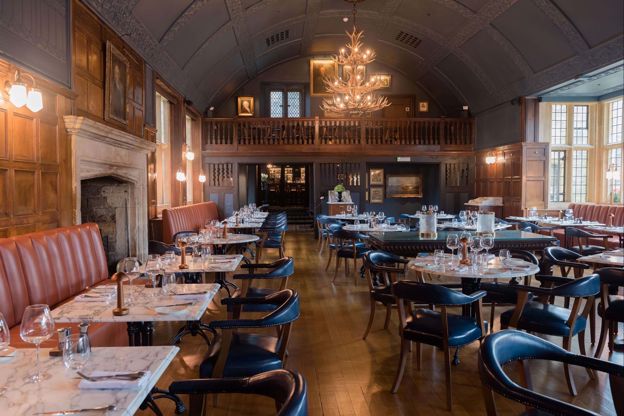
The inns to book for a cold weekend are the Lamb at Burford, with armchairs by the fire in the bar and the Windrush walks from the door; the Kingham Plough on the green at Kingham, open every day with rooms, the station on the Paddington line and Foxholes and Daylesford for walks; the Lygon Arms on Broadway's High Street, where the Grill serves under old beams by the fire and the walk up to Broadway Tower starts from the village; and the Farmers Arms at Guiting Power, a Donnington pub with a log burner and the Windrush valley walks outside.
For the escarpment woods, Painswick and Stroud are the bases; for Westonbirt, Tetbury. Our guide to the best pubs in the Cotswolds names the ones with a fire in both bars.
The quieter shoulder: September and November
September and November are the months the Cotswolds are best left to the people who know them. September has the warmth without the school holidays, the harvest on the wolds, Heritage Open Days and the Painswick clipping, and the gardens still open; November has the beeches' last gold, Westonbirt at its lower price from the middle of the month, the Rococo Garden's free dog weekends, empty villages and the first fires.
In September the honeypots empty when the schools go back and the paths are dry, which they will not be again until May; it is the best month for the Cotswold Way. November is wetter and shorter, but it has the villages to itself and the run-up to Christmas in the Cotswolds, with Westonbirt's illuminated trail from the last week of the month. Both months are on our when to visit the Cotswolds page, month by month, with the snowdrops, the bluebells and the lavender that follow. Each month has its own guide too: the Cotswolds in September, in October and in November.
Mentioned in this story
The places, sights and walks in this story, each with a page of its own: what it is, when to go and how to get there.
-
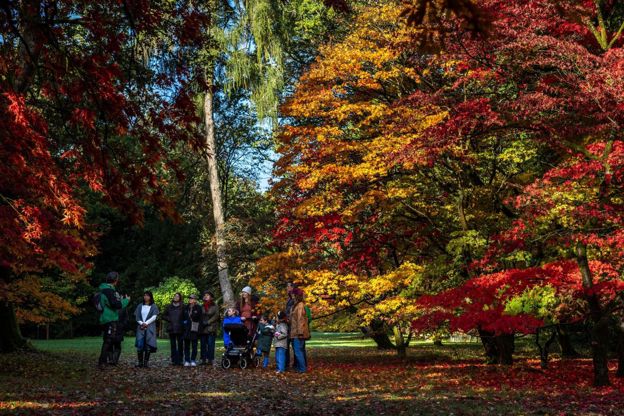
Westonbirt, The National Arboretum
Parks and gardens · Tetbury
-
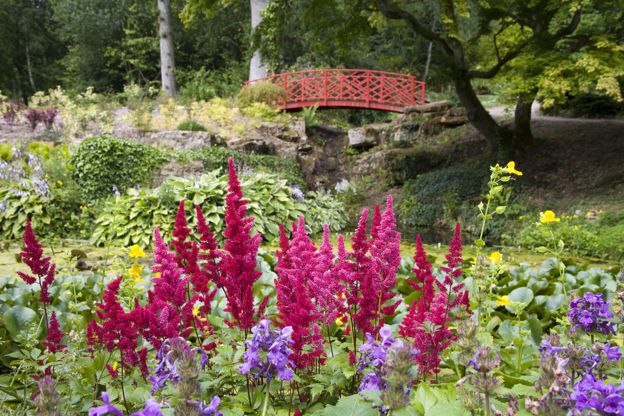
Batsford Arboretum
Parks and gardens · Moreton-in-Marsh
-
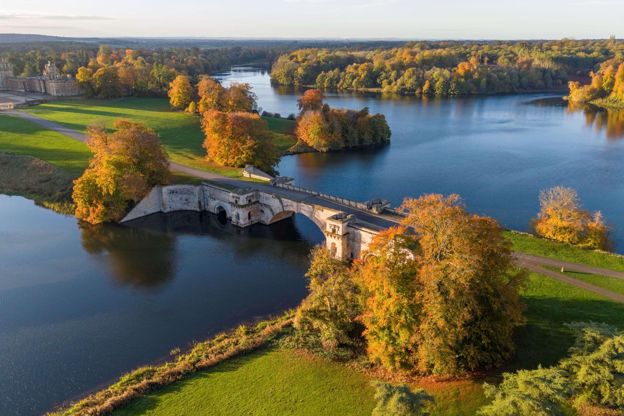
Blenheim Palace
Historic houses and heritage · Woodstock
-
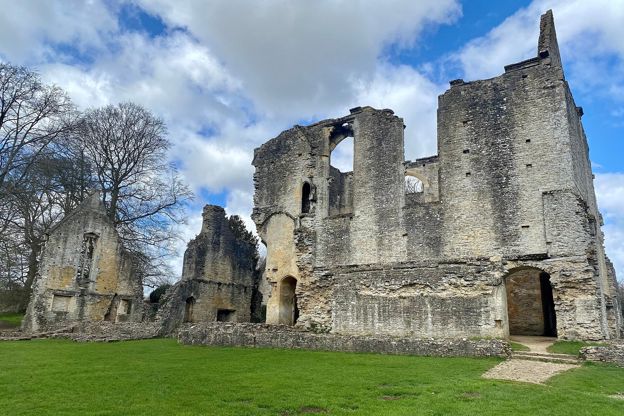
Minster Lovell Hall and Dovecote
Historic houses and heritage · Witney
-
Hayles Fruit Farm
Farm shops and delis · Winchcombe
-
The Lamb Inn
Inn · Burford
-
The Kingham Plough
Inn · Kingham
-
The Lygon Arms
Hotel · Broadway
-
Frith Wood
Sight · Wood · Stroud and the Five Valleys
-
Standish Wood
Sight · Wood · Stroud and the Five Valleys
-
Cirencester Park
Sight · Common or park · Cirencester
-
Painswick Beacon
Sight · Hill fort or barrow · Painswick
-
Haresfield Beacon
Sight · Viewpoint · Stroud and the Five Valleys
-
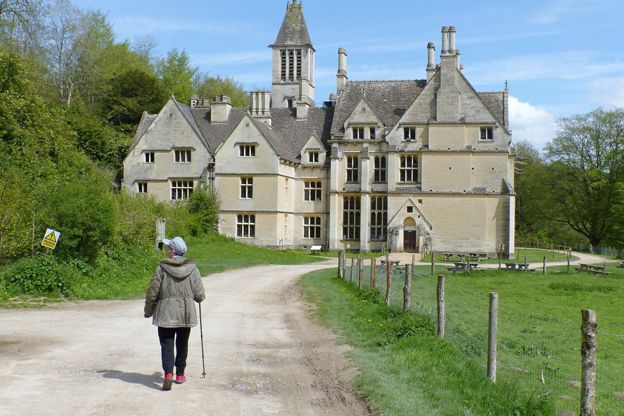
Woodchester Park
Sight · Common or park · Nailsworth
Places to stay near Tetbury
-
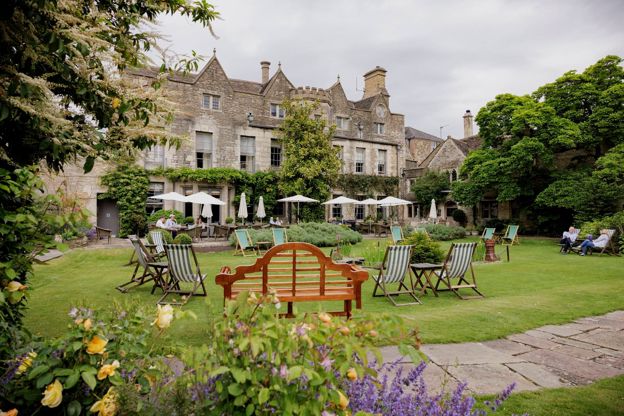
The Close Hotel
Hotel · Tetbury
A hotel on Long Street, Tetbury, set back from the street, part of Cotswold Inns and Hotels, with dogs welcome.
Dog-friendly · EV charging
Verified Nov 2026
-
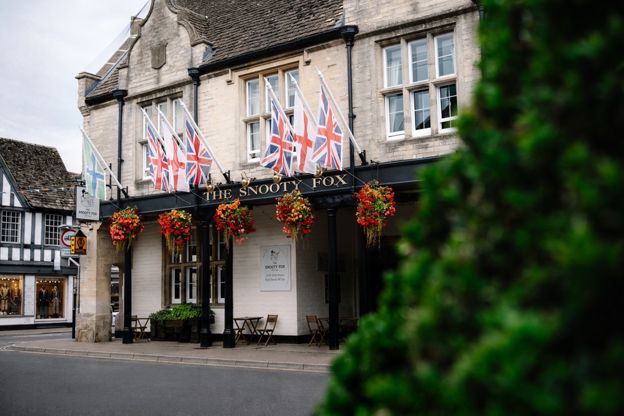
The Snooty Fox
Hotel · Tetbury
A hotel, restaurant and bar with 12 rooms on Tetbury's Market Place, with dogs welcome.
Dog-friendly · Wedding venues
Verified Nov 2026
-
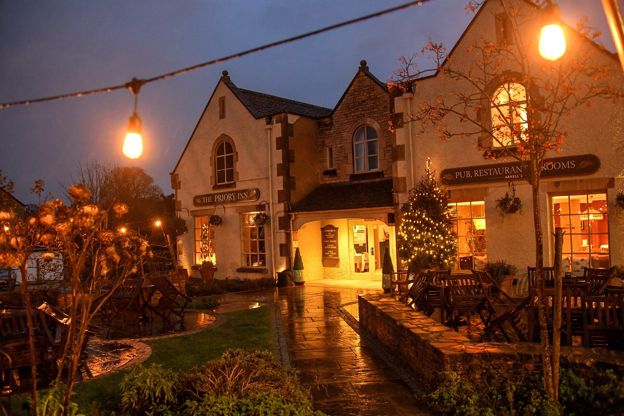
The Priory Inn
Inn · Tetbury
An Arkell's pub with 14 en-suite rooms, including a large family room, on London Road, Tetbury, with an EV charger in the car park.
EV charging · Family-friendly
Verified Nov 2026
Read next
-
When to visit the Cotswolds, month by month
Story · Guides · 13 minute read
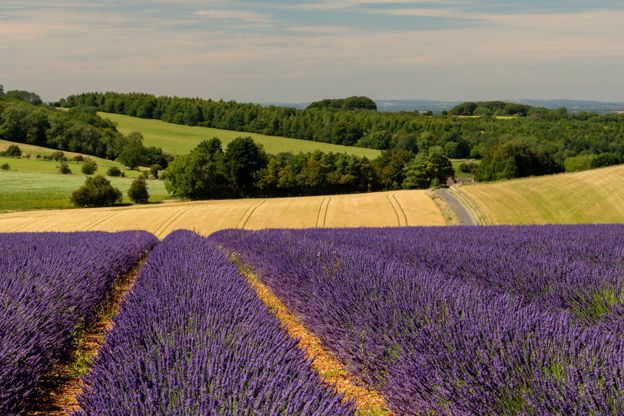
The best months to visit the Cotswolds are May, September and October. June to August and the bank holidays are the busiest, January the quietest. Here is the year month by month, with what is in flower, the customs, the weather and what to book ahead.
-
Christmas in the Cotswolds
Story · Guides · 10 minute read
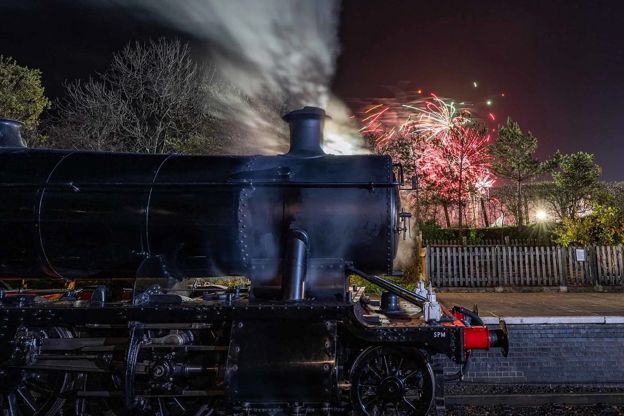
Christmas in the Cotswolds: Blenheim's and Sudeley's light trails, Christmas markets at Cogges and Stroud, steam trains to Broadway's late-night shopping, candlelit carols, Boxing Day mummers, winter walks and inns with fires.
-
The best viewpoints in the Cotswolds
Story · Guides · 11 minute read
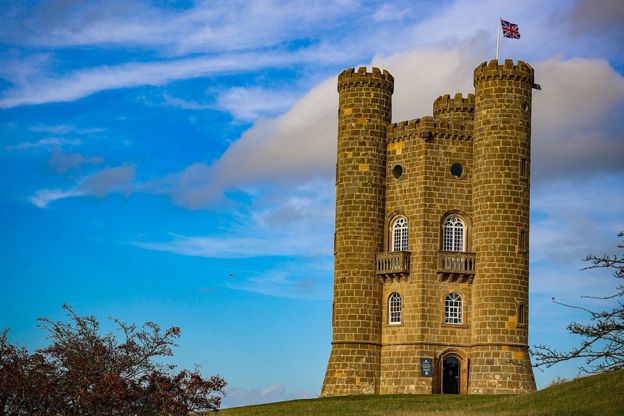
The best viewpoints in the Cotswolds, from Broadway Tower, Dover's Hill and Cleeve Hill to Haresfield Beacon, Crickley Hill and the Tyndale Monument: what you see from each, where to park and the walk that gets you there.