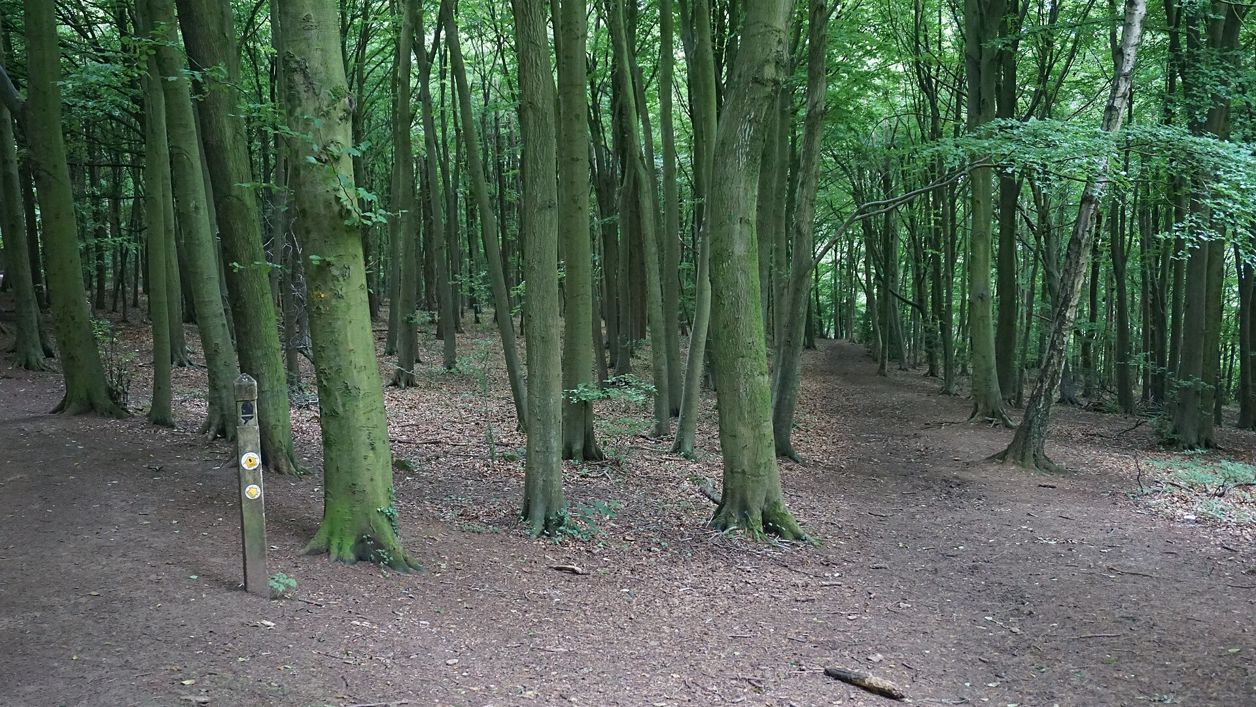
Bill Boaden, CC BY-SA 2.0, via Wikimedia Commons
Standish Wood
A National Trust beech wood on the Cotswold scarp below Haresfield Beacon near Stroud, known for bluebells and wild garlic in spring, with veteran beeches over 200 years old at Shortwood, a Neolithic long barrow on the ridge nearby and the Cotswold Way running through it.
Standish Wood clothes the steep scarp of the Cotswold Edge below Haresfield Beacon, north-west of Stroud, in the Five Valleys. The National Trust looks after it with the beacon and the woods around Shortwood, where beeches more than 200 years old stand at the top; in spring the slopes below are blue with bluebells and white with wild garlic.
History
Standish Wood is part of a National Trust estate on the edge of the Cotswolds that has been used since the Neolithic, and the Trust counts long and round barrows, a hillfort and a cross dyke among its monuments, all more than 3,000 years old.
The Randwick Hill long barrow
The oldest monument close by is the long barrow on Randwick Hill, on a ridge above the Vale of Gloucester: a mound up to about 46m long and 4.5m high, built by early farmers between about 3400 and 2400 BC as a communal tomb. It was dug in 1883, when a horned entrance and a drystone-walled chamber at its east end were found, with at least seven skeletons inside and more crouched burials beside its south side; Roman pottery and a Roman horseshoe showed that people came back to it much later. Two round barrows and a cross dyke lie close by, and all are scheduled together.
Robbers Road and the cross dyke
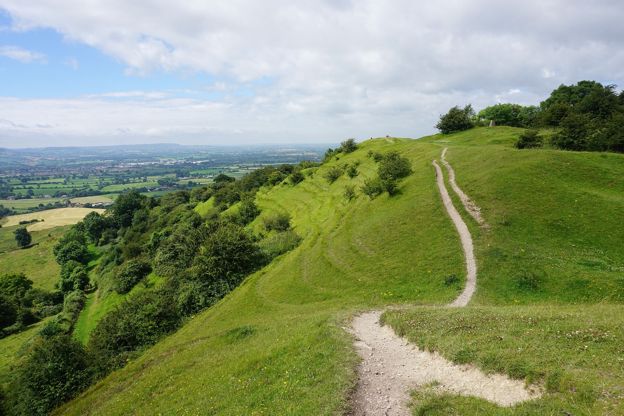
At the foot of the wood an old bridleway, Robbers Road, runs past the earthwork of a cross dyke, one of the prehistoric boundaries that cut across the ridges of the scarp here. Above, on Haresfield Beacon, are the Iron Age hillfort and the beacon mound that give the estate its other name.
A working wood
The Trust manages the trees and keeps ragwort down on the open grassland. The veteran beeches at Shortwood, which the Trust puts at more than 200 years old, are the old trees of the estate.
What to see
Bluebells are the reason most people come: in April and early May the floor of Standish Wood is carpeted with them, with wild garlic in the damper hollows, and walkers reported both in flower in April 2026.
- The veteran beeches at Shortwood, near the car park.
- Beech and yew on the Trust's Randwick Wood circular.
- The cross dyke beside Robbers Road, and nearby on Randwick Hill the long barrow, round barrows and another cross dyke.
- Views out through the trees over the Severn Vale, and from the edge above to the Forest of Dean.
Visiting
Standish Wood is National Trust woodland, free to walk in at any time. The Trust asks for dogs on leads across the estate, and sheep graze the fields below the wood; if cattle come close, its advice is to let your dog off the lead and call it back when it is safe. The paths down the scarp are steep and muddy after rain, and the field paths below have stiles; walkers have reported double stiles there that are hard for dogs. The Trust lists no toilets. A coffee truck, Off Road Bean, trades at the Shortwood car park most weekends from 10am to 1pm and on some weekdays, mostly Fridays, from 10am to noon; it publishes its dates on its website (to 22 November in 2026). Come in late April for the bluebells, or in autumn when the beeches turn.
Getting there
Park at the National Trust's Shortwood car park, reached by lanes from Whiteshill above Stroud (GL6 6PP): £1 for an hour, £3 for three hours, £4 all day, free to members. The Trust's Randwick Wood circular, 1 mile (1.6km) and 30 to 40 minutes, starts from its Randwick Woods car park (grid reference SO823065). On foot, the Cotswold Way runs through Standish Woods on its stage from Painswick to King's Stanley, and our Haresfield Beacon and Standish Wood walk goes down through the wood, along Robbers Road and back up to the beacon.
Nearby
Haresfield Beacon and its hillfort are a short walk north-west along the edge. The Vine Tree Inn at Randwick, which welcomes dogs, is about 350m as the crow flies from the walk below the wood. Randwick keeps its spring festival, the Randwick Wap, each May. For more beech woods and bluebells, try Frith Wood above the Slad valley or Woodchester Park; for open grassland, Rodborough Common across the valley.
Walks past Standish Wood
-
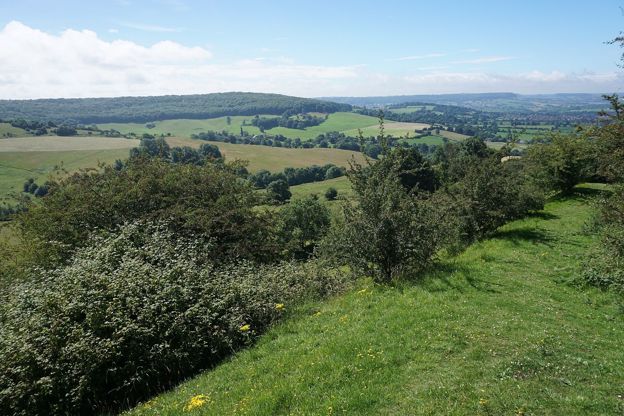
Haresfield Beacon and Standish Wood
Walk · Starts in Stroud and the Five Valleys · 2 hrs, 15 mins · Circular
A 4.5-mile (7.2km) circular walk from the National Trust's Shortwood car park, moderate and two to two and a half hours: south through the beeches of Standish Wood, down across the fields below the escarpment, and a long climb back to the hillfort on Haresfield Beacon.
Stay and eat near Standish Wood
-
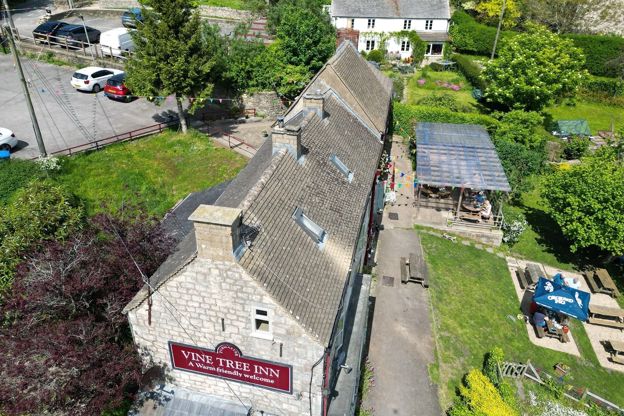
The Vine Tree Inn
Pubs · Stroud
A pub at Randwick, about 2.5 miles by road from Stroud, whose chef was Cotswold Life's chef of the year in 2025, with dogs welcome and a tiered garden looking over the valleys.
Dog-friendly · Walker-friendly
Verified Nov 2026
-
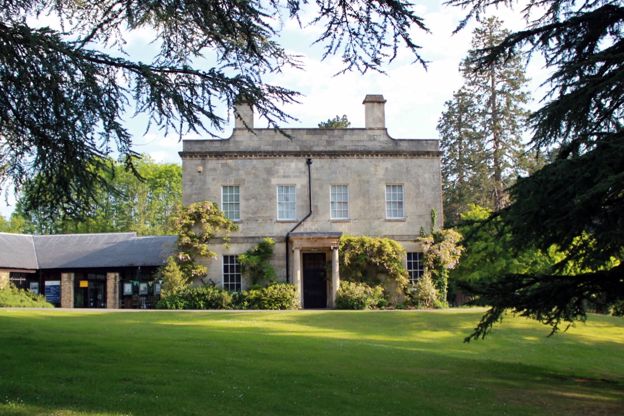
Museum in the Park
Museums and galleries · Stroud
Stroud's free museum in a seventeenth-century house in Stratford Park, with a walled garden and a café, closed on Mondays and for a few weeks in winter.
Rainy days · Car-free · Family-friendly
Verified Oct 2026
-
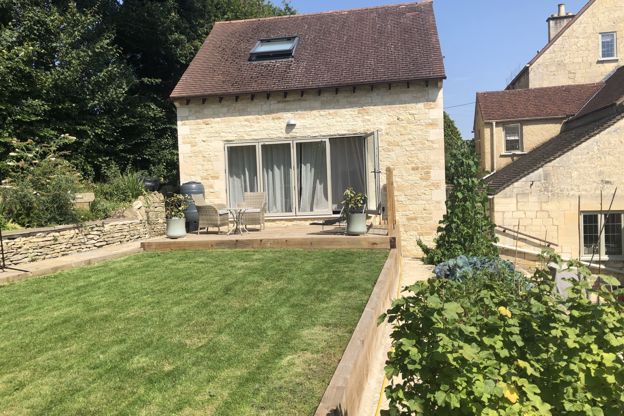
Cotswold Lodge
Self-catering · Painswick
A one-bedroom lodge on Stamages Lane, Painswick, for two adults and up to two young children, with a deck over the valley and free parking.
Verified Oct 2026
Stories about Standish Wood
-
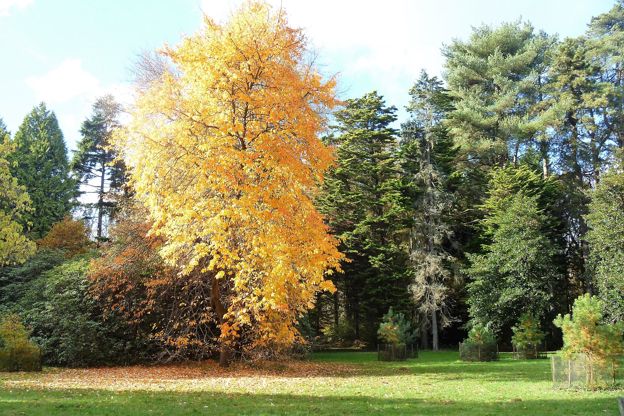
Autumn in the Cotswolds
Story · Guides · 10 minute read
Autumn in the Cotswolds, from Westonbirt's maples and Batsford to the beech woods of the escarpment, Blenheim's park and the Slad valley: when the colour comes, the best autumn walks, the October events, how to miss the half-term crowds, what to wear and where to stay for a fire.
-
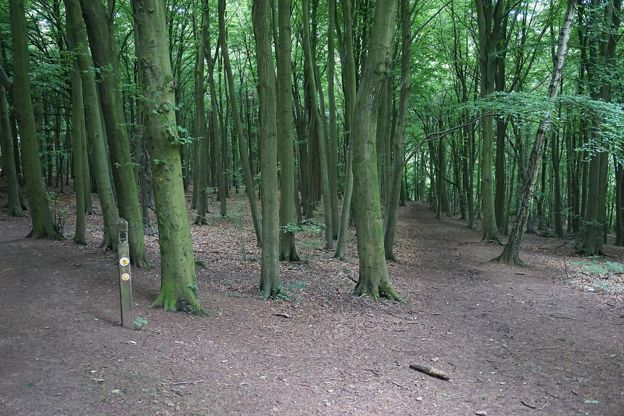
Bluebell woods in the Cotswolds
Story · Guides · 10 minute read
The best bluebell woods in the Cotswolds, from Westonbirt's Silk Wood and Lynches Wood below Dover's Hill to Standish Wood, Frith Wood, Siccaridge Wood and Foxholes: when they flower, who looks after each wood, where to park, the dog rule and the walk that goes through it.
-
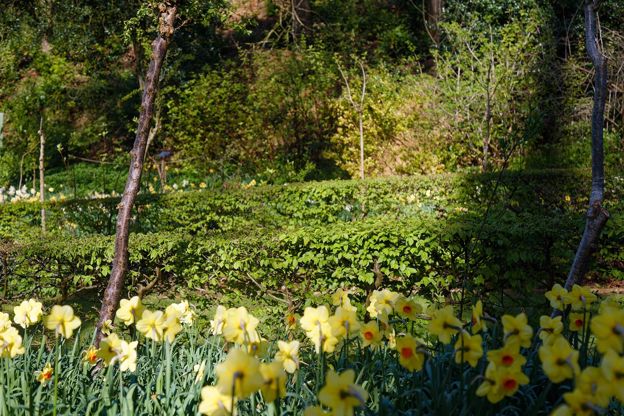
The Cotswolds in April
Story · Guides · 8 minute read
The Cotswolds in April: Easter and its crowds, the bluebell woods from the middle of the month, blossom and the gardens reopening, the jazz festival at the month's end, what opens when, four walks through the bluebells, and a day on the Stroud edge.
More sights to see
-
Haresfield Beacon
Sight · Viewpoint · Stroud and the Five Valleys
A National Trust promontory of the Cotswold Edge north-west of Stroud, with a small Iron Age hillfort reused in Roman times, a beacon mound carrying the trig point and a view over the Severn estuary to the Forest of Dean and, on a clear day, the Brecon Beacons.
-
Painswick Beacon
Sight · Hill fort or barrow · Painswick
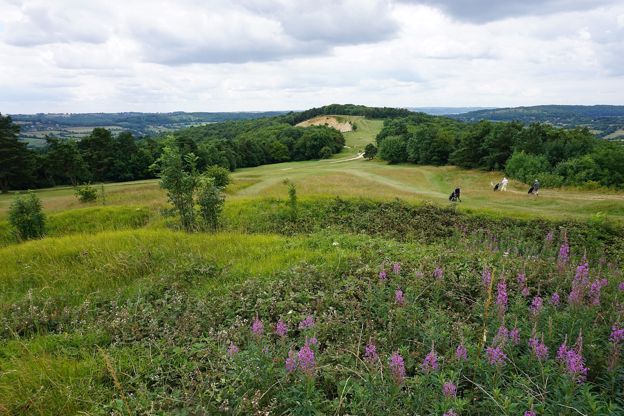
Painswick Beacon is a hill north of Painswick, about 280m high, crowned by a large Iron Age hill fort with triple ramparts. Royalist troops camped here in 1643. It is open common land on the Cotswold Way, shared with a golf course, with views over the Severn Vale.
-
Rodborough Common
Sight · Common or park · Stroud and the Five Valleys
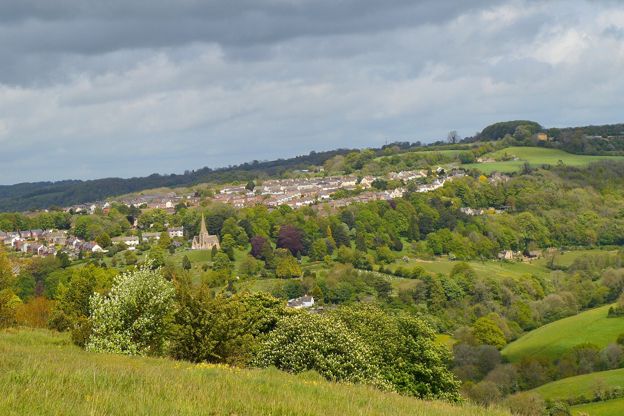
Open limestone grassland on the hill between Stroud and the Golden Valley, owned by the National Trust, known for rare pasqueflowers in spring, early purple orchids in May and over 30 kinds of butterfly, grazed by commoners’ cattle, with Rodborough Fort on its brow.