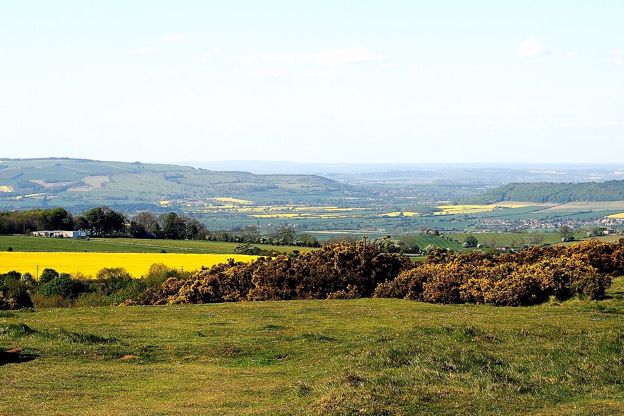
Des Blenkinsopp, CC BY-SA 2.0, via Wikimedia Commons
Cirencester and the Coln Valley
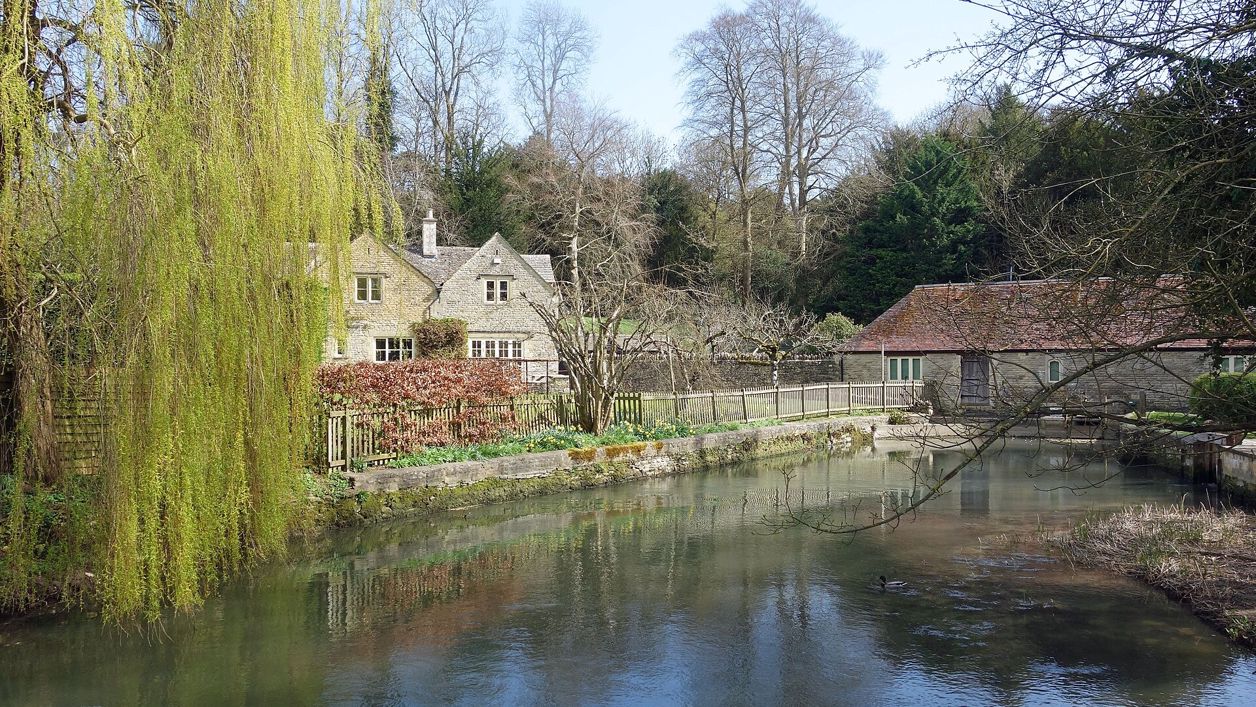
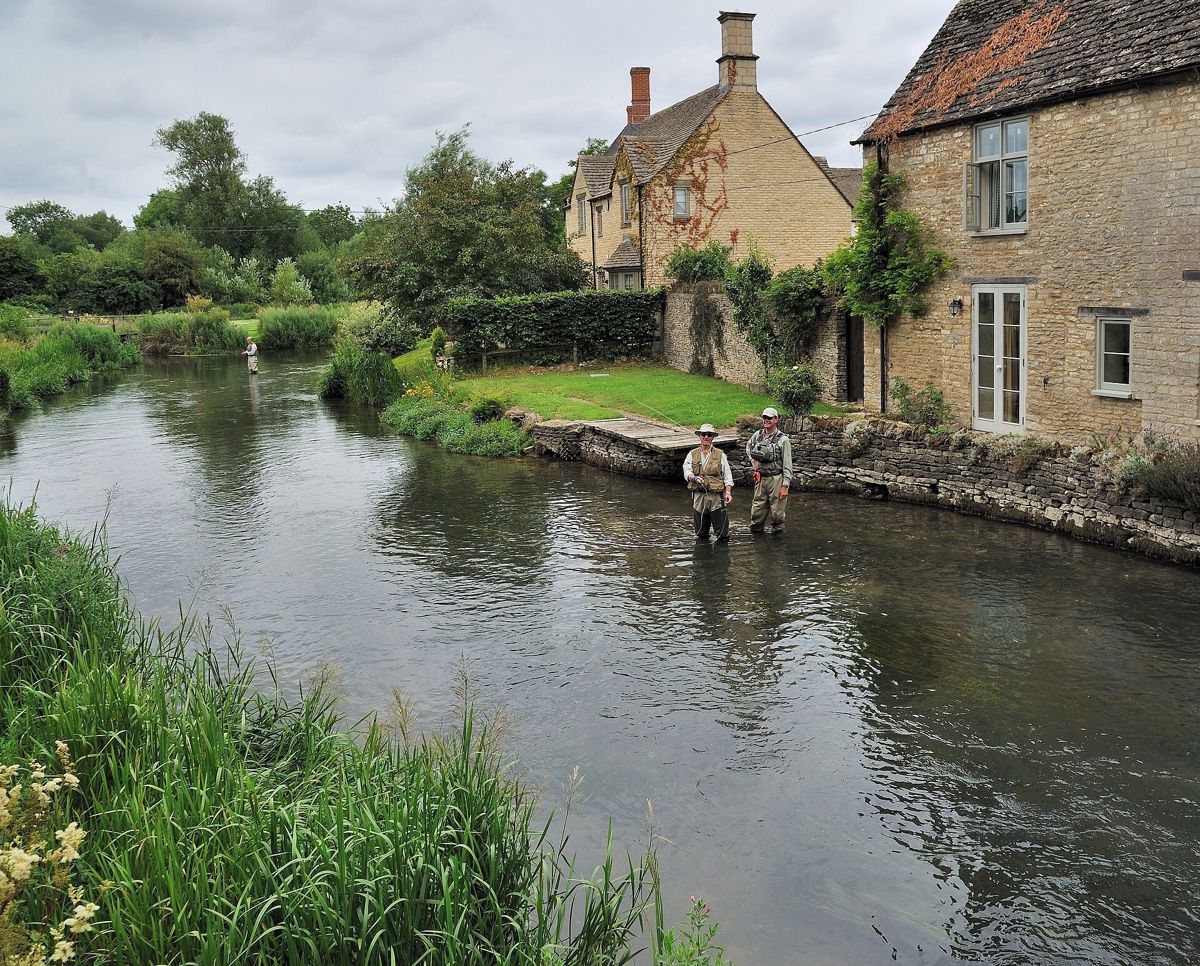
Cirencester, the Roman town of Corinium, and the River Coln running past Bibury, Coln St Aldwyns and Fairford to meet the Thames by Lechlade.
- Nearest station
- Kemble, on the line from London Paddington, for Cirencester
- Best time
- Spring and summer for the river; early or late in the day at Bibury
- When it's busy
- Bibury on summer weekends, when press reports put visitors at up to 20,000
About Cirencester and the Coln Valley
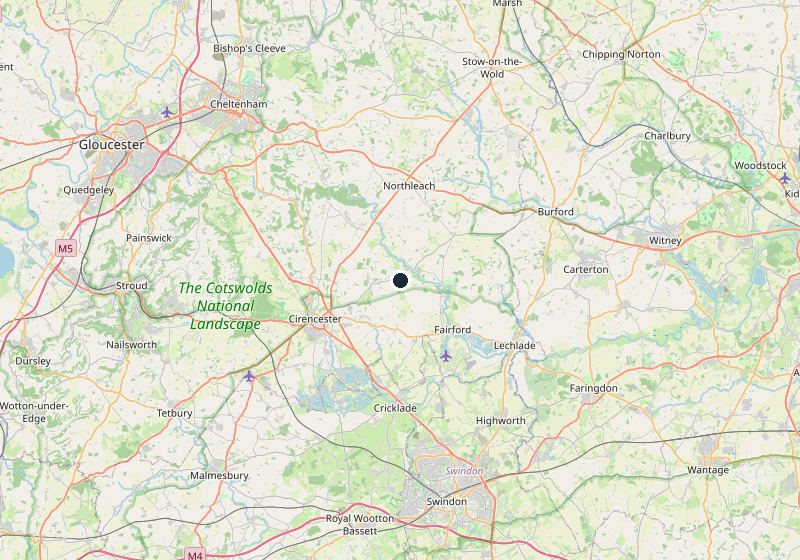
This is the south-eastern Cotswolds, where the wolds slope down towards the upper Thames. At its centre is Cirencester, the Roman town of Corinium, and running through it is the River Coln, which runs past Bibury and Fairford on its way to the Thames near Lechlade.
Where the valley begins and ends
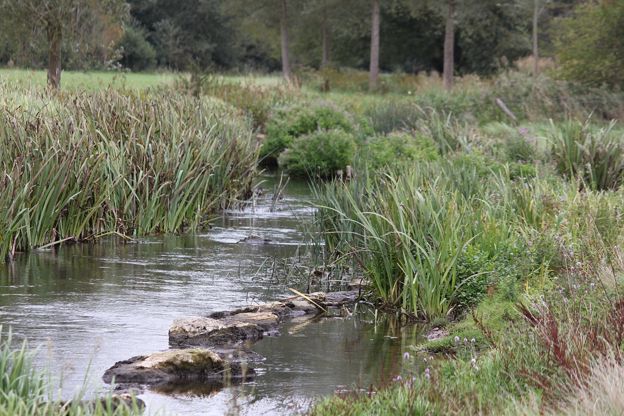
The Coln rises near Sevenhampton on the high wolds and runs south-east for its whole length through this region: past Withington and Chedworth, under Bibury's Arlington Row, through Coln St Aldwyns and Quenington to Fairford, and into the Thames at Inglesham, just above Lechlade. The Leach runs beside it through Northleach, Eastleach and Southrop, and the Churn through Cirencester. The Fosse Way crosses the valley at Cirencester, where the North Cotswolds begin at Northleach, and south of the town the land flattens into the Cotswold Water Park, more than 170 gravel lakes round South Cerney, before the South Cotswolds start at Tetbury. Most of it is Gloucestershire, in Cotswold district, whose offices are in Cirencester; Inglesham is just over the line in Wiltshire and Kelmscott in Oxfordshire.
Cirencester
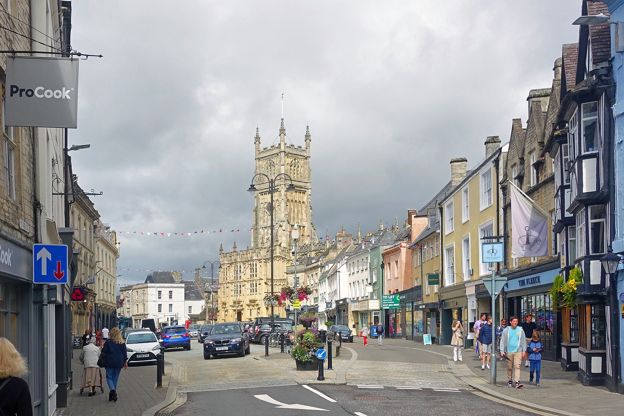
Cirencester is the region's market town, with the Corinium Museum's Roman mosaics, a Roman amphitheatre on its edge, a great wool church facing the Market Place and Earl Bathurst's park behind it. Its Charter Market runs on Mondays and Fridays. Our guide to the Roman Cotswolds starts there, and for a bed, see where to stay in Cirencester.
Northleach, on the A40 to the north-east, is the other wool town, with one of the great wool churches, its floor full of merchants' brasses, and the Old Prison, built in the early 1790s, whose cells and courtroom are free to see. Kemble, south-west of Cirencester, is the village with the region's station. The Water Park's Gateway Centre is on the Spine Road at Cerney Wick, by South Cerney; the beach at Cotswold Country Park may have closed, so check with the Cotswold Lakes Trust.
Down the Coln
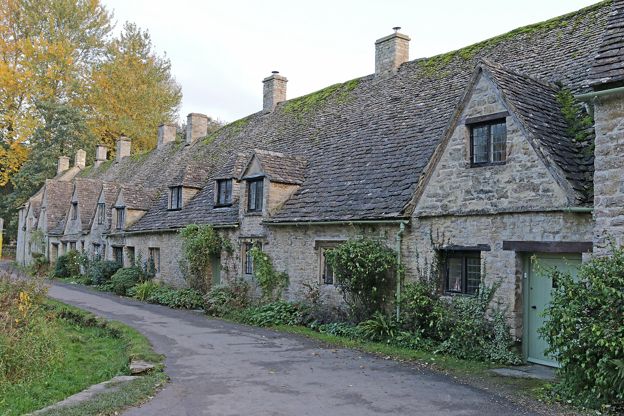
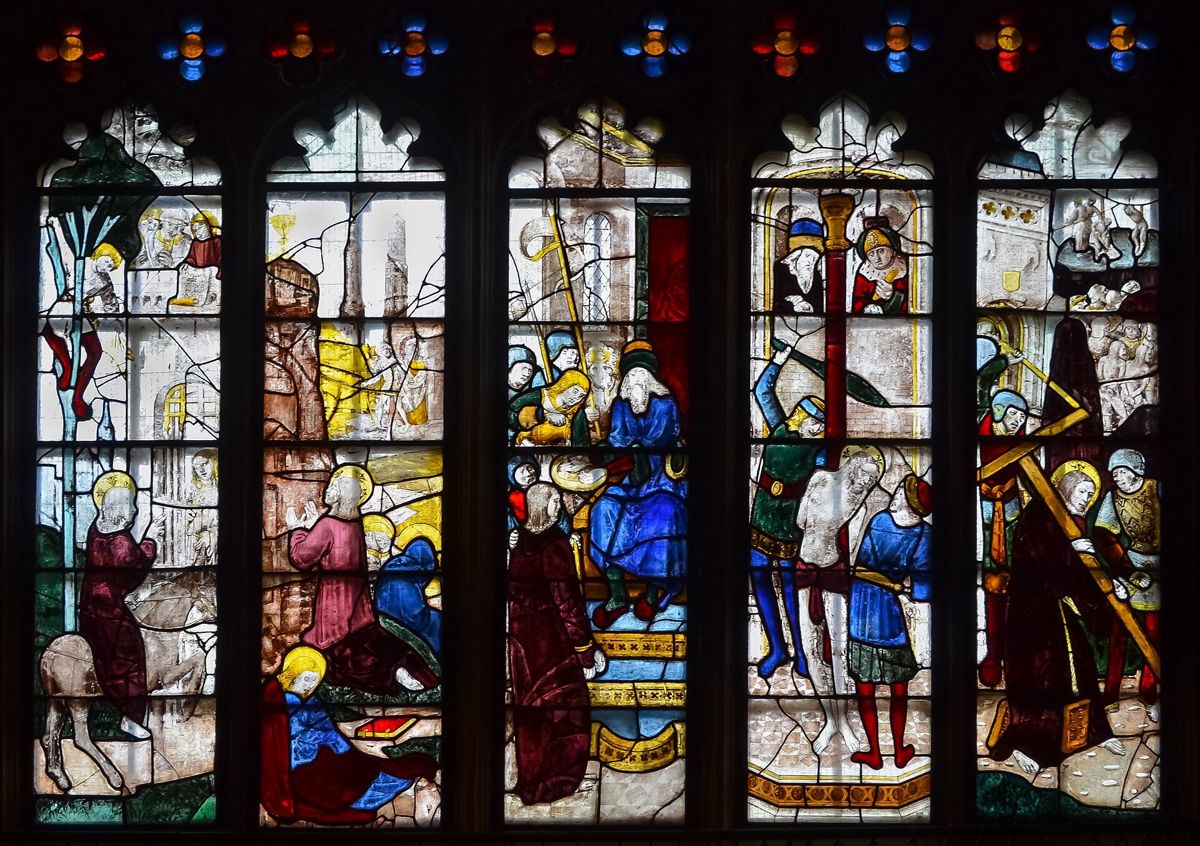
Bibury is the valley's famous village, for Arlington Row and the water meadow of Rack Isle, and its busiest. A few miles downstream, Coln St Aldwyns and Quenington have the same river and stone, a Norman church and a Knights Hospitaller gateway, and few visitors. Fairford has what its parish calls the only complete set of late medieval glass in a parish church in the country, and Lechlade-on-Thames is where the Coln and the Leach meet the Thames, with the river's highest lock and William Morris's Kelmscott Manor nearby.
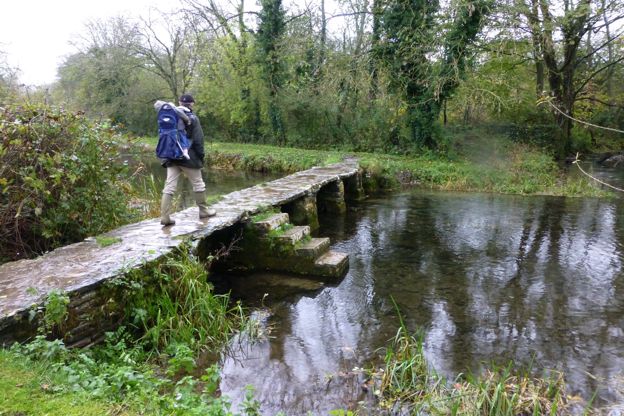
Above Bibury, Ablington is a hamlet with an Elizabethan manor of 1590 seen from the lane, and Barnsley has Rosemary Verey's garden at Barnsley House, now the hotel THE PIG in the Cotswolds, with the Village Pub opposite. Chedworth, in the next valley, has the Roman villa found in its woods in 1864, with a mosaic that National Trust archaeologists have dated to the fifth century, and Withington a Grade I church with two Norman doorways. Over the Leach, Eastleach is two villages facing each other across the river, St Andrew's and St Michael and St Martin, joined by Keble's Bridge, a clapper bridge of flat slabs. Southrop, downstream, has the Thyme estate and its cookery school. North-west of Cirencester, the Duntisbournes are four hamlets along 2 miles of the Dunt brook, where Duntisbourne Rouse's tiny church has a vaulted chapel under its chancel and fifteenth-century misericords. East of Cirencester, Ampney Crucis has a Grade I medieval cross in its churchyard, which Historic England thinks gave the parish its name, and Holy Rood church keeps its fourteenth-century wall paintings.
Sights worth a detour
Rome is the reason to start in Cirencester: the Corinium Museum shows Roman mosaics from a town and district where more than 90 are known, and the amphitheatre, built early in the second century for about 8,000 people, is free on the edge of town, with Cirencester Park and its 8km Broad Ride behind the church, where a day pass is needed. Chedworth Roman Villa is the country house of the same world. Down the valley, Arlington Row is the fourteenth-century wool store turned weavers' cottages, St Mary's at Fairford holds 28 windows of glass made about 1500 to 1515, and below Lechlade, at Kelmscott, Kelmscott Manor, William Morris's home from 1871, Inglesham church, which he saved from restoration, and Father Thames at St John's Lock make a day by the river. The Roman Cotswolds and William Morris carry the stories.
Walks
The National Landscape's 6-mile circuit between Bibury and Coln St Aldwyns follows the river through the water meadows with gates but no stiles. The Quenington to Fairford circuit follows the Coln down through a permitted wood to Fairford, with several stiles, and the Thames Path runs from Lechlade to Kelmscott, about 3 miles.
For the upper valley, Bibury and Ablington climbs the Salt Way over open wold, and Northleach, Hampnett and the Saltway is stile-free and passes Hampnett's painted Norman chancel. Eastleach and the River Leach is 4.4 miles (7.1km) past both churches, muddy from autumn to spring by walkers' reports, with one spot on the way back that is often flooded, Cirencester Park, Pope's Seat and Stratton is the easy town loop, and Lechlade and St John's Lock is flat, 3 miles and about 45 minutes; walkers found the riverside path under water in January and February 2026 and report cattle by the river, so check after rain.
Eating and staying
Bibury's Swan stands by the bridge. The quieter beds are the New Inn at Coln St Aldwyns, the Keepers Arms in Quenington and the Wheatsheaf at Northleach. In Cirencester, Igloo and Sam & Jak are the independent restaurants, the Organic Farm Shop on the Burford road is on a farm where organic conversion began in 1990, and the Bathurst Arms at North Cerney has rooms by the Churn. By the Thames, the Trout Inn at St John's Lock has been an inn since the fifteenth century. Where to stay in Cirencester has the full list.
The Cotswolds Info newsletter
Events, new places and the best of the season, about once a month. Unsubscribe at any time.
Getting around
Kemble station is about 4 miles from Cirencester, with the 882 bus. The 855 runs from Cirencester through Bibury and Northleach to Bourton-on-the-Water, the 77 from Cirencester to Fairford and Lechlade, and the 51 to Swindon and Cheltenham, which also runs on Sundays. For the rest of the Cotswolds, see things to do and where to stay.
Kemble is about 70 minutes from Paddington, with a taxi rank and the 882 on about five runs a day from Monday to Saturday. The X52 from Oxford and Cheltenham stops in Northleach, and the Robin minibus covers Bibury, Fairford, Lechlade and Kemble on booking. There is no bus to Bibury on Sundays; check bank holidays with Pulhams. Getting here, the buses page and the Cotswolds without a car have the times.
When to come and where it is busiest
Bibury is the problem and the rest of the valley the answer. Press reports put visitors at up to 20,000 on a peak summer weekend, so see Arlington Row before 10am or after 5pm and walk on down the river, where the crowd soon thins. In September 2026 the parish council agreed to reseed and fence off the grass by Swan Bridge, and to ask the National Trust to do the same by the footbridge to Arlington Row, to keep visitors out of the river there. Cirencester is liveliest on Monday and Friday for the Charter Market, Fairford fills for the Royal International Air Tattoo in mid-July (16 to 18 July in 2027), and Kelmscott Manor opens from April to October. The quiet corners are Eastleach, Southrop and Withington on any day of the year.
Last verified 1 November 2026 by our editors
Places in Cirencester and the Coln Valley
-
Ablington
Hamlet · Cirencester and the Coln Valley
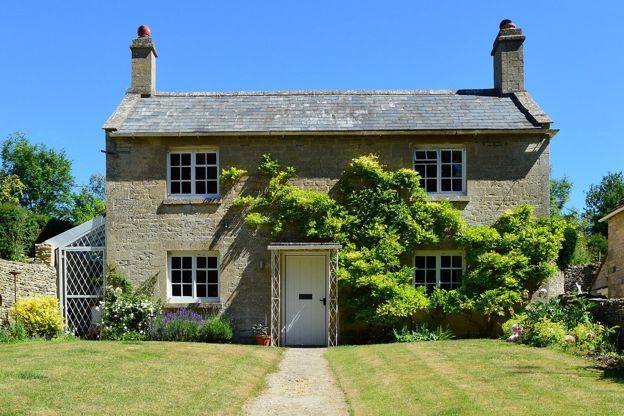
A hamlet of Bibury parish a mile up the River Coln from Arlington Row, with the Elizabethan manor where J. Arthur Gibbs wrote A Cotswold Village, a small green and no shop, pub or coach. Walk here from Bibury.
-
Ampney Crucis
Village · Cirencester and the Coln Valley
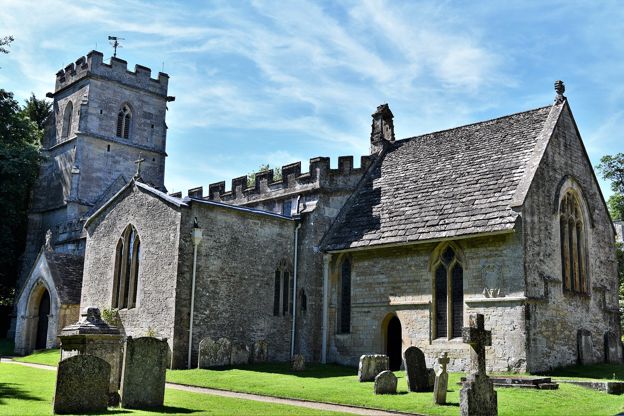
A village on the Ampney Brook 4 miles east of Cirencester, with Holy Rood church, its Grade I medieval churchyard cross and its wall paintings, an old coaching inn by the water and two smaller Ampneys a mile or so away.
-
Barnsley
Village · Cirencester and the Coln Valley
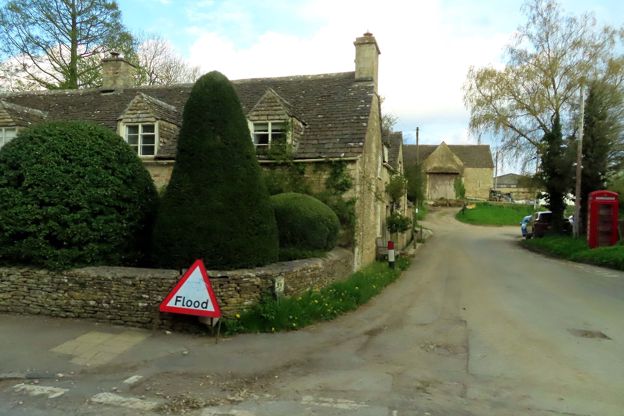
An estate village of one street on the Cirencester to Bibury road, with Rosemary Verey's garden behind the wall of Barnsley House, a Norman church and a pub with rooms. Four miles from Cirencester, and quiet.
-
Bibury
Village · Cirencester and the Coln Valley
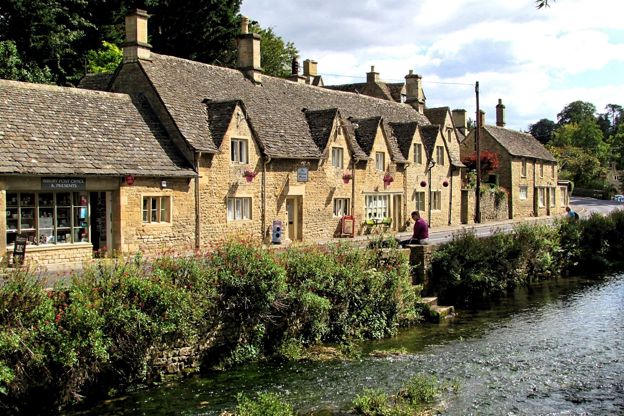
A village on the River Coln with a row of medieval cottages that draws up to 20,000 visitors on a peak weekend, by press estimates. Come early or late, and walk on down the river.
-
Chedworth
Village · Cirencester and the Coln Valley
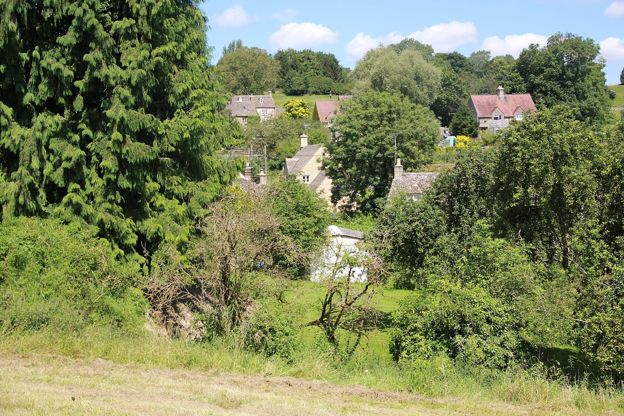
A long village down both sides of a steep valley between Cirencester and Northleach, with a Grade I church, a seventeenth-century inn below it, 800 acres of woods with a disused railway through them, and the Roman villa a mile away through the trees.
-
Cirencester
Market town · Cirencester and the Coln Valley
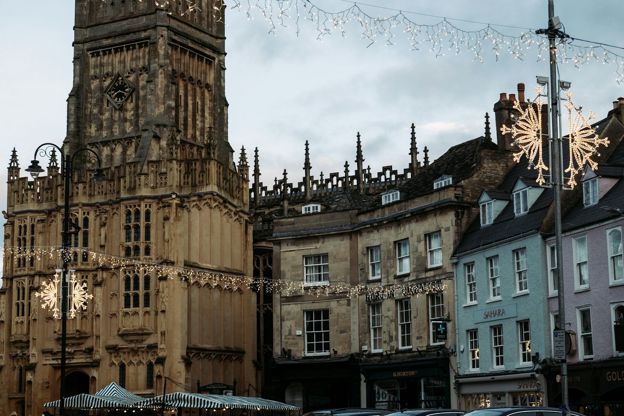
The Roman town of Corinium and the market town of the southern Cotswolds, with a museum of its mosaics, a great wool church, an amphitheatre and Earl Bathurst's park.
-
Coln St Aldwyns
Village · Cirencester and the Coln Valley
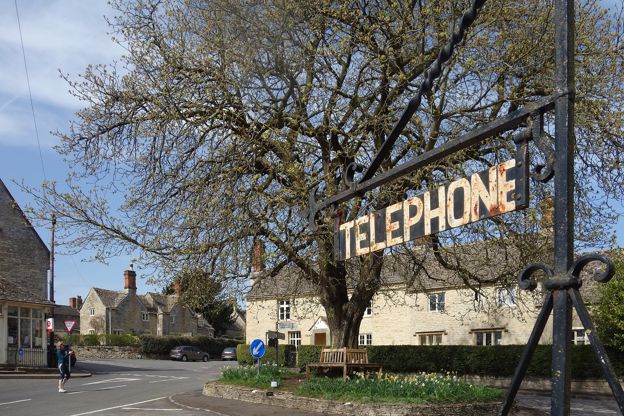
Two villages facing each other across the River Coln a few miles below Bibury, with a Norman church, a Knights Hospitaller gateway and a pub, and few visitors.
-
Eastleach and Southrop
Village · Cirencester and the Coln Valley
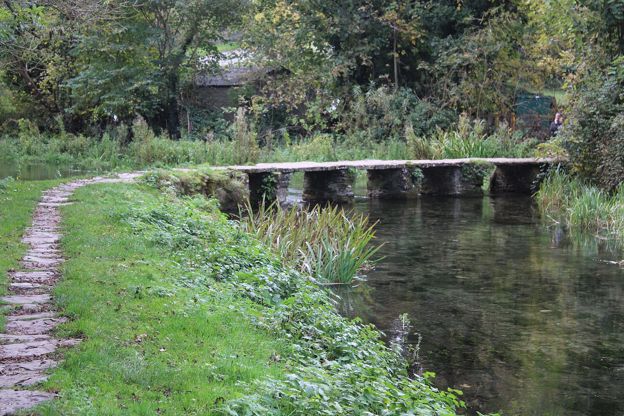
Two villages on the River Leach east of the Coln: Eastleach, where two Norman churches face each other across a clapper bridge, and Southrop, a mile and a half downstream, with the Swan and Thyme. Daffodils in spring, hardly a visitor in any season.
-
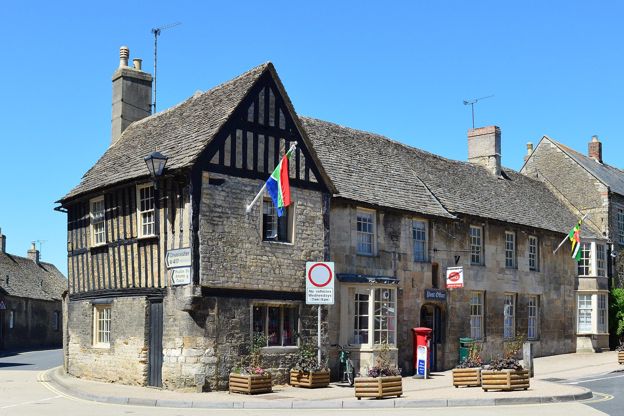
Fairford
Market town · Cirencester and the Coln Valley
A small town on the River Coln with the only complete set of late medieval glass in an English parish church, and the home of the Royal International Air Tattoo.
-
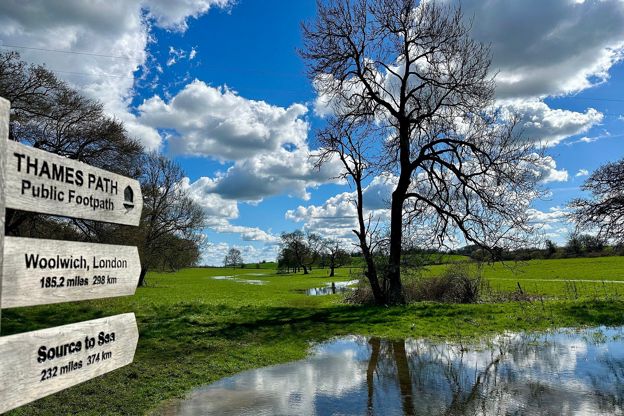
Kemble
Village · Cirencester and the Coln Valley
The village with the station for Cirencester and the south Cotswolds, about a mile and a half from the source of the Thames where the Thames Path begins, with a church spire of 1824, the old RAF airfield and the Thames Head Inn on the A433.
-
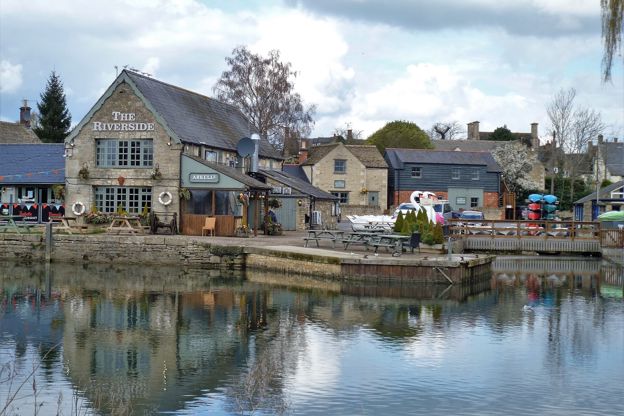
Lechlade-on-Thames
Market town · Cirencester and the Coln Valley
The town where the Thames becomes navigable, with the highest lock on the river, a toll bridge and Father Thames, and William Morris's Kelmscott Manor 3 miles away.
-
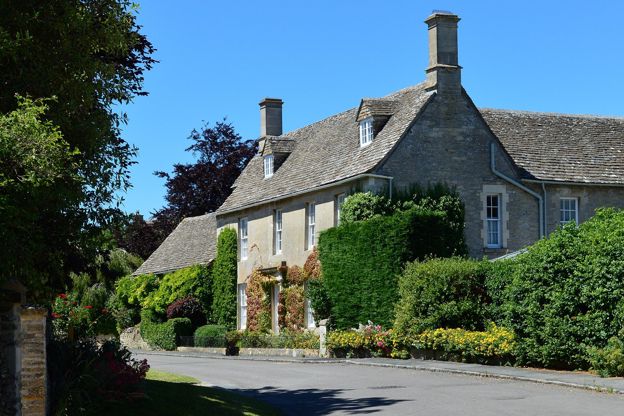
Quenington
Village · Cirencester and the Coln Valley
A village of about 600 people on the River Coln between Bibury and Fairford, with two of the finest Norman doorways in the Cotswolds, the gatehouse of a Knights Hospitallers' preceptory, a green, a free house with rooms and a river walk to Fairford.
-
South Cerney
Village · Cirencester and the Coln Valley
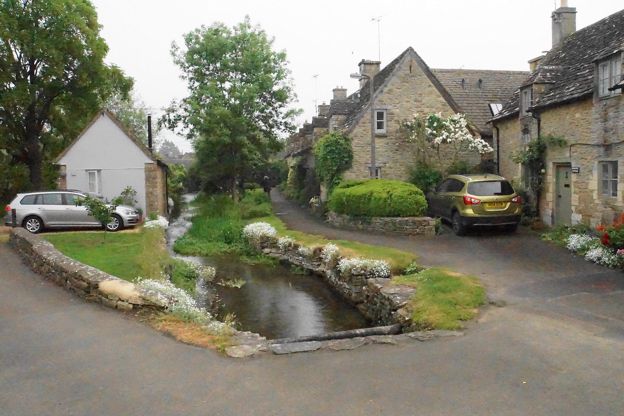
A large village on the River Churn south of Cirencester, with a Norman church that once hid a twelfth-century crucifix, the infilled locks of the Thames and Severn Canal and the Cotswold Lakes at the end of the street.
-
The Cotswold Water Park
Countryside · Cirencester and the Coln Valley
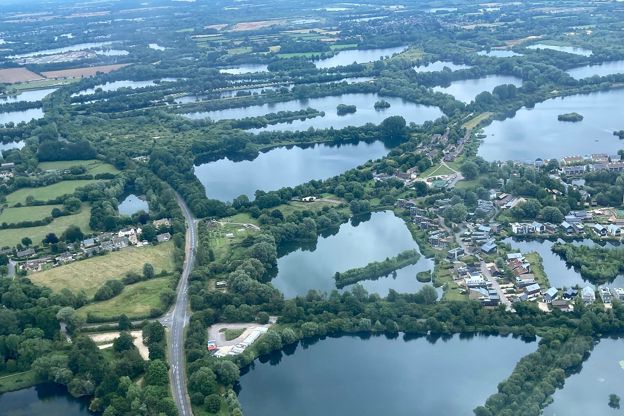
Flooded gravel pits south of Cirencester, now called the Cotswold Lakes: more than 170 lakes on Natural England's count across the Gloucestershire and Wiltshire border, with bird hides, booked open-water swims, the Thames Path and an old railway to cycle.
-
The Duntisbournes
Village · Cirencester and the Coln Valley
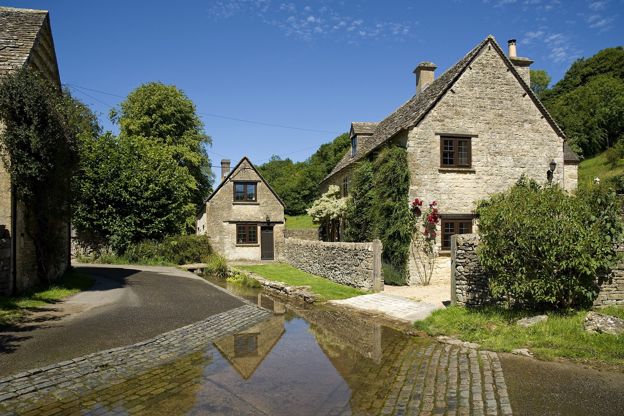
Four hamlets along 2 miles of the Dunt, a brook north-west of Cirencester: Duntisbourne Abbots on its hill, Duntisbourne Leer where the lane fords the stream, Middle Duntisbourne and Duntisbourne Rouse, whose tiny church has a crypt and misericords. No pub, no shop, no visitors.
-
Withington
Village · Cirencester and the Coln Valley
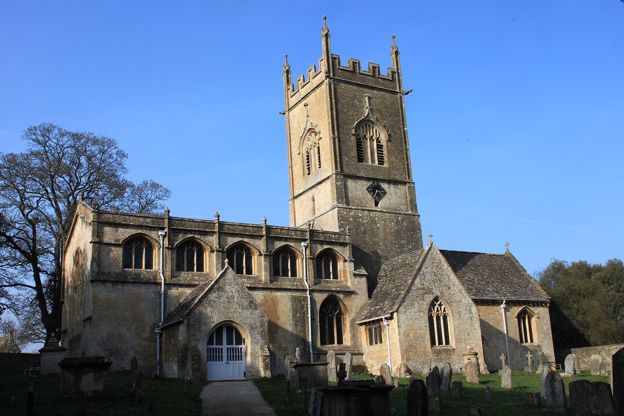
A village in two halves either side of the upper Coln, about 6.5 miles from Cheltenham, with a Grade I church, the Mill Inn by the bridge, Withington Woods above and a Roman villa under a field on the road to Chedworth.
Things to do in Cirencester and the Coln Valley
Historic houses and heritage · Lechlade-on-Thames
Kelmscott Manor
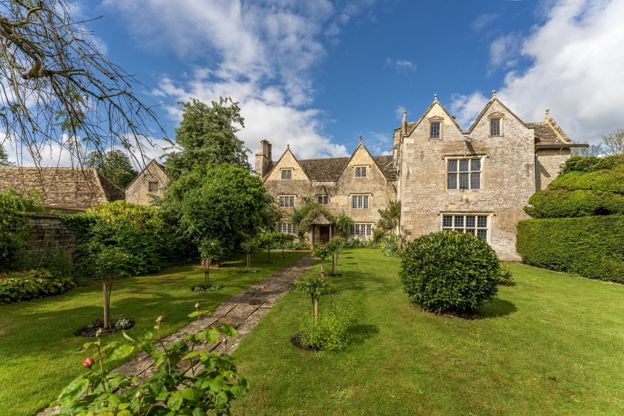
William Morris's country home by the upper Thames near Lechlade, which he rented from 1871 until 1896, with its rooms, gardens and his grave nearby.
-
Corinium Museum
Museums and galleries · Cirencester
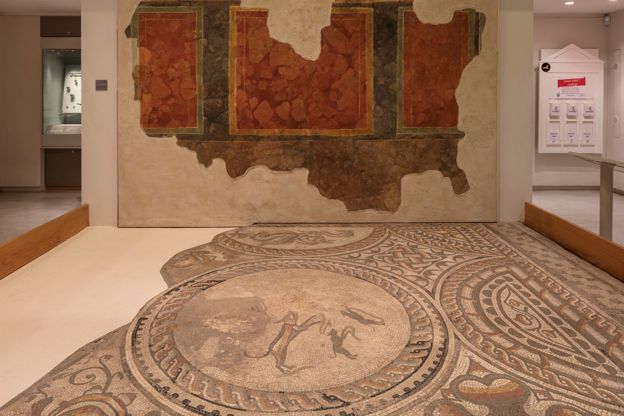
Cirencester's museum of Roman Corinium, with the Hare, Four Seasons and Orpheus mosaics, Anglo-Saxon grave goods and medieval sculpture.
Family-friendly · Rainy days · Car-free
Verified Oct 2026
-
Cirencester Roman Amphitheatre
Historic houses and heritage · Cirencester
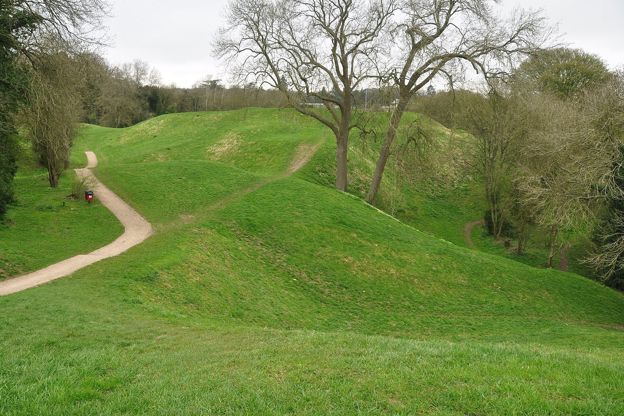
The grassy banks of a Roman amphitheatre built early in the second century to hold about 8,000 people, free to visit in daylight on the edge of Cirencester.
Dog-friendly · Car-free
Verified Oct 2026
-
Bibury Trout Farm
Family days out · Bibury
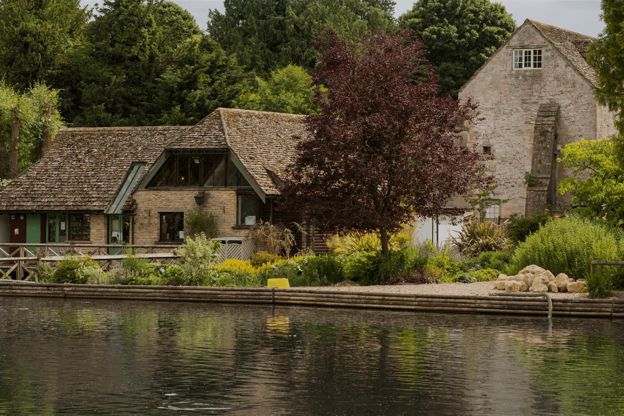
A working trout farm on the River Coln at Bibury, founded in 1902, with a café, a shop, catch-your-own fishing and its own pay car park.
Family-friendly · Dog-friendly
Verified Oct 2026
Where to stay in Cirencester and the Coln Valley
-
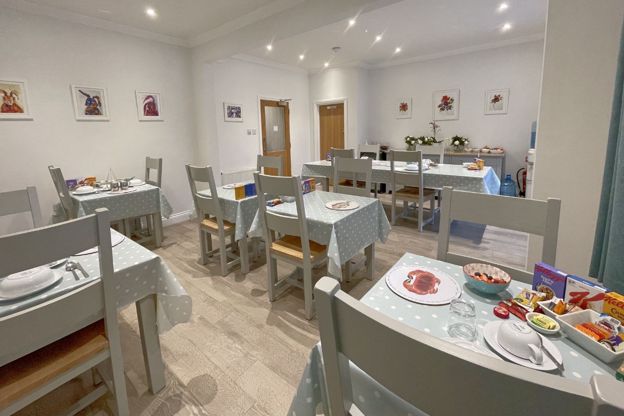
Cotswold Hare
B&B · Cirencester
A bed and breakfast with seven en suite rooms on Victoria Road, Cirencester, with a parking space for every room, for adults and children over ten.
Verified Nov 2026
-
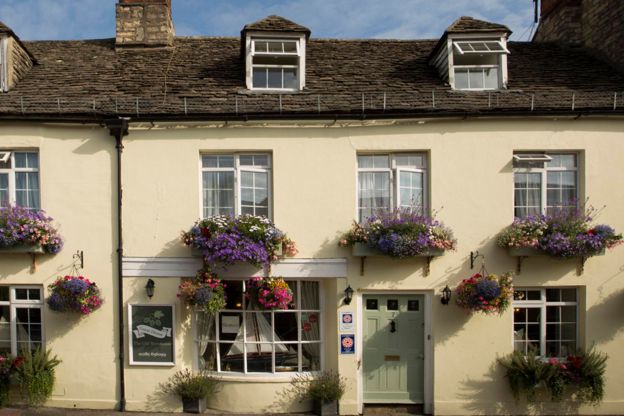
The Old Brewhouse
B&B · Cirencester
A bed and breakfast in a 17th-century town house on London Road, Cirencester, with ten rooms in the house and round a courtyard, free parking and a VisitEngland four-star rating.
Verified Oct 2026
-
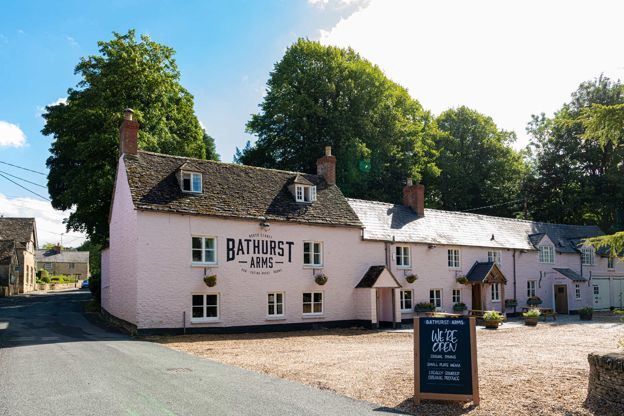
The Bathurst Arms
Inn · Cirencester
A pub with five rooms on the River Churn at North Cerney, about five miles north of Cirencester, with a beer garden, food every day and roasts on Sundays.
Verified Nov 2026
-
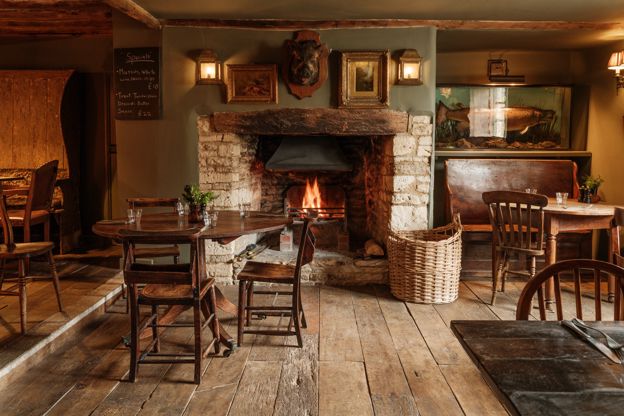
The Village Pub
Inn · Cirencester
A pub with six bedrooms in the eaves at Barnsley, about four miles from Cirencester, part of THE PIG group, with gravity-fed ales and steak night on Thursdays.
Dog-friendly
Verified Oct 2026
-
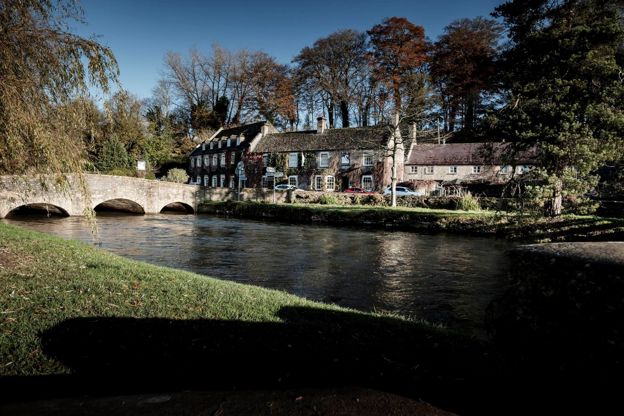
The Swan Hotel
Hotel · Bibury
A former coaching inn by the bridge over the River Coln in Bibury, part of Cotswold Inns and Hotels, with a brasserie, a lift, a free car park and dog-friendly rooms.
Dog-friendly · Wedding venues
Verified Nov 2026
-
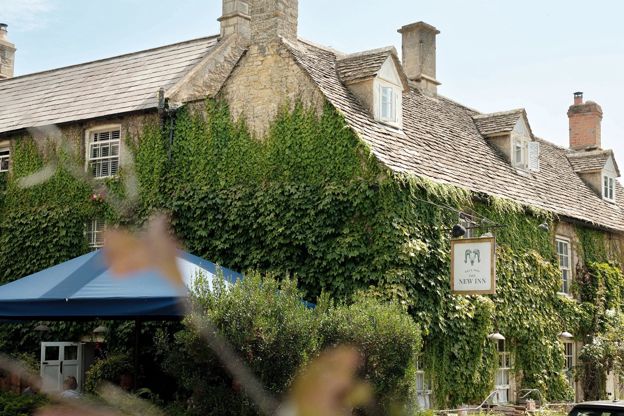
The New Inn
Inn · Coln St Aldwyns
A 16th-century coaching inn with rooms in Coln St Aldwyns, reopened in 2020 by Baz and Fred, with a Garden Suite and food every day.
Verified Nov 2026
Where to eat and drink in Cirencester and the Coln Valley
-
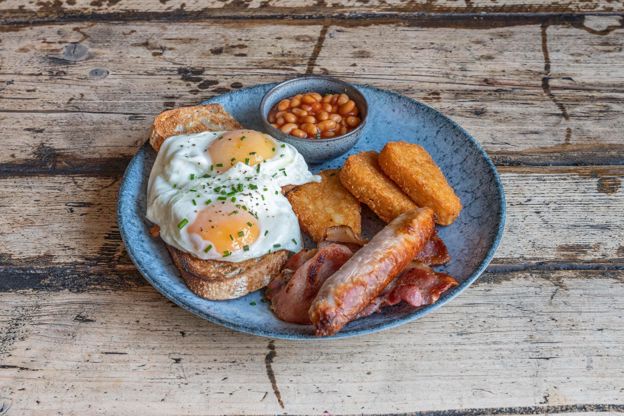
Igloo
Restaurants · Cirencester
A family-run restaurant on Castle Street, Cirencester, serving breakfast, lunch and dinner, with coffee, wine and cocktails, and dogs welcome downstairs.
Dog-friendly
Verified Nov 2026
-
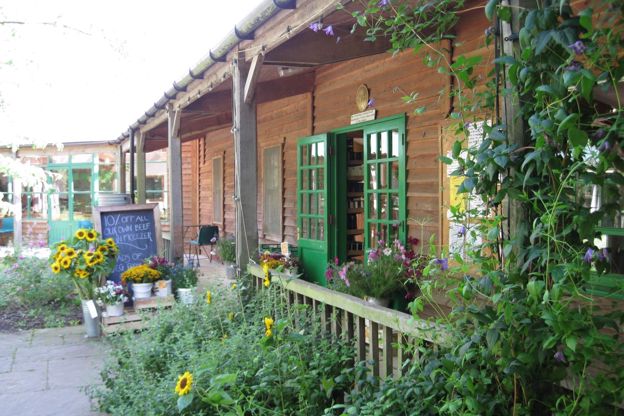
The Organic Farm Shop
Farm shops and delis · Cirencester
An organic farm shop and café at Abbey Home Farm on the Burford Road outside Cirencester, which began its organic conversion in 1990, with walks round the farm and EV charging.
EV charging
Verified Oct 2026
-
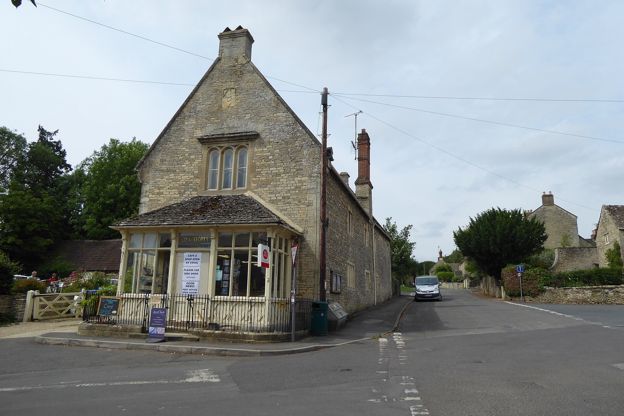
Coln Community Stores
Cafes and tearooms · Coln St Aldwyns
The village shop, café and post office on Main Street, Coln St Aldwyns, owned by local residents and the Countryside Alliance's best shop in the south west for 2026.
Walker-friendly
Verified Oct 2026
-
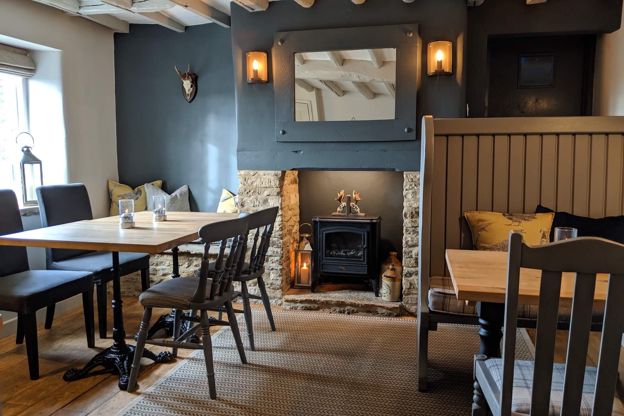
The Keepers Arms
Inn · Coln St Aldwyns
A family-run free house in Quenington with four adults-only bed and breakfast rooms above the pub, independent real ales and dogs welcome.
Dog-friendly
Verified Nov 2026
-
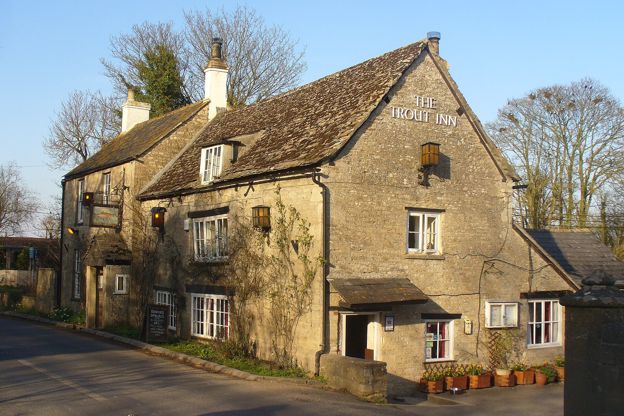
The Trout Inn
Pubs · Lechlade-on-Thames
A family-run pub by St John's Lock at St John's Bridge, Lechlade, recorded as an inn by 1692, with a riverside garden and fishing rights on the Thames.
Walker-friendly · Family-friendly
Verified Oct 2026
-
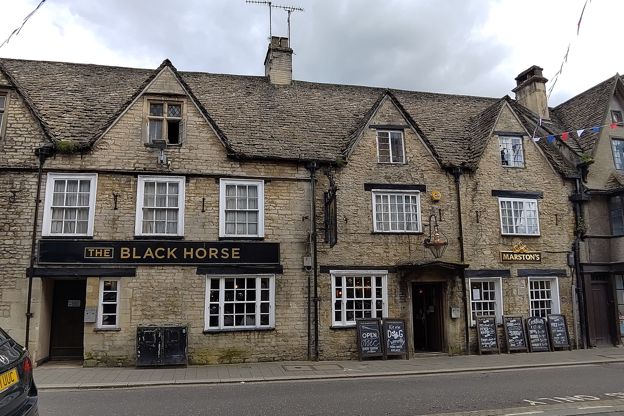
Black Horse
Pubs · Cirencester
A Marston's pub on Castle Street, Cirencester, with cask ale, a beer garden, three en suite rooms and dogs welcome.
Dog-friendly
Verified Oct 2026
Walks in and around Cirencester and the Coln Valley
-
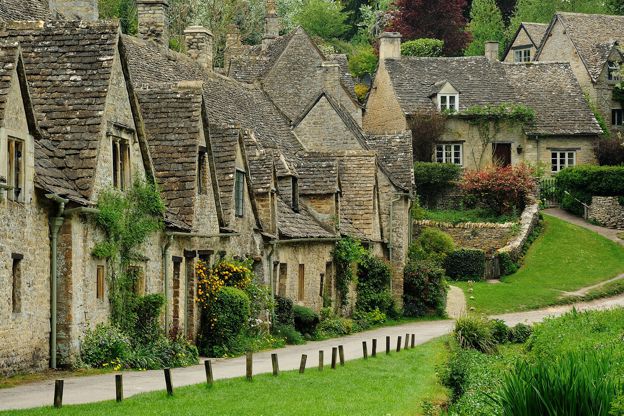
Bibury, Oxhill Wood and Akeman Street
Walk · Starts in Bibury · 1 hr, 45 mins · Circular · Dog-friendly
A 4-mile (6.6km) circular walk from the bridge by the Swan in Bibury, an hour and a half to two hours with a few short, steep climbs. It goes out by the church and up above the Coln to Oxhill Wood, along the line of the Roman Akeman Street and back over farmland to Arlington Row.
-
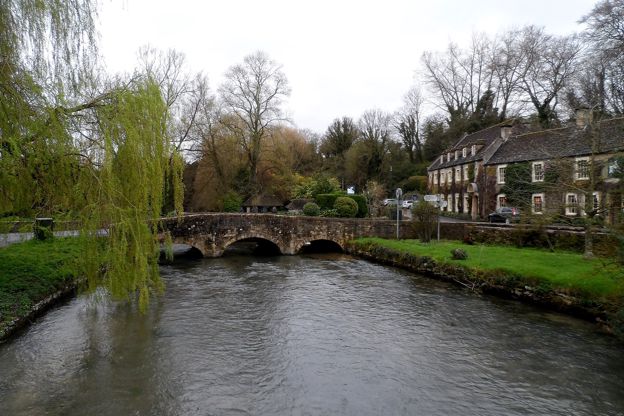
Bibury and the River Coln
Walk · Starts in Bibury · 2 hrs · Circular
A 4-mile (6.5km) circular walk from the bridge by the Swan in Bibury, about two hours with one climb and a muddy stretch. It crosses the Coln below Bibury Court, climbs through Oxhill Wood to the line of Akeman Street, passes a dewpond and returns by Arlington Row.
-
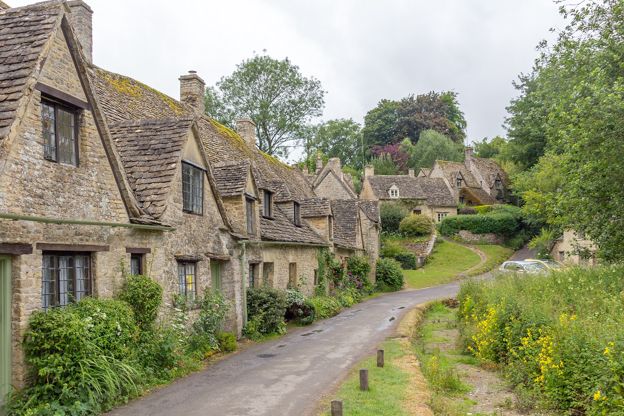
Bibury and Ablington
Walk · Starts in Bibury · 1 hr, 45 mins · Circular
A 5-mile (8.2km) circular walk from Arlington Row in Bibury, an hour and a half to two hours of moderate walking with a few stiles. It goes up Packhorse Lane and the Salt Way over open wold, down to Ablington and its Elizabethan manor, and back beside the River Coln.
Sights in and around Cirencester and the Coln Valley
-
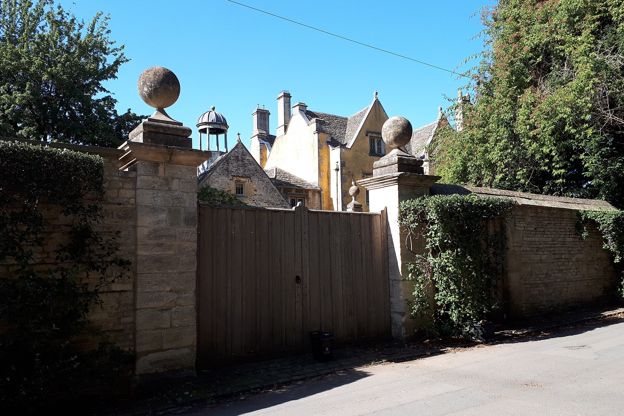
Ablington Manor
Sight · Historic building · Bibury
Ablington Manor is an Elizabethan house in the hamlet of Ablington near Bibury, dated 1590 for John Coxwell, with five carved royal heads over its porch. Listed Grade I and a private home, it is seen from the lane through the hamlet.
-
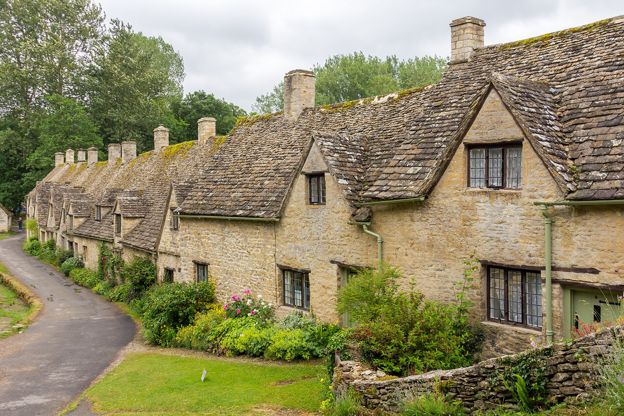
Arlington Row, Bibury
Sight · Historic building · Bibury
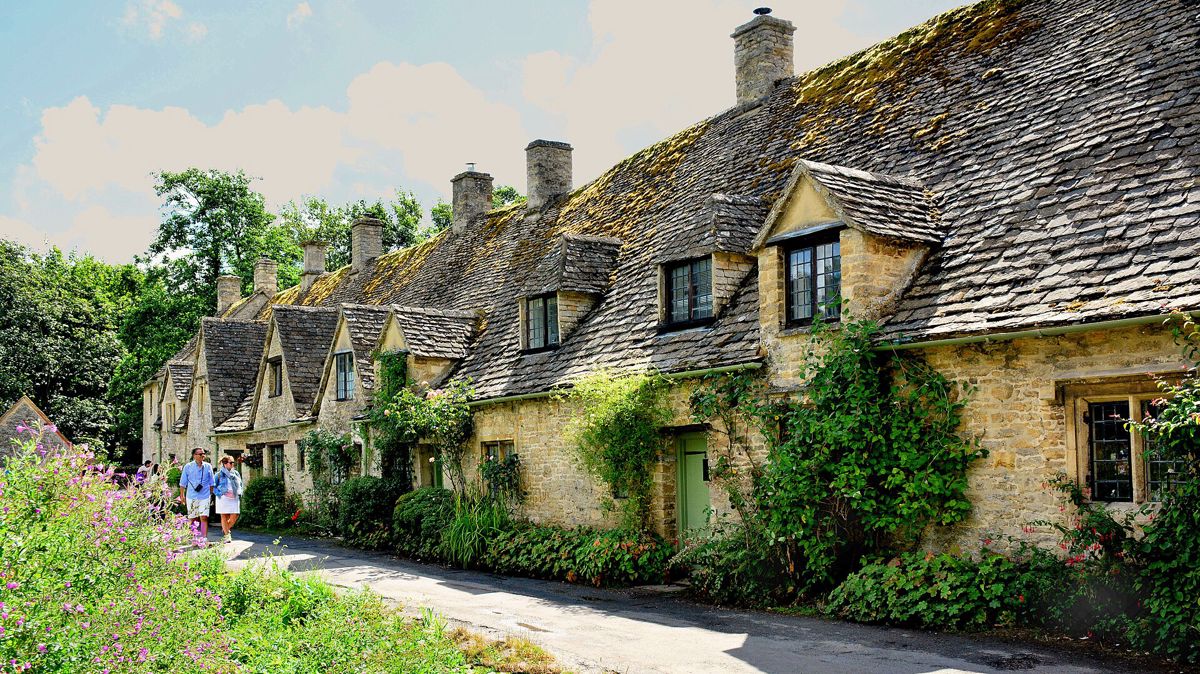
Arlington Row is a terrace of stone cottages above the mill stream in Bibury, built as a wool store in the late fourteenth century and turned into weavers' homes in the seventeenth. Grade I and owned by the National Trust, the cottages are lived in and seen from the path.
-
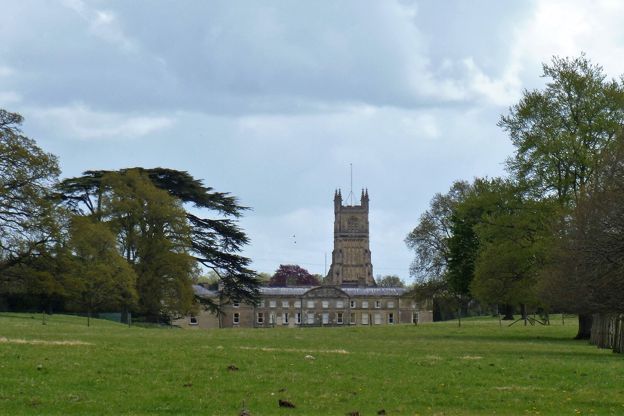
Cirencester Park
Sight · Common or park · Cirencester
The Bathurst family's landscape park on the western edge of Cirencester, planted from 1714 by the first Earl Bathurst with Alexander Pope: 8km of rides and woods along the Broad Ride, with Pope's Seat and Alfred's Hall. Grade I registered; a day pass is needed.
-
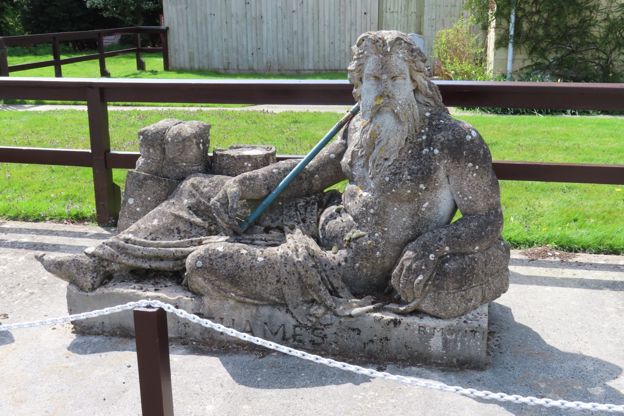
Father Thames and St John's Lock
Sight · Monument · Lechlade-on-Thames
Raffaelle Monti's reclining river god, modelled in cement for the Crystal Palace in 1854, beside St John's Lock below Lechlade, the first lock on the Thames. He lay at the river's source from 1958 until vandals drove him here in 1974. Grade II.
-
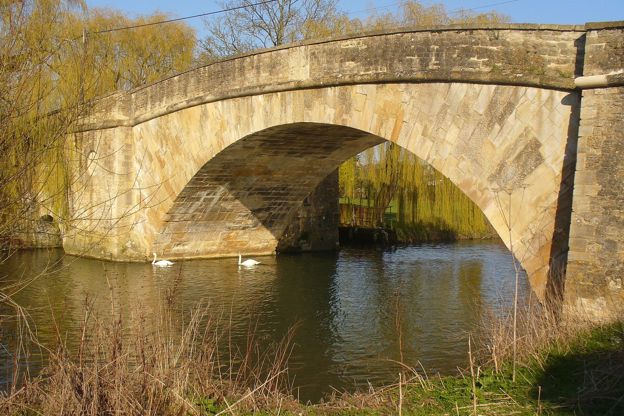
Halfpenny Bridge, Lechlade
Sight · Bridge · Lechlade-on-Thames
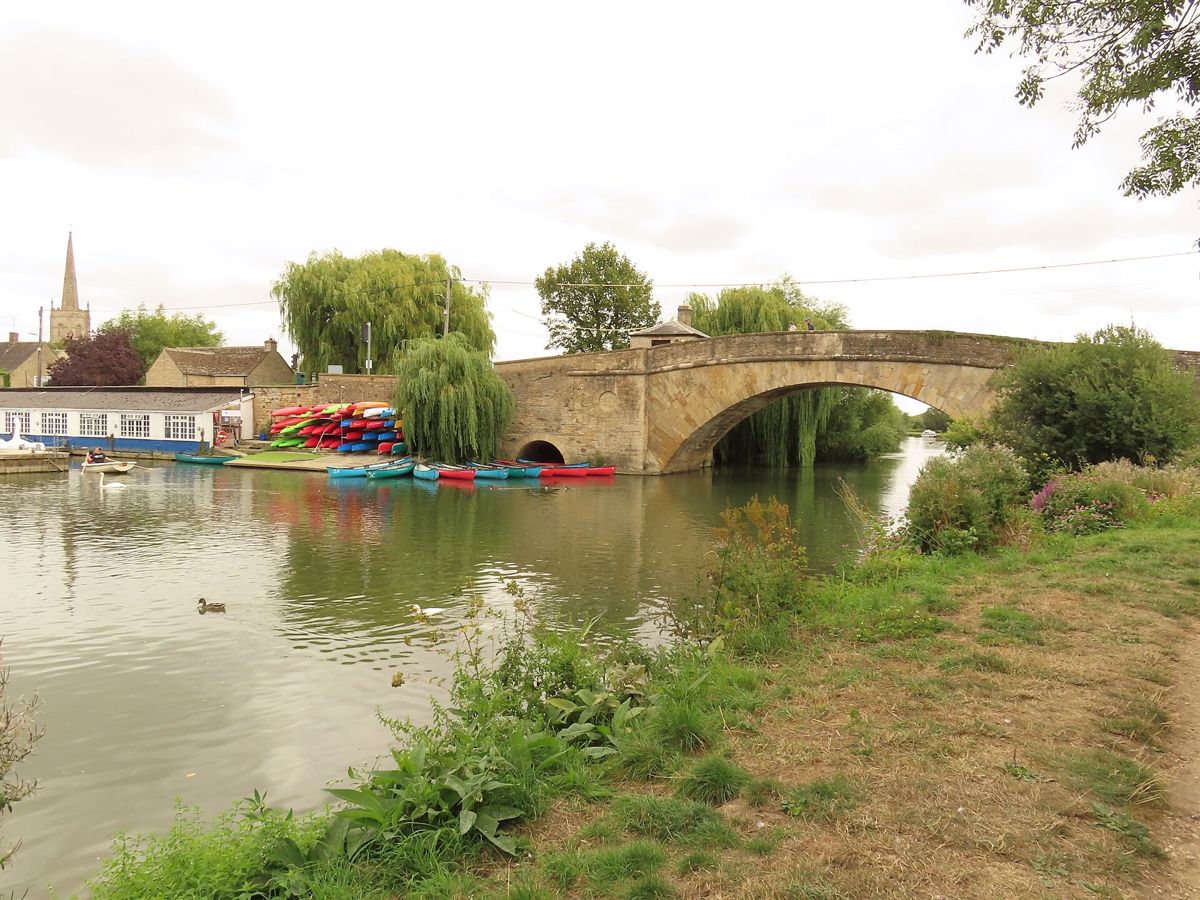
The single tall stone arch that carries Thames Street over the Thames at Lechlade, built under a turnpike Act of 1792, with a little square tollhouse on its corner. Named after the halfpenny walkers paid until 1839. Grade II; free.
-
Keble's Bridge, Eastleach
Sight · Bridge · Cirencester and the Coln Valley
A clapper bridge of flat limestone slabs on rubble piers across the River Leach, the old footbridge between Eastleach Turville and Eastleach Martin, with medieval origins and the name of the Keble family. Grade II; free on a public footpath.
Stories about Cirencester and the Coln Valley
-
Where are the Cotswolds?
Story · Guides · 11 minute read
The Cotswolds are a range of limestone hills in south-central England, a National Landscape of 787 square miles across six counties, most of it in Gloucestershire. Here is where they are, what the boundary includes, and what makes the stone golden.
Getting to Cirencester and the Coln Valley