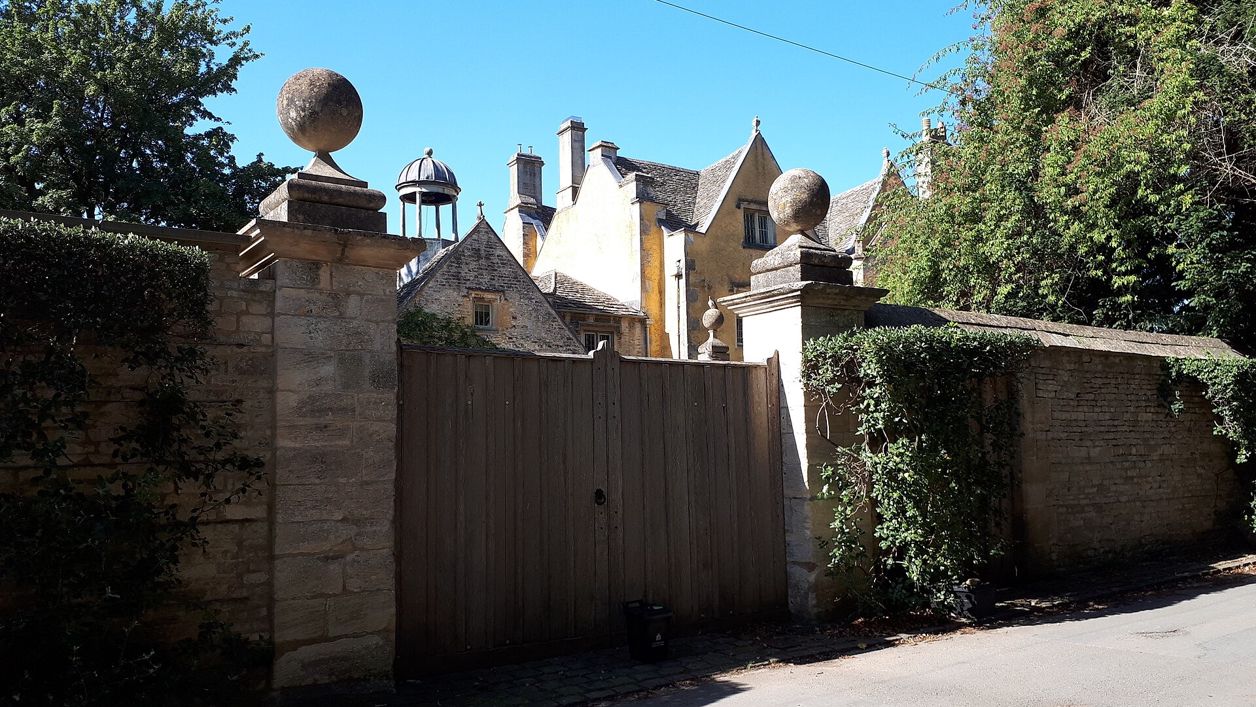
Vieve Forward, CC BY-SA 2.0, via Wikimedia Commons
Ablington Manor
Ablington Manor is an Elizabethan house in the hamlet of Ablington near Bibury, dated 1590 for John Coxwell, with five carved royal heads over its porch. Listed Grade I and a private home, it is seen from the lane through the hamlet.
Historic building
BiburyAblington Manor is the Elizabethan house of Ablington, a hamlet of Bibury on the River Coln about 1.5 km north-west of the village. Its porch is dated 1590 and carries five carved royal heads, it is listed Grade I, and it was the home of J. Arthur Gibbs, whose book of 1898 its listing calls one of the first to popularise the Cotswolds.
History
Ablington Manor is dated 1590 for John Coxwell, who had bought the manor from Arthur Basset in 1574, and the Coxwells held it for more than three centuries. The Victoria County History records that in the early sixteenth century the house was leased to a family called Howse, and describes a three-roomed house with a north porch dated 1590.
The Coxwells
Two wings went up on the south side, facing the river, in the earlier seventeenth century, and in 1650 another John Coxwell set rooms aside in the house for his mother, Katherine. In about 1780, for the Revd Charles Coxwell, the interior was refitted, the south front given new windows and the roofs partly rebuilt; the space between the wings became a staircase at the same time. Service rooms were added on the east side in the nineteenth century, and a stable court is dated 1860. Charles Coxwell, who lived at the manor, was vicar of Bibury from 1806 to 1809, and the pioneer balloonist Henry Tracey Coxwell was his grandson. The estate passed to the Coxwell Rogers family, and after Godfrey Coxwell Rogers died in 1914 it was broken up: the house was sold in 1915 and Manor Farm to Lord Sherborne in 1918.
A Cotswold Village
The house's best-known resident was not a Coxwell. Joseph Arthur Gibbs lived at Ablington Manor and wrote A Cotswold Village there, published in 1898, a book about the life of the hamlet and the wold around it that brought Bibury to a wide readership. The listing calls it one of the first books to popularise the Cotswolds, in the late nineteenth and early twentieth centuries.
What to see
The north porch is the thing to look for from the lane. It is two storeys high, with diagonal buttresses and a Doric entablature on fluted pilasters framing the arch. In the frieze over its arch are five stylised heads, which the listing identifies as Elizabeth I in the middle, Mary and Henry VIII beside her, and Philip of Spain and James I at the ends. Above them a raised inscription asks the Lord to plead Coxwell's cause and gives the year 1590, set between two projecting roundels.
The rest of the north front is asymmetrical, with three gables and a mix of mullioned and transomed windows, and a gabled service wing on the left carries a small domed cupola. The walls are limestone rubble under an early roughcast render with a yellow ochre wash, which gives the house its warm colour. Inside, which visitors do not see, the listing records panelling of the early seventeenth century in the dining room and a stair hall of about 1780.
Look round the hamlet too. Ablington House nearby is a gabled house of the middle of the seventeenth century, and an early nineteenth-century bridge of two arches carries a drive over the Coln west of the manor. A barn of the sixteenth century, listed Grade II*, stands about 50m west of Manor Farmhouse; an addition to it is dated 1727, when John Coxwell was lord of the manor.
Visiting
Ablington Manor is a private home, so it is seen from outside only, from the lane that runs through the hamlet; please do not go through the gates. There is no entry charge and nothing to book. The lane is quiet, but there is nowhere to stop a car outside the house, and there are no facilities in Ablington. The porch faces north, so it is in shade for much of the day; a bright, overcast day shows the carving best.
Getting there
The easiest way to see Ablington Manor is on foot from Bibury. The Bibury and Ablington walk, 5 miles from Arlington Row, crosses the wold by Packhorse Lane and the Salt Way, comes down the lane into Ablington past the manor, and returns along the Coln valley to Arlington. By car, Ablington is reached by a lane from Bibury, but there is nowhere to park in the hamlet and little in Bibury, so walking is better. The 855 bus between Cirencester and Bourton-on-the-Water stops in Bibury, Monday to Saturday.
Nearby
Back in Bibury, Arlington Row and St Mary's Church, where ledger slabs of the eighteenth century to the Coxwell family of Bibury Court lie in the nave, are both a short walk from the river. The Swan Hotel by the bridge and Bibury Trout Farm, which has a café, are the places to eat. Downstream, St John the Baptist at Coln St Aldwyns is the next church on the river.
Walks past Ablington Manor
-
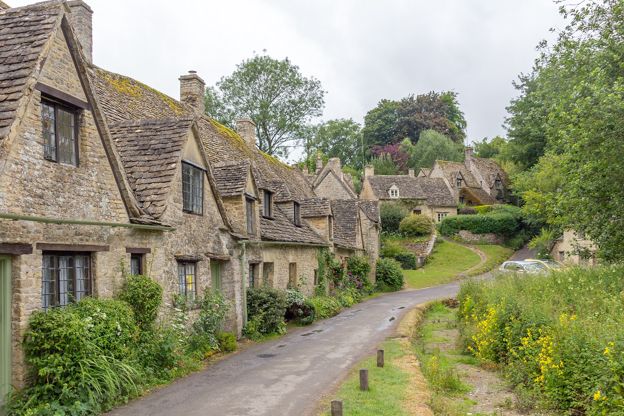
Bibury and Ablington
Walk · Starts in Bibury · 1 hr, 45 mins · Circular
A 5-mile (8.2km) circular walk from Arlington Row in Bibury, an hour and a half to two hours of moderate walking with a few stiles. It goes up Packhorse Lane and the Salt Way over open wold, down to Ablington and its Elizabethan manor, and back beside the River Coln.
-
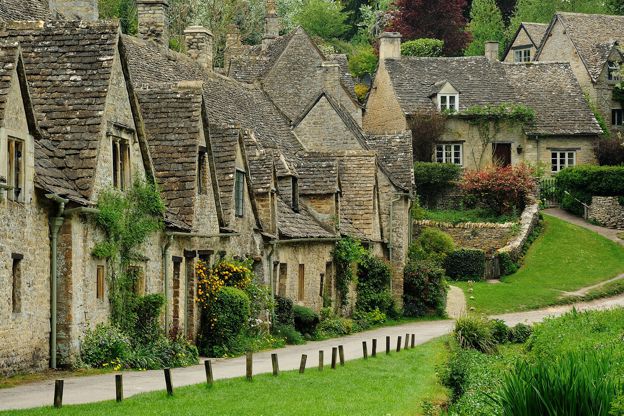
Bibury, Oxhill Wood and Akeman Street
Walk · Starts in Bibury · 1 hr, 45 mins · Circular · Dog-friendly
A 4-mile (6.6km) circular walk from the bridge by the Swan in Bibury, an hour and a half to two hours with a few short, steep climbs. It goes out by the church and up above the Coln to Oxhill Wood, along the line of the Roman Akeman Street and back over farmland to Arlington Row.
-
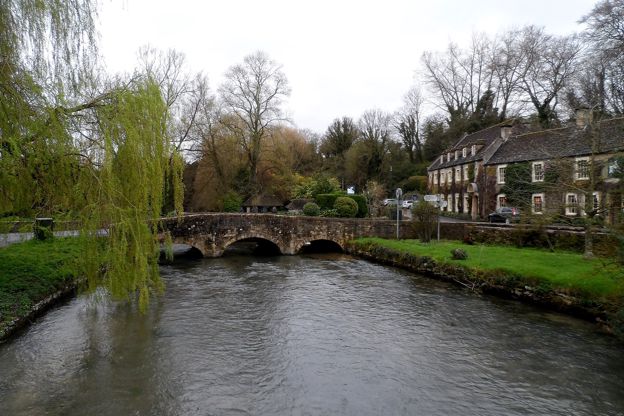
Bibury and the River Coln
Walk · Starts in Bibury · 2 hrs · Circular
A 4-mile (6.5km) circular walk from the bridge by the Swan in Bibury, about two hours with one climb and a muddy stretch. It crosses the Coln below Bibury Court, climbs through Oxhill Wood to the line of Akeman Street, passes a dewpond and returns by Arlington Row.
Stay and eat near Ablington Manor
-
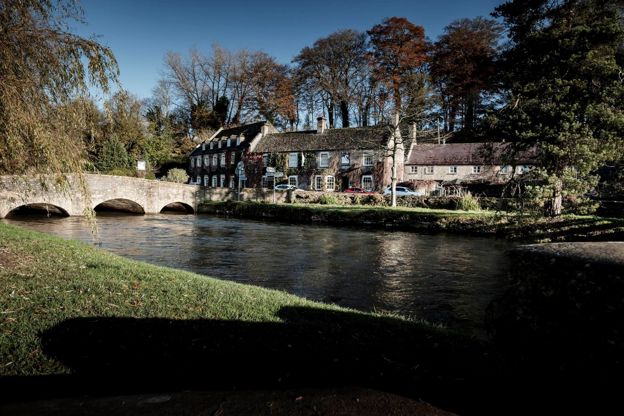
The Swan Hotel
Hotel · Bibury
A former coaching inn by the bridge over the River Coln in Bibury, part of Cotswold Inns and Hotels, with a brasserie, a lift, a free car park and dog-friendly rooms.
Dog-friendly · Wedding venues
Verified Nov 2026
-
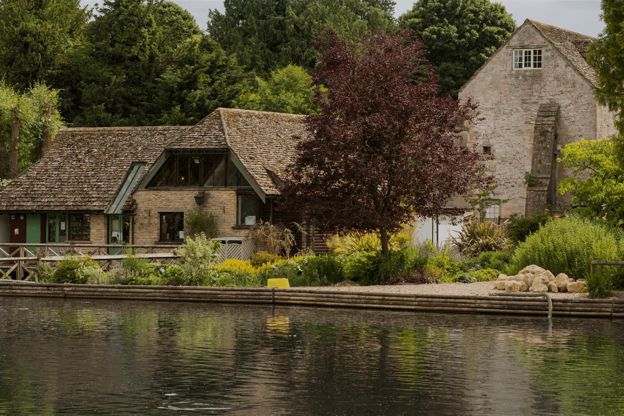
Bibury Trout Farm
Family days out · Bibury
A working trout farm on the River Coln at Bibury, founded in 1902, with a café, a shop, catch-your-own fishing and its own pay car park.
Family-friendly · Dog-friendly
Verified Oct 2026
-
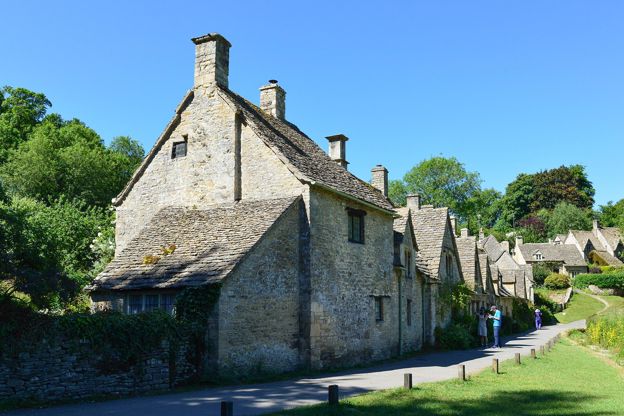
Cotteswold House
B&B · Bibury
A renovated guest house in Arlington, Bibury, a short walk from Arlington Row, with double rooms, a family suite and two self-catering cottages, and a cooked breakfast for those in the rooms.
Verified Oct 2026
More sights to see
-
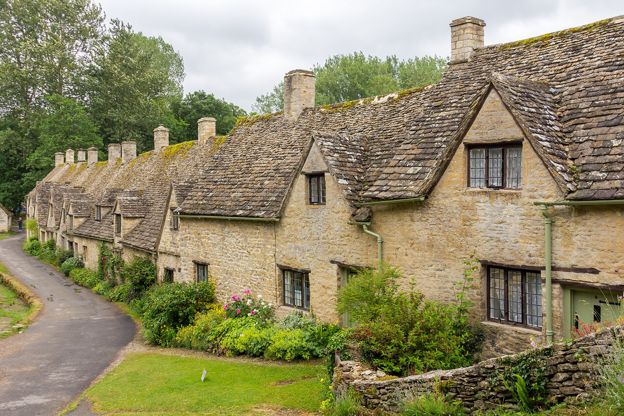
Arlington Row, Bibury
Sight · Historic building · Bibury
Arlington Row is a terrace of stone cottages above the mill stream in Bibury, built as a wool store in the late fourteenth century and turned into weavers' homes in the seventeenth. Grade I and owned by the National Trust, the cottages are lived in and seen from the path.
-
St Mary's Church, Bibury
Sight · Church · Bibury
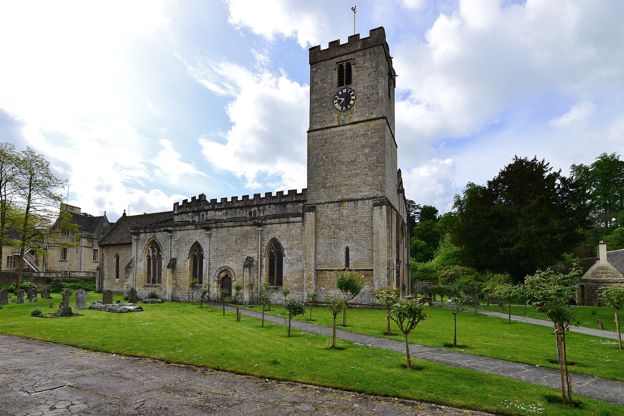
St Mary's in Bibury is a Saxon church grown over five centuries, with eleventh-century walling, Saxon stones in the chancel, carved capitals of the Oseney canons, the county's earliest stained glass and a Karl Parsons window of 1927. Grade I and open daily.
-
River Coln
Sight · River · Cirencester and the Coln Valley
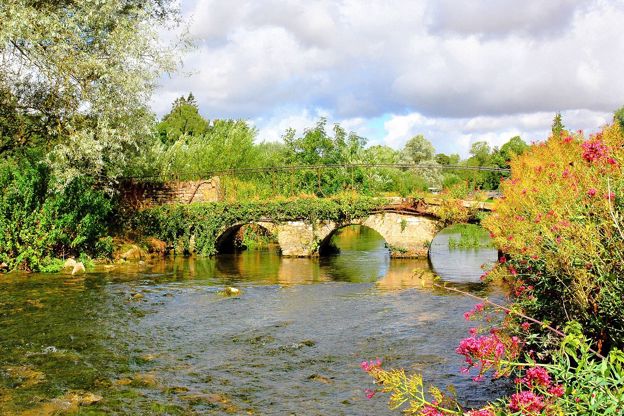
The limestone river of the south Cotswolds, rising near Sevenhampton and running south-east past Chedworth, Bibury and Arlington Row, Coln St Aldwyns, Quenington and Fairford to join the Thames at Inglesham above Lechlade. Five of our walks follow or cross it.