Michael Garlick, CC BY-SA 2.0, via Wikimedia Commons
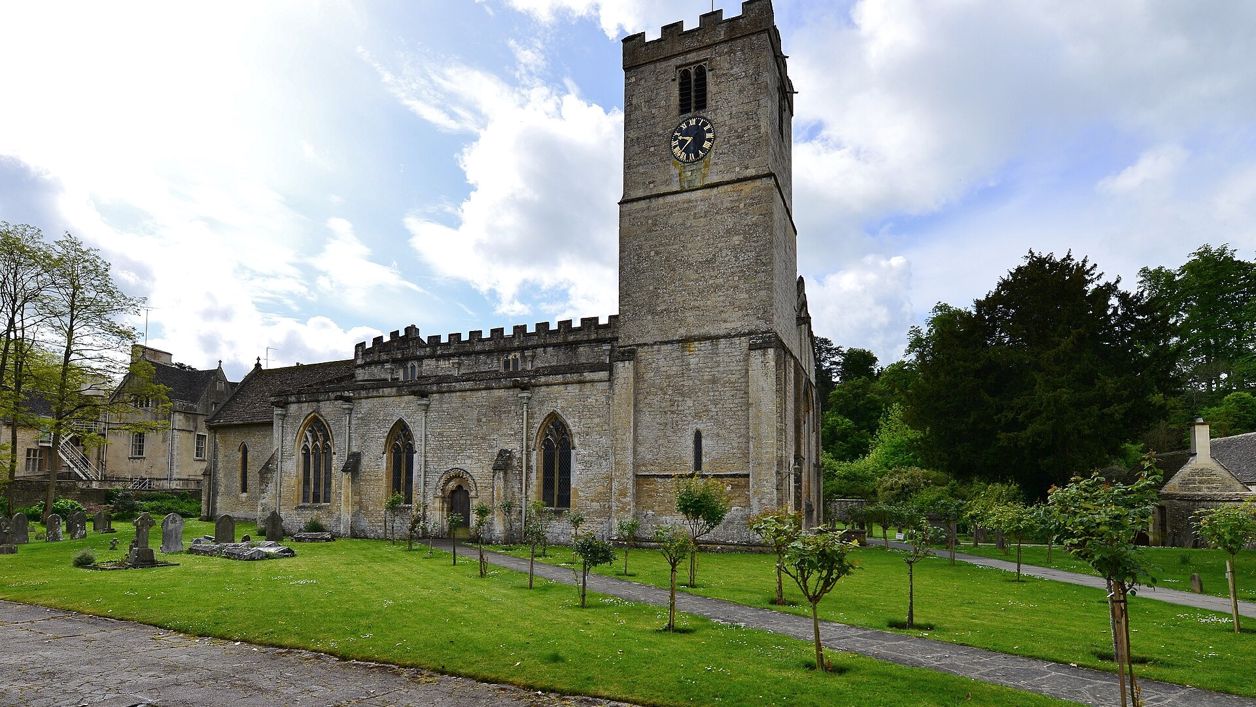
St Mary's Church, Bibury
St Mary's in Bibury is a Saxon church grown over five centuries, with eleventh-century walling, Saxon stones in the chancel, carved capitals of the Oseney canons, the county's earliest stained glass and a Karl Parsons window of 1927. Grade I and open daily.
Church
BiburySt Mary's is the parish church of Bibury, at the east end of Church Road, a few minutes from the bridge over the River Coln. Its core is a Saxon church of the eleventh century, enlarged over the next four hundred years, and it is listed Grade I. It is open daily, and much quieter than the riverbank.
History
St Mary's grew from a Saxon church into the church seen today in five stages. A church stood at Bibury by 899, when the Bishop of Worcester reserved its dues in a lease of the estate, and a priest is recorded in Domesday Book in 1086. The church's own history connects the name of the village with Beaga, the daughter of Earl Leppa, who was granted the estate in the eighth century.
The Saxon church and the Oseney canons
The plan is that of a large pre-Conquest church, and the listing dates the oldest standing walls to the middle or late eleventh century. In 1151 the bishop allowed Oseney Abbey, near Oxford, to take over the church and its chapels, and the canons altered it through the late twelfth and thirteenth centuries: they added a north aisle, lengthened the nave and chancel, and built the tower over the west end of the aisle. The abbey also claimed the right to run its own church court, the Bibury peculiar, which issued marriage licences and proved wills; its probate records run from 1590 to 1833.
Later changes
The north aisle was rebuilt a little wider in the early fourteenth century, and in the fifteenth the nave was given its clerestory and the roof that still covers it. After the Dissolution the rectory went to Christ Church, Oxford, in 1542. The church was restored in 1863, probably by Sir Gilbert Scott, and again by Waller and Son between 1895 and 1900, and the chancel arch was opened up in 1920.
What to see
Walk round the outside first. The south wall of the nave shows the church growing: a stretch of eleventh-century wall keeps its small round clerestory window, beside the lancets of the early thirteenth-century aisle and a large fifteenth-century window by the porch. The south doorway is round-arched, under a porch with dogtooth carving, and the reset north doorway has a chevron arch of the twelfth century.
Inside, look for:
- the Saxon jambs and imposts that carry the thirteenth-century chancel arch, and a fragment of carved Saxon pilaster in the chancel wall;
- the north arcade, unusual because it is broken by short lengths of wall, with the carved and scalloped capitals of the Oseney canons' work;
- the square early thirteenth-century font in the south aisle;
- the small window lighting the altar, which keeps a grisaille panel of thirteenth-century glass, described as the earliest medieval stained glass in Gloucestershire;
- the north chancel window of 1927 by Karl Parsons, a Virgin and Child among passionflowers, made in memory of Rowland and Ellen Cooper; a detail of it was used on a Royal Mail Christmas stamp in 1992;
- the ten-bay fifteenth-century roof with three tiers of cusped windbraces, and the Coxwell family's ledger slabs of the early eighteenth century in the nave.
The east window, by Thomas Willement in 1855, remembers Lady Elizabeth Dutton and John William Dutton. Carved stones in the Saxon and Scandinavian tradition found in the churchyard were moved into the tower in 1896; one was later set in the north wall of the chancel and four went to the British Museum. The church's own list of treasures includes a Saxon gravestone.
The churchyard is rich in table tombs and gravestones, many of them to the clothiers and weavers who paid for the church, and Historic England lists several groups of its eighteenth-century pedestal and bale tombs in their own right, one group south of the nave at Grade II*. A corner of it, the Bisley piece, was by tradition used to bury people from Bisley while that parish lay under an interdict.
Visiting
St Mary's is open daily, usually from about 8am until 6pm and later in summer, the church says on A Church Near You. Entry is free and donations help keep the building. A Church Near You lists step-free access, a wheelchair, an accessible toilet (a modern one outside the church, with no steps to it), a hearing loop and large print, with guidebooks and brass rubbing, and the church calls itself dog friendly. Sunday service is at 11am, so come at another time to look round. The church is a popular wedding venue, and BibLit, the village's literary festival, is held in it in spring (24 and 26 April in 2026).
Getting there
St Mary's is on Church Road (its postal address is Cemetery Road, GL7 5NR), about 400m from Arlington Row. The church says there is on-street parking by the church and within 250m, but Bibury has no council car park and is crowded at weekends; the 855 bus from Cirencester and Bourton-on-the-Water stops in the village, Monday to Saturday.
Three of our walks pass the church. Bibury, Oxhill Wood and Akeman Street goes out by it, Bibury and Ablington walks through the village by Church Road, and the loop from Coln St Aldwyns comes into Bibury beside it. Bibury and the River Coln turns uphill just before it.
Nearby
Arlington Row and Rack Isle are along the river, and Ablington Manor, the Coxwells' house, is 1.5 km up the valley. The Swan Hotel and Bibury Trout Farm are the nearest places to eat. Downstream, St Swithin's at Quenington has two carved Norman doorways, and St Mary's at Fairford is famous for its medieval windows; our story on the wool churches of the Cotswolds puts them in context.
Walks past St Mary's Church, Bibury
-
Bibury and Ablington
Walk · Starts in Bibury · 1 hr, 45 mins · Circular
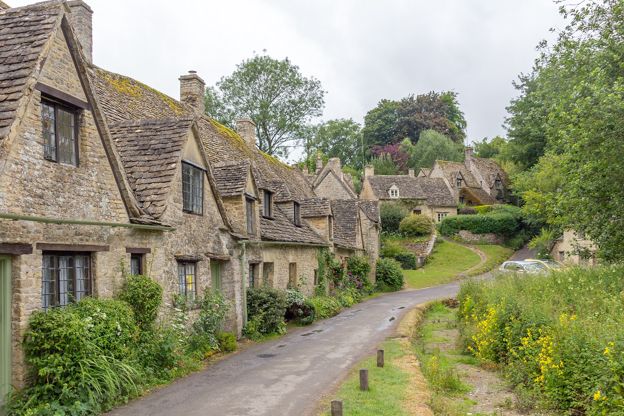
A 5-mile (8.2km) circular walk from Arlington Row in Bibury, an hour and a half to two hours of moderate walking with a few stiles. It goes up Packhorse Lane and the Salt Way over open wold, down to Ablington and its Elizabethan manor, and back beside the River Coln.
-
Bibury and the River Coln
Walk · Starts in Bibury · 2 hrs · Circular
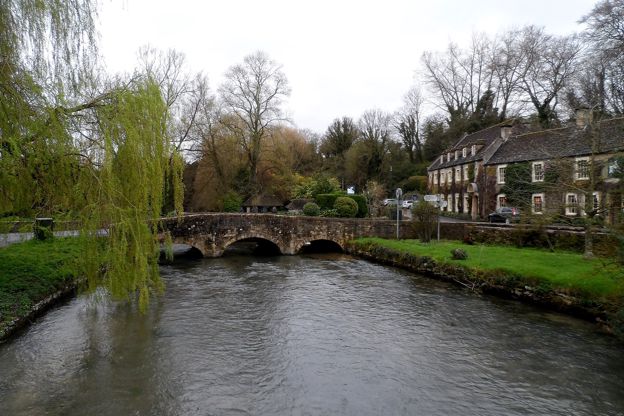
A 4-mile (6.5km) circular walk from the bridge by the Swan in Bibury, about two hours with one climb and a muddy stretch. It crosses the Coln below Bibury Court, climbs through Oxhill Wood to the line of Akeman Street, passes a dewpond and returns by Arlington Row.
-
Bibury, Oxhill Wood and Akeman Street
Walk · Starts in Bibury · 1 hr, 45 mins · Circular · Dog-friendly
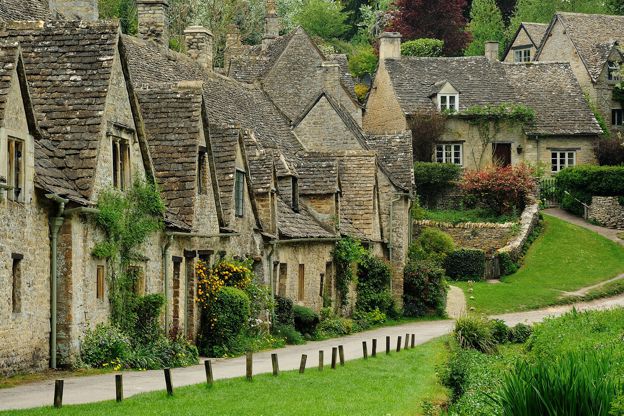
A 4-mile (6.6km) circular walk from the bridge by the Swan in Bibury, an hour and a half to two hours with a few short, steep climbs. It goes out by the church and up above the Coln to Oxhill Wood, along the line of the Roman Akeman Street and back over farmland to Arlington Row.
Stay and eat near St Mary's Church, Bibury
-
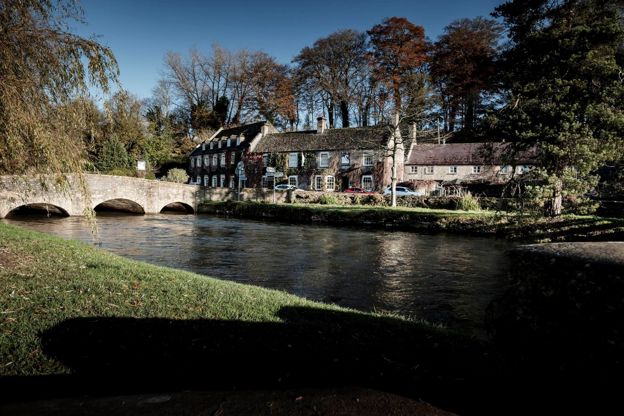
The Swan Hotel
Hotel · Bibury
A former coaching inn by the bridge over the River Coln in Bibury, part of Cotswold Inns and Hotels, with a brasserie, a lift, a free car park and dog-friendly rooms.
Dog-friendly · Wedding venues
Verified Nov 2026
-
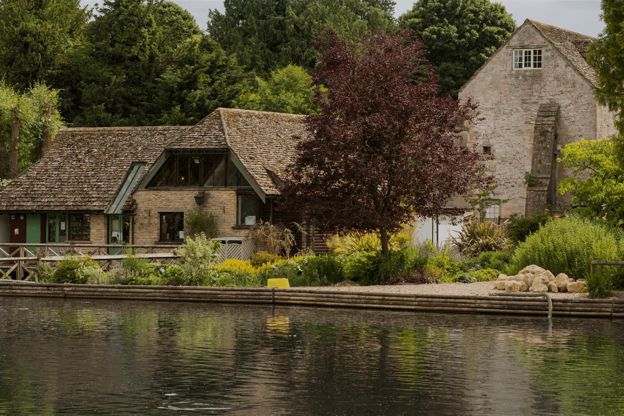
Bibury Trout Farm
Family days out · Bibury
A working trout farm on the River Coln at Bibury, founded in 1902, with a café, a shop, catch-your-own fishing and its own pay car park.
Family-friendly · Dog-friendly
Verified Oct 2026
-
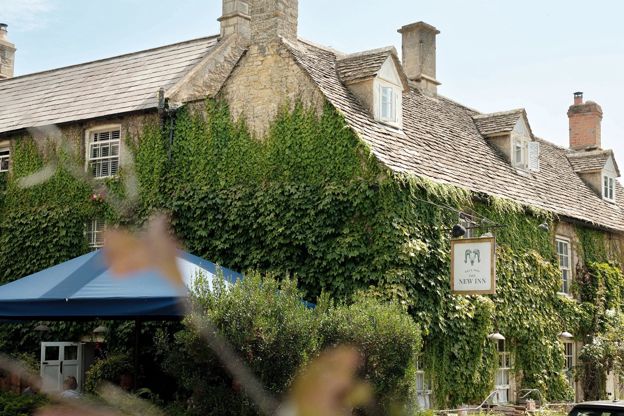
The New Inn
Inn · Coln St Aldwyns
A 16th-century coaching inn with rooms in Coln St Aldwyns, reopened in 2020 by Baz and Fred, with a Garden Suite and food every day.
Verified Nov 2026
More sights to see
-
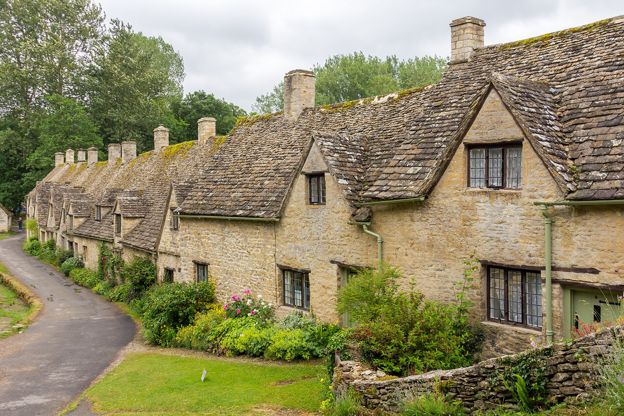
Arlington Row, Bibury
Sight · Historic building · Bibury
Arlington Row is a terrace of stone cottages above the mill stream in Bibury, built as a wool store in the late fourteenth century and turned into weavers' homes in the seventeenth. Grade I and owned by the National Trust, the cottages are lived in and seen from the path.
-
Ablington Manor
Sight · Historic building · Bibury
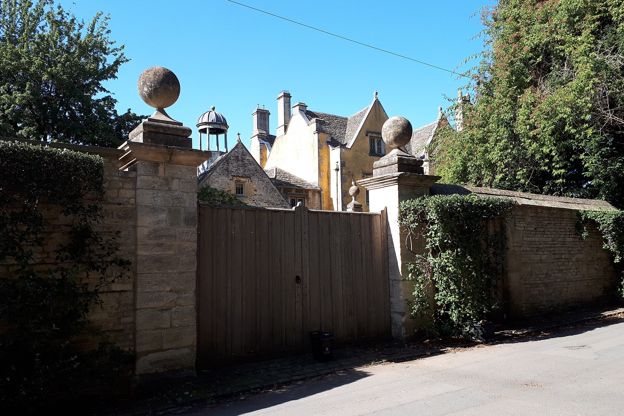
Ablington Manor is an Elizabethan house in the hamlet of Ablington near Bibury, dated 1590 for John Coxwell, with five carved royal heads over its porch. Listed Grade I and a private home, it is seen from the lane through the hamlet.
-
River Coln
Sight · River · Cirencester and the Coln Valley
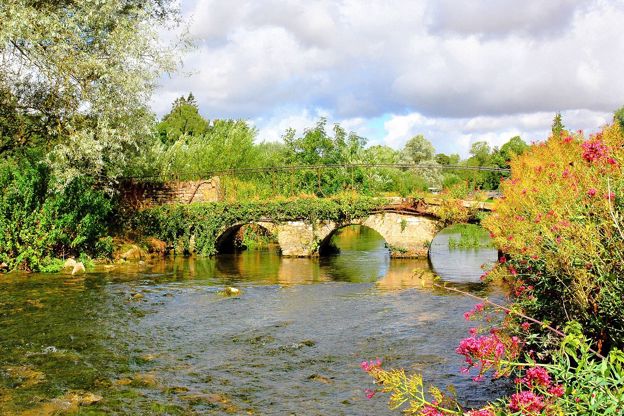
The limestone river of the south Cotswolds, rising near Sevenhampton and running south-east past Chedworth, Bibury and Arlington Row, Coln St Aldwyns, Quenington and Fairford to join the Thames at Inglesham above Lechlade. Five of our walks follow or cross it.