Oswald Bertram, CC BY-SA 2.0, via Wikimedia Commons
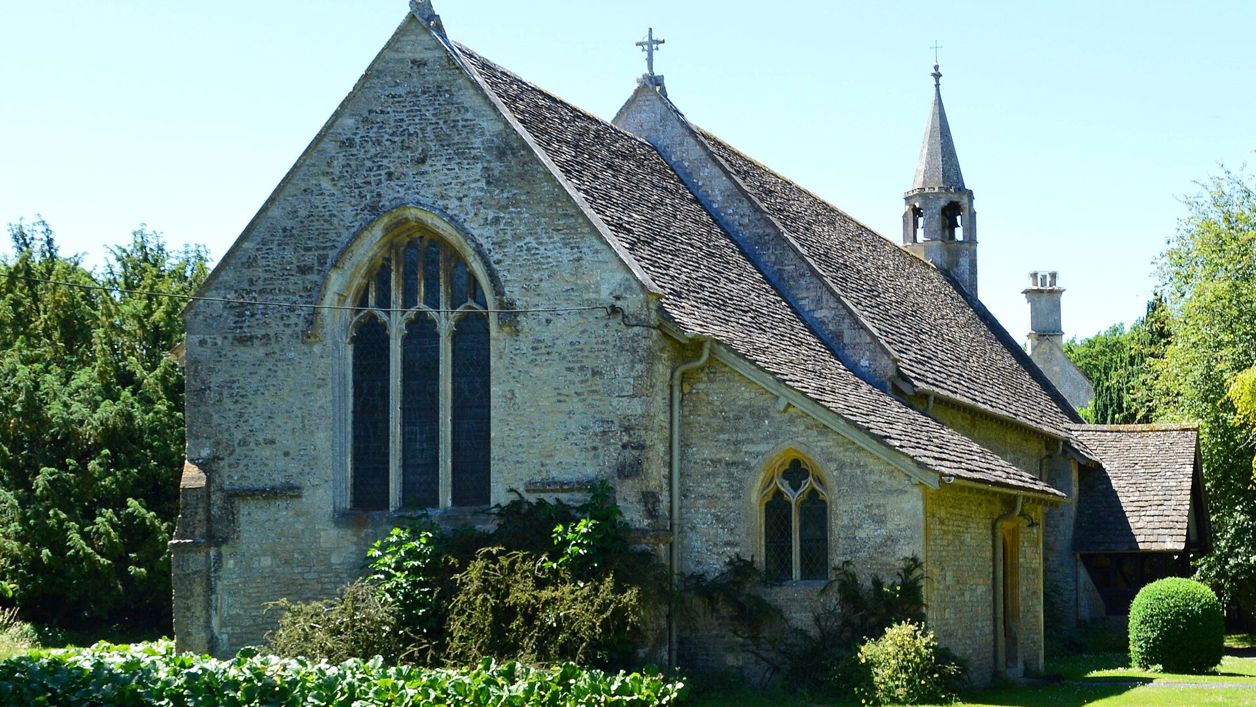
St Swithin's Church, Quenington
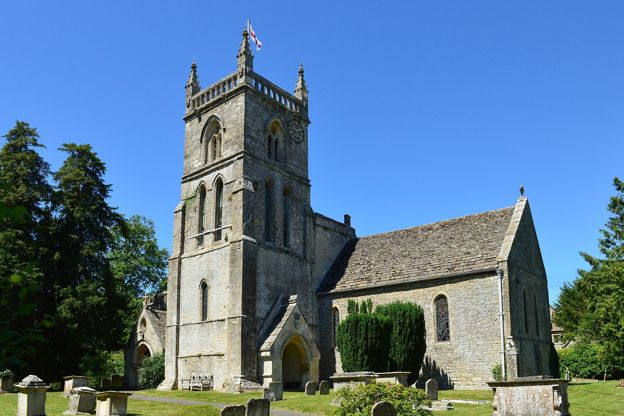
Quenington's Norman parish church in the Coln valley, recorded by 1100, with two richly carved Norman doorways: the Harrowing of Hell over the north door and, over the south, what may be the earliest carving of the Coronation of the Virgin. Grade I.
St Swithin's is the parish church of Quenington, a village on the River Coln in the Coln valley between Bibury and Fairford. It was recorded by 1100, and its two Norman doorways, each with a carved tympanum, make it one of the most rewarding small churches in the Cotswolds. It is listed Grade I and stands beside the gateway of the Knights Hospitallers' preceptory.
History
St Swithin's is a Norman church whose walls and doorways date mostly from the twelfth century, much restored in 1882. A church at Quenington is first mentioned in 1100, when the bishop of Worcester awarded Gloucester Abbey a yearly pension from it; the abbey said it had the church from Hugh de Lacy.
The church of the Hospitallers
In the middle of the twelfth century Agnes de Lacy and her daughter Sibyl gave the manor to the Knights Hospitallers, the crusading order of St John. The Hospitallers secured the church too, paying the abbey its pension, and about 1193 founded a preceptory just south-west of it to manage their estates. Edward I stayed there often between 1276 and 1290. The order kept Quenington until the Dissolution; its fourteenth-century gatehouse still stands at the end of Church Road. The story of both orders in the Cotswolds is told in Templars and Hospitallers in the Cotswolds.
The building
The lower walls of the nave and chancel, with their string course and flat buttresses, are later twelfth-century work, and so are the two doorways, each of three richly decorated orders, as the Victoria County History describes them. The listing dates the chancel windows to the thirteenth and fifteenth centuries, though the three-light east window was copied in 1882 from the old west window; the square-headed nave windows are probably seventeenth-century. The church was called St Mary's in the twelfth century and was dedicated to St Swithin by 1735.
Towers lost and the restoration of 1882
A central tower and spire were said to have been taken down by the early 1700s, though nothing in the fabric proves it. A west tower, missing from a view of 1790, was built shortly before 1825 and pulled down in the extensive restoration of 1882, which gave the church its bellcote and spirelet, a west window, an open timber north porch, a canopy over the south door, a rebuilt chancel and a vestry.
What to see
The two tympana are the reason to come, and both are inside porches, so they can be seen even when the church is shut.
The north door: the Harrowing of Hell
The north doorway has three orders of chevron, each cut to a different pattern, on carved capitals. Its tympanum shows the Harrowing of Hell, Christ's descent among the dead after the Crucifixion to free the souls held there. The listing suggests the tympanum may be a little later than the doorway that frames it.
The south door: a coronation
The south doorway is all of one build, its orders carved with guilloche, pellets and beakheads, the bird-like heads that bite the roll moulding. Its tympanum shows a crowning, framed by the symbols of the four Evangelists. It is usually read as the Coronation of the Virgin, and the listing says it may be the earliest representation of that subject.
Inside
- A late sixteenth-century font with a cover dated 1662.
- Marble wall monuments to the Powle and Ireton families and to rectors, reset at the west end of the nave, one of the late seventeenth century.
- A small seventeenth-century brass of a shield set in the floor near the north door.
Visiting
St Swithin's is a working parish church, one of the CHEQS parishes with Coln St Aldwyns and Hatherop. Sunday services move between the three villages, and the benefice website, chqchurches.net, lists them. We could not confirm that it is open on weekdays, but the carved doorways stand in porches and can be seen at any reasonable hour. We found no car park at the church.
Getting there
Quenington is about 3km north of Fairford as the crow flies (nearly 5km by road) and 12km east of Cirencester (about 18km by road). Park considerately on the village roads; the church is on Church Road, by the river. Stagecoach West's 76, which also serves Fairford and Cirencester, stops in the village a few times a day, Monday to Saturday; check the current timetable. On foot, a Cotswolds National Landscape river walk runs from Quenington down the Coln to Fairford, and the Coln St Aldwyns and Bibury walk starts from the next village upstream.
Nearby
The Hospitallers' gateway is a few steps away, seen from the road. The Keepers Arms is in the village, and the New Inn and the Coln Community Stores are about a mile upstream at Coln St Aldwyns, whose church is St John the Baptist. Follow the River Coln down to St Mary's, Fairford for its medieval glass, or go over the hill to the twin churches of Eastleach.
Walks past St Swithin's Church, Quenington
-
Quenington to Fairford
Walk · Starts in Coln St Aldwyns · 3 hrs · Circular
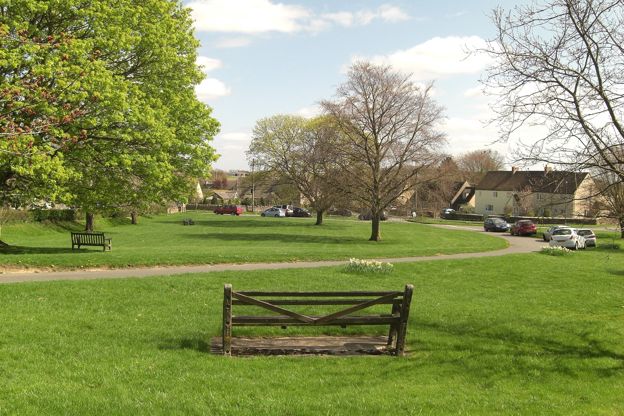
A 5.75-mile (9.25km) circular walk from the Keepers Arms in Quenington, moderate with several stiles, in two and a half to three hours: down the river valley and through a permitted wood to Fairford's Mill Bridge and church, and back. The permitted path is closed on Tuesdays.
-
Coln St Aldwyns and Bibury
Walk · Starts in Coln St Aldwyns · 2 hrs, 45 mins · Circular · Dog-friendly
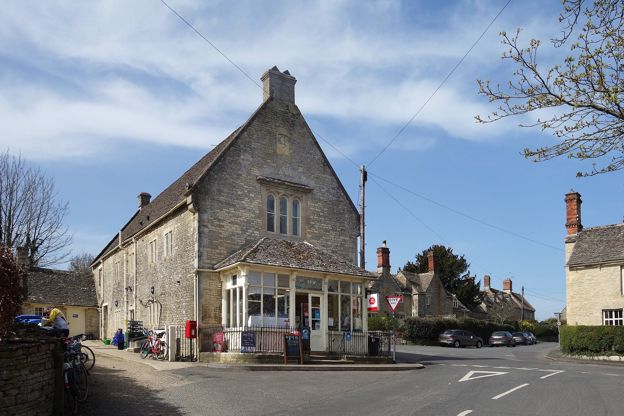
A 6.5-mile (10.6km) circular walk from Coln St Aldwyns, moderate and two and a half to three hours: up the River Coln and through Oxhill Wood to Bibury and Arlington Row, then back over the open wold by the Roman Akeman Street to the village pub and shop.
Stay and eat near St Swithin's Church, Quenington
-
The Keepers Arms
Inn · Coln St Aldwyns
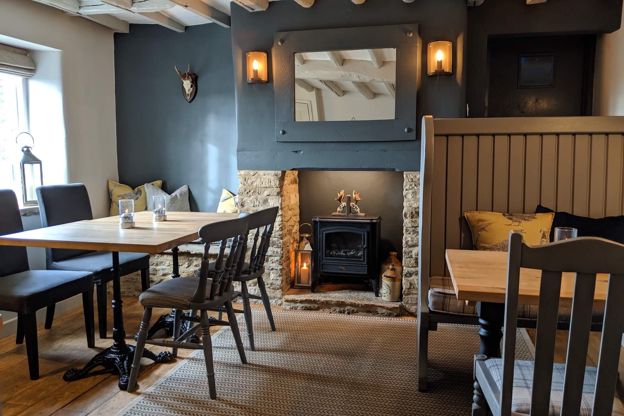
A family-run free house in Quenington with four adults-only bed and breakfast rooms above the pub, independent real ales and dogs welcome.
Dog-friendly
Verified Nov 2026
-
The New Inn
Inn · Coln St Aldwyns
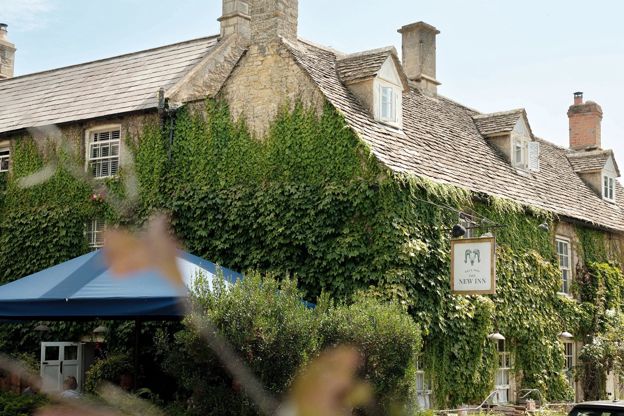
A 16th-century coaching inn with rooms in Coln St Aldwyns, reopened in 2020 by Baz and Fred, with a Garden Suite and food every day.
Verified Nov 2026
-
Coln Community Stores
Cafes and tearooms · Coln St Aldwyns
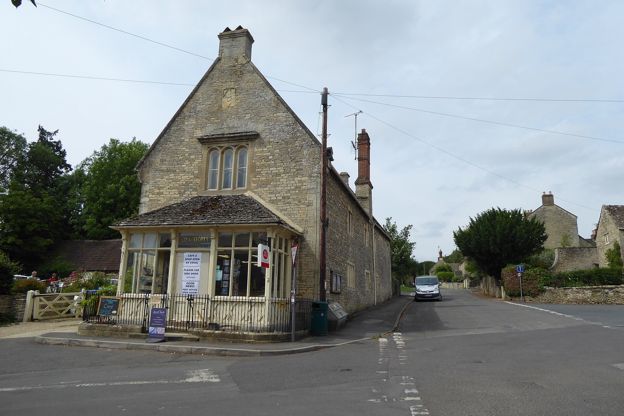
The village shop, café and post office on Main Street, Coln St Aldwyns, owned by local residents and the Countryside Alliance's best shop in the south west for 2026.
Walker-friendly
Verified Oct 2026
Stories about St Swithin's Church, Quenington
-
Templars and Hospitallers in the Cotswolds
Story · Strange Things · 5 minute read
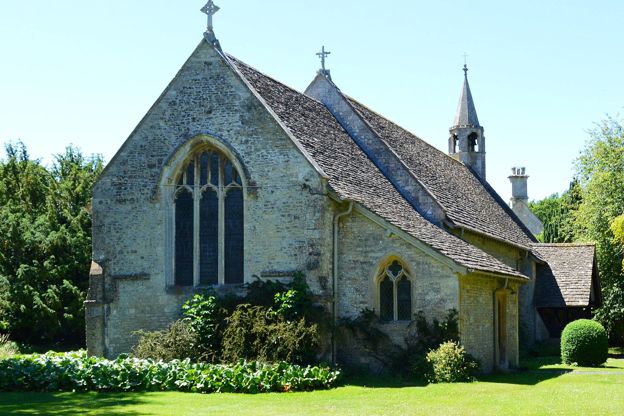
The crusading orders held land in the Cotswolds: the Templars at Temple Guiting until their fall in 1308, and the Knights Hospitaller at Quenington until 1540.
More sights to see
-
Knights Hospitallers' Gateway, Quenington
Sight · Historic building · Cirencester and the Coln Valley
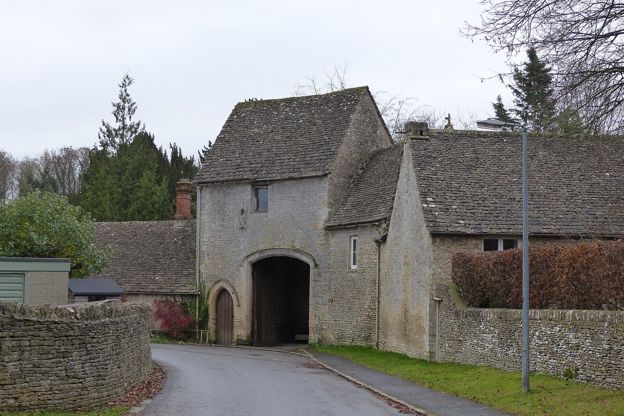
The fourteenth-century gatehouse of the preceptory the Knights Hospitallers founded at Quenington in about 1193, partly rebuilt in the early sixteenth century, beside St Swithin's church. Grade I; on private land, seen from Church Road.
-
St John the Baptist, Coln St Aldwyns
Sight · Church · Coln St Aldwyns
Coln St Aldwyns' parish church: a late Norman doorway of chevrons, a demon carved over a blocked window, a two-tier chandelier of about 1767, and windows remembering the two John Kebles, father and son, who served here. Grade II*.
-
River Coln
Sight · River · Cirencester and the Coln Valley
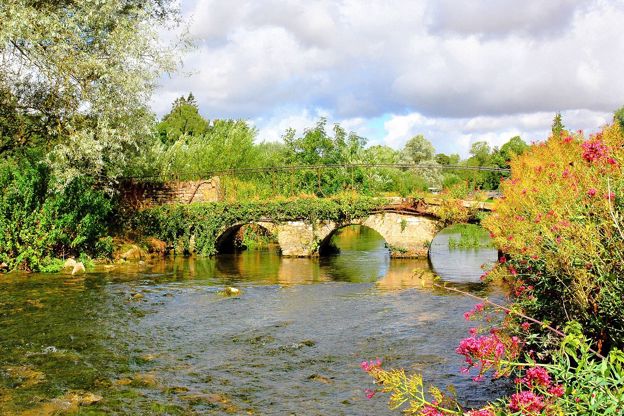
The limestone river of the south Cotswolds, rising near Sevenhampton and running south-east past Chedworth, Bibury and Arlington Row, Coln St Aldwyns, Quenington and Fairford to join the Thames at Inglesham above Lechlade. Five of our walks follow or cross it.