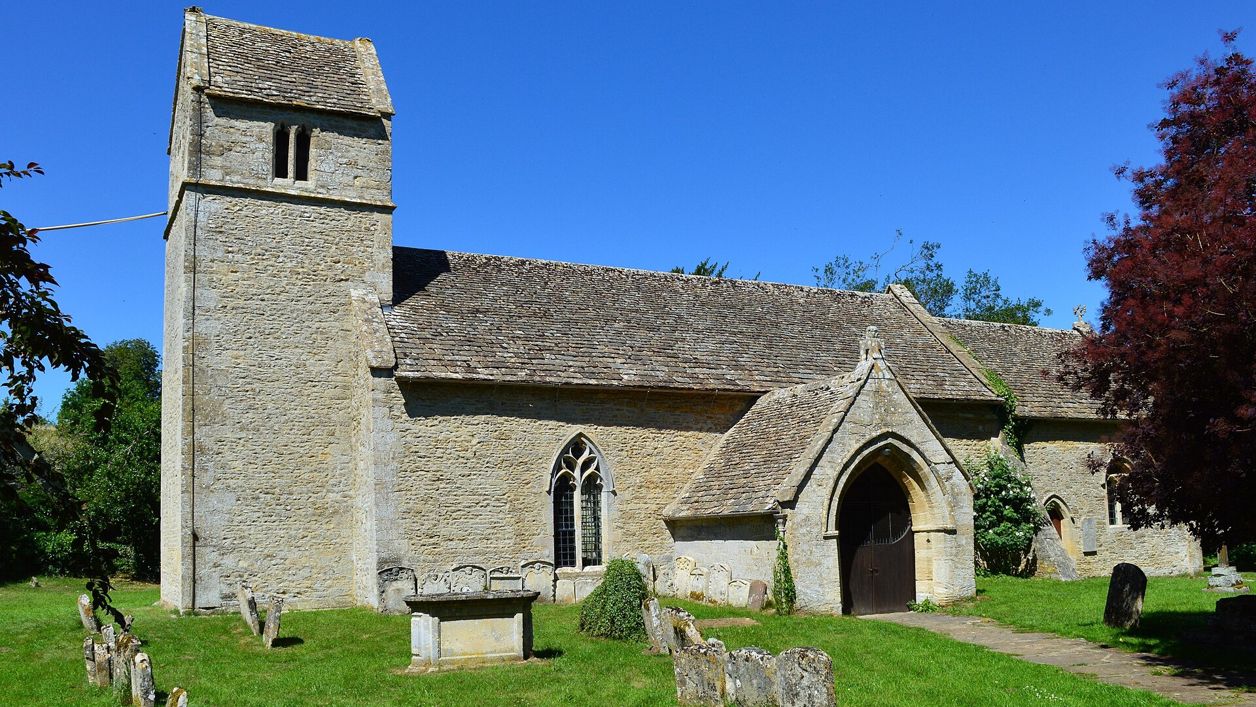
Oswald Bertram, CC BY-SA 2.0, via Wikimedia Commons
St Andrew's Church, Eastleach Turville
St Andrew's is Eastleach Turville's parish church, by the River Leach and facing its twin across the water. Grade I, it has a carved Norman Christ in Majesty over the south door, a medieval saddleback tower and a lectern shaft from Tewkesbury Abbey.
St Andrew's Church stands on the west bank of the River Leach in Eastleach Turville, one of two medieval churches that face each other across the water in the twin villages of Eastleach, which our guide covers with Cirencester and the Coln valley. It was here by 1114, and it is listed Grade I, with a carved Norman doorway, a saddleback tower and seventeenth-century woodwork inside.
History
St Andrew's is a Norman church, recorded in 1114 and built up in stages until the fourteenth century. The Victoria County History says Henry I confirmed it to Tewkesbury Abbey that year, the abbey probably having had it from Robert FitzHamon, the Norman lord who died in 1107. It carried the dedication to St Andrew by 1282.
The Norman church
The oldest standing work is the south wall of the nave, of the middle of the twelfth century, with its doorway and carved tympanum. The chancel arch and the north wall of the chancel are later twelfth century. A blocked arch of two orders in the chancel's north wall may once have opened into a chapel of the Holy Trinity that is mentioned in 1506.
Thirteenth and fourteenth centuries
In the thirteenth century the east end of the chancel was rebuilt with three lancets set in an arcade, and later in the century a north aisle of three bays, the south porch and the west tower were added (the listing dates the tower a little later, to the fourteenth century). Early in the fourteenth century the aisle's east bay was carried out into a north transept, and a window with flowing tracery went into the south wall of the nave. The tower is a saddleback, its two stages capped by a gabled roof instead of a parapet.
Later changes
Probably in the seventeenth century the north aisle and the chancel chapel were taken down and the arcade blocked, leaving the plain mullioned lights that fill the old arches today. The chancel roof seems to have fallen in by 1776 and was repaired; the transept's side walls were rebuilt in 1825; the chancel arch was partly renewed about 1884. In 1906, the county history records, the whole church was re-roofed in local elm given by G S Bazley (the listing dates the roofs to 1909).
The two Eastleaches
Eastleach Turville and Eastleach Martin were separate parishes with a church each, a few hundred metres apart on either side of the river. They shared curates long before they shared a living: Benjamin Boyes in the 1770s and 1780s and the poet and churchman John Keble from 1815 to 1825. The livings were united in 1871 and the parishes became one civil parish in 1935. Eastleach Martin’s church was later declared redundant and is now looked after by the Churches Conservation Trust, while St Andrew's remains the parish church.
What to see
Christ in Majesty over the south door is the thing to come for. He sits in the tympanum between two angels, above a round arch of two orders of chevron; the inner chevrons run on down the jambs, the capitals are scalloped and the two shafts are carved, one with a spiral of pellets and one with chevrons.
- The south porch, thirteenth century, with stone benches, a trefoil-headed niche and a square sundial on its gable.
- The tower's west gable and its trefoil-headed belfry lights, best seen from the river path.
- On the outside of the chancel's north wall, the blocked archway to the lost chapel, with a crocket capital and a small grotesque head on its shafts.
- Inside, the late twelfth-century chancel arch and the three thirteenth-century lancets at the east end, under the elm roofs of the 1900s.
- A reading desk dated 1632 and carved with initials, and a hexagonal pulpit made up with Jacobean panels.
- The lectern, whose carved vine-trail shaft came from Tewkesbury Abbey, the church's medieval owner, according to the county history (the listing says only that it is said to).
- Eighteenth-century ledger slabs in the chancel floor for the Saunders, Keble and Porter families, and a Gothic memorial over the tower door to the curate Benjamin Boyes (died 1814), by Harvey of Fairford.
- A fourteenth-century tomb recess with ballflower carving in the transept, now hidden behind the organ, and the base of a stone cross in the churchyard.
Visiting
St Andrew's is a working parish church. The parish's website lists a service every Sunday at 11am, usually Matins, with Holy Communion usually on the second Sunday of the month and a family service on any fifth Sunday; in 2026 the Remembrance Sunday service on 8 November starts at 10.45am. We could not confirm that the church is open on weekdays, so check with the parish office (01367 358653) before making a special journey. Entry is free. The church sits below the village on the slope to the river, so expect grass and uneven ground. We found no mention of toilets or a café, and parking is on the village lanes. Spring is the time to come, when the Churches Conservation Trust notes daffodils along the banks and the approaches to the bridge.
Getting there
Eastleach is about 6km north of Lechlade and 6km north-east of Fairford, reached by lanes from Fairford, Lechlade and Burford road. There is no car park: leave the car considerately on the lanes by the river. On foot, the Eastleach and River Leach walk starts by the river and passes both churches.
Nearby
St Michael and St Martin is across the river, reached by the stone clapper footbridge known as Keble's Bridge. Down the valley are the Norman tympana of St Swithin's at Quenington and the medieval glass of St Mary's, Fairford, and to the south St Lawrence's at Lechlade. For Keble's family church, see St John the Baptist, Coln St Aldwyns.
Walks past St Andrew's Church, Eastleach Turville
-
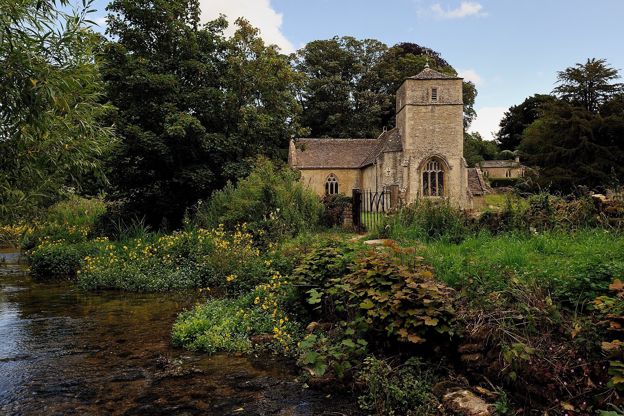
Eastleach and the River Leach
Walk · Starts in Cirencester and the Coln Valley · 1 hr, 45 mins · Circular · Dog-friendly
A 4.4-mile (7.1km) circular walk from Eastleach, an hour and a half to two hours with about 70m of climbing and plenty of mud: past two Norman churches and over the Leach, up the quiet valley to the Roman Akeman Street, and back down the other side to the Victoria Inn.
Stay and eat near St Andrew's Church, Eastleach Turville
-
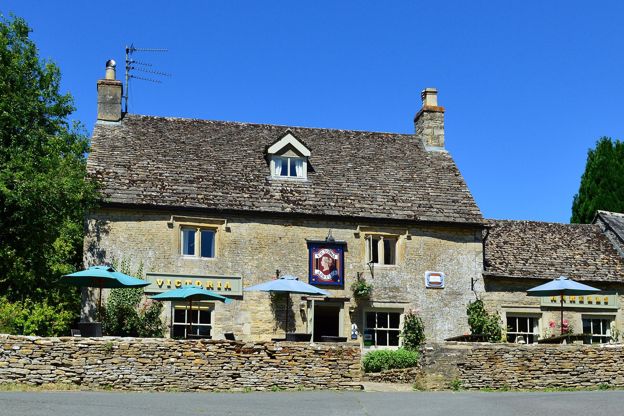
The Victoria Inn, Eastleach
Pubs · Eastleach and Southrop
An Arkell's pub on the green at Eastleach Turville, an inn since 1856, looking down over the village and the River Leach; closed on Tuesdays.
Dog-friendly · Walker-friendly
Verified Nov 2026
-
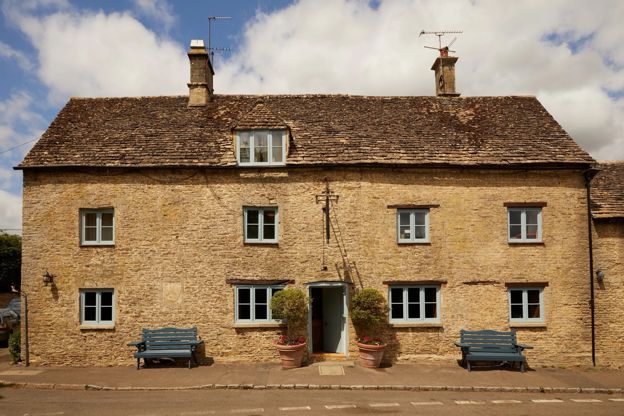
The Swan, Southrop
Pubs · Eastleach and Southrop
The village pub of Southrop, part of the Thyme estate, with roaring fires and low ceilings in a building recorded from 1606, serving lunch and dinner from its kitchen garden and farm.
Dog-friendly · Family-friendly
Verified Nov 2026
-
Thyme
Hotel · Eastleach and Southrop
The Hibbert family's estate round Southrop Manor, a mile from Eastleach: 31 bedrooms in restored farm buildings and cottages, the Ox Barn restaurant, a spa and pool, and a cookery school.
EV charging
Verified Oct 2026
More sights to see
-
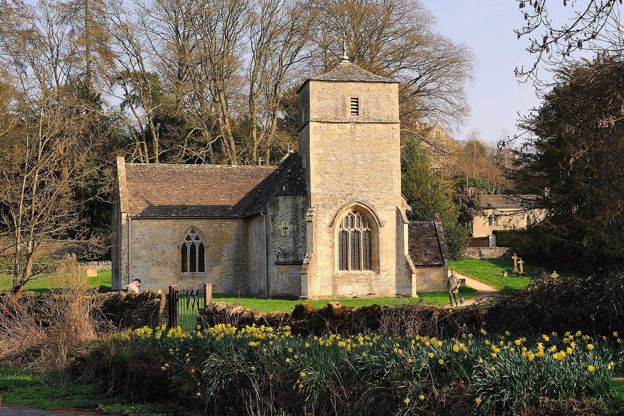
St Michael and St Martin, Eastleach Martin
Sight · Church · Cirencester and the Coln Valley
The Norman church of Eastleach Martin, on the east bank of the River Leach facing St Andrew's across the water. Granted to Great Malvern Priory about 1120, it keeps a fine Decorated transept window and medieval pews. Grade I; Churches Conservation Trust; open daily.
-
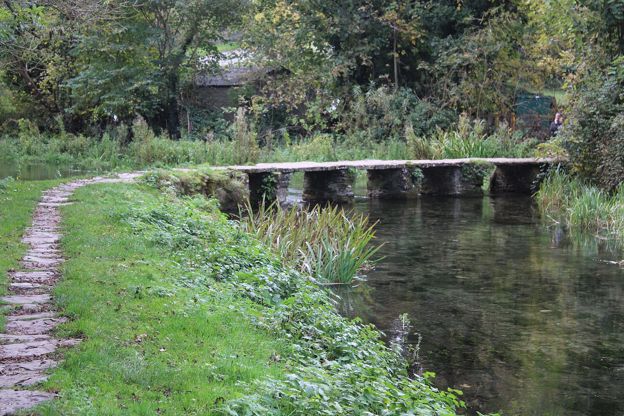
Keble's Bridge, Eastleach
Sight · Bridge · Cirencester and the Coln Valley
A clapper bridge of flat limestone slabs on rubble piers across the River Leach, the old footbridge between Eastleach Turville and Eastleach Martin, with medieval origins and the name of the Keble family. Grade II; free on a public footpath.
-
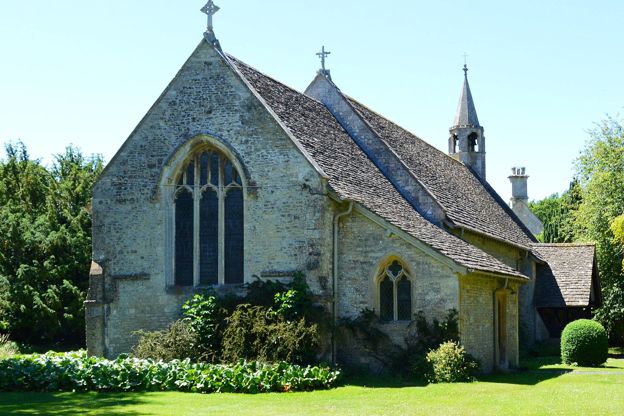
St Swithin's Church, Quenington
Sight · Church · Cirencester and the Coln Valley
Quenington's Norman parish church in the Coln valley, recorded by 1100, with two richly carved Norman doorways: the Harrowing of Hell over the north door and, over the south, what may be the earliest carving of the Coronation of the Virgin. Grade I.