Philip Pankhurst, CC BY-SA 2.0, via Wikimedia Commons
St Lawrence's Church, Lechlade
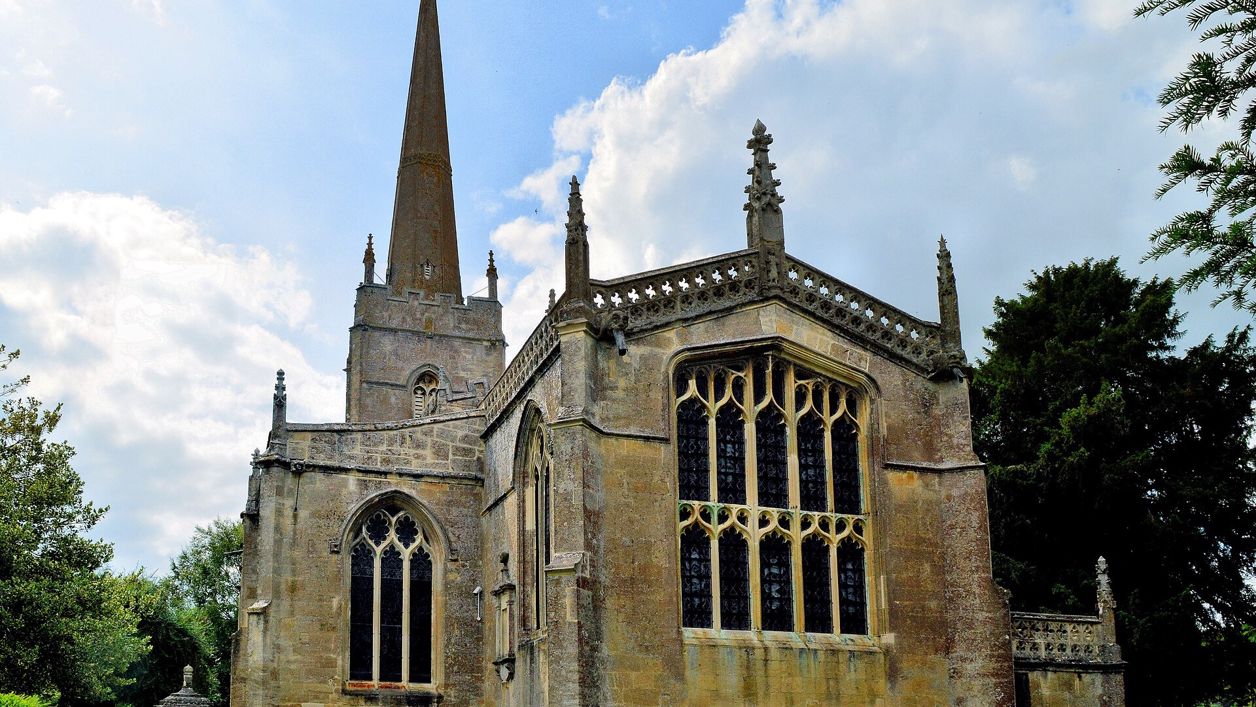
Lechlade's wool church on the Market Place, rebuilt in Taynton stone in the 1470s, with a spire seen across the Thames meadows and a churchyard that moved Shelley to verse in 1815. Grade I; closed for restoration through 2026, with reopening expected by Christmas.
Church
Lechlade-on-ThamesSt Lawrence's is the parish church of Lechlade-on-Thames, on the east side of the Market Place, its spire a landmark across the river meadows. It was rebuilt in the 1470s in Taynton stone, partly with wool merchants' money, and is listed Grade I. The churchyard inspired Shelley in 1815. The church is closed for restoration, and the parish expects to reopen it in time for Christmas 2026.
History
The story of St Lawrence's is one of a fifteenth-century rebuilding on a much older site. The parish says excavations on the edge of the town in 1985 found Christian burials of the mid-seventh century, so a Saxon church probably stood nearby, and a church of St Lawrence is recorded in 1255, one of the few in England with the privilege of sanctuary.
The rebuilding of the 1470s
In 1470 the vicar, Conrad Nye (Ney in the parish's history), recorded that he and the parishioners had rebuilt the nave and aisles and that he meant to rebuild the chancel next; the parish dates the work from about 1472 to 1476. In 1472 Cecily, Duchess of York, mother of Edward IV, founded a chantry of St Mary here, endowed with the possessions of the hospital of St John by St John's Bridge, dissolved that year, and John Twyniho founded a chantry of St Blaise; the chapels either side of the chancel probably housed them. The town's wool trade is remembered in its brasses: one in the south aisle shows John Townsend, a wool merchant who died in 1458, with his wife. The clerestory and north porch are early sixteenth century, and the nave roof and the tower with its spire were probably added then too.
The stone came from Taynton, near Burford, the same freestone that, the parish says, was shipped from Lechlade down the Thames to London for St Paul's Cathedral. The parish describes it as wholly Perpendicular in style, and the architectural historian David Verey counted it among the six finest parish churches in Gloucestershire.
Later changes
Richard Pace fitted new pews and galleries in 1829 to 1830. Waller & Son refitted the church in 1882, and the painted bosses of the chancel roof were restored in 1938.
Shelley
In 1815 the poet Percy Bysshe Shelley came up the Thames to Lechlade, and his "A Summer Evening Churchyard, Lechlade, Gloucestershire", dated September 1815, came of that visit; Mary Shelley later wrote that the stanzas were written in the churchyard. The church path across the meadows is known as Shelley's Walk.
Project Inspire
The church closed after its last Sunday services on 18 January 2026 for Project Inspire, a restoration backed by the National Lottery Heritage Fund and other grants. The work includes a new stone floor with level access throughout, underfloor heating fed by two air source heat pumps in the churchyard, a kitchen, a new toilet and glass doors in the west porch. By the parish's late spring 2026 update the heat pumps were in and the underfloor heating pipes laid, with the screed due in June. The parish expects to reopen the church in time for Christmas 2026.
What to see
From the Market Place, look at the west tower, three stages with diagonal buttresses and corner pinnacles, and its slender eight-sided spire with a gilt weathervane. The west face has the clock and a three-light window, and over the arched west door an angel holds a shield.
The north porch is the finest piece of carving outside: an embattled parapet with pinnacles, carved figures along its base and, inside, a flat stone ceiling ribbed in a star pattern.
When the church reopens, look inside for the early sixteenth-century nave roof on wooden shafts, the gilded and painted bosses in the eastern bay of the chancel roof, the carved original vestry door, the fifteenth-century octagonal font under a canopied niche, the medieval brasses at the east end, and a marble monument by Nicholas Read to Mrs Anne Simmons, who died in 1769. About two dozen monuments in the churchyard are listed in their own right.
Visiting
The building is closed during the works, with services held in the Memorial Hall and the Baptist church; when we checked, the parish expected to reopen it in time for Christmas 2026. The churchyard and Shelley's Walk stay open, though parts of the south side may be fenced off at times. Check the parish website before you plan to go in.
Getting there
The church is on the Market Place in Lechlade, where Stagecoach West's 77 stops on its way between Cirencester, Fairford and Highworth, about four times a day each way from Monday to Saturday, with no Sunday service. There is no car park at the church; walkers report two-hour parking in the town centre and a pay-and-display car park by the river.
On foot, Lechlade and St John's Lock is a flat 3-mile loop that comes home along Shelley's Walk to the church and finishes at The New Inn on the Market Place.
Nearby
Halfpenny Bridge and the River Thames are a few minutes south. Downstream, Father Thames reclines at St John's Lock beside The Trout Inn, and across the fields are two more remarkable churches: St John the Baptist, Inglesham, saved by William Morris, and St Mary's, Buscot, with its Burne-Jones glass. Our story on the wool churches of the Cotswolds sets St Lawrence's among its peers. Back on the Market Square, Lynwood & Co is a café open from 8am to 4pm (3pm on Sundays).
Walks past St Lawrence's Church, Lechlade
-
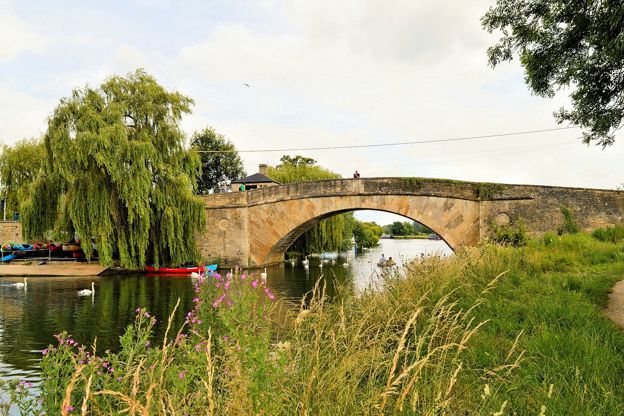
Lechlade and St John's Lock
Walk · Starts in Lechlade-on-Thames · 45 mins · Circular · Dog-friendly
A flat 3-mile (4.8km) circular walk from Lechlade's Market Place, easy and about an hour: out to the Round House where the Coln and the old canal meet the Thames, back along the meadows past Ha'penny Bridge to St John's Lock and the Trout Inn, home by Shelley's Walk.
-
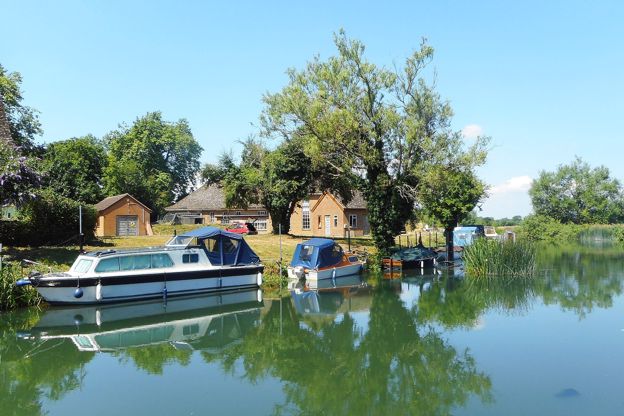
Lechlade, Buscot and the Thames
Walk · Starts in Lechlade-on-Thames · Circular
A level 4.5-mile (7.2km) circular walk from Halfpenny Bridge, Lechlade, with three stiles and no time given: by the Thames Path meadows to Inglesham church, over to Buscot by lanes and fields, across Buscot Weir and Lock, and back by St John's Lock and the Trout Inn.
Stay and eat near St Lawrence's Church, Lechlade
-
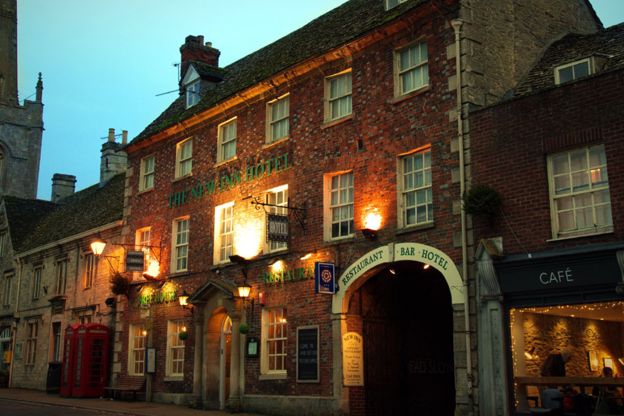
The New Inn Hotel
Hotel · Lechlade-on-Thames
A 17th-century coaching inn on the Market Place in Lechlade-on-Thames, with thirty rooms, a restaurant and bar, and weddings.
Wedding venues
Verified Nov 2026
-
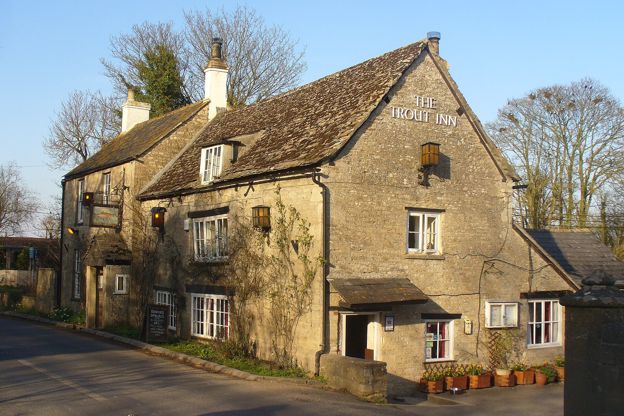
The Trout Inn
Pubs · Lechlade-on-Thames
A family-run pub by St John's Lock at St John's Bridge, Lechlade, recorded as an inn by 1692, with a riverside garden and fishing rights on the Thames.
Walker-friendly · Family-friendly
Verified Oct 2026
-
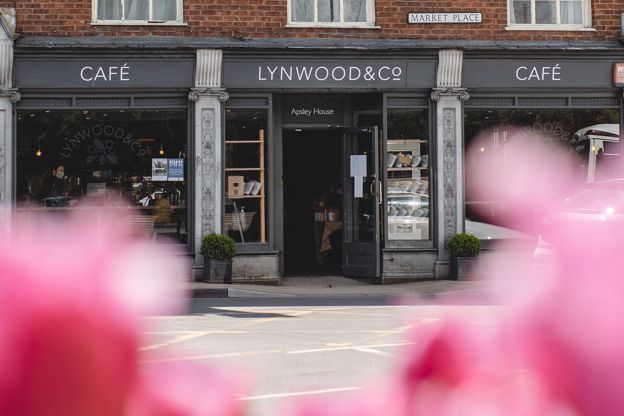
Lynwood & Co, Lechlade
Cafes and tearooms · Lechlade-on-Thames
The first Lynwood & Co café, opened on Lechlade's Market Square in January 2015: an Australian-style café for breakfast, coffee and lunch, open from 8am every day.
Verified Oct 2026
Stories about St Lawrence's Church, Lechlade
-
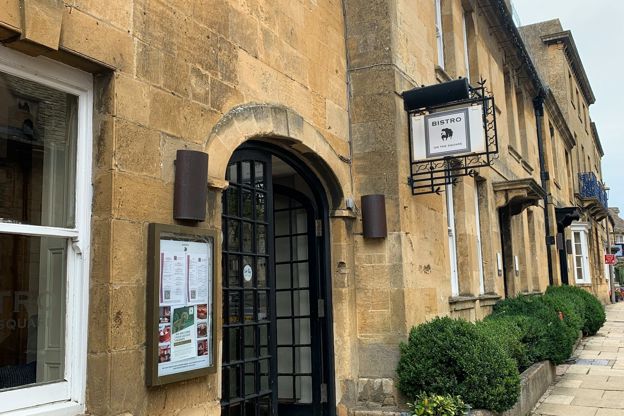
Why Cotswold stone is golden
Story · History · 9 minute read
The Jurassic limestone that built the Cotswolds, the iron that colours it honey in the north and grey in the south, the quarries at Taynton, Barrington, Guiting and Painswick, the stone slate roofs and the dry-stone walls, and where to see each.
More sights to see
-
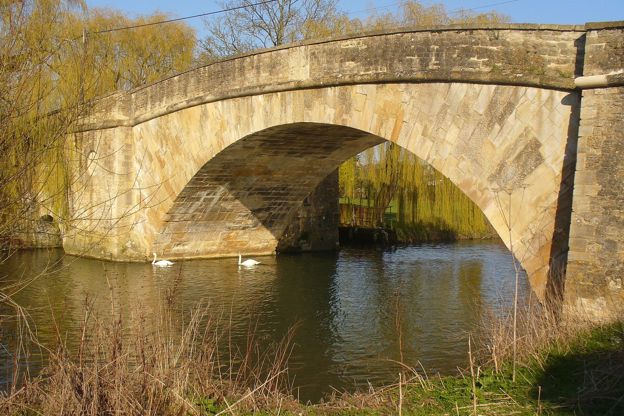
Halfpenny Bridge, Lechlade
Sight · Bridge · Lechlade-on-Thames
The single tall stone arch that carries Thames Street over the Thames at Lechlade, built under a turnpike Act of 1792, with a little square tollhouse on its corner. Named after the halfpenny walkers paid until 1839. Grade II; free.
-
River Thames at Lechlade
Sight · River · Lechlade-on-Thames
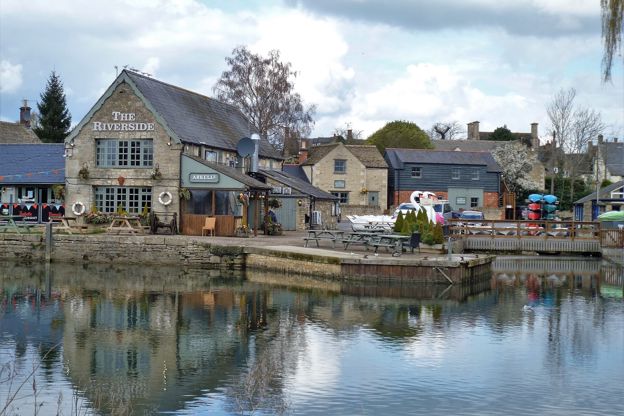
The young Thames at Lechlade, where the Coln and the Leach join it and the old Thames and Severn Canal met it at the Round House: long the head of the navigable river, with the Thames Path past Halfpenny Bridge to St John's Lock.
-
Father Thames and St John's Lock
Sight · Monument · Lechlade-on-Thames
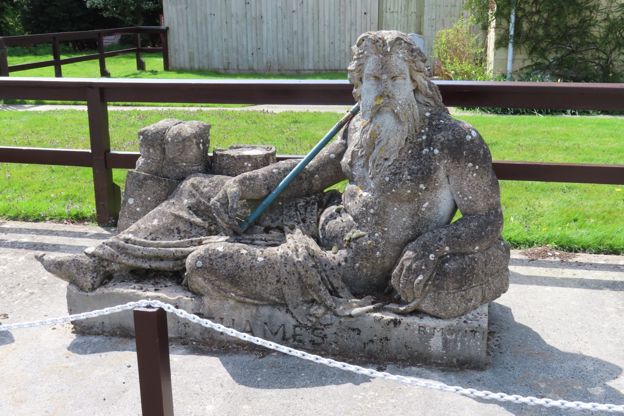
Raffaelle Monti's reclining river god, modelled in cement for the Crystal Palace in 1854, beside St John's Lock below Lechlade, the first lock on the Thames. He lay at the river's source from 1958 until vandals drove him here in 1974. Grade II.