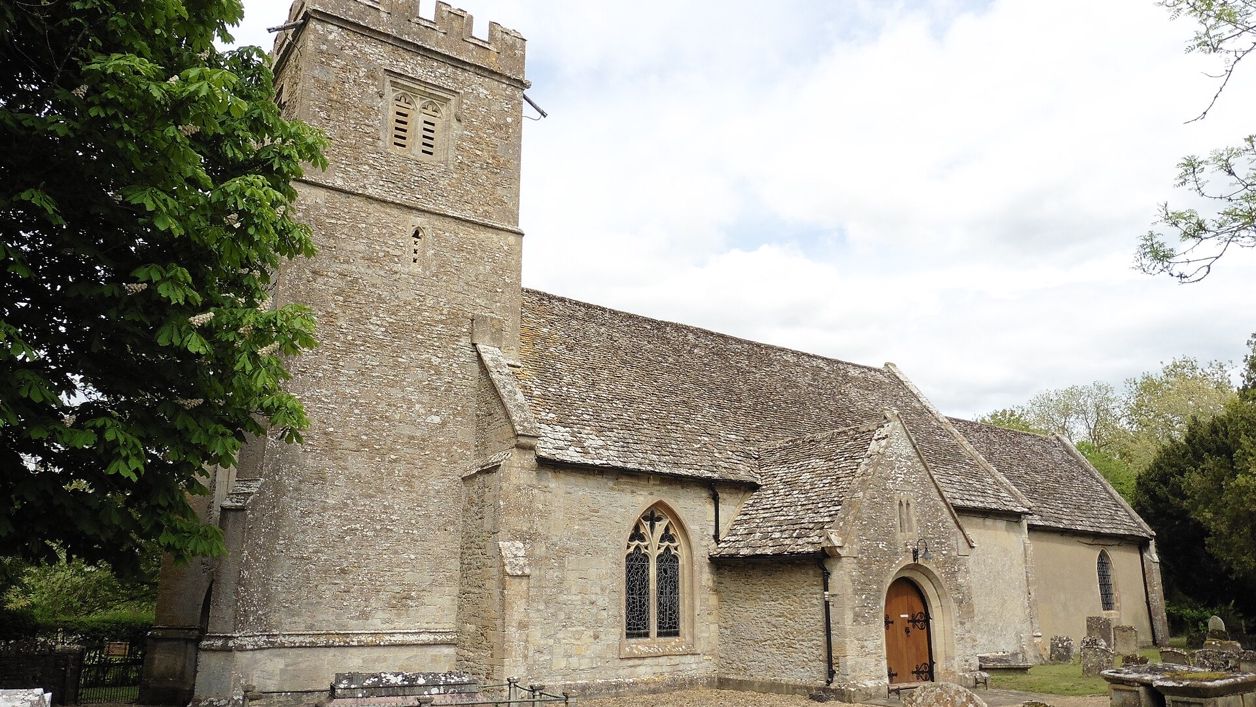
Dave Kelly, CC BY-SA 2.0, via Wikimedia Commons
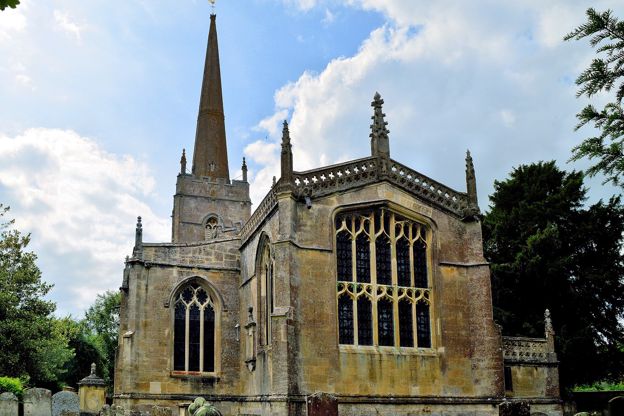
St Mary's Church, Buscot
Buscot's small thirteenth-century church by the Thames below Lechlade, with a full set of Morris & Co. windows designed by Edward Burne-Jones from 1892 to 1924, a zigzag chancel arch and the Loveden monuments by Robert Cooke. Grade I.
Church
Lechlade-on-ThamesSt Mary's stands a few metres from the Thames at Buscot, on the Oxfordshire bank about 2km downstream of Lechlade-on-Thames. It is a small church of the thirteenth century with a carved zigzag chancel arch, and it holds what Historic England calls an exceptional set of stained glass by Morris & Co., every window designed by Edward Burne-Jones. It is listed Grade I.
History
St Mary's is a village church shaped by the owners of Buscot Park, the big house nearby. The Oxfordshire Historic Churches Trust dates it to the end of the thirteenth century, with a chancel arch that may be older. Historic England's listing describes a thirteenth-century plan with fifteenth-century additions, including the small west tower, eighteenth-century alterations and a restoration in 1854.
The Lovedens
In the eighteenth century the Buscot estate belonged to Edward Loveden Loveden, and two of the church's best monuments are to his wives, both by the sculptor Robert Cooke. Cooke also carved the memorial to the Reverend Robert Reading, who died in 1791. Older memorials remember Susanna Place, who died in 1686, and Edward Loveden, who died in 1713.
The Hendersons and Burne-Jones
By the end of the nineteenth century Buscot Park belonged to Sir Alexander Henderson, later the first Lord Faringdon. In 1891, the Oxfordshire Historic Churches Trust says, Henderson gave the church its east window of the Good Shepherd, and over the next three decades Morris & Co. filled the church with glass, all to Burne-Jones's designs; the windows of the 1920s were made from his drawings long after his death in 1898. In 1908 he gave the panels from a Flemish triptych that are now set in the pulpit.
What to see
Start with the glass. The listing dates each window:
- The Good Shepherd, the east window of the chancel, 1892.
- A window of angels, on the south wall of the chancel, 1897.
- Valour and Fortitude, on the north wall of the nave, 1921.
- The Centurion and Christ as Love, on the south wall of the nave, 1921.
- Hope, Charity and Faith, in the west window of the tower, 1922.
- The Archangel Gabriel and the Virgin Mary, on the south wall of the nave, 1924.
Then look at the chancel arch, of three orders with an outer band of zigzag, perhaps reset, resting on two columns of the Transitional style between Norman and Gothic, with stiff-leaf capitals.
On the north wall of the chancel are Cooke's monuments to the Loveden wives. The one to Margaret, the first wife, who died in 1784, has two cherubs beside a grey obelisk and a relief of Charity at its foot, and is signed and dated 1786. The one to Elizabeth, the second wife, who died in 1788, shows her reclining on a couch before an obelisk under a canopy, with an angel holding her hand.
Look also at the pulpit, an early sixteenth-century polygonal pulpit set with panels from a Flemish triptych of the same date, and at the two late fifteenth-century brasses of a husband and wife on the south wall of the chancel. Outside, the Perpendicular west tower has a sundial on its south face.
Visiting
A Church Near You lists the church as open to visitors, with guidebook notes and parking, but gives no hours, so check with the benefice before a special trip; the contact is on the same page. Holy Communion is held at 10.30am on the third Sunday of each month, and the church opens for the Ride and Stride day. There is no toilet. Come on a bright day for the glass.
Getting there
The church is off the A417 Lechlade road at Buscot (SN7 8DQ), a short walk from Buscot Lock on the Thames. On foot from Lechlade, follow the Thames Path downstream past St John's Lock and Father Thames; the church is just over 1km on foot beyond the lock, about 2.5km from the Halfpenny Bridge. Stagecoach West's 77 (about four times a day each way) and Thames Travel's 64 serve Lechlade, Monday to Saturday only; neither stops at Buscot.
Nearby
The Trout Inn at St John's Bridge is the nearest pub, about 1km back upstream; it is closed on Mondays. William Morris, whose firm made the glass, lived at Kelmscott Manor, a few miles downstream, and fought to save St John the Baptist, Inglesham, up the river beyond Lechlade. In Lechlade itself are St Lawrence's Church and the River Thames, and our story on the Arts and Crafts movement puts the Buscot glass in context.
Walks past St Mary's Church, Buscot
-
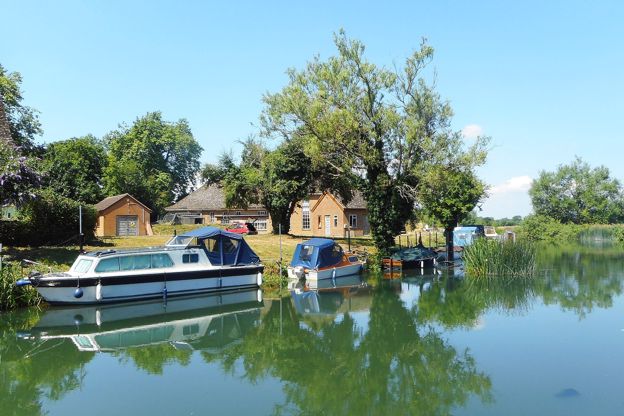
Lechlade, Buscot and the Thames
Walk · Starts in Lechlade-on-Thames · Circular
A level 4.5-mile (7.2km) circular walk from Halfpenny Bridge, Lechlade, with three stiles and no time given: by the Thames Path meadows to Inglesham church, over to Buscot by lanes and fields, across Buscot Weir and Lock, and back by St John's Lock and the Trout Inn.
-
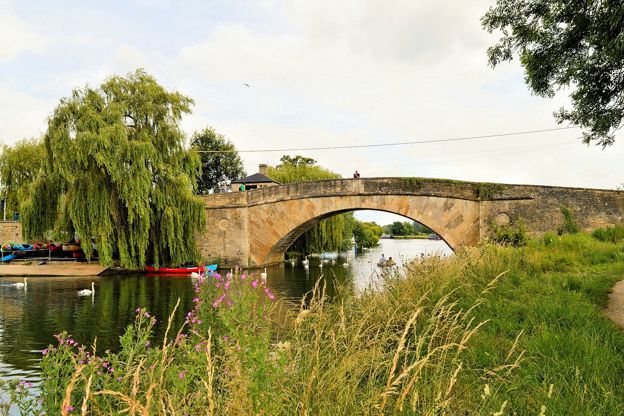
Lechlade and St John's Lock
Walk · Starts in Lechlade-on-Thames · 45 mins · Circular · Dog-friendly
A flat 3-mile (4.8km) circular walk from Lechlade's Market Place, easy and about an hour: out to the Round House where the Coln and the old canal meet the Thames, back along the meadows past Ha'penny Bridge to St John's Lock and the Trout Inn, home by Shelley's Walk.
Stay and eat near St Mary's Church, Buscot
-
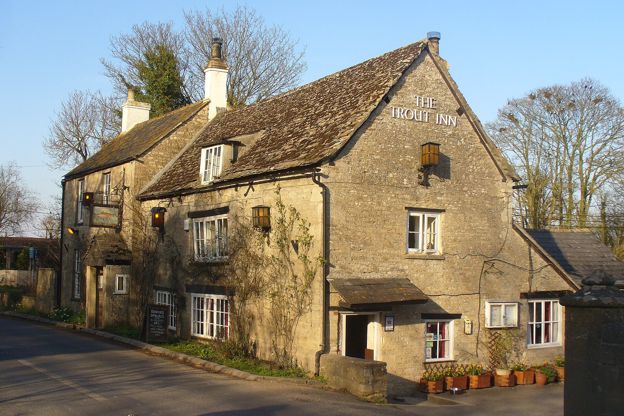
The Trout Inn
Pubs · Lechlade-on-Thames
A family-run pub by St John's Lock at St John's Bridge, Lechlade, recorded as an inn by 1692, with a riverside garden and fishing rights on the Thames.
Walker-friendly · Family-friendly
Verified Oct 2026
-
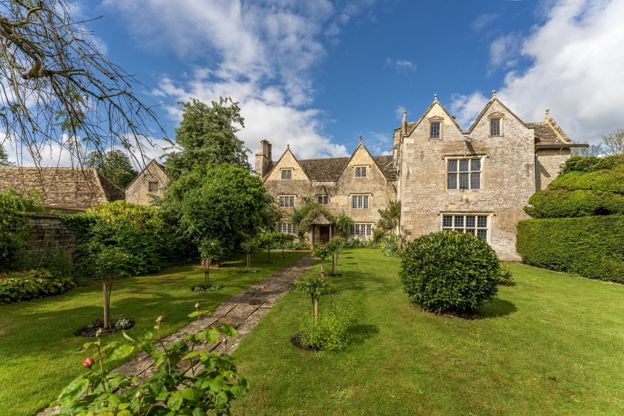
Kelmscott Manor
Historic houses and heritage · Lechlade-on-Thames
William Morris's country home by the upper Thames near Lechlade, which he rented from 1871 until 1896, with its rooms, gardens and his grave nearby.
Walker-friendly · Family-friendly
Verified Oct 2026
-
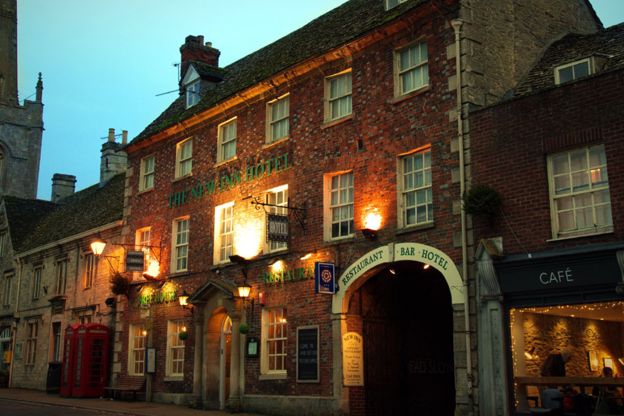
The New Inn Hotel
Hotel · Lechlade-on-Thames
A 17th-century coaching inn on the Market Place in Lechlade-on-Thames, with thirty rooms, a restaurant and bar, and weddings.
Wedding venues
Verified Nov 2026
More sights to see
-
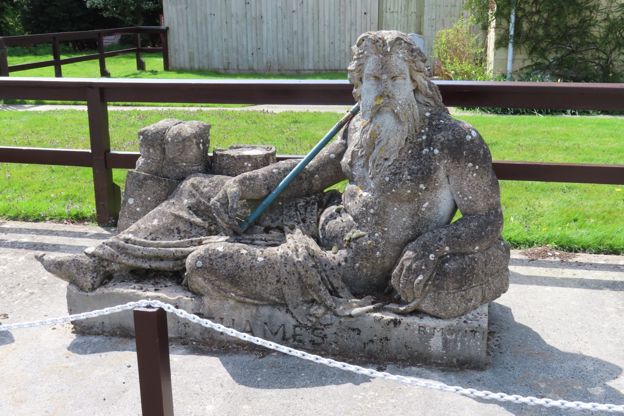
Father Thames and St John's Lock
Sight · Monument · Lechlade-on-Thames
Raffaelle Monti's reclining river god, modelled in cement for the Crystal Palace in 1854, beside St John's Lock below Lechlade, the first lock on the Thames. He lay at the river's source from 1958 until vandals drove him here in 1974. Grade II.
-
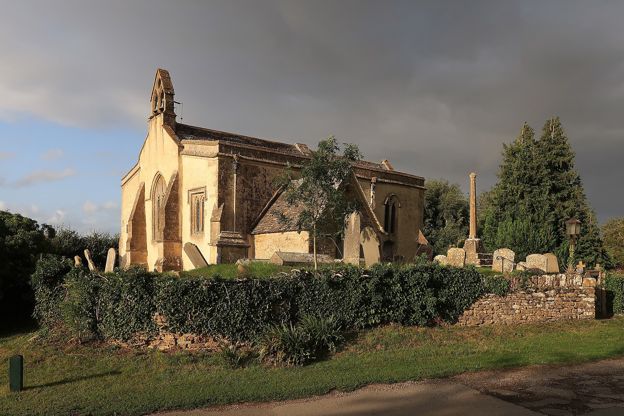
St John the Baptist, Inglesham
Sight · Church · Lechlade-on-Thames
A tiny church by the Thames at Inglesham, south of Lechlade, saved from Victorian restoration by William Morris: box pews, medieval screens, seven layers of wall paintings and a late Saxon Madonna and Child. Grade I; Churches Conservation Trust, open daily.
-
St Lawrence's Church, Lechlade
Sight · Church · Lechlade-on-Thames
Lechlade's wool church on the Market Place, rebuilt in Taynton stone in the 1470s, with a spire seen across the Thames meadows and a churchyard that moved Shelley to verse in 1815. Grade I; closed for restoration through 2026, with reopening expected by Christmas.