The Arts and Crafts movement in the Cotswolds
Around 1900 a group of designers and craftsmen left London for the Cotswolds to make things by hand. They left a silversmith's bench still in use, a manor furnished by its builders, two gardens and a museum. Here is where to find them.
· 10 minute read
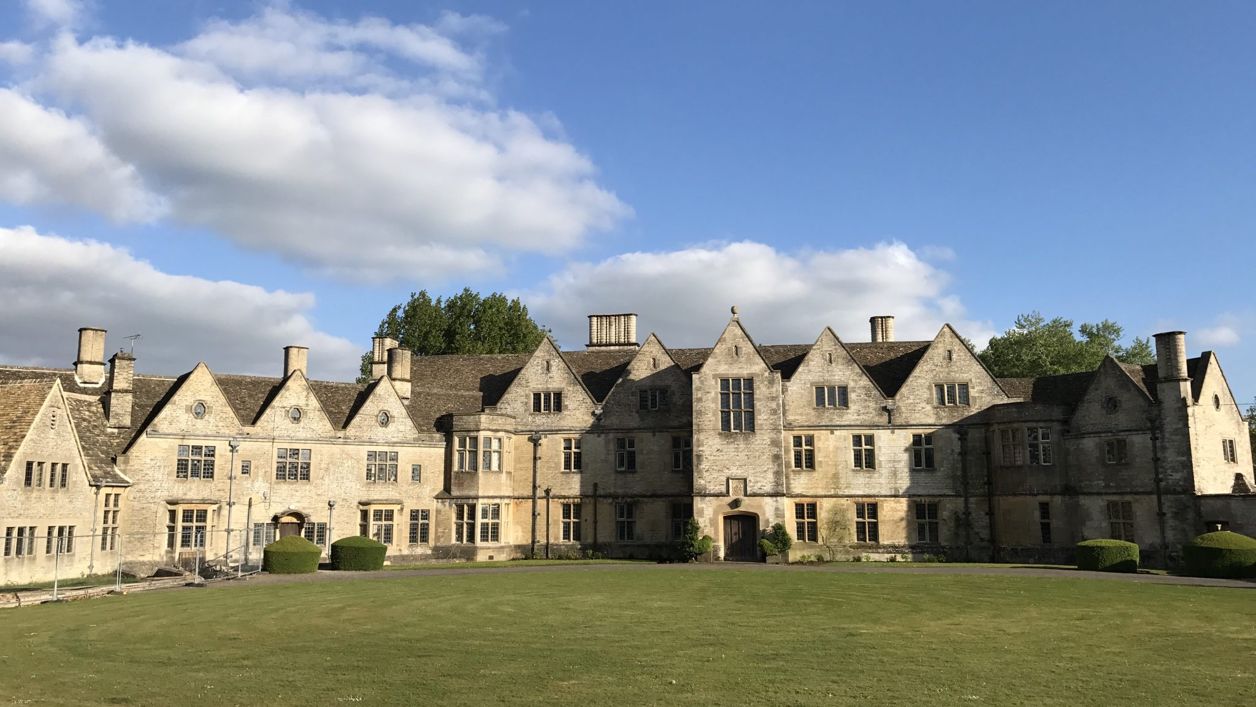
The Arts and Crafts movement held that ordinary things should be made well, by hand, by people who took pleasure in the work, and between about 1890 and 1930 a remarkable number of its makers left London to work in the Cotswolds. Their work can still be seen at Chipping Campden, where a silversmith's workshop from 1902 is still running, at Sapperton and Rodmarton Manor near Cirencester, at Broadway and at William Morris's Kelmscott.
Two things drew them: the stone villages, built by hand and barely touched by industry, and William Morris, who had made the upper Thames his country home in 1871 and whose ideas the whole movement grew from. What follows takes the places in turn, with what you can visit at each.
Ashbee and the Guild of Handicraft
Charles Robert Ashbee founded the Guild of Handicraft in London's East End in 1888, and in 1902 moved it to Chipping Campden, with its craftsmen and their families. Court Barn (opens in a new tab), the museum that tells the story, says 50 guildsmen came, with their families.
The guild set up its workshops in the old Silk Mill on Sheep Street, working to Ashbee's ideal of a community of craftsmen rather than a factory. It did not last as a company, and Court Barn dates its liquidation to 1908.
Some of the craftsmen stayed, and Campden kept its makers. That is the guild's real legacy in the town: not a building but a trade that never left.
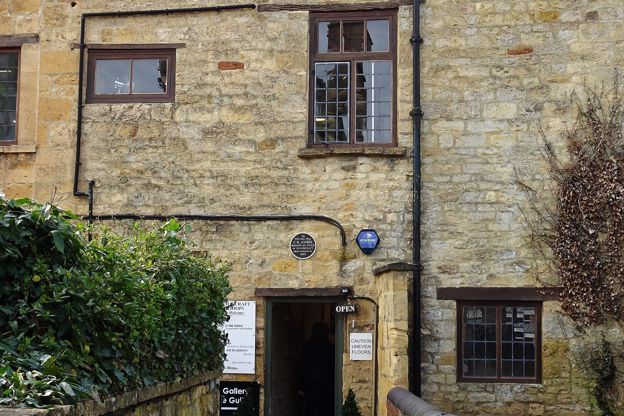
Hart's workshop in the Silk Mill
The one guild workshop still at work is Hart's, the silversmiths on the first floor of the Silk Mill, which Court Barn calls the sole surviving workshop of the original Guild of Handicraft. George Hart was one of the guild's silversmiths when it came to Campden, and he took over the running of the workshop in 1912, by one account; his family has run it since.
Today his descendants David, William and Julian Hart and Derek Elliott work there, making everything from thimbles to church crosses and civic silver, and Court Barn describes the workshop as almost unchanged since the early twentieth century. It is a working workshop rather than a museum, so we have not given opening times: check with the silversmiths before you call in. Court Barn showed an exhibition of photographs of the workshop in the autumn of 2025.
Court Barn museum
Court Barn, on Church Street in Chipping Campden, is the museum of the Arts and Crafts story in the north Cotswolds, from Ashbee's guild to makers working now, and the place to start. It opened in 2007, along Church Street from St James's Church.
It opens Tuesday to Sunday and on bank holiday Mondays, 10am to 4pm. An adult ticket is £7 (2026) and lasts a year; under-12s, under-25s and full-time students go free, and arriving with a bus ticket or a cycle helmet halves the price. The building is step-free, with an accessible toilet, and there is no car park of its own.
Gimson and the Barnsleys at Sapperton
Ernest Gimson and the brothers Sidney and Ernest Barnsley left London in the 1890s to make furniture in the Cotswolds, and in 1903 they came to Sapperton, on the Bathurst estate. The Victoria County History says their arrival made the village a centre for the craft movement inspired by William Morris.
Their workshops made furniture, wrought ironwork and decorative plasterwork, often with local craftsmen, and the staff dispersed soon after Gimson died in 1919. The houses they built for themselves, among them Upper Dorvel House, Beechanger and the Leasowes, still stand in the village, as does the village hall of 1912, which Ernest Barnsley designed.
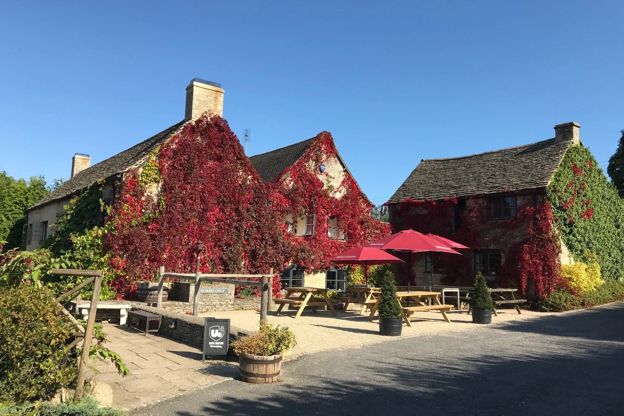
Gimson and both Barnsley brothers, who died in 1926, are buried in the churchyard at Sapperton under plain ledger stones. The houses are private, but the churchyard is open, and the Bell at Sapperton is the village pub.
Rodmarton Manor
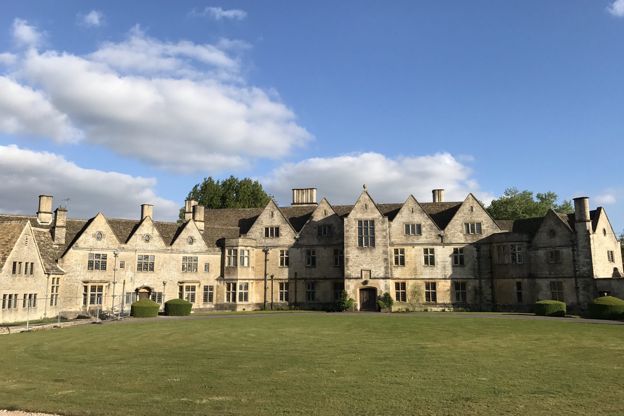
Rodmarton Manor, between Cirencester and Tetbury, is the movement's great house in the Cotswolds: built between 1909 and 1929 by Ernest Barnsley and local craftsmen for Claud and Margaret Biddulph, and furnished by the same makers. It is still the Biddulph family's home, and the furniture, metalwork and textiles made for it are still in the rooms.
The garden is laid out as outdoor rooms, and the house and garden open from early May to the end of September on Wednesdays, Saturdays and bank holiday Mondays, from 2pm to 5pm, or 11am to 4pm in June and July. In 2026 adults paid £15 for the house and garden. There are no dogs, and no photography in the house.
Gordon Russell at Broadway
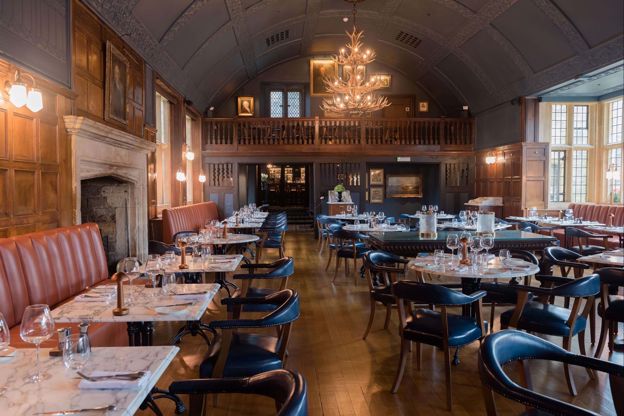
Gordon Russell carried the Arts and Crafts idea into the age of the factory, from a workshop in Broadway. His father, Sydney Bolton Russell, bought the Lygon Arms in 1904 to turn it into a country hotel, and Gordon left school at sixteen to work in the family's antique repair workshop, which furnished its rooms.
From those repairs grew a furniture company, Russell and Sons, founded in 1922 and later Gordon Russell Limited. In the Second World War the government appointed Russell to lead the design panel for utility furniture, and he played a key part in launching the Council of Industrial Design in 1944. He was knighted in 1955 and died in 1980. The Lygon Arms still has a suite named after him.
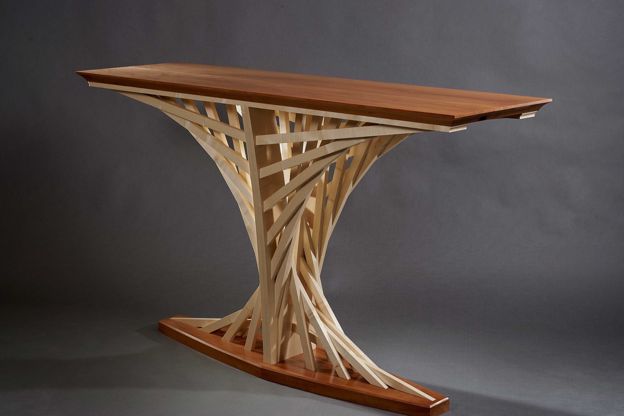
The Gordon Russell Design Museum, in one of his former workshops at 15 Russell Square, opens Tuesday to Saturday, 10am to 4pm, and Sunday, 11am to 3pm; an adult ticket is £8 (2026) and lasts a year, and under-16s and students go free.
The Cotswolds Info newsletter
Events, new places and the best of the season, about once a month. Unsubscribe at any time.
Kelmscott and William Morris
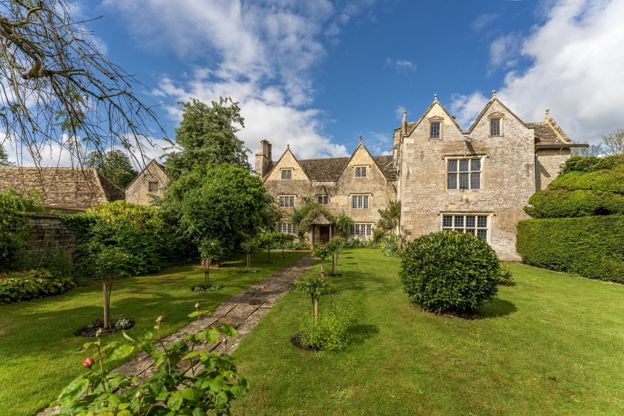
Every road in this story leads back to Kelmscott, the manor house by the upper Thames that William Morris rented from 1871 until his death in 1896. Morris's belief that the maker and the thing made both mattered is the movement's starting point, and Ashbee, Gimson and the Barnsleys all came after him.
Kelmscott Manor, about 3 miles east of Lechlade, opens from April to the end of October, Thursday to Saturday, with the house seen by timed ticket; it closes for the winter on 31 October 2026. Our story on William Morris and the Cotswolds has the house, his grave and the churches he saved.
Hidcote and Kiftsgate, the Arts and Crafts gardens
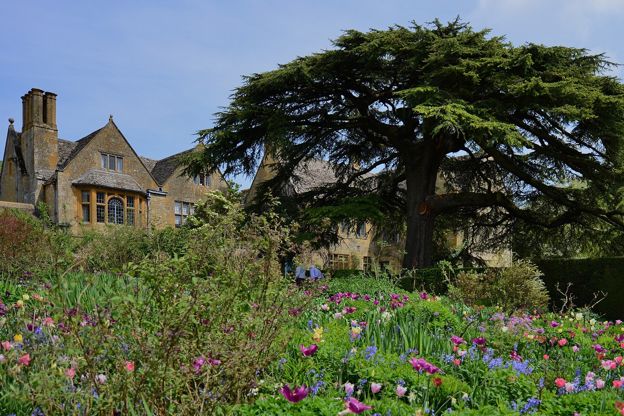
The movement made gardens as well as furniture, and its best-known garden in the Cotswolds is Hidcote, near Chipping Campden, which Lawrence Johnston began in 1907. The National Trust describes it as inspired by the Arts and Crafts movement: a series of outdoor rooms divided by hedges and walls, with loose planting inside a formal plan.
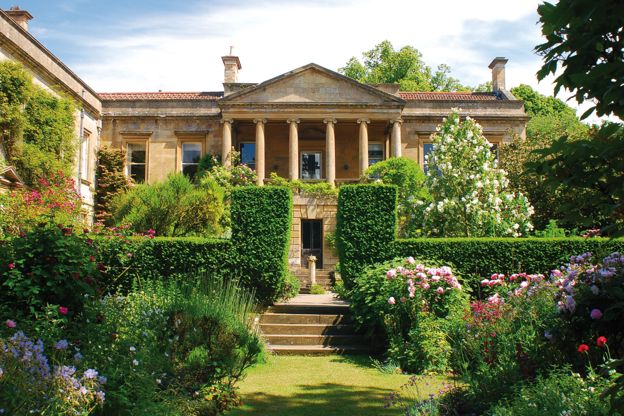
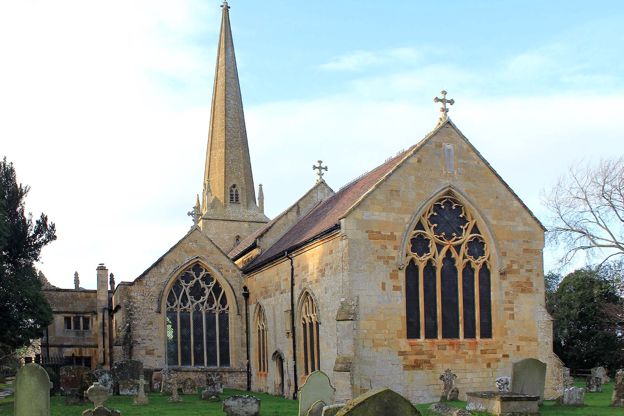
The trust has looked after Hidcote since 1948. From 14 March to 1 November 2026 adults pay £20, and winter tickets from 2 November are £12. Kiftsgate Court, half a mile away, is a garden made by three generations of women, Heather Muir, Diany Binny and Anne Chambers, with a wide border, a white sunk garden and terraces down the bank to a lower garden, and it opens on its own season, so check its dates. Our walk from Mickleton past Hidcote and Kiftsgate climbs to both from the village.
Where else to see the work
The Wilson, Cheltenham's museum and art gallery, holds what the Cheltenham Trust calls the leading Arts and Crafts Movement collection, but its Arts and Crafts gallery is closed for repair and refurbishment, with key objects shown elsewhere in the museum. The Friends of the Wilson (opens in a new tab) said in July 2026 that the museum's new galleries were to reopen on 23 October 2026, and the Cheltenham Trust now says the transformed museum wing is open. We could not confirm whether the Arts and Crafts gallery itself has reopened. The Friends added that the Wilson hopes to stage a major Arts and Crafts exhibition while the gallery is closed, and that it aims to reopen the permanent gallery once the work is done. Check before you make a special trip.
For a single day, Chipping Campden gives the most: Court Barn in the morning, a look at the Silk Mill, and Hidcote and Kiftsgate in the afternoon. Sapperton and Rodmarton make a second day, on a Wednesday or Saturday between May and September, when Rodmarton is open.
Mentioned in this story
The places, sights and walks in this story, each with a page of its own: what it is, when to go and how to get there.
-
Rodmarton Manor
Historic houses and heritage · Tetbury
-
Gordon Russell Design Museum
Museums and galleries · Broadway
-
Kelmscott Manor
Historic houses and heritage · Lechlade-on-Thames
-
Hidcote
Parks and gardens · Chipping Campden
-
Kiftsgate Court Gardens
Parks and gardens · Chipping Campden
-
The Lygon Arms
Hotel · Broadway
-
The Bell at Sapperton
Pubs · Sapperton and Frampton Mansell
-
Mickleton, Hidcote and Kiftsgate
Walk · Starts in Chipping Campden · 2 hrs, 15 mins · Circular · Dog-friendly
Places to stay near Chipping Campden
-
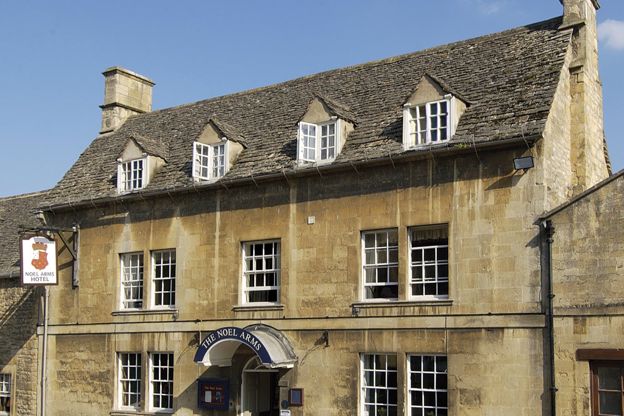
The Noel Arms Hotel
Inn · Chipping Campden
A Grade II listed inn with 27 rooms on Chipping Campden's High Street, with a restaurant, parking, accessible rooms and dogs by arrangement.
Dog-friendly
Verified Oct 2026
-
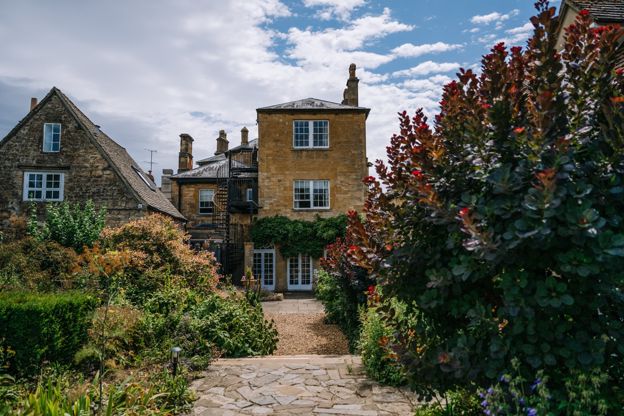
Cotswold House Hotel and Spa
Hotel · Chipping Campden
A Grade II listed Regency town house on Chipping Campden's Upper High Street, now a hotel and spa with the Hidcote restaurant.
Hot tubs · Wedding venues
Verified Nov 2026
-
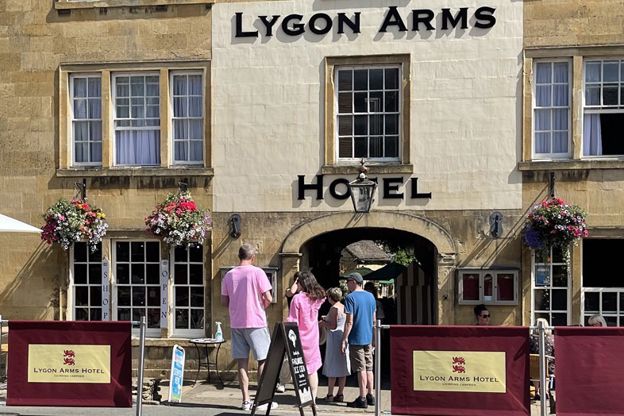
The Lygon Arms, Chipping Campden
Inn · Chipping Campden
A coaching inn with ten rooms on Chipping Campden's High Street, with family rooms, bike storage, free parking at the rear and dogs welcome.
Dog-friendly
Verified Oct 2026
Read next
-
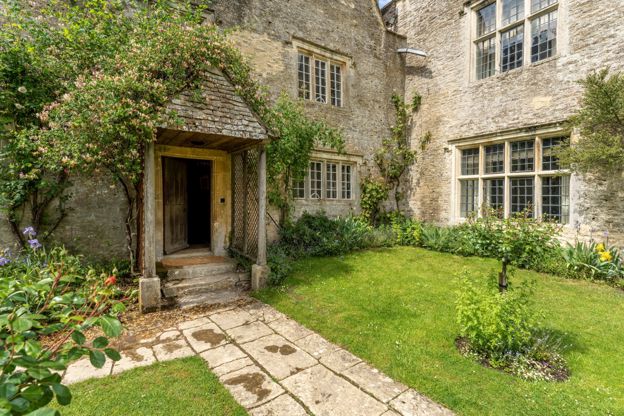
William Morris and the Cotswolds
Story · History · 9 minute read
William Morris's Cotswold life: Kelmscott Manor, his heaven on earth by the upper Thames, his grave at Kelmscott, the churches at Inglesham and Burford he fought for, and the Bibury line he may never have said.
-
Country houses and castles of the Cotswolds
Story · Guides · 11 minute read
Blenheim, Sudeley, Berkeley, Snowshill, Chastleton, Stanway, Kelmscott, Rodmarton, Dyrham, Lacock and the ruins: the Cotswolds' great houses and castles, who built them, when they open, and which suit children, gardeners or a day by train.
-
Famous people with Cotswold connections
Story · History · 10 minute read
The writers, composers, scientists, queens and prime ministers whose lives are tied to Cotswold places, from Tyndale and Katherine Parr to Laurie Lee, Holst and Edward Thomas, and where to find their traces.