William Morris and the Cotswolds
The designer, poet and campaigner rented a manor house by the upper Thames for twenty-five years and is buried in the village churchyard. He also founded the society that changed how England mends its old churches, starting with two near Lechlade and Burford.
· 9 minute read
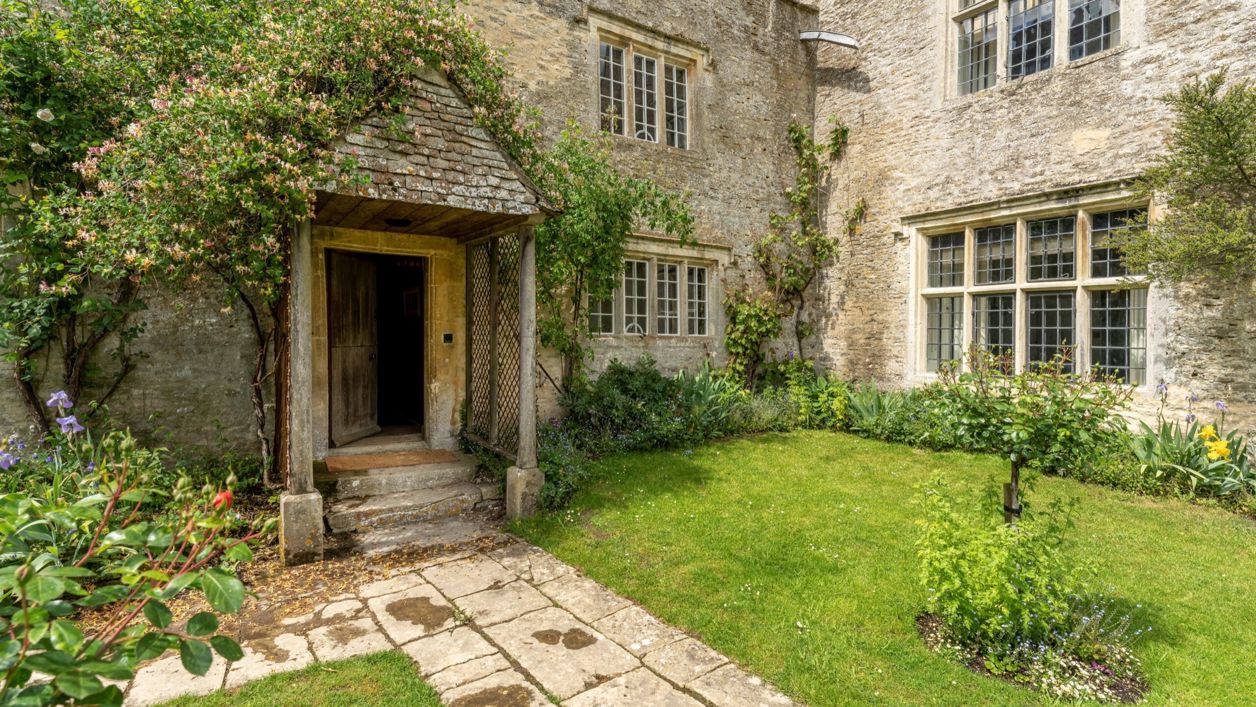
William Morris is best known for his wallpapers and fabrics, but in the Cotswolds he is remembered for a house, a grave and two churches. In May 1871 he found a manor house at Kelmscott, a village on the upper Thames near Lechlade, in a house agent's catalogue, and took it on a joint lease with the painter Dante Gabriel Rossetti. The day after he first saw it, he called it 'a heaven on earth' in a letter to his friend Charles Faulkner.
He kept the house until he died in 1896, is buried in the village churchyard, and from Kelmscott he went out to fight the restorers who were scraping the old churches of the district bare. All of it can be visited: the manor from April to October, the grave at any time and the churches most days.
Who William Morris was
William Morris, born in Walthamstow in 1834, was a designer, poet, printer and socialist, and one of the most significant figures in the Arts and Crafts movement. He set up the design firm that became Morris & Co, designed wallpapers and textiles that are still printed, wrote long poems and prose romances, and in 1891 founded the Kelmscott Press.
His London home from 1878 was Kelmscott House in Hammersmith, and he died there on 3 October 1896. The Cotswolds were where he went to rest and to work in quiet, and the upper Thames at Kelmscott is the landscape behind his utopian novel, News from Nowhere.
Kelmscott Manor
Kelmscott Manor is a stone house by the Thames, about 3 miles east of Lechlade, and it was Morris's country home from 1871 to 1896. Rossetti left in 1874, but Morris kept the tenancy until he died. It was a family retreat, where the household spent summers, rather than his main home. The house, its custodians say (opens in a new tab), inspired News from Nowhere and designs such as Strawberry Thief.
After Morris's death the tenancy passed to his widow Jane, and in 1913 trustees bought the house for £4,000 to give her security; she died in January 1914. Their younger daughter May moved in for good in 1923 and lived there until her death in 1938. She left it to Oxford University, but in 1962 a court released the university from the terms of her will and the house passed to the Society of Antiquaries of London, which restored it and runs it today.
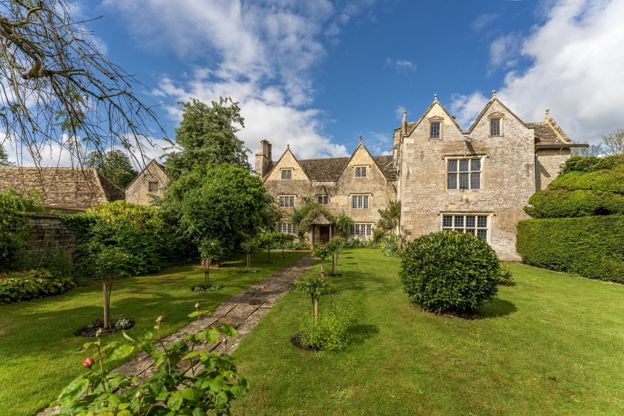
Visiting Kelmscott Manor
Kelmscott Manor opens from April to the end of October, Thursday to Saturday; in 2026 it closes for the winter on 31 October and reopens in April. The estate opens from 10.15am to 5pm and the house is seen by timed ticket every 15 minutes from 10.30am, with last entry at 3.30pm.
In 2026 an adult ticket was £15.50, or £17.25 with Gift Aid, and children aged 5 to 16 and students paid £10.50. The gardens, tearoom and shop are free on open days, so you can come for lunch without a house ticket; collect a free garden ticket at the ticket office. It is not a National Trust house, so members pay, though Historic Houses members get in free. Dogs on a lead are welcome in the grounds but not in the house or the walled garden, apart from assistance dogs. The car park is by St George's Church, a walk of 10 to 12 minutes from the house, with a shuttle for anyone who cannot manage it.
The best way to arrive is along the river. The Thames Path from Lechlade passes Father Thames at St John's Lock and follows the river to Kelmscott, which the manor puts 3 miles from Lechlade. The Plough, five minutes from the Thames Path, is the village pub, and the Trout at St John's Bridge is on the way.
The funeral and the grave at Kelmscott
Morris is buried in the churchyard of St George's at Kelmscott, and his coffin came there from Lechlade station on an open hay cart. The writer R. B. Cunninghame Graham, who was at the funeral on 6 October 1896, described the coffin riding on the cart through wind and rain, with the mourners following in country carriages.
His friend the architect Philip Webb designed the tomb, a low limestone ridge like the roof of a small house, which also remembers Jane and their daughters Jane Alice, known as Jenny, and May. Historic England lists it at Grade II (opens in a new tab). The church is beside the manor's visitor car park, 10 to 12 minutes' walk from the house, and the grave can be seen at any time.
Saving old buildings: the SPAB
In 1877 Morris founded the Society for the Protection of Ancient Buildings, with Philip Webb and others, to stop architects 'restoring' medieval churches by stripping and rebuilding them. Its manifesto (opens in a new tab), written that year, argues for daily care and honest repair instead of rebuilding, and it is still the basis of the society's work.
The spark was a plan by Sir Gilbert Scott to restore Tewkesbury Abbey, which Morris attacked in a letter to The Athenaeum in March 1877. But two of the churches that shaped his anger were close to Kelmscott, and both are in our guides.
Burford church
At Burford, G. E. Street restored St John the Baptist's Church heavily in the 1870s. Driving through Burford in September 1876, Morris was horrified by the work, and his daughter May recalled that the sight set him making notes for an appeal for united action. Historic England's listing names Burford as one of the cases that led him to found the SPAB.
What Street left is still one of the grandest wool churches in the Cotswolds, grown to its present plan by the late fifteenth century and taking in the chapel of the town's guild, on the wealth of the wool trade. Go and see what was saved, and look at the bare stone walls with Morris's objection in mind.
Inglesham, the church Morris saved
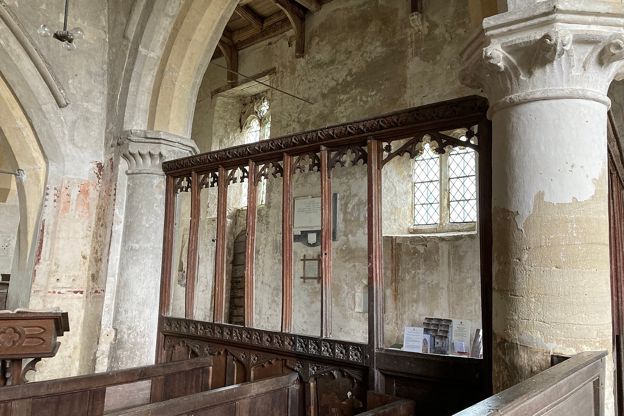
The little church of St John the Baptist at Inglesham, just south of Lechlade, is the church Morris fought for and won. The Churches Conservation Trust (opens in a new tab) says he was appalled by restoration work by Street when he visited in 1876, and he arranged a survey of the church. Historic England's listing records that in 1888 and 1889 the SPAB restored it but did not alter it, with J. T. Micklethwaite as architect and Morris helping.
The result is a church kept much as it was in the seventeenth century: high box pews, medieval screens, wall paintings up to seven layers deep and a late Saxon carving of the Madonna and Child. The trust, which looks after it now, quotes Morris's view, given in 1896, that we are only trustees for those who come after us. It is open daily; there are no toilets or running water, and five steps lead up to the churchyard.

The Cotswolds Info newsletter
Events, new places and the best of the season, about once a month. Unsubscribe at any time.
Broadway Tower
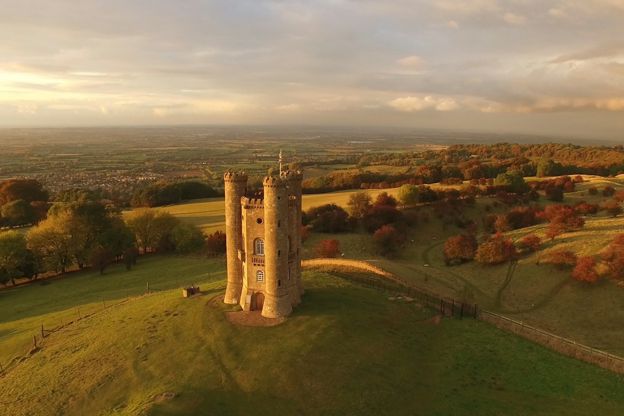
From 1866 Morris's friend Cormell Price rented Broadway Tower, the folly on the hill above Broadway, and Morris and his family stayed there with him. In September 1876 Morris drove from Kelmscott to the tower by way of Burford, with Jane, their daughters and Edward Burne-Jones's family in the party, and they all signed the tower's visitors' book.
The link with the SPAB is on record. His first biographer, J. W. Mackail, wrote that at Broadway Tower, fresh from Burford, Morris drafted a letter urging a society to deal with such cases; the draft has not survived, and the society was founded the following March. Two of our walks climb to the tower from the village.
Holst's elegy for Morris
Morris's influence reached well beyond furniture. The young Gustav Holst conducted the Hammersmith Socialist Choir in the 1890s, and when he wrote his symphony The Cotswolds in 1899 and 1900 its slow movement was an elegy in memory of Morris. Our story on Gustav Holst and the Cotswolds has the music and the places.
The Bibury quotation
You will often read that Morris called Bibury the most beautiful village in England. No primary source for it has been found: the line is repeated on websites and in captions, but none names the letter, lecture or date where he said it.
It may be true, and Arlington Row would justify it, but we cannot quote it as his. If you find the source, tell us and we will print it.
Mentioned in this story
The places, sights and walks in this story, each with a page of its own: what it is, when to go and how to get there.
-
Kelmscott Manor
Historic houses and heritage · Lechlade-on-Thames
-
Broadway Tower
Historic houses and heritage · Broadway
-
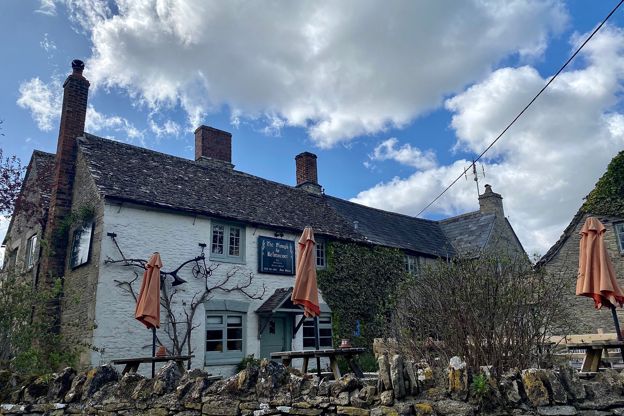
The Plough, Kelmscott
Pubs · Kelmscott
-
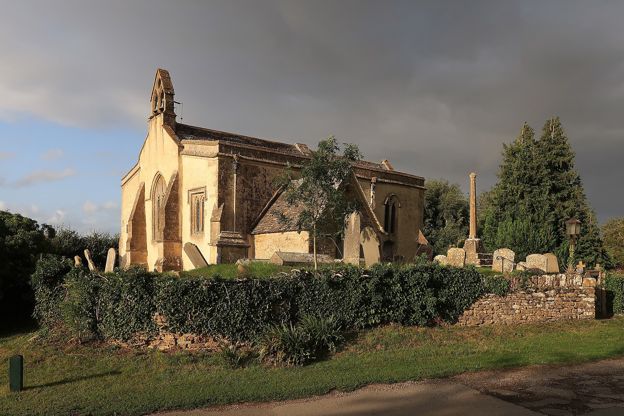
St John the Baptist, Inglesham
Sight · Church · Lechlade-on-Thames
-
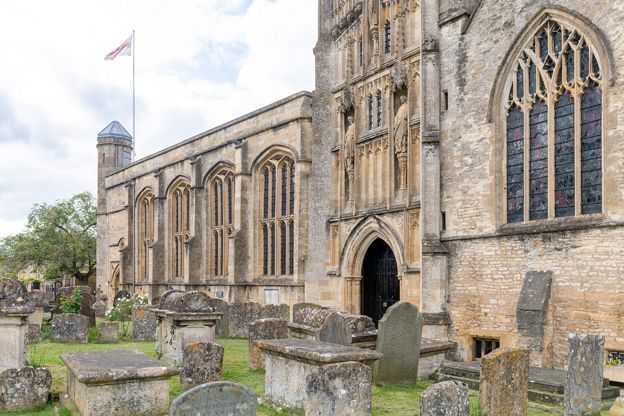
St John the Baptist, Burford
Sight · Church · Burford
Places to stay near Lechlade-on-Thames
-
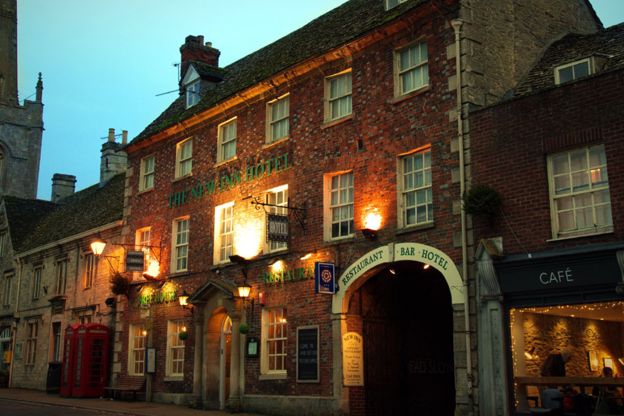
The New Inn Hotel
Hotel · Lechlade-on-Thames
A 17th-century coaching inn on the Market Place in Lechlade-on-Thames, with thirty rooms, a restaurant and bar, and weddings.
Wedding venues
Verified Nov 2026
-
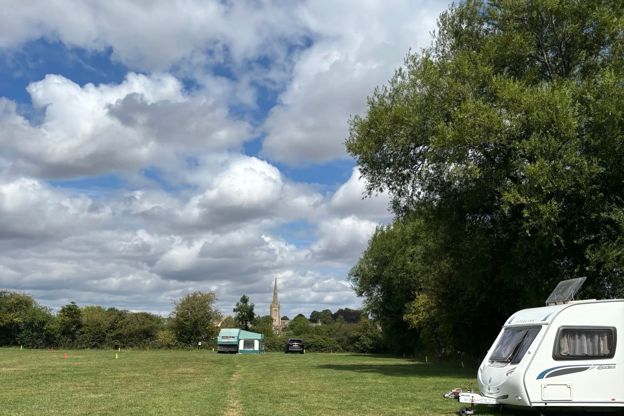
Bridge House Campsite
Camping · Lechlade-on-Thames
A small family-run touring and camping field on Thames Street, Lechlade, a short walk from the river and the town, with 42 pitches and three bell tents, open from late March until it closes for the winter.
Dog-friendly · Walker-friendly
Verified Nov 2026
-
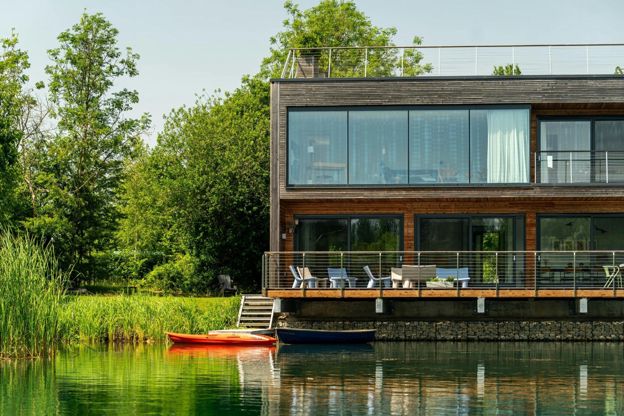
The Lakes by YOO
Self-catering · Lechlade-on-Thames
An 850-acre lakeside estate at Coln Park, west of Lechlade, with rooms, apartments, cabins and houses sleeping up to 14, a spa with a 17-metre pool, and a lakeside bar and kitchen.
Family-friendly · Hot tubs
Verified Nov 2026
Read next
-
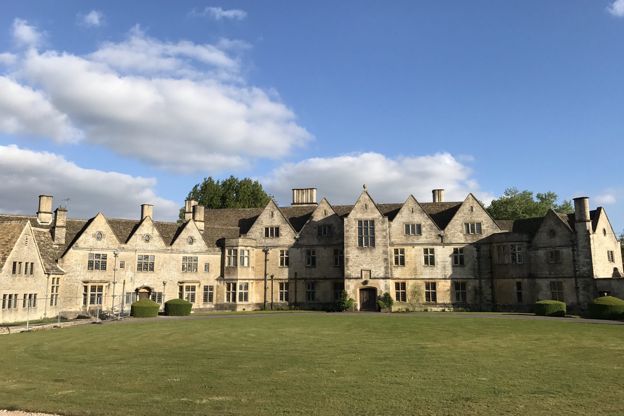
The Arts and Crafts movement in the Cotswolds
Story · History · 10 minute read
How Ashbee's Guild of Handicraft, Gimson and the Barnsleys, Rodmarton Manor, Gordon Russell and the gardens at Hidcote made the Cotswolds a home of Arts and Crafts, and where to see it now.
-
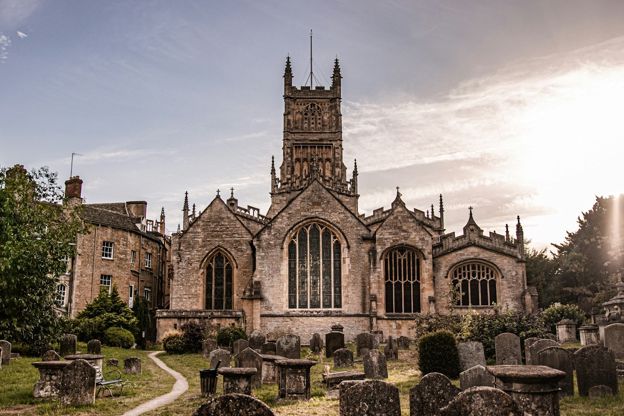
The wool churches of the Cotswolds
Story · Guides · 11 minute read
Northleach, Chipping Campden, Cirencester, Fairford, Burford and the other Cotswold churches rebuilt on medieval wool money: how the trade paid for them, what to look for in each, when they open and a route by car or on foot.
-
Famous people with Cotswold connections
Story · History · 10 minute read
The writers, composers, scientists, queens and prime ministers whose lives are tied to Cotswold places, from Tyndale and Katherine Parr to Laurie Lee, Holst and Edward Thomas, and where to find their traces.