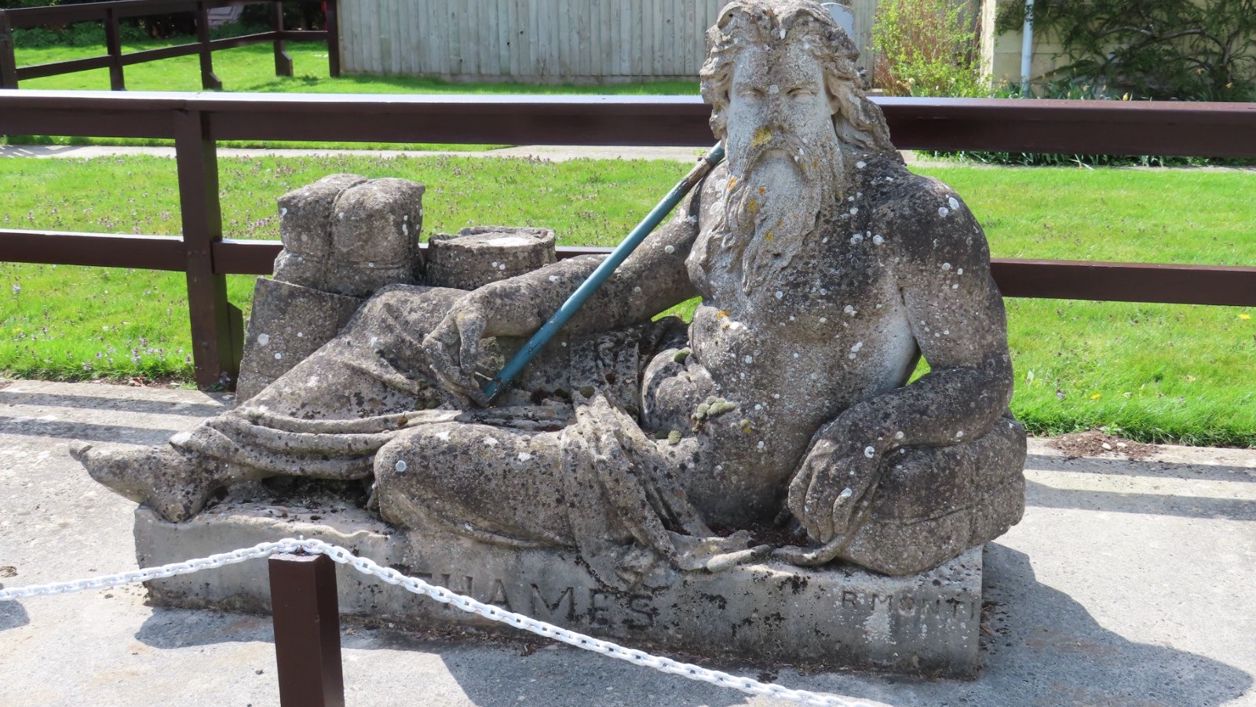
Philip Halling, CC BY-SA 2.0, via Wikimedia Commons
Father Thames and St John's Lock
Raffaelle Monti's reclining river god, modelled in cement for the Crystal Palace in 1854, beside St John's Lock below Lechlade, the first lock on the Thames. He lay at the river's source from 1958 until vandals drove him here in 1974. Grade II.
Monument
Lechlade-on-ThamesFather Thames, a half-reclining river god, lies beside St John's Lock on the edge of Lechlade-on-Thames. The Italian sculptor Raffaelle Monti modelled him in cement in 1854 for the grounds of the Crystal Palace, and after a spell at the river's source he was moved to the lockside in 1974. St John's Lock, built in 1791, is the first lock on the Thames. The statue is listed Grade II.
History
The statue and the lock tell two different stories: one of Victorian display, the other of the working river.
From the Crystal Palace to Thames Head
Monti made the figure for the grounds of the Crystal Palace at Sydenham, in south London, as part of a display of rivers and oceans. He was modelled in Portland cement rather than carved in marble, and he is signed R Monti on the base. He survived the fire that destroyed the Crystal Palace in 1936 and was later acquired by the Thames Conservancy, which in 1958 set him up at Thames Head, the traditional source of the river in Trewsbury Mead near Coates. Repeated vandalism there led to his move to St John's Lock in 1974.
St John's Bridge and the lock
The lock takes its name from the bridge and the medieval hospital beside it. Before 1228, the Victoria County History says, Isabel de Mortimer and her husband Peter FitzHerbert founded a hospital of St John the Baptist on the north side of the bridge, and Peter built a gateway onto the bridge in 1228. The prior collected tolls for its upkeep in the fourteenth century. The hospital was dissolved in 1472, and in about 1520 some of its buildings were pulled down and the stone used to mend the bridge. The present St John's Bridge, a few metres downstream of the lock, was rebuilt in 1831 by the local builder Peter Cox.
At the end of the eighteenth century, the commissioners who ran the upper Thames bypassed the bridge with a short new cut and a lock. The Victoria County History dates it to 1791. It is the first lock a boat meets coming down the river and the last going up.
What to see
Walk along the lockside to see the statue up close, beside the lock-keeper's house. The listing reads his symbols: the shovel he holds stands for the navvies, the men who dug the canals and cuts, and the bales and the barrel at his feet for the trade the river carried. Look for Monti's signature on the base.
Watch a boat work through the lock if one comes by. Just downstream, the River Leach joins the Thames near St John's Bridge.
Visiting
The lockside is free and open at all times, on the Thames Path. The statue lies beside the lock-keeper's house, so be considerate when the lock is working. Visit Thames describes the lock's company of boaters, walkers and picnickers. The meadows either side can flood in winter, and walkers report cattle and geese beside the path at times.
Getting there
St John's Lock is about 1km south-east of Lechlade's Market Place, beside the A417 at St John's Bridge; the Environment Agency gives its postcode as GL7 3HA. On foot, follow the Thames Path downstream from Halfpenny Bridge, or walk the Lechlade and St John's Lock loop, which passes the statue near the end before crossing the meadows back to town. Stagecoach West's bus 77 between Cirencester and Highworth stops in the Market Place four or five times a day each way, Monday to Saturday, with no Sunday service. We could not confirm a public car park at the lock; park in Lechlade and walk.
Nearby
The Trout Inn stands beside St John's Bridge; it was recorded as the Baptist's Head by 1692, after the hospital, and renamed the Trout before 1831. Back in town are St Lawrence's Church and The New Inn, and the River Thames at Lechlade has its own page. Downstream, the Thames Path continues to Buscot Lock and St Mary's, Buscot, with its Burne-Jones windows.
Walks past Father Thames and St John's Lock
-
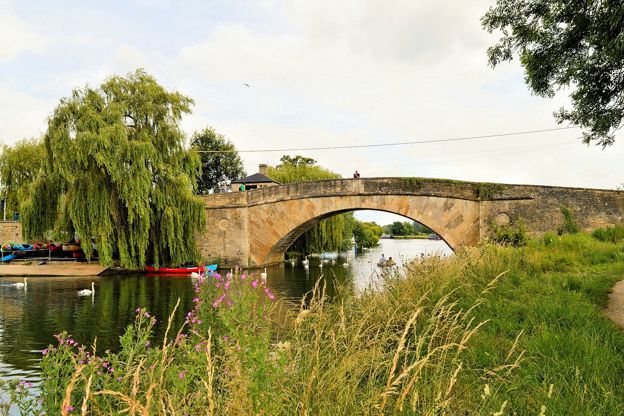
Lechlade and St John's Lock
Walk · Starts in Lechlade-on-Thames · 45 mins · Circular · Dog-friendly
A flat 3-mile (4.8km) circular walk from Lechlade's Market Place, easy and about an hour: out to the Round House where the Coln and the old canal meet the Thames, back along the meadows past Ha'penny Bridge to St John's Lock and the Trout Inn, home by Shelley's Walk.
-
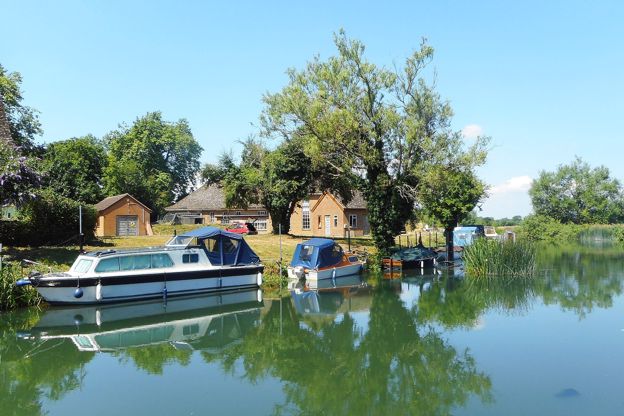
Lechlade, Buscot and the Thames
Walk · Starts in Lechlade-on-Thames · Circular
A level 4.5-mile (7.2km) circular walk from Halfpenny Bridge, Lechlade, with three stiles and no time given: by the Thames Path meadows to Inglesham church, over to Buscot by lanes and fields, across Buscot Weir and Lock, and back by St John's Lock and the Trout Inn.
Stay and eat near Father Thames and St John's Lock
-
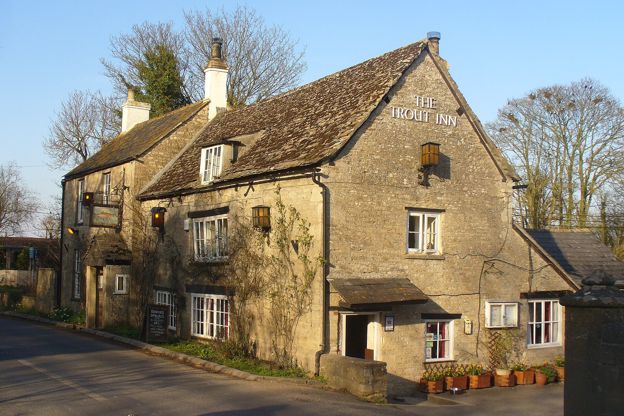
The Trout Inn
Pubs · Lechlade-on-Thames
A family-run pub by St John's Lock at St John's Bridge, Lechlade, recorded as an inn by 1692, with a riverside garden and fishing rights on the Thames.
Walker-friendly · Family-friendly
Verified Oct 2026
-
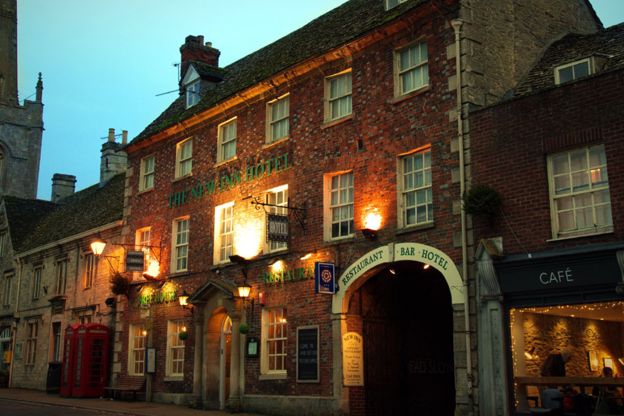
The New Inn Hotel
Hotel · Lechlade-on-Thames
A 17th-century coaching inn on the Market Place in Lechlade-on-Thames, with thirty rooms, a restaurant and bar, and weddings.
Wedding venues
Verified Nov 2026
-
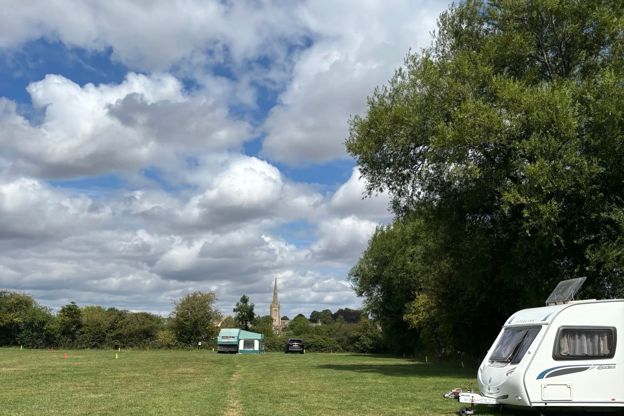
Bridge House Campsite
Camping · Lechlade-on-Thames
A small family-run touring and camping field on Thames Street, Lechlade, a short walk from the river and the town, with 42 pitches and three bell tents, open from late March until it closes for the winter.
Dog-friendly · Walker-friendly
Verified Nov 2026
Stories about Father Thames and St John's Lock
-
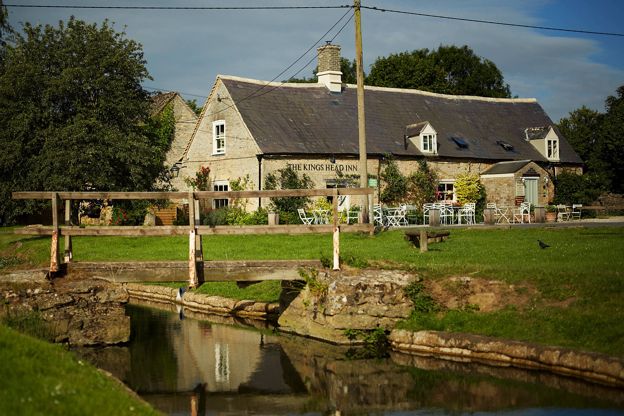
The best pubs in the Cotswolds
Story · Guides · 11 minute read
The best pubs in the Cotswolds: village pubs on the green at Biddestone and Guiting Power, medieval inns at Castle Combe and Lacock, riverside pubs at Lechlade and Swinbrook, pubs with rooms round Kingham, and the pubs at the end of our walks.
-
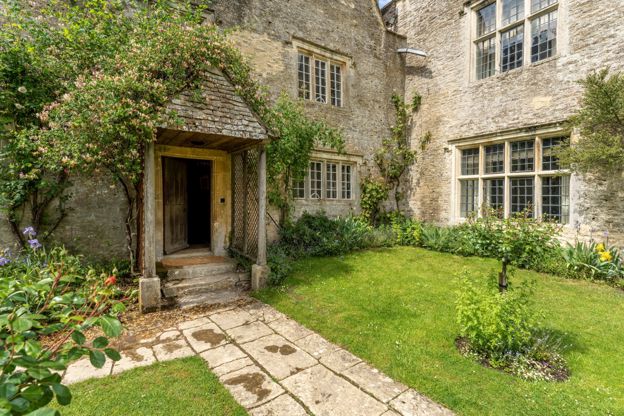
William Morris and the Cotswolds
Story · History · 9 minute read
William Morris's Cotswold life: Kelmscott Manor, his heaven on earth by the upper Thames, his grave at Kelmscott, the churches at Inglesham and Burford he fought for, and the Bibury line he may never have said.
More sights to see
-
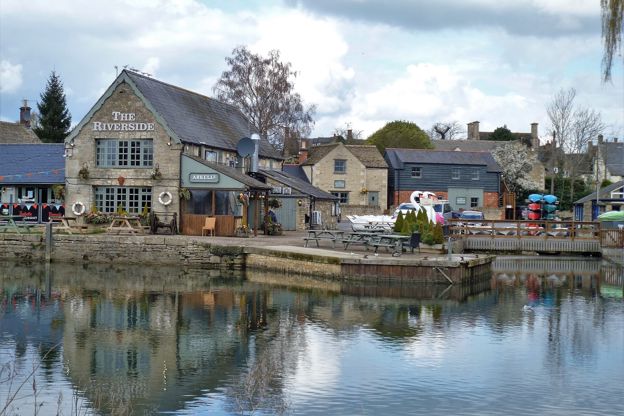
River Thames at Lechlade
Sight · River · Lechlade-on-Thames
The young Thames at Lechlade, where the Coln and the Leach join it and the old Thames and Severn Canal met it at the Round House: long the head of the navigable river, with the Thames Path past Halfpenny Bridge to St John's Lock.
-
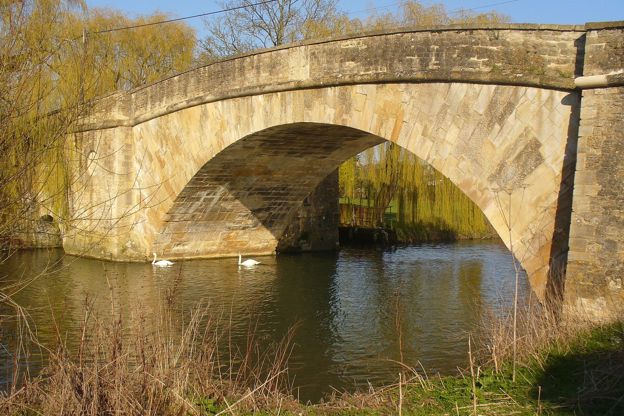
Halfpenny Bridge, Lechlade
Sight · Bridge · Lechlade-on-Thames
The single tall stone arch that carries Thames Street over the Thames at Lechlade, built under a turnpike Act of 1792, with a little square tollhouse on its corner. Named after the halfpenny walkers paid until 1839. Grade II; free.
-
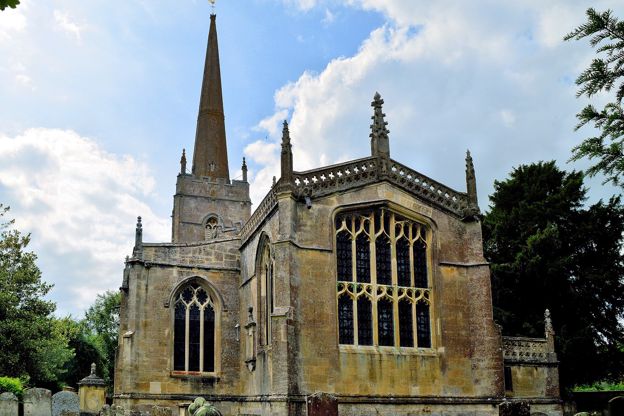
St Lawrence's Church, Lechlade
Sight · Church · Lechlade-on-Thames
Lechlade's wool church on the Market Place, rebuilt in Taynton stone in the 1470s, with a spire seen across the Thames meadows and a churchyard that moved Shelley to verse in 1815. Grade I; closed for restoration through 2026, with reopening expected by Christmas.