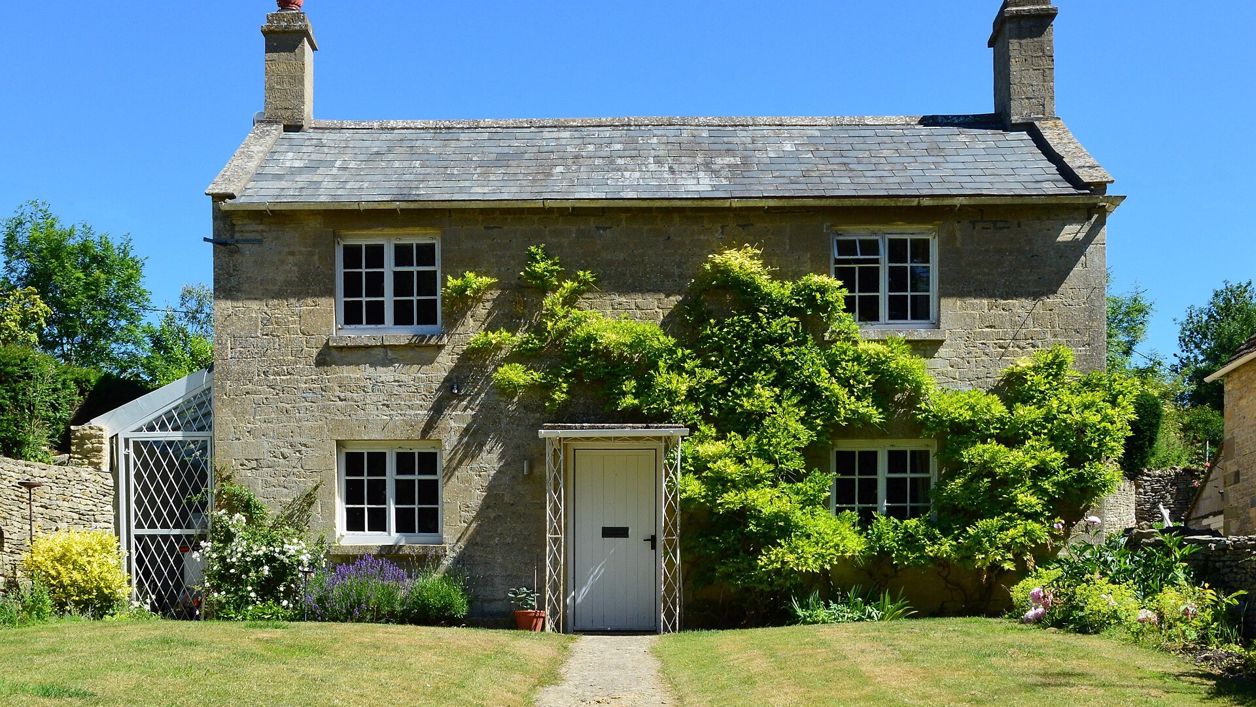
Oswald Bertram, CC BY-SA 2.0, via Wikimedia Commons
Ablington
A hamlet of Bibury parish a mile up the River Coln from Arlington Row, with the Elizabethan manor where J. Arthur Gibbs wrote A Cotswold Village, a small green and no shop, pub or coach. Walk here from Bibury.
- Nearest station
- Kemble, 13 miles, then a taxi, or the 882 to Cirencester and the 855 to Bibury and a mile on foot
- Parking
- No car park and almost no roadside space; park in Bibury and walk
- Best time
- Spring and early summer by the river; any day Bibury is busy
- When it's busy
- Never, beyond a few walkers on a fine weekend
- Toilets
- None; the nearest are the public toilets on The Street in Bibury (50p)
- Dogs
- On leads through the hamlet and in the fields, which have sheep and cattle; the river is open to them on the Bibury walk
About Ablington
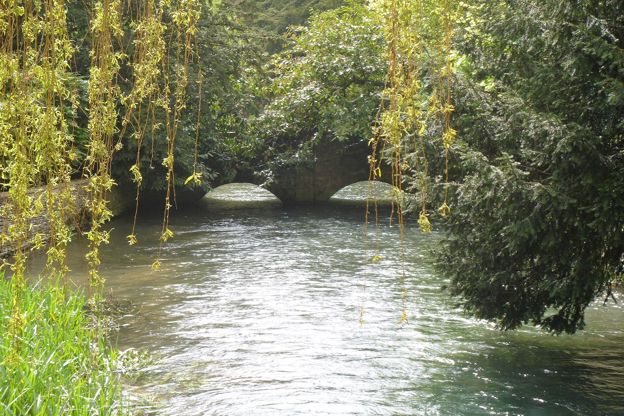
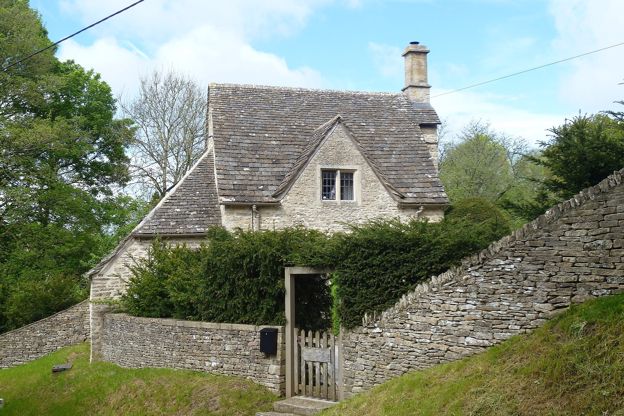
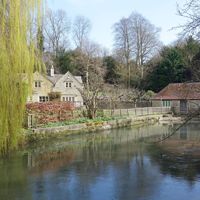
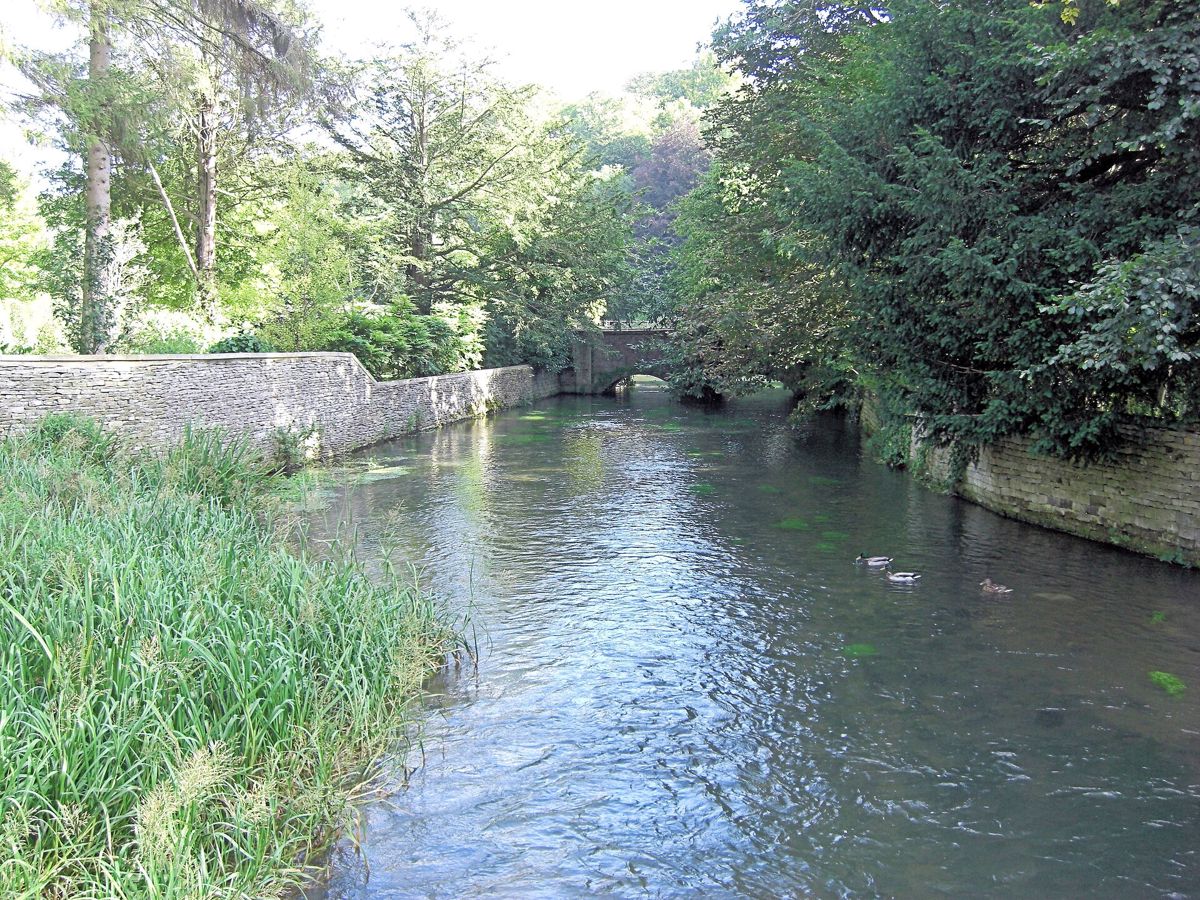
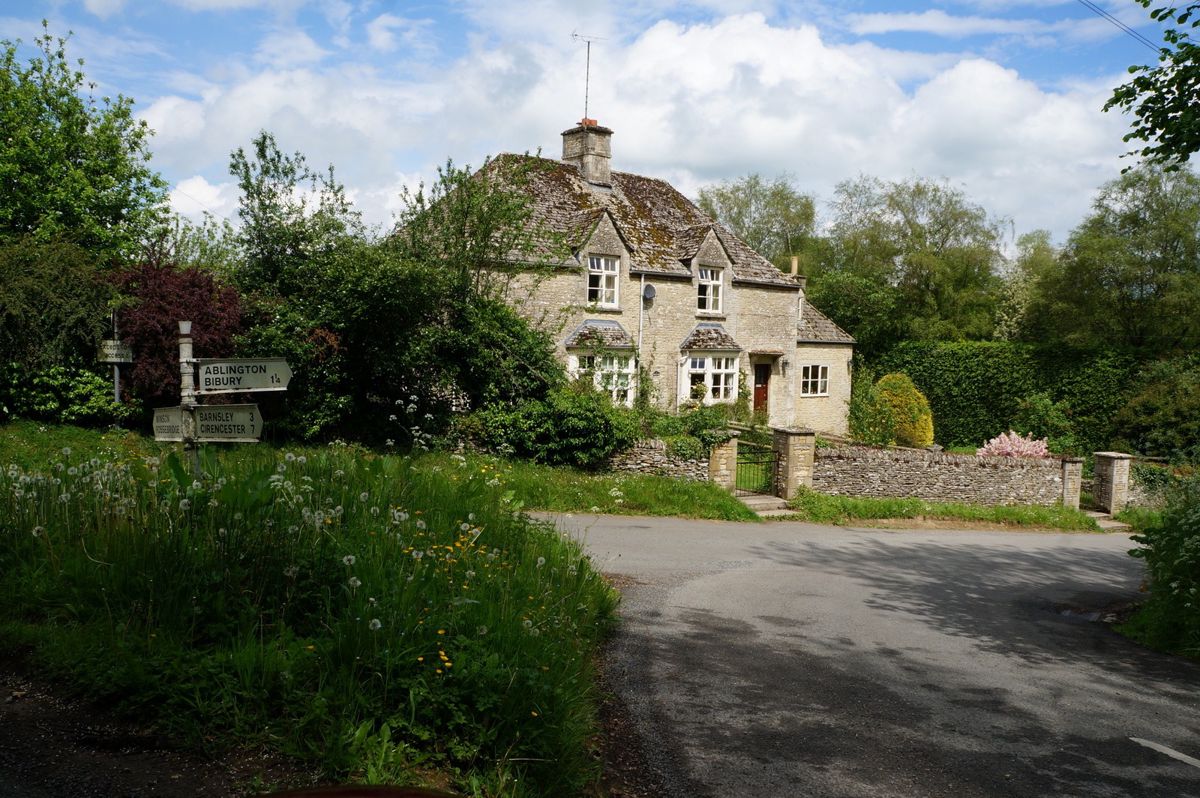
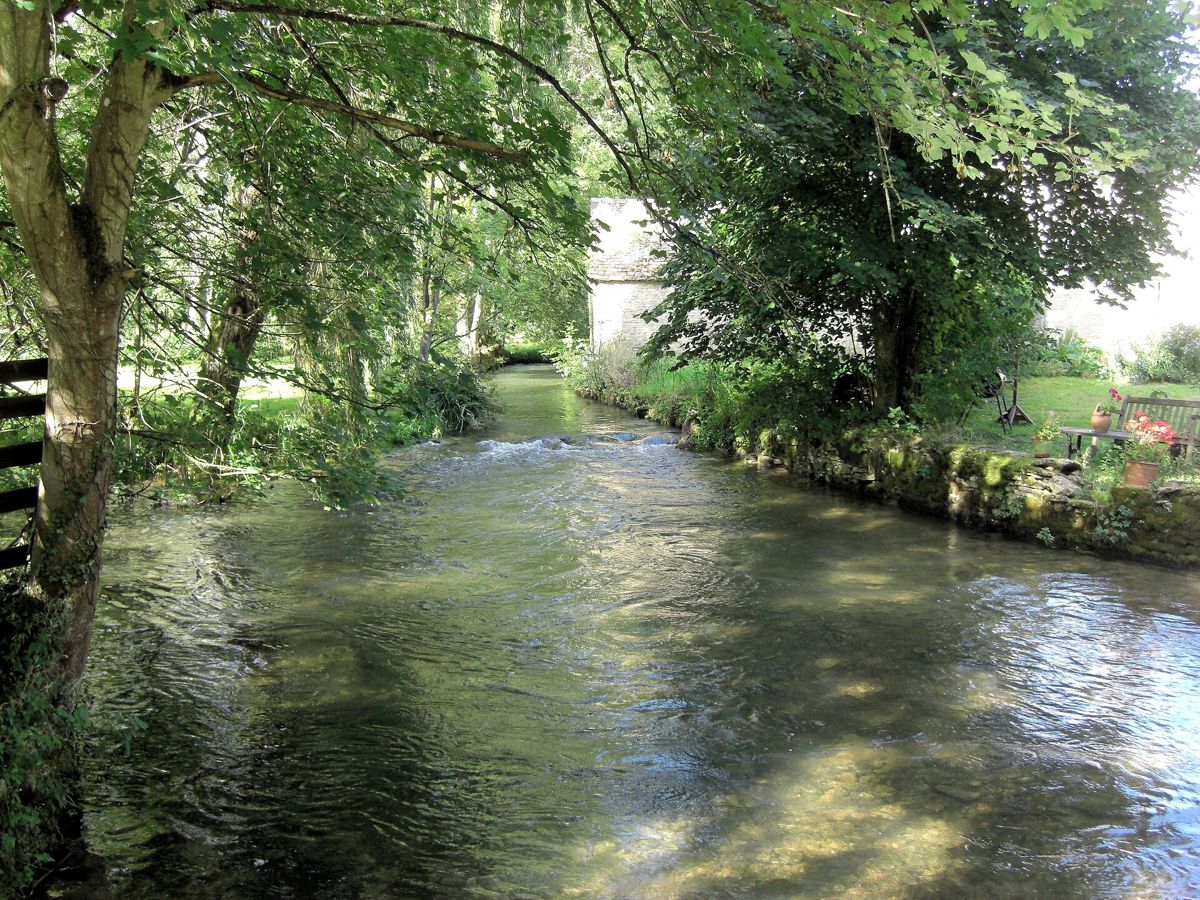
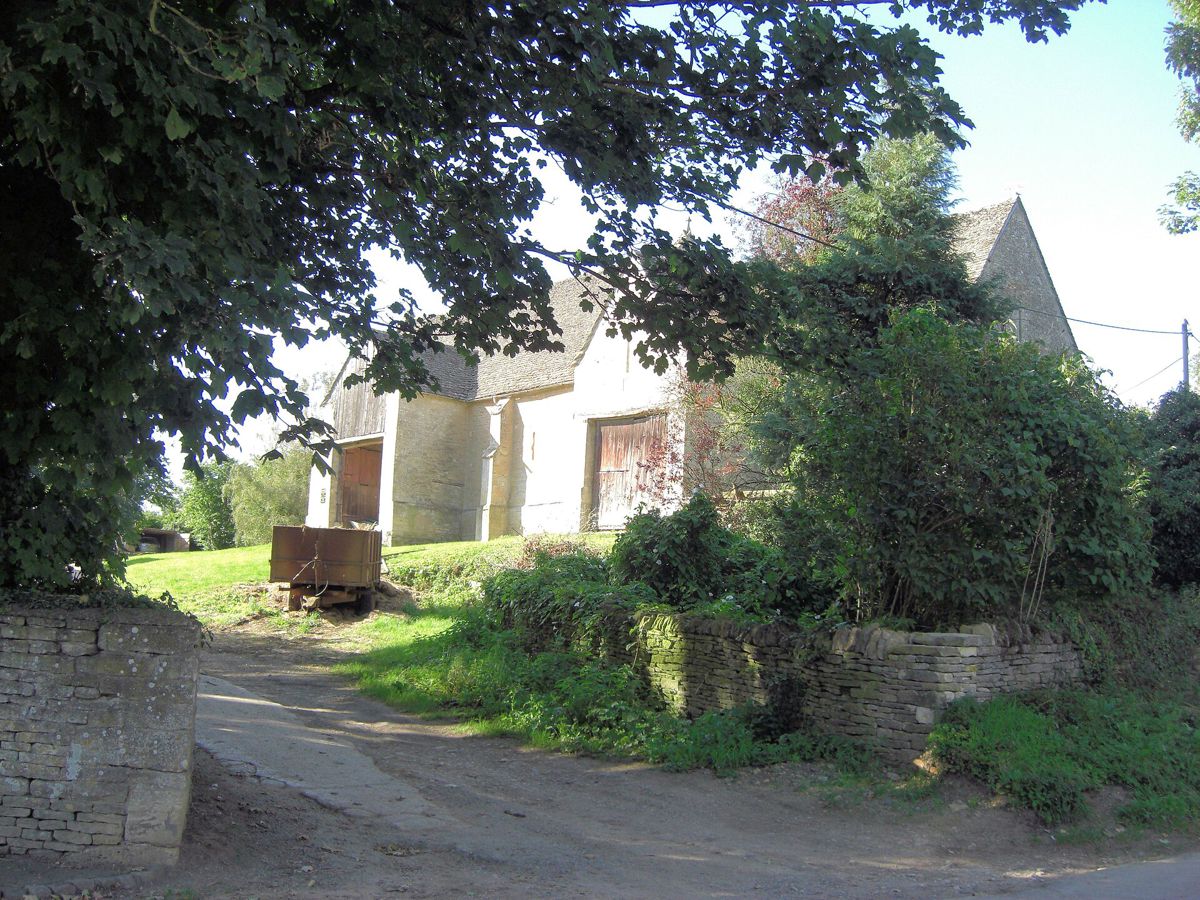
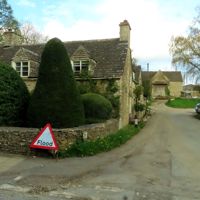
Ablington is the hamlet a mile up the River Coln from Bibury: a loose group of houses and barns round a small green, a bridge, a manor with its garden on the water, and nothing to buy. The river is the one that runs past Arlington Row, and on the afternoon the coaches are parked three deep down there, there will be a heron here and nobody else.
What to see
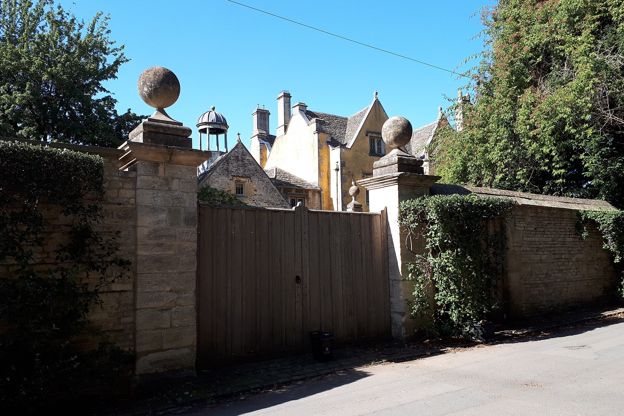
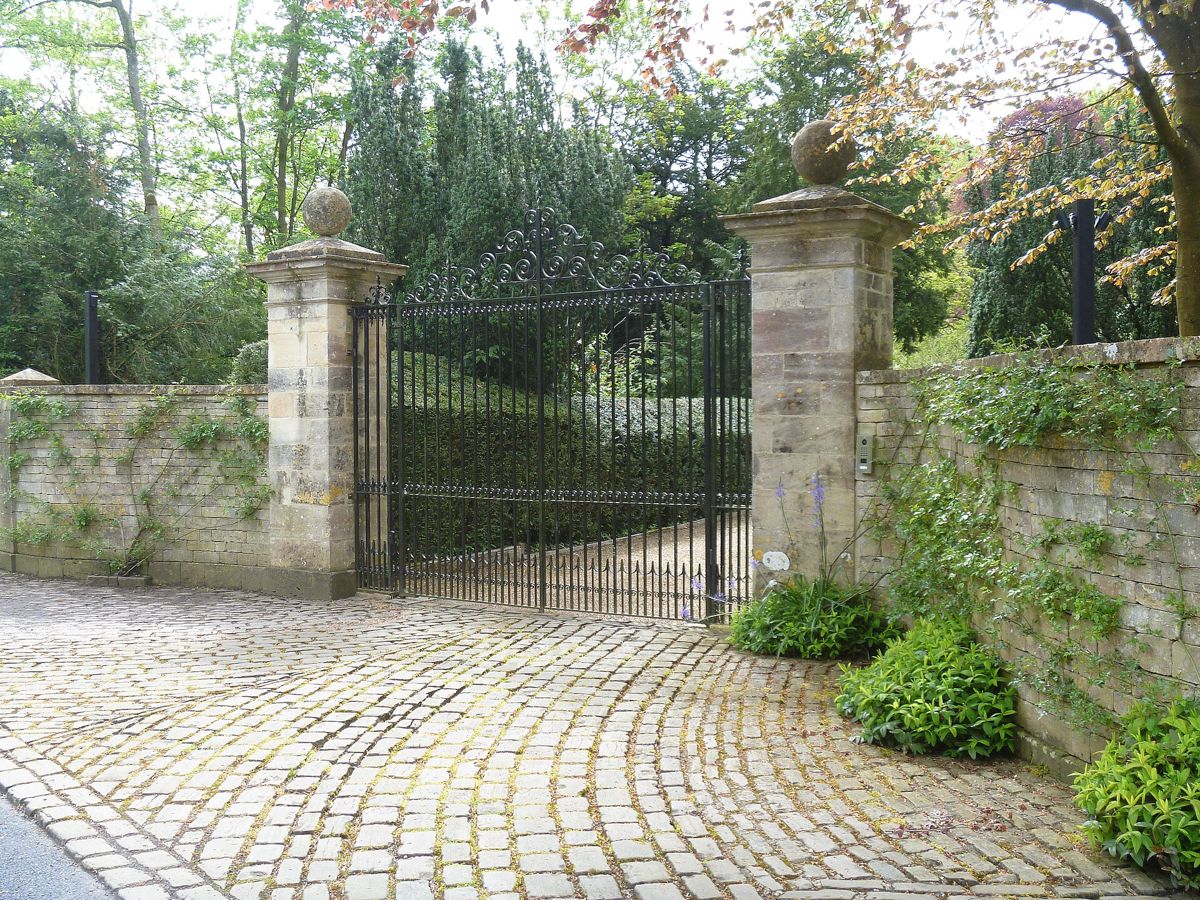
Ablington Manor is the one building to come for. Its north porch, on the lane, is dated 1590 and carries five carved royal heads and an inscription for John Coxwell, who had bought the manor in 1574, and the Coxwells kept the house for more than three centuries. It is listed Grade I and it is a private home, so the porch is seen from the lane and the gardens are not seen at all. Joseph Arthur Gibbs lived here and wrote A Cotswold Village, published in 1898, the book that first brought Bibury a wide readership.
Ablington House is a mid-seventeenth-century farmhouse whose entrance is flanked by nineteenth-century carved stone lions from the Houses of Parliament. On the river stands an eighteenth-century house that was Ablington Mill, still grinding corn in 1914 and out of use by 1920.
A morning here
See Arlington Row before nine, then leave Bibury by Packhorse Lane and come over the wold on the Salt Way, the old road from Droitwich to Lechlade, recorded in 1388, dropping into Ablington from the north. Walk the lane past the manor porch and the green, cross the river, and follow the Coln back to Arlington for lunch. The loop is 5 miles (8.2km) and about two hours; the hamlet itself is a quarter of an hour.
Walks
Our Bibury and Ablington walk comes here: moderate, a few stone stiles, windy on the top and muddy by the river after rain, with livestock in the fields, so dogs on leads until the water. The shorter loops south of the village, Bibury and the River Coln among them, stay on the other bank. Ablington is on our list of dog-friendly walks for the river at the end.

The Cotswolds Info newsletter
Events, new places and the best of the season, about once a month. Unsubscribe at any time.
Food and drink
Nothing in Ablington: no pub, no shop, no café. The Catherine Wheel at Arlington is the pub at the end of the walk, and the trout farm's café in Bibury needs no ticket. The Village Pub at Barnsley is 4 miles by road.
When to come
Spring and early summer for the river and the meadows; walkers report the field path at its muddiest in February and March. Ablington has no busy season, which is why it is in our guide to the Cotswolds without the crowds; it is a hamlet of people's homes, so keep to the lane and the paths and leave the car in Bibury.
Last verified 27 October 2026 by our editors
Part of
Cirencester and the Coln Valley
Cirencester, the Roman town of Corinium, and the River Coln running past Bibury, Coln St Aldwyns and Fairford to meet the Thames by Lechlade.
Things to do in Ablington
Family days out · Bibury
Bibury Trout Farm
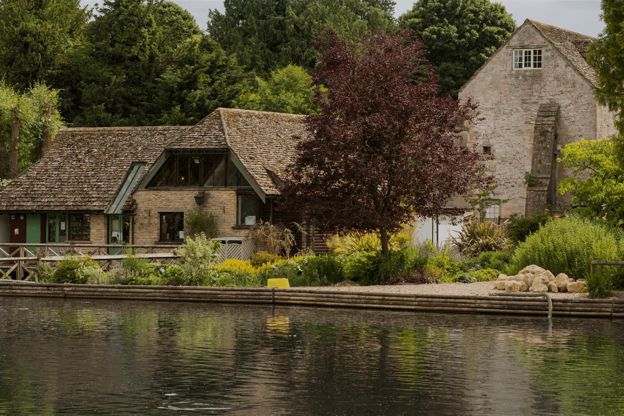
A working trout farm on the River Coln at Bibury, founded in 1902, with a café, a shop, catch-your-own fishing and its own pay car park.
Where to stay in Ablington
-
Cotteswold House
B&B · Bibury
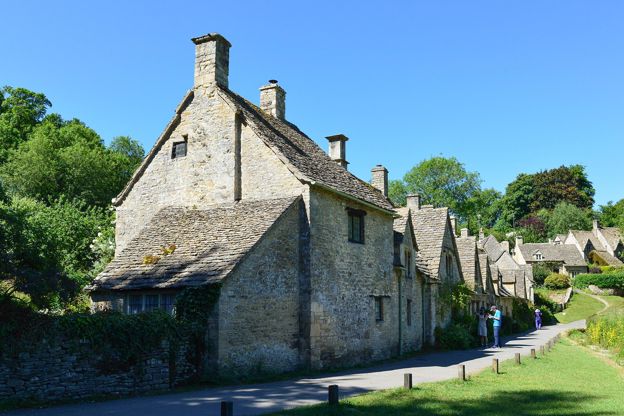
A renovated guest house in Arlington, Bibury, a short walk from Arlington Row, with double rooms, a family suite and two self-catering cottages, and a cooked breakfast for those in the rooms.
Verified Oct 2026
-
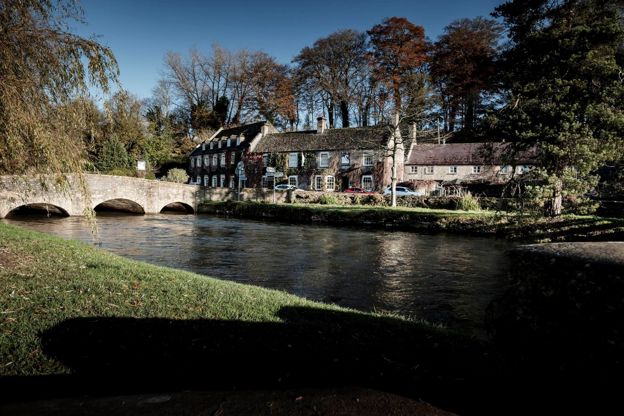
The Swan Hotel
Hotel · Bibury
A former coaching inn by the bridge over the River Coln in Bibury, part of Cotswold Inns and Hotels, with a brasserie, a lift, a free car park and dog-friendly rooms.
Dog-friendly · Wedding venues
Verified Nov 2026
-
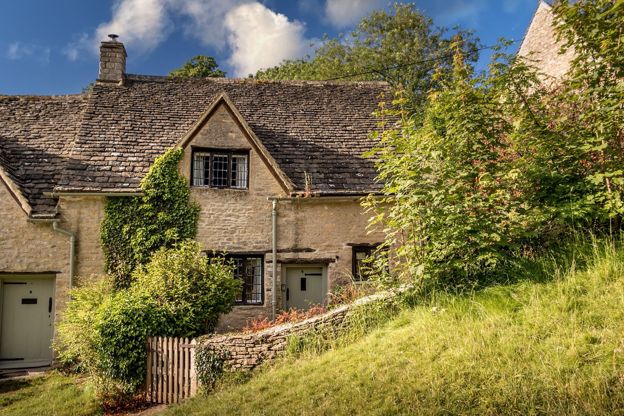
9 Arlington Row
Self-catering · Bibury
The National Trust's holiday cottage in Arlington Row, Bibury: a two-bedroom former weaver's cottage for three, with a wood burner and a private garden behind the famous terrace.
Verified Oct 2026
Where to eat and drink in Ablington
-
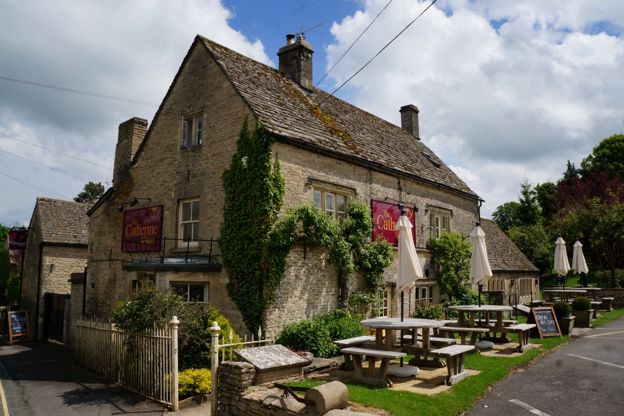
The Catherine Wheel, Bibury
Pubs · Bibury
A family-run pub and restaurant in Arlington, the upper part of Bibury, cooking from local suppliers since 2009, with a garden, an open fire and four rooms.
Verified Nov 2026
-
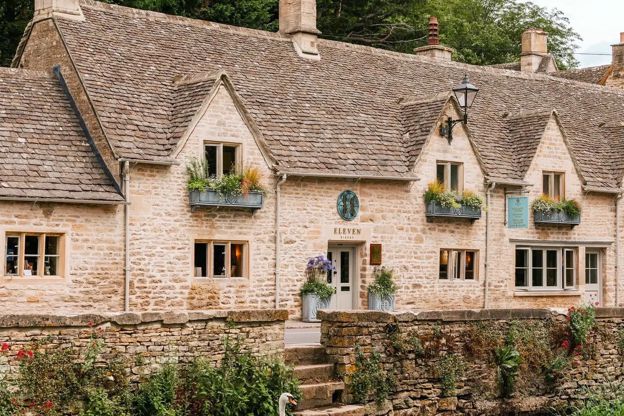
Eleven Bibury
Cafes and tearooms · Bibury
A café, brasserie and gallery shop at 11 The Street, Bibury, opposite Arlington Row, open every day from 9am to 5pm, with a terraced garden and the village post office.
Dog-friendly
Verified Nov 2026
-
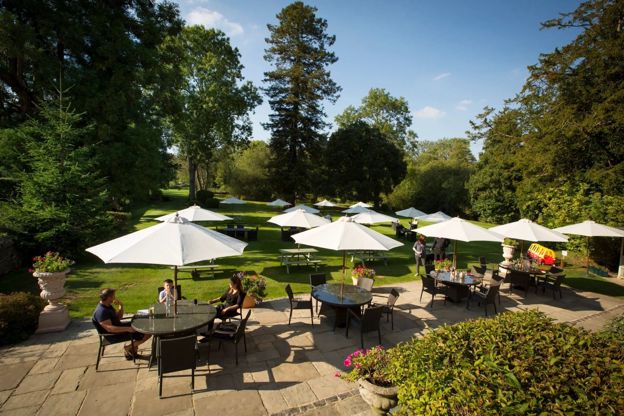
The Inn at Fossebridge
Pubs · Chedworth
An inn, a hostelry since the early seventeenth century by its own account, where the Fosse Way crosses the River Coln, between Cirencester and Northleach, with 4 acres of riverside gardens, log fires and seven rooms.
Dog-friendly · Walker-friendly
Verified Nov 2026
Walks in and around Ablington
-
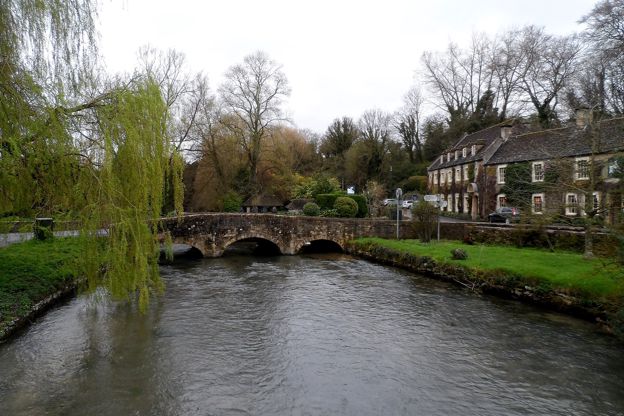
Bibury and the River Coln
Walk · Starts in Bibury · 2 hrs · Circular
A 4-mile (6.5km) circular walk from the bridge by the Swan in Bibury, about two hours with one climb and a muddy stretch. It crosses the Coln below Bibury Court, climbs through Oxhill Wood to the line of Akeman Street, passes a dewpond and returns by Arlington Row.
-
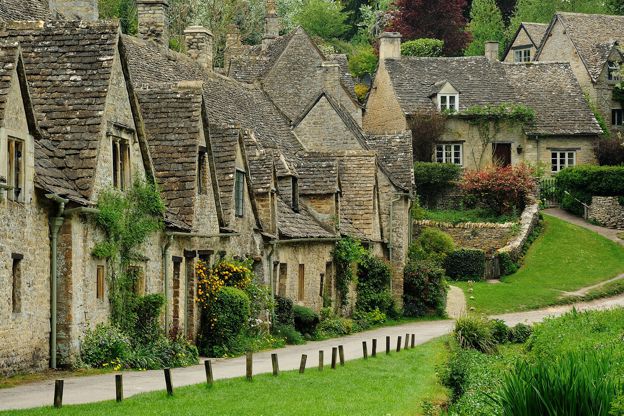
Bibury, Oxhill Wood and Akeman Street
Walk · Starts in Bibury · 1 hr, 45 mins · Circular · Dog-friendly
A 4-mile (6.6km) circular walk from the bridge by the Swan in Bibury, an hour and a half to two hours with a few short, steep climbs. It goes out by the church and up above the Coln to Oxhill Wood, along the line of the Roman Akeman Street and back over farmland to Arlington Row.
Sights in and around Ablington
-
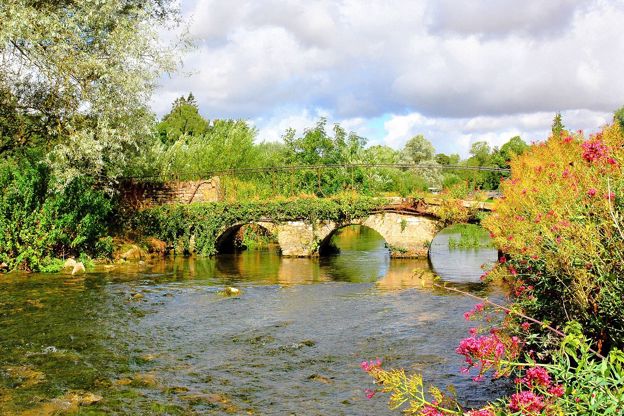
River Coln
Sight · River · Cirencester and the Coln Valley
The limestone river of the south Cotswolds, rising near Sevenhampton and running south-east past Chedworth, Bibury and Arlington Row, Coln St Aldwyns, Quenington and Fairford to join the Thames at Inglesham above Lechlade. Five of our walks follow or cross it.
-
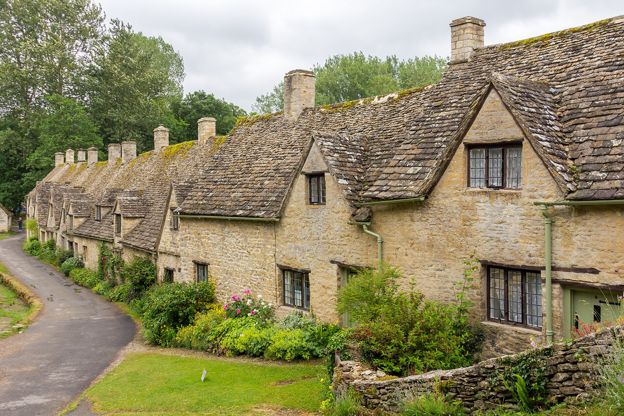
Arlington Row, Bibury
Sight · Historic building · Bibury
Arlington Row is a terrace of stone cottages above the mill stream in Bibury, built as a wool store in the late fourteenth century and turned into weavers' homes in the seventeenth. Grade I and owned by the National Trust, the cottages are lived in and seen from the path.
-
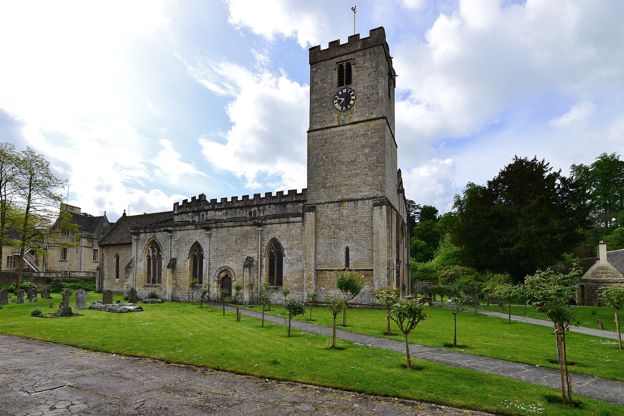
St Mary's Church, Bibury
Sight · Church · Bibury
St Mary's in Bibury is a Saxon church grown over five centuries, with eleventh-century walling, Saxon stones in the chancel, carved capitals of the Oseney canons, the county's earliest stained glass and a Karl Parsons window of 1927. Grade I and open daily.
Getting to Ablington
- By bus
- The 855 (Pulhams) between Cirencester and Bourton-on-the-Water stops in Arlington and Bibury, roughly hourly Monday to Saturday, no Sunday service; walk from there.
- By car
- Off the B4425 at Bibury by a narrow lane; there is nowhere to park in the hamlet, so leave the car in Bibury.
- Parking
- None in Ablington. Park in Bibury and walk the mile up the Coln by the field path, or 5 miles round by the Salt Way on our circular walk.
Access
Lanes without pavements; the field path from Bibury has stiles
| Bibury | 1.2 mi |
|---|---|
| Coln St Aldwyns | 3.1 mi |
| Barnsley | 4.3 mi |
| Northleach | 7.5 mi |
| Cirencester | 8.1 mi |
| Kemble station | 13 mi |
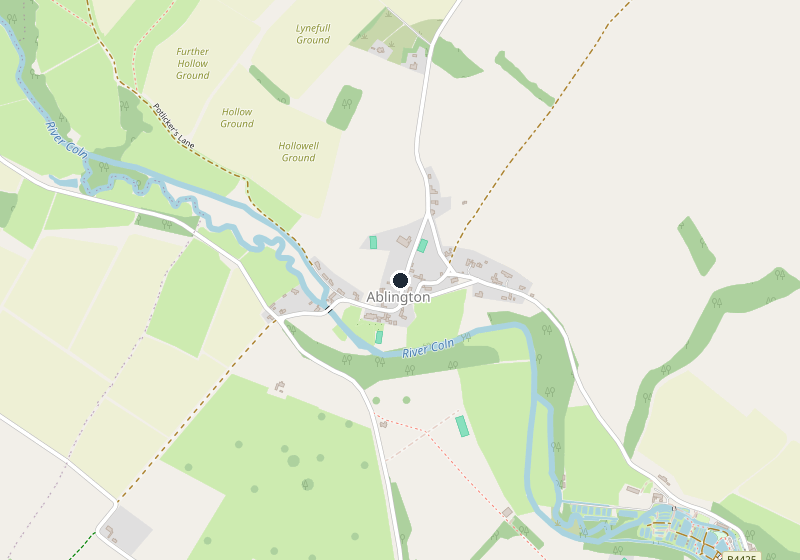
Places near Ablington
-
 BiburyA village on the River Coln with a row of medieval cottages that draws up to 20,000 visitors on a peak weekend, by press estimates. Come early or late, and walk on down the river.
-
 BarnsleyAn estate village of one street on the Cirencester to Bibury road, with Rosemary Verey's garden behind the wall of Barnsley House, a Norman church and a pub with rooms. Four miles from Cirencester, and quiet.
-
 Coln St AldwynsTwo villages facing each other across the River Coln a few miles below Bibury, with a Norman church, a Knights Hospitaller gateway and a pub, and few visitors.