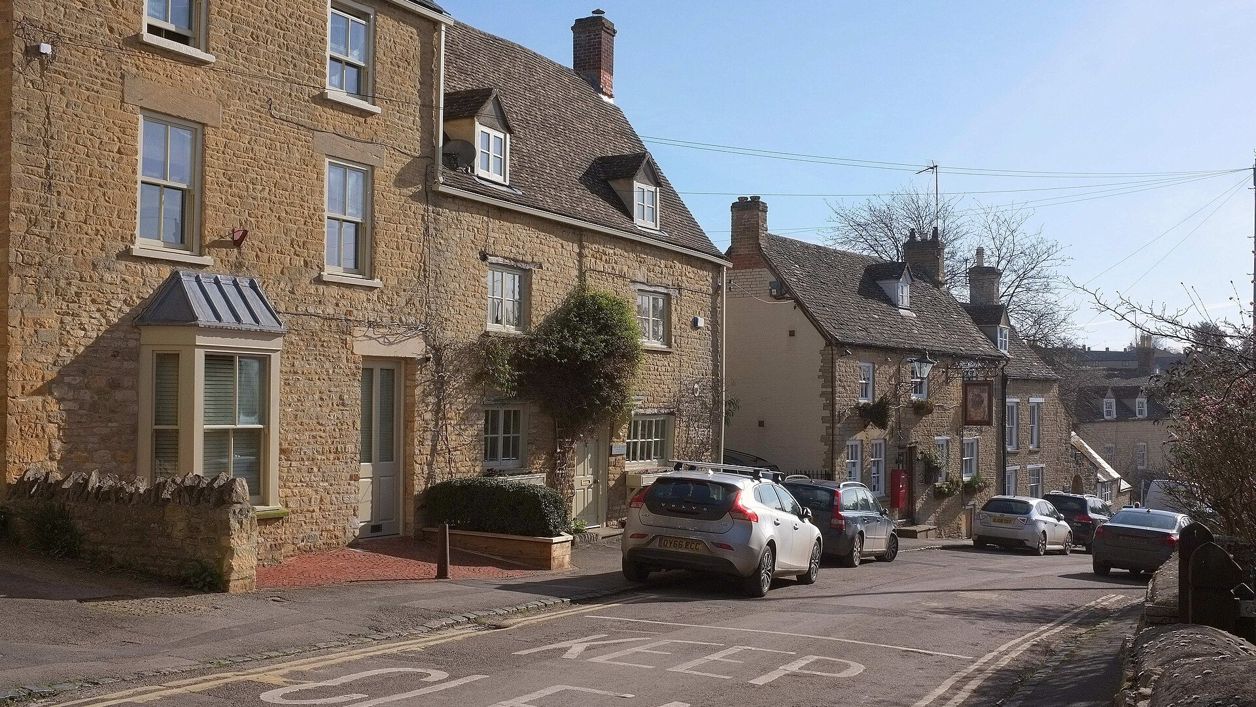
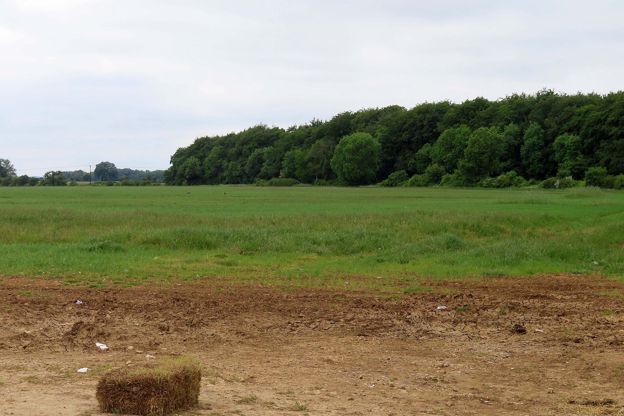
Derek Harper, CC BY-SA 2.0, via Wikimedia Commons
Charlbury
A small stone town on the side of the Evenlode valley with a Brunel station on the line from London, a Quaker past and a gloving one, a volunteer museum by the Corner House, a free riverside festival in July, and Cornbury Park and the edge of Wychwood Forest on its doorstep.
- Nearest station
- Charlbury, below the town on the Cotswold Line from London Paddington; 158-space car park, step-free
- Parking
- Spendlove car park, free: 40 bays, 17 of them 10-hour and 16 three-hour, with 4 Blue Badge bays, from 1 February 2026
- Best time
- Saturday mornings from May to October for the market; autumn for the forest
- When it's busy
- The Wilderness festival weekend in summer, when the station, the lanes and every room are taken; the Riverside Festival weekend in July. Otherwise quiet
- Toilets
- At the station; none listed by the district council in the town
- Dogs
- Welcome on the Oxfordshire Way and the Evenlode paths; keep them on leads near livestock. The Rose and Crown welcomes them; ask at the other pubs
About Charlbury
Charlbury is a small town on the side of the Evenlode valley, 15 miles north-west of Oxford, with the remains of Wychwood Forest on the hill behind it and Cornbury Park across the river. It has had a market since the thirteenth century, a railway since 1853 and a reputation for Quakers and gloves; today it has a station about 70 minutes from London, which makes it one of the easiest Cotswold towns to reach without a car.
What to see
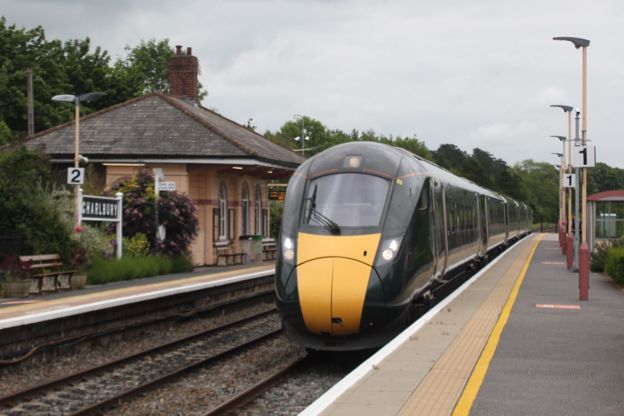
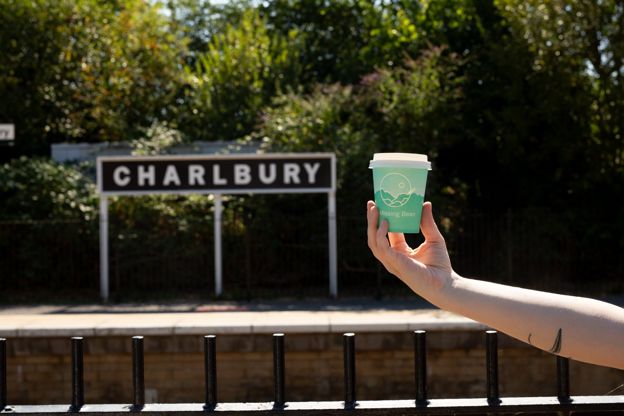
Start with the station, because it is the best building in town and the one most visitors walk past. It was built in 1853 for the Oxford, Worcester and Wolverhampton Railway in Brunel's Italianate style, timber-framed and weatherboarded under a hipped slate roof, and it is listed Grade II with its platform furniture and the original 'CHARLBURY' name board, bold sans serif on two posts, on the up platform. It has a ticket office on weekday and Saturday mornings, toilets and a 158-space car park.
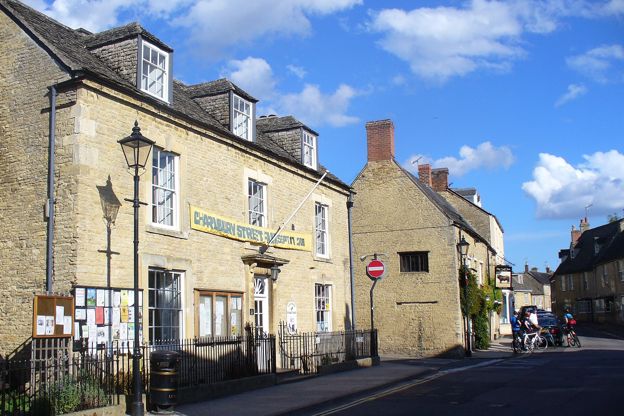
Up the hill, the Corner House on Market Street has been the town hall and library since 1947, and the Charlbury Museum is beside it: five rooms run by volunteers, with Stone Age arrowheads, the town's market charter of 1256, the history of the royal forest of Wychwood, farming and the gloving trade that filled the town in the nineteenth century. It opens on Saturdays from 10.30am to 12.30pm and 2.30 to 4.30pm, and on Sundays and bank holiday Mondays from 2.30 to 4.30pm, from early April to late October (4 April to 25 October in 2026).
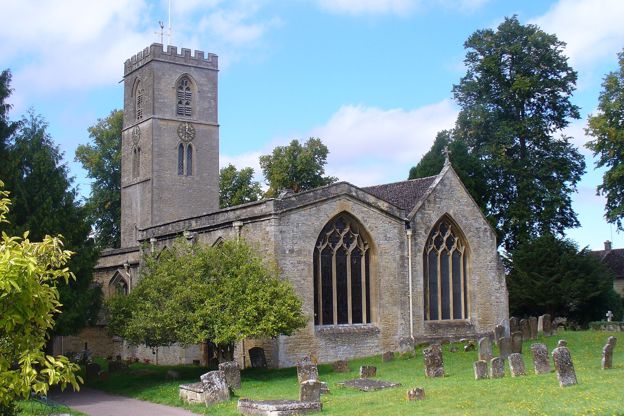
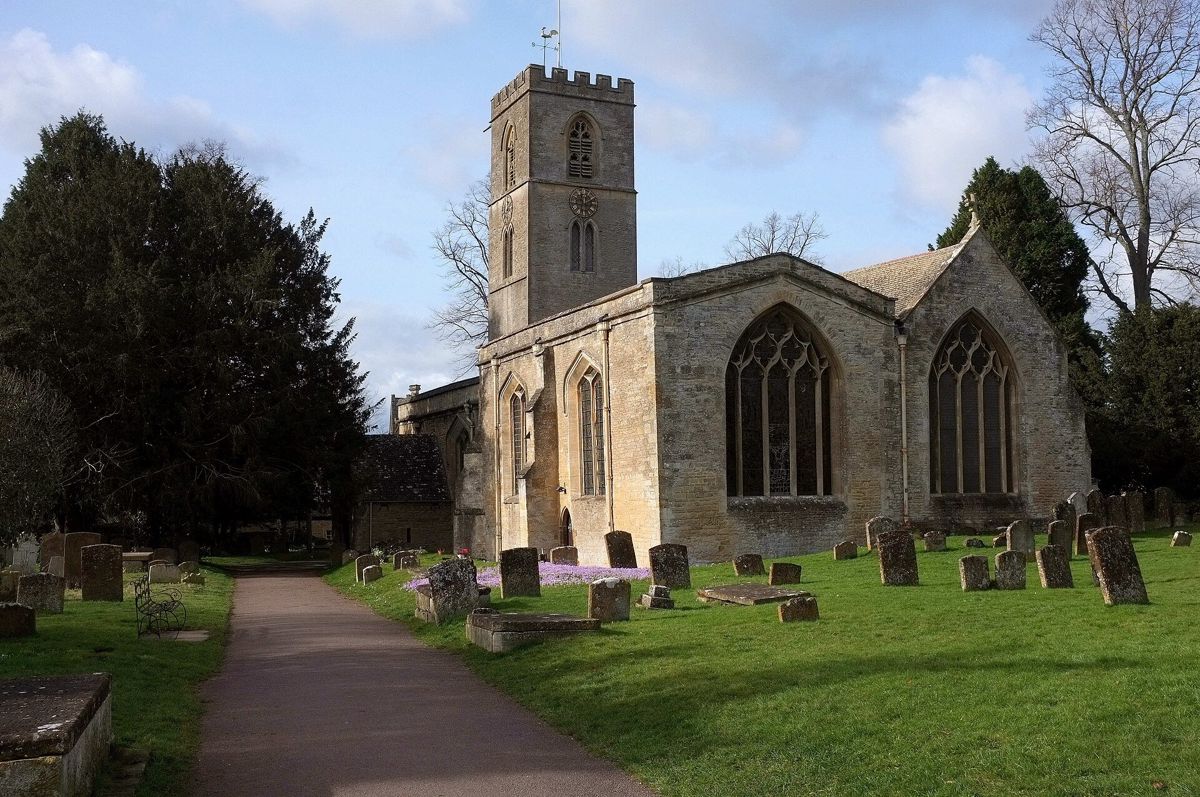
St Mary's, below the town towards the river, is Grade I and older than its plain outside suggests: a twelfth-century north arcade, a thirteenth-century chancel and tower, a fifteenth-century bell stage, and a restoration by G. E. Street in 1856, with the chancel done again in 1874 for the Duke of Marlborough. Charlbury's Quaker meeting house, listed Grade II, is nearby; the county history names the Spendlove and Albright families as the town's prominent Quakers in the eighteenth and nineteenth centuries.
Cornbury Park
Cornbury Park (opens in a new tab) is the estate across the Evenlode, and its house is the grandest thing near Charlbury that you cannot go into. Late sixteenth century in origin, it was enlarged in 1632 to 1633 by Nicholas Stone for the Earl of Danby and altered in 1663 to 1677 by Hugh May for Edward Hyde, Earl of Clarendon, Charles II's chancellor; it is Grade I. The house is private, the deer park opens only during events, and the estate's public footpaths and permissive cycle route are the way to see it. The Wilderness festival is held in the park each summer.
A day here from the train
Arrive on a Saturday morning between May and October. Walk up Dyers Hill into the town, uphill all the way, and go to the market outside the Community Centre, which runs from 9.30am to midday with local vegetables, bread from the volunteer-run bakery stall and whatever guest stalls have come. Have coffee at the Missing Bean in the middle of the town, then the museum when it opens at 10.30am and St Mary's on the way back down. Lunch at the Bull on Sheep Street. In the afternoon take the Oxfordshire Way along the Evenlode, east towards Stonesfield or west towards Ascott-under-Wychwood, and catch the train home from whichever station you reach; almost every train on the line stops at Charlbury, and Kingham is served well, but check the times at Ascott, Finstock and Combe before you rely on them.
Walks
The Oxfordshire Way passes through Charlbury along the Evenlode, east towards Woodstock and west towards the Wychwood villages, and the station makes every walk a line rather than a loop. The town's own site, charlbury.info (opens in a new tab), describes five: the Oxfordshire Way from Kingham to Charlbury, 11 miles, station to station; Finstock and the Evenlode, 5 miles; Stonesfield and the Salt Way, 6 miles; medieval Shorthampton, 5 miles; and the Forest of Wychwood by Finstock, 9 miles. Explorer maps 180 and 191 cover them, and the rights of way are well marked on the ground. The Wychwood Way, a 37-mile (59km) circuit of the old forest, also passes close by. None of our own walks starts here yet; the Kingham to Charlbury line is the first we will walk.
Wychwood Forest
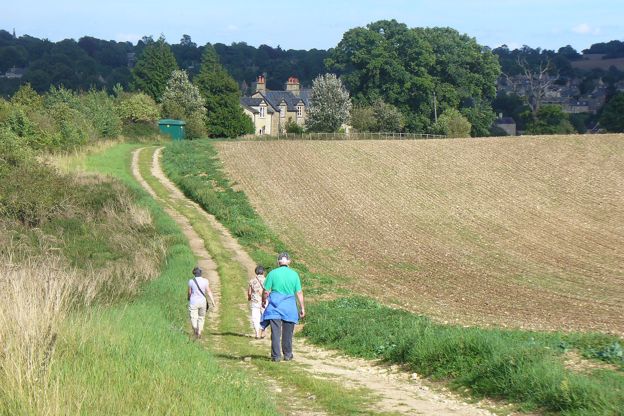
Wychwood was a royal forest that once covered much of West Oxfordshire, and Charlbury sat on its edge; the Victoria County History records a perambulation of its bounds in 1298 and its disafforestation in 1857, when most of it was cleared for farms. What survives is fragments, most of them private woodland, and the Wychwood Forest Trust (opens in a new tab) looks after the pieces it can, including Wigwell, seven hectares of limestone grassland on Nine Acres Lane at Charlbury, owned by Thames Water and entered on foot from the lane or from Banbury Hill. The 9-mile walk by Finstock is the way to see the forest's edge from the town.
Food and drink
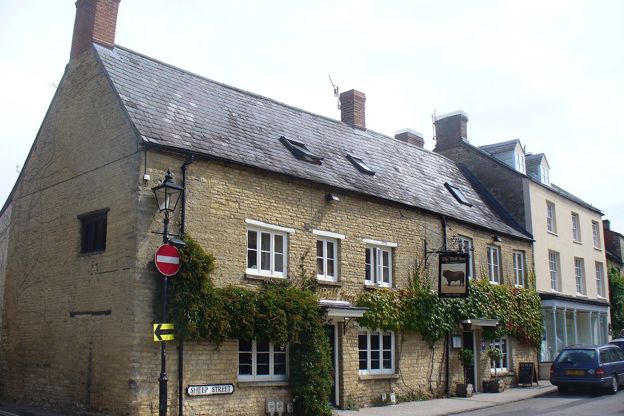
The Bull on Sheep Street is the pub people travel for: an old inn with rooms, which the county history dates to the seventeenth century and the pub itself to the early 1500s, open from 8am every day, until 11pm on Sundays and Mondays and midnight the rest of the week, with breakfast, a bar menu and a dining room. The Bell on Church Street carries the date 1700 and was first recorded as an inn in 1769, and it has rooms too. The Rose and Crown on Market Street is the real-ale pub, run by Oak Taverns since 2025, open from 2pm on weekdays and noon at weekends, with eight hand pumps, live music and quiz nights in its events room and a welcome for dogs, but no food on its website. The Missing Bean, the Oxford roaster's café in Alder House on Market Street, opens from 8am (9am on Sundays) to 4pm with pastries, cakes and sandwiches from its own East Oxford bakery. Diddly Squat Farm Shop, where Clarkson's Farm is made, is near Chadlington; our story on visiting Diddly Squat has what you can see there and how to miss the worst of the queues.
The Cotswolds Info newsletter
Events, new places and the best of the season, about once a month. Unsubscribe at any time.
When to come
July for the Riverside Festival, a free two-day music festival on the Mill Field, an island in the Evenlode entered from the end of Mill Lane opposite the station, which has run for about thirty years; in 2026 it was on 18 and 19 July, and the 2027 date is still to be confirmed, though it has kept to the third weekend of July. The Wilderness festival fills Cornbury Park for a weekend each summer, and that weekend is the one to avoid unless you are going: trains, taxis and rooms are taken for miles. The Saturday market runs from May to October, and a Christmas market is held in the Memorial Hall on Saturday 5 December 2026, 9.30am to 12.30pm. Autumn is the forest's season, and winter the quietest, with the Bull's fire and empty paths along a full river.
Last verified 1 November 2026 by our editors
Part of
The Oxfordshire Cotswolds
The Windrush and Evenlode valleys on the Oxfordshire side of the hills: Burford's High Street, Kingham on the railway, Witney's blankets and Woodstock at Blenheim's gates.
Things to do in Charlbury
Museums and galleries · Charlbury
Charlbury Museum
Charlbury's volunteer-run museum beside the Corner House on Market Street: five rooms on the town's history, from Stone Age arrowheads to gloving, open at weekends from April to October.
-
Diddly Squat Farm Shop
Farm shops and delis · Charlbury
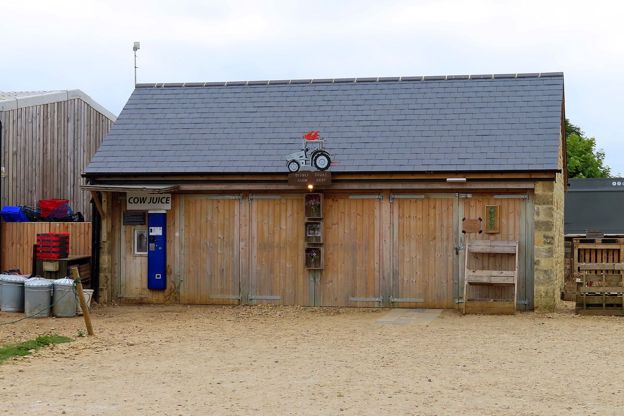
Jeremy Clarkson's farm shop on the Chipping Norton road near Chadlington, opened in 2020 and made famous by Clarkson's Farm, open Tuesday to Sunday outside its winter break, with a café and lambing barn seating.
Verified Nov 2026
Where to stay in Charlbury
-
Banbury Hill Farm
B&B · Charlbury
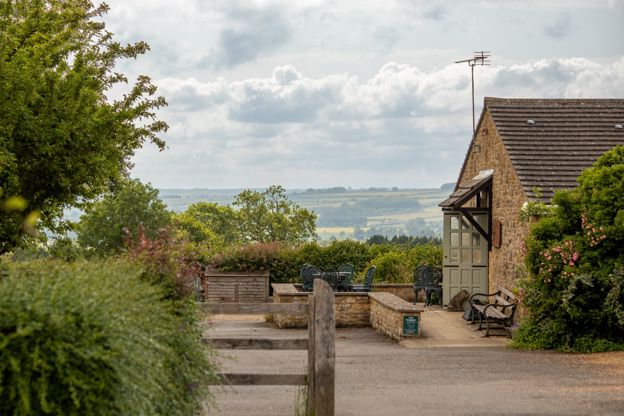
A former farm on the Enstone Road a mile outside Charlbury, with eight ground-floor B&B rooms in a converted piggery, four self-catering cottages and a seven-bedroom farmhouse.
Dog-friendly · Walker-friendly · EV charging
Verified Nov 2026
-
Amarelo Apartments
Self-catering · Charlbury
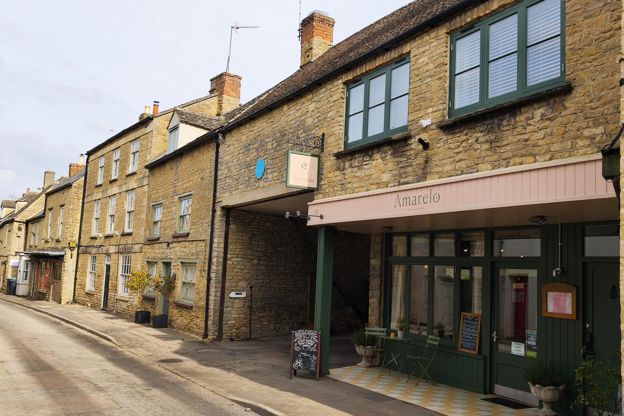
Two one-bedroom holiday apartments for two above a restaurant at 8 Market Street, Charlbury, a short walk from the station.
Car-free
Verified Nov 2026
-
Cotswold View Caravan and Camping Park
Camping · Charlbury
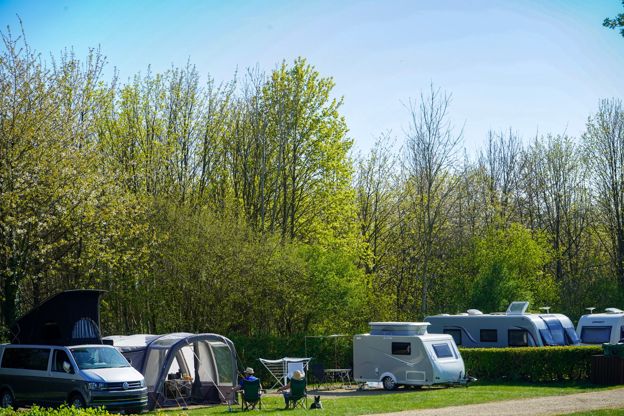
A caravan and camping park on 54 acres of farmland at Banbury Hill Farm, a mile outside Charlbury, with tent and touring pitches, wooden camping pods and a tennis court, open from late March to the start of November.
Dog-friendly · Family-friendly · Walker-friendly
Verified Oct 2026
Where to eat and drink in Charlbury
-
The Bull, Charlbury
Pubs · Charlbury
An inn on the corner of Sheep Street in Charlbury, there since the early 1500s by its own account, with a dining room built around open-fire cooking, vegetables from its own market garden, rooms, and breakfast for anyone from 8am.
Dog-friendly · Car-free
Verified Nov 2026
-
The Bell at Charlbury
Pubs · Charlbury
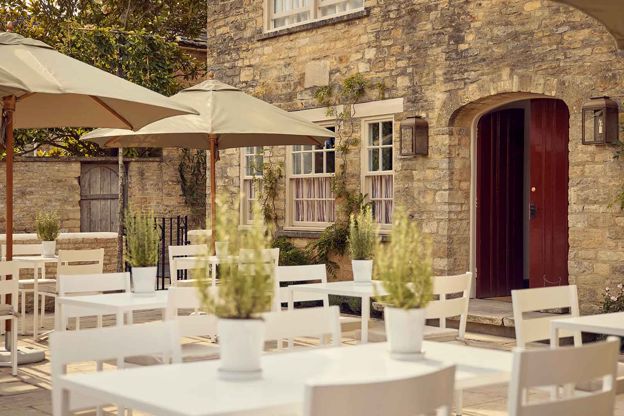
A seventeenth-century coaching inn on Church Street in Charlbury, run by Daylesford Stays, with a modern British pub menu using produce from the Daylesford farm, log fires, an orchard garden of nearly an acre and rooms.
Dog-friendly · Family-friendly
Verified Oct 2026
-
The Missing Bean, Charlbury
Cafes and tearooms · Charlbury
A coffee shop on Market Street, Charlbury, opened in 2025 by the Missing Bean, the Oxford coffee roaster, with pastries and sandwiches from its own bakery, open every day.
Car-free
Verified Oct 2026
Walks in and around Charlbury
-
Combe and Blenheim Park
Walk · Starts in Woodstock · 3 hrs · Circular
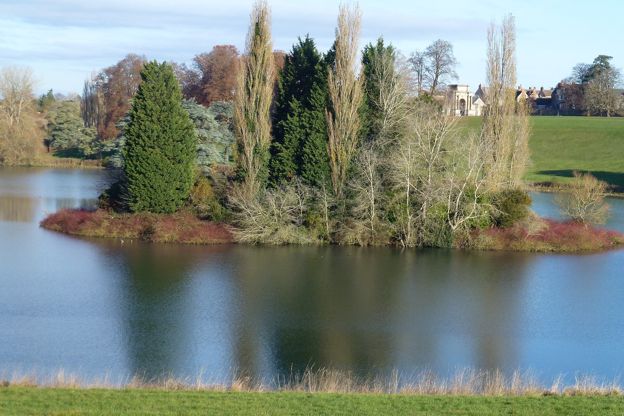
A 6.7-mile (10.8km) circular walk from Combe, moderate and about three hours: over stiled fields to East End, into Blenheim Park, mostly on its public footpaths, past Fair Rosamund's Well and the lake, north to the park wall and back down the western edge to Combe's green.
Stories about Charlbury
-
Clarkson's Farm: visiting Diddly Squat and the Farmer's Dog
Story · Guides · 7 minute read
Where Clarkson's Farm is made, what you can and cannot see at Diddly Squat Farm Shop near Chadlington and at the Farmer's Dog near Burford, and how to visit without the worst of the queues.
Getting to Charlbury
- By train
- Charlbury is on GWR's Cotswold Line between Oxford and Worcester, with direct trains from London Paddington; the station is at the foot of the town on Dyers Hill (OX7 3HH).
- By bus
- The X9 (Thames Travel) runs about hourly between Witney, Charlbury and Chipping Norton by way of Chadlington, stopping at the Spendlove Centre and the Bell.
- By car
- Charlbury is on the road between Witney and Enstone, 8 miles north of Witney and 15 miles north-west of Oxford.
- Parking
- Spendlove car park, free, 40 bays with 4 Blue Badge bays; from 1 February 2026 half the bays are limited to 3 hours and the rest to 10. The station car park has 158 spaces and charges.
Access
The station is step-free with a ramped bridge to platform 1. The town climbs from the station up Dyers Hill to the centre, which is steep. The museum is beside the Corner House, the town hall, on Market Street.
| Chipping Norton | 6.2 mi |
|---|---|
| Woodstock | 8.1 mi |
| Witney | 8.1 mi |
| Burford | 8.7 mi |
| Kingham | 9.9 mi |
| Oxford | 18 mi |
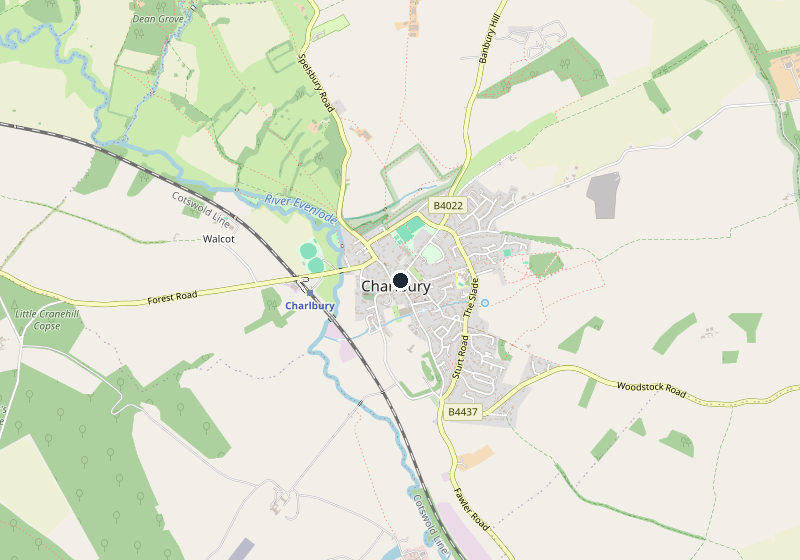
Places near Charlbury
-
 KinghamAn Oxfordshire village in the Evenlode valley with a station on the line from London, two dining pubs, and Daylesford's farm shop two miles down the road.
-
 WitneyThe blanket town on the Windrush, just outside the National Landscape, with a Butter Cross, a long Church Green and Cogges manor farm, and free parking.
-
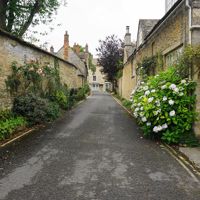 WoodstockA small town of stone houses at the gates of Blenheim Palace, Churchill's birthplace and a World Heritage Site, with a free county museum and two old sundials.
-
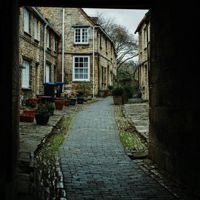 BurfordA wool and coaching town whose High Street runs downhill to a medieval bridge over the Windrush, with a Grade I church where the Levellers were held in 1649.