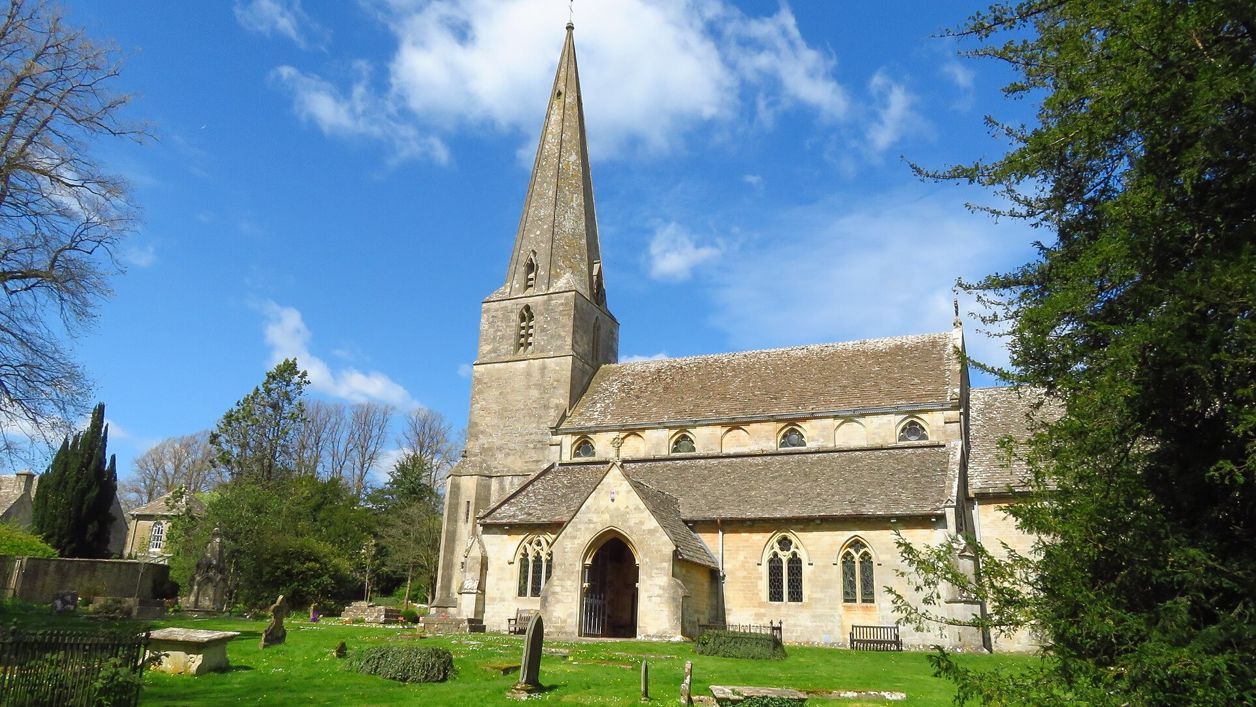
Colin Park, CC BY-SA 2.0, via Wikimedia Commons
Bisley
A high stone village east of Stroud with a row of wells dressed with flowers every Ascension Day, a two-cell lock-up of 1824, and a pub in the old courthouse with a colonnade along its front.
- Nearest station
- Stroud, about 4 miles; the 8B bus from Merrywalks takes about 14 minutes, two journeys a day, Monday to Saturday
- Parking
- No public car park. The Bear has parking for about 15 to 20 cars for its customers; otherwise park with care in the village streets
- Best time
- Ascension Day for the well dressing; a clear spring day for Lypiatt
- Toilets
- None public; All Saints has an accessible toilet
- Dogs
- Welcome at the Bear
About Bisley
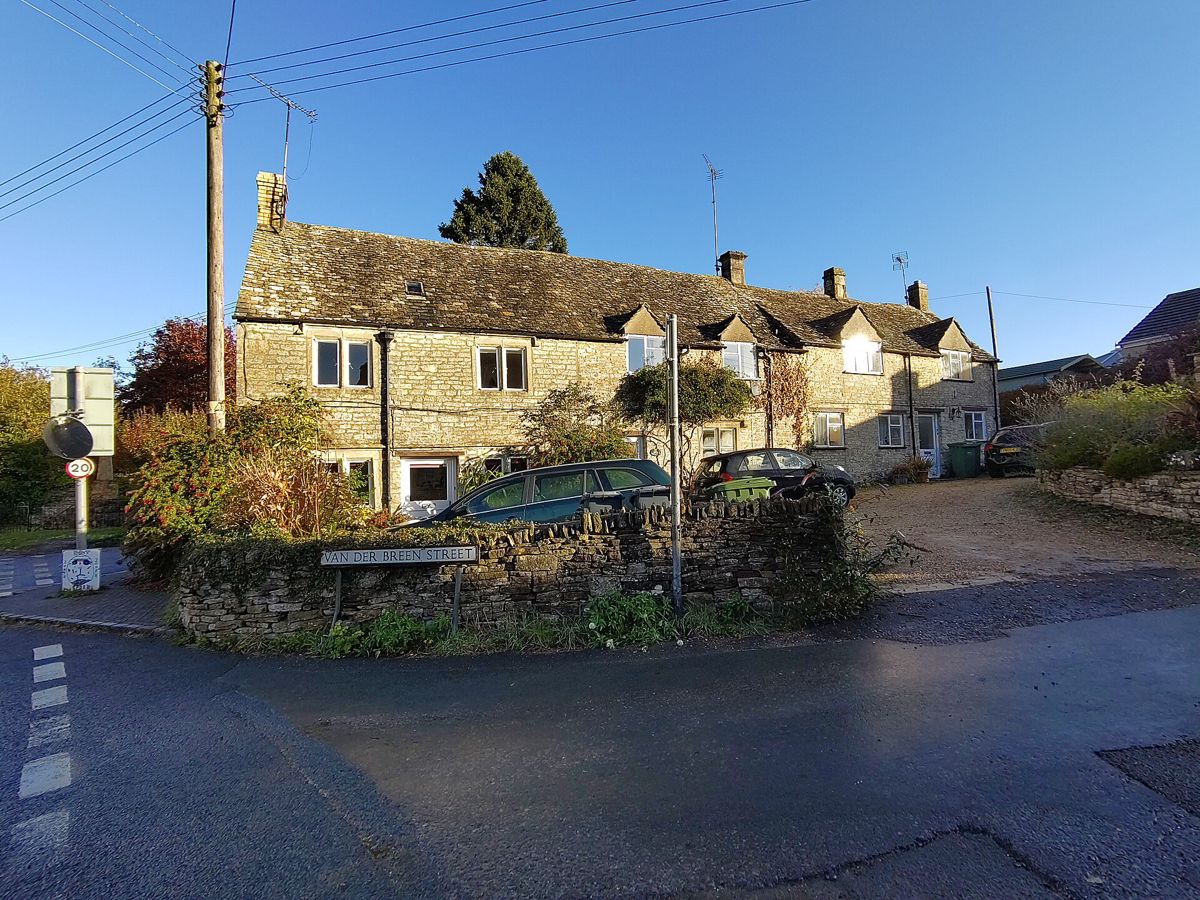
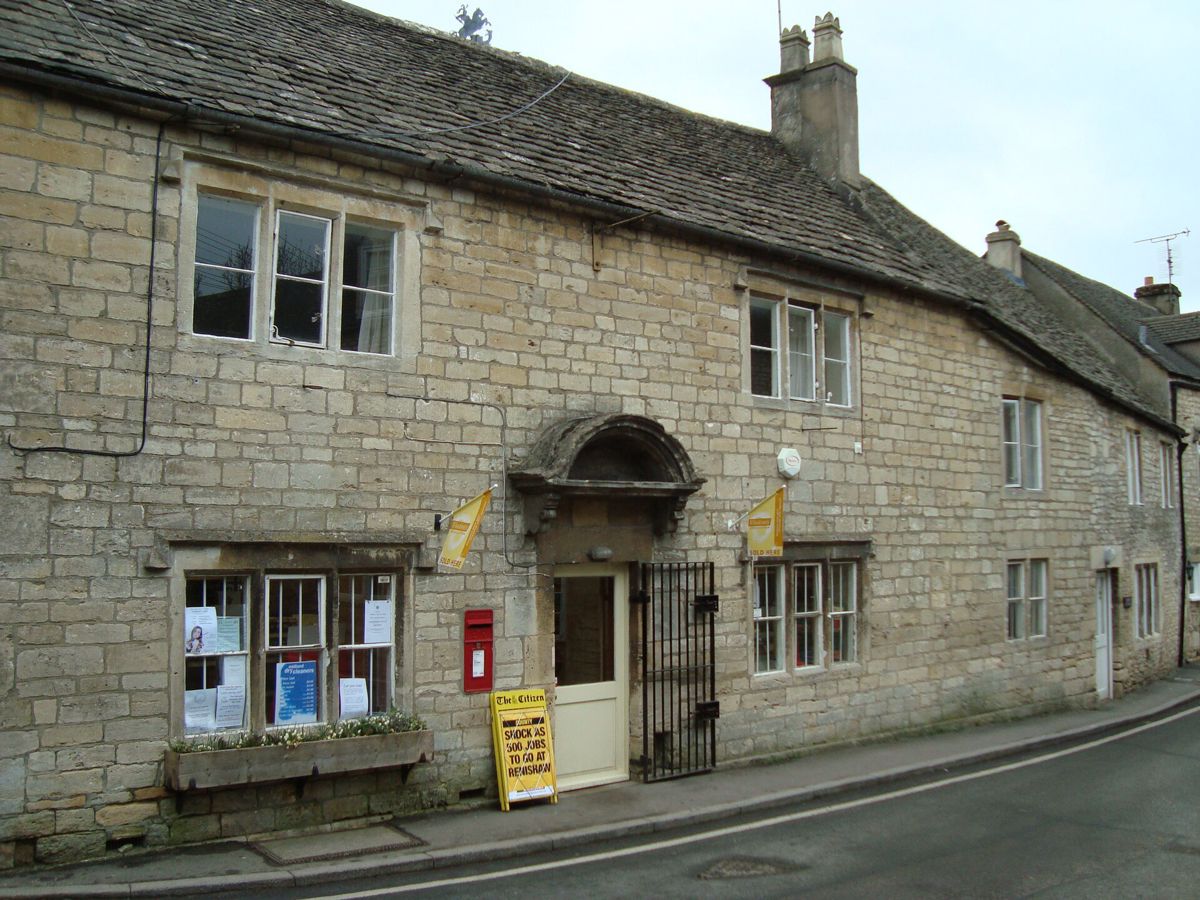
Bisley stands high on the wolds between the Stroud valleys and Cirencester, a village of narrow stone streets round a church with a spire, about 4 miles (6.5km) east of Stroud. It had the look of a small town once, with a manor court, 12 alehouses in 1781 and a lock-up, and it keeps the court house, the lock-up and a row of wells that the village dresses with flowers every Ascension Day.
What to see
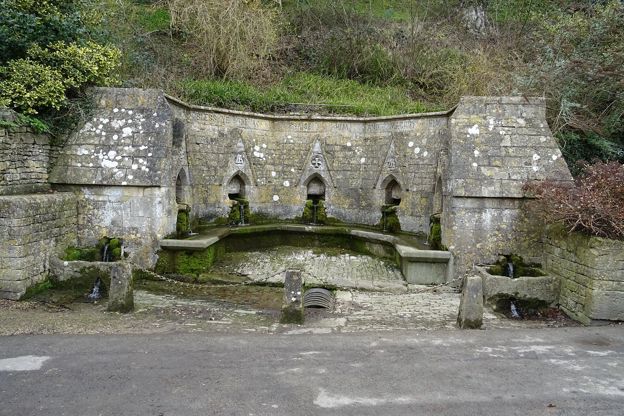
The wells are on Wells Road, below the village. Five spouts pour from a Gothic stone screen carved with the words "O ye wells, bless ye the Lord, praise him and magnify him for ever", given its stone head in 1863 by Thomas Keble, the vicar, and listed Grade II. Since then generations of children from Bisley Blue Coat School have carried flower-covered stars, numbers and letters, spelling out the year and the word Ascension, down to them on Ascension Day; our story on well dressing at Bisley has the day in full.
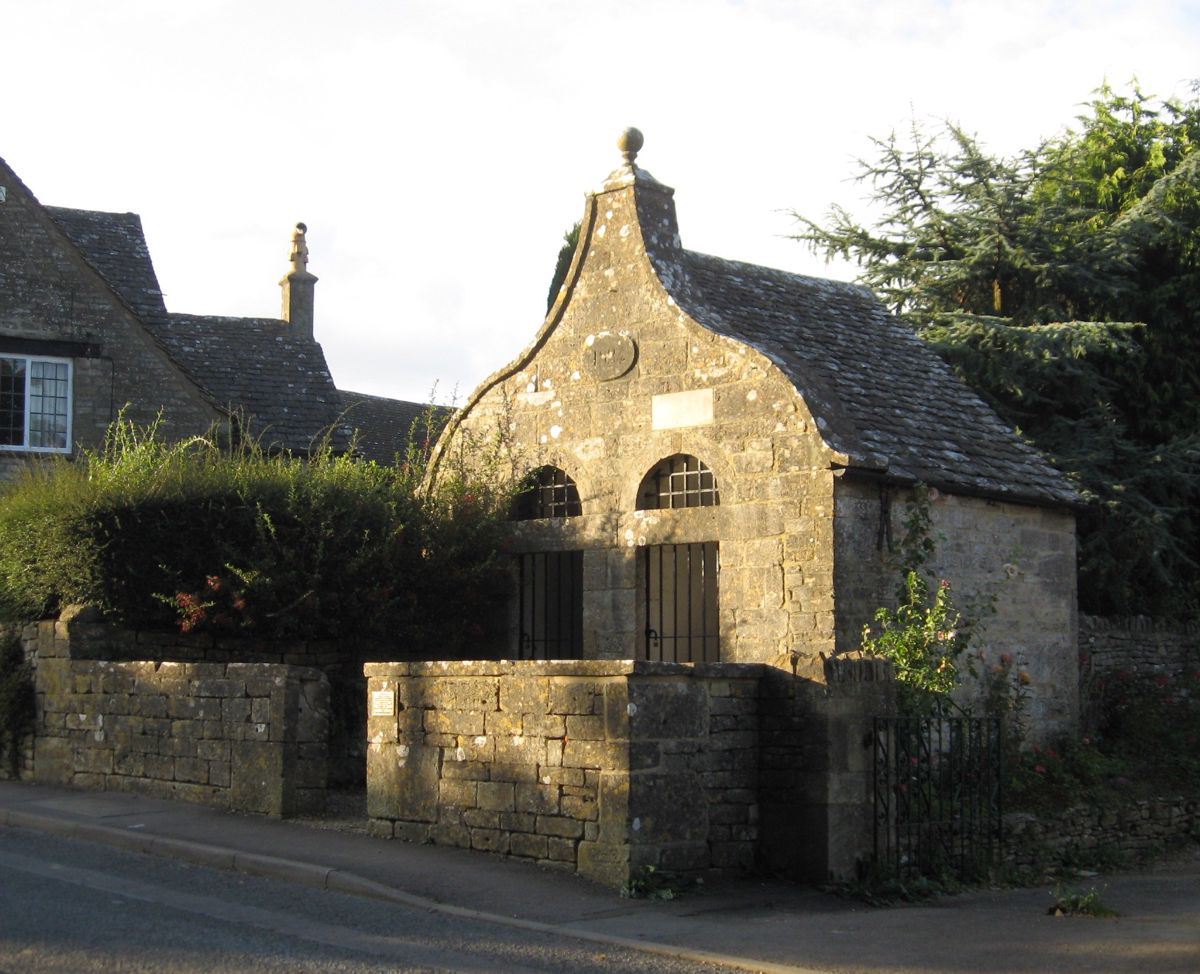
Up on George Street is the lock-up of 1824, two cells under an ogee gable with a ball on top, each cell with iron gates and a grille above, built to replace an older blind-house by the churchyard. It is listed Grade II*, as is the Bear across the street, an early seventeenth-century building with a four-bay stone colonnade along its front. It was the village's courthouse and assembly room before it was an inn: the Bear is recorded as a pub from 1631, and the manor court met there between 1766 and 1838.
All Saints, on Church Hill, is mostly thirteenth and fourteenth century, with a fourteenth-century tower and broach spire that is the landmark of the uplands for miles around. The Revd W. H. Lowder rebuilt much of it in 1862, possibly with G. F. Bodley's help. In the churchyard stands a Poor Souls' Light, a late thirteenth-century stone lantern whose candles, its list entry says, were once lit during masses said for the poor; it is listed Grade II* in its own right. West of the church are Over Court and Jaynes Court, two former manor houses, both private.
A morning here
Start at the wells on Wells Road and walk up into the village, where George Street has the lock-up, the Bear and a milestone a few metres from the lock-up door. Climb Church Hill for All Saints and the Poor Souls' Light, and take the steps down past the wall of Jaynes Court. The streets are short, so an hour covers the village; the Bear serves food from midday, and the village has a farm shop.
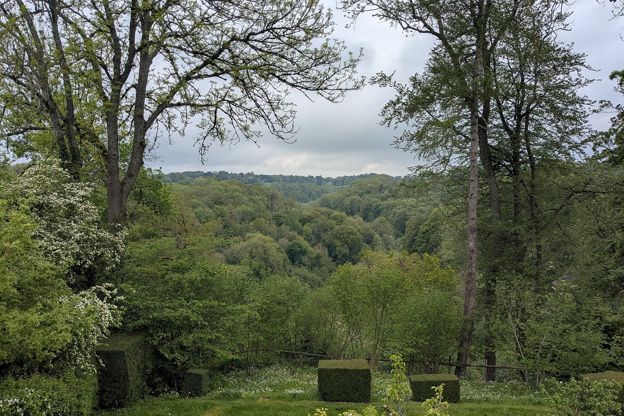
Lypiatt Park, a mile west, is a Grade I mansion begun in the mid-sixteenth century and given its Gothick look by Jeffry Wyatville between 1809 and 1815. Its list entry records it as the home of the sculptor Lynn Chadwick, with his work on show in its rooms. It is private, but its lodge and gateway on the Stroud road are listed, and the lanes round the park are quiet walking.
Walks
Our Eastcombe and Toadsmoor valley walk, a 6.5-mile (10.5km) figure of eight through the beech woods below Eastcombe, starts 2 miles south of Bisley and passes Toadsmoor Mill, one of the old cloth mills of the valley. North-west over the hill, the Laurie Lee Wildlife Way loops round the Slad valley from Bulls Cross, about 5 miles away by road. East of the village the lanes lead down to Daneway and Sapperton, where the Wildlife Trust's reserves at Daneway Banks and Siccaridge Wood lie by the old canal.
The Cotswolds Info newsletter
Events, new places and the best of the season, about once a month. Unsubscribe at any time.
Food and drink
The Bear on George Street is the pub to know: cask ales including Timothy Taylor Landlord and Butcombe, a real fire, a garden, a dartboard and two rooms for bed and breakfast. It opens from midday to 3pm and 5pm to 10pm Monday to Thursday, midday to 11pm on Friday and Saturday and midday to 7pm on Sunday. It came under new management in March 2025; CAMRA last recorded food times in October 2025, so ring to check when the kitchen is serving.
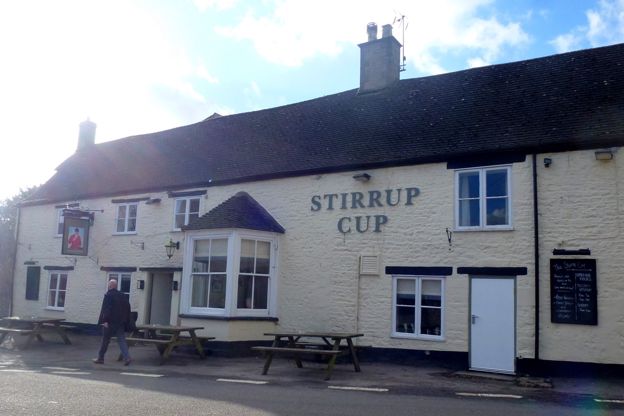
The Stirrup Cup on Cheltenham Road is the village's other pub, recorded as the New Inn from 1774 and renamed in the twentieth century. It has had an unsettled year: CAMRA recorded it closed from 10 June 2026 and seeking new tenants, and a new company, Stirrup Ltd, was registered to run it in August 2026. In October 2026 the village website listed it open again under Jason Linehan, who also runs the Great Western Arms at Blockley, and its own website shows it open from 5pm to 11pm Wednesday to Friday, midday to 11pm on Saturday and midday to 9pm on Sunday, closed on Monday and Tuesday, with dinner from 6pm to 9pm Wednesday to Saturday and a Sunday roast from midday to 4pm. Bisley had 15 pubs and 35 beershops in 1838; by 1972 only these two were left.
When to come
Ascension Day is the day, a Thursday 39 days after Easter: it fell on 14 May in 2026 and is expected on 6 May in 2027, with the times to be confirmed. In 2026 a short service in All Saints at 1.15pm was followed by the procession of the school's pupils, in period costume, with the clergy and the Avening Silver Band, to the wells; the flowers are blessed, and tea is served in the WI village hall afterwards. The bearings can be seen in the school playground before the service. Our page on Bisley Well Dressing has the times for the next one.
Otherwise Bisley is quiet, a place for a pub lunch and a walk on a clear day. It sits high and exposed, so bring a coat in any month. The village has a music festival, a bonfire night and a flower show and fete; the dates are on the village website.
Last verified 1 November 2026 by our editors
Part of
Stroud and the Five Valleys
The steep valleys that meet at Stroud: old cloth-mill country, with Painswick's churchyard of yews, Nailsworth's mills and the commons above Minchinhampton.
Things to do in Bisley

Sport and activity · Minchinhampton
Cotswold Gliding Club
One of the UK's larger gliding clubs, at Aston Down airfield between Stroud and Cirencester, offering air experience flights, motorglider flights and courses.
-
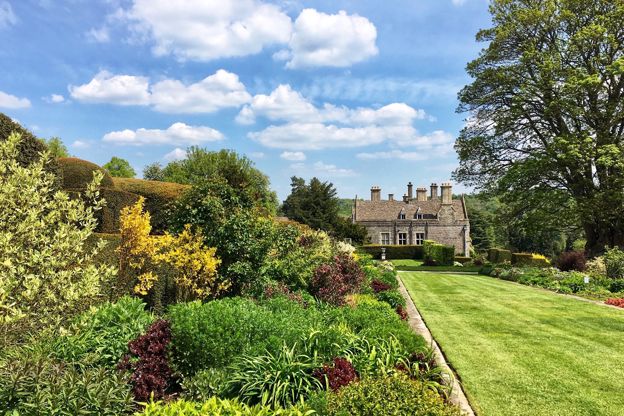
Miserden Garden
Parks and gardens · Bisley
The seventeenth-century garden of Miserden Park, between Stroud and Cirencester, with some of the longest mixed borders in private hands, a yew walk and a loggia by Lutyens. Closed for winter until April 2027.
Verified Oct 2026
-
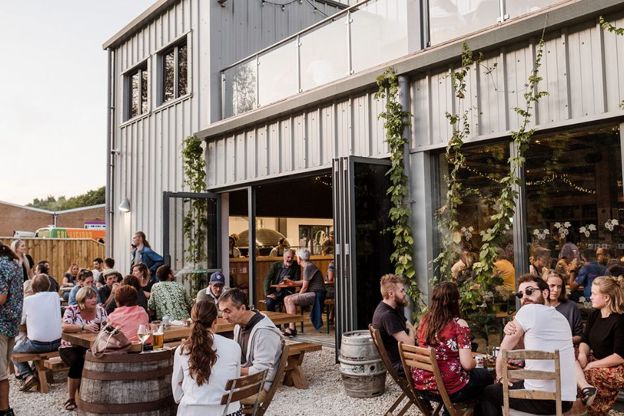
Stroud Brewery
Breweries and distilleries · Stroud
An organic brewery and taproom beside the Thames and Severn Canal at Thrupp, Stroud, founded in 2006, with wood-fired pizza, monthly brewery tours and tasting sessions.
Dog-friendly · Family-friendly
Verified Nov 2026
-
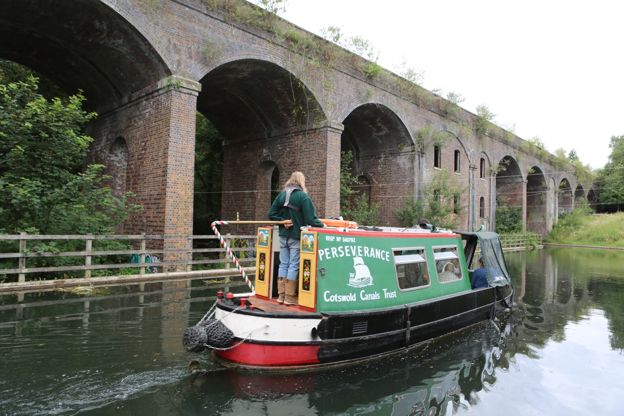
Cotswold Canals Trust boat trips, Stroud
Tours and experiences · Stroud
Volunteer-crewed trips on the restored Thames and Severn Canal from Wallbridge in Stroud, run by the Cotswold Canals Trust, including a lunch cruise to Stroud Brewery.
Family-friendly
Verified Nov 2026
Where to stay in Bisley
-
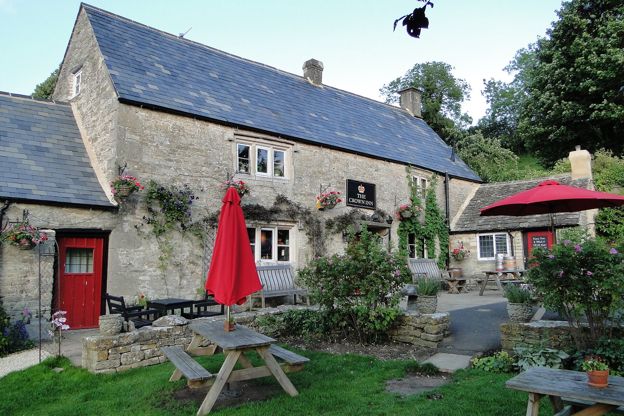
The Crown Inn, Frampton Mansell
Pubs · Sapperton and Frampton Mansell
An old village inn at Frampton Mansell, by its own account a seventeenth-century cider house, with log fires, local ales, a big garden and views over the Golden Valley, open every day.
Dog-friendly · Family-friendly
Verified Nov 2026
-
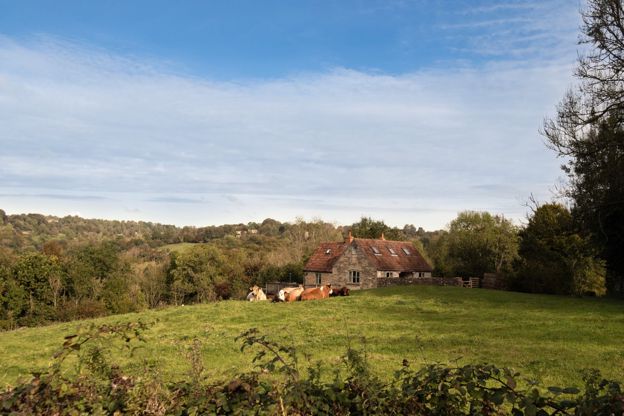
Westley Farm
Glamping · Chalford
A 70-acre hill farm at the head of the Golden Valley above Chalford, with six off-grid yurts and cabins in its ancient woodland and three stone cottages, all dog-friendly.
Dog-friendly · Family-friendly · Walker-friendly
Verified Oct 2026
-
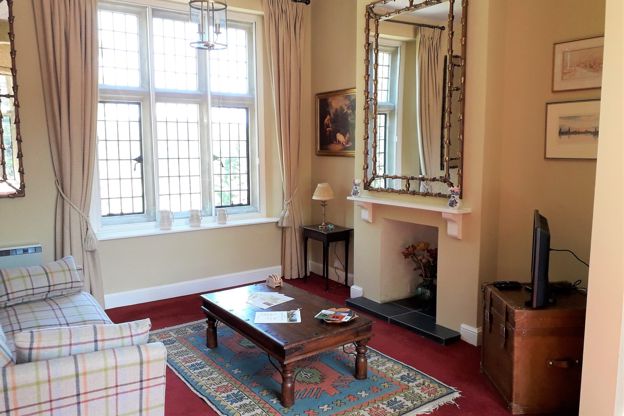
Miserden Estate holiday lets
Self-catering · Miserden
Two holiday lets on the Miserden estate: a one-bedroom flat in the Grade II* house at Miserden Park, with free entry to the garden, and the Old Rectory in the village, sleeping 13.
Walker-friendly
Verified Oct 2026
Where to eat and drink in Bisley
-
The Stirrup Cup, Bisley
Pubs · Bisley
A village pub on Cheltenham Road, Bisley, the old New Inn, reopened under new hands with a grill menu, Cornish oysters and Sunday roasts; open Wednesday to Sunday.
Verified Nov 2026
Walks in and around Bisley
-
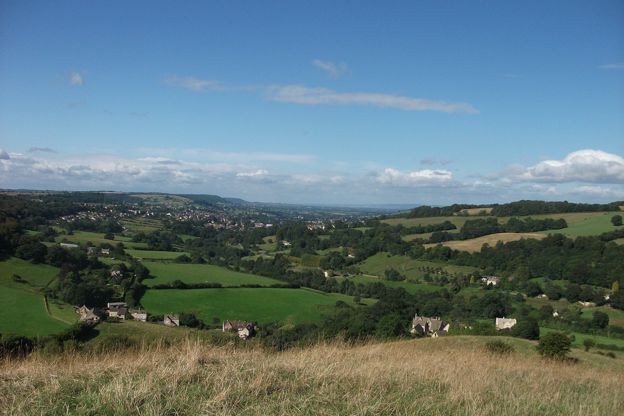
The Laurie Lee Wildlife Way
Walk · Starts in Painswick · 2 hrs, 45 mins · Circular
A 5-mile (8.4km) circular walk from Bulls Cross round the Slad valley, moderate with steep climbs and three to five hours with stops: Gloucestershire Wildlife Trust's loop by Longridge Wood, Snows Farm, Catswood and Swift's Hill, with ten posts carrying Laurie Lee's poems.
Sights in and around Bisley
-
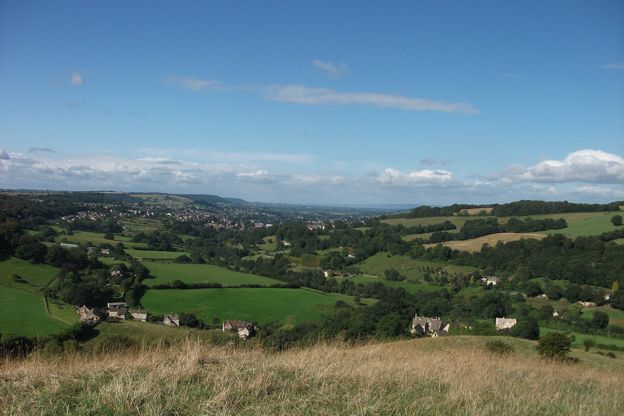
Swift's Hill
Sight · Nature reserve · Stroud and the Five Valleys
Swift's Hill is a Gloucestershire Wildlife Trust reserve of 10 hectares of steep limestone grassland above the Slad valley, an SSSI with more than 130 kinds of wildflower, 13 orchids and 29 butterflies, on a hill that appears in Laurie Lee's Cider with Rosie.
-
Snows Farm Nature Reserve
Sight · Nature reserve · Stroud and the Five Valleys
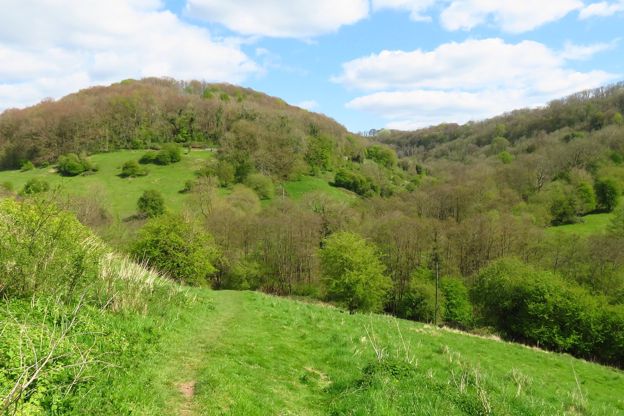
Snows Farm is a Gloucestershire Wildlife Trust reserve of 21 hectares at the head of the Slad valley: old limestone grassland, ancient beech wood and the Dillay Brook, with more than 300 kinds of plant, grazed by cattle and Dartmoor ponies, on the Laurie Lee Wildlife Way.
-
Holy Trinity Church, Slad
Sight · Church · Stroud and the Five Valleys
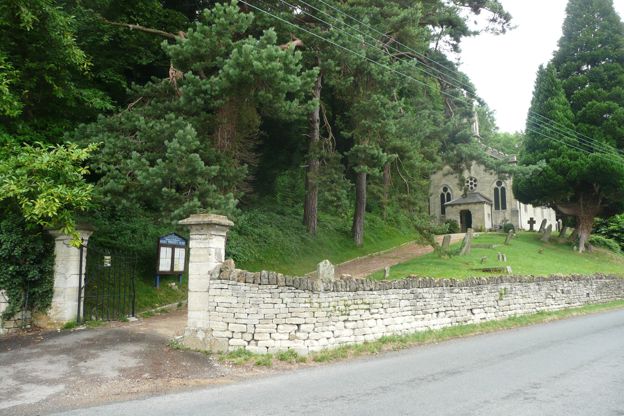
Holy Trinity is Slad's small village church, built in 1831 to designs by Charles Baker of Painswick and reconstructed by Benjamin Bucknall in 1869, with a stone spirelet. Laurie Lee, who grew up in the valley, is buried in its churchyard, opposite a memorial window. Open by day.
Getting to Bisley
- By car
- From Stroud, 4 miles east by the Bisley road through Stancombe, or from the A419 at Chalford up the hill. There is no car park; the Bear has parking for its customers.
- By bus
- The 8B (Cotswold Green) runs from Stroud Merrywalks through Bisley to Eastcombe and Oakridge, two journeys a day, Monday to Saturday, about 14 minutes to Bisley. There is no Sunday bus.
- By train
- Stroud, on the line from London Paddington and Gloucester, is 4 miles away; a taxi takes about ten minutes.
Access
All Saints has a ramp, an accessible toilet and a hearing loop; the village slopes from the church down to the wells, and George Street is narrow
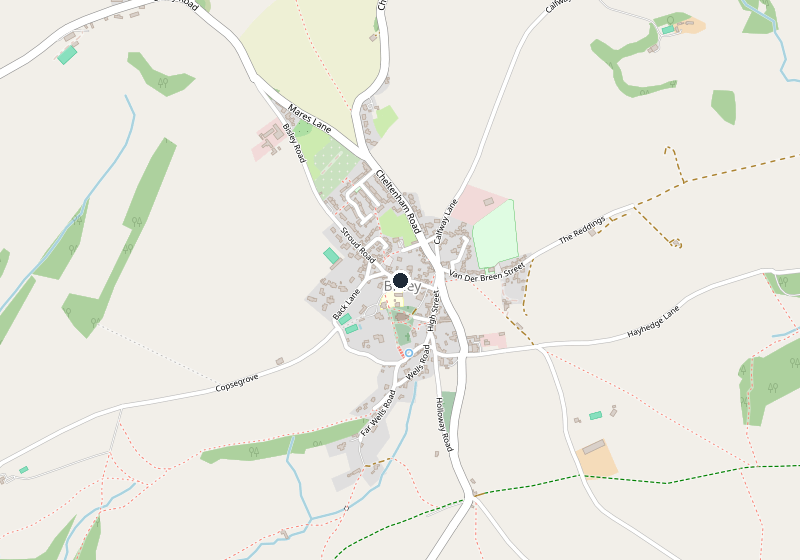
| Stroud station | 4 mi |
|---|---|
| Chalford | 3.1 mi |
| Painswick | 6.2 mi |
| Cirencester | 11.8 mi |
| Cheltenham | 13 mi |
Places near Bisley
-
 StroudThe cloth town where five valleys meet, with a Saturday farmers' market, a free museum in Stratford Park, a canal coming back to life and Laurie Lee's Slad next door.
-
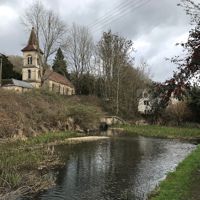 ChalfordThe hillside village of the Golden Valley east of Stroud, its cottages stacked above the Thames and Severn Canal, with the Lavender Bakehouse on the valley road, a round canal house of 1790 and a web of steep paths that donkeys once carried the shopping up.
-
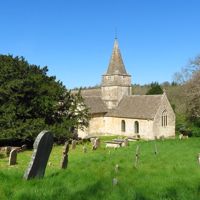 Sapperton and Frampton MansellTwo villages on the lip of the Frome valley where the Thames and Severn Canal went underground: the Gothic tunnel portal at Daneway, the Daneway Inn beside the old canal, the church where Gimson and the Barnsleys are buried, and the Crown at Frampton Mansell.
-
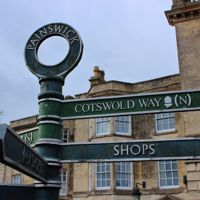 PainswickA former cloth town above the Stroud valleys, with a churchyard of clipped yews and carved tombs, a church clipping every September, and the Rococo Garden.