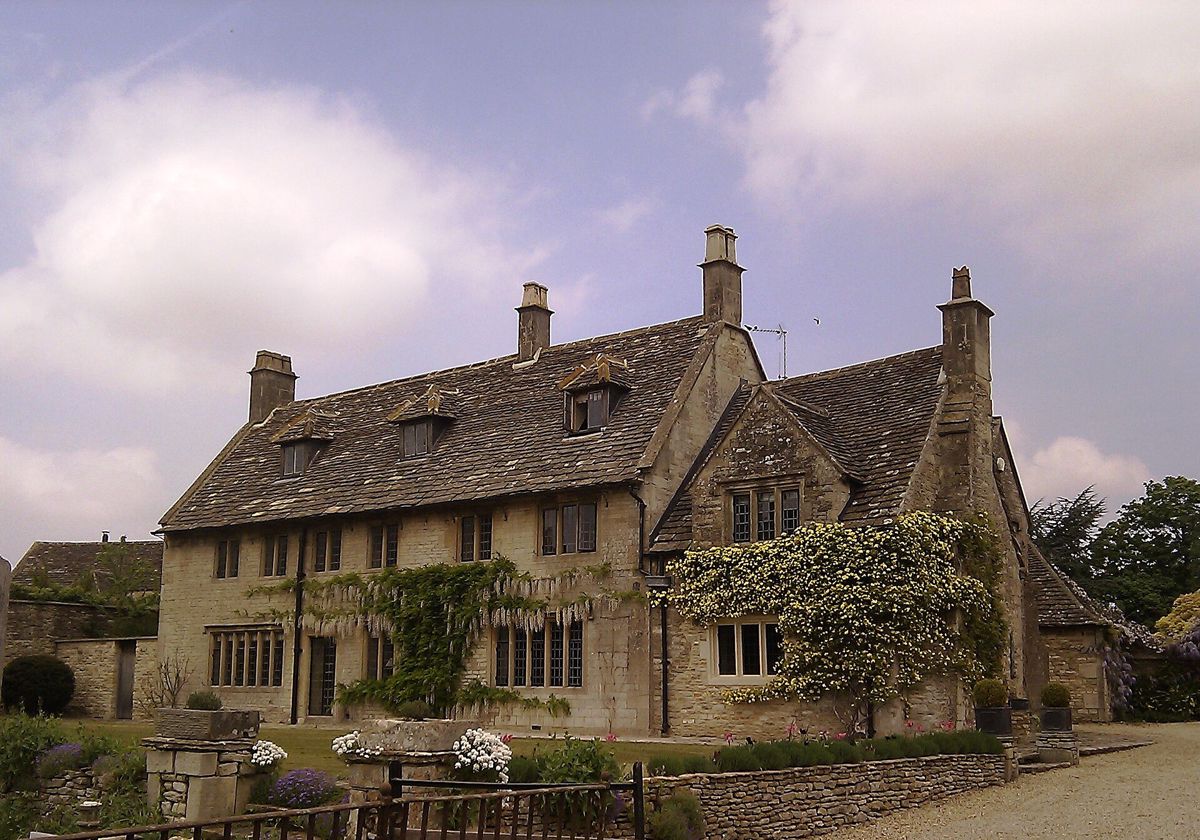
Stuart Logan, CC BY-SA 2.0, via Wikimedia Commons
Biddestone
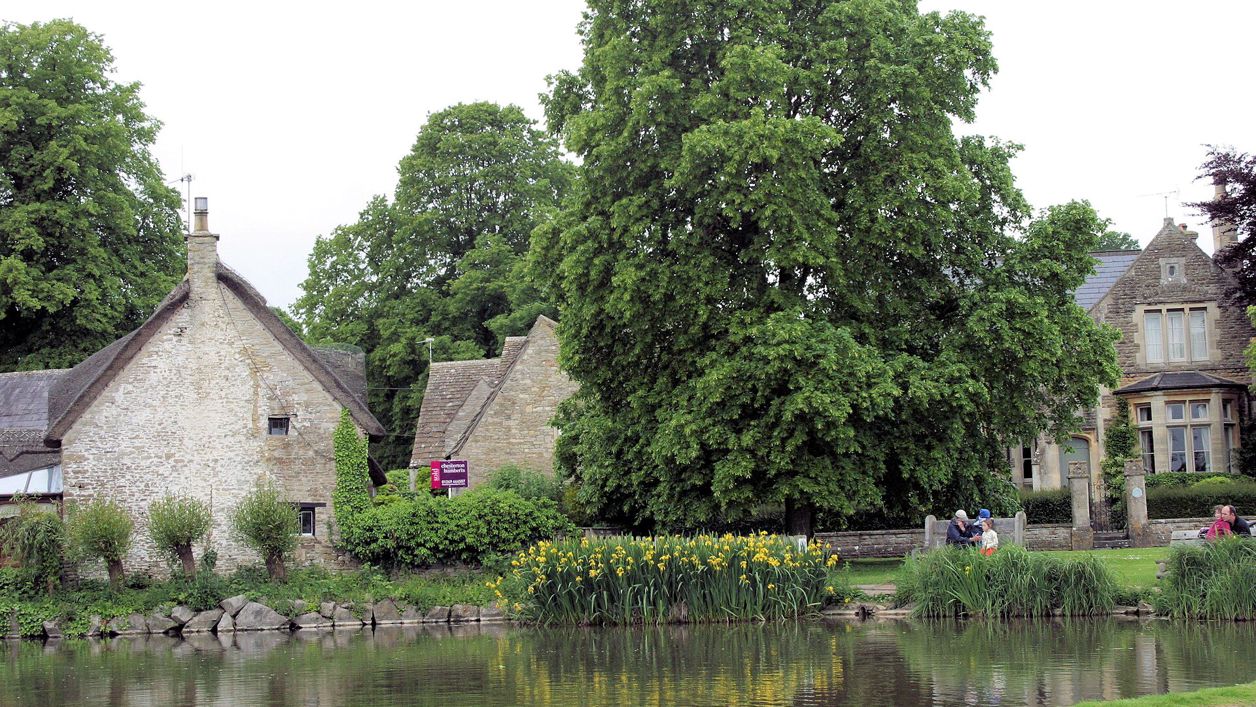
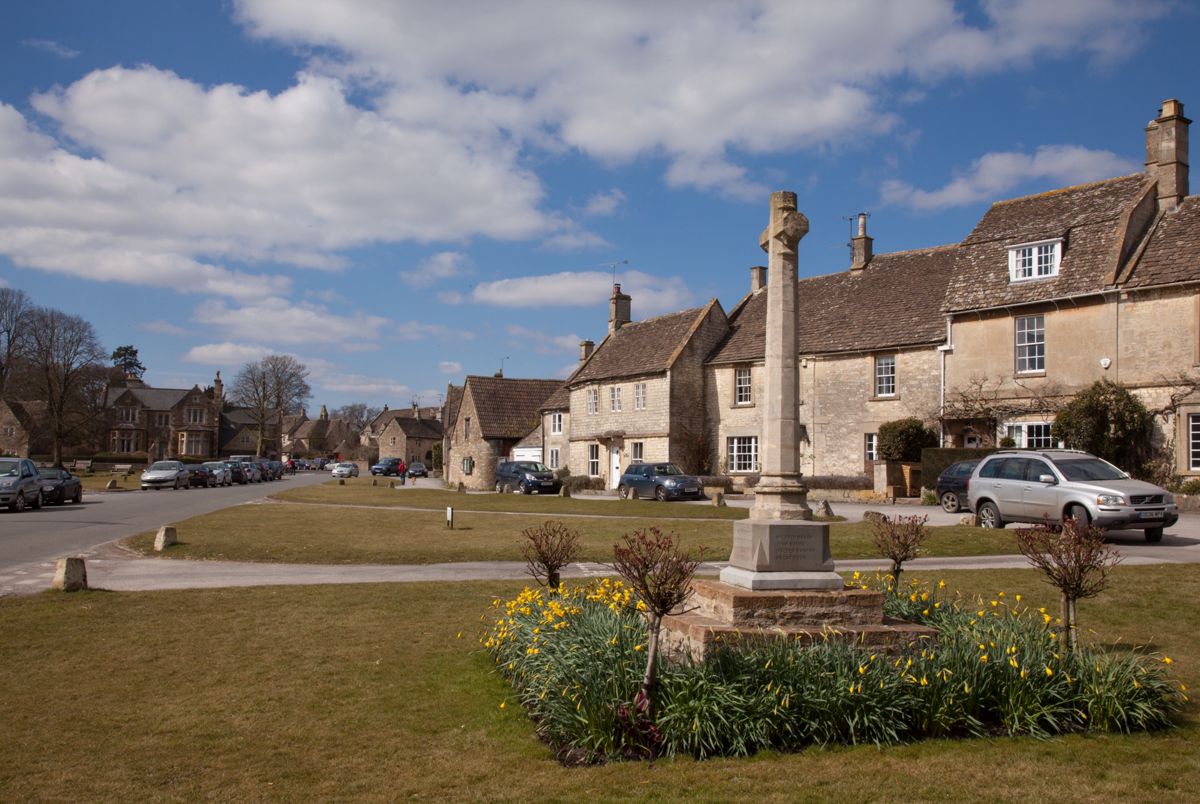
A Wiltshire village round a large green and a duck pond of 1661, with a Norman church, an eighteenth-century pub, a manor garden that opens for charity and far fewer visitors than Castle Combe, 3 miles away.
- Nearest station
- Chippenham, about 5 miles (8km); Faresaver's 635 and 636 buses call on weekdays only, otherwise a taxi
- Parking
- The public car park behind the village hall on Yatton Road (SN14 7BZ), free, with ample space; park thoughtfully in the village, which has no other car park
- Best time
- Summer evenings by the pond; the manor's open days; when Castle Combe is full
- Dogs
- Welcome at the White Horse, with water bowls and treats at the bar; on a fixed short lead at the manor garden on its open days; on leads on the heritage trail, which crosses grazed fields
About Biddestone
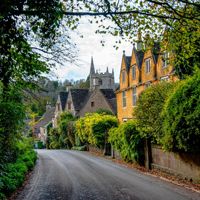
Biddestone is a village in Wiltshire, just inside the Cotswolds National Landscape, about 3 miles north of Corsham and ten minutes from junction 17 of the M4. Its middle is a wide green with a duck pond, ringed by stone houses of the seventeenth and eighteenth centuries, and much of it is a conservation area. Castle Combe is 3 miles north-west and gets the coaches; Biddestone gets the people who live there, the ducks and, on a fine evening, the pub's customers on the grass.
What to see
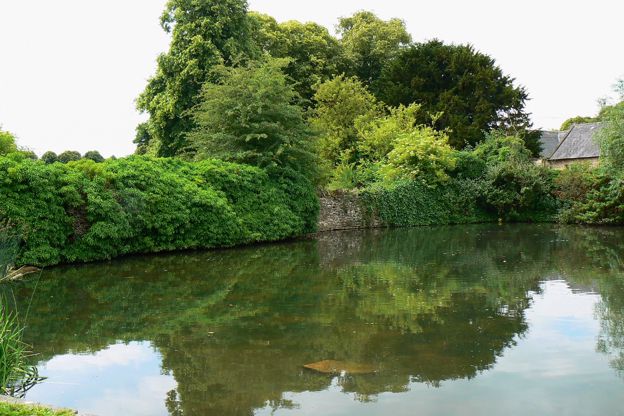
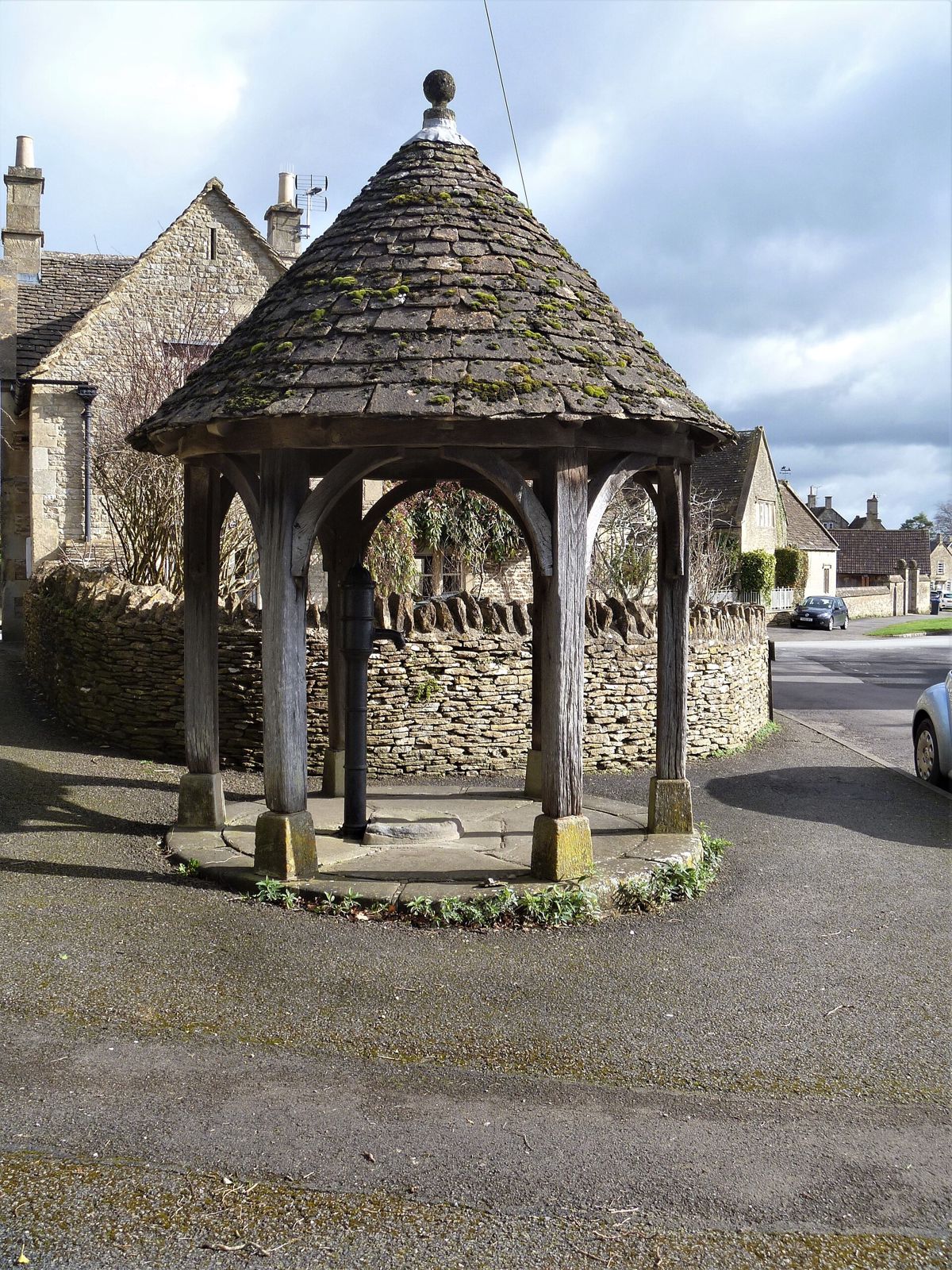
The green and the pond are the village, and you see them in a minute from the bus stop. The pond is older than it looks: in 1661 William Mountjoy, who had bought the manor in 1626, laid a gutter from the springs to fill it, and for generations it watered animals, filled steam engines and soaked wagon wheels. Round it are the White Horse, an eighteenth-century inn, a Baptist chapel of the nineteenth century, a sixteenth-century house that the parish council says was once a cloth factory worked by Flemings, and a K6 telephone box. Willow House, built by a maltster in 1730, is one of the dated ones.
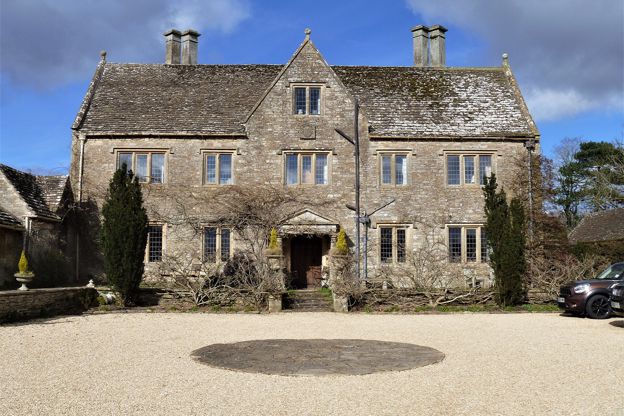
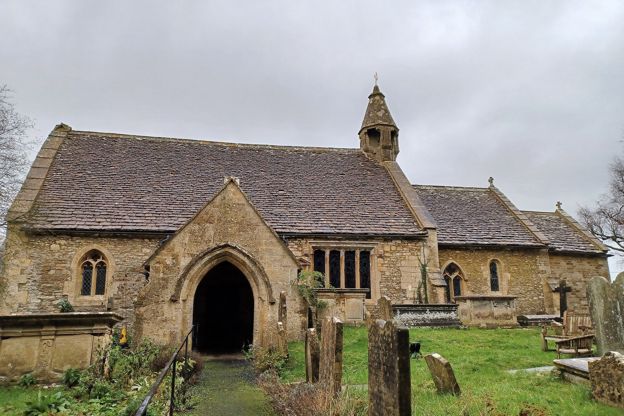
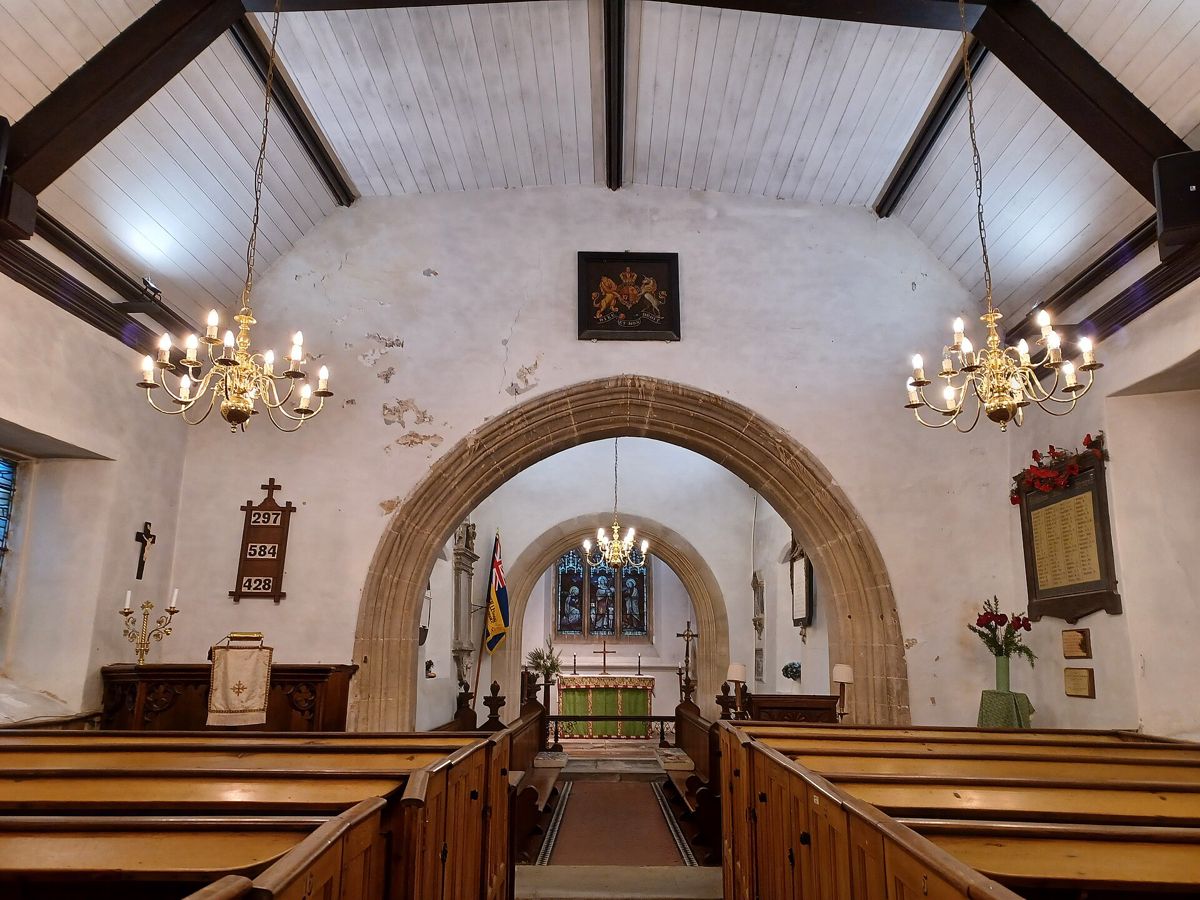
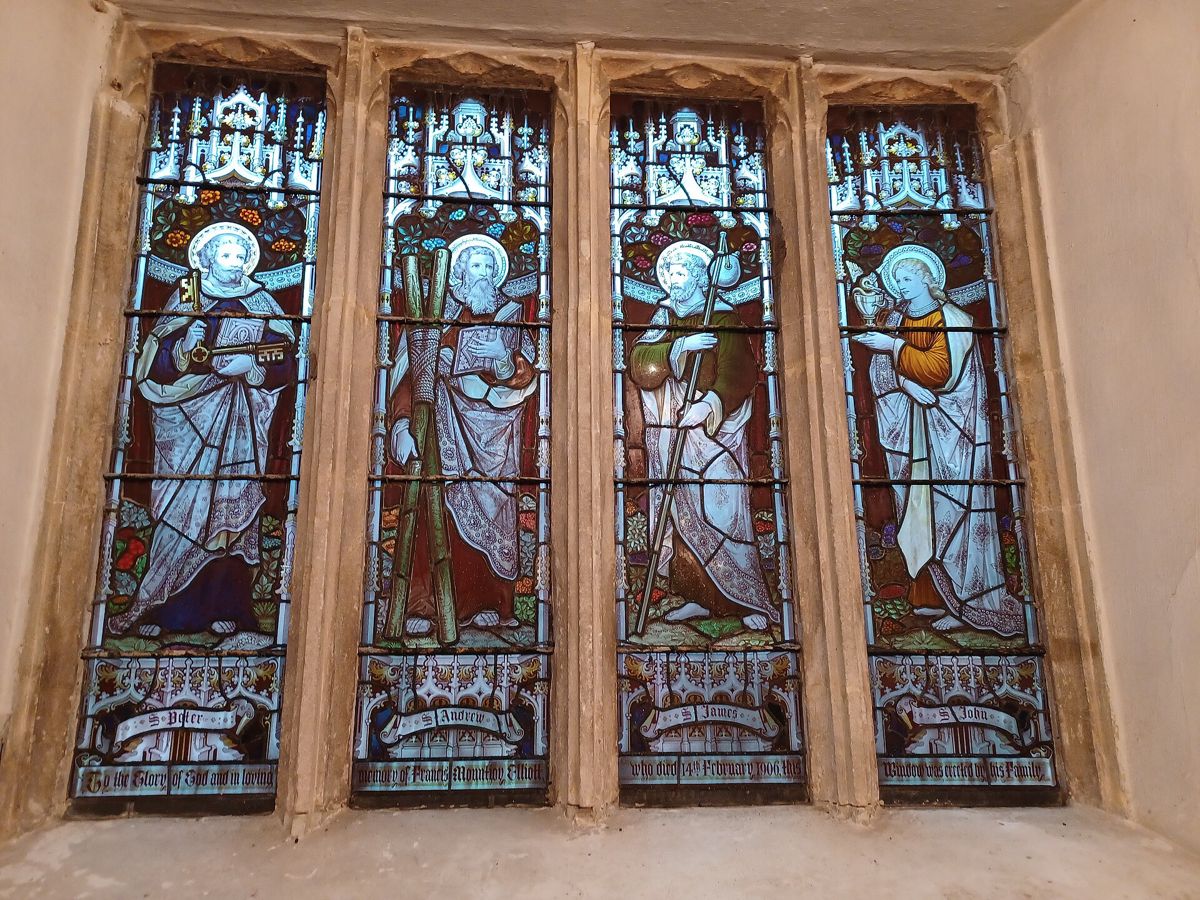
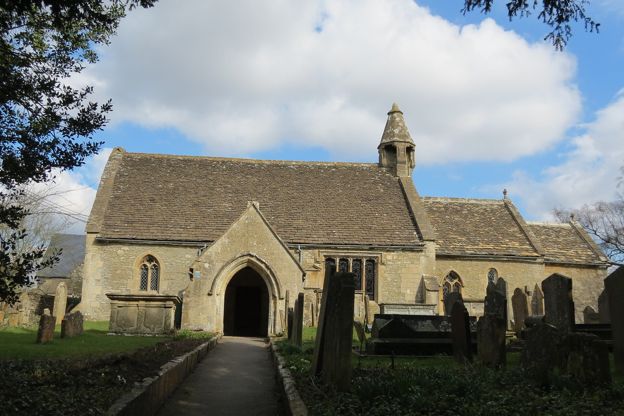
St Nicholas' church, on Church Road a few minutes from the green, is listed Grade I; the parish council records that the village had two manors and two churches in the eleventh century. It is small, Norman and hardly enlarged in seven centuries: a twelfth-century south doorway and font, a thirteenth-century bell turret under a fifteenth-century spire, Georgian box pews and a gallery, and memorials to the Mountjoys. It is open every day until dusk. Biddestone Manor, an early seventeenth-century house listed Grade II*, is private, but its 5 acres of garden, with a lake, streams, an arboretum and clipped box and yew in front of the house, open on set days for the National Garden Scheme (opens in a new tab), with refreshments; it had finished its 2026 openings by October, and it does not yet take wheelchair users.
A morning here
A morning is a loop of the green, the church and a lane or two, then the pub. Park behind the village hall on Yatton Road and walk down to the green, round the pond and along to the Baptist chapel. Take Church Road to St Nicholas', then come back past the manor's gates and the Butts, which the heritage trail follows out of the village. If you have more time, the trail takes two to two and a half hours; if you have less, Corsham is 3 miles away and Lacock to the south. Lunch is at the White Horse from Friday to Sunday; from Tuesday to Thursday it opens at 5pm and on Monday it is closed, so eat in Corsham.
Walks from Biddestone
The Biddestone heritage trail is the village's walk: about 6.5 miles (10.5km) from the village hall, two to two and a half hours, moderate with stiles and a couple of short steep pulls. It goes round the green past the listed houses, out by the Butts and Ham Lane, down the hillside to Slaughterford, where it passes Chapps Mill and St Nicholas' church with an Edward VII post box in its wall, over Common Hill to the White Hart at Ford, the only refreshment on the way, and back down the By Brook through the flood meadows past the Rag Mill woods. It is muddy by the brook after rain, and the Cotswolds National Landscape's route notes warn of a stretch of busy road with no footpath beyond Ford.
From Ford, Ford, Long Dean and Castle Combe is a 4.5-mile (7.2km) circuit up the By Brook valley into Castle Combe and back through the woods, which lets you see the famous village on foot and leave the car park queue to others. Lacock, Naish Hill and Bowden Park, 7 miles (11.3km) from Lacock, is the longer day to the south.

The Cotswolds Info newsletter
Events, new places and the best of the season, about once a month. Unsubscribe at any time.
Food and drink
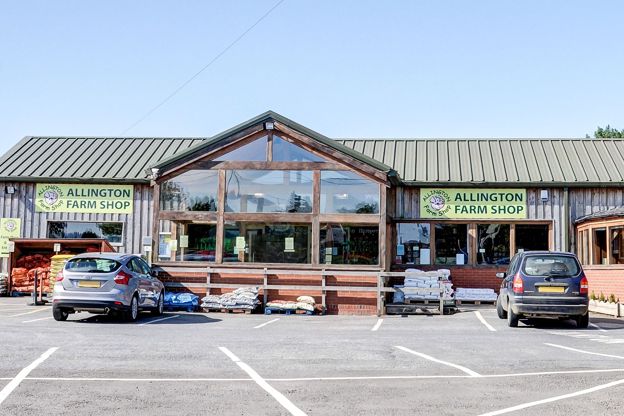
The White Horse on the green is the village's pub, and in practice its only place to eat: fresh food, real ale, a curry and a pint for £18 on Thursdays (2026), a charity quiz on the first Tuesday of the month and Sunday roasts from 12.30pm to 3pm. It reopened under a new landlord in September 2025, welcomes dogs and muddy boots, and has a garden behind as well as tables looking over the green. It is closed on Monday, open from 5pm from Tuesday to Thursday, from midday on Friday, Saturday and Sunday, and from 12.30pm to 4.30pm on bank holiday Mondays. The village's other pub, the Biddestone Arms, closed in 2019 and its site has been redeveloped for housing. For a bed, the parish council lists Owl Cottage, with a cooked breakfast, a two-night minimum stay and free parking in the street, according to its own site, and two self-catering lets: Wellside, a pair of cottages that can be taken together or apart, and Anvil Cottage, in the grounds of the Close, an eighteenth-century house facing the pond, which its owners list as sleeping four in two bedrooms, with parking for two cars on the drive and no pets; it is listed on Sawday's with a two-night minimum stay. For a farm shop, Allington Farm Shop and Café is about 2 miles away outside Chippenham, with its own butchery, a deli and a café.
When to come
Any day, which is the point of it. Biddestone has no festival, no car park charge and no coach bay, so it is quiet when Castle Combe is not, and a summer evening on the green is as good as the village gets. The manor garden's open days for the National Garden Scheme are the one date to plan around; they are announced on the scheme's site each year. The buses run only on weekdays, a few times a day, so a car-free visit means a weekday and a timetable. In winter the By Brook meadows flood and the trail is for boots.
Last verified 1 November 2026 by our editors
Part of
The South Cotswolds
The southern wolds as they fall towards Bath and Wiltshire: Tetbury's Market House, Castle Combe's street by the By Brook, Malmesbury's abbey and Lacock beyond the edge.
Things to do in Biddestone
Sport and activity · Castle Combe
Castle Combe Circuit
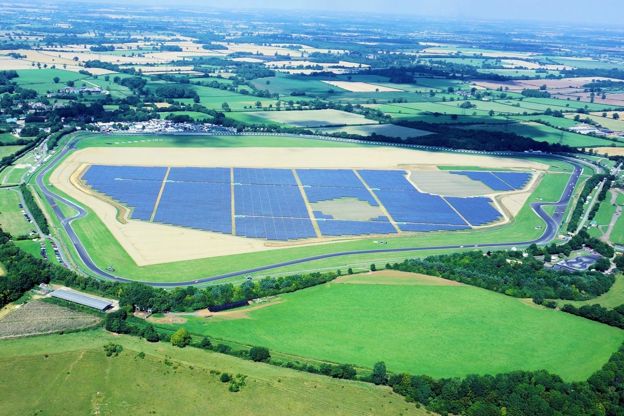
A 1.85-mile motor racing circuit half a mile from Castle Combe, racing since 1950, with race days, action days, track days and driving experiences from spring to November.
-
Lacock Abbey, Fox Talbot Museum and Village
Historic houses and heritage · Lacock
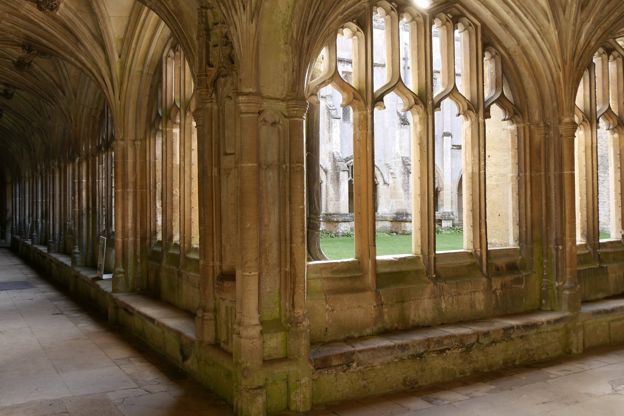
The National Trust's abbey made from a medieval nunnery, where Fox Talbot made the earliest surviving photographic negative in 1835, with its museum and village.
Car-free · Dog-friendly · EV charging
Verified Oct 2026
Where to stay in Biddestone
-
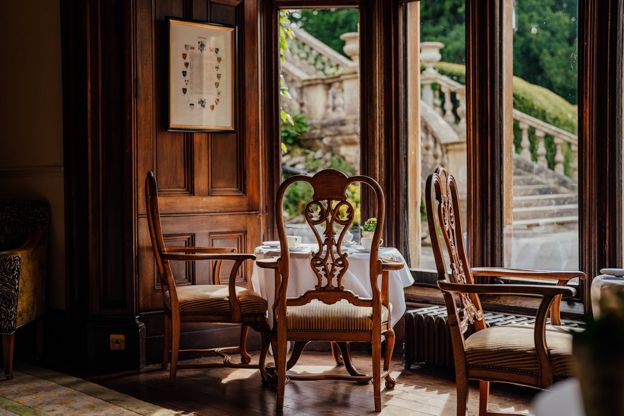
The Manor House
Hotel · Castle Combe
A hotel in a manor house of seventeenth-century origins at Castle Combe, part of the Exclusive Collection, with the Bybrook restaurant.
Dog-friendly · Wedding venues · EV charging
Verified Oct 2026
-
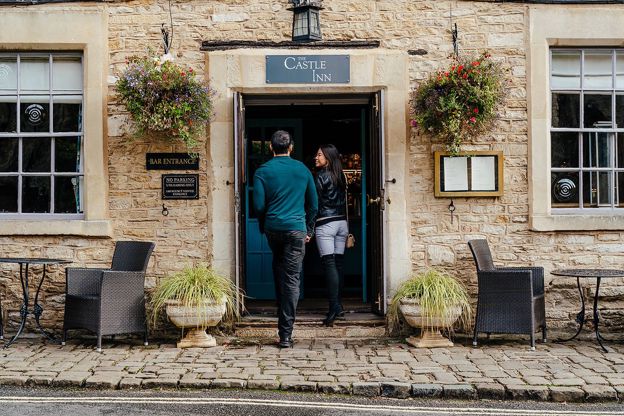
The Castle Inn
Inn · Castle Combe
An inn with 12 rooms on West Street, Castle Combe, part of the Exclusive Collection, with a menu holding two AA rosettes.
Dog-friendly
Verified Oct 2026
-
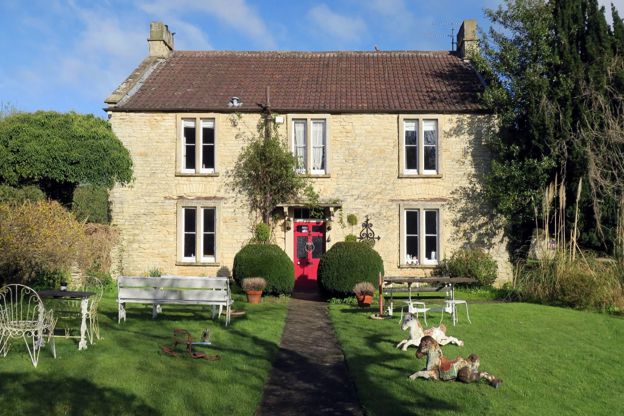
Fosse Farmhouse
B&B · Castle Combe
A farmhouse bed and breakfast full of vintage finds on the Fosse Way at Nettleton Shrub, a mile or so from Castle Combe, with three dog-friendly holiday cottages in its old farm buildings.
Dog-friendly · Family-friendly
Verified Nov 2026
Where to eat and drink in Biddestone
-
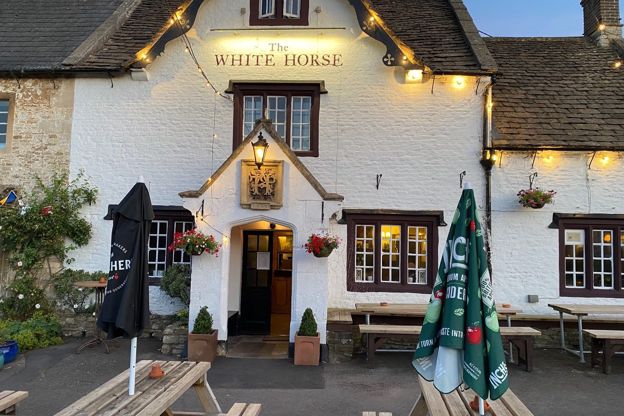
The White Horse, Biddestone
Pubs · Biddestone
A dog-friendly pub on the green at Biddestone serving pub classics, with a garden at the back, curry night on Thursdays and a quiz on the first Tuesday of the month.
Dog-friendly · Walker-friendly
Verified Oct 2026
-
Allington Farm Shop and Café
Farm shops and delis · Biddestone
A family farm shop and café on Allington Bar Farm outside Chippenham, about 3 miles by road from Biddestone, with its own butchery from the farm, a deli, a bakery and a licensed café.
Family-friendly
Verified Oct 2026
Walks in and around Biddestone
-
Ford, Long Dean and Castle Combe
Walk · Starts in Castle Combe · 2 hrs, 15 mins · Circular
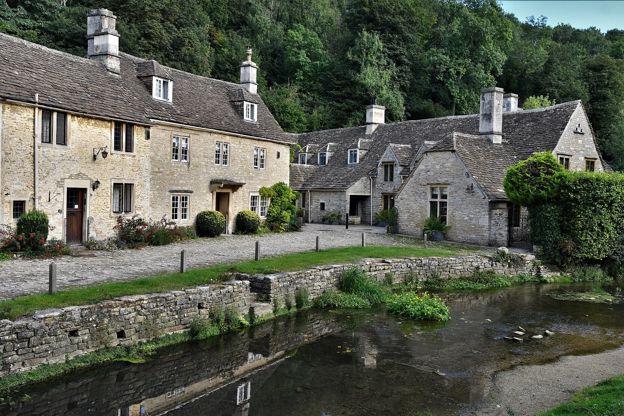
A 4.5-mile (7.2km) circular walk from the White Hart Inn at Ford, moderate and two to two and a half hours: up the By Brook valley by Long Dean and through the woods into Castle Combe, down The Street past the Market Cross, and back through Becker's Wood and Out Woods.
Sights in and around Biddestone
-
St Nicholas' Church, Biddestone
Sight · Church · Biddestone
St Nicholas' in Biddestone is a small Norman church near Castle Combe, listed Grade I, with a twelfth-century doorway and font, a rare bell turret under a little spire, box pews, a gallery and Mountjoy memorials. Open daily until dusk.
-
By Brook
Sight · River · Castle Combe
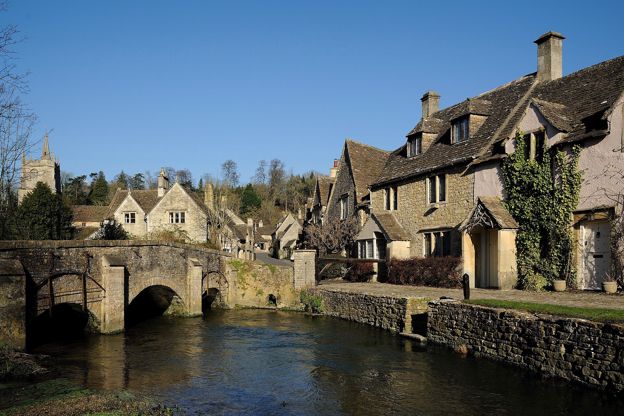
The By Brook is the wooded valley stream that runs through Castle Combe and south by Long Dean, Ford and Slaughterford, in north-west Wiltshire. It once had some twenty watermill sites, for corn, cloth and paper, and public footpaths follow much of it.
-
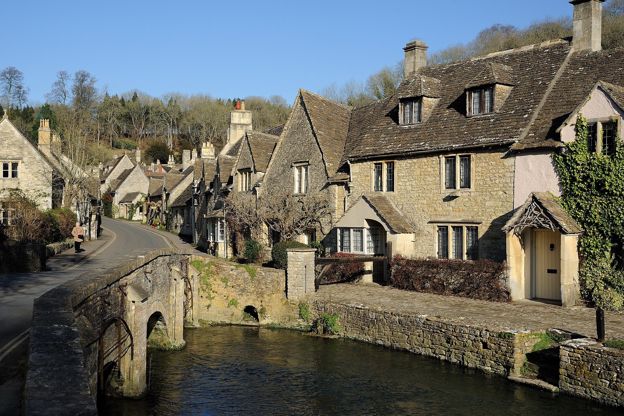
Castle Combe bridge
Sight · Bridge · Castle Combe
Castle Combe bridge carries the village street over the By Brook at the bottom of the hill: three low skew arches rebuilt for the Scropes in the early nineteenth century, with grooves in its buttresses for the iron screens that kept livestock in. Grade II.
Stories about Biddestone
-
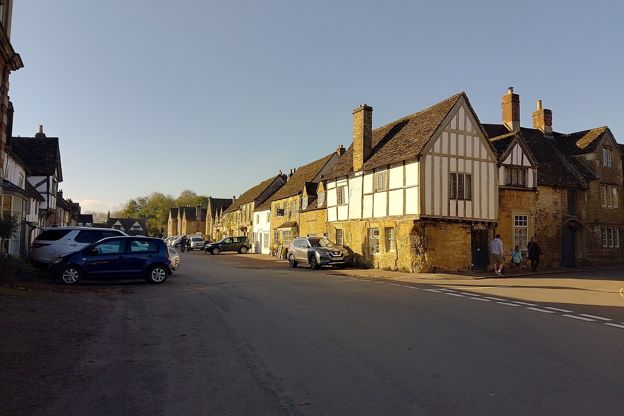
Pride and Prejudice at Lacock: Meryton on the High Street
Story · Guides · 6 minute read
Lacock played Meryton in the BBC's 1995 Pride and Prejudice, with the Red Lion as the assembly rooms: what you can see, the other dramas filmed in the village, and how to visit.
-
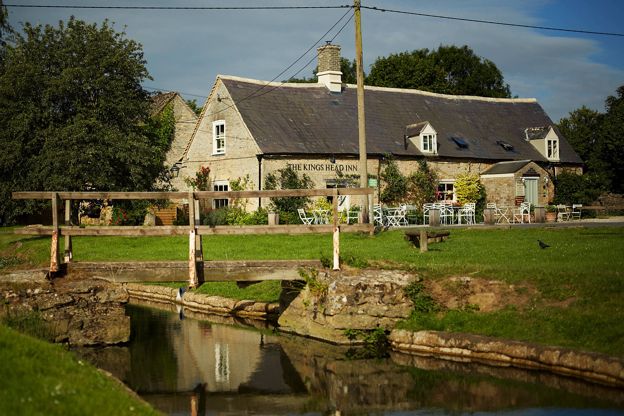
The best pubs in the Cotswolds
Story · Guides · 11 minute read
The best pubs in the Cotswolds: village pubs on the green at Biddestone and Guiting Power, medieval inns at Castle Combe and Lacock, riverside pubs at Lechlade and Swinbrook, pubs with rooms round Kingham, and the pubs at the end of our walks.
Getting to Biddestone
- By bus
- Faresaver's 635 and 636 (Chippenham to Marshfield, the 636 via Corsham) stop at the pond a few times on weekdays only; Coachstyle's X79 to Bath calls on Thursday mornings.
- By train
- Chippenham, on the line from London Paddington to Bath and Bristol, is about 5 miles away; take the 635 or 636 on a weekday or a taxi.
- By car
- From junction 17 of the M4 in about ten minutes, or by the lanes from Corsham (3 miles) or Chippenham (5 miles); Castle Combe is 3 miles north-west.
- Parking
- The free public car park behind the village hall on Yatton Road (SN14 7BZ), which is also the start of the heritage trail. There is no other car park; park thoughtfully.
Access
The green and the lanes round it are level, with the pond at the roadside; the village hall has disabled access; the church is a few hundred metres from the car park along Church Road; the manor garden does not yet take wheelchair users
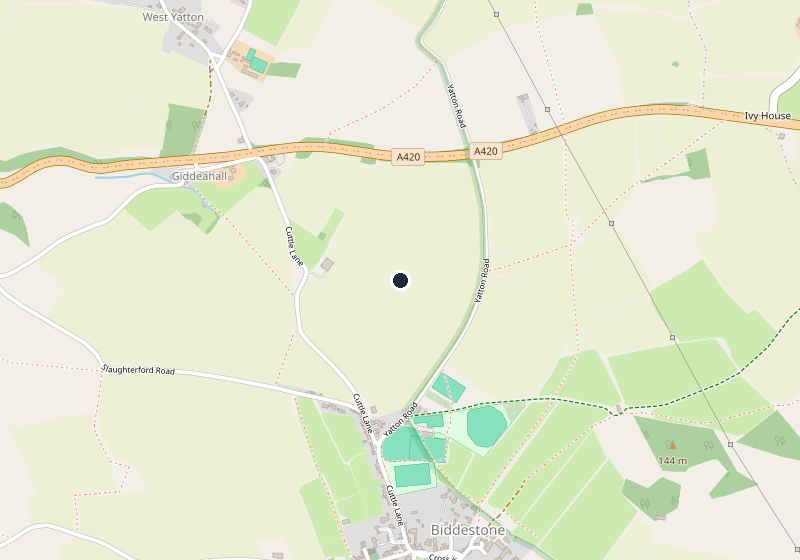
| Corsham | 3.1 mi |
|---|---|
| Castle Combe | 3.1 mi |
| Chippenham | 5 mi |
| Bath | 11.8 mi |
Places near Biddestone
-
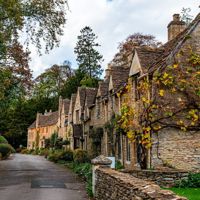 Castle CombeA small Wiltshire village running down a single street from a medieval market cross to a bridge over the By Brook. Park at the top, walk down, and come early.
-
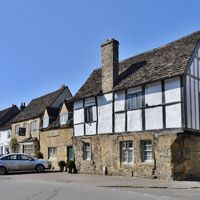 LacockA Wiltshire village mostly owned by the National Trust, with an abbey made from a medieval nunnery, where Fox Talbot made the earliest surviving negative in 1835.
-
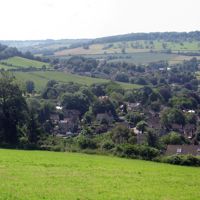 BoxA Wiltshire stone village in the By Brook valley on the road from Bath to Chippenham, where Brunel's Box Tunnel opened in 1841, the hill above is hollow with old stone mines and the church stands on a Roman villa.