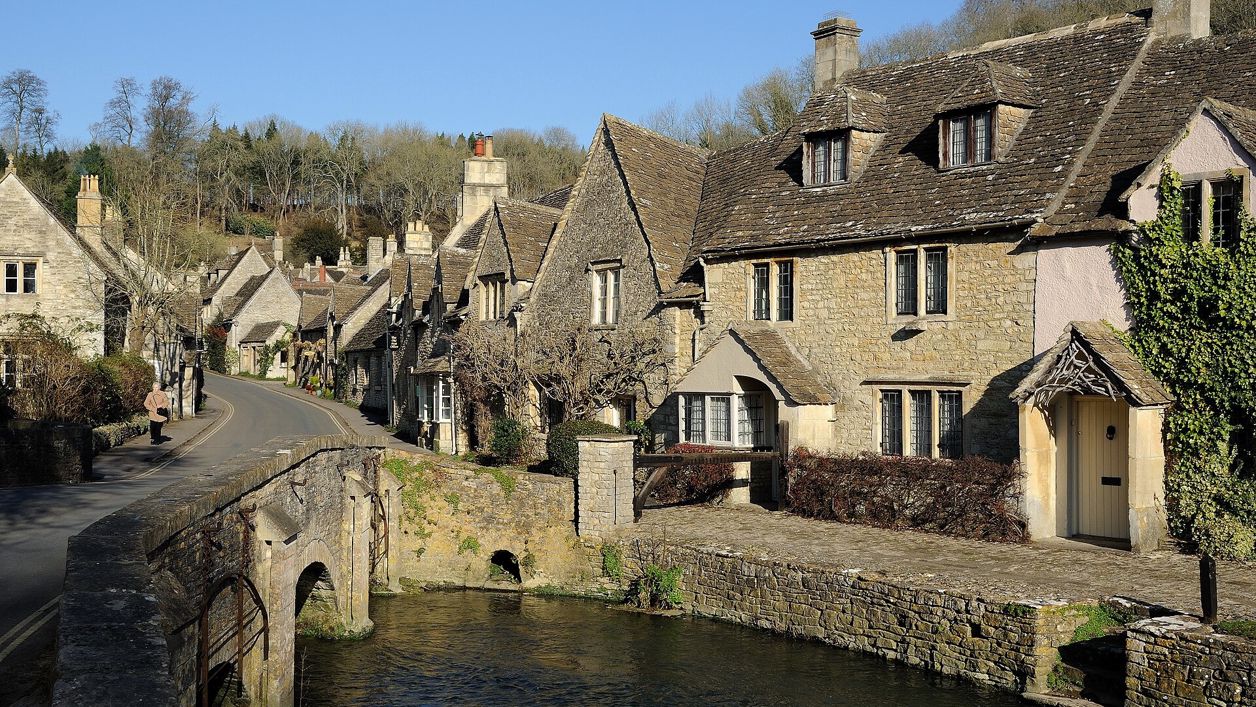
Saffron Blaze, CC BY-SA 3.0, via Wikimedia Commons
Castle Combe bridge
Castle Combe bridge carries the village street over the By Brook at the bottom of the hill: three low skew arches rebuilt for the Scropes in the early nineteenth century, with grooves in its buttresses for the iron screens that kept livestock in. Grade II.
Bridge
Castle CombeCastle Combe bridge is where the street through Castle Combe ends, at the bottom of the hill, crossing the By Brook. It is a bridge of three low skew arches, rebuilt in the early nineteenth century for the Scrope family who owned the village, and it is listed Grade II.
History
The bridge was rebuilt in the early nineteenth century. The Wiltshire Community History records that the Scropes, lords of the manor for nearly five hundred years until 1866, had the bridge at the bottom of The Street completely rebuilt, and the listing dates what stands to that time.
The brook it crosses made Castle Combe. It carved the steep valley and drove the fulling mills of a medieval cloth trade: there were fulling mills on it in the Middle Ages, and Sir John Fastolf, who married into the Scrope family, bought the red and white cloth of Castle Combe to clothe his soldiers in France. Within a few years of his death in 1459 the brook's flow fell, in some summers almost to nothing, and the fullers left.
In 1962 a national newspaper called Castle Combe the prettiest village in England, and visitors followed. In the 1960s the brook was made into a fishing harbour for the film Doctor Dolittle.
What to see
Look at the east side. Four shallow ashlar buttresses stand against it, each grooved to hold an iron screen that stopped livestock from straying along the brook; the middle screen is missing, but the slots are clear. The bridge itself is rubble stone, with three low segmental arches set at a skew to the road and coped parapets.
Stand on the bridge to look upstream along the brook to the houses of the lower village, or go a little way over it to see the bridge in profile with the water below. Early morning gives the clearest view, before the visitors arrive.
Visiting
The bridge is open at all times and free. The public toilets are just south of it. The parish council says the village can be crowded in summer and on bank holidays, when the car park is likely to be full, and quieter early in the morning and late in the afternoon; winter is its favourite time to visit. The council asks for dogs to be kept under control, and on a lead where directed.
Getting there
Park in the pay-and-display car park on Dunns Lane in Upper Castle Combe, at the top of the hill; coaches may not enter the village, and the parish council asks drivers not to come down into it. From the car park, walk down The Street past the Market Cross to the bridge; it is downhill all the way, so the walk back is a climb. Faresaver buses 95 and 95A from Chippenham run a few times a day, Monday to Saturday.
On foot, the Ford, Long Dean and Castle Combe walk comes up the By Brook valley from the White Hart at Ford and crosses the bridge on its way through the village.
Nearby
The White Hart, a fourteenth-century pub on The Street, the Castle Inn and the Manor House, with its Bybrook restaurant, are all a few minutes up the hill. St Andrew's Church, with its faceless clock, is just off The Street. Downstream, the By Brook runs on to Long Dean, Ford and Slaughterford, and Biddestone's green is a short drive south. Our guide to Cotswold film and TV locations has the films shot in the village.
Walks past Castle Combe bridge
-
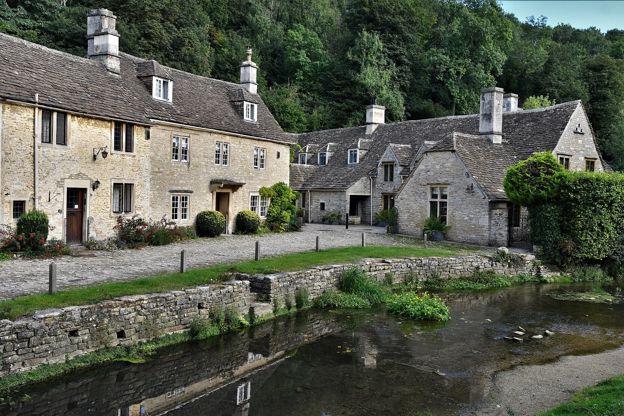
Ford, Long Dean and Castle Combe
Walk · Starts in Castle Combe · 2 hrs, 15 mins · Circular
A 4.5-mile (7.2km) circular walk from the White Hart Inn at Ford, moderate and two to two and a half hours: up the By Brook valley by Long Dean and through the woods into Castle Combe, down The Street past the Market Cross, and back through Becker's Wood and Out Woods.
Stay and eat near Castle Combe bridge
-
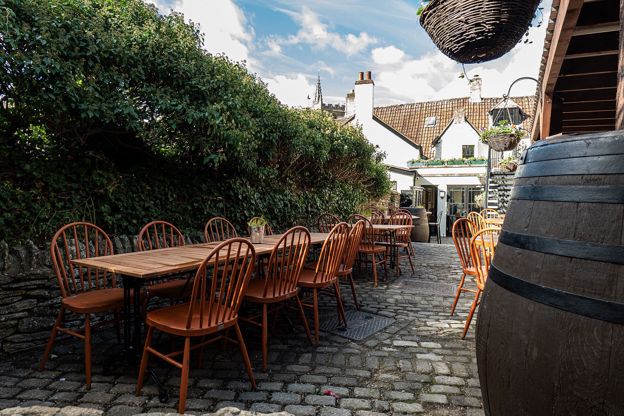
The White Hart, Castle Combe
Pubs · Castle Combe
A Grade II listed Wadworth pub on The Street in Castle Combe, open from 9am with pastries, with a courtyard garden, and dog friendly.
Dog-friendly
Verified Nov 2026
-
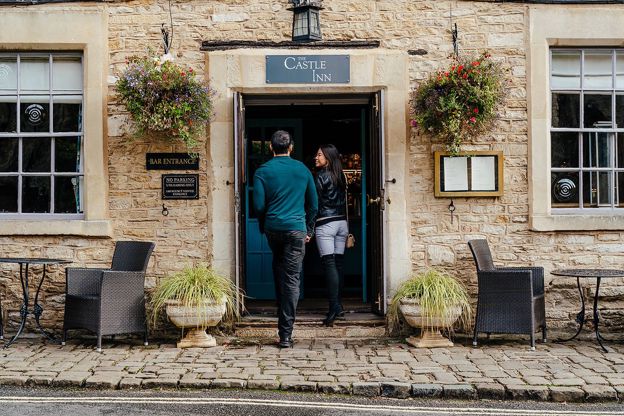
The Castle Inn
Inn · Castle Combe
An inn with 12 rooms on West Street, Castle Combe, part of the Exclusive Collection, with a menu holding two AA rosettes.
Dog-friendly
Verified Oct 2026
-
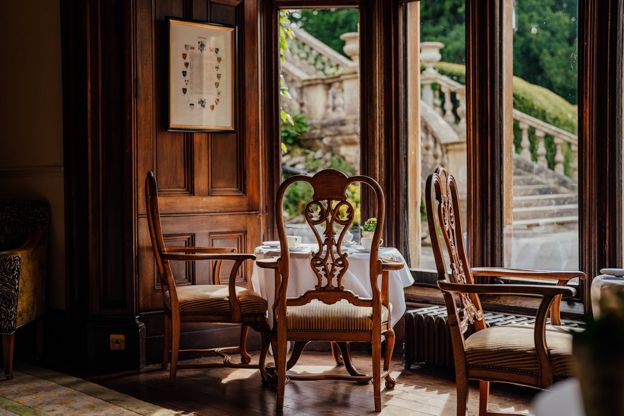
The Manor House
Hotel · Castle Combe
A hotel in a manor house of seventeenth-century origins at Castle Combe, part of the Exclusive Collection, with the Bybrook restaurant.
Dog-friendly · Wedding venues · EV charging
Verified Oct 2026
More sights to see
-
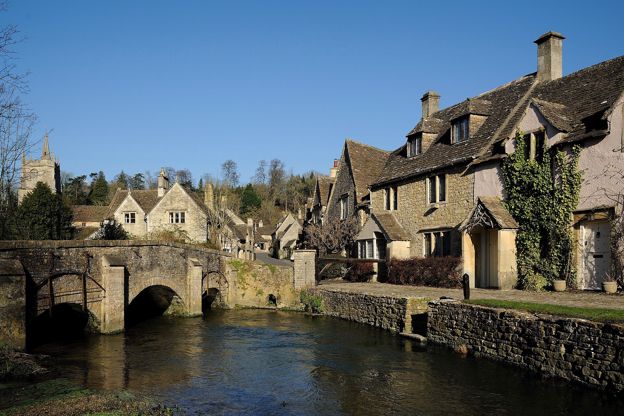
By Brook
Sight · River · Castle Combe
The By Brook is the wooded valley stream that runs through Castle Combe and south by Long Dean, Ford and Slaughterford, in north-west Wiltshire. It once had some twenty watermill sites, for corn, cloth and paper, and public footpaths follow much of it.
-
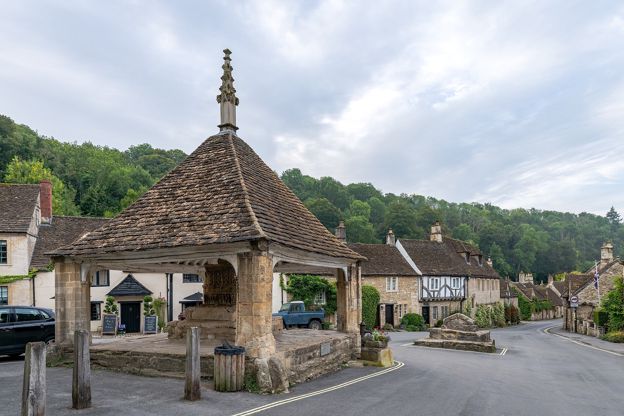
Market Cross, Castle Combe
Sight · Monument · Castle Combe
Castle Combe's medieval market cross, a stone-tiled roof on four corner posts over a central pedestal, stands where the village street begins, beside St Andrew's church. It is a scheduled monument, free to see at any time.
-
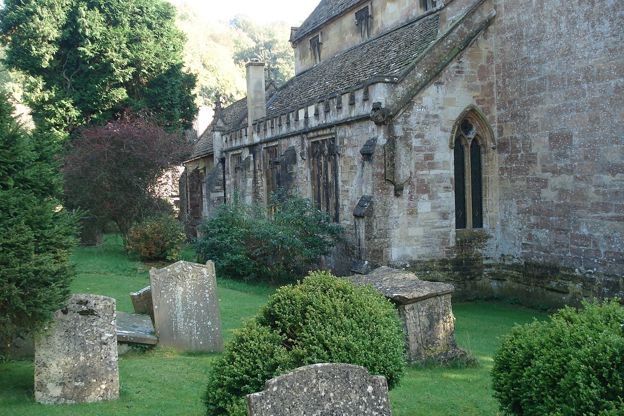
St Andrew's Church, Castle Combe
Sight · Church · Castle Combe
Castle Combe's Grade I parish church, open every day in daylight: a fifteenth-century tower begun in 1434 with help from Sir John Fastolf's will, a medieval clock with no face, and the crossed-legged effigy of Sir Walter de Dunstanville.