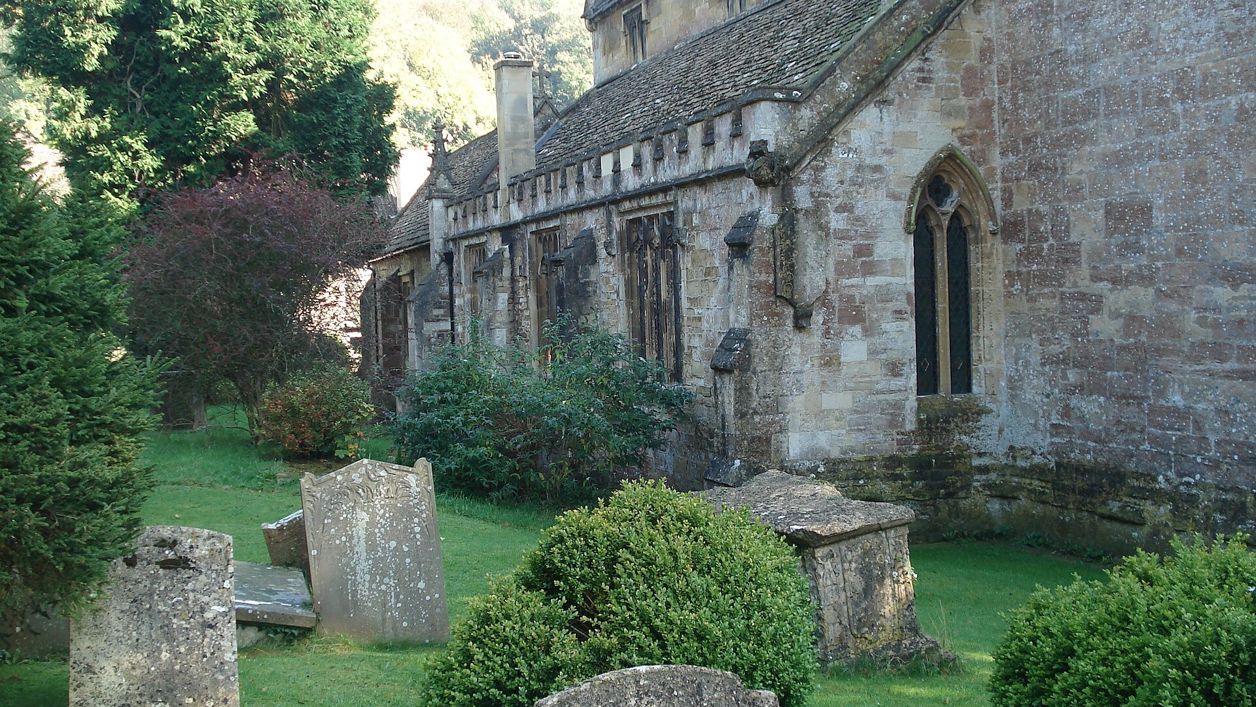
Paul Pichota, CC BY-SA 2.0, via Wikimedia Commons
St Andrew's Church, Castle Combe
Castle Combe's Grade I parish church, open every day in daylight: a fifteenth-century tower begun in 1434 with help from Sir John Fastolf's will, a medieval clock with no face, and the crossed-legged effigy of Sir Walter de Dunstanville.
Church
Castle CombeSt Andrew's is the parish church of Castle Combe, standing just behind the Market Cross at the top of the village street. Its tower was begun in 1434 with money from the village's cloth trade and the will of Sir John Fastolf. It is listed Grade I and is open every day of the year in daylight.
History
St Andrew's grew from a Norman foundation into a large church paid for by cloth. Wiltshire Council's community history finds no record of an earlier Saxon church. The church was taxed in 1291, and the first rector whose name survives, Adam of Codford, is recorded in 1301.
The cloth village
The chancel is the oldest part, from the thirteenth century, and the nave was rebuilt in the fourteenth. In the fifteenth century Castle Combe made cloth, with fulling mills worked by the By Brook, and Sir John Fastolf, who married the widowed Lady Millicent Scrope and so had charge of the estate, bought it to clothe his troops in France. Work on the tower began in 1434, paid for by the clothiers and helped by money from Fastolf's will. A carving set into the tower's east wall in about 1576 shows the tools of the trade: a comb, shears and a shuttle. One of the four pinnacles is dated 1617.
The Scropes and the rebuilding
The Scrope family owned the village for nearly five hundred years, until 1866, and from the mid fifteenth century the Lady Chapel became their chapel. By the nineteenth century the church had become unsafe, partly because graves and vaults had been dug under its walls, and in 1850 to 1851 nearly all of it except the tower was taken down and rebuilt on the old plan, at a cost of about £3,000, most of it paid by George Poulett Scrope. The pews were made from timber grown on the estate. A Gothic canopied monument of 1851 to the Scrope family is in the north-east chapel.
What to look for
The clock is the thing most visitors come to see. It has no face and works the bell instead of hands, and it is thought to have been made by a local blacksmith, perhaps in the late fourteenth century; it is often called one of the oldest working clocks in England, though its exact date is not proven. It stands at the base of the tower.
Look for these as you go round:
- The fan vault inside the tower, which the benefice compares with Bath Abbey's
- The chancel arch, carved with three statuettes under canopies on each side
- The nave capitals, carved with foliage and figures
- The tomb of Sir Walter de Dunstanville, Baron of Castle Combe, who died in 1270; his crossed legs are said to show that he went on crusade
- The effigy of a knight of about 1300 in the north-east chapel, and the Scrope arms in the glass above
- The fourteenth-century octagonal font and the fifteenth-century wooden pulpit
- A tablet of 1588 to R Gill in the north aisle
The tower holds a small thirteenth-century bell and a larger one of 1766. An intercessions book for private prayer is kept in the Knights' Chapel.
Visiting
St Andrew's is open every day of the year in daylight, and visitors are welcome in the church and churchyard; entry is free. A Church Near You lists a ramp, an accessible toilet, a hearing loop, baby changing, guidebooks and a small shop, and the church offers guided tours and historic notes you can download to a phone at the info point. Services are shared across the ten churches of the Bybrook Benefice, so check the benefice website before a visit on a Sunday morning.
The village is busiest at weekends and on bank holidays. The parish council suggests a weekday, early morning or late afternoon, or the winter months, when the street is at its quietest.
Getting there
By car, park in the visitors' car park on Dunns Lane in Upper Castle Combe, a pay car park at the top of the hill, and walk down into the village: the parish council asks visitors not to drive into the lower village. Faresaver's 95 and 95A buses run to Castle Combe from Chippenham, which has the nearest railway station, a few times a day from Monday to Saturday, with no Sunday service.
On foot, Ford, Long Dean and Castle Combe, a 4.5-mile (7.2km) circular walk from the White Hart Inn at Ford, comes up the street past the church.
Nearby
The Market Cross is a few steps away, and the street runs down to Castle Combe Bridge over the By Brook. The White Hart and the Castle Inn are both within 100m of the church door, and the Manor House is at the foot of the village. Our story on the wool churches of the Cotswolds tells how cloth paid for churches like this one, and our guide to Castle Combe covers the village.
Walks past St Andrew's Church, Castle Combe
-
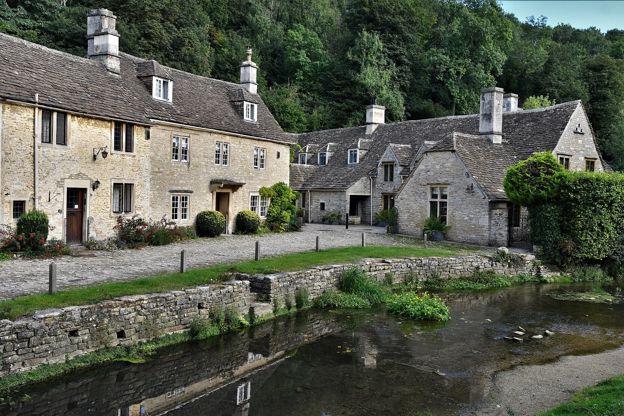
Ford, Long Dean and Castle Combe
Walk · Starts in Castle Combe · 2 hrs, 15 mins · Circular
A 4.5-mile (7.2km) circular walk from the White Hart Inn at Ford, moderate and two to two and a half hours: up the By Brook valley by Long Dean and through the woods into Castle Combe, down The Street past the Market Cross, and back through Becker's Wood and Out Woods.
Stay and eat near St Andrew's Church, Castle Combe
-
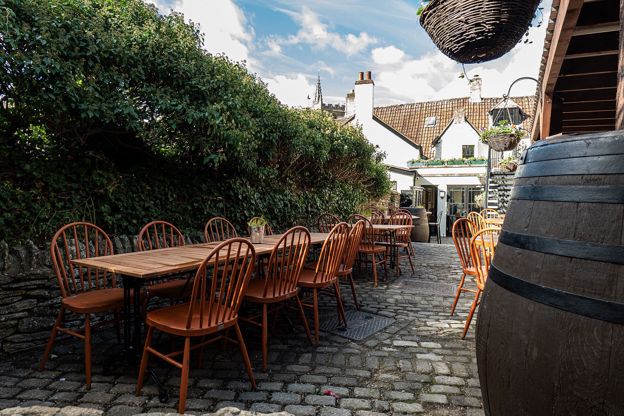
The White Hart, Castle Combe
Pubs · Castle Combe
A Grade II listed Wadworth pub on The Street in Castle Combe, open from 9am with pastries, with a courtyard garden, and dog friendly.
Dog-friendly
Verified Nov 2026
-
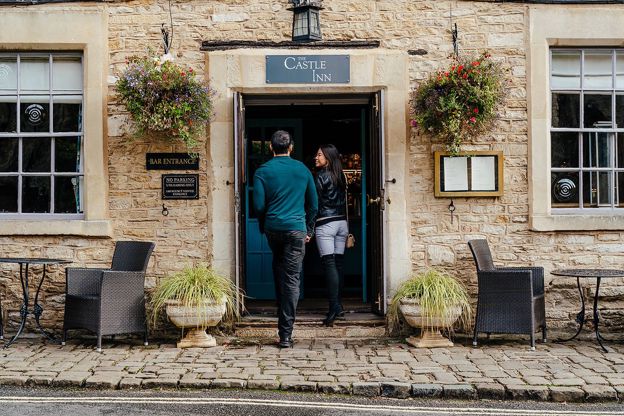
The Castle Inn
Inn · Castle Combe
An inn with 12 rooms on West Street, Castle Combe, part of the Exclusive Collection, with a menu holding two AA rosettes.
Dog-friendly
Verified Oct 2026
-
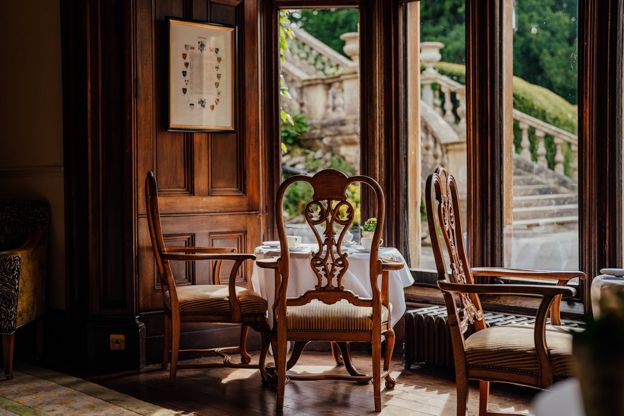
The Manor House
Hotel · Castle Combe
A hotel in a manor house of seventeenth-century origins at Castle Combe, part of the Exclusive Collection, with the Bybrook restaurant.
Dog-friendly · Wedding venues · EV charging
Verified Oct 2026
Stories about St Andrew's Church, Castle Combe
-
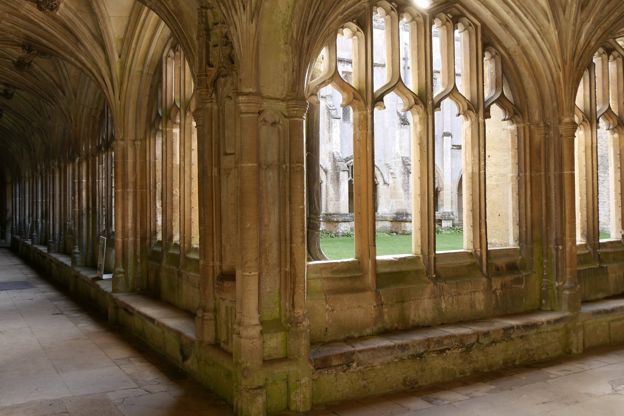
Cotswold film and TV locations
Story · Guides · 11 minute read
Where Clarkson's Farm, Downton Abbey, Harry Potter, Father Brown, Poldark, Bridget Jones and Cider with Rosie were filmed in and around the Cotswolds, what you can see today, and the claims that do not stand up.
More sights to see
-
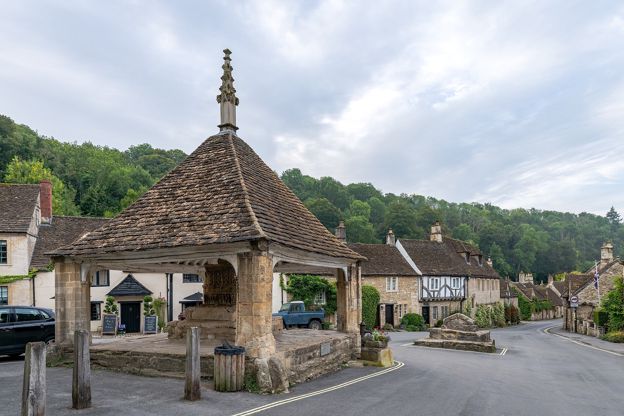
Market Cross, Castle Combe
Sight · Monument · Castle Combe
Castle Combe's medieval market cross, a stone-tiled roof on four corner posts over a central pedestal, stands where the village street begins, beside St Andrew's church. It is a scheduled monument, free to see at any time.
-
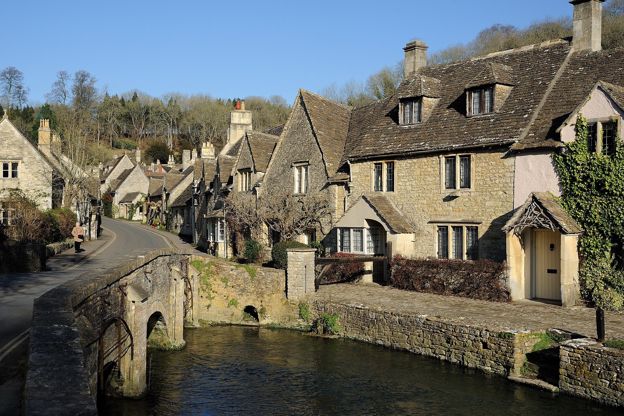
Castle Combe bridge
Sight · Bridge · Castle Combe
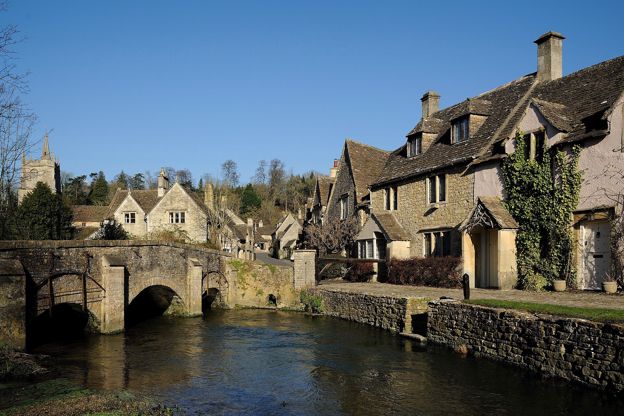
Castle Combe bridge carries the village street over the By Brook at the bottom of the hill: three low skew arches rebuilt for the Scropes in the early nineteenth century, with grooves in its buttresses for the iron screens that kept livestock in. Grade II.
-
By Brook
Sight · River · Castle Combe
The By Brook is the wooded valley stream that runs through Castle Combe and south by Long Dean, Ford and Slaughterford, in north-west Wiltshire. It once had some twenty watermill sites, for corn, cloth and paper, and public footpaths follow much of it.