The wool churches of the Cotswolds
The biggest churches in the Cotswolds stand in small towns, and the reason is sheep. Here is how the wool trade paid for them, what to look for in each, and how to see the best of them in a day.
· 11 minute read
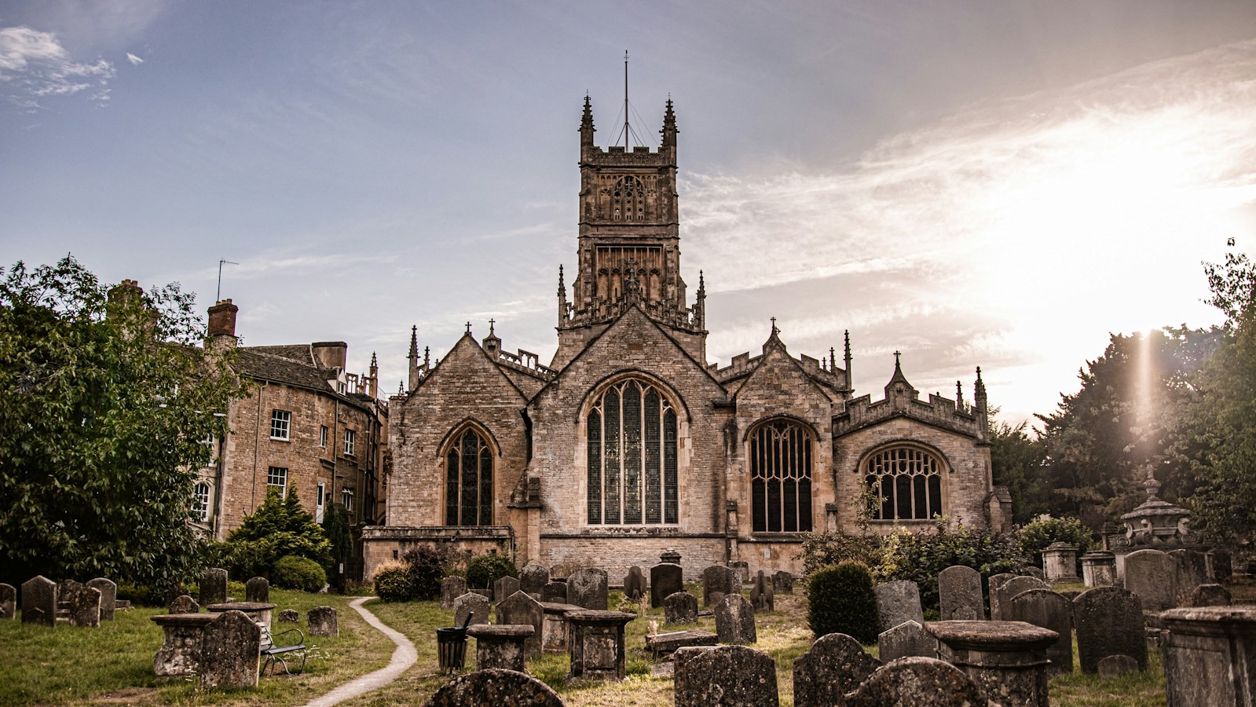
A wool church is a parish church rebuilt or enlarged in the fifteenth century on the wool merchants' money, in the tall, light Perpendicular Gothic of the time, with big windows, a clerestory and a tower out of all proportion to the town below it. The Cotswolds have the best set in England, because Cotswold wool was reckoned the finest in Europe and the men who sold it to Calais and Florence put their fortunes into stone. The great five are at Northleach, Chipping Campden, Cirencester, Fairford and Burford, all free to visit and open most days.
The trade that paid for them
The money came from fleeces. Overseas wool sales were controlled by the Merchants of the Staple, granted their monopoly by Edward III in the 1340s, and every sack went out through the staple port of Calais, taxed on the way. The Staplers bought from local dealers, the woolmen, and the woolmen of the Cotswold towns grew rich. Our story on the Cotswold wool trade follows the woolmen of Campden, Northleach and Fairford, and the cloth mills that came after them.
The woolmen spent on their parish churches, raising naves, adding clerestories (the upper row of windows that fills a nave with light) and having themselves engraved in brass on the floor, often with their feet on a woolpack and their merchant's mark, the sign they stamped on their sacks, beside them.
The sheep is the Cotswold, called the Cotswold Lion for its long curling fleece, though the breed's origins are uncertain. It declined from the 1840s, when machinery could spin shorter wool, and the Rare Breeds Survival Trust lists it as at risk on its current Watchlist; the Cotswold Sheep Society (opens in a new tab), re-formed at Aldsworth in 1966, tells its history.
Northleach: St Peter and St Paul
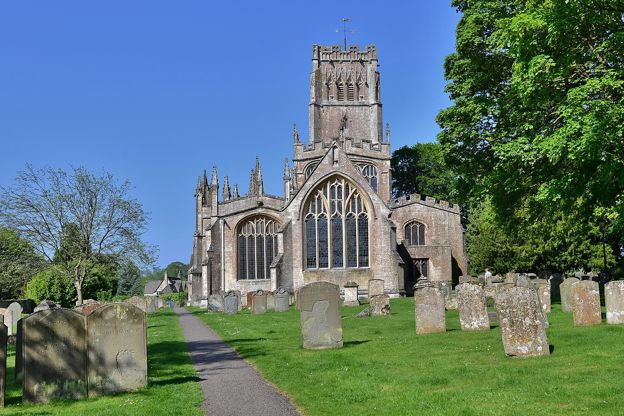
St Peter and St Paul at Northleach is the church to see first, because here the woolmen have names. It is open every day from 9am to 5pm, with level access to the main areas, and our walk to Hampnett and the Saltway starts in the Market Place beside it.
The tower, south aisle and two-storey south porch came first, in the later fourteenth century. In the middle of the fifteenth the nave was remodelled, largely at the expense of John Fortey, who died in 1458 and left £300 to carry on and complete the new work he had begun; Historic England credits him with the clerestory that floods the nave with light. William and Margaret Bicknell built the south chapel in 1489.
The brasses are the treasure, one of the largest collections of medieval brasses in England by the county history's count. Look for Thomas Fortey, who died in 1447, with his wife Agnes; John Fortey, his feet on a woolpack; William Midwinter, who died in 1501, whose woolmark the benefice reproduces; and Thomas Bush with the arms of the Calais Staple. There are free public toilets, with an accessible one, in the Market Place.
Chipping Campden: St James
St James's at Chipping Campden has the finest tower of them all, five stages at the end of Church Street, and the brass of William Grevel, perhaps the richest Cotswold wool merchant of his day. It is usually open from late morning to mid-afternoon, with a ramp in the porch, and the Court Barn Museum is a few minutes down the street.
Grevel lent Richard II 300 marks in 1397 and in his will of 1401 left 100 marks for new building work. His brass in the chancel floor, with his first wife Mariona, is about 1.6m long and calls him the flower of the wool merchants of all England. Two centuries on, Sir Baptist Hicks, who built the town's almshouses, gave the pulpit in 1612 and lies in the south chapel under a marble canopied tomb, possibly by Nicholas Stone.
Under the tower the church shows a medieval embroidered cope and a complete set of altar hangings, which the church describes as said to be the oldest in the country in their original church. Its website gives visiting hours of 11am to 4pm in spring and summer and 11am to 3pm in autumn and winter, Sundays from 12.30pm, and it can close for weddings, funerals and concerts, so check before a special trip.
Cirencester: St John the Baptist
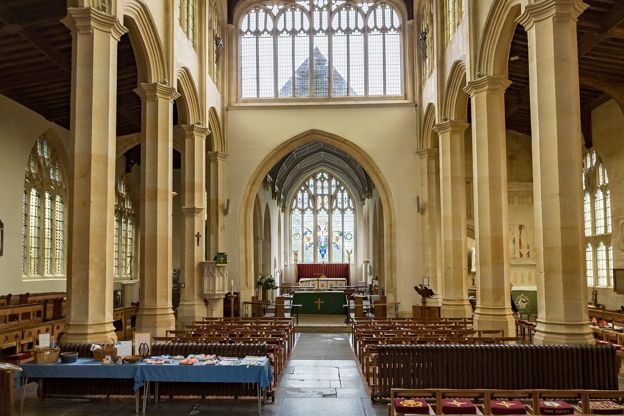
St John the Baptist fills the north side of Cirencester's Market Place and is the largest of the wool churches, with a three-storey porch that served as the town hall. The parish gives its hours as 10am to 5pm on weekdays (4pm or 5pm in places), and it also opens on Saturdays from 10am to 5pm and on Sundays from 11.30am to 4pm. There is level access through the north door, and free guided tours, six a week at 10.30am or 2.30pm, run from mid-March to the end of October with no need to book.
It grew beside a great abbey, founded in 1117 and dissolved in 1539. The tower came early in the fifteenth century, the Trinity Chapel from 1430, St Catherine's Chapel with its fan vault dated 1508, and the nave was rebuilt from 1515 to 1530, late in the life of the trade. The south porch was enlarged about 1490 to 1500, townspeople leaving money for it in their wills from 1453 to 1501; its fan vault is the one to look up at.
In a recess at the east end of the south aisle is the Boleyn Cup, a gilt silver cup of 1535. The parish says Anne Boleyn gave it to Dr Richard Masters, who had cared for her daughter, the future Elizabeth I, and that he gave it to the church in 1561; other accounts have it reaching Masters through Elizabeth herself, so hold the story lightly.
Fairford: St Mary
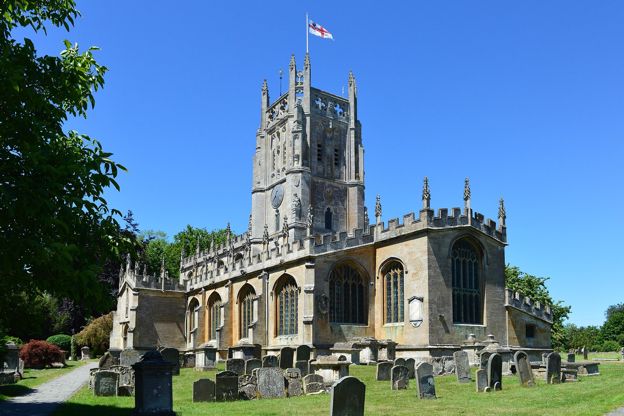
St Mary's at Fairford is the wool church to see for glass: 28 windows made about 1500 to 1515, which the parish calls the only complete set of late medieval glass left in any English parish church. It is open daily, 10am to 5pm in summer (Sundays from 11.30am) and to 4pm in winter, with a steward, free audio guides and binoculars for the high windows.
John Tame, a wool merchant and, the church says, a member of the Calais Staple, had leave to pull down all but the tower and build a much larger church around it, which is why the tower stands in the middle; the church says the work was finished in 1497. Tame died in 1500 and his son Edmund saw the glazing through by 1515. The church says the glass was probably made in London under the direction of Barnard Flower, the King's Glazier, and it runs from the Old Testament through the life of Christ and his mother, ending with judgement and mercy in the three west windows.
A storm in November 1703 damaged the west windows, the glass was taken out in 1940 and stored in the cellars of Fairford Park for the war, and a restoration from 1988 to 2010 added clear protective glazing outside. Come on a bright morning and allow an hour.
Burford: St John the Baptist
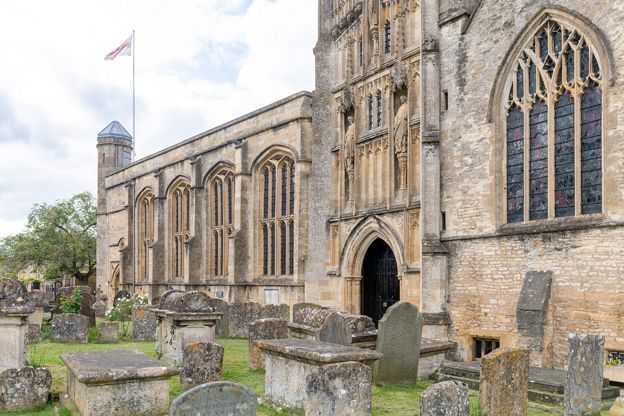
St John the Baptist stands on Church Green at the bottom of Burford by the Windrush, a Norman church grown into a wool church by the late fifteenth century. It is open Monday to Saturday 10am to 4pm and Sunday 1pm to 4pm, with a ramp, an accessible toilet and a hearing loop; our Burford town walk passes it.
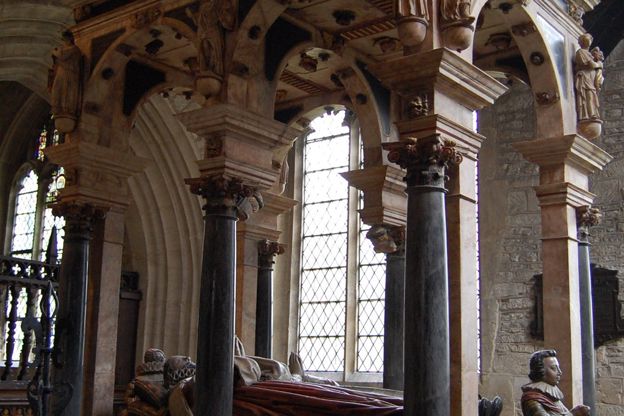
The crossing tower is of the twelfth century, and the fifteenth century remodelled the nave with tall windows and a clerestory and built the three-storey south porch. The monuments are the draw: the Tanfield tomb of 1628, with its cadavers under the effigies and its iron railings, and the memorial to Christopher Kempster, the quarryman who worked for Wren. G E Street's heavy restoration in the 1870s was one of the cases that led William Morris to found the Society for the Protection of Ancient Buildings.
In May 1649 the church was a prison. Soldiers of Parliament's army who had mutinied over pay, the Levellers, were surrounded at Burford and about 340 were shut inside; one of them, Anthony Sedley, carved his name into the lead of the font, with the date 1649. The church says the ringleaders were taken out and shot on 16 May while the rest watched from the Lady Chapel roof, and a plaque on the outside wall remembers them.
Winchcombe: St Peter and its grotesques
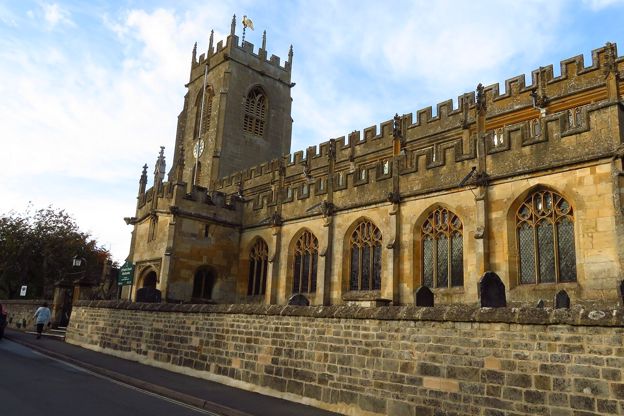
St Peter's at Winchcombe was built in one campaign, about 1458 to 1468, and is a church to walk round outside first, for the carved heads along its walls, 40 or so by the National Churches Trust's count. The parish gives its hours as 9.30am to 5pm in summer and to 4pm in winter, every day, and it has a ramp and an accessible toilet.
It was not wool money alone: Abbot William of Winchcombe paid first, then Ralph Boteler, Lord Sudeley, who was rebuilding Sudeley Castle in the same years. Many of the heads are grotesques rather than gargoyles, since they carry no water spout. Tradition says some are caricatures of local people, and one by the south porch is said to be Boteler himself, a story rather than a record.
Stow-on-the-Wold: St Edward and the yew door
St Edward's, beside the Market Square in Stow-on-the-Wold, is known for one thing: the thirteenth-century north door framed by two old yews. It is open every day, 9am to 5pm in summer and to dusk in winter, and asks visitors for a donation of £4 a person (2026).
The fifteenth century gave it the four-stage tower you see across the wold and its clerestory, so it belongs among the wool churches even if its door is older. There is no evidence that the door inspired the doors of Moria in Tolkien; it is a local legend, and the door needs no help. The benefice's directions (2013) give a step-free way into the churchyard along the passage behind Huffkins on Church Street.
The Cotswolds Info newsletter
Events, new places and the best of the season, about once a month. Unsubscribe at any time.
Lechlade: St Lawrence and Shelley
St Lawrence's at Lechlade was rebuilt in Taynton stone in the later fifteenth century, its spire the landmark across the Thames meadows, and its churchyard moved Shelley to a poem in 1815. The building has been closed for restoration since January 2026, and the parish expects to reopen it in time for Christmas 2026, though the churchyard and Shelley's Walk stay open.
The vicar, Conrad Nye, recorded in 1470 that he and the parishioners had rebuilt the nave and aisles, and the town's wool trade is in its brasses, among them John Townsend, a wool merchant who died in 1458. Shelley, Mary Godwin and Thomas Love Peacock came up the Thames in 1815, stayed at the New Inn and walked here; A Summer Evening Churchyard, Lechlade, Gloucestershire was published the next year, and the path across the meadows carries his name. The parish website (opens in a new tab) has the latest.
Painswick, Bibury, Chedworth and Tetbury
Four more churches show what the wool churches are and are not: Painswick, known for its churchyard; Bibury, Saxon and older than the trade; Chedworth, a village church with a woolman's name on it; and Tetbury, rebuilt in the Georgian age, when the wool had gone.
St Mary's at Painswick has a nave of about 1480, but most people come for the churchyard of clipped yews and carved table tombs; legend says 99 yews, and nobody has published a reliable count. It is open daily, 9am to 6.30pm in summer and to 4.30pm in winter, with a ramp into the porch. St Mary's at Bibury keeps eleventh-century walling and Saxon carving, and some thirteenth-century glass in a small window by the altar. It is usually open from about 8am to 6pm, later in summer, and it is much quieter than the river.
At Chedworth, St Andrew's carries an inscription of 1461 to Richard Sely on a buttress by the porch and a stair turret dated 1485, and we could not confirm when it is open. St Mary's at Tetbury is the contrast: the medieval church was pulled down in 1777 and Francis Hiorn rebuilt it by 1781 as a tall Georgian Gothic hall with box pews and a vault on slender wooden columns. It is open daily, 9am to 5pm. For a church William Morris saved, St John the Baptist at Inglesham, south of Lechlade, is in the care of the Churches Conservation Trust and open daily.
The best for brasses, glass, monuments and towers
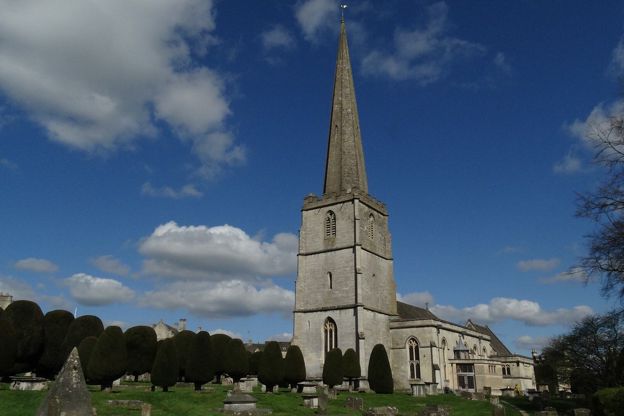
For brasses go to Northleach, then Campden for Grevel; for glass, Fairford, with the medieval fragments at Winchcombe and Bibury's early glass as footnotes; for monuments, Burford for the Tanfields and Campden for Hicks; for a tower, Campden from the valley, Cirencester from the Market Place and Stow from the wold. For the feel of the trade itself, Northleach on a weekday morning has no rival.
A wool-church route by car
The five great churches lie on a loop that fits a long day's driving: Cirencester, Fairford, Burford, Northleach and Chipping Campden, with Stow on the Fosse Way between the last two. In the tour season start at Cirencester for a 10.30am tour, and watch the clock for Campden, whose church closes at 4pm in spring and summer and 3pm in autumn and winter.
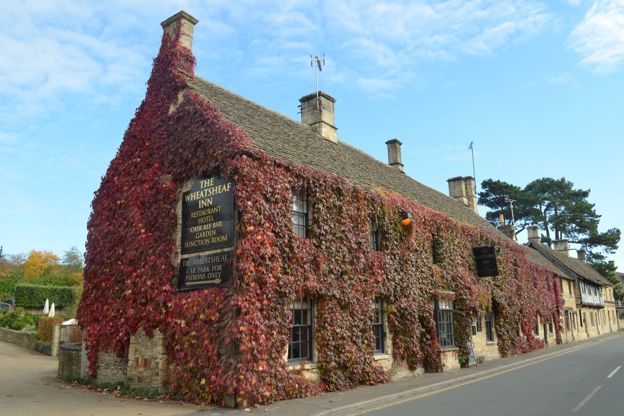
From Cirencester take the A417 east to Fairford and on to Lechlade, then the A361 north to Burford, where the Guildenford car park is free. The A40 west and the A429 north bring you to Northleach, with the Wheatsheaf on West End, a few minutes' walk from the church, for lunch, and the Fosse Way carries on to Stow. Campden is about 10 miles (16km) further north. With two days, add Winchcombe and Painswick to the west.
The Cotswold Way's churches on foot
The Cotswold Way starts at the marker stone by the Market Hall in Chipping Campden, a few minutes from St James's, and passes a church worth the door on most of its northern days. Stanton, Hailes, Winchcombe and Painswick are the ones to plan a stop around.
From Campden the Way goes to Broadway, where St Eadburgha's is a mile out on the Snowshill road, then to Stanton, whose church stands by the cross on the route. The third day passes the little painted church at Hailes and comes into Winchcombe by St Peter's, and further south the path drops through Painswick's churchyard between the yews.
Opening, access and how to behave
Most of the wool churches open every day in daylight, usually from about 9am or 10am to 4pm or 5pm, and all are free, though each asks for a donation towards its upkeep. Each publishes its own hours on its website or on A Church Near You (opens in a new tab), and those are the ones to trust over a guidebook.
On access, Northleach, Campden, Burford, Winchcombe, Painswick and Bibury list a ramp or level access to the main areas, Burford, Winchcombe and Bibury list an accessible toilet, and Cirencester describes its wheelchair access as partial; porches often have a step or two, so the ramp is the thing to ask about. Towers are stairs only, and Northleach, Burford, Winchcombe and Bibury tell the National Churches Trust they are dog friendly.
These are working parish churches, and services, weddings and funerals come first, so a visit can be cut short or a door found locked; Sunday mornings are for the congregation. Keep voices down if someone is praying, do not photograph a service, and put something in the box. To see what happened to the wool, Dunkirk Mill near Nailsworth shows its waterwheel driving textile machinery when it reopens in the spring after its winter closure, and our story on the Arts and Crafts movement follows the craftsmen who came four centuries after the woolmen.
Mentioned in this story
The places, sights and walks in this story, each with a page of its own: what it is, when to go and how to get there.
-
Court Barn Museum
Museums and galleries · Chipping Campden
-
Wheatsheaf Inn
Inn · Northleach
-
The Lamb Inn
Inn · Burford
-
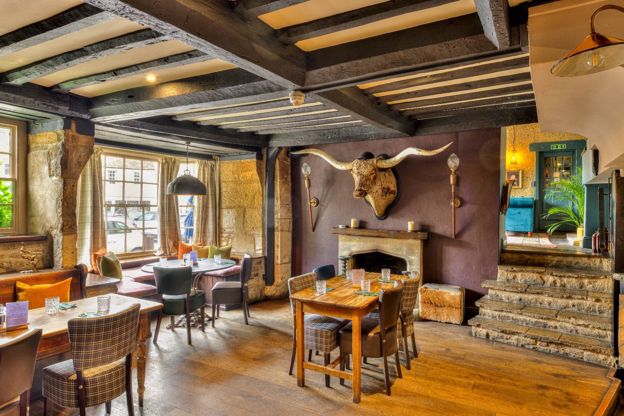
The Bull Hotel
Inn · Fairford
-
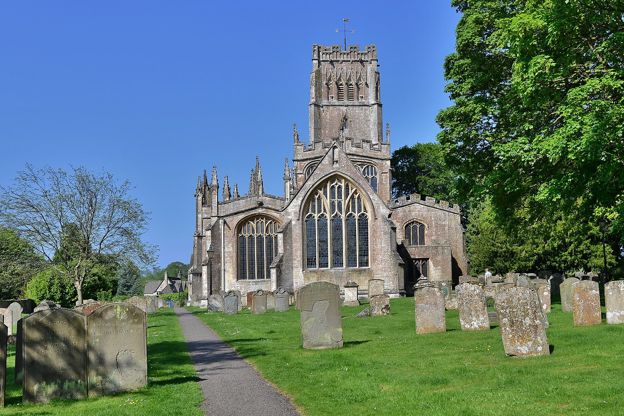
St Peter and St Paul, Northleach
Sight · Church · Northleach
-
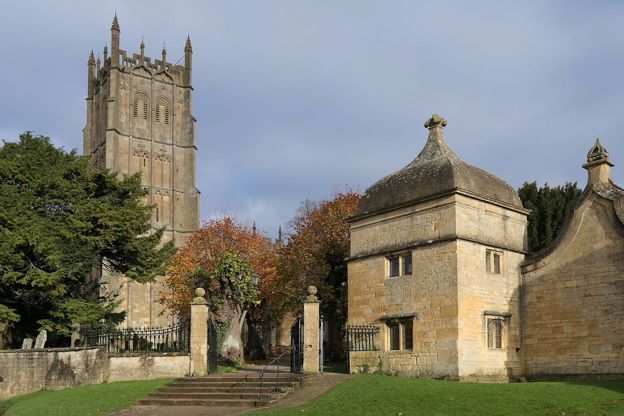
St James's Church, Chipping Campden
Sight · Church · Chipping Campden
-
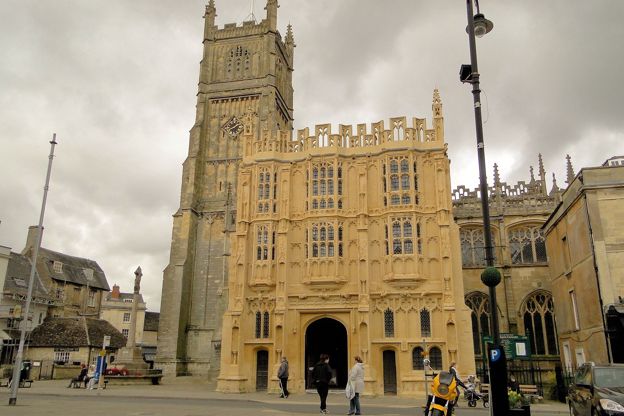
St John the Baptist, Cirencester
Sight · Church · Cirencester
-
St Mary's Church, Fairford
Sight · Church · Fairford
-
St John the Baptist, Burford
Sight · Church · Burford
-
St Peter's Church, Winchcombe
Sight · Church · Winchcombe
-
Northleach, Hampnett and the Saltway
Walk · Starts in Northleach · 2 hrs · Circular
-
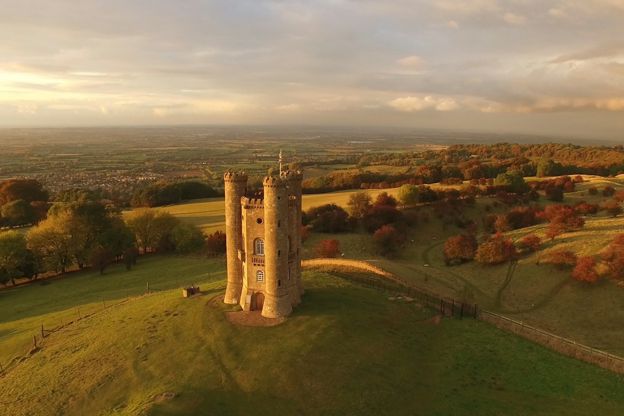
Burford's lanes and fields
Walk · Starts in Burford · 1 hr · Circular
-
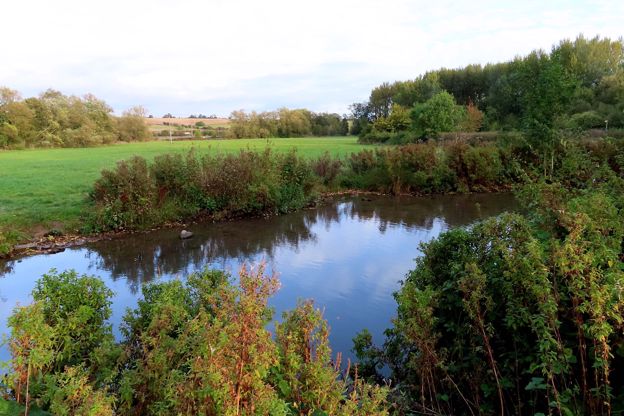
The Cotswold Way
Walk · Dog-friendly
Places to stay near Northleach
-
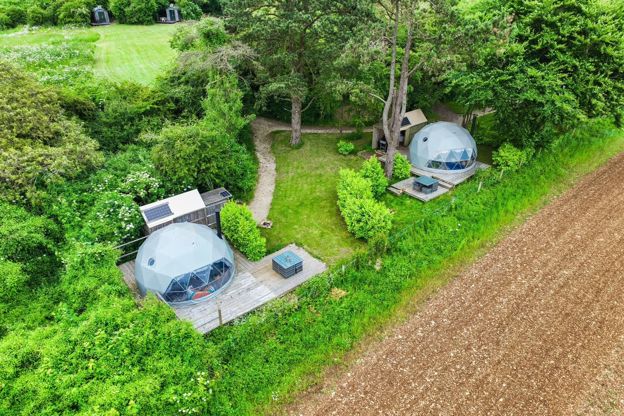
Far Peak Camping
Camping · Northleach
A seasonal campsite with tent and hook-up pitches, tipis, bell tents, shepherd huts and glamping domes beside the Far Peak climbing centre, about a mile from Northleach.
Dog-friendly · Family-friendly
Verified Oct 2026
-
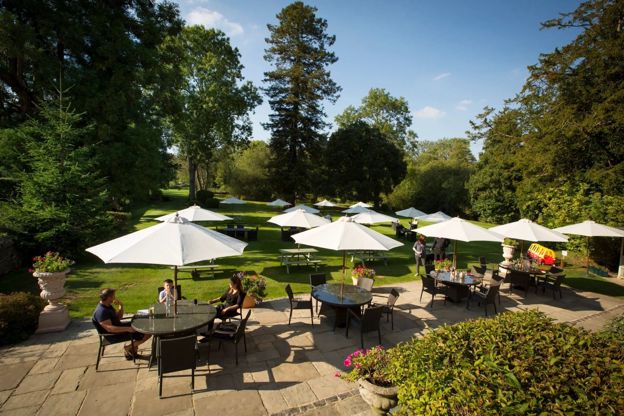
The Inn at Fossebridge
Pubs · Chedworth
An inn, a hostelry since the early seventeenth century by its own account, where the Fosse Way crosses the River Coln, between Cirencester and Northleach, with 4 acres of riverside gardens, log fires and seven rooms.
Dog-friendly · Walker-friendly
Verified Nov 2026
-
The Swan Hotel
Hotel · Bibury
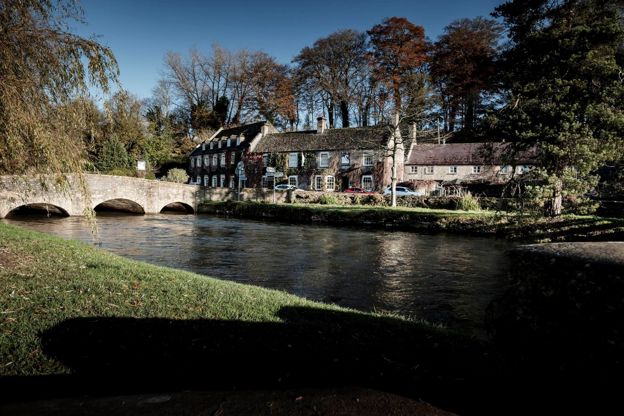
A former coaching inn by the bridge over the River Coln in Bibury, part of Cotswold Inns and Hotels, with a brasserie, a lift, a free car park and dog-friendly rooms.
Dog-friendly · Wedding venues
Verified Nov 2026
Read next
-
The Arts and Crafts movement in the Cotswolds
Story · History · 10 minute read
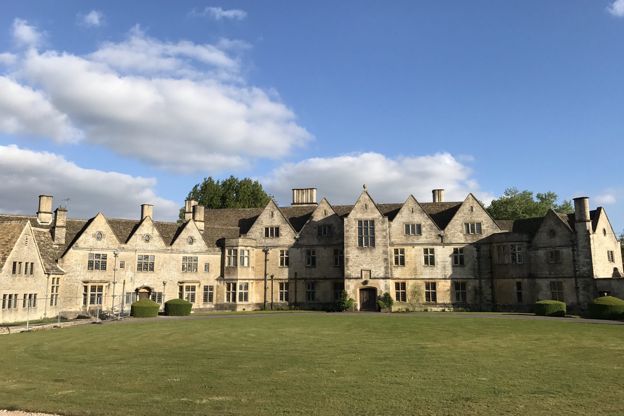
How Ashbee's Guild of Handicraft, Gimson and the Barnsleys, Rodmarton Manor, Gordon Russell and the gardens at Hidcote made the Cotswolds a home of Arts and Crafts, and where to see it now.
-
The Roman Cotswolds
Story · Guides · 10 minute read
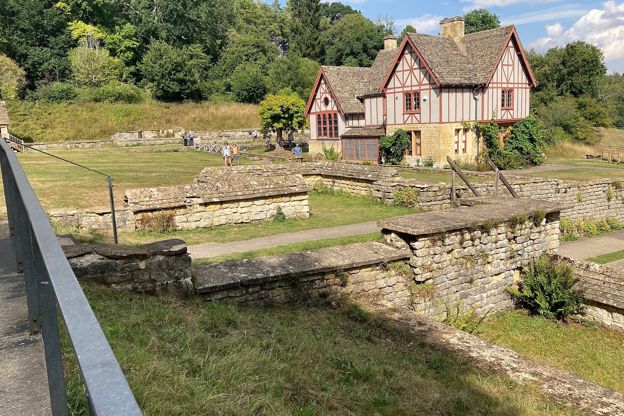
Corinium at Cirencester, Chedworth Roman Villa, the amphitheatre, the Fosse Way and the villas you can and cannot see: where to find Roman Britain in the Cotswolds, by car and by train.
-
Templars and Hospitallers in the Cotswolds
Story · Strange Things · 5 minute read
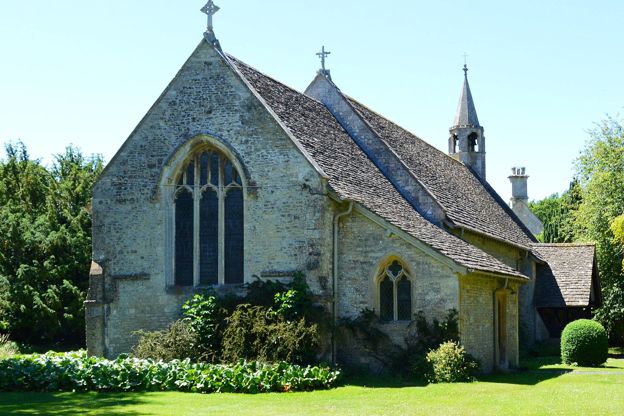
The crusading orders held land in the Cotswolds: the Templars at Temple Guiting until their fall in 1308, and the Knights Hospitaller at Quenington until 1540.