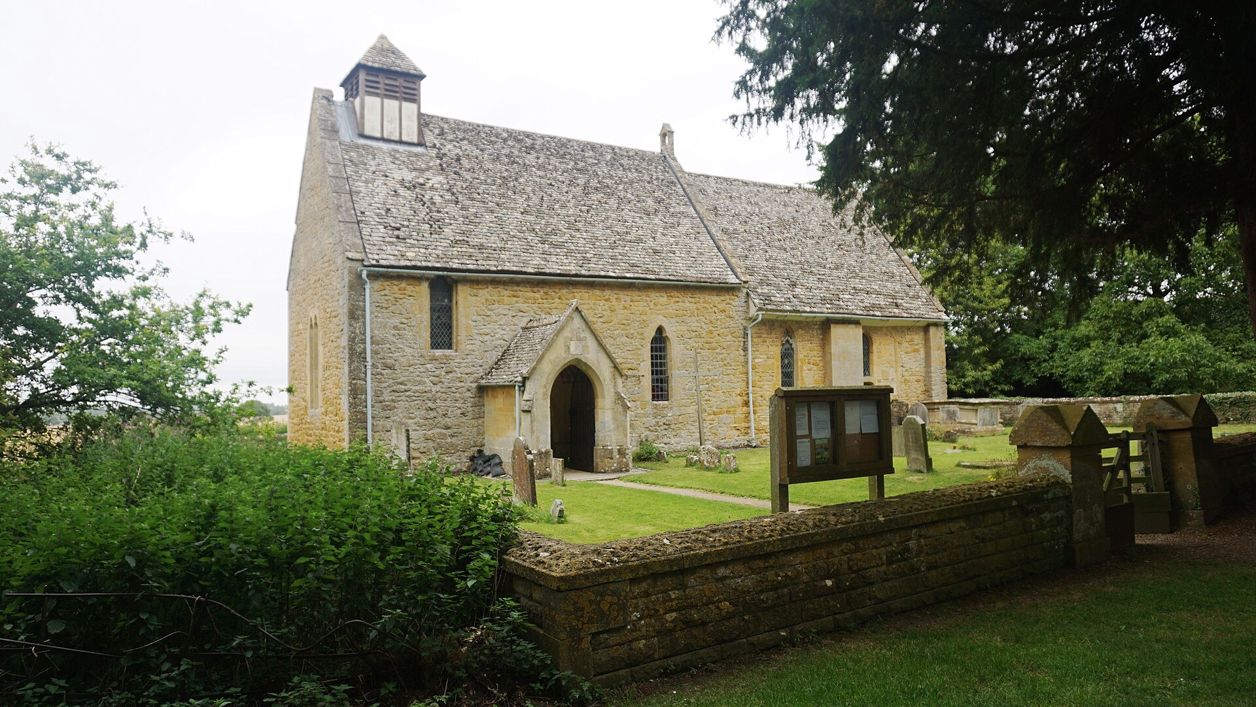
Bill Boaden, CC BY-SA 2.0, via Wikimedia Commons
Hailes Church
A little twelfth-century church at Hailes, near Winchcombe, older than the abbey across the lane, with fourteenth-century paintings of heraldry and beasts, a giant St Christopher, medieval tiles and screen, and seventeenth-century pews. Grade I.
Church
WinchcombeHailes church stands on the lane opposite the ruins of Hailes Abbey, about 2 miles (3km) north-east of Winchcombe. It is a small twelfth-century church, older than the abbey, and inside it keeps medieval wall paintings, tiles and a screen, and pews arranged in the seventeenth century. Its dedication is unknown, and it is listed Grade I.
History
The church is twelfth century, with work of the fourteenth, fifteenth and seventeenth centuries, a timber-framed belfry and a porch added in 1905, with H Andrews named on its datestone. The walk leaflet says it is about half a century older than the abbey, which Richard, Earl of Cornwall, founded after a vow made in a storm at sea; the first monks came in 1246.
The abbey and the pilgrims
In 1270 Edmund of Cornwall gave the abbey a relic of the Holy Blood, and by 1277 the east end of the abbey church had been rebuilt for the pilgrims who came to see it. The leaflet says the little church served the visitors and pilgrims who could not use the abbey church. The abbey was surrendered on Christmas Eve 1539 and fell to ruin, but the church stayed in use, and it now belongs to the parish of Toddington, Stanway and Didbrook with Hailes. Its interior, the listing says, has hardly changed since the seventeenth century.
What to look for
The paintings are the reason to come. In the chancel, those the listing dates to the fourteenth century include:
- On the north side, a grid of coats of arms, a saint painted in a window recess, and mythical beasts over the windows
- On the south side, a diagonal grid of lions and eagles
- Figures above the wallplate, and further traces on the chancel's west wall
In the nave, a giant St Christopher fills part of the north wall, and a hunting scene runs along the south wall. The walk leaflet dates the paintings to the thirteenth century, the listing to the fourteenth.
Underfoot are medieval tiles, which the leaflet says came from the abbey, and memorial slabs. The chancel screen is medieval, with tracery heads and a beam carved with vine scrolls, and in the chancel, seventeenth-century pews stand against the screen in what the listing calls a Puritan arrangement, with the seats gathered round the communion table. Look also for the plain pews with moulded tops, probably sixteenth century, the panelled box pew at the back of the nave, the square pulpit with its octagonal sounding board, the double piscina and two carved cross slabs beside the communion table.
Visiting
We have not confirmed the church's opening hours, so check with the parish before a special trip. The church is small and the paintings are faint, so a bright day helps. Hailes Abbey, across the lane, is owned by the National Trust and run by English Heritage, and when we checked it opened on the first weekend of every month for tours booked online with English Heritage.
Getting there
Hailes is reached by a lane north-east of Winchcombe. Hayles Fruit Farm, a short way along the lane (GL54 5PB, closed Mondays), has walkers' parking; the walk leaflet gives a £2.50 fee taken off what you spend in its shop or tearoom, so ring to check. The abbey's free car park is by the church, across a narrow lane used by farm vehicles. The Pulhams 606 bus between Cheltenham and Chipping Campden runs Monday to Saturday, with its nearest stops in Toddington, about a mile away. On foot, the Hailes and Beckbury Camp walk comes down the lane past the church and the abbey near its end, and the Cotswold Way passes on its way into Winchcombe. Our guide to the Cotswold Way from Wood Stanway to Winchcombe covers that stage.
Nearby
The ruins of Hailes Abbey are across the lane, and Hayles Fruit Farm, with its tearoom, farm shop and cider, is a few minutes' walk. Up on the scarp, Beckbury Camp has the stone seat where Thomas Cromwell is said to have watched the abbey burn. The Pheasant Inn at Toddington is a short drive, and in Winchcombe St Peter's Church is the town's great fifteenth-century church.
Walks past Hailes Church
-
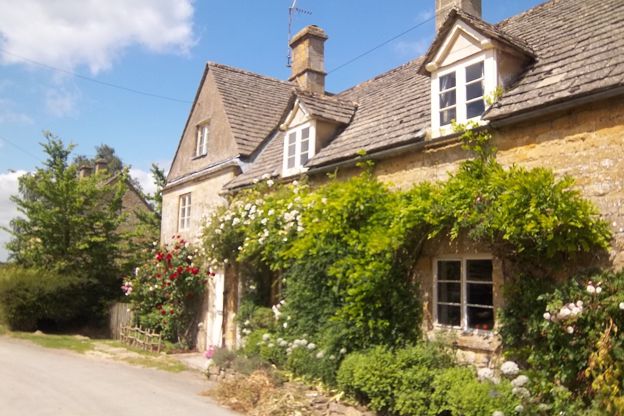
Cotswold Way: Wood Stanway to Winchcombe
Walk · Starts in Stanway · 3 hrs, 15 mins · Dog-friendly
A 5.4-mile (8.8km) one-way walk on the third section of the Cotswold Way, from Wood Stanway to Winchcombe, moderate and about three and a quarter hours: a steep climb to the top, Beckbury Camp, the old track down to Hailes Abbey, then lanes into the town.
-
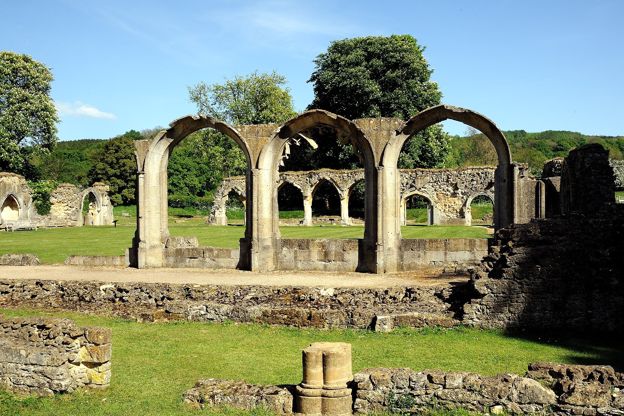
Hailes and Beckbury Camp
Walk · Starts in Winchcombe · 2 hrs, 15 mins · Circular
A 3.5-mile (5.6km) circular walk from Hayles Fruit Farm, moderate and about two and a quarter hours: up the monks' track to Beckbury Camp, down the edge of a wood over three stiles towards Wood Stanway, and back past Hailes church and the abbey ruins.
-
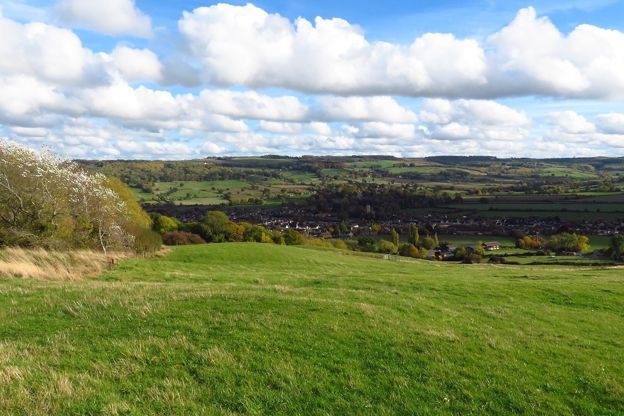
Winchcombe and Belas Knap
Walk · Starts in Winchcombe · 2 hrs, 45 mins · Circular
A 5.5-mile (8.8km) moderate loop of two to two and three quarter hours from Winchcombe, up the Cotswold Way and through the woods to Belas Knap, the Neolithic long barrow, then home on the Winchcombe Way by Wadfield Farm and Sudeley, with two stiles and a narrow road.
Stay and eat near Hailes Church
-
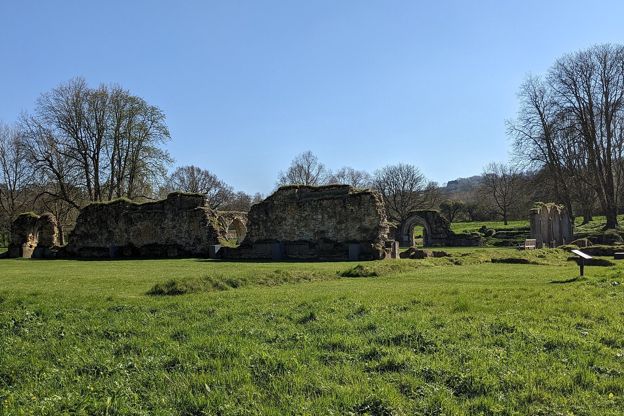
Hailes Abbey
Historic houses and heritage · Winchcombe
The ruins of a Cistercian abbey near Winchcombe, founded in 1246, once a place of pilgrimage, now open for booked tours on the first weekend of each month.
Walker-friendly
Verified Nov 2026
-
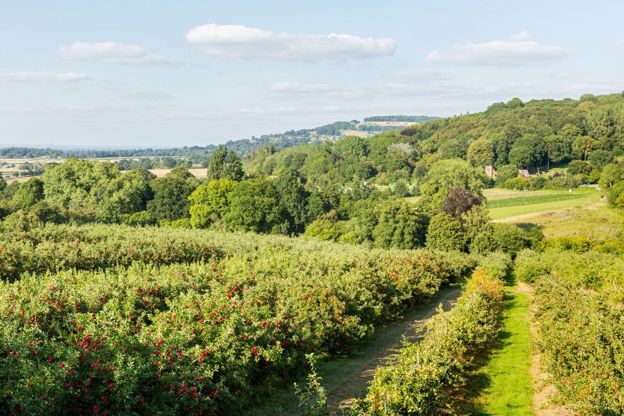
Hayles Fruit Farm
Farm shops and delis · Winchcombe
A fruit farm at Hailes, about 3 miles by road from Winchcombe, with a farm shop, the Orchard Kitchen tearoom, pick your own and its own Hayles cider.
Family-friendly · Walker-friendly
Verified Nov 2026
-
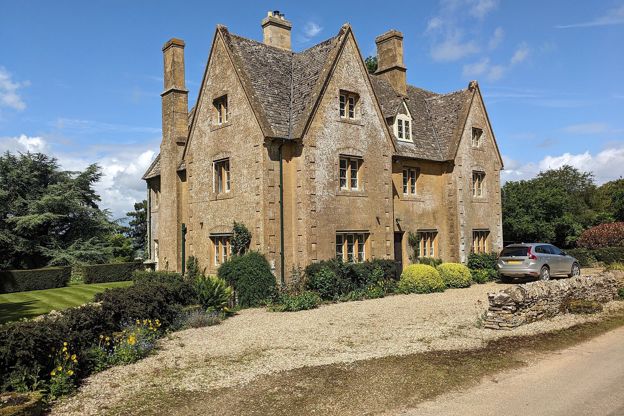
North Farmcote
B&B · Winchcombe
Bed and breakfast in a farmhouse above Winchcombe, built around 1840, its owners say, as a dower house for Lord Sudeley's mother.
Walker-friendly
Verified Oct 2026
Stories about Hailes Church
-
The Cotswolds in March
Story · Guides · 8 minute read
The Cotswolds in March: daffodils, lambs and the gardens reopening, the Cheltenham Festival week to plan around, Mothering Sunday and an early Easter, what opens when, three walks for the first dry days, and a day out from Winchcombe.
More sights to see
-
Beckbury Camp, Hailes
Sight · Hill fort or barrow · Winchcombe
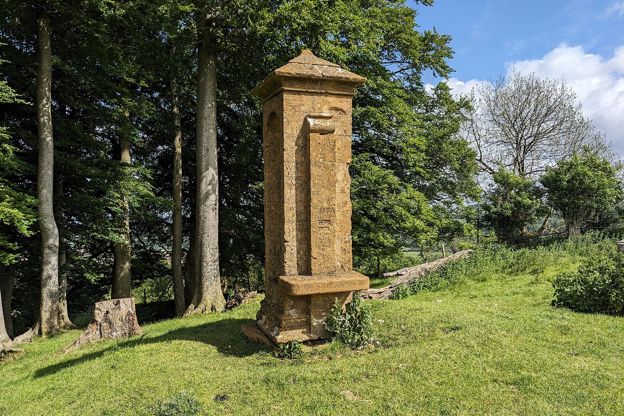
An Iron Age hillfort on the Cotswold edge above Hailes, near Winchcombe, its bank still up to 4m high, with the nineteenth-century monument called Cromwell's Seat, where the story goes that Thomas Cromwell watched Hailes Abbey burn. On the Cotswold Way.
-
St Peter's Church, Winchcombe
Sight · Church · Winchcombe
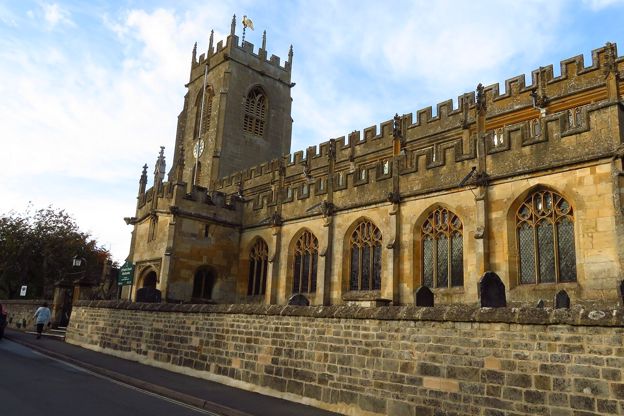
St Peter's is Winchcombe's Grade I parish church, built in one campaign in about 1458 to 1468, with some 40 carved grotesques round its walls, a fan-vaulted tower and two stone coffins tied to the St Kenelm story. Usually open daily.
-
River Isbourne
Sight · River · Winchcombe
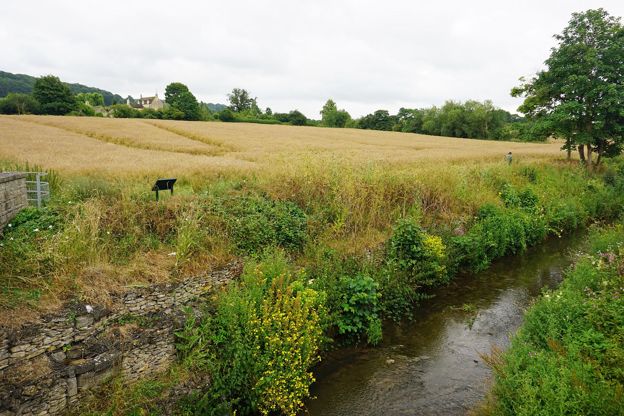
The River Isbourne rises at a spring on Cleeve Hill above Winchcombe and runs north past Postlip, Winchcombe, Toddington and Sedgeberrow to join the Avon at Evesham. A waymarked path of some 14 miles, the Isbourne Way, follows it.