Templars and Hospitallers in the Cotswolds
Two of the great military orders of the crusades kept houses in the Cotswolds. One left only a name; the other left a gateway you can still see.
· 5 minute read
The Knights Templar and the Knights Hospitaller were monks and soldiers, founded to protect pilgrims to the Holy Land and paid for by estates across Europe. Both held land in the Cotswolds.
The Templars at Temple Guiting
The Templars founded a preceptory, a house managing their estates, at Guiting in the middle of the twelfth century, on land given by Gilbert de Lacy and Roger de Waterville; in 1185 it was valued at £11 10s 6½d (opens in a new tab). The village still carries their name: Temple Guiting, near Guiting Power. When the English Templars were arrested in January 1308, John de Coningston, the preceptor of Guiting, was sent to London and later made to do penance in monasteries in the diocese of Worcester.
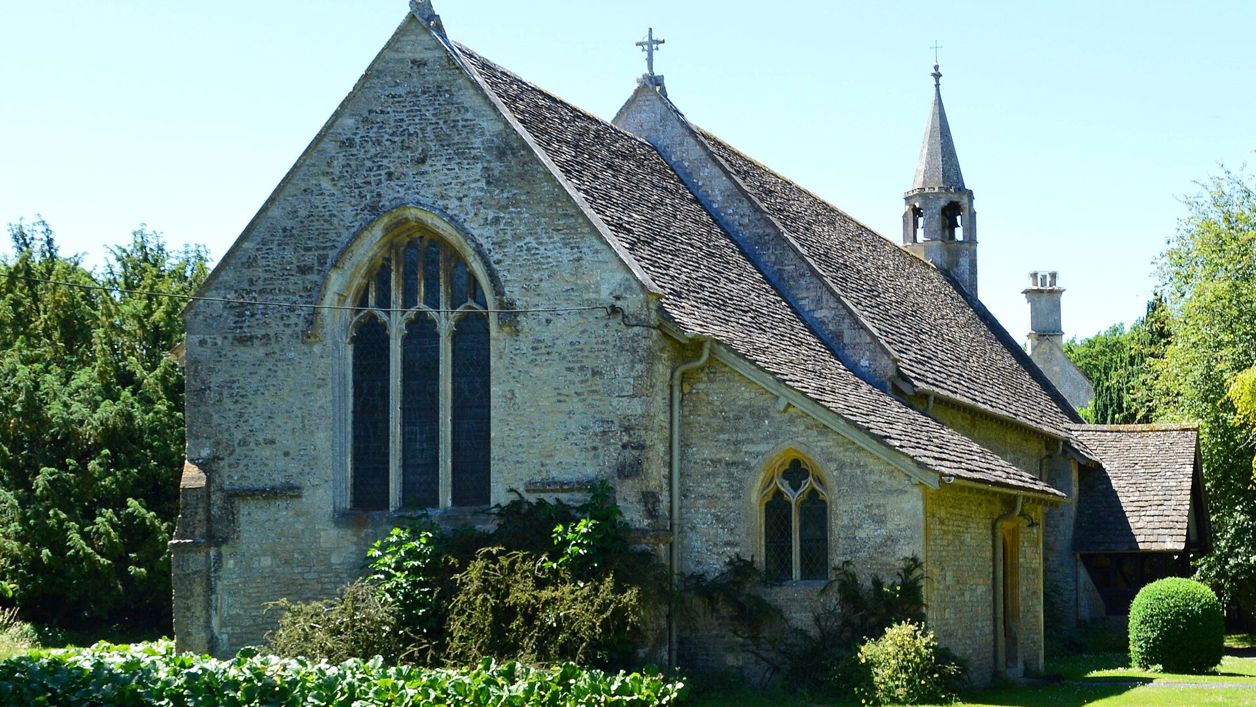
The church of St Mary at Temple Guiting, listed Grade I (opens in a new tab), has a twelfth-century chancel. It is often said that the Templars built it, but there is no record of that. The listing does note a carved cross of the Knights Templar on one of the corbels along the north side of the chancel.
The Hospitallers at Quenington
The Knights Hospitaller founded their preceptory at Quenington, near Coln St Aldwyns, in or about 1193 (opens in a new tab), on a manor given by Agnes de Lucy and her daughter Sibilla. In 1338 it housed a preceptor, two other knights, a chaplain, three clerks and servants. The Pope granted the Templars' lands to the Hospitallers in 1312, but they struggled to get them, and never gained the manor of Guiting.
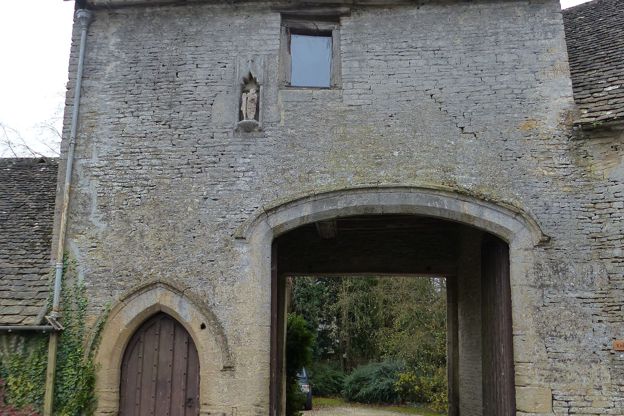
Quenington was surrendered in 1540, with the rest of the order's English houses. Its gatehouse survives, listed Grade I (opens in a new tab), and so does a dovecote, also Grade I, which the listing says is reputed to be one mentioned in 1338, though some think it seventeenth century. Both stand in the grounds of a private house, so see them from the road. The gatehouse stands beside St Swithin's church, and is seen from Church Road.
The Cotswolds Info newsletter
Events, new places and the best of the season, about once a month. Unsubscribe at any time.
What is not true
You may read of Templar treasure, or the Ark of the Covenant, hidden in the Cotswolds. There is no evidence for any of it.
Places to stay near Guiting Power
-
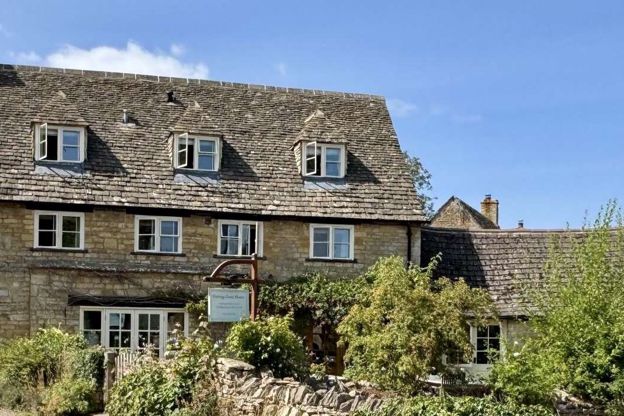
Guiting Guest House
B&B · Guiting Power
An adults-only guest house with six rooms in a seventeenth-century farmhouse in Guiting Power, kept free of pets, with an honesty bar and walking breaks.
Walker-friendly
Verified Nov 2026
-
The Hollow Bottom
Inn · Guiting Power
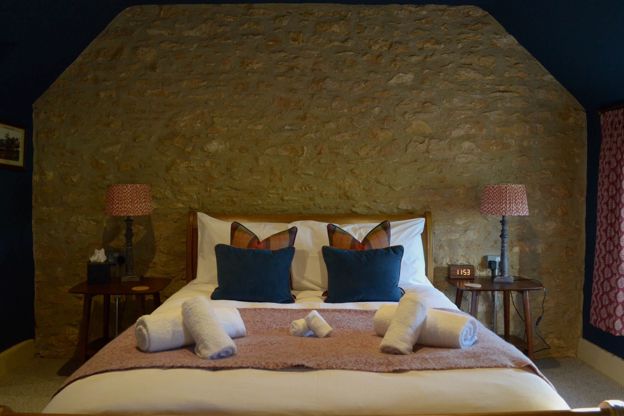
A racing pub with six bedrooms in Guiting Power, once Ye Olde Inn, bought in 1996 by Nigel Twiston-Davies and Raymond Mould, with dogs welcome throughout.
Dog-friendly
Verified Oct 2026
-
Cotswold Farm Park Holidays
Glamping · Guiting Power
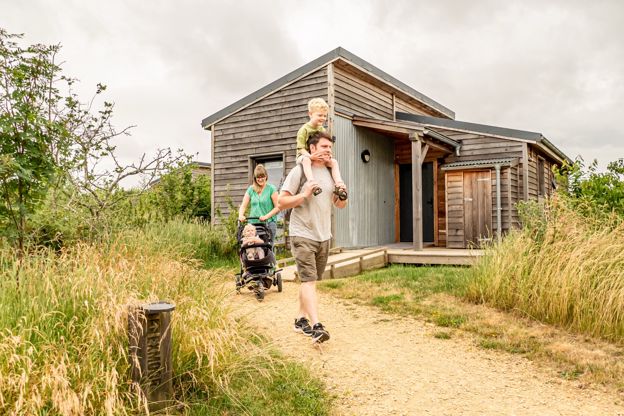
Lodges, cabins, safari tents, glamping pods and camping pitches at Adam Henson's Cotswold Farm Park above Guiting Power, with entry to the farm included.
Dog-friendly · Family-friendly · Hot tubs
Verified Oct 2026
Read next
-
The wool churches of the Cotswolds
Story · Guides · 11 minute read
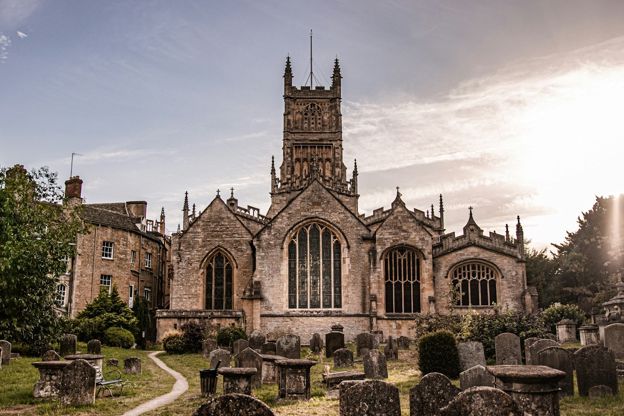
Northleach, Chipping Campden, Cirencester, Fairford, Burford and the other Cotswold churches rebuilt on medieval wool money: how the trade paid for them, what to look for in each, when they open and a route by car or on foot.
-
The Cotswolds without the crowds
Story · Guides · 15 minute read
Five Cotswold villages take most of the visitors: Bibury, Bourton-on-the-Water, Castle Combe, Broadway and the Slaughters. Here is when each is busiest, what the councils have done about it, the best and worst hours, and the quieter village on the same river or ridge.
-
Three dooms at Minster Lovell Hall
Story · Strange Things · 5 minute read
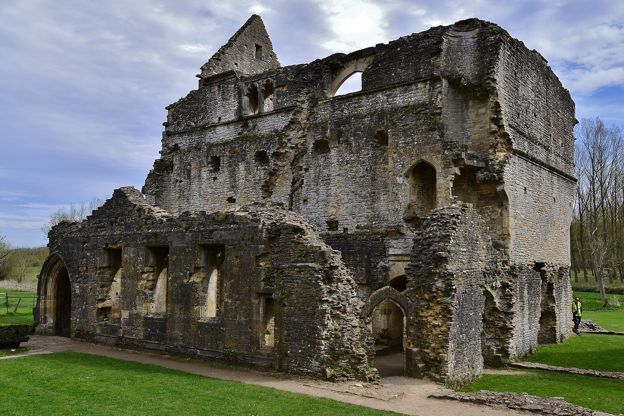
The ruined hall on the Windrush at Minster Lovell, the lord who vanished after the battle of Stoke, a skeleton said to sit at a table, and a bride in a chest.