The Roman Cotswolds
Cirencester was the second town of Roman Britain, three Roman roads still carry its traffic, and a villa in the Coln woods kept its floors into the fifth century. Here is what is left to see, and how to plan a Roman day.
· 10 minute read
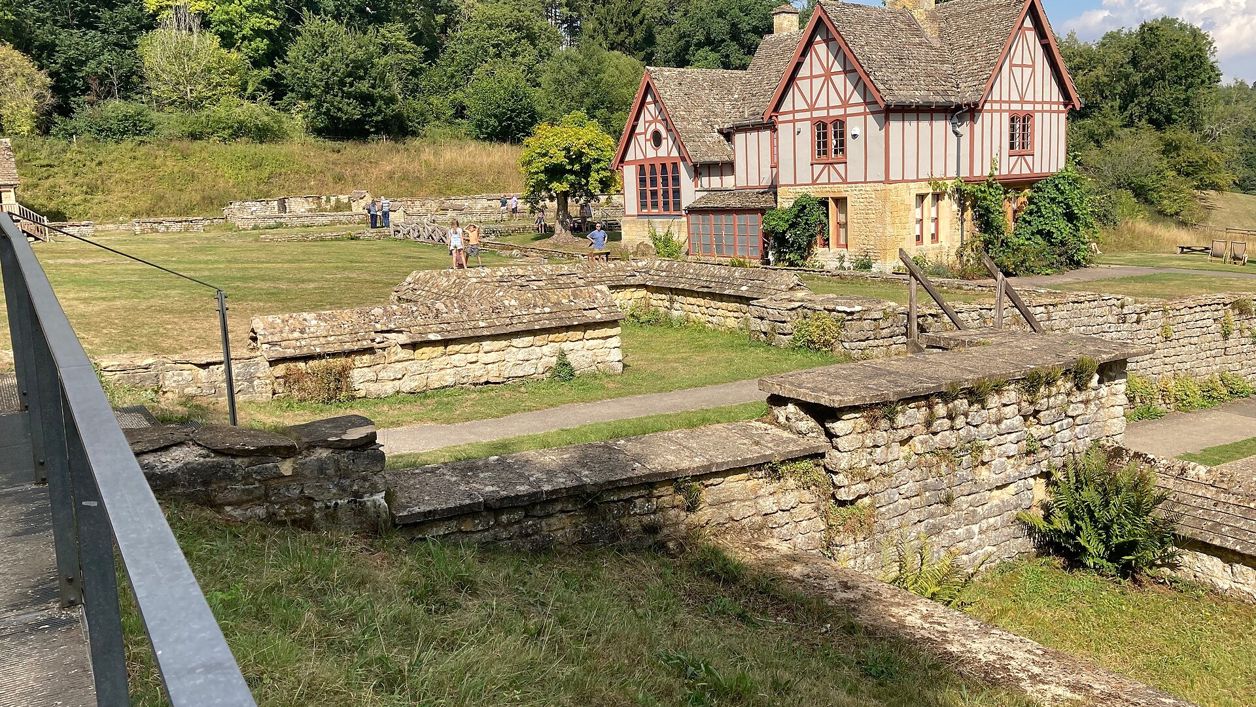
The Roman Cotswolds centre on Cirencester, which was Corinium Dobunnorum, the second largest town of Roman Britain after London. Three Roman roads met here, the Fosse Way, Ermin Street and Akeman Street, and two of them still carry the traffic as the A429 and the A417. The villas of the Coln and Churn valleys lie in the hills around, and one of them, Chedworth, keeps its mosaics in place.
Cirencester and the Corinium Museum
Start at the Corinium Museum on Park Street, which holds the finds from the Roman town and is the best Roman museum in the Cotswolds. It opens daily, 10am to 4pm, and an hour and a half covers the Roman galleries. Everything else Roman in Cirencester is a short walk from its door.
Cirencester began as a fort, founded in about AD 44, a year or so after the conquest, where the roads met. The soldiers left about AD 70, and the town beside the fort became the capital of the Dobunni, the people of the Cotswolds and the Severn vale. The museum puts its population by the second century at about 15,000, with a forum and basilica matched only by London's, and the walls enclosed 240 acres. In the fourth century it became the capital of the province of Britannia Prima.
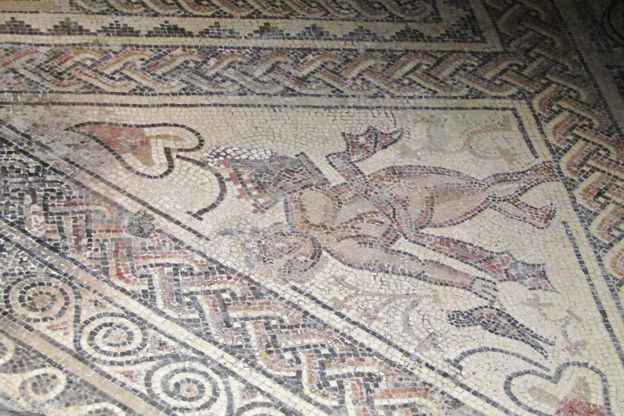
The mosaics are the reason to come. More than 90 are known from the town and the country around it, which the museum calls the largest concentration in the country outside London, among them the fourth-century Hare. Look for the Jupiter column capital, found in the forum and carved on four sides with Bacchus, his foster-father Silenus with a drinking horn, the Thracian king Lycurgus and Ambrosia with a drum; the museum shows it on a replica column, because no Jupiter column has been found whole. On a first-century tombstone found at Watermoor in 1835 the horseman Dannicus spears a fallen enemy, and a word square scratched into wall plaster may be an early Christian puzzle.
The museum states full disabled access on its own site (opens in a new tab), with accessible toilets and a wheelchair to borrow. Prices are on our listing, with their check date, and the Old Station car park is a short walk away.
The amphitheatre and the town wall, both free
The two Roman sights you can see without paying are the amphitheatre on the west edge of the town and a stretch of the town wall in the Abbey Grounds. Both are open in daylight every day of the year, and with the museum they make a Roman morning on foot.
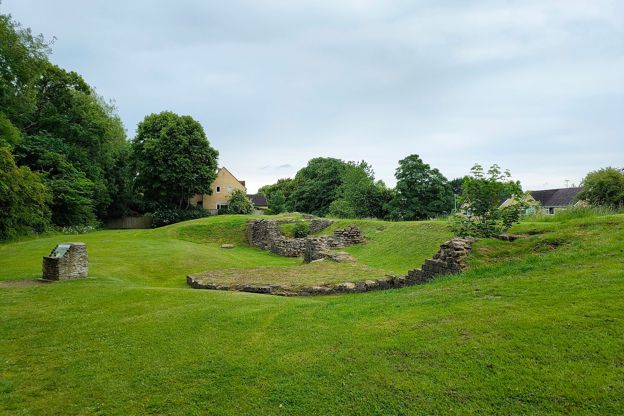
The Roman amphitheatre was built early in the second century and held about 8,000 people, which is to say most of the town. What survives is a great oval of grassed banks, looked after by the town council for English Heritage. There is a free car park at the east end of Cotswold Avenue and dogs on leads are welcome, but English Heritage warns of a small flight of steps at the entrance and uneven ground, so it is not a place for a wheelchair. Early morning, with the sun low across the banks, is when it looks most like what it was.
The Abbey Grounds are the park behind St John the Baptist, where the medieval abbey stood until 1539. A length of the Roman town wall survives there beside the River Churn, near the Norman arch of the abbey gate, a lake, a play area and a Changing Places toilet. The Cotswolds National Landscape's Cirencester route is a 2.5-mile (4km) tarmac loop from the Waterloo car park through the grounds into Cirencester Park, and our walk through the park to Stratton starts at the church's west door.
Chedworth Roman Villa
Chedworth Roman Villa, in woods above the Coln between Northleach and Cirencester, is the one Cotswold villa where you can see the floors where they were laid. The National Trust owns it and its hours change through the year, so check the Trust's calendar; allow a couple of hours. No bus reaches it, so come by car or taxi.
A gamekeeper found pieces of mosaic in the woods in 1864, and the Earl of Eldon paid for the digging and built the small museum that still stands in the middle of the site. The villa had two bath suites, one of damp heat and one of dry, fed from a spring in the north-west corner where the Romans built a nymphaeum, a shrine to the water spirits, round an eight-sided pool. One of its coping stones carries a scratched Chi-Rho, the first two Greek letters of Christ's name, so at some point the owners were Christian, or wished to be seen so. The same spring supplies the site's water today.
The West Range is under a modern cover building, with a walkway above the floors, and digging between 2010 and 2018 found a mosaic corridor more than 30m long there. The find that changed the history books came from a smaller room in the north range. In 2020 the dig team reported that the wall dividing it could not have been built before the fifth century, so the mosaic laid against it was later still: radiocarbon dates from the wall's foundations gave a mean of AD 475 to 495. In 2024 a further test showed that the soil under the mosaic last saw sunlight no earlier than AD 400. So the floor was laid after Roman rule in Britain had ended.
Our listing for Chedworth carries the hours, prices and dog rules with their check date. The Trust lists a lift and ramps, but some surfaces are uneven, with steps and narrow corridors; AccessAble publishes a detailed access guide (opens in a new tab). Only assistance dogs are allowed.
Great Witcombe and North Leigh, the English Heritage villas
The two other villas with something to see are English Heritage sites on the edges of the Cotswolds, and both need checking before you go. Great Witcombe, below the escarpment near Gloucester, is closed until further notice. North Leigh, in Oxfordshire near Witney, is free and open in daylight, but its mosaic is shown only on volunteer open days.
Great Witcombe Roman Villa stands on a steep slope under Cooper's Hill, with the remains of a bath house, what may be a water shrine, and mosaics kept in a modern building. In 2026 English Heritage says the villa and its car park are closed for emergency conservation and safety work after weather damage left masonry loose, with no date for reopening.
North Leigh Roman Villa is a large courtyard villa by the Evenlode near Witney. You park in a lay-by and walk about 500m down a farm track, uneven and often muddy, which English Heritage says may be unsuitable for wheelchairs or scooters. The walls are laid out in the grass and open at any reasonable hour. The early fourth-century mosaic lies under sheeting in the Mosaic House, which volunteers open on set weekends from late May to September, 11am to 5pm, down five steps with a banister; dogs on leads may not go in. English Heritage's page (opens in a new tab) lists the year's open days.
The Roman roads: the Fosse Way, Ermin Street and Akeman Street
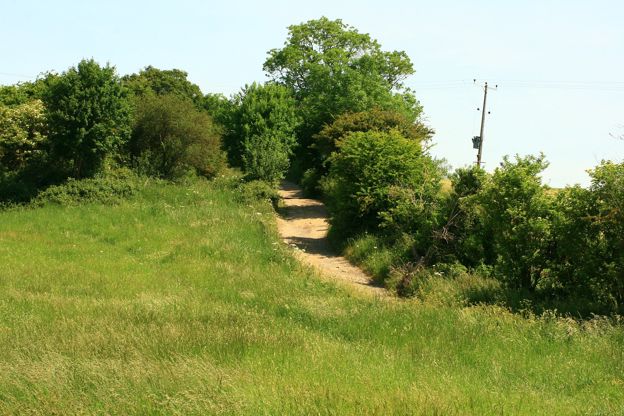
The Roman roads are the easiest Roman thing to see, because you drive on them. The Fosse Way is the A429 from Cirencester through Stow to Moreton, Ermin Street is the A417 and A419 from Gloucester through Cirencester towards Swindon, and Akeman Street came in from the east by Bicester and Asthall. Several of our walks cross or follow them.
The Fosse Way was laid out in the middle of the first century AD from Exeter to Lincoln by way of Bath, Cirencester and Leicester, and its name probably comes from the Latin fossa, a ditch. North of Cirencester it forms the western boundary of Northleach parish, and our walk from Northleach to Hampnett and back by the Saltway crosses it twice, by the Old Prison on the way out and where the Saltway meets it coming back; take care at both, because it is a fast road. It then climbs to Stow-on-the-Wold, where our stile-free loop to Maugersbury touches it, and runs down to Moreton-in-Marsh, which the abbot of Westminster laid out along it in the thirteenth century; the walk from Moreton by Batsford and Dorn passes the mound of a Roman fort at Dorn.
Akeman Street ran about 73 miles (117km) west from Watling Street near St Albans to Cirencester, by Alchester, Kirtlington and Asthall, and our walk from Bibury by Oxhill Wood follows its line for a short stretch along Coneygar Road, a hedged track above the Coln. Ermin Street linked Gloucester with Cirencester and ran on to Silchester; digs beside it at Birdlip Quarry in 1996 and 1997 found a roadside settlement, and the A417 works turned up another in 2024.
Bath and Gloucester, the Roman cities either side
Bath and Gloucester are outside the Cotswolds but at their edges, and each has more standing Roman masonry than anywhere inside them. Bath was Aquae Sulis, the spa town round the hot springs, and Gloucester was Glevum, a colony for retired soldiers. Both have railway stations and both fit a Roman trip as a last day.
At the Roman Baths (opens in a new tab) the Great Bath still fills from the spring, and the gilt bronze head of the goddess Sulis Minerva, from the temple beside it, is one of the treasures of Roman Britain. The baths open every day except 25 and 26 December, and their accessibility page says which levels a wheelchair can reach. Bath is about 36 miles (58km) from Cirencester, and the Cotswold Way ends at its abbey.
Gloucester was made a colonia, a city of veterans with Roman citizenship, in about AD 97. The Museum of Gloucester (opens in a new tab) on Brunswick Road has a length of the Roman wall on view inside the building and Roman tombstones; it opens Wednesday to Saturday, 10am to 5pm, and on some Mondays and Tuesdays. Under the Boots shop on Eastgate Street a viewing chamber shows the foundations of the east gate, opened only on occasional days, so check with the city first.

The Cotswolds Info newsletter
Events, new places and the best of the season, about once a month. Unsubscribe at any time.
A Roman day out by car
With a car, give the morning to Cirencester and the afternoon to Chedworth. Park at the Old Station, see the museum from ten, walk through the Abbey Grounds to the wall, and drive out to the amphitheatre before lunch. Chedworth is a short drive north by the Fosse Way and the Coln lanes, and its café closes earlier than the site, so check its hours.
With a second day, drive the Fosse Way north to Northleach, where the wool church stands beside the Roman road's line, walk the Hampnett loop, and go on up the A429 to Stow and Moreton. North Leigh fits a day in the Oxfordshire Cotswolds with Witney, best on one of its mosaic open days; bring boots for the track.
A Roman day out by train
Cirencester has no station, but Kemble, about 4 miles (6km) south-west, is on the line from London Paddington, and the 882 bus runs from the station into town in about 25 minutes. The museum, the wall and the amphitheatre are then all on foot. Chedworth cannot be reached by bus, so a car-free Roman day is a Cirencester day, with Bath or Gloucester as the second.
The 882 runs between Gloucester, Cirencester, Kemble station and Tetbury about seven times a day from Monday to Saturday, with no Sunday service, so check the times before you book a train. From the museum the amphitheatre is about a mile (1.6km) west across the town, and the Abbey Grounds are two minutes the other way. For an evening in town, where to stay in Cirencester has our picks, and the Cotswolds without a car has the other stations and the buses that meet the trains.
Museums, reading and sources
Three museums hold the Roman Cotswolds between them: the Corinium Museum for the town and its villas, the Museum of Gloucester for Glevum and the Roman Baths for Aquae Sulis. Chedworth has its own small museum of finds in the Victorian building on the site.
For reading, the Victoria County History of Gloucestershire has the fullest account of Roman Cirencester, free online through British History Online (opens in a new tab), and the Corinium Museum publishes short pieces on its best objects. For this page we used the museum, English Heritage, the National Trust and AccessAble, our own listing and walk files, and the county history; every opening time and price is dated on the listing it links to, and if you find one wrong, tell us.
Where the record stops
What happened to Corinium after Rome is not known. The archaeology ends in the fifth century, and the next firm date is 577, when the West Saxons took Cirencester, Gloucester and Bath after the battle of Dyrham. One reading of the evidence has survivors sheltering inside the amphitheatre's banks in the years between; it is a reading, not a record.
Other stories need the same care. The great Orpheus pavement at Woodchester, near Stroud, is real, but it lies buried in the old churchyard and has not been uncovered since 1973, so nobody can show it to you; a full-size replica was sold at auction in 2010 and its whereabouts are unclear. And the claim that the Romans brought the Cotswold sheep is one the Cotswold Sheep Society itself calls unproven.
Mentioned in this story
The places, sights and walks in this story, each with a page of its own: what it is, when to go and how to get there.
-
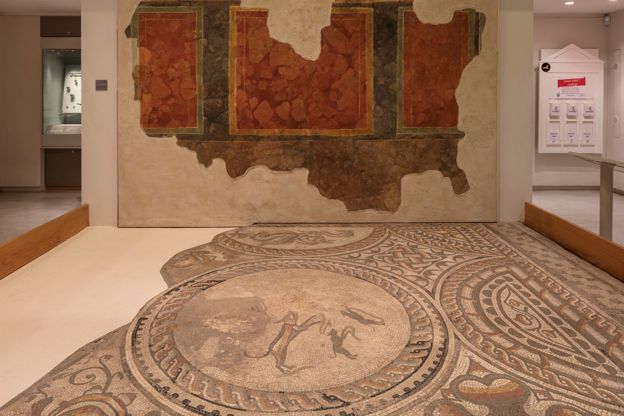
Corinium Museum
Museums and galleries · Cirencester
-
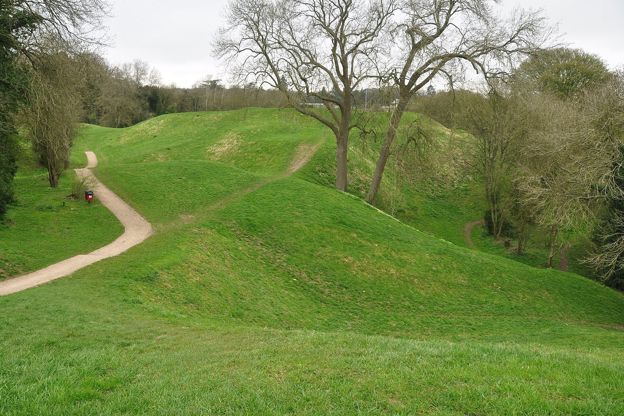
Cirencester Roman Amphitheatre
Historic houses and heritage · Cirencester
-
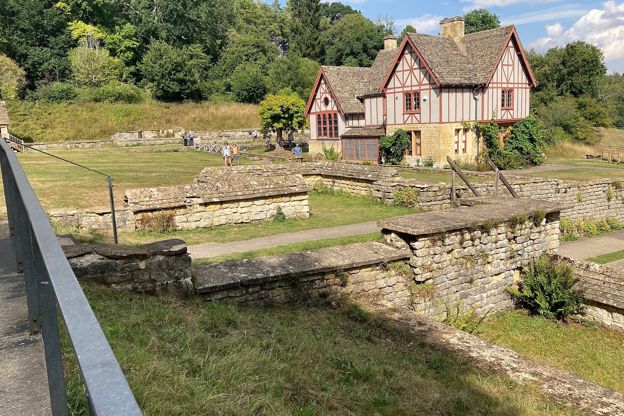
Chedworth Roman Villa
Historic houses and heritage · Northleach
-
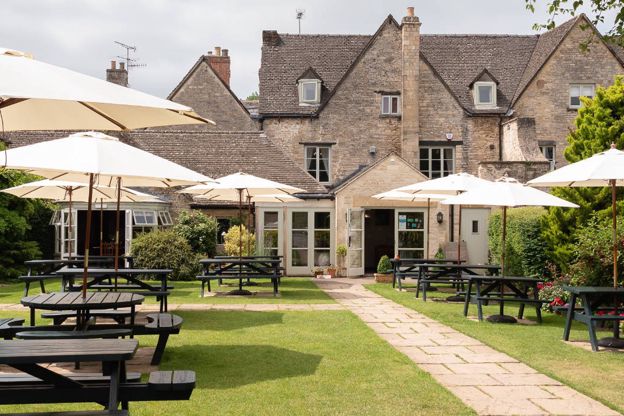
The Corinium Hotel
Hotel · Cirencester
-
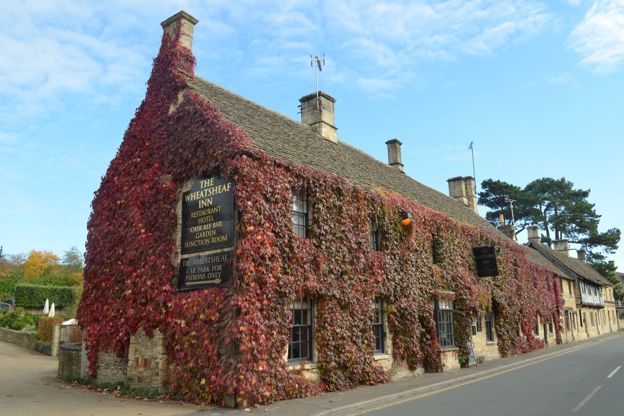
Wheatsheaf Inn
Inn · Northleach
-
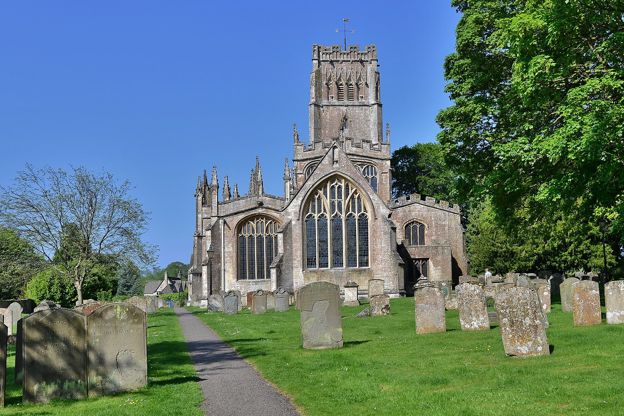
St Peter and St Paul, Northleach
Sight · Church · Northleach
-
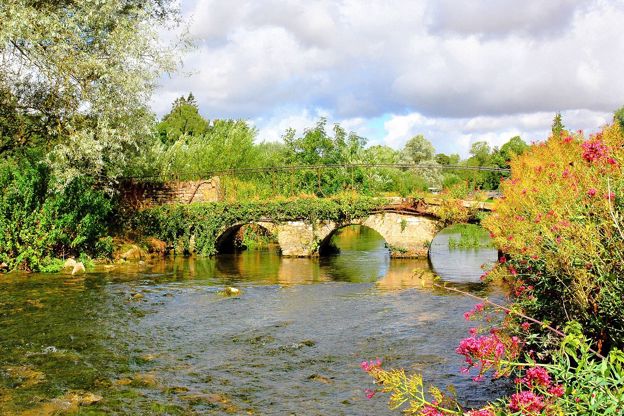
River Coln
Sight · River · Cirencester and the Coln Valley
-
Northleach, Hampnett and the Saltway
Walk · Starts in Northleach · 2 hrs · Circular
-
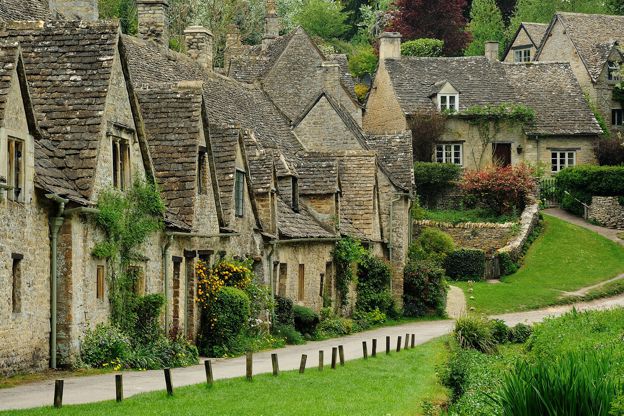
Bibury, Oxhill Wood and Akeman Street
Walk · Starts in Bibury · 1 hr, 45 mins · Circular · Dog-friendly
Places to stay near Cirencester
-
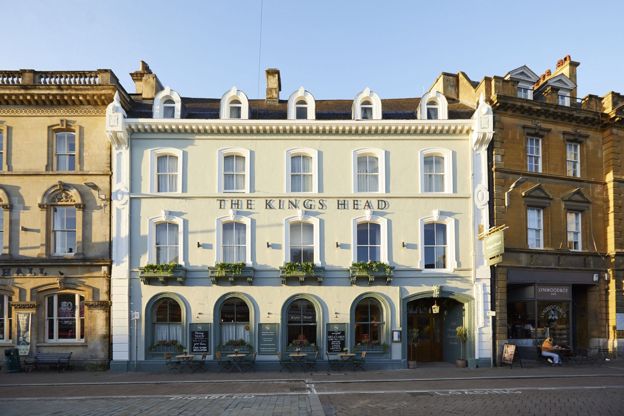
The King's Head
Hotel · Cirencester
A former coaching inn on Cirencester's Market Place with 63 bedrooms, one of Brakspear's Honeycomb Houses, open from 7am daily, with dog-friendly dining.
Dog-friendly
Verified Nov 2026
-
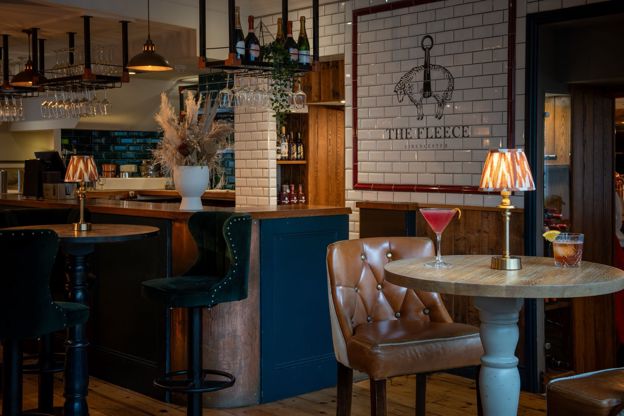
The Fleece
Inn · Cirencester
An inn with rooms on Cirencester's Market Place, run by Thwaites, with stays from £125 a room and dogs welcome in the bar.
Verified Oct 2026
-
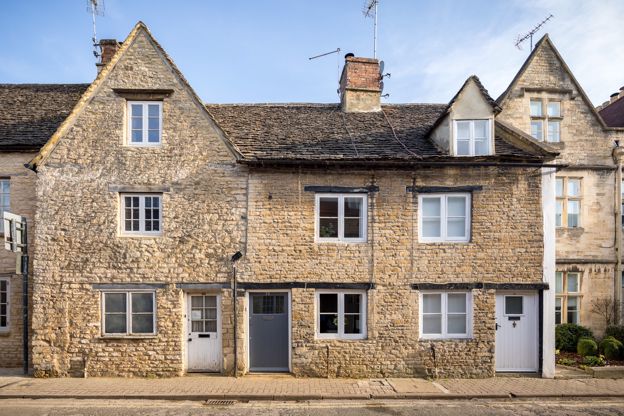
The Cottage
Self-catering · Cirencester
A Grade II listed two-bedroom holiday cottage for up to four adults, a seven-minute walk from the middle of Cirencester, with a courtyard garden and parking for one car; Plum Guide lists it as Honey Pot Cottage.
Verified Oct 2026
Read next
-
The wool churches of the Cotswolds
Story · Guides · 11 minute read
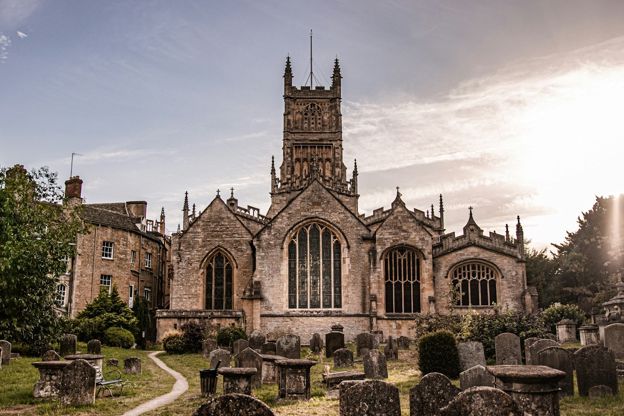
Northleach, Chipping Campden, Cirencester, Fairford, Burford and the other Cotswold churches rebuilt on medieval wool money: how the trade paid for them, what to look for in each, when they open and a route by car or on foot.
-
Getting to the Cotswolds without a car
Story · Guides · 12 minute read
You can see the Cotswolds without a car: trains from London Paddington reach Moreton-in-Marsh, Kingham, Charlbury, Kemble and Stroud in 70 to 90 minutes, and buses go on to Stow, Bourton, Bibury and Chipping Campden. Every station, its bus, the fares and the limits.
-
The Cotswolds on a rainy day
Story · Guides · 10 minute read
Museums, houses, a steam railway, spas with day passes, cinemas, theatres and pubs with fires: the Cotswolds when it rains, by region, with the free museums, what suits children and the honest bit about the rivers.