Michael Garlick, CC BY-SA 2.0, via Wikimedia Commons
St Peter and St Paul, Northleach
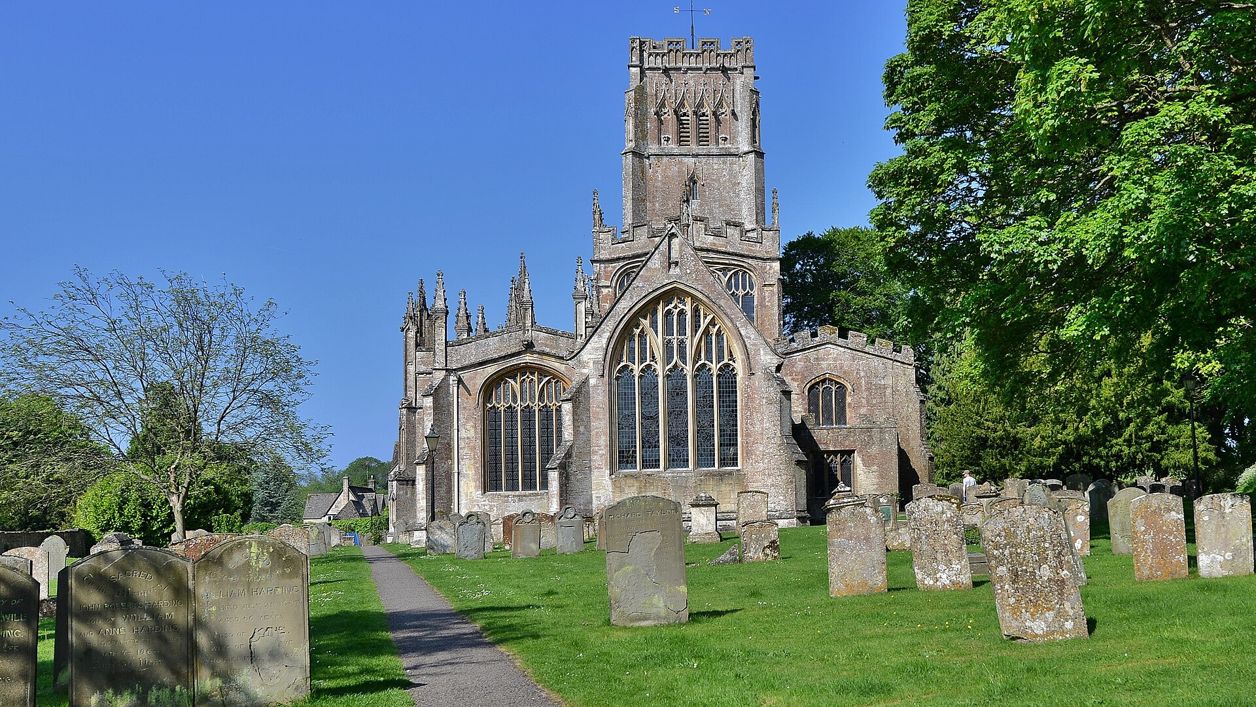
St Peter and St Paul is Northleach's wool church, rebuilt in the fifteenth century with money from the town's woolmen: a tall tower, a vaulted two-storey porch and one of England's finest collections of brasses to wool merchants. Grade I; open daily.
Church
NorthleachSt Peter and St Paul stands just off the Market Place in Northleach, a small market town that grew rich on Cotswold wool. Its woolmen paid for its rebuilding in the late fourteenth and fifteenth centuries, and their brasses, set into the floor, are among the finest in England. It is one of the great wool churches, listed Grade I, and open every day.
History
Northleach was a planned town. Gloucester Abbey, lord of the manor, founded it as a borough and market around 1220, offering settlers three years free of rent. By the late fourteenth century it was one of the chief markets for Cotswold wool, where local woolmen dealt with the staplers of London and Calais and with Italian buyers, and the church shows where the profits went.
The rebuilding
There was a church here in the twelfth century, but the building you see is almost all of the late Middle Ages. The Victoria County History puts the tower, the widening of the south aisle and the south porch first, in the later fourteenth century. In the middle of the fifteenth century the nave was remodelled, largely at the expense of John Fortey, a woolman who died in 1458 and left money to finish it; Historic England credits him with the clerestory that floods the nave with light. William Bicknell and his wife Margaret built the south chapel in 1489. The listing dates differ: it gives the tower to about 1400, the clerestory to about 1445 to 1455, and the south aisle and porch to about 1460 to 1480, with the date 1489 carved on a corbel in the south chapel.
The woolmen
The names on the brasses are the town's merchant families: the Forteys, Thomas, who died in 1447, and John; William Midwinter, who died in 1501; the Bushes, the Taylors and the Serches. The wool trade had left the town by the middle of the sixteenth century, and its clothmaking dwindled through the seventeenth, but the church the woolmen built remained.
Restoration
James Brooks restored and refitted the church in 1884, the tower was repaired in 1897, and in the early 1960s a re-ordering brought a new east window by Christopher Webb. Six bells were cast in 1700 by William and Robert Corr of Aldbourne, and two more were added in 1897 for Queen Victoria's jubilee, making a ring of eight.
What to see
Start at the south porch, two storeys high with pinnacles and buttresses. Over the door sits a medieval statue of the Virgin, and other medieval figures survive in the niches of its front. Inside, look up at the lierne vault with its carved bosses, including human heads. The room above has its own medieval fireplace.
In the nave, the tall Perpendicular arcades rise to Fortey's clerestory, and over the chancel arch is a great window, a feature of the Cotswold wool churches. The goblet-shaped stone pulpit is fifteenth century, and the font of the late fourteenth century is carved with portrait heads, angels playing instruments and devils round the base.
The brasses
The brasses are the treasure. The Victoria County History counts one of the largest surviving collections of medieval brasses in England, most of them to woolmen of the fifteenth and early sixteenth centuries. Look for an unnamed woolman and his wife of about 1400; Thomas Fortey with his wife Agnes; John Fortey, with his feet on a woolpack; John Taylor and Joan; a brass probably to William Midwinter and Agnes; Robert Serche, a mercer, and Anne; William Launder, vicar, of about 1524; and Thomas Bush and Joan, with the arms of the Calais staple. There are fragments of the Bicknell brasses in the south chapel and a wall brass to Maud Parker, who died in 1585.
Visiting
The church is open every day from 9am to 5pm, and entry is free. The National Churches Trust lists level access to the main areas, dogs welcome, and parking on the street at the church; free public toilets are in the Market Place, open 9am to 6pm in summer and 9am to 5pm in winter, with an accessible toilet opened by a RADAR key. The clock chimes the quarters, and every three hours, at noon, 3pm, 6pm and 9pm, a carillon on the eight bells plays the hymn O Worship the King, the benefice says, so time a visit for noon. The old clock of about 1700, which had no face, now stands in the north chapel. The Sunday service is at 11am, and the benefice office is open on Wednesday and Friday mornings.
Getting there
Northleach is just off the A40 between Oxford and Cheltenham, where it crosses the A429 Fosse Way. Park free on the street in the Market Place; the church is on Mill End (GL54 3HL), a short walk away. Pulhams buses stop in the Market Place: the 855 about hourly from Monday to Saturday, and the X52 about every two hours, with a couple of journeys each way on Sundays. On foot, Northleach, Hampnett and the Saltway, a 7.2km walk without stiles, starts in the Square and comes back down into the town past the church.
Nearby
The Wheatsheaf, a seventeenth-century coaching inn, is a few steps away, and Lynwood & Co is a café in the Island House on the Market Place. At the Fosse Way crossroads on the edge of town is the Old Prison, and a mile north-west is the painted Norman church of St George, Hampnett. For the other great wool churches, see St John the Baptist, Cirencester, St Mary's, Fairford and St John the Baptist, Burford, and our story on the wool churches of the Cotswolds tells how they came to be.
Walks past St Peter and St Paul, Northleach
-
Northleach, Hampnett and the Saltway
Walk · Starts in Northleach · 2 hrs · Circular
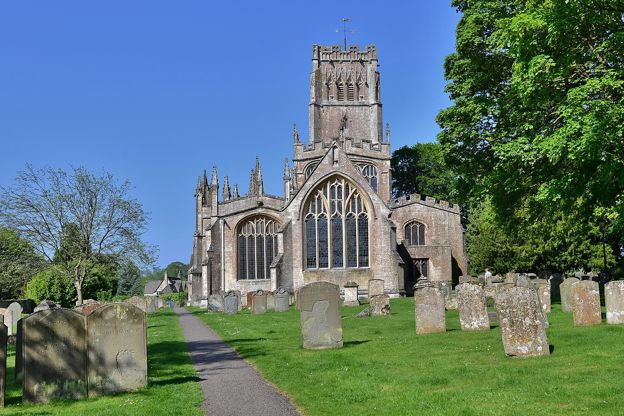
A 4.5-mile (7.2km) circular walk from Northleach's Market Place, easy, stile-free and about two hours: out past the Old Prison to Hampnett and its painted Norman church, south by bridleway to the old Saltway, and home past Winterwell Barn to the wool church.
Stay and eat near St Peter and St Paul, Northleach
-
Wheatsheaf Inn
Inn · Northleach
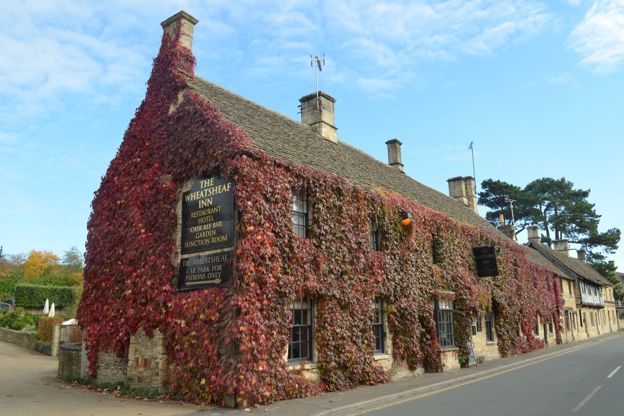
A seventeenth-century coaching inn on West End, Northleach, with 14 bedrooms, a garden and food all day, friendly to families and dogs.
Dog-friendly · Family-friendly · Walker-friendly
Verified Nov 2026
-
Lynwood & Co, Northleach
Cafes and tearooms · Northleach
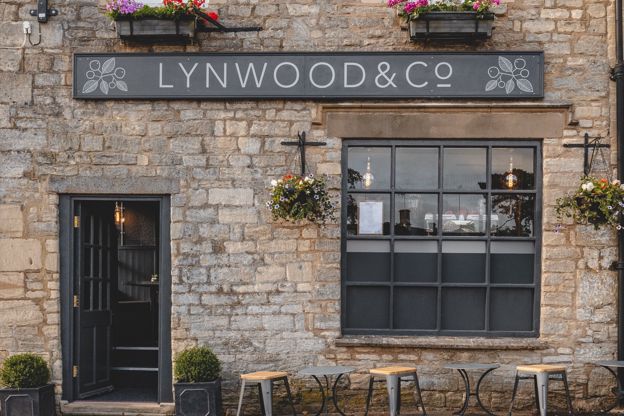
An Australian-style café in the Island House on Northleach's Market Place, one of a small Cotswold group, open from 8am every day for breakfast, coffee and lunch.
Verified Oct 2026
-
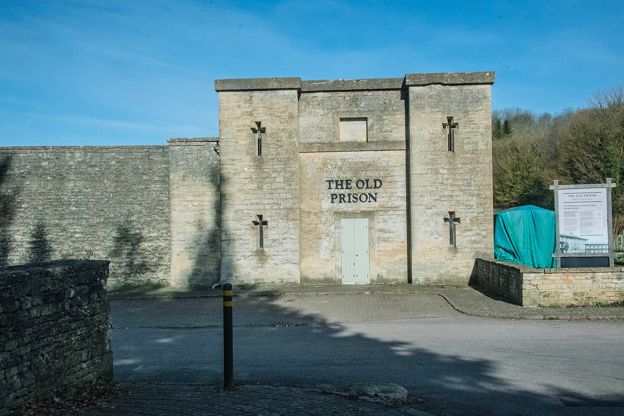
The Old Prison Café, Northleach
Cafes and tearooms · Northleach
A daytime café run by Relish in Northleach's Georgian house of correction on the Fosse Way, with free parking and free entry to the cells and courtroom.
Dog-friendly · Family-friendly
Verified Oct 2026
Stories about St Peter and St Paul, Northleach
-
The Cotswold wool trade
Story · History · 9 minute read
How the Cotswold sheep made the hills rich: the medieval export of raw wool through the Staple at Calais, the woolmen of Campden, Northleach and Fairford, the cloth mills of the Stroud valleys, the decline, and where to see it all today.
-
The Cotswolds in November
Story · Guides · 8 minute read
The Cotswolds in November: the wettest month and one of the quietest, the last of the beech colour, the November Meeting at Cheltenham, the light trails and late-night shopping that start Christmas, what stays open in winter, firm walks for wet weather and inns with fires.
-
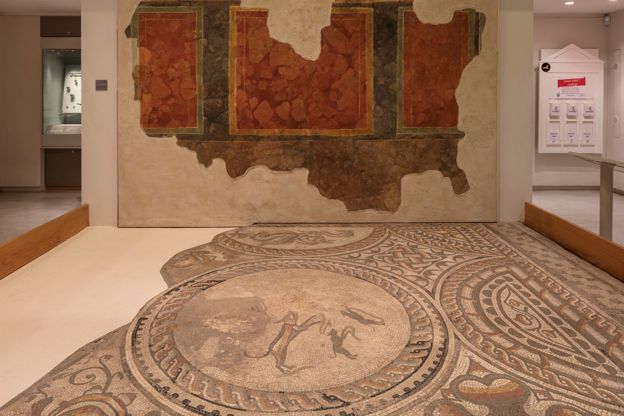
The Cotswolds on a rainy day
Story · Guides · 10 minute read
Museums, houses, a steam railway, spas with day passes, cinemas, theatres and pubs with fires: the Cotswolds when it rains, by region, with the free museums, what suits children and the honest bit about the rivers.
More sights to see
-
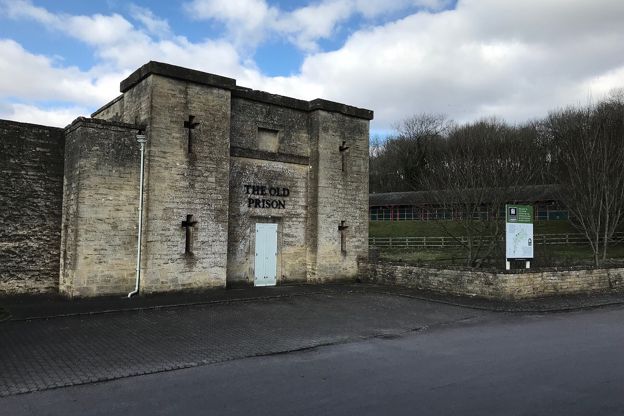
The Old Prison, Northleach
Sight · Historic building · Northleach
The Old Prison at Northleach is the house of correction William Blackburn designed in 1791 for Sir George Onesiphorus Paul's reform of Gloucestershire's prisons. A cell block and the Victorian courtroom survive, free to see, with a café. Grade II*.
-
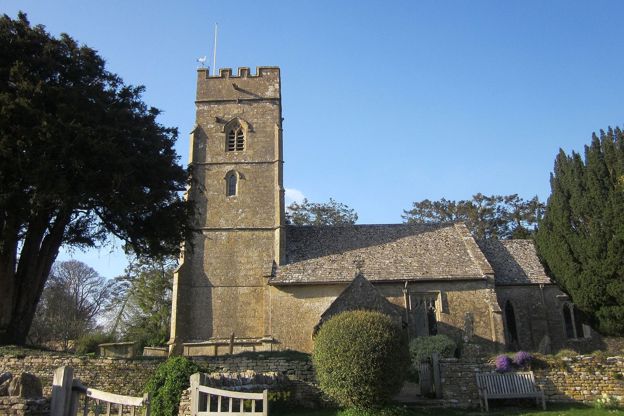
St George's Church, Hampnett
Sight · Church · Northleach
St George's is the small Norman church of Hampnett, a hamlet a mile from Northleach, built about 1125. Its chancel was painted around 1868 to 1871 under William Wiggin, later its rector, with stencilled flowers and stars, and survived a villagers' fund to remove it. Grade I.
-
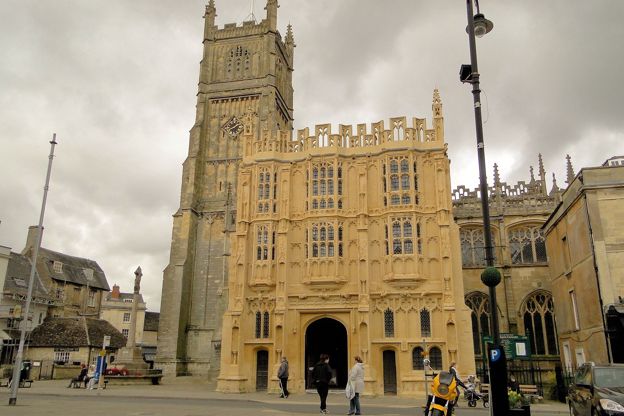
St John the Baptist, Cirencester
Sight · Church · Cirencester
Cirencester's great wool church on the Market Place, free to visit: a fifteenth-century tower you can climb on set Saturdays, a three-storey porch of about 1490 that served as the town hall, fan vaults, medieval glass and the Boleyn Cup. Grade I.