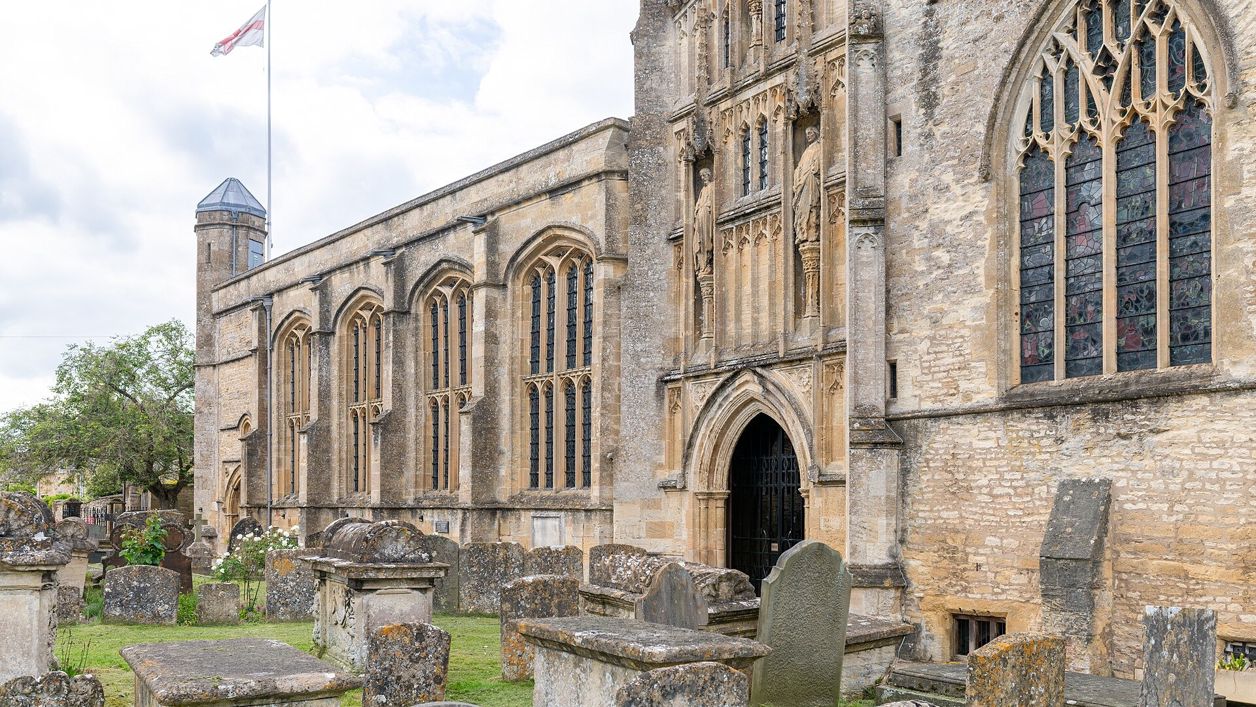
Tilman2007, CC BY-SA 4.0, via Wikimedia Commons
St John the Baptist, Burford
St John the Baptist is Burford's great wool church by the Windrush: Norman at its core, with a fan-vaulted porch, the Tanfield and Harman monuments, and the font where a Leveller carved his name before three were shot in 1649. Grade I; open daily, free.
Church
BurfordSt John the Baptist is the parish church of Burford, on Church Green at the bottom of the town near the River Windrush. It grew from a Norman church into one of the great wool churches of the Cotswolds by the late fifteenth century, and is listed Grade I. In 1649 it was a prison for mutinous soldiers, and the font still carries one of their names. It is open every day.
History
St John the Baptist was built up over four centuries from a Norman church.
The Norman church
The listing traces it to the twelfth century, possibly earlier. The crossing tower and the west door of the middle of the twelfth century are the Norman parts that survive; the tower's low crossing arches were later partly blocked to carry the extra weight above. The heightening of the tower and the spire were planned by 1396.
The wool church
Wool money did the rest. The merchants' guild built a chapel at the south-west in the early thirteenth century, later extended and drawn into the church, and in the fifteenth century the nave was remodelled with tall Perpendicular windows and a clerestory, and the three-storey south porch was built. By the late fifteenth century the church had the complex plan it has now. The top of the spire fell in 1722.
The Levellers
In May 1649 soldiers of Parliament's army, angry at unpaid wages, mutinied at Salisbury and marched north to join other Levellers near Banbury; government troops caught them at Burford. The church says about 340 prisoners were held in the building. One of them, Anthony Sedley, carved his name and the year in the lead of the font. On 16 May the ringleaders were taken out and shot, while the rest were made to watch from the roof of the Lady Chapel; the others were pardoned. The church notes that there is no firm evidence of where the executions took place or where the men were buried. A plaque on the outside wall remembers the three men executed, and Levellers Day is held in the town each May.
Street's restoration
G. E. Street restored the church heavily in the 1870s, stripping most of the old plaster. William Morris objected, and the listing names Burford as one of the cases that led him to found the Society for the Protection of Ancient Buildings.
What to see
Start with the south porch, three storeys high, its front covered in traceried panels, with a fan vault inside. Then go round to the west door to see the Norman work, with its rows of carved beak-heads and chevrons.
Inside, look for:
- the font, with Anthony Sedley's name scratched in its lead, dated 1649;
- the Tanfield monument of 1628 in the north chapel, with Sir Lawrence Tanfield and his wife above, cadavers below and an iron palisade round it, and a kneeling figure of their grandson Lucius Cary, Viscount Falkland, killed at Newbury in 1643;
- the Harman memorial of about 1569 on the north wall, to Edmund Harman, barber-surgeon to Henry VIII, carved with figures that the church calls the earliest known representation in Britain of people of the New World;
- the memorial to Christopher Kempster, who died in 1715, a Burford quarryman and mason whom Wren employed at St Paul's Cathedral;
- the tiny wooden chantry chapel opposite the door, which survived the Reformation as a squire's private pew;
- the brightly painted pulpit, made up from fifteenth-century tracery, and the Sylvester family's tomb chests in the guild chapel;
- medieval glass in the tracery of the west and east windows, the great west window showing the stem of Jesse, and much glass by Kempe;
- a nine men's morris board scratched into a tomb in the Bartholomew Aisle.
The Chapel of St Thomas of Canterbury, over a crypt, keeps some wall paintings, and the churchyard is worth a walk round.
Visiting
The church is open Monday to Saturday from 10am to 4pm and on Sunday from 1pm to 4pm, and is closed at Christmas, Easter and on New Year's Day; services and events can close parts of it, so check with the church office before a special trip. Entry is free, with donations towards keeping the building open. A duty verger is usually on hand, free printed guides come in many languages, and group tours can be booked with a verger. A Church Near You lists a ramp, an accessible toilet, a hearing loop and baby changing, and the church says it is dog friendly. The church says it welcomes more than 75,000 visitors a year.
Getting there
Park in the free Guildenford car park by the river, a few minutes' walk away, where the public toilets are. Buses stop at the Oxford Road layby at the top of the town; the Pulhams X52 runs between Oxford, Witney, Burford and Cheltenham up to every two hours from Monday to Saturday, with a few journeys on Sundays.
Both our Burford walks pass the church. Burford, Fulbrook and Widford leaves Guildenford along Church Lane past the almshouses and the church before crossing the bridge, and Burford's lanes and fields ends along Church Lane at the church.
Nearby
The Great Almshouses, founded in 1457 by Richard, Earl of Warwick, and the old grammar school line Church Lane beside the church. Burford Bridge is at the foot of the High Street, and Burford Priory, once Tanfield's and Lenthall's house, is up Priory Lane. On the High Street, the Tolsey Museum tells the town's story, and the Bull, the Lamb Inn and the Bay Tree are the places to eat. Down the valley, St Oswald's at Widford and St Mary's at Swinbrook make a walk of churches, and St Peter and St Paul at Northleach is the next great wool church west. Our story on the wool churches of the Cotswolds has more.
Walks past St John the Baptist, Burford
-
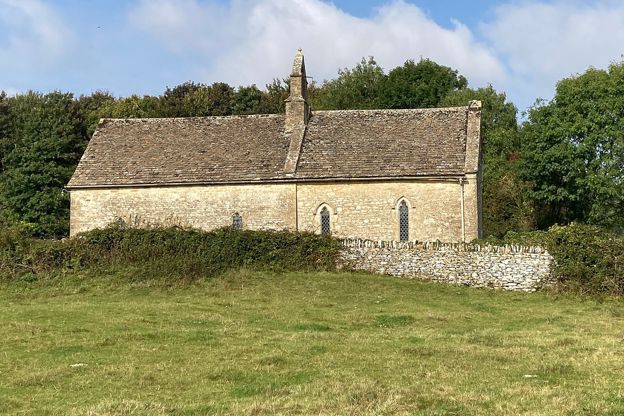
Burford, Fulbrook and Widford
Walk · Starts in Burford · 2 hrs, 30 mins · Circular · Dog-friendly
A 6-mile (9.7km) circular walk from Guildenford car park in Burford, about two and a half hours of moderate walking with stiles and some road. It crosses the old bridge to Fulbrook and the fields to Widford's church, and returns along the Windrush meadows, which flood in winter.
-
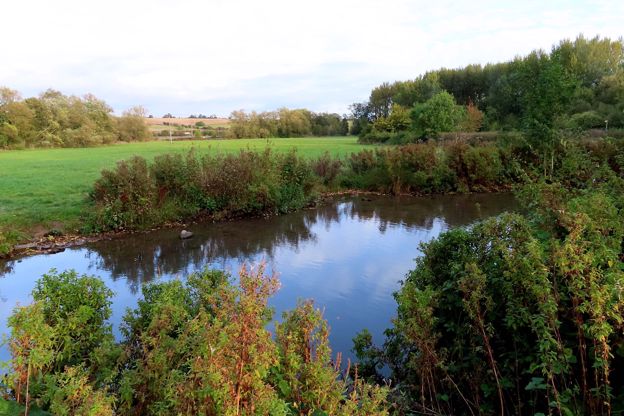
Burford's lanes and fields
Walk · Starts in Burford · 1 hr · Circular
A 1.7-mile (2.7km) circular walk from Burford's free riverside car park, easy and about an hour, mostly on pavements and lanes. It climbs Witney Street and Barns Lane to a field west of the town, then comes back down Sheep Street and Priory Lane to the church.
-
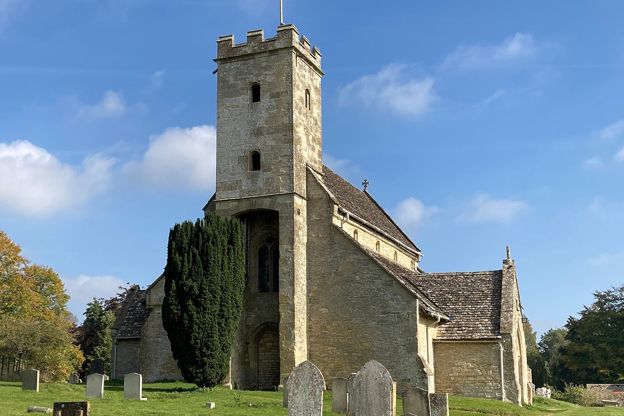
Swinbrook, Fulbrook and Widford
Walk · Starts in Burford · 2 hrs · Circular · Dog-friendly
A 4.3-mile (6.9km) easy loop of about two hours from the Swan at Swinbrook: north on a lane and west over fields to Fulbrook, back by a lane, then down a wooded valley to Widford's lone church and along the Windrush to the Mitford graves at St Mary's.
Stay and eat near St John the Baptist, Burford
-
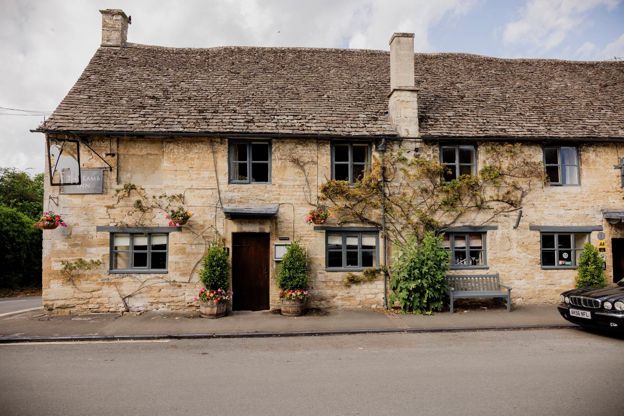
The Lamb Inn
Inn · Burford
An inn with rooms in Burford, part of Cotswold Inns and Hotels, taking bookings for rooms and tables and welcoming dogs.
Dog-friendly
Verified Nov 2026
-
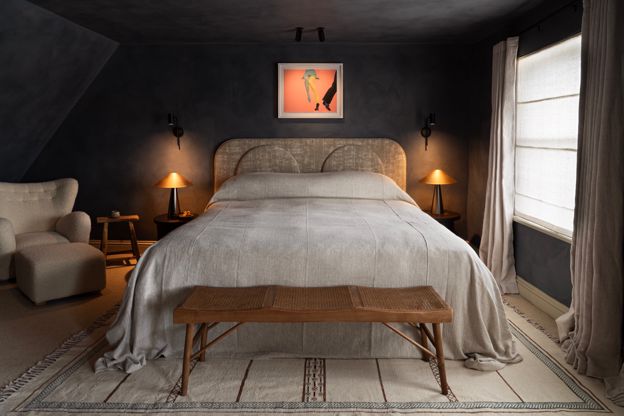
Bull, Burford
Hotel · Burford
A coaching inn on Burford's High Street, opened in 1536 by its own account, now a hotel with 18 rooms, three restaurants and a treatment suite.
Wedding venues
Verified Oct 2026
-
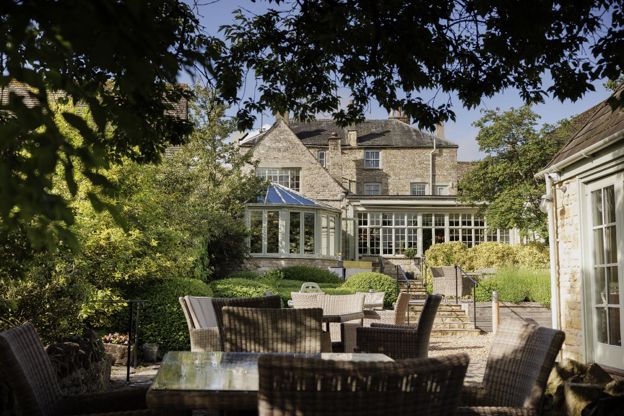
The Bay Tree
Hotel · Burford
A Grade II listed hotel on Sheep Street, Burford, with 21 rooms and a walled garden, part of Cotswold Inns and Hotels, dogs welcome.
Dog-friendly · Wedding venues
Verified Oct 2026
Stories about St John the Baptist, Burford
-
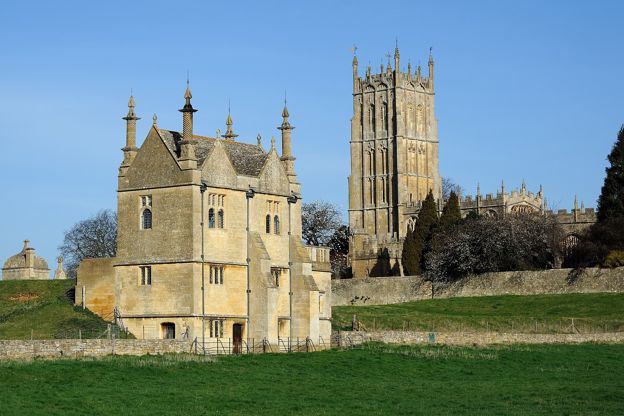
The Civil War in the Cotswolds
Story · History · 9 minute read
The storming of Cirencester and the battle of Lansdown in 1643, Sudeley Castle besieged and slighted, Campden House burned, the last battle of the first war at Stow in 1646, the Levellers at Burford and Chastleton's hidden Royalist, with where to see each.
-
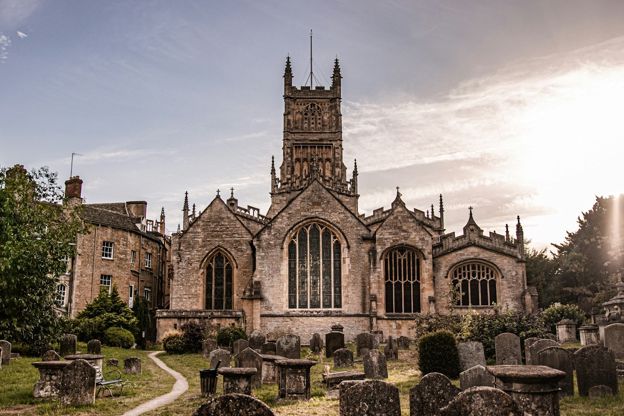
The wool churches of the Cotswolds
Story · Guides · 11 minute read
Northleach, Chipping Campden, Cirencester, Fairford, Burford and the other Cotswold churches rebuilt on medieval wool money: how the trade paid for them, what to look for in each, when they open and a route by car or on foot.
-
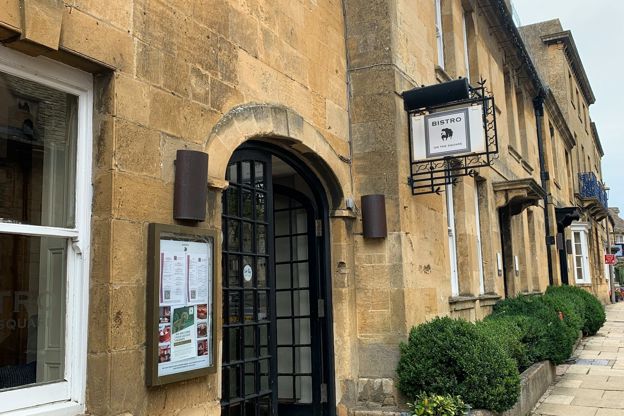
Why Cotswold stone is golden
Story · History · 9 minute read
The Jurassic limestone that built the Cotswolds, the iron that colours it honey in the north and grey in the south, the quarries at Taynton, Barrington, Guiting and Painswick, the stone slate roofs and the dry-stone walls, and where to see each.
More sights to see
-
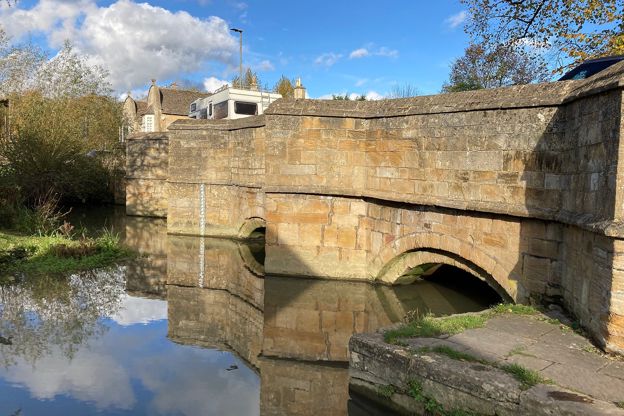
Burford Bridge
Sight · Bridge · Burford
Burford Bridge carries the road over the River Windrush at the foot of Burford's High Street: four low arches with pointed cutwaters, medieval in origin and heavily remodelled in 1791. Grade II*, on the way in and out of the town.
-
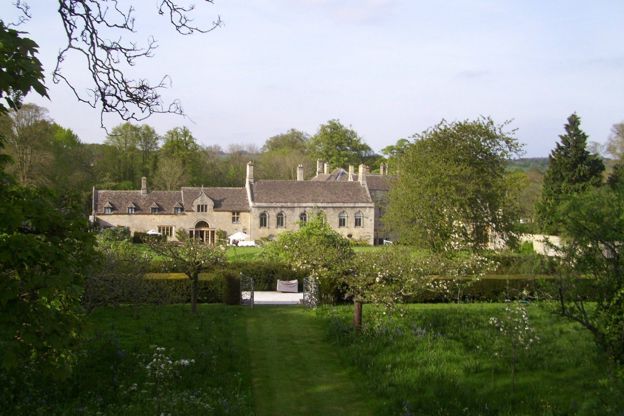
Burford Priory
Sight · Historic building · Burford
Burford Priory is a Jacobean mansion on the site of a medieval hospital in Burford, remodelled by Speaker Lenthall in the seventeenth century, with his chapel of 1661 to 1662 beside it. Grade I; a private house, seen only from Priory Lane.
-
River Windrush
Sight · River · The Oxfordshire Cotswolds
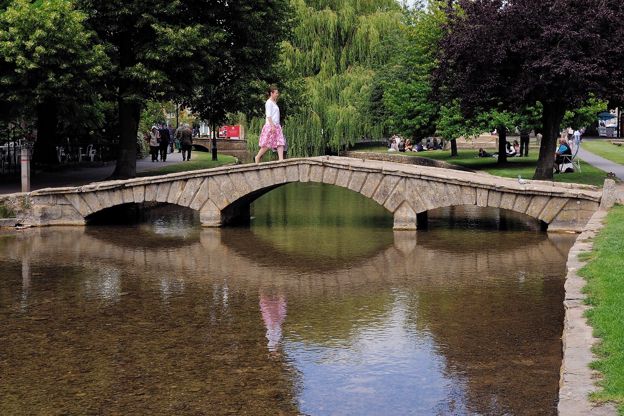
The River Windrush rises on the high wolds of Gloucestershire and runs south-east through Naunton, Bourton-on-the-Water, Burford, Minster Lovell and Witney to join the Thames at Newbridge. Public footpaths follow much of it, and eight of our walks meet it.