Des Blenkinsopp, CC BY-SA 2.0, via Wikimedia Commons
Burford Priory
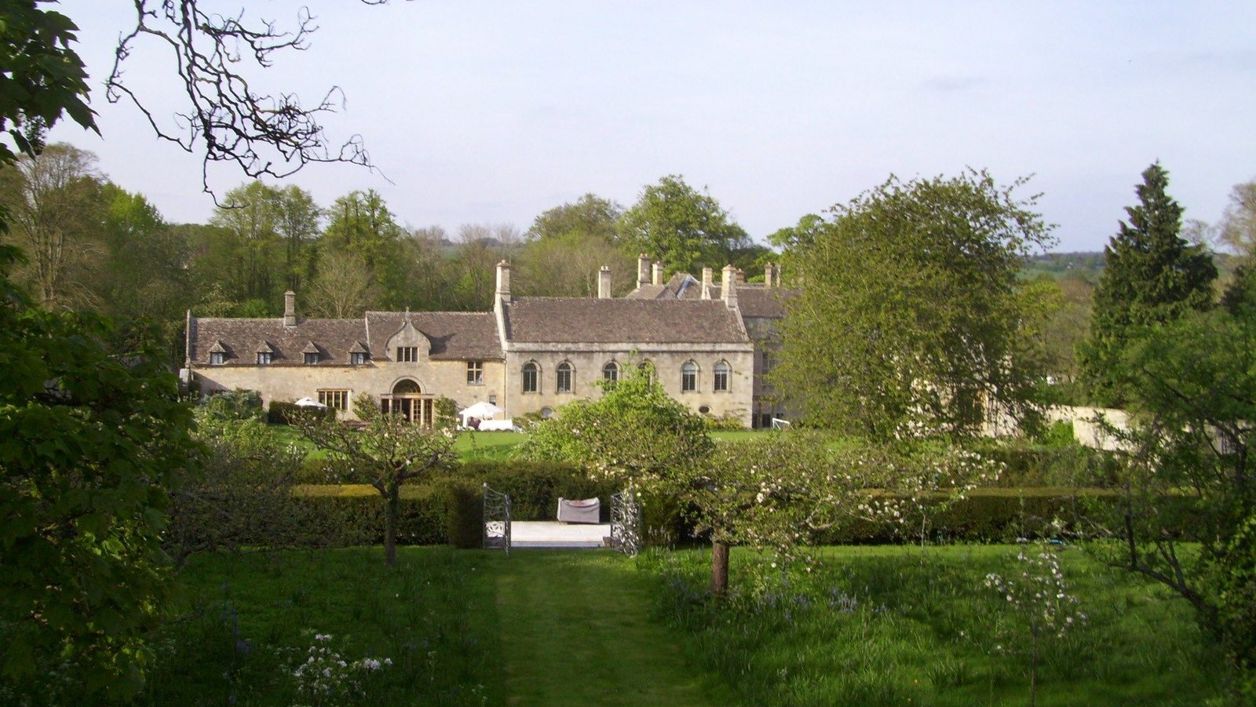
Burford Priory is a Jacobean mansion on the site of a medieval hospital in Burford, remodelled by Speaker Lenthall in the seventeenth century, with his chapel of 1661 to 1662 beside it. Grade I; a private house, seen only from Priory Lane.
Historic building
BurfordBurford Priory is the large stone house at the west end of Priory Lane in Burford, on the site of a small medieval hospital. Largely Jacobean, it was remodelled by William Lenthall, Speaker of the House of Commons, in the seventeenth century, and his chapel of 1661 to 1662 stands beside it. The house is listed Grade I and is a private home, seen only from the lane.
History
The Priory's name comes from a hospital, not a priory. The Hospital of St John the Evangelist, a small house first recorded in 1226, stood here until the Reformation, and the entrance hall of the present house keeps three early thirteenth-century arches and piers, put back in place.
Tudor surgeon and Jacobean judge
In 1543 the hospital was granted to Edmund Harman, one of Henry VIII's barber-surgeons, who seems to have built a mansion on the site; his memorial is in St John the Baptist. Sir Lawrence Tanfield, later Lord Chief Baron of the Exchequer, bought the house and entertained James I here in 1603. The listing notes that he was unpopular in the town for reducing the power of its burgesses. His tomb, too, is in the parish church.
Speaker Lenthall
William Lenthall, Speaker of the Long Parliament, bought the Priory in 1637 and extended and remodelled it before his death in 1662; the six-bay long gallery wing on the south side is of his time. His chapel was built in 1661 and 1662 and is listed Grade II*, as is the link that joins it to the house. Charles II dined here in 1681 on his way to the Burford races.
Decline, rescue and a convent
After 1808 the house was greatly reduced, and its outer wings were taken down in the early nineteenth century. Colonel de Sales de la Terriere saved it from dereliction in 1908, and Emslie John Horniman, who bought it in 1912, continued the work, restoring the south wing in a Cotswold style with Voysey-like detail. For 59 years from the middle of the twentieth century it was the home of an enclosed Anglican community, the Society of the Salutation, which took Benedictine vows there in 1952, and the listing links the half-moon yew screen at the entrance to them. In 2008 the community decided to sell the house, and it moved to its new monastery, Mucknell Abbey in Worcestershire, in 2010; the Priory has been a private home since.
What to see
The listing describes the main front, which faces the gates on Priory Lane: roughly U-shaped, of three storeys and attics, with stepped outer gables, long mullioned windows on the first floor and a showy central porch, with the yew screen curving in front of it. The chapel stands to one side, joined to the house. How much you see from the lane depends on the gates and the trees.
Inside, which visitors cannot see, the listing records the thirteenth-century arches in the hall, an eighteenth-century staircase with barley-sugar balusters, and a first-floor former ballroom with a plaster ceiling and a fireplace carrying the Lenthall arms.
Visiting
Burford Priory is a private house, so it can only be seen from Priory Lane; please do not go through the gates or block the lane. There is no entry and nothing to book. The lane is narrow and quiet, and best walked in the morning before Burford fills up.
Getting there
Priory Lane runs between Sheep Street and the High Street, by Falkland Hall. Park in the free Guildenford car park by the river and walk up through the town. Buses stop at the Oxford Road layby above the town.
On foot, Burford's lanes and fields, a 1.7-mile town walk from Guildenford, comes back down Sheep Street past the Lamb and along Priory Lane past the Priory's gates before returning by Church Lane.
Nearby
The Lamb Inn and the Bay Tree are a few doors away on Sheep Street, and the Bull and the Tolsey Museum are on the High Street. St John the Baptist, with the Harman and Tanfield monuments, and Burford Bridge are at the bottom of the town. At Swinbrook, St Mary's Church holds the monuments of another great local family, the Fettiplaces.
Walks past Burford Priory
-
Burford's lanes and fields
Walk · Starts in Burford · 1 hr · Circular
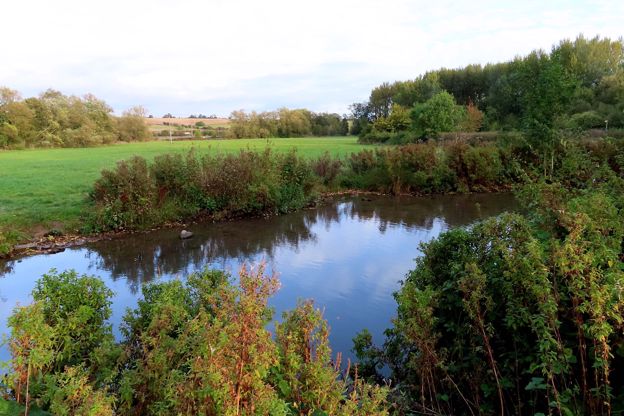
A 1.7-mile (2.7km) circular walk from Burford's free riverside car park, easy and about an hour, mostly on pavements and lanes. It climbs Witney Street and Barns Lane to a field west of the town, then comes back down Sheep Street and Priory Lane to the church.
-
Burford, Fulbrook and Widford
Walk · Starts in Burford · 2 hrs, 30 mins · Circular · Dog-friendly
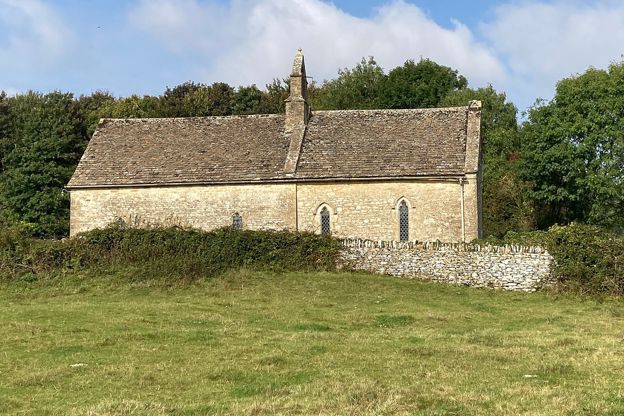
A 6-mile (9.7km) circular walk from Guildenford car park in Burford, about two and a half hours of moderate walking with stiles and some road. It crosses the old bridge to Fulbrook and the fields to Widford's church, and returns along the Windrush meadows, which flood in winter.
Stay and eat near Burford Priory
-
The Lamb Inn
Inn · Burford
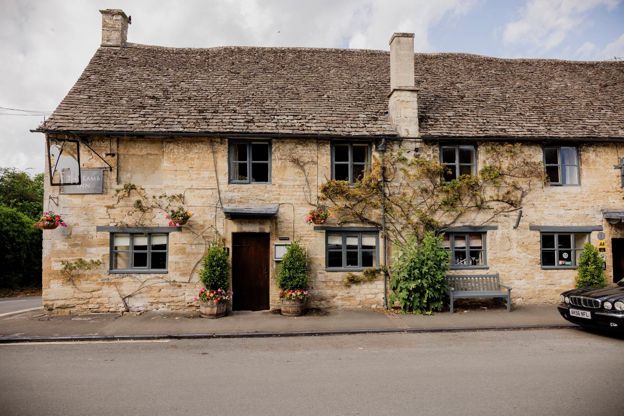
An inn with rooms in Burford, part of Cotswold Inns and Hotels, taking bookings for rooms and tables and welcoming dogs.
Dog-friendly
Verified Nov 2026
-
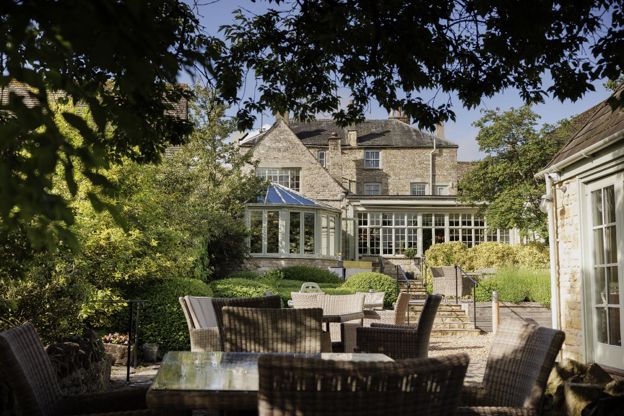
The Bay Tree
Hotel · Burford
A Grade II listed hotel on Sheep Street, Burford, with 21 rooms and a walled garden, part of Cotswold Inns and Hotels, dogs welcome.
Dog-friendly · Wedding venues
Verified Oct 2026
-
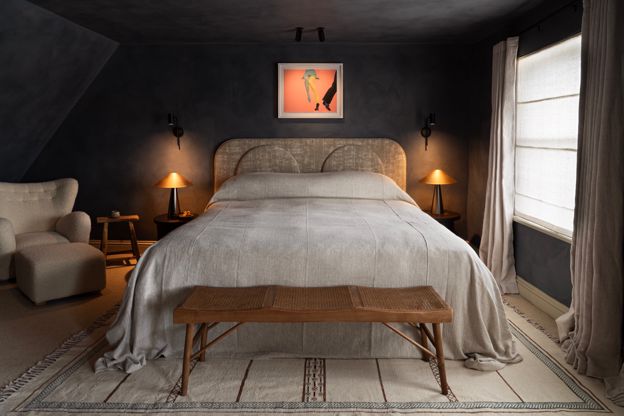
Bull, Burford
Hotel · Burford
A coaching inn on Burford's High Street, opened in 1536 by its own account, now a hotel with 18 rooms, three restaurants and a treatment suite.
Wedding venues
Verified Oct 2026
More sights to see
-
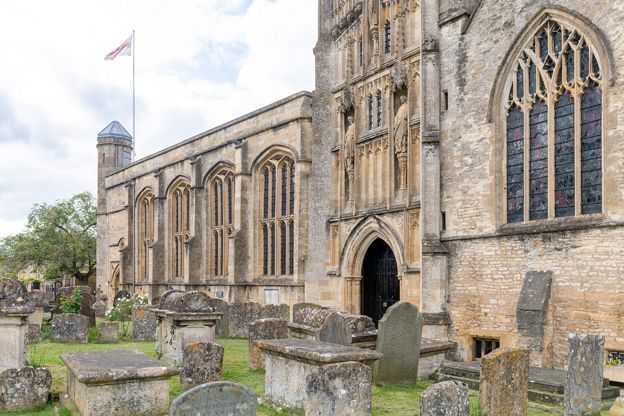
St John the Baptist, Burford
Sight · Church · Burford
St John the Baptist is Burford's great wool church by the Windrush: Norman at its core, with a fan-vaulted porch, the Tanfield and Harman monuments, and the font where a Leveller carved his name before three were shot in 1649. Grade I; open daily, free.
-
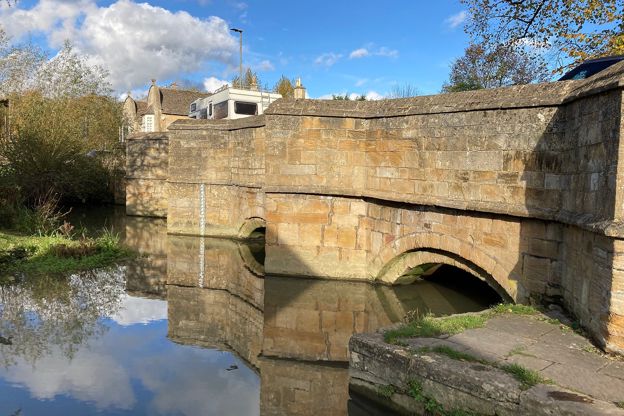
Burford Bridge
Sight · Bridge · Burford
Burford Bridge carries the road over the River Windrush at the foot of Burford's High Street: four low arches with pointed cutwaters, medieval in origin and heavily remodelled in 1791. Grade II*, on the way in and out of the town.
-
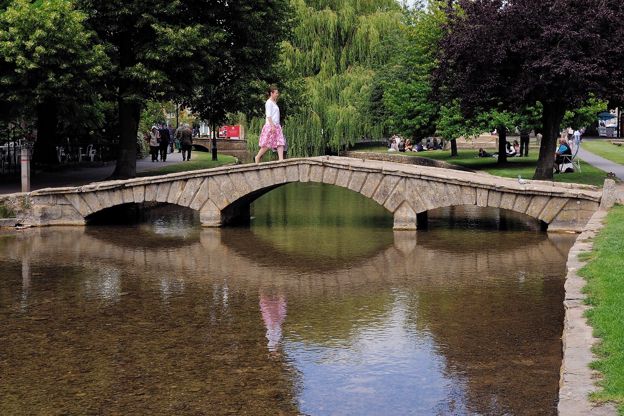
River Windrush
Sight · River · The Oxfordshire Cotswolds
The River Windrush rises on the high wolds of Gloucestershire and runs south-east through Naunton, Bourton-on-the-Water, Burford, Minster Lovell and Witney to join the Thames at Newbridge. Public footpaths follow much of it, and eight of our walks meet it.