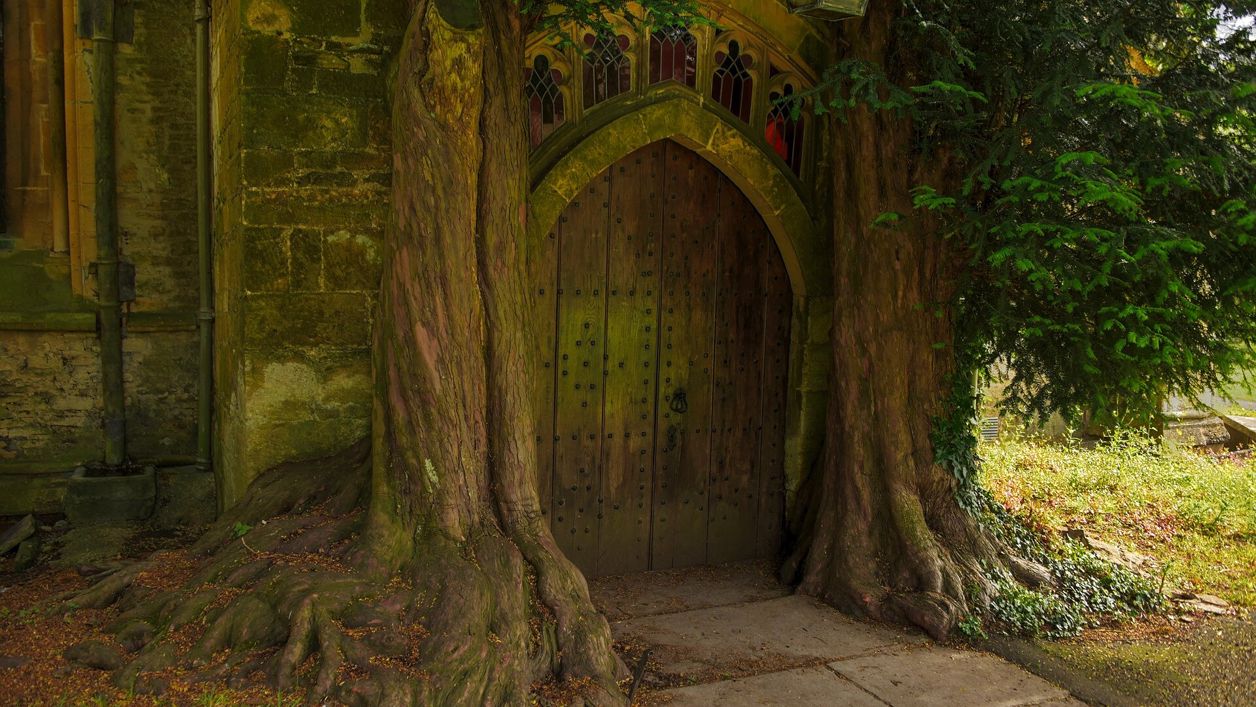
August Schwerdfeger, CC BY 4.0, via Wikimedia Commons
St Edward's Church, Stow-on-the-Wold
St Edward's is Stow-on-the-Wold's Grade I parish church, beside the Market Square, with a fifteenth-century tower seen across the wold and a north door framed by two yews. Royalist prisoners were held inside after the battle of 1646. Open daily.
Church
Stow-on-the-WoldSt Edward's Church stands on Church Street on the west side of the Market Square in Stow-on-the-Wold, its fifteenth-century tower a landmark for miles across the wold. Its north door, under a seventeenth-century porch, is framed by two old yews, and after the battle of Stow in 1646 more than 1,600 royalist prisoners were held inside. It is listed Grade I.
History
The town was once called Edwardstow, after its church, and a priest is recorded here by 1086; the Victoria County History thinks the saint most likely Edward the Martyr, though it cannot be sure. Nothing in the building is older than the twelfth century: the west wall of the nave and a reset capital in the south arcade.
The medieval church
By the end of the thirteenth century the church had its cross shape. The south arcade is early thirteenth century, the north aisle and arcade about 1300, and the north doorway, with its moulded arch of six orders, late thirteenth. In the fourteenth century the chancel was rebuilt and the great west window of the nave put in. The fifteenth century added the four-stage tower, with panelled battlements, gargoyles and crocketed pinnacles, the clerestory and a remodelled north transept. In the mid fifteenth century Robert Chester founded the guild or chantry of the Holy Trinity, which William Chester refounded in 1476.
The battle of Stow
Early in 1646 Sir William Brereton's parliamentary army caught Lord Astley's royalist force near Stow, in what is counted the last battle of the first Civil War. More than 1,600 prisoners were taken and shut in the church. A floor slab in the chancel remembers Francis Keyt, killed in the fight; the county history notes that 1645, often given, is the wrong year. By 1657 the church was so ruinous that it was unfit for use.
Restorations
Bishop Robert Frampton encouraged repairs in the 1680s, the church was repewed bit by bit in the early eighteenth century, and a west gallery went up in 1825. After a restoration in 1847 and a new nave roof in 1859, J L Pearson restored the church thoroughly in 1873, removed the gallery and built the south porch.
What to see
Start outside, at the north door.
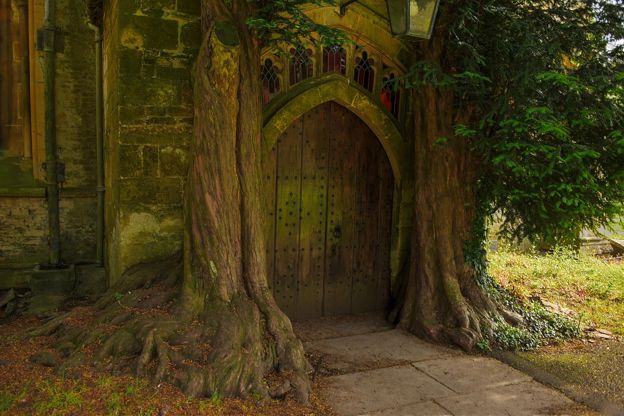
- The north doorway: late thirteenth century, six orders of mouldings, under a shallow seventeenth-century porch, with a yew growing either side. A local story links it to the doors of Moria in Tolkien; no evidence for the link has been found, so enjoy it as a legend
- The tower from the Market Square, and the clock facing the square, successor to one of the early sixteenth century
Inside:
- The unusually wide, round chancel arch, springing from the walls without columns, with a fifteenth-century sanctus bellcote above it outside
- In the chancel, a fourteenth-century piscina and part of a sedilia, still showing traces of colour, and the slab to Francis Keyt
- Monuments to John Chamberlayne, who died in 1668, and his family
- The large Crucifixion in the south aisle, attributed to the Flemish painter Gaspar de Crayer, given in 1838 by Joseph Chamberlayne Chamberlayne
- The late sixteenth-century goblet-shaped font
- The fourteenth-century west window, with flowing tracery under an ogee arch
Visiting
St Edward's is open every day, 9am to 5pm in summer and 9am to dusk in winter, and closes for weddings and funerals, so groups should check first. It is free to enter, but the church asks for a donation of £4 a person. There is water on the picnic tables for visitors, a prayer tree and a colouring table for children. For step-free access, A Church Near You says to use the churchyard entrance nearest to Huffkins on Church Street. The Sunday service is at 10.30am. Come early in the day to have the north door to yourself.
Getting there
The church is on Church Street (GL54 1BE), just off the Market Square. There is no parking at the church: use the Maugersbury Road car park (GL54 1HH, charged) a few minutes' walk away. Pulhams bus 801 stops in Stow about hourly every day, with a shorter day on Sundays, between Moreton-in-Marsh station, Bourton-on-the-Water and Cheltenham.
On foot, the Stow-on-the-Wold and Maugersbury walk finishes past the church on Church Street, and the Stow and Lower Swell walk passes about 100m away.
Nearby
A few steps away in the Square is the medieval market cross. For tea, the Old Bakery Tearoom is off Digbeth Street, and the Porch House, the Old Stocks Inn and the Kings Arms are inns in the middle of the town. A mile west, Lower Swell has the Norman church of St Mary, a war memorial thought to be to a Lutyens design and the Pineapple Spa. East of Stow, St Nicholas at Lower Oddington has a huge medieval Doom. Our story on the wool churches of the Cotswolds includes St Edward's.
Walks past St Edward's Church, Stow-on-the-Wold
-
Stow and Lower Swell
Walk · Starts in Stow-on-the-Wold · 1 hr, 45 mins · Circular · Dog-friendly
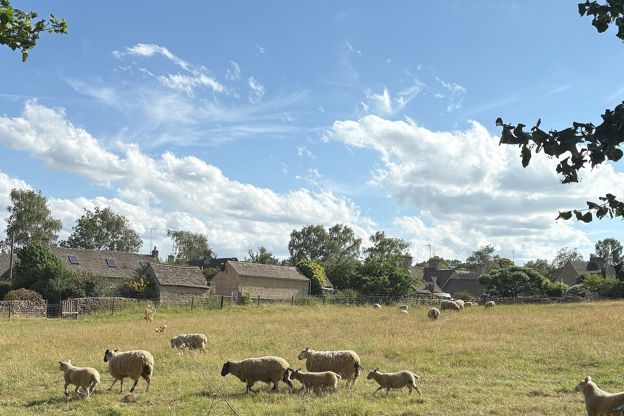
A 3.6-mile (5.8km) moderate loop from Stow-on-the-Wold of about an hour and three quarters, down the fields by Nether Swell to the River Dikler at Hyde Mill, up Mill Lane to Lower Swell's Norman church and Lutyens war memorial, and back to Stow beside the B4068.
-
Stow-on-the-Wold and Maugersbury
Walk · Starts in Stow-on-the-Wold · 2 hrs · Circular
A 3.75-mile (5.5km) circular walk without stiles from the Cross in Stow-on-the-Wold, easy with 130m of ups and downs and about two hours: past the Porch House and Maugersbury Manor to the Fosse Way, down to Hyde Mill and back up through white gates by Nether Swell.
Stay and eat near St Edward's Church, Stow-on-the-Wold
-
The Old Bakery Tearoom
Cafes and tearooms · Stow-on-the-Wold
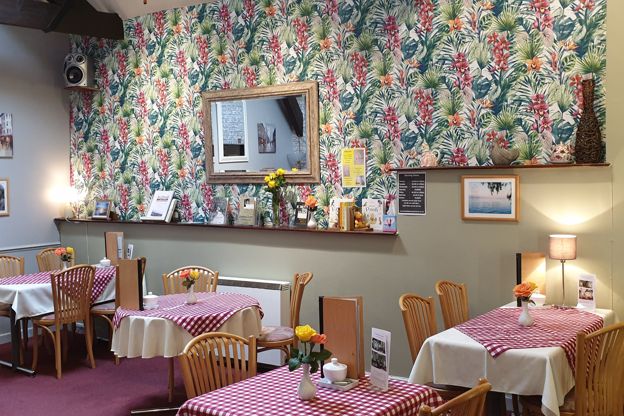
A tearoom in Fountain Court off Digbeth Street, Stow-on-the-Wold, run by Jackie and Alan since 2005, where all the food is made on the premises and dogs come in.
Dog-friendly
Verified Oct 2026
-
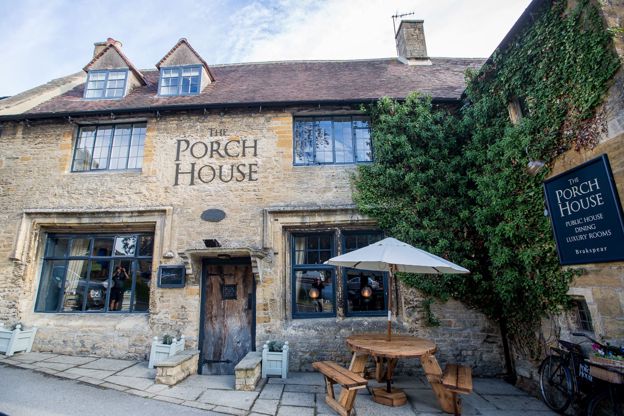
The Porch House
Inn · Stow-on-the-Wold
An inn with 13 rooms on Digbeth Street, Stow-on-the-Wold, serving breakfast, lunch and dinner every day, which calls itself England's oldest inn.
Dog-friendly
Verified Oct 2026
-

The Old Stocks Inn
Inn · Stow-on-the-Wold
A seventeenth-century coaching inn on the Square at Stow-on-the-Wold, with 16 rooms and a restaurant with two AA Rosettes.
Dog-friendly
Verified Oct 2026
Stories about St Edward's Church, Stow-on-the-Wold
-
Famous people with Cotswold connections
Story · History · 10 minute read
The writers, composers, scientists, queens and prime ministers whose lives are tied to Cotswold places, from Tyndale and Katherine Parr to Laurie Lee, Holst and Edward Thomas, and where to find their traces.
-
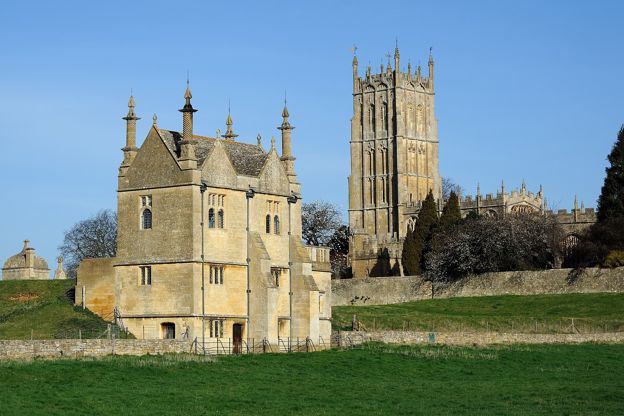
The Civil War in the Cotswolds
Story · History · 9 minute read
The storming of Cirencester and the battle of Lansdown in 1643, Sudeley Castle besieged and slighted, Campden House burned, the last battle of the first war at Stow in 1646, the Levellers at Burford and Chastleton's hidden Royalist, with where to see each.
-
The Fosse Way through the Cotswolds
Story · History · 8 minute read
The Roman road from Exeter to Lincoln through the Cotswolds: its line by Cirencester, Northleach, Stow, Moreton and Stretton-on-Fosse, where it is the A429 and where a green lane, the Saltway and the roads that cross it, the towns it made, and walks on it.
More sights to see
-
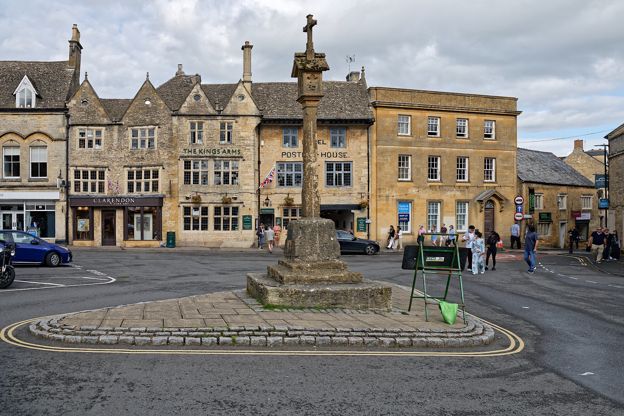
Market cross, Stow-on-the-Wold
Sight · Monument · Stow-on-the-Wold
Stow's market cross stands in the southern half of the Market Square: a medieval calvary and socket stone, probably of the fourteenth century, carrying a shaft and lantern head restored in 1878 and again in 1995, when its four carved panels were restored. Grade II and scheduled.
-
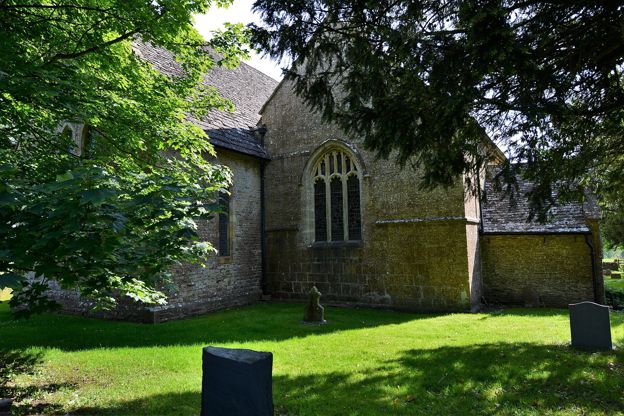
St Mary's Church, Lower Swell
Sight · Church · Stow-on-the-Wold
St Mary's at Lower Swell, a mile west of Stow, is two churches in one: a twelfth-century nave and chancel, now the south aisle and chapel, beside a larger church of 1852. Its Norman doorway has a Tree of Life tympanum and its old chancel arch rare carvings. Grade II*.
-
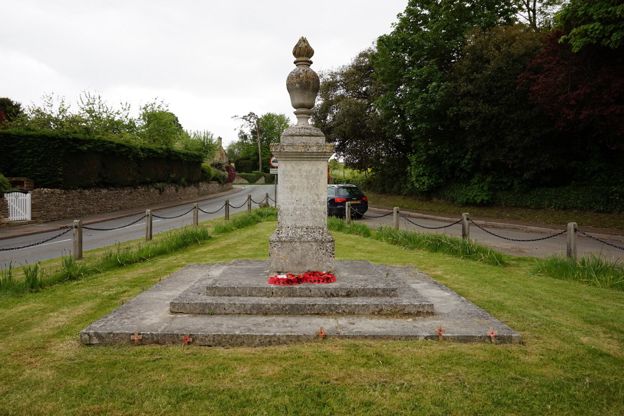
Lower Swell war memorial
Sight · Monument · Stow-on-the-Wold
Lower Swell's war memorial is a flaming urn on a stone pedestal on the village green, designed by Sir Edwin Lutyens and unveiled in 1921. Lutyens had worked at Abbotswood nearby for Mark Fenwick. It is on the Stow and Lower Swell walk, open at all times. Grade II.