Michael Garlick, CC BY-SA 2.0, via Wikimedia Commons
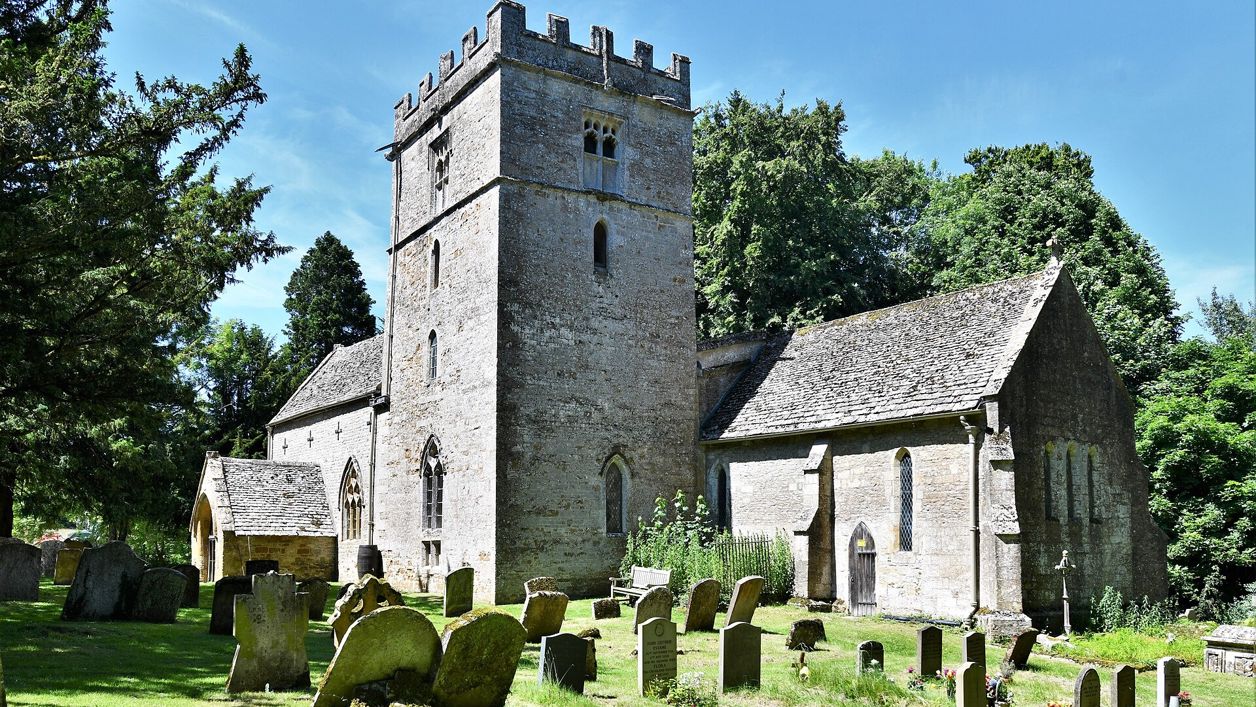
St Nicholas's Church, Lower Oddington
A Grade I church in the woods at Lower Oddington, near Stow-on-the-Wold, left almost unaltered when a new church was built in 1852. Its north wall carries a huge fourteenth-century Doom, hidden under whitewash until 1913. Open daily; no electricity.
Church
Stow-on-the-WoldSt Nicholas's Church stands on its own in the woods at the end of Church Road, Lower Oddington, about 3 miles (5km) east of Stow-on-the-Wold. Begun in the twelfth century and all but abandoned in 1852, it was left almost untouched by the Victorians, and its north wall carries one of the largest medieval Doom paintings in the country. It is listed Grade I.
History
St Nicholas's is a church that lost its village and then lost its congregation, which is why so much of its medieval fabric survives. The Norman nave of the twelfth century is the present south aisle; in the thirteenth century a tower and chancel arch were built at its east end and a wider nave was added to the north, and the porch, the top of the tower, the west window, the nave roof and the font followed in the fourteenth and fifteenth centuries.
The archbishops of York
The church first belonged to St Peter's Abbey at Gloucester, and in 1157 it passed to the archbishops of York. Oddington became one of their houses: in the thirteenth century Henry III often stayed here, and in 1236 royal oaks were sent to build stables. The Victoria County History finds the archbishops living here now and then until 1315, perhaps until 1356. In 1545 the manor was exchanged with the Crown, which granted it in 1552 to Sir Thomas Chamberlayne; a later Thomas Chamberlayne, who died in 1640, has the grandest monument in the chancel.
The village that moved
The original village probably lay around the church, and it drifted north to the road from Stow, so that Lower Oddington was a compact settlement by the end of the sixteenth century. A local tradition blames the Black Death, but the Victoria County History finds no fall in the population to support it. In about 1624 to 1630 the walls were whitewashed, hiding the medieval paintings.
Abandoned and found again
By the nineteenth century the church was a long walk from both Lower and Upper Oddington, and in 1852 the parish built the Church of the Holy Ascension midway between them. St Nicholas's was then used only for funerals. It was restored in 1913, when the eighteenth-century west gallery came out and the whitewash came off the paintings (some accounts give 1912), and it has held occasional services ever since. Eve Baker conserved the paintings from 1969.
What to see
The Doom fills most of the north wall of the nave. The listing dates it to the middle of the fourteenth century and the Victoria County History to the later part of it, and the National Churches Trust calls it perhaps the largest Doom in Britain. It is faded and damaged, so give your eyes time:
- Christ sits in judgement in the middle, the orb of the world at his feet, though the upper part of the figure is lost
- Angels below him blow the last trumpet, and St Peter, in a papal tiara, stands with the saved on their way to heaven, drawn as a tall tower whose wall one soul seems to be climbing
- On the right the damned are driven off by a hoofed devil, crowned and mitred heads among them, past a gibbet and a cauldron of souls to the mouth of Hell
- Beyond it the painting runs into a scene of the Seven Deadly Sins, partly overpainted in the fifteenth century
Look also for traces of paint on the twelfth-century arches and above the image niches by the altar, a small painting in the south chapel that the National Churches Trust thinks may show the Nativity or the life of the Virgin, and the royal arms of William IV painted over a medieval picture above the chancel arch. In the fourteenth-century porch, Historic England's listing notes incised lines on the stone benches where yeomen are reputed to have sharpened their arrows, and a mass dial to the left of the entrance; the benefice counts three scratch dials on the porch's western jamb, probably used to show the times of services.
The fittings are those of a country church that nobody had the money to modernise: a fifteenth-century font, a seventeenth-century pulpit with its sounding board, a fifteenth-century oak bench with carved ends, and commandment boards in the niches by the altar. The monument to Thomas Chamberlayne, who died in 1640, has Doric columns with skulls and bones at its foot, and plaques remember the Rice family, among them Edward Rice, rector here, who became Dean of Gloucester in 1825. In the churchyard, the monument to Margaret Parsons is listed Grade II* in its own right.
Visiting
St Nicholas's is open every day and free to visit. There is no electricity or running water, so it is lit only by its windows: come on a bright day, and late morning or early afternoon, to see the paintings best. Services are held on the third Sunday of the month from April to September, and by candlelight on St Nicholas Day (6 December) and at 6pm on Christmas Eve. The church's National Churches Trust entry says it is dog friendly and has level access to the main areas.
Getting there
St Nicholas's is reached by car or on foot from Lower Oddington, a village on the A436 between Stow-on-the-Wold and Chipping Norton. Follow Church Road to its end, about 700m by road from the Fox; the church gives its postcode as GL56 0XE, and its National Churches Trust entry lists on-street parking by the church and more within 250m. The Kingham, Daylesford and the Evenlode walk explores the valley a little to the east.
Nearby
The Fox at Oddington is a short walk back up the village, and Daylesford Farm, with its café and shop, is about 1.2km to the east as the crow flies (about 2.7km by road). The Adlestrop railway sign and seat are a few minutes' drive north, the River Evenlode runs below the village, and in Stow St Edward's Church is the town's own medieval church.
Walks past St Nicholas's Church, Lower Oddington
-
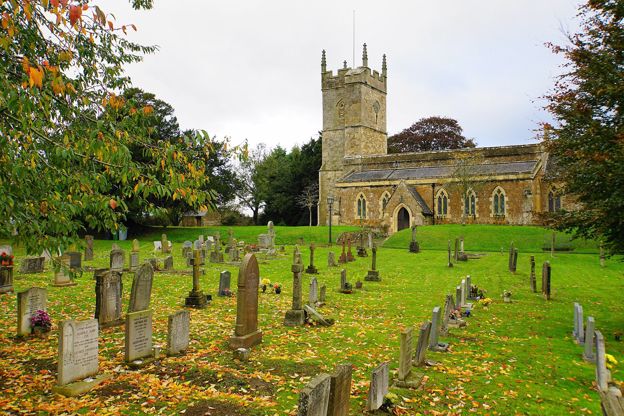
Kingham, Daylesford and the Evenlode
Walk · Starts in Kingham · 1 hr, 30 mins · Circular · Dog-friendly
A flat 4.4-mile (7.1km) circular walk of about an hour and a half from Kingham: north-west on bridleways across Daylesford's fields to the Evenlode, back down the river meadows and over the Cotswold Line on the level. Walkers report it wet and often flooded in winter.
Stay and eat near St Nicholas's Church, Lower Oddington
-
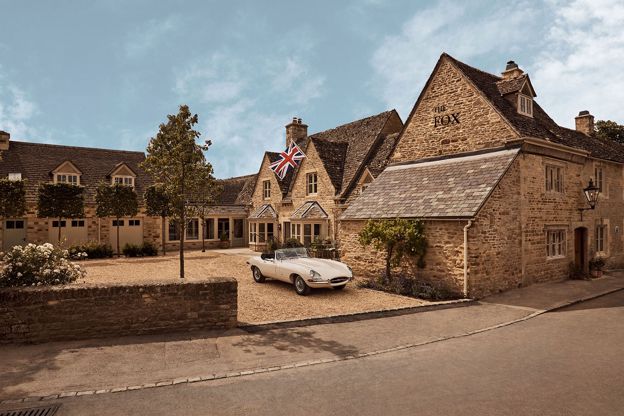
The Fox at Oddington
Inn · Kingham
A Daylesford pub with rooms at Lower Oddington, with the four-bedroom Coachman's House opposite for self-catering groups of up to eight.
Dog-friendly · Family-friendly
Verified Oct 2026
-
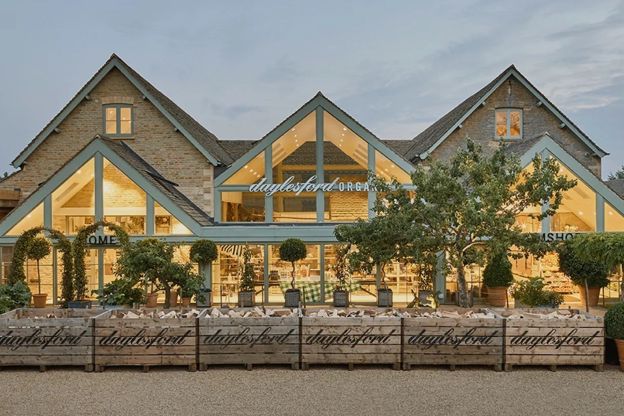
Daylesford Farm
Farm shops and delis · Kingham
The farm shop, restaurant and café at Daylesford near Kingham, open every day, with the Trough holding a Green Michelin star.
Dog-friendly
Verified Nov 2026
-
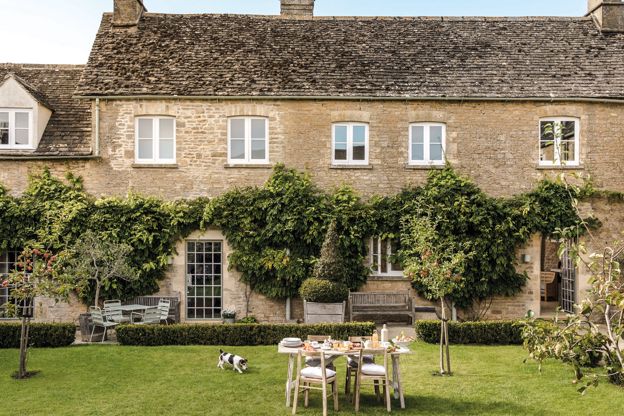
Daylesford Stays cottages
Self-catering · Kingham
Self-catering cottages in Daylesford village and on Daylesford's organic farm near Kingham, all within two miles of the farm shop, and all of them dog-friendly.
Dog-friendly
Verified Nov 2026
Stories about St Nicholas's Church, Lower Oddington
-
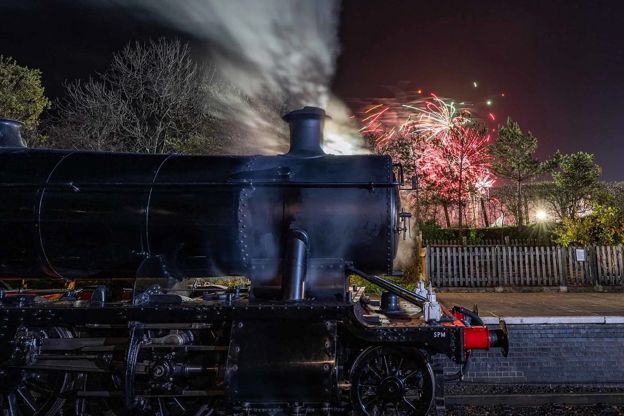
Christmas in the Cotswolds
Story · Guides · 10 minute read
Christmas in the Cotswolds: Blenheim's and Sudeley's light trails, Christmas markets at Cogges and Stroud, steam trains to Broadway's late-night shopping, candlelit carols, Boxing Day mummers, winter walks and inns with fires.
-
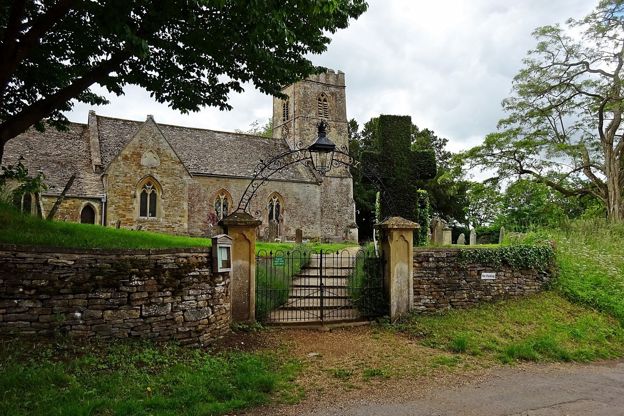
Edward Thomas and Adlestrop
Story · History · 8 minute read
The express that stopped at Adlestrop in June 1914, the poem Edward Thomas made of it, the station that closed in 1966, and the sign and bench in the village bus shelter today.
More sights to see
-
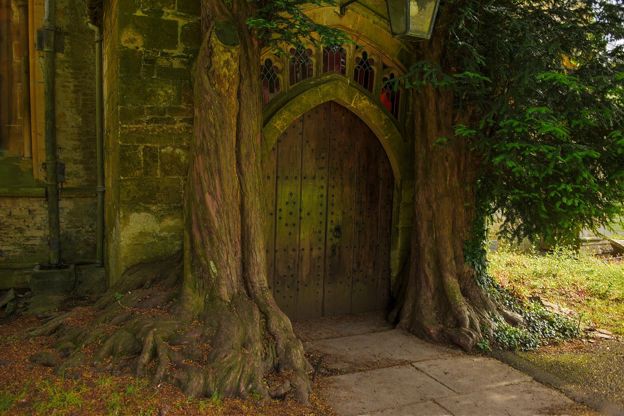
St Edward's Church, Stow-on-the-Wold
Sight · Church · Stow-on-the-Wold
St Edward's is Stow-on-the-Wold's Grade I parish church, beside the Market Square, with a fifteenth-century tower seen across the wold and a north door framed by two yews. Royalist prisoners were held inside after the battle of 1646. Open daily.
-
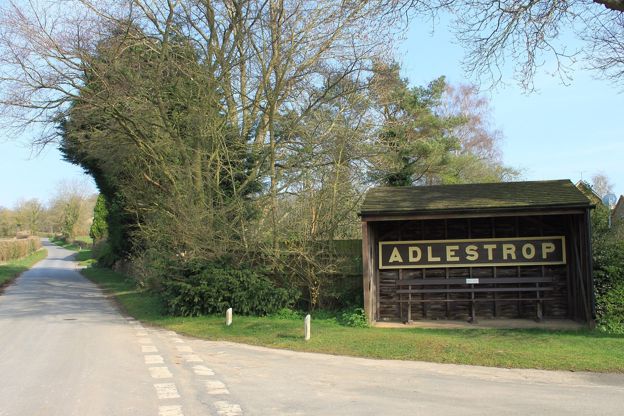
Adlestrop railway sign and seat
Sight · Monument · The Oxfordshire Cotswolds
The Great Western Railway sign and bench from Adlestrop's lost station stand in the village bus shelter, where they were set up in the early 1970s. Edward Thomas's train stopped here in June 1914, and his poem Adlestrop made the name famous. Grade II; free to see.
-
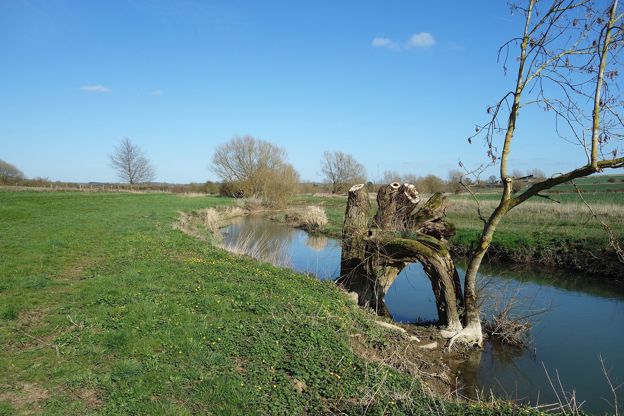
River Evenlode
Sight · River · Kingham
The Evenlode is the river of the valley below Kingham, rising in the Cotswold limestone and flowing south-east to the Thames; near Kingham it runs beside the Cotswold Line past Bledington and Daylesford and for a stretch marks the Oxfordshire and Gloucestershire boundary.