Edward Thomas and Adlestrop
A train paused at a country halt on a hot June day in 1914, nobody got on or off, and a passenger wrote down the birdsong. The station has gone; the name on its sign has not.
· 8 minute read
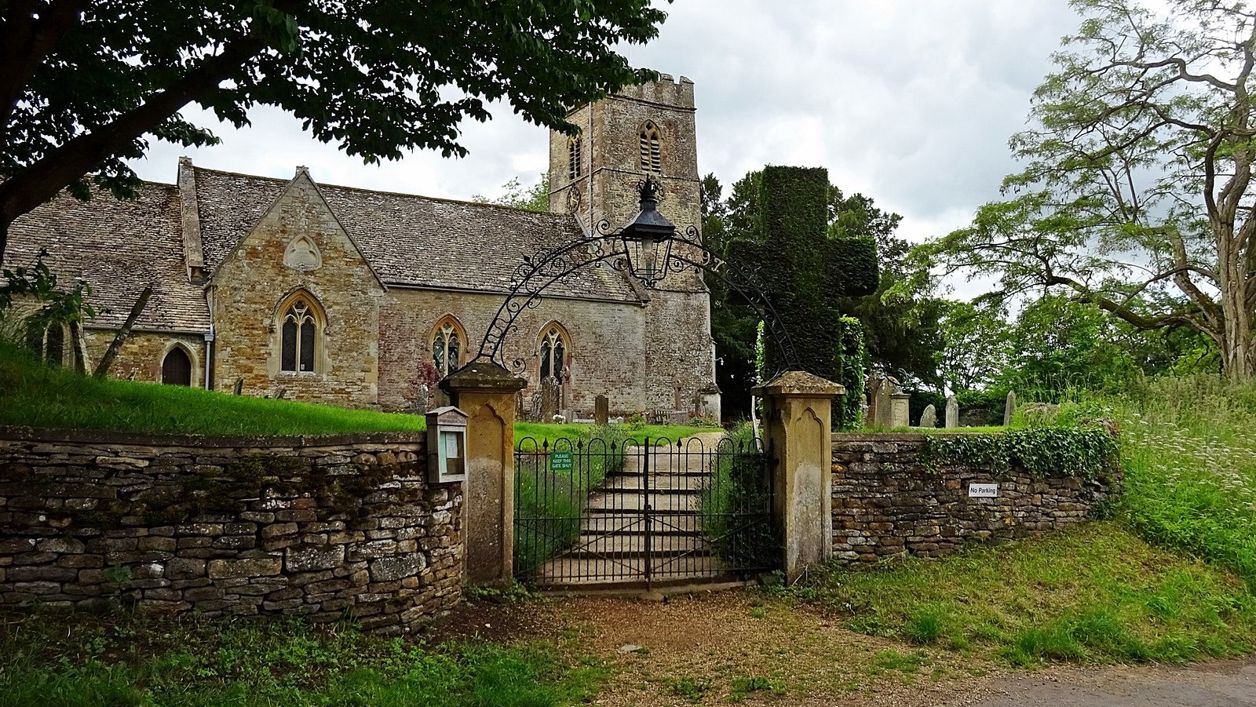
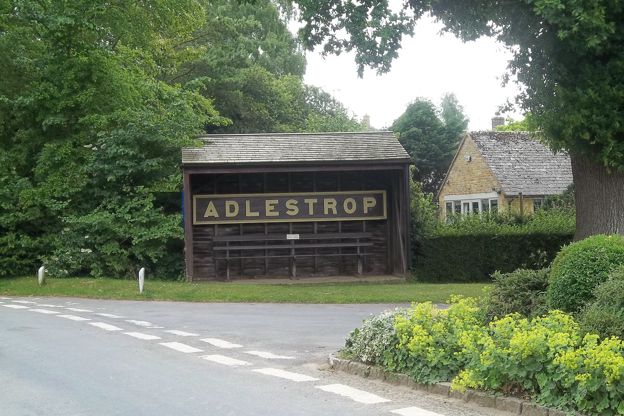
In June 1914 an express train from London Paddington stopped briefly at Adlestrop, a small station on the line to Worcester, and one of its passengers, the writer Edward Thomas, noted the silence and the birds. The next year he turned the note into Adlestrop, a poem of sixteen lines that is now one of the best known in English. The station closed in 1966, but its sign and a platform bench hang in the bus shelter in Adlestrop, free to see at any time.
The facts behind the poem are small, and that is the point of it. Nothing happened: the train stopped where it did not usually stop, no one came or went, and for a minute a man in a carriage heard a blackbird. Within three years the man was dead in France and the England he had heard had changed, which is why people still come to read the poem by the sign.
The train that stopped
The stop is recorded in Thomas's own field notebook, which Matthew Hollis's account, cited by Lancaster University in 2014, dates to 24 June 1914. The notebook notes the time, about a quarter to one, the blackbirds and a thrush singing, nobody to be seen, and the hiss of the engine letting off steam.
Not everyone reads the date the same way: the notes to the University of Toronto's online edition of the poem (opens in a new tab) give the notebook entry as 23 June. The usual date is 24 June. Either way it was a hot day at the end of June, and the poem says so in four words: 'It was late June.'
Thomas was a critic, a biographer and a writer of country books, not yet a poet. The Edward Thomas Fellowship (opens in a new tab) records that he met the American poet Robert Frost in 1913, became his close friend, and began writing verse only in December 1914, six months after the train stopped.
The poem
Adlestrop was written in 1915, from the notebook, and it remembers the moment rather than describing it as it happened. It opens with the word 'Yes', as if answering a question, recalls the heat and the empty platform and the name on the board, and then widens, line by line, from one bird near the train to 'all the birds / Of Oxfordshire and Gloucestershire'.
The poem is out of copyright, and anthologies and the plaque in the shelter give it in full, so we quote only those few words. It is best read where it is set, on the bench under the sign, and it takes less than a minute.
How the poem was published
Thomas never saw Adlestrop in print. He enlisted, and he was killed at the Battle of Arras on Easter Monday, 9 April 1917. The poem appeared in the New Statesman about three weeks later, according to Lancaster University's note, and then in Poems, the collection published in 1917 under the name Edward Eastaway, which he had already used for Six Poems in 1916.
That order matters to how it is read. The war is not in the poem, but it is in the dates around it, and many readers have heard the stopped train and the singing birds as the last summer before everything changed. Thomas wrote it in 1915, with the war already a year old.
The station and its closure
Adlestrop station opened in 1853 on the Oxford, Worcester and Wolverhampton Railway, which became part of the Great Western in 1863, and it closed in 1966. The Victoria County History (opens in a new tab) notes that it actually stood in Oddington parish and was first called Adlestrop and Stow Road.
The line itself is still open: the Cotswold Line trains from London Paddington to Worcester run past the site without stopping. The nearest station now is Kingham, about 5 miles away by road, and our guide to Kingham covers the trains and the walks from it.
The sign and the bench
After the station closed, British Rail gave the village the platform sign and a bench, and in the early 1970s they were set up in the bus shelter on Evenlode Road, beside the village hall, as a memorial to the station. Historic England listed both at Grade II (opens in a new tab) in 2017, for their part in the poem and as unaltered railway fittings.
The sign is a painted timber board with the name in raised letters. The bench below it has a cast-iron frame with the GWR monogram on each of its three legs, and in June 2014, a century after the stop, a plaque with the poem was fixed to it. Our page on the Adlestrop railway sign and seat describes them in detail.
The Cotswolds Info newsletter
Events, new places and the best of the season, about once a month. Unsubscribe at any time.
Jane Austen at Adlestrop
The village had a literary visitor a century before Thomas. Jane Austen, a relation on her mother's side of the Leigh family who owned Adlestrop, stayed at the rectory three times when the Rev Thomas Leigh was rector, from 1762 to 1813, according to the Evenlode Vale churches, who call him her mother's cousin; Historic England's listing for the house calls him her uncle and her a frequent visitor.
The former rectory is now Adlestrop House, beside St Mary Magdalene's church, and Adlestrop Park, the Leighs' house with its Gothick front by Sanderson Miller, stands behind the churchyard wall. Both are private homes, seen from the lane and the footpath. Our guide to Adlestrop has the church and the village's longer history.
Visiting Adlestrop
Adlestrop is a small village off the A436 between Stow-on-the-Wold and Chipping Norton, and the shelter is on Evenlode Road by the village hall. Park with care and do not block the road or the bus stop.
There is no pub or shop in the village. Daylesford Farm is a little over 1.5km away for food, and the Fox at Oddington is a village pub a similar distance south-west. Pulhams' 803 bus calls at the Evenlode turn on Tuesdays only, once each way (a morning bus towards Moreton-in-Marsh and a midday one back towards Bourton-on-the-Water when we checked), so most people drive or come on foot. Late June, when Thomas came, is the obvious time; any still afternoon will do.
The Evenlode valley around it
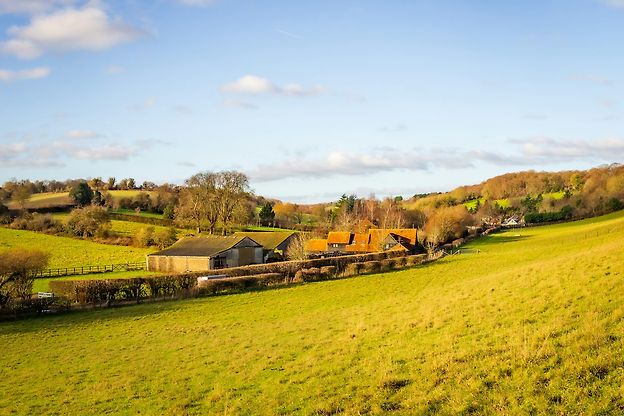
The fields Thomas looked out on are the Evenlode valley, where the River Evenlode marks the county boundary between Gloucestershire and Oxfordshire, so both of the poem's counties are in view. Footpaths cross it to Daylesford, Kingham and the Oddingtons.
In Lower Oddington, a short drive west, St Nicholas's Church has a medieval Doom painting on its north wall. Our guide to the Oddingtons has the walk and the pubs.
Mentioned in this story
The places, sights and walks in this story, each with a page of its own: what it is, when to go and how to get there.
-
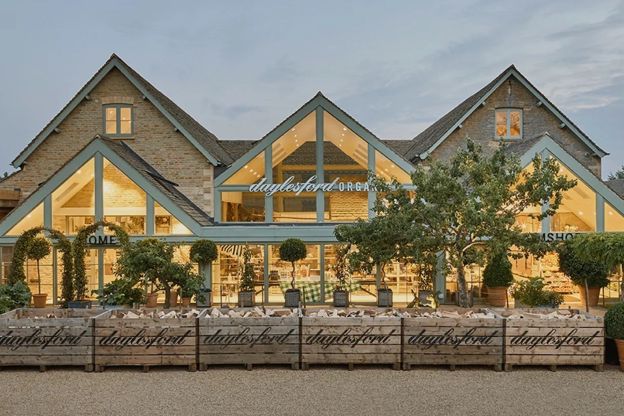
Daylesford Farm
Farm shops and delis · Kingham
-
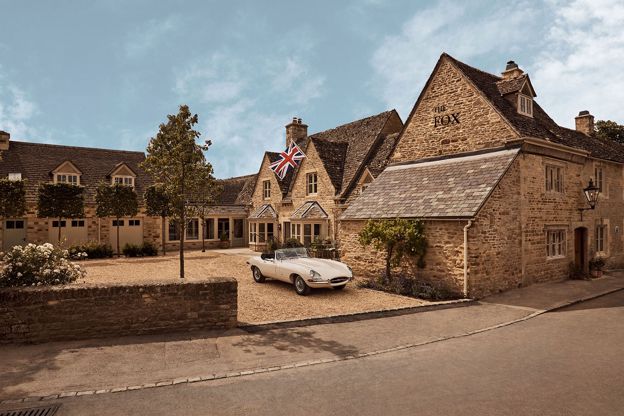
The Fox at Oddington
Inn · Kingham
-
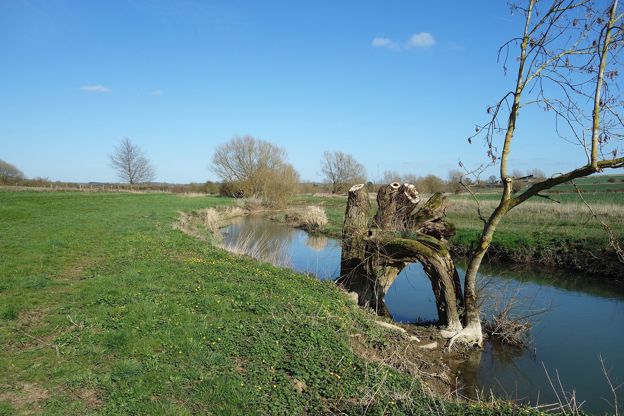
River Evenlode
Sight · River · Kingham
-
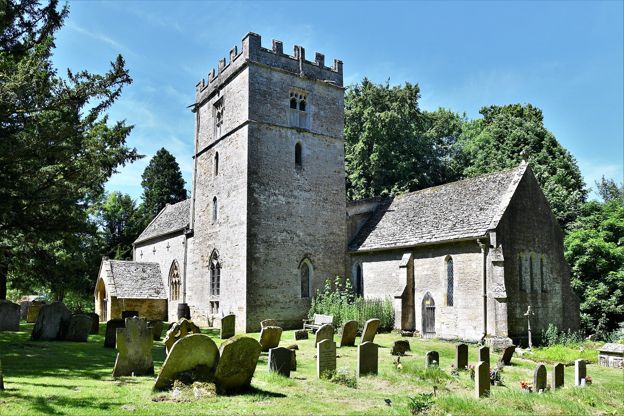
St Nicholas's Church, Lower Oddington
Sight · Church · Stow-on-the-Wold
Places to stay near Adlestrop
-
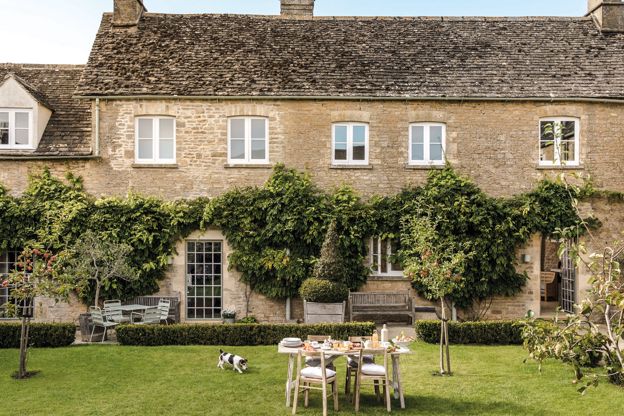
Daylesford Stays cottages
Self-catering · Kingham
Self-catering cottages in Daylesford village and on Daylesford's organic farm near Kingham, all within two miles of the farm shop, and all of them dog-friendly.
Dog-friendly
Verified Nov 2026
-
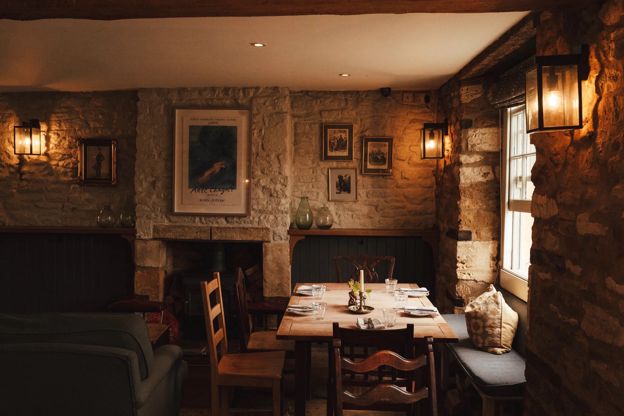
The Kingham Plough
Inn · Kingham
A pub with six rooms and a cottage on the green at Kingham, open daily from 8.30am, with dogs and families welcome.
Car-free · Dog-friendly · Family-friendly
Verified Nov 2026
-
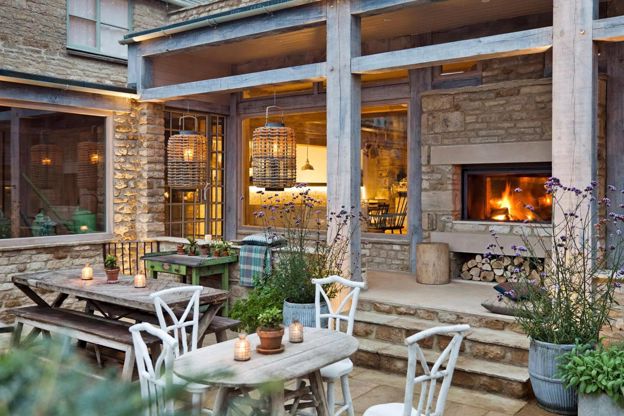
The Wild Rabbit
Inn · Kingham
A Daylesford pub with rooms and cottages in a 17th-century house at Kingham, with three AA Rosettes and dinner from Wednesday to Sunday.
Wedding venues
Verified Nov 2026
Read next
-
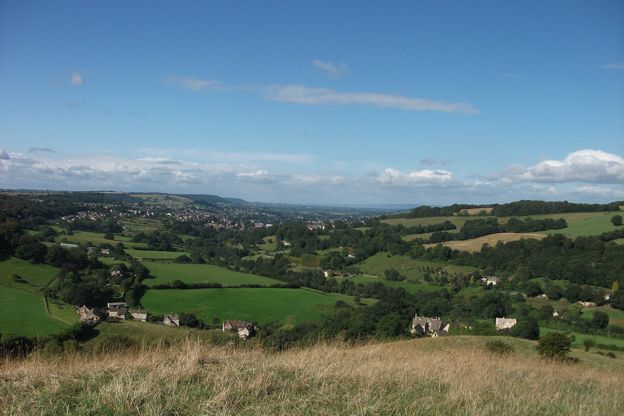
Laurie Lee and Slad
Story · History · 9 minute read
Laurie Lee's life and the Slad valley he wrote into Cider with Rosie: the cottage, the Woolpack, his grave at Holy Trinity, the Sheepscombe cricket field and the Wildlife Way.
-
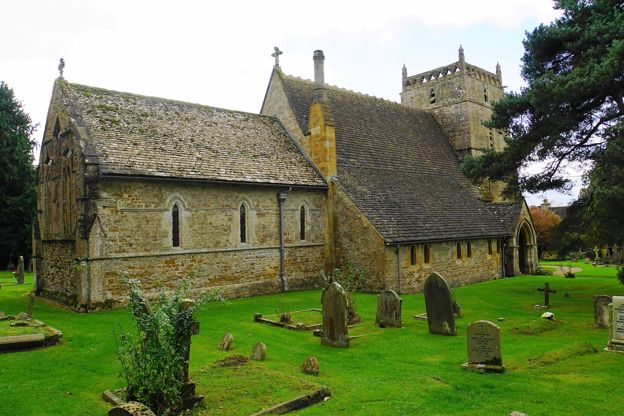
Gustav Holst and the Cotswolds
Story · History · 8 minute read
The composer of The Planets was born in Cheltenham, was organist at Wyck Rissington as a teenager and wrote a symphony called The Cotswolds: where to see and hear his Cotswold years.
-
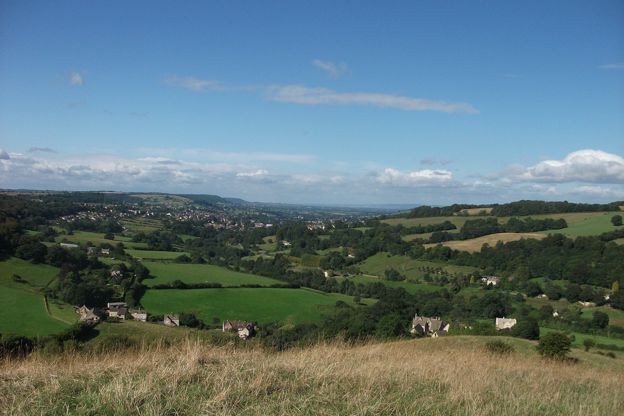
Famous people with Cotswold connections
Story · History · 10 minute read
The writers, composers, scientists, queens and prime ministers whose lives are tied to Cotswold places, from Tyndale and Katherine Parr to Laurie Lee, Holst and Edward Thomas, and where to find their traces.