Gustav Holst and the Cotswolds
Before The Planets, Gustav Holst was a Cheltenham boy with a church organ in a village east of Bourton and a symphony named after the hills. This is where to find him.
· 8 minute read
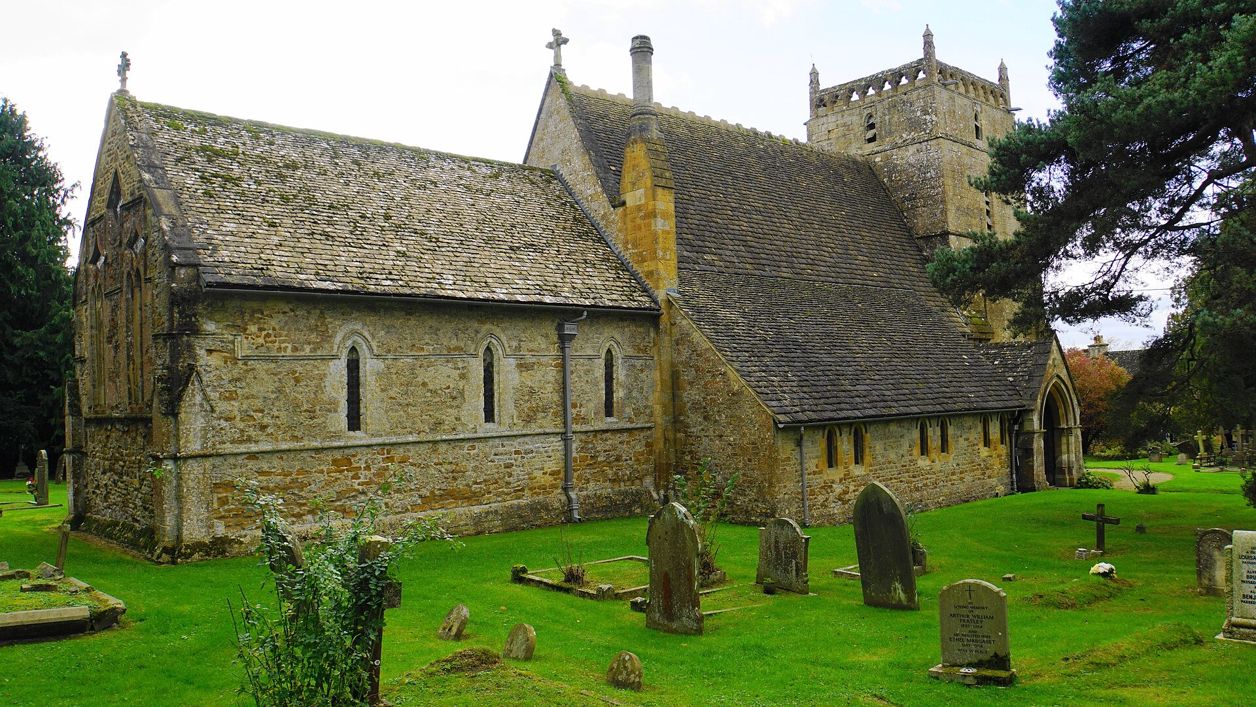
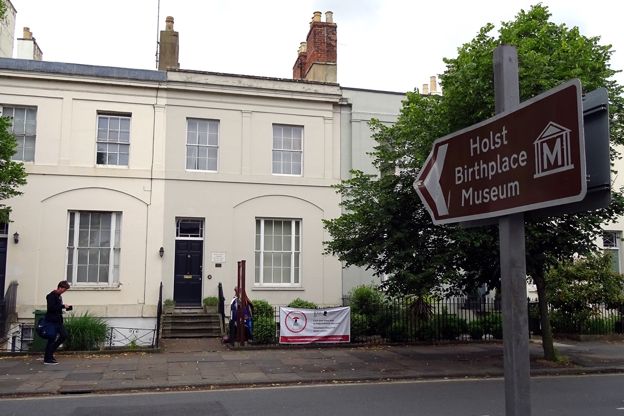
Gustav Holst was born in Cheltenham on 21 September 1874, in the house on Clarence Road that is now Holst Victorian House (opens in a new tab), and he was organist at St Laurence's, Wyck Rissington, in 1892 and 1893, shortly after leaving school. A few years later he wrote a symphony he called The Cotswolds. Those are his real Cotswold connections, and two of them can be visited on the same day.
He is remembered for The Planets, written between 1914 and 1916, long after he had left Gloucestershire for London. The Cotswold years are the beginning: a boy learning music in a spa town, a teenage organist in a village church, and a young composer looking back at the hills while he worked in the city.
Born in Cheltenham
Holst was born on 21 September 1874 at 4 Clarence Road, in the Pittville district of Cheltenham, a terrace house opposite the gates of Pittville Park; his parents had moved in a few months before. The house is now a museum, Holst Victorian House, and it describes itself as his birthplace.
His father taught the piano, and music was the family trade. The house today is shown as a Victorian family home of the late nineteenth century, with restored period rooms from the working kitchen to the formal drawing room, and the museum's collection includes Holst's own piano, a Collard and Collard, and a portrait of him by Bernard Munns.
What to see at Holst Victorian House
Holst Victorian House opens from Tuesday to Saturday, 10am to 4pm, and on Sundays from midday to 4pm, with last admission at 3.30pm; it is closed on Mondays except bank holidays. An adult ticket is £10 (2026), young adults aged 16 to 25 pay £5, and under-16s go free with a paying adult. Art Fund members and carers go free too.
You can book ahead or pay at the door. There is no car park: the museum points drivers to the NCP car park on Portland Street, about three minutes' walk away, or to up to four hours' free parking on nearby streets such as Albert Road. From Cheltenham Spa station the D bus stops at Holy Trinity Church, a minute from the door. The museum's access page says the house is a Grade II listed building on four floors with no lift, narrow stairs and five steps up to the front door, with seating on every level and a toilet in the basement but no fully accessible toilet. An exhibition on the painter Theodor von Holst opened at the house on 10 October 2026 and runs until 30 May the following year.
Organist at Wyck Rissington
As a teenager Holst was organist at St Laurence's Church, Wyck Rissington, a village east of Bourton-on-the-Water, and the Victoria County History (opens in a new tab) records that the organ carries an inscription saying he played it as parish organist in 1892 and 1893. The parish council says he came to it shortly after leaving school in Cheltenham.
The sources disagree on whether he started in 1891 or 1892, so we follow the inscription. In 1893, at seventeen, he left Cheltenham to study composition at the Royal College of Music in London, and the Cotswolds became the place he came from.
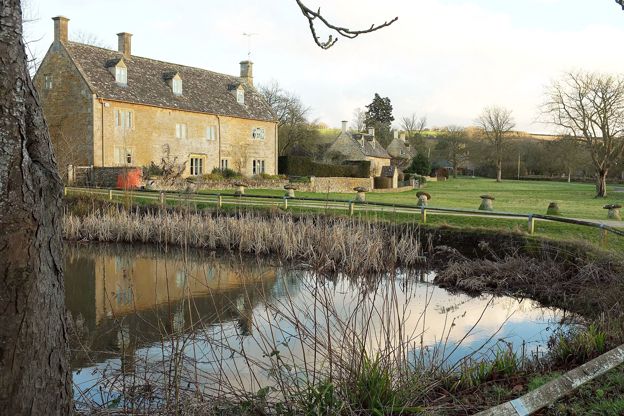
St Laurence's Church is a small Grade I church, consecrated in 1269, with a twelfth-century corbel table under the eaves, a tub font of about 1200 and an east wall of paired lancets, and the parish council says the organ he played is still in use. Our guide to the Rissingtons covers the green, the pond and the two neighbouring villages.
Walking to Wyck Rissington
The best way to arrive is on foot, across the fields from Bourton. Our walk from Bourton-on-the-Water to Wyck Rissington is a 4-mile (7km) loop without stiles that follows the Oxfordshire Way over the Eye and the Dikler, passes the green and the church at about halfway, and comes back by Rissington Mill.
There is no pub, shop or car park in Wyck Rissington, so park in Bourton and bring what you need. The Gustav Holst Way, a walking route of about 28 miles from Cranham by way of Cheltenham, ends at the church, according to the parish council.
The Cotswolds symphony
Holst's Symphony in F, The Cotswolds, Op. 8, was written in 1899 and 1900, a few years after he had played trombone in the Queen's Hall Orchestra in London, and its slow movement is an elegy for William Morris. It was played once in his lifetime, by the Bournemouth Municipal Orchestra in 1902, the first time a professional orchestra performed his work.
The elegy is the heart of it. Holst had conducted the Hammersmith Socialist Choir in the 1890s, and the composer Colin Matthews, writing in 2018, calls Morris his mentor and the slow movement 'by some way the most personal and eloquent music that Holst had yet written'. Morris had died in 1896 and is buried at Kelmscott, by the upper Thames; our story on William Morris and the Cotswolds has the house and the grave.
What the symphony says about the hills is harder to pin down. The notes say little about the landscape itself, and Matthews calls the outer movements relatively conventional. The title is a young man's dedication to the country he grew up in, more than a description of it.

The Cotswolds Info newsletter
Events, new places and the best of the season, about once a month. Unsubscribe at any time.
Where to hear Holst's Cotswold music
The symphony is rare in concert halls, so the way to hear it is on record: the BBC Philharmonic and Sir Andrew Davis recorded it for Chandos in Salford in January 2018, with notes by Colin Matthews. Listen to the elegy before a visit to Kelmscott and it makes more sense of both.
The Cheltenham Music Festival programme is the place to look for live Holst in his home town. At Wyck Rissington the parish council lists services on the second and fourth Sundays of the month; the church is a working church first and a Holst site second.
Thaxted and Chichester are elsewhere
Holst's later life belongs to other counties, and it is worth knowing so you do not go looking for it here. He later settled at Thaxted in Essex, and he spent his working life in London, at Morley College and at St Paul's Girls' School, where he was director of music until his death.
He died in London on 25 May 1934. His ashes were buried in the north transept of Chichester Cathedral, in Sussex, beneath the memorial to the Tudor composer Thomas Weelkes; the stone there now was designed by Alec Peever in 2009. None of that is Cotswold, and neither is The Planets.
A Holst day in the Cotswolds
Start in Cheltenham at Holst Victorian House when it opens at 10am on a Tuesday to Saturday, and allow an hour. Drive or take the 801 bus to Bourton, about 45 minutes, walk the loop to Wyck Rissington and back in about two hours, and finish in Bourton, where there is food all day.
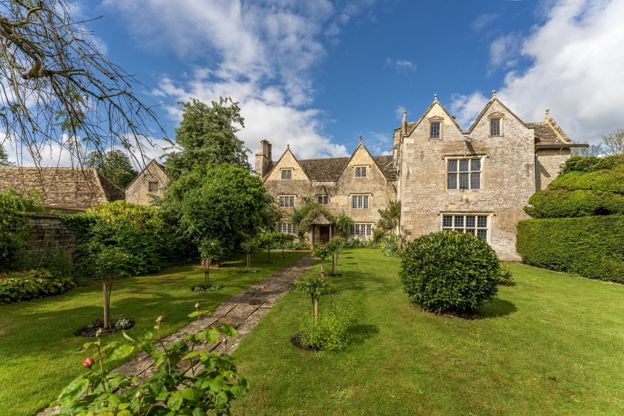
Kelmscott Manor, where Morris lived, is the third point of the triangle, but it opens only from Thursday to Saturday between April and October, so a full Holst and Morris day needs one of those; it closes for the winter at the end of October and reopens in April. Our Kelmscott Manor listing has its times and timed tickets.
Mentioned in this story
The places, sights and walks in this story, each with a page of its own: what it is, when to go and how to get there.
-
Kelmscott Manor
Historic houses and heritage · Lechlade-on-Thames
Places to stay near Cheltenham
-
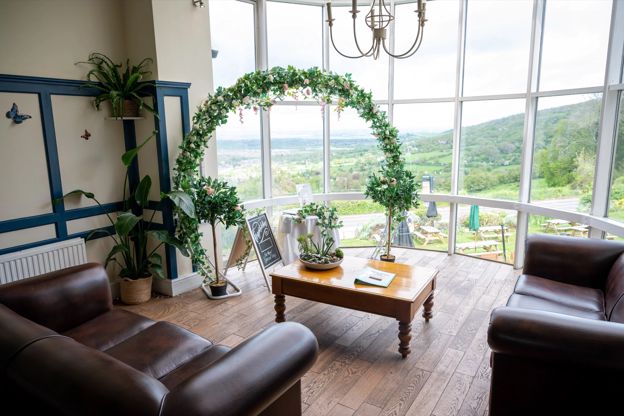
The Rising Sun Hotel
Hotel · Cleeve Hill
A Greene King Inns hotel, pub and restaurant with 23 bedrooms near the top of Cleeve Hill, with views over five counties from its beer garden.
Dog-friendly · Walker-friendly
Verified Nov 2026
-
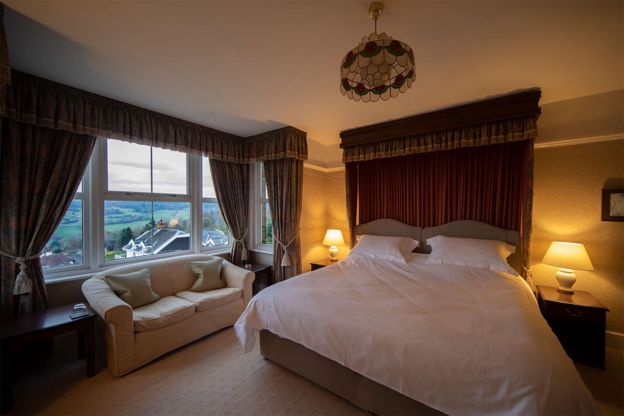
Cleeve Hill Hotel
B&B · Winchcombe
A 12-room bed and breakfast hotel on Cleeve Hill, about three miles south-west of Winchcombe, with views over the Severn Vale and a door onto Cleeve Common and the Cotswold Way.
Walker-friendly · Dog-friendly
Verified Oct 2026
Read next
-
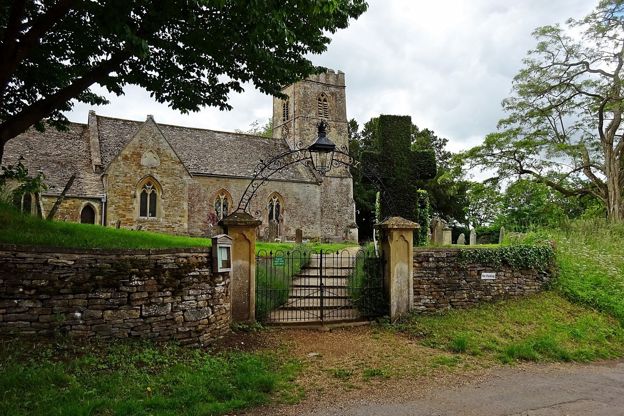
Edward Thomas and Adlestrop
Story · History · 8 minute read
The express that stopped at Adlestrop in June 1914, the poem Edward Thomas made of it, the station that closed in 1966, and the sign and bench in the village bus shelter today.
-
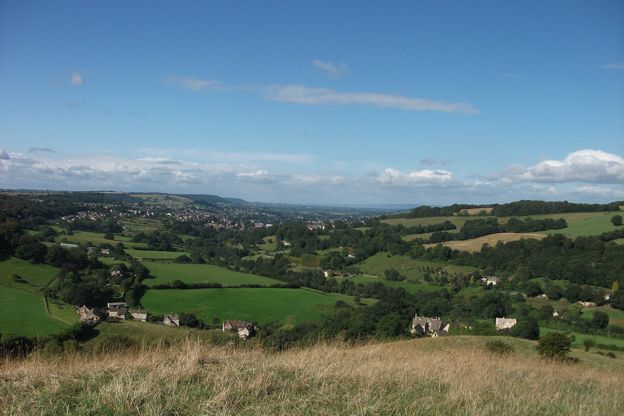
Laurie Lee and Slad
Story · History · 9 minute read
Laurie Lee's life and the Slad valley he wrote into Cider with Rosie: the cottage, the Woolpack, his grave at Holy Trinity, the Sheepscombe cricket field and the Wildlife Way.
-
Famous people with Cotswold connections
Story · History · 10 minute read
The writers, composers, scientists, queens and prime ministers whose lives are tied to Cotswold places, from Tyndale and Katherine Parr to Laurie Lee, Holst and Edward Thomas, and where to find their traces.