Laurie Lee and Slad
Laurie Lee arrived in Slad aged three, left at nineteen to walk to London, and came back to write the book that made the valley famous. Here is what is on record, what is in the book, and what you can still see.
· 9 minute read
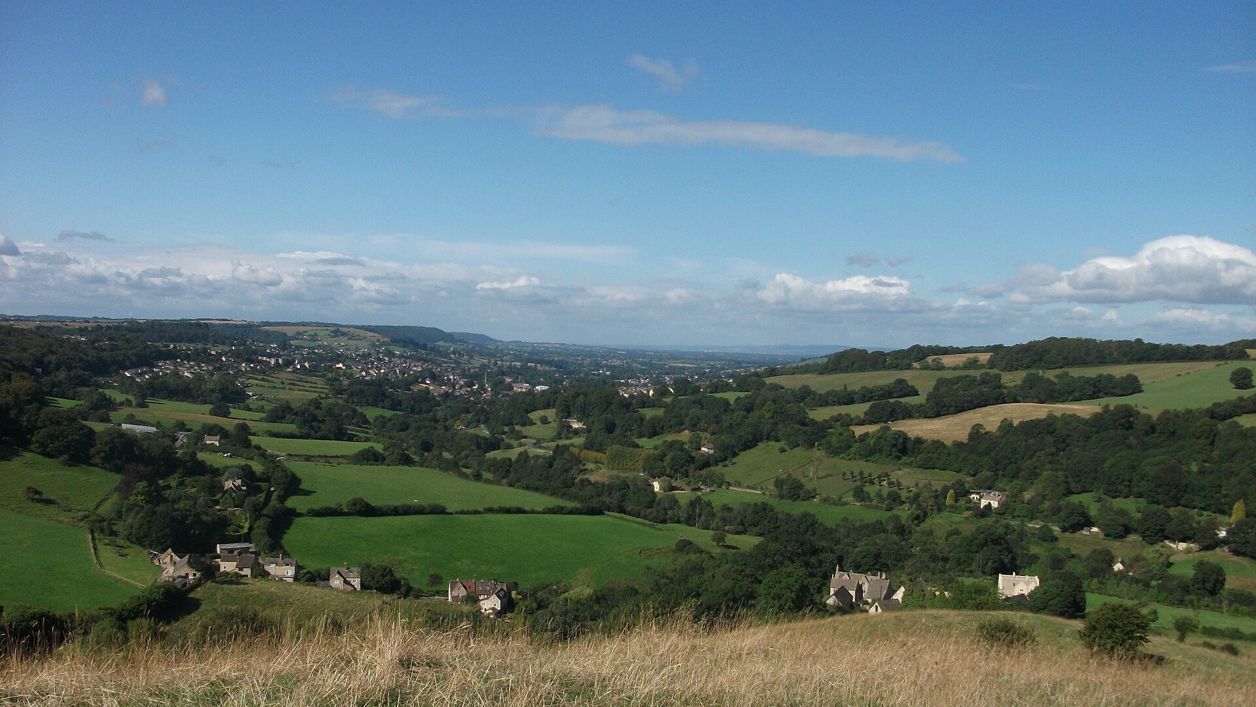
Laurie Lee was born in Stroud in 1914, grew up in the village of Slad two miles up the valley, and made it famous in Cider with Rosie, published in 1959. The book's success let him buy his childhood home in Slad; he died in the village in 1997 and is buried in the churchyard of Holy Trinity, across the road from the village pub, the Woolpack. The church, the pub, the cottage he grew up in and the hills he walked are all still there, a few hundred metres apart.
This is the story of the man and the places, told from the record. The book is part of the record too, but it is a memoir written some forty years after the childhood it describes, shaped and told for effect, and where it parts company with the documents we say so.
Who Laurie Lee was
Laurie Lee was a poet and writer, born in Stroud on 26 June 1914, who wrote three books about his early life: Cider with Rosie (1959) on his childhood in Slad, As I Walked Out One Midsummer Morning (1969) on walking through Spain, and a third on his return to Spain in the Civil War. The Poetry Archive's biography (opens in a new tab) gives the outline that follows.
His family moved out of Stroud to Slad when he was three, and he went to the village school and then to Stroud Central School. At nineteen he left home and walked to London, where he worked for a year as a builder's labourer. From there he spent about four years travelling in Spain and around the Mediterranean, mostly on foot, earning his keep by playing the violin in streets and squares. In 1937 he went back to Spain to volunteer for the International Brigade against Franco, until epilepsy cut his service short.
In the Second World War he settled in London as a journalist and scriptwriter and made documentary films for government bodies, among them the General Post Office, the Crown Film Unit and the Ministry of Information, where he also worked as an editor on the Ministry's publications. He wrote poetry throughout, but it was Cider with Rosie that changed his life: the Poetry Archive says its success gave him the security to write full time and to buy his childhood home in Slad.
Slad, the village in the book
Slad is a straggle of stone houses along the B4070 in a steep, narrow valley north-east of Stroud, and it still looks much as the book describes it, because there has been little room to build. The Victoria County History (opens in a new tab) says the road up the valley was made in 1800, that there were only four or five cottages by 1820, and that the church, the school and the Woolpack opposite were all built in the 1830s.
Cider with Rosie opens with the boy of three set down from the carrier's cart outside the cottage that would be home, and the rest of the book is the village seen from inside it: the kitchen, the women next door, the school, the church outings, the squire, the seasons and the people who made up a small world before the motor car arrived. The book's people have names, but they are Lee's portraits, not a census, and it is fairest to read it as a memoir rather than a gazetteer.
The cottage and the birthplace question
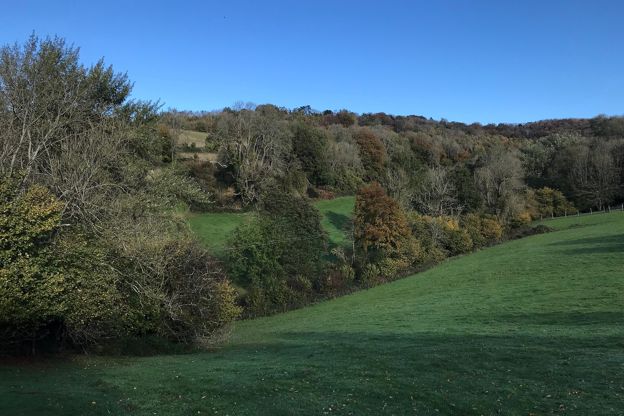
The cottage the Lee family moved into in 1917, when Laurie was three, is a private home, so look from the road and leave the people who live there in peace. Country Life reported in 2019, when part of it was for sale, that it was called Bank Cottages when the Lees arrived and is now Rosebank Cottages.
Historic England's list entry for Rose Bank (opens in a new tab), listed Grade II in 1990, describes a cottage with an early eighteenth-century front and calls it the 'birthplace of Laurie Lee', adding that he was still in the house in April 1984. That word conflicts with every other account. Lee's own book has him arrive at the cottage aged three, and the Poetry Archive gives his birthplace as Stroud.
We have not been able to settle it from a birth certificate, which is the document that would name the house, so we follow Lee's own account: born in Stroud, brought to Slad at three. The note about 1984 may fit what the Poetry Archive says happened later, that Lee bought his childhood home after the book's success, but the sources we have read do not settle which cottage he lived in when. Either way, the house is private.
Holy Trinity and the grave
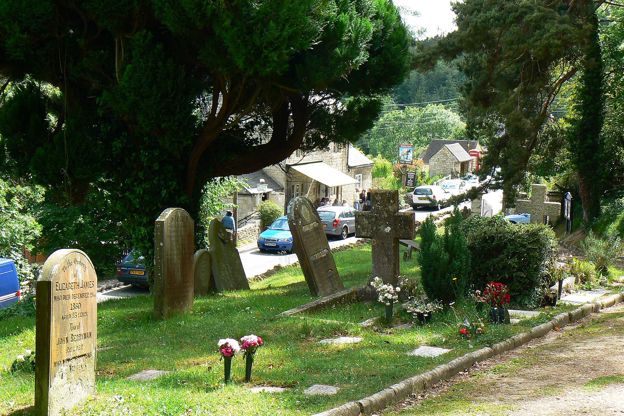
Laurie Lee is buried in the churchyard of Holy Trinity, Slad, across the road from the Woolpack; the Gloucestershire Wildlife Trust puts his grave between the small church and the pub. He died in the village on 13 May 1997.
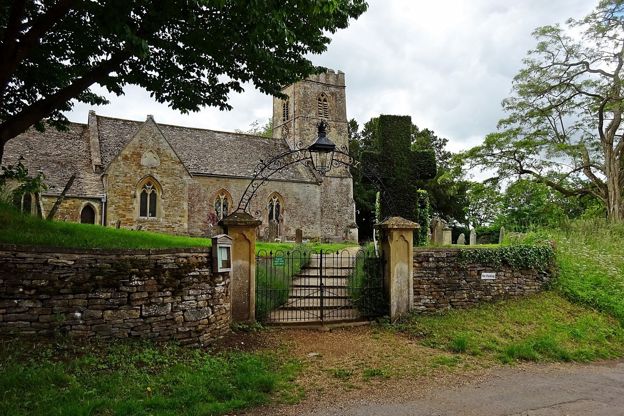
The church, designed by Charles Baker of Painswick, opened in 1834 as a chapel of ease to Painswick, and a north aisle and porch were added in 1869. It is open to visitors in daylight hours. The church asks visitors to look at both sides of the headstone, and to find the memorial window installed by his family and supporters, set opposite the grave. Inside there is a permanent display on his life, and the village guidebook, which also covers local walks, is on sale. There are a few spaces for disabled drivers up the drive; everyone else parks on the road outside the Woolpack.
The Woolpack
The Woolpack is the village pub, built in the 1830s according to the Victoria County History, across the road from the church where Lee is buried. It is small, with a fire, a snug and a terrace looking down the valley, and it describes itself as dog friendly.
It opens daily from midday, but the dining room serves only from Tuesday to Sunday, so walkers coming down on a Monday should not count on lunch. Our listing for the Woolpack has the hours and how to book. The church visitors' toilets are the pub's, and they are not accessible.
The Sheepscombe cricket field
Lee bought the cricket ground at Sheepscombe, the next valley north, in 1971, in memory of his uncles, who were founder members of the club, so that it could keep playing there. The club has played on the hilltop field since 1896, and the village website calls it the Laurie Lee Field.
In 2013 the club bought the ground itself after a run of fundraising in the village, which secures it for cricket for good. Matches are on Saturdays in the Gloucestershire County Cricket League, with some Sunday and evening games. The Butchers Arms in Sheepscombe, which says on its own site that Lee was a regular, is in the village below.
The Laurie Lee Wildlife Way
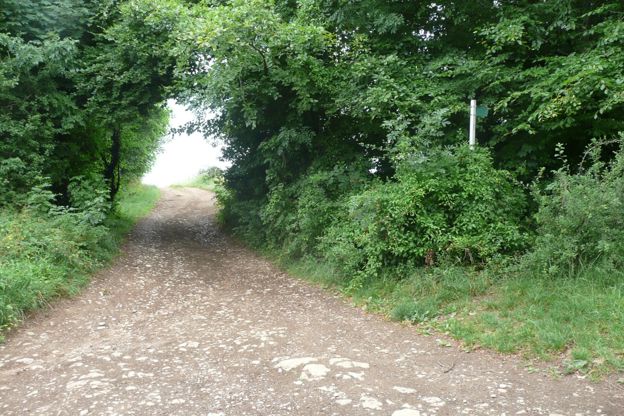
The Laurie Lee Wildlife Way is a circular walk of about 5 miles (8km) round the Slad valley, created by the Gloucestershire Wildlife Trust (opens in a new tab) in 2013, with ten wooden poetry posts set along the route, each carrying lines from Lee's poems. The trust gives three to five hours for it, and our walk page puts the climbing at about 330 metres.
It starts from a layby on the B4070 opposite the sign for Bulls Cross and links the trust's reserves in the valley. Swift's Hill, the limestone grassland across from the village, appears in Cider with Rosie. The walk also passes Laurie Lee Wood, which the trust describes as woodland dating back before 1600, the meadows of Snows Farm, and the beech wood of Frith Wood. The steepest part, which the trust calls the hardest of the walk, is a climb of about 100 metres from Slad Brook up to Slad Slope.
The trust warns that the paths are uneven and muddy in wet weather, that cattle graze the slopes (on Swift's Hill from April to October, where dogs must be on a lead), and that the route is not suitable for wheelchairs. When the trust walked it in 2020, ash dieback had forced a diversion early in the route, so the path on the ground differs slightly from the leaflet, and it asks walkers to watch for the exposed root balls of fallen beeches. The way crosses the B4070 at the north end of Slad, about 400 metres up the road from the Woolpack and the church, which is the detour most walkers make.

The Cotswolds Info newsletter
Events, new places and the best of the season, about once a month. Unsubscribe at any time.
Keeping the book apart from the record
The book and the record agree on the shape of Lee's life and disagree on details, and the visitor is best served by knowing which is which. What is on record: the dates of his birth and death, the move to Slad, the walk to London and Spain, the war work, the purchase of the cricket field in 1971 and the burial at Holy Trinity.
What belongs to the book: the voices, the characters, the order of events and the summers that seem longer than summers are. Lee wrote it in his forties, from memory, and a memoir written that way is arranged and heightened by its nature. That does not make it less worth reading in the place it describes. It means a guide should not present a scene from the book as something that happened on a known day, and we have not.
Visiting Slad
Slad is on the B4070 about 2 miles (3km) north-east of Stroud. The church asks visitors to park on the road outside the Woolpack, and to use the church drive only to drop off. Our Five Valleys weekend by car comes to Slad on its Sunday, with Bisley and Sapperton.
The church opens in daylight, the pub from midday, and the grave can be seen at any time. Stroud has trains to Gloucester, Swindon and London Paddington, and our guide to Slad has the buses that stop by the Woolpack and the war memorial. Spring brings bluebells in Frith Wood; autumn turns the beeches on both sides of the valley.
Mentioned in this story
The places, sights and walks in this story, each with a page of its own: what it is, when to go and how to get there.
-
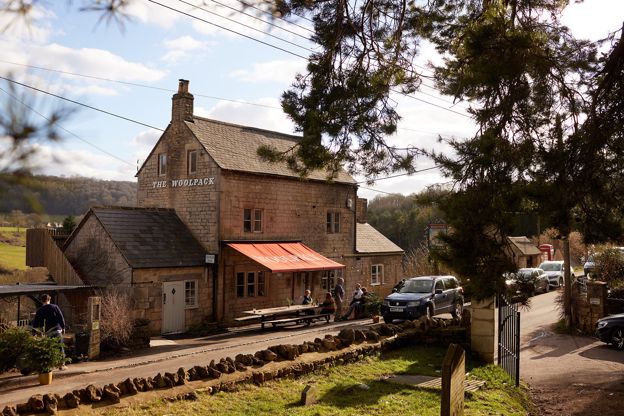
The Woolpack, Slad
Pubs · Slad
-
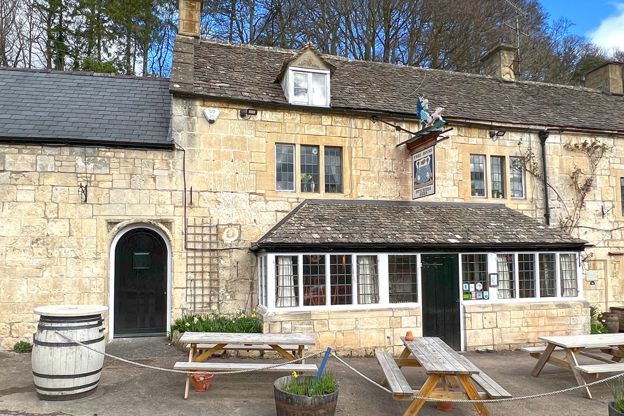
The Butchers Arms
Pubs · Painswick
-
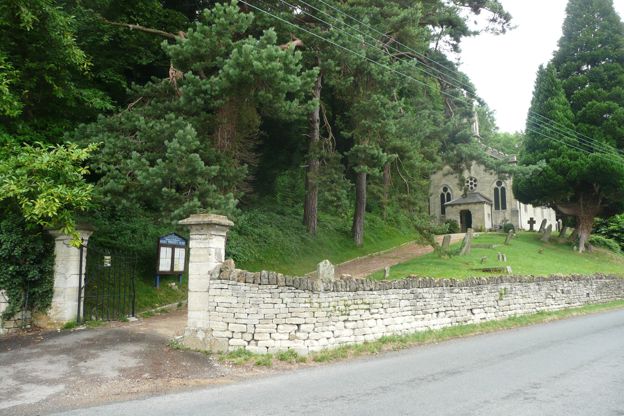
Holy Trinity Church, Slad
Sight · Church · Stroud and the Five Valleys
-
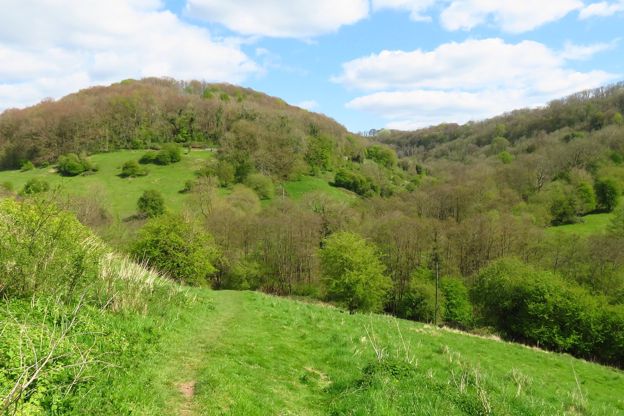
Snows Farm Nature Reserve
Sight · Nature reserve · Stroud and the Five Valleys
Places to stay near Slad
-
Cotswold Lodge
Self-catering · Painswick
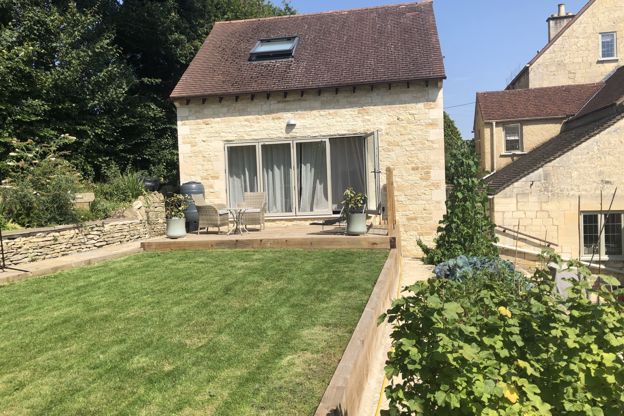
A one-bedroom lodge on Stamages Lane, Painswick, for two adults and up to two young children, with a deck over the valley and free parking.
Verified Oct 2026
-
The Painswick
Hotel · Painswick
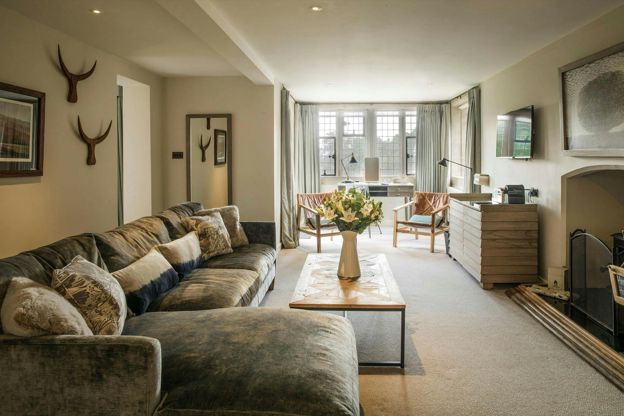
A 16-room hotel in a Palladian house on Kemps Lane, Painswick, part of the Calcot Collection, with an AA Rosette restaurant and dogs in some rooms.
Dog-friendly · Wedding venues
Verified Nov 2026
-
Barn Cottage, Painswick
Self-catering · Painswick
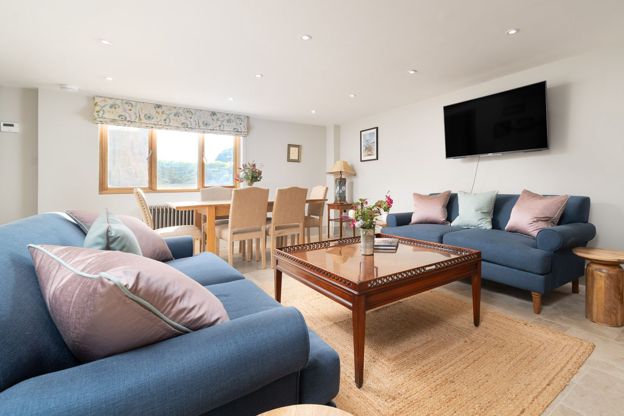
A three-bedroom barn conversion in Painswick, sleeping six in en suite rooms, with off-road parking, an enclosed courtyard and dogs welcome.
Dog-friendly
Verified Nov 2026
Read next
-
Famous people with Cotswold connections
Story · History · 10 minute read
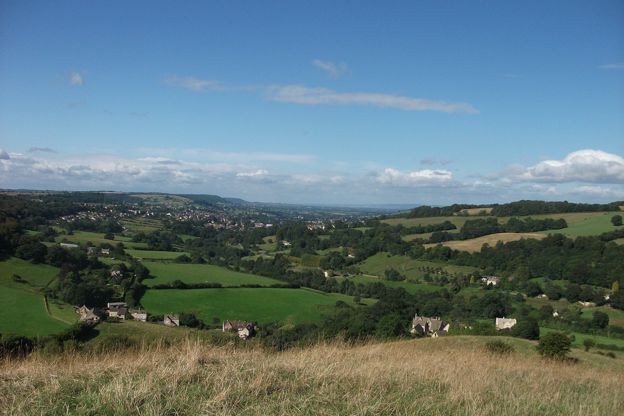
The writers, composers, scientists, queens and prime ministers whose lives are tied to Cotswold places, from Tyndale and Katherine Parr to Laurie Lee, Holst and Edward Thomas, and where to find their traces.
-
Edward Thomas and Adlestrop
Story · History · 8 minute read
The express that stopped at Adlestrop in June 1914, the poem Edward Thomas made of it, the station that closed in 1966, and the sign and bench in the village bus shelter today.
-
Gustav Holst and the Cotswolds
Story · History · 8 minute read
The composer of The Planets was born in Cheltenham, was organist at Wyck Rissington as a teenager and wrote a symphony called The Cotswolds: where to see and hear his Cotswold years.