Roger Davies, CC BY-SA 2.0, via Wikimedia Commons
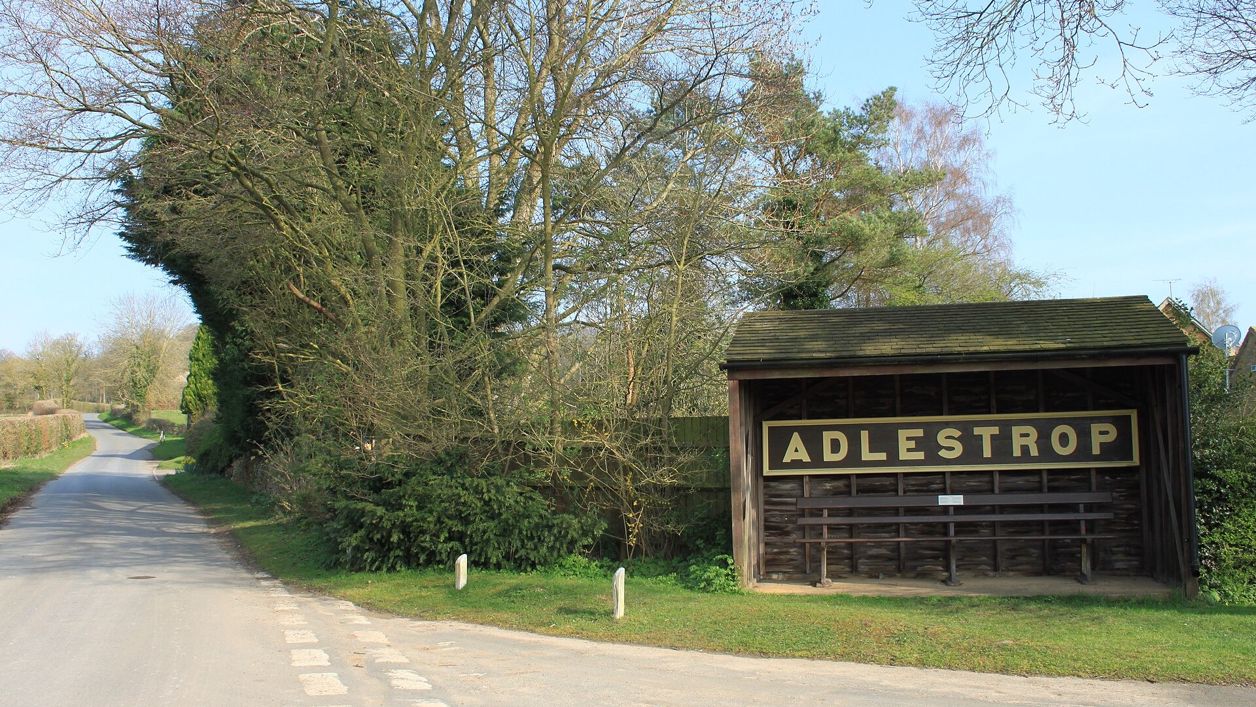
Adlestrop railway sign and seat
The Great Western Railway sign and bench from Adlestrop's lost station stand in the village bus shelter, where they were set up in the early 1970s. Edward Thomas's train stopped here in June 1914, and his poem Adlestrop made the name famous. Grade II; free to see.
Monument
The Oxfordshire CotswoldsIn the bus shelter in Adlestrop, beside the village hall, hang the platform sign and bench of a railway station that closed in 1966. They are kept because of one brief stop in June 1914, when the express carrying the poet Edward Thomas halted here, and the poem he wrote about it made the name Adlestrop known far beyond the Oxfordshire Cotswolds. Both are listed Grade II.
History
Adlestrop station opened in 1853 on the Oxford, Worcester and Wolverhampton line, which became part of the Great Western Railway in 1863. It was a small country station, and it closed in 1966. Its fittings went into store, and British Rail later gave the platform sign and a bench to the village. In the early 1970s both were set up in the bus shelter as a memorial to the station; the shelter has since been refurbished.
Edward Thomas and the poem
In June 1914 the express carrying Edward Thomas stopped briefly at Adlestrop. In 1915 he wrote a short poem about the moment: the empty platform, the name on the sign, the birdsong across the fields. Adlestrop has become one of the best-known poems in English, and Historic England gives its part in inspiring the poem as a reason for listing the sign and seat. Thomas went on to enlist and was killed at the Battle of Arras on 9 April 1917. A metal plaque engraved with the poem was fixed to the bench in June 2014, a hundred years after his journey.
The listing
Historic England listed the sign and bench in 2017, for their part in the poem and as unaltered examples of the railway's own fittings. The listing notes that the bold sign at a prominent road junction over open fields is a landmark in itself. The shelter and its concrete floor are not part of the listing.
Jane Austen at Adlestrop
The village had a literary connection long before Thomas. Jane Austen visited her relations at the rectory, now Adlestrop House, while the Rev. Thomas Leigh was rector, from 1762 to 1813; Historic England's listing of the house calls him her uncle and her a frequent visitor. The Leigh family owned the manor and Adlestrop Park.
What to see
The sign is a painted timber board with raised letters spelling ADLESTROP, fixed with metal fittings to the timber shelter. Beneath it is the bench: a cast-iron frame with timber slats, the GWR monogram cast on each of its three legs, now carrying the plaque with the poem. Sit on it and read the poem where it was meant to be read.
Visiting
The sign and bench are in an ordinary bus shelter by the roadside, free to see at any time. Walkers report a small car park at the village hall beside it; it is the village’s own, so park with care. Come in June, as Thomas did.
Getting there
Adlestrop is a small village off the A436 between Stow-on-the-Wold and Chipping Norton. Walkers report a small car park at the village hall, and the shelter is beside it. The only bus is the Pulhams 803, which calls at the Evenlode turn stops on Tuesdays only, once each way. The nearest station today is Kingham, on the Cotswold Line, about 5 miles by road to the south; our guide to Kingham covers the station and the walks from it.
Nearby
Daylesford Farm, with its café and farm shop, is a little over 1.5km away, and the Fox at Oddington is a village pub a similar distance south-west. In Lower Oddington is the medieval St Nicholas's Church. Over the hill is the Jacobean house of Chastleton, and in the Evenlode valley to the south are the churches of Kingham and Bledington. Our story on famous people with Cotswold connections has more writers who knew these villages.
Stay and eat near Adlestrop railway sign and seat
-
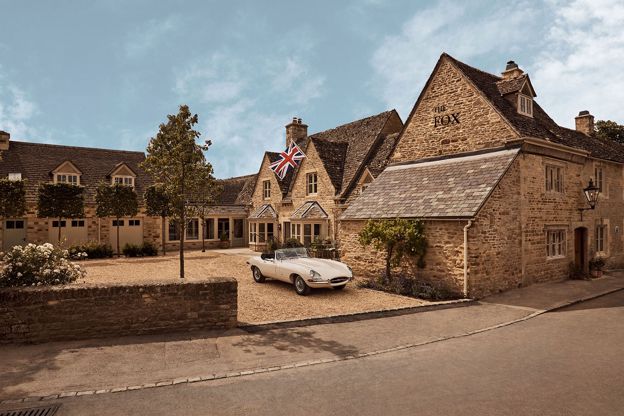
The Fox at Oddington
Inn · Kingham
A Daylesford pub with rooms at Lower Oddington, with the four-bedroom Coachman's House opposite for self-catering groups of up to eight.
Dog-friendly · Family-friendly
Verified Oct 2026
-
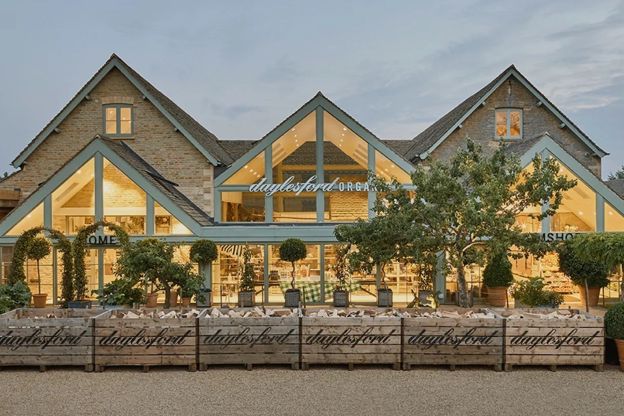
Daylesford Farm
Farm shops and delis · Kingham
The farm shop, restaurant and café at Daylesford near Kingham, open every day, with the Trough holding a Green Michelin star.
Dog-friendly
Verified Nov 2026
-
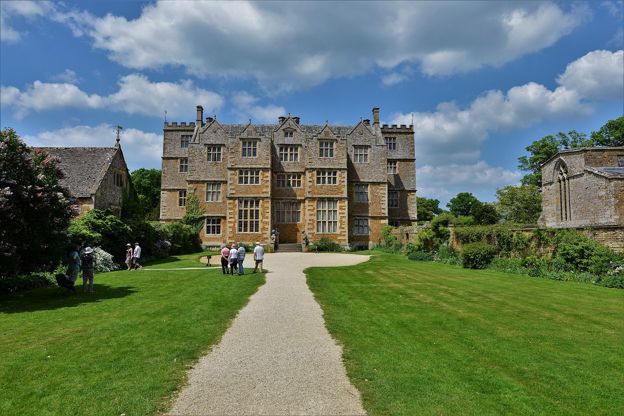
Chastleton House
Historic houses and heritage · Moreton-in-Marsh
A Jacobean house near Moreton-in-Marsh, built on the estate Robert Catesby sold in 1602, where rules for croquet were written.
Verified Oct 2026
Stories about Adlestrop railway sign and seat
-
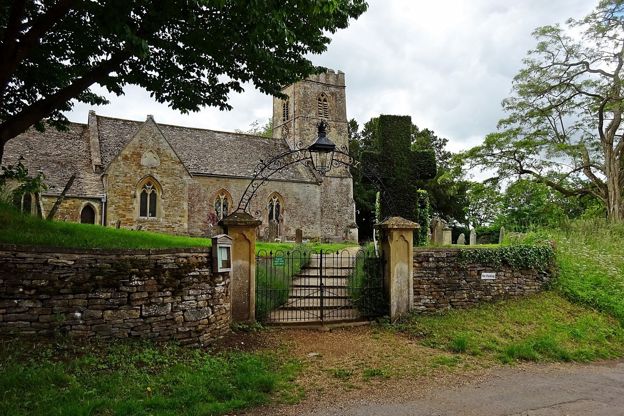
Edward Thomas and Adlestrop
Story · History · 8 minute read
The express that stopped at Adlestrop in June 1914, the poem Edward Thomas made of it, the station that closed in 1966, and the sign and bench in the village bus shelter today.
-
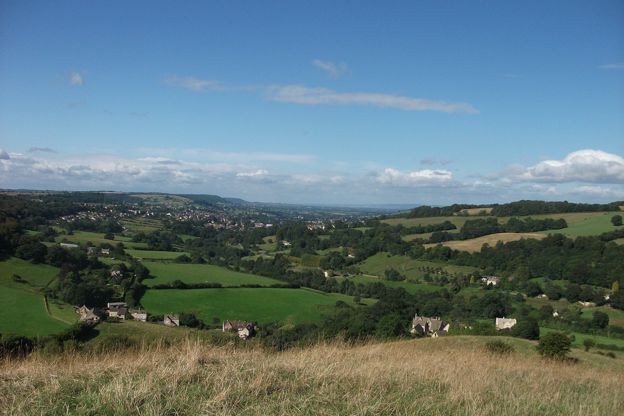
Famous people with Cotswold connections
Story · History · 10 minute read
The writers, composers, scientists, queens and prime ministers whose lives are tied to Cotswold places, from Tyndale and Katherine Parr to Laurie Lee, Holst and Edward Thomas, and where to find their traces.
More sights to see
-
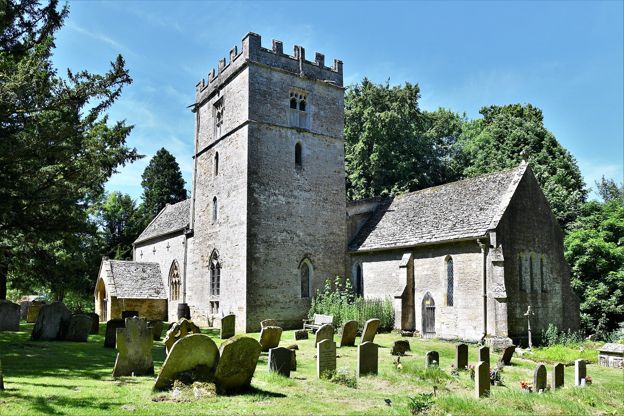
St Nicholas's Church, Lower Oddington
Sight · Church · Stow-on-the-Wold
A Grade I church in the woods at Lower Oddington, near Stow-on-the-Wold, left almost unaltered when a new church was built in 1852. Its north wall carries a huge fourteenth-century Doom, hidden under whitewash until 1913. Open daily; no electricity.
-
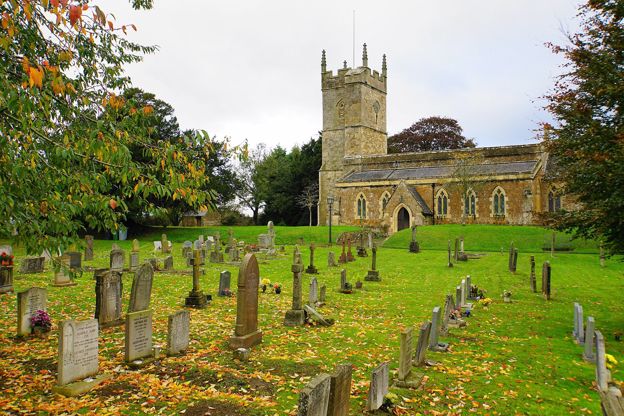
St Andrew's Church, Kingham
Sight · Church · Kingham
Kingham's ironstone church of the fourteenth and fifteenth centuries, with a pinnacled tower, a nave roof dated 1774, an Elizabethan brass in the Easter Sepulchre and the old rectory of 1688 next door. Grade II*.
-
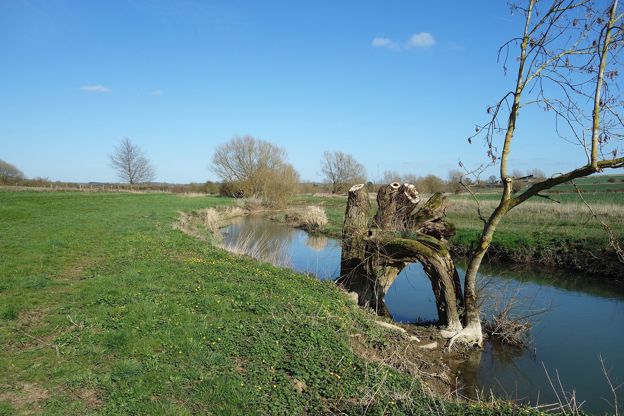
River Evenlode
Sight · River · Kingham
The Evenlode is the river of the valley below Kingham, rising in the Cotswold limestone and flowing south-east to the Thames; near Kingham it runs beside the Cotswold Line past Bledington and Daylesford and for a stretch marks the Oxfordshire and Gloucestershire boundary.