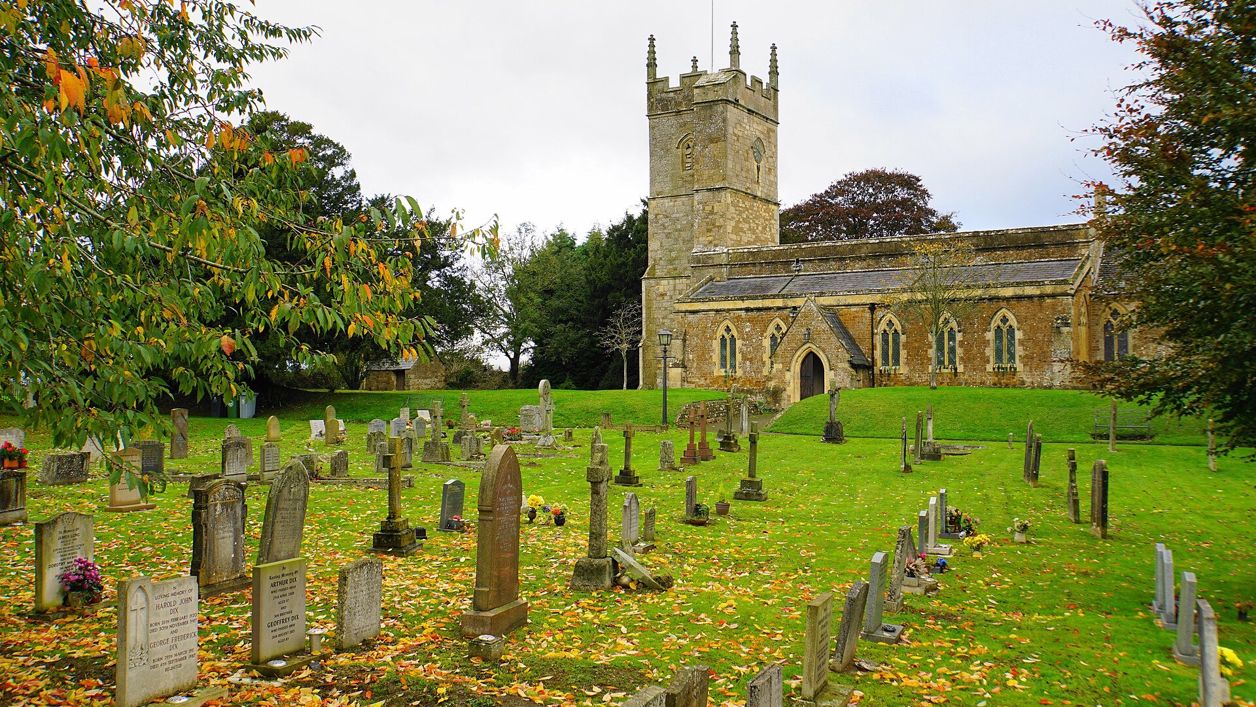
Bill Boaden, CC BY-SA 2.0, via Wikimedia Commons
St Andrew's Church, Kingham
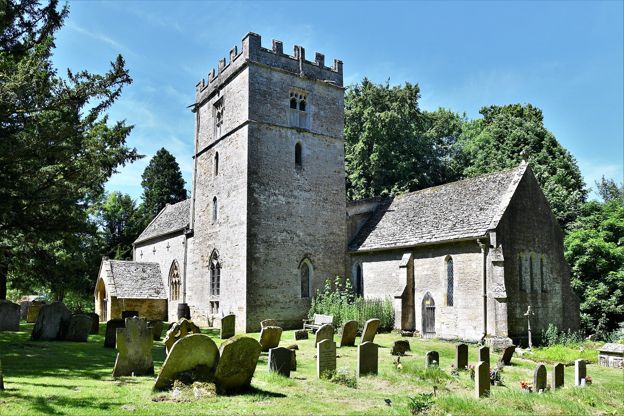
Kingham's ironstone church of the fourteenth and fifteenth centuries, with a pinnacled tower, a nave roof dated 1774, an Elizabethan brass in the Easter Sepulchre and the old rectory of 1688 next door. Grade II*.
Church
KinghamSt Andrew's is the parish church of Kingham, on Church Street. Built of ironstone with limestone dressings, it dates from the fourteenth and fifteenth centuries, with a pinnacled tower, a chancel rebuilt in 1688 and a thorough Victorian restoration. It is listed Grade II*.
History
St Andrew's is a medieval church altered in almost every century since. Historic England's listing dates the west tower and the north aisle to the mid-fourteenth century and the tower's top to the fifteenth.
The seventeenth and eighteenth centuries
The chancel was rebuilt in 1688, around the time the rectory next door, now Kingham House, was built for the Reverend William Dowdeswell. Dowdeswell, who died in 1711, has a carved cartouche with scrolls and cherubs inside the church. The parishioners left their own marks: the date 1769 is cut on the north aisle, and an inscription of 1774 on the nave roof records the churchwardens of the day.
The Victorian church
A vivid east window went in in 1843, and in 1852 to 1853 the church was extensively restored. The south aisle and porch were added then, the south arcade was built as a copy of the medieval north one, and the stone pulpit, the benches with their poppyhead ends and most of the glass all date from those years. The brass altar rails followed in 1885.
Kingham House
Next door, the old rectory of about 1688 is listed separately, and its late seventeenth-century gatepiers on Church Street are topped with carved stone pineapples. It is a private home, seen from the street.
What to see
Outside, look at the tower: three stages of roughly coursed limestone, stepped buttresses, crocketed pinnacles at the corners and a stair turret jutting out at the south-east corner. The rest of the church is regularly coursed ironstone with limestone dressings. On the north aisle, find the date 1769 carved on the stone east of the second window from the west. East of the north door, a fourteenth-century tomb canopy with a cinquefoil head shelters a slab once carved with a foliated cross, now almost worn away.
Inside, the north arcade of four bays on octagonal piers is fourteenth century. Look up at the low-pitched nave roof in seven bays, with gilded bosses and the 1774 inscription, and at the painted bosses of the aisle roofs. In the chancel, the pointed fourteenth-century Easter Sepulchre in the north wall holds the brass of Katherine James, who died in 1588, kneeling with her three children. Across the chancel are two Victorian sedilia and a piscina, and a Tudor doorway on the north side once led to the rood loft.
Other things to find: the round thirteenth-century font on its moulded plinth; the monument by R. Physick of London to Lieutenant Colonel Henry Samuel Davies, who died in 1851, a mourning soldier leaning on a sarcophagus; an eighteenth-century hatchment in the tower; and an elaborate Gothic brass chandelier. Several memorials in the churchyard east of the chancel are listed in their own right.
Visiting
Kingham's village website says the church is open in the day from April to October, and it houses the Kingham archive display. The parish publishes no hours, so contact it before a special trip in winter. The parish is raising money for a servery, a children's room and a toilet, so there is no toilet in the church at present; Kingham station has toilets, including an accessible one and a Changing Places toilet.
Getting there
The church is on Church Street, Kingham, beside The Wild Rabbit. Kingham station, on the Cotswold Line from London Paddington, is about a mile by road south of the church, down Church Street and Station Road, and has a 140-space car park, so St Andrew's is easy to reach without a car; our guide to getting to the Cotswolds without a car has the trains.
On foot, Kingham, Daylesford and the Evenlode is a 4.4-mile (7.1km) circular walk that starts on Church Street by the Wild Rabbit, crosses Daylesford's farmland to the River Evenlode and comes back into the village to finish past the church.
Nearby
The Wild Rabbit is next door and The Kingham Plough is on the green. Daylesford Farm, with its shop and café, is just off the walk to the north-west. Across the Evenlode, St Leonard's, Bledington has fifteenth-century glass and The King's Head Inn on its green, and further on are St Nicholas', Lower Oddington and the Adlestrop railway sign. Our Kingham guide covers the village.
Walks past St Andrew's Church, Kingham
-
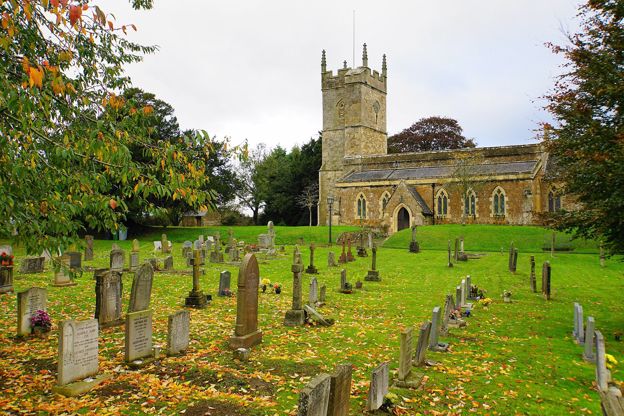
Kingham, Daylesford and the Evenlode
Walk · Starts in Kingham · 1 hr, 30 mins · Circular · Dog-friendly
A flat 4.4-mile (7.1km) circular walk of about an hour and a half from Kingham: north-west on bridleways across Daylesford's fields to the Evenlode, back down the river meadows and over the Cotswold Line on the level. Walkers report it wet and often flooded in winter.
-
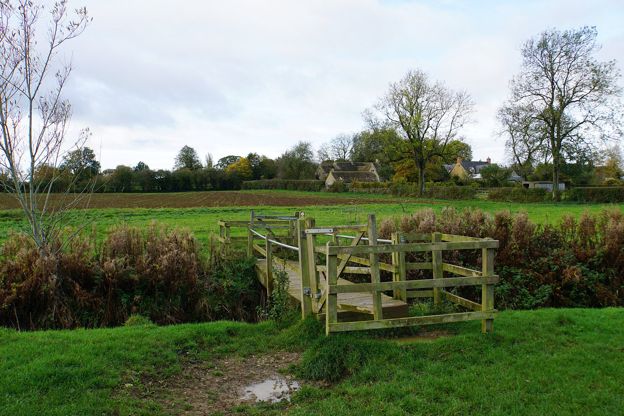
Kingham station and Bledington
Walk · Starts in Kingham · 3 hrs · Circular
A 3.5-mile (6km) car-free circular walk from Kingham station, easy and two to three hours with stiles and a boggy patch: along the River Evenlode into Gloucestershire, over the old railway and past a pond, then to Bledington's green and the King's Head, and back by the river.
Stay and eat near St Andrew's Church, Kingham
-
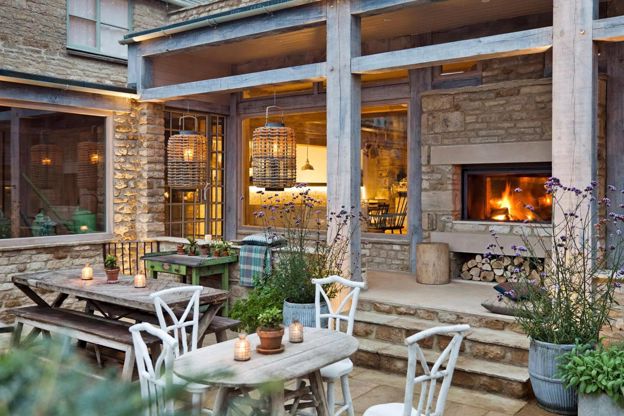
The Wild Rabbit
Inn · Kingham
A Daylesford pub with rooms and cottages in a 17th-century house at Kingham, with three AA Rosettes and dinner from Wednesday to Sunday.
Wedding venues
Verified Nov 2026
-
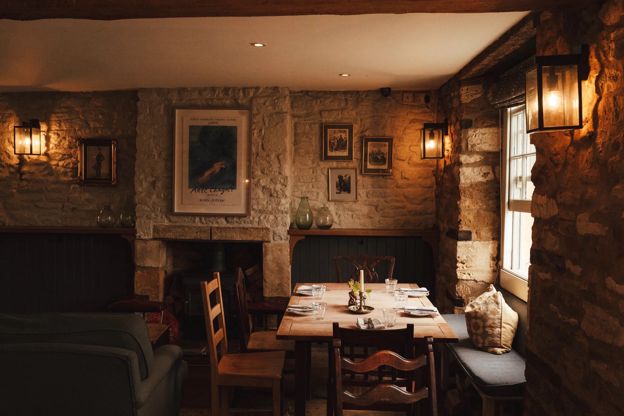
The Kingham Plough
Inn · Kingham
A pub with six rooms and a cottage on the green at Kingham, open daily from 8.30am, with dogs and families welcome.
Car-free · Dog-friendly · Family-friendly
Verified Nov 2026
-
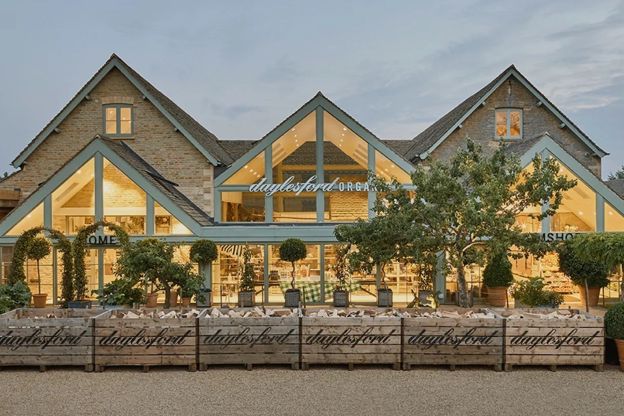
Daylesford Farm
Farm shops and delis · Kingham
The farm shop, restaurant and café at Daylesford near Kingham, open every day, with the Trough holding a Green Michelin star.
Dog-friendly
Verified Nov 2026
More sights to see
-
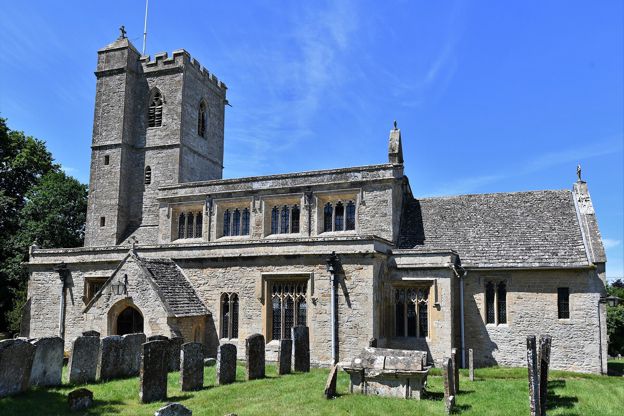
St Leonard's Church, Bledington
Sight · Church · Kingham
Bledington's Grade I church by the green, recorded in 1175 and rebuilt in the fifteenth century, with fifteenth-century painted glass, one panel dated 1470, a Norman tub font and a tower built inside the nave. Open daily.
-
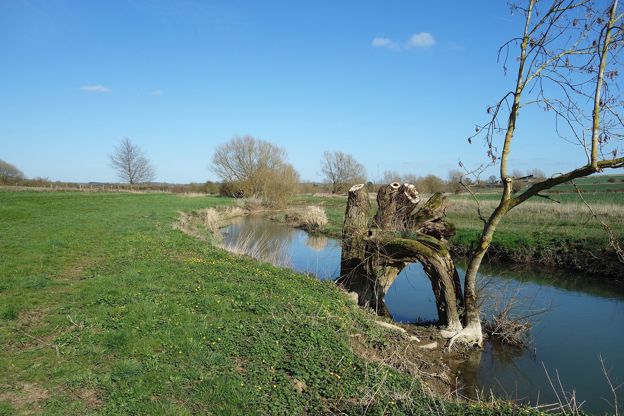
River Evenlode
Sight · River · Kingham
The Evenlode is the river of the valley below Kingham, rising in the Cotswold limestone and flowing south-east to the Thames; near Kingham it runs beside the Cotswold Line past Bledington and Daylesford and for a stretch marks the Oxfordshire and Gloucestershire boundary.
-
St Nicholas's Church, Lower Oddington
Sight · Church · Stow-on-the-Wold
A Grade I church in the woods at Lower Oddington, near Stow-on-the-Wold, left almost unaltered when a new church was built in 1852. Its north wall carries a huge fourteenth-century Doom, hidden under whitewash until 1913. Open daily; no electricity.