Michael Coppins, CC BY-SA 4.0, via Wikimedia Commons
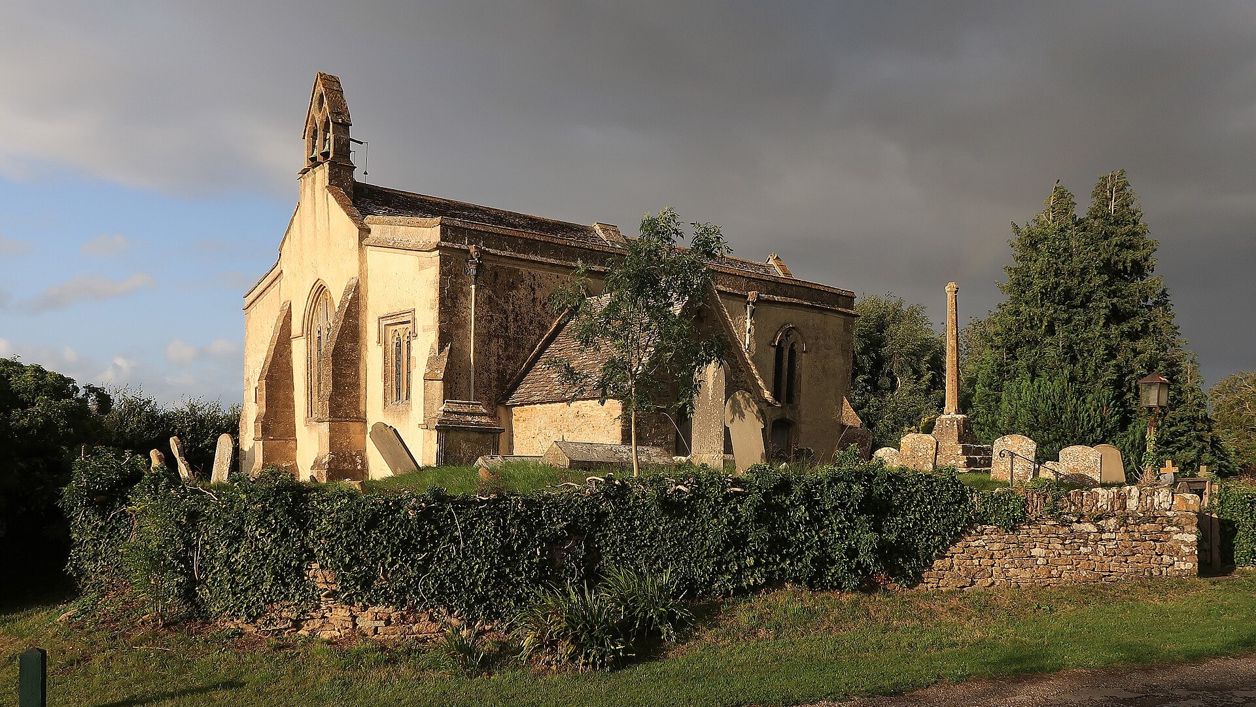
St John the Baptist, Inglesham
A tiny church by the Thames at Inglesham, south of Lechlade, saved from Victorian restoration by William Morris: box pews, medieval screens, seven layers of wall paintings and a late Saxon Madonna and Child. Grade I; Churches Conservation Trust, open daily.
Church
Lechlade-on-ThamesSt John the Baptist stands on a rise above the Thames meadows at Inglesham, just over the Wiltshire border south of Lechlade-on-Thames. It is a small, mostly thirteenth-century church on a Saxon core, kept almost as it was in the seventeenth century because William Morris fought to stop it being restored. It is listed Grade I and cared for by the Churches Conservation Trust.
History
The story of Inglesham is how a forgotten village church escaped the Victorians. Historic England's listing finds a Saxon core, probably enlarged around the time the church was refounded in 1205 and again later in the thirteenth century; the reset south door may itself be Saxon or late eleventh century.
William Morris and the SPAB
In 1871 Morris began renting Kelmscott Manor, about four miles away down the river. When he visited Inglesham in 1876, the Churches Conservation Trust says, he objected to a restoration by the architect G. E. Street, his former employer. The next year he helped found the Society for the Protection of Ancient Buildings, whose principle was to repair rather than renew. Morris arranged a survey of Inglesham, and in 1888 and 1889 the society repaired the church without altering it, with J. T. Micklethwaite as architect and Morris helping. They kept the thirteenth-century marble floor slabs, the wall paintings and the old box pews. The trust quotes Morris's view, given in 1896, that we are only trustees for those who come after us.
The Churches Conservation Trust
In 2017 thieves stripped lead from its roof; the trust had a temporary cover on within 24 hours, but water still stained parts of the interior. Most of the staining has been cleaned, including on the Saxon Madonna, but some over the wall paintings has been left in place because it could not be removed. The aisle roofs are now under three layers of mineral felt with a life of ten years at most, and the trust says it needs to raise £366,000 to replace the roof and remove the staining.
What to see
Step inside and the arrangement is much as it was in Cromwell's time. High box pews, mostly cut down in the seventeenth century, fill the nave, with parclose screens of the fourteenth and fifteenth centuries closing off the side chapels, a pulpit with its sounding board of about 1630, a fifteenth-century font, and seventeenth-century communion rails.
The walls are the marvel. Paintings from the thirteenth to the nineteenth century cover them, in places seven layers deep: a thirteenth-century pattern of painted masonry in the chancel, fifteenth-century angels above the chancel arch, an early fourteenth-century Doom on the east wall of the north aisle, and painted texts of the nineteenth century over the top.
Set into the wall of the south chapel is the church's greatest treasure, a late Saxon carving of the Madonna and Child. It once stood outside, and the British Sundial Society records a dial cut into it. In the chancel, look also for a slab of Tournai marble with the outline of a knight of about 1300, its brass long gone, and the three-seat sedilia and piscina.
Outside, the double bellcote on the west gable is mid to late thirteenth century. The churchyard is full of headstones, several carved with cherubs of the seventeenth and eighteenth centuries, and chest tombs, and its churchyard cross is listed Grade II* in its own right.
Visiting
The church is open daily. It has power and lighting, but no toilets or running water. The Churches Conservation Trust has a free online audio guide and a church guidebook to download from its website, and keeps printed copies of its free Wiltshire county guide in the church. From the small car park, five steps lead up to the churchyard and two down into the porch, whose flagstones are worn and uneven, so it is not step-free. The National Churches Trust lists it as dog friendly. Come on a bright day to see the paintings at their best.
Getting there
Inglesham church is about 1 mile south of Lechlade, off the A361 towards Swindon; there is a car park at the end of the lane (SN6 7RD). The A361 is fast and busy, so take care if you walk from Lechlade along it. The nearest railway station is Swindon, about 11 miles away by road, and Stagecoach West's 77 stops in Lechlade on St John's Street four times a day each way, Monday to Saturday, with no Sunday service.
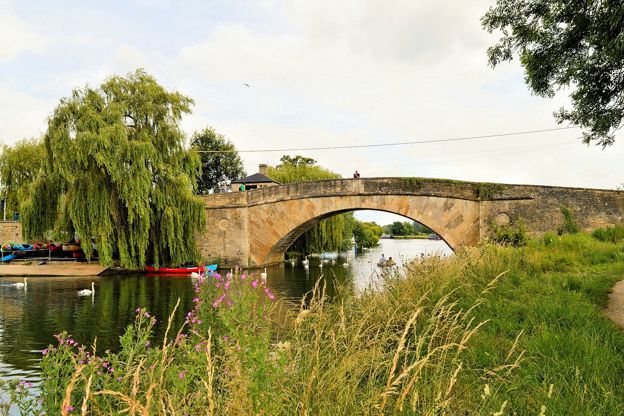
On foot from the town, cross Halfpenny Bridge and head west by the River Thames; the Churches Conservation Trust says the church is a stone's throw from the Thames Path. Check an Ordnance Survey map for the field paths, and take care if you have to cross the A361.
Nearby
In Lechlade, St Lawrence's Church is the town's great wool church, and downstream past St John's Lock, St Mary's, Buscot has windows made by Morris's own firm to Burne-Jones's designs. Kelmscott Manor, Morris's house, opens from April to October; it closes for the winter on 31 October 2026 and reopens in April 2027. The New Inn and The Trout Inn are the nearest pubs (the Trout is closed on Mondays; ring the New Inn to check it is serving food), and our stories on William Morris and the Cotswolds and the Arts and Crafts movement tell the wider story.
Walks past St John the Baptist, Inglesham
-
Lechlade, Buscot and the Thames
Walk · Starts in Lechlade-on-Thames · Circular
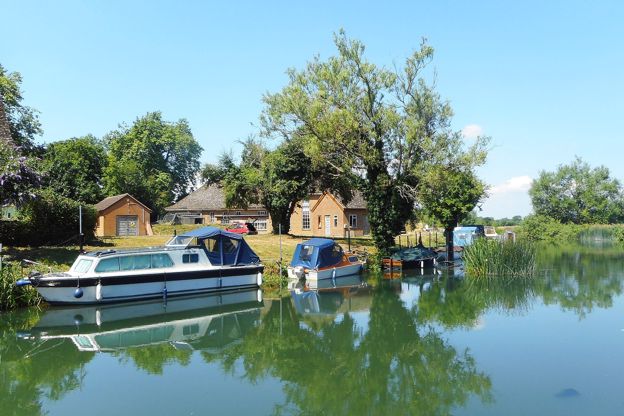
A level 4.5-mile (7.2km) circular walk from Halfpenny Bridge, Lechlade, with three stiles and no time given: by the Thames Path meadows to Inglesham church, over to Buscot by lanes and fields, across Buscot Weir and Lock, and back by St John's Lock and the Trout Inn.
-
Lechlade and St John's Lock
Walk · Starts in Lechlade-on-Thames · 45 mins · Circular · Dog-friendly
A flat 3-mile (4.8km) circular walk from Lechlade's Market Place, easy and about an hour: out to the Round House where the Coln and the old canal meet the Thames, back along the meadows past Ha'penny Bridge to St John's Lock and the Trout Inn, home by Shelley's Walk.
Stay and eat near St John the Baptist, Inglesham
-
Kelmscott Manor
Historic houses and heritage · Lechlade-on-Thames
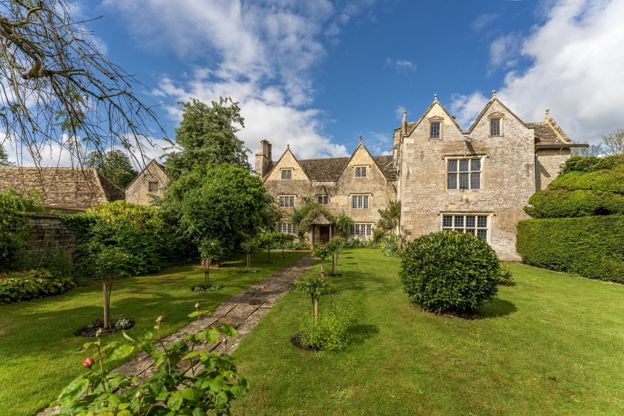
William Morris's country home by the upper Thames near Lechlade, which he rented from 1871 until 1896, with its rooms, gardens and his grave nearby.
Walker-friendly · Family-friendly
Verified Oct 2026
-
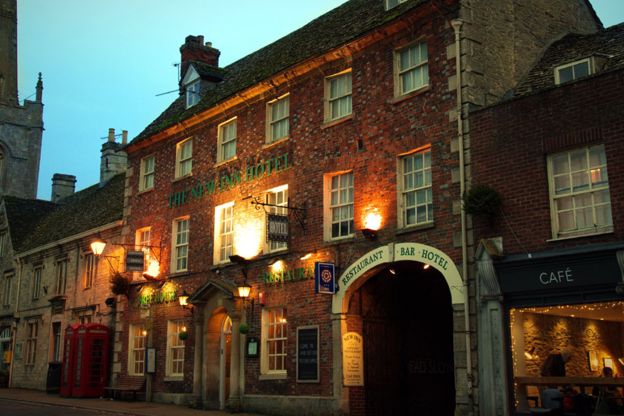
The New Inn Hotel
Hotel · Lechlade-on-Thames
A 17th-century coaching inn on the Market Place in Lechlade-on-Thames, with thirty rooms, a restaurant and bar, and weddings.
Wedding venues
Verified Nov 2026
-
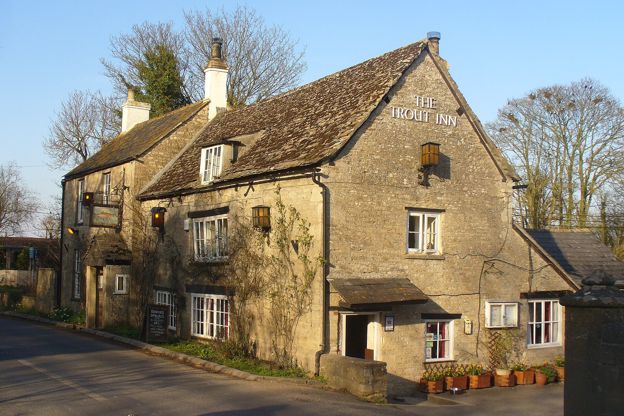
The Trout Inn
Pubs · Lechlade-on-Thames
A family-run pub by St John's Lock at St John's Bridge, Lechlade, recorded as an inn by 1692, with a riverside garden and fishing rights on the Thames.
Walker-friendly · Family-friendly
Verified Oct 2026
Stories about St John the Baptist, Inglesham
-
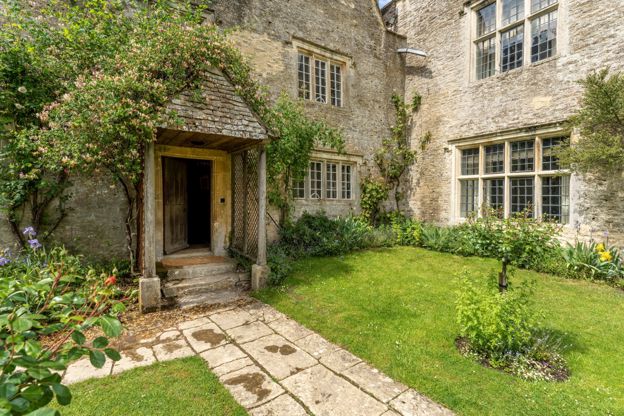
William Morris and the Cotswolds
Story · History · 9 minute read
William Morris's Cotswold life: Kelmscott Manor, his heaven on earth by the upper Thames, his grave at Kelmscott, the churches at Inglesham and Burford he fought for, and the Bibury line he may never have said.
More sights to see
-
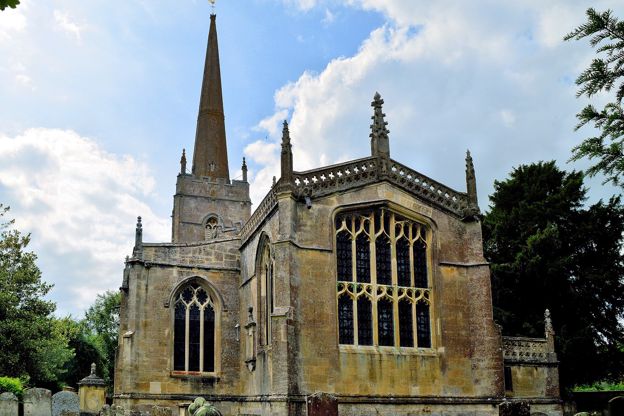
St Lawrence's Church, Lechlade
Sight · Church · Lechlade-on-Thames
Lechlade's wool church on the Market Place, rebuilt in Taynton stone in the 1470s, with a spire seen across the Thames meadows and a churchyard that moved Shelley to verse in 1815. Grade I; closed for restoration through 2026, with reopening expected by Christmas.
-
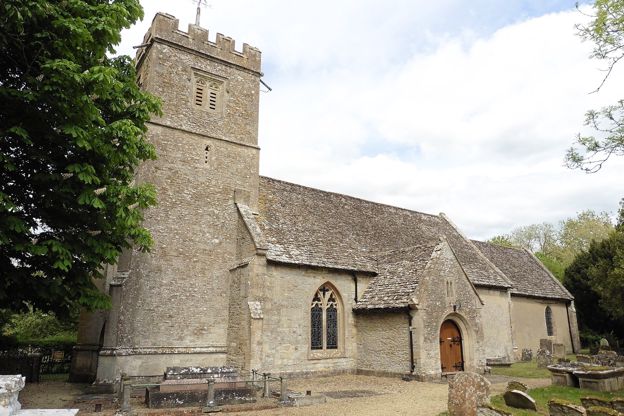
St Mary's Church, Buscot
Sight · Church · Lechlade-on-Thames
Buscot's small thirteenth-century church by the Thames below Lechlade, with a full set of Morris & Co. windows designed by Edward Burne-Jones from 1892 to 1924, a zigzag chancel arch and the Loveden monuments by Robert Cooke. Grade I.
-
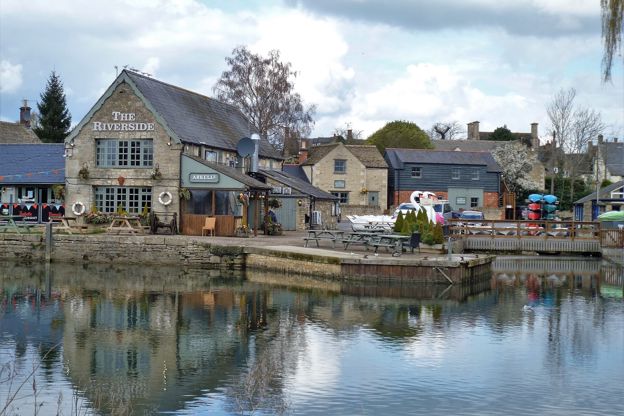
River Thames at Lechlade
Sight · River · Lechlade-on-Thames
The young Thames at Lechlade, where the Coln and the Leach join it and the old Thames and Severn Canal met it at the Round House: long the head of the navigable river, with the Thames Path past Halfpenny Bridge to St John's Lock.