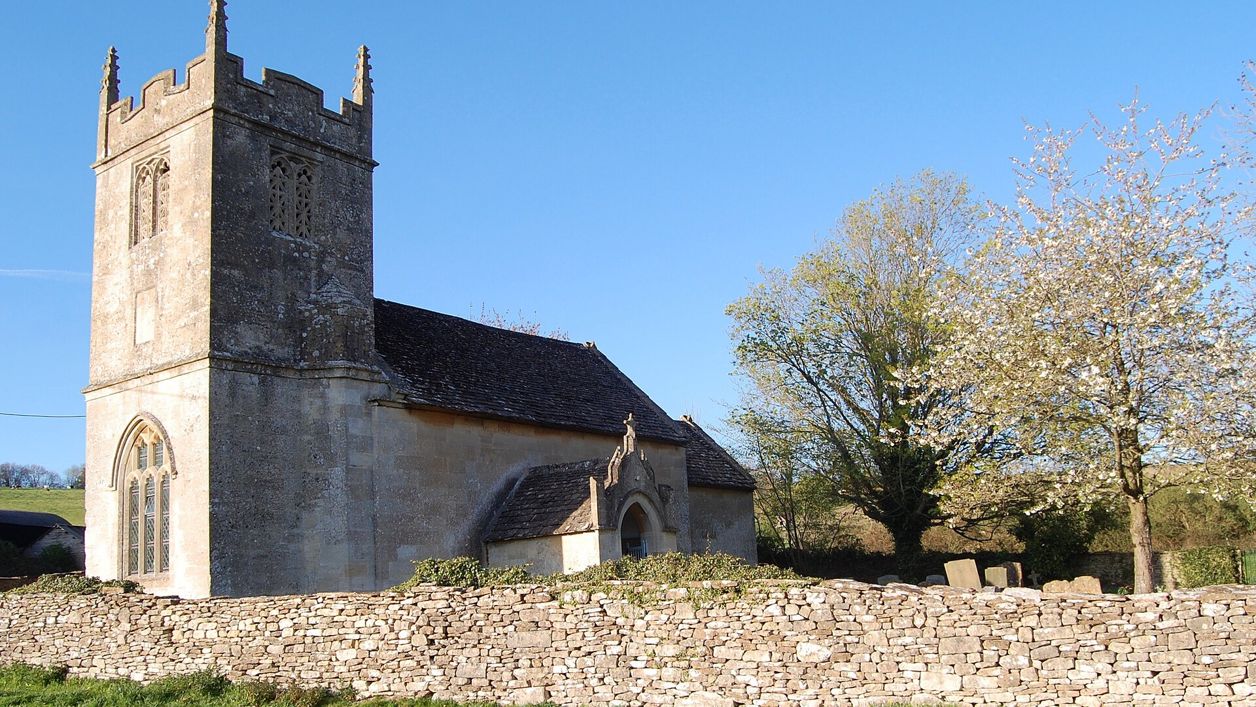
Theroadislong, CC BY-SA 4.0, via Wikimedia Commons
St Nicholas' Church, Slaughterford
St Nicholas' is the small church of Slaughterford in the By Brook valley near Biddestone, reached across a field: a fifteenth-century tower with a nave rebuilt in 1823 after the church had lain ruined, by tradition, since Cromwell's troops wrecked it.
Church
BiddestoneSt Nicholas' is the church of Slaughterford, a hamlet of mills in the wooded valley of the By Brook, a little over 2km west of Biddestone. It stands on its own in a field above the lane. Its tower is fifteenth century, and the rest was rebuilt in 1823; an inscription inside records the rebuilding after two centuries of disuse. It is listed Grade II*.
History
St Nicholas' was a medieval church that lost two centuries to war. The local tradition, repeated by the Bybrook Benefice and the Wiltshire Community History, is that Cromwell's troops partly destroyed it while marching to Bristol to sail for Ireland, which would date the damage to 1649, and the heritage trail leaflet gives that year.
Two centuries at Biddestone
With their church unusable, the people of Slaughterford walked to Biddestone to worship. The Wiltshire Community History says a gallery, reached by an outside stair, was built for them in St Nicholas' at Biddestone. The heritage trail leaflet dates it to 1712 and says the two parishes got on badly enough to want separate doors, though Historic England dates the present gallery to the late eighteenth century. The two parishes were joined under a local government order of 1844.
Rebuilt in 1823
The nave, chancel and south porch were rebuilt in 1823 by G. Forder of Winchester, paid for mainly by local people, and an inscription inside records the rebuilding after two centuries of disuse. The windows were given new tracery in the Perpendicular style in a restoration of 1883.
A valley of mills
Slaughterford's living came from the brook. Chapps Mill, in the hamlet, began as a fulling mill; the heritage trail leaflet says it turned to paper after 1790, with spells back on cloth, and the Dowding family ran it from 1859. It made paper until the 1990s, and small businesses use the site now. Upstream, the Rag Mill had the valley's earliest paper machine. The hamlet's brewery, Little and Sons, ran from 1858 to 1915 by the leaflet's dates, and its stack still stands. The hamlet had 132 people in 1871 and 81 in 1915.
What to see
The tower is the medieval part. It is small, of two stages, with a three-sided stair turret rising to the bell stage, pierced stone panels in the bell openings, an embattled parapet and corner pinnacles. The porch is embattled too. Inside, the church is plain, with plastered walls and roof, a chamfered chancel arch and fittings of the later nineteenth century; look for the inscription of 1823. From the field there is a good view down over the hamlet, the old brewery and the valley.
Visiting
St Nicholas' is reached through a field from the road. Holy Communion is held at 11am on the second Sunday of the month, with an all-age communion outdoors in the churchyard in the summer months. The benefice does not say whether the church is open at other times, so do not count on getting inside on a weekday. There are no facilities at the church; the nearest pub is the White Hart at Ford, further along the heritage trail.
Getting there
We found no public car park in Slaughterford, so walk in from Biddestone, where there is a car park behind the village hall (SN14 7BZ). The Biddestone heritage trail comes over the hill with Slaughterford below, goes through the mill, crosses the brook and enters the churchyard by a metal gate, then climbs over Common Hill to Ford.
Nearby
Back in Biddestone, the green and pond and the White Horse are a little over 2km away. Upstream, the By Brook leads past Ford and Long Dean to Castle Combe's bridge.
Walks past St Nicholas' Church, Slaughterford
-
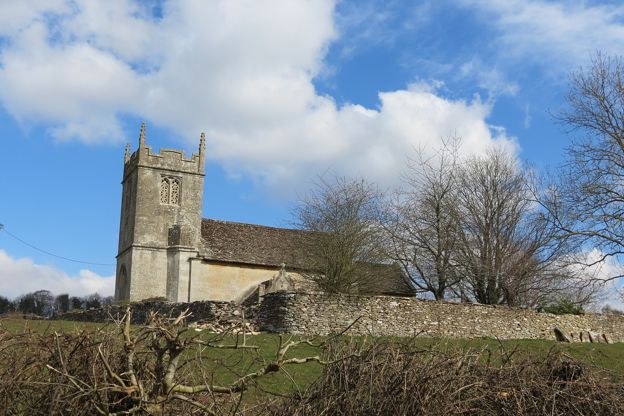
Biddestone heritage trail
Walk · Starts in Biddestone · 2 hrs, 30 mins · Circular
A 6.5-mile (10.5km) circular walk from Biddestone village hall, two to two and a half hours, moderate with stiles and short steep climbs. It goes round the green, over the fields to Slaughterford's paper mill and the White Hart at Ford, and back down the By Brook.
-
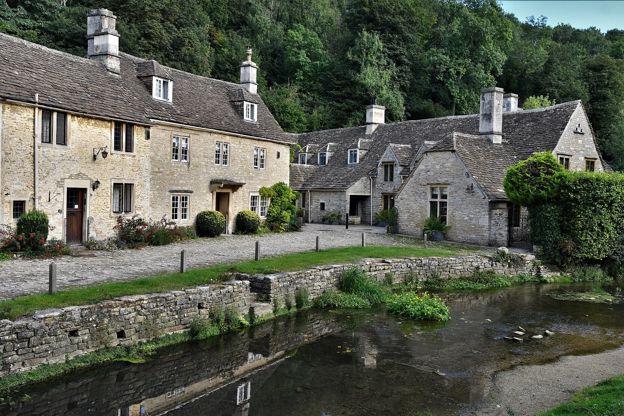
Ford, Long Dean and Castle Combe
Walk · Starts in Castle Combe · 2 hrs, 15 mins · Circular
A 4.5-mile (7.2km) circular walk from the White Hart Inn at Ford, moderate and two to two and a half hours: up the By Brook valley by Long Dean and through the woods into Castle Combe, down The Street past the Market Cross, and back through Becker's Wood and Out Woods.
Stay and eat near St Nicholas' Church, Slaughterford
-
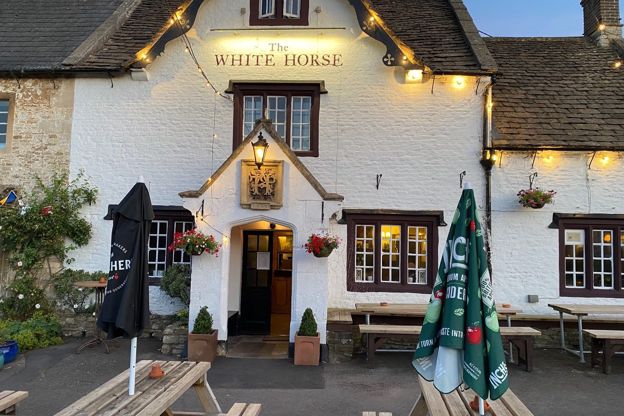
The White Horse, Biddestone
Pubs · Biddestone
A dog-friendly pub on the green at Biddestone serving pub classics, with a garden at the back, curry night on Thursdays and a quiz on the first Tuesday of the month.
Dog-friendly · Walker-friendly
Verified Oct 2026
-
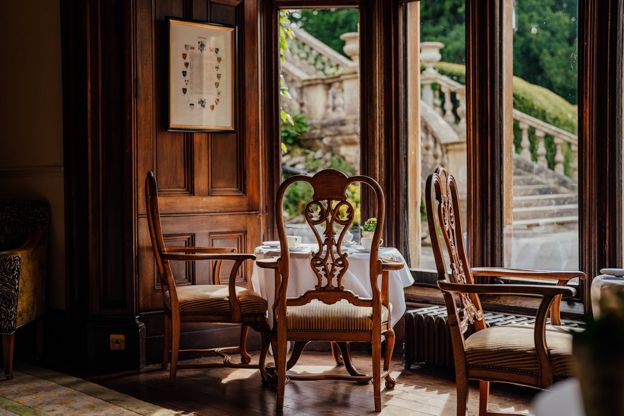
The Manor House
Hotel · Castle Combe
A hotel in a manor house of seventeenth-century origins at Castle Combe, part of the Exclusive Collection, with the Bybrook restaurant.
Dog-friendly · Wedding venues · EV charging
Verified Oct 2026
-
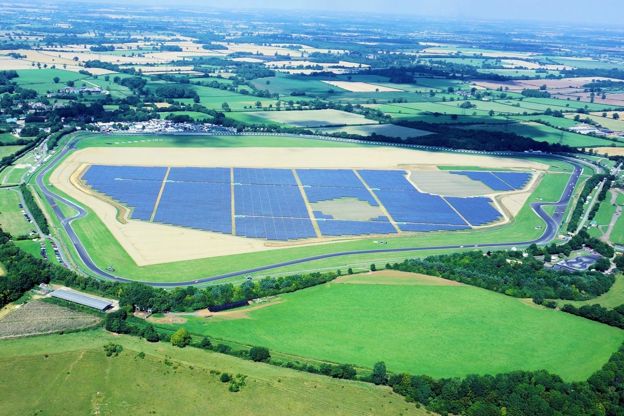
Castle Combe Circuit
Sport and activity · Castle Combe
A 1.85-mile motor racing circuit half a mile from Castle Combe, racing since 1950, with race days, action days, track days and driving experiences from spring to November.
Verified Nov 2026
More sights to see
-
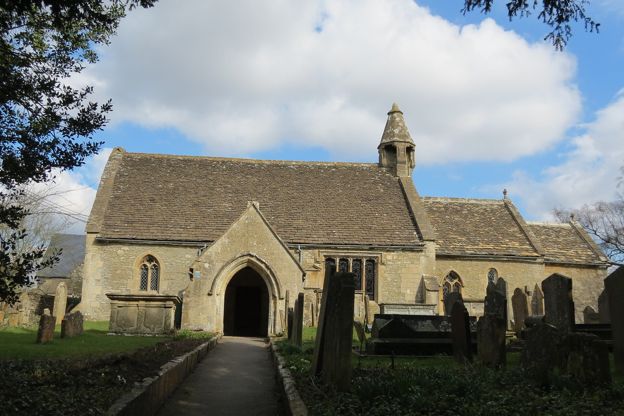
St Nicholas' Church, Biddestone
Sight · Church · Biddestone
St Nicholas' in Biddestone is a small Norman church near Castle Combe, listed Grade I, with a twelfth-century doorway and font, a rare bell turret under a little spire, box pews, a gallery and Mountjoy memorials. Open daily until dusk.
-
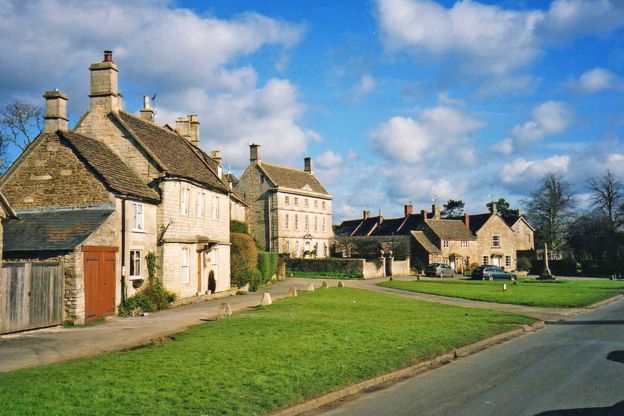
Biddestone green and pond
Sight · Common or park · Biddestone
Biddestone's green is the large open heart of a Wiltshire stone village near Castle Combe, with a duck pond made in 1661, a pub of the eighteenth century, a war memorial and houses from the seventeenth century on. Free and open at any time.
-
By Brook
Sight · River · Castle Combe
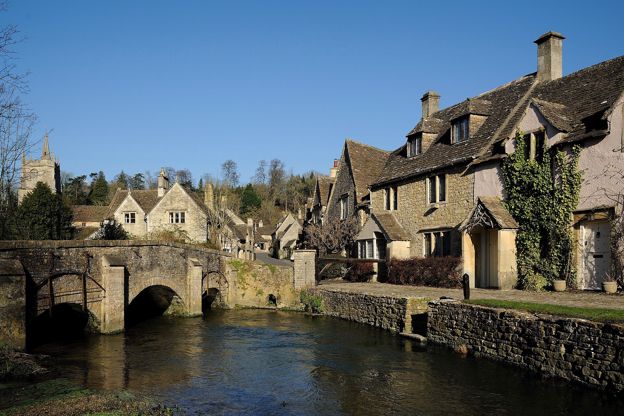
The By Brook is the wooded valley stream that runs through Castle Combe and south by Long Dean, Ford and Slaughterford, in north-west Wiltshire. It once had some twenty watermill sites, for corn, cloth and paper, and public footpaths follow much of it.