The great gardens of the Cotswolds
The Cotswolds hold some of the most influential gardens in England, many within a few miles of each other. Here are 18 of them, grouped by kind, with the month to see each at its best and how to plan a garden year.
· 12 minute read
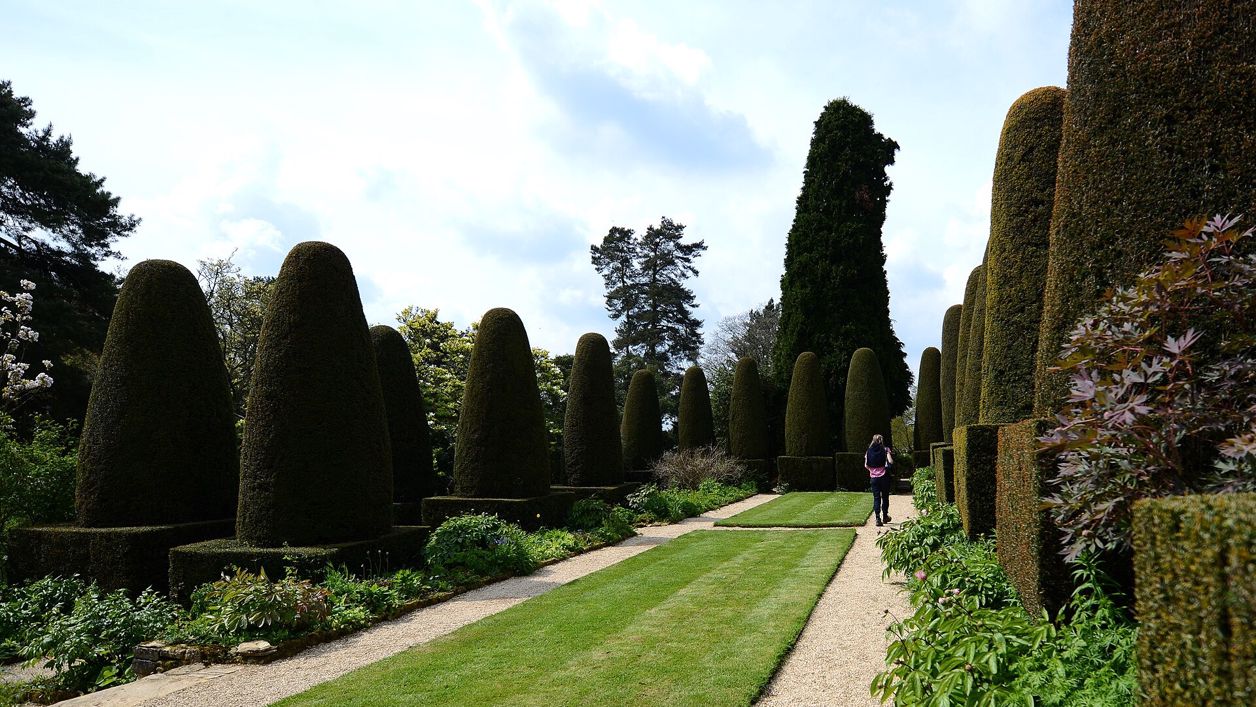
The great gardens of the Cotswolds are Hidcote and Kiftsgate above Chipping Campden, Sezincote, Batsford and Bourton House near Moreton-in-Marsh, Westonbirt, Highgrove and Rodmarton around Tetbury, and Painswick Rococo Garden, Colesbourne, Miserden and Cerney House on the hills between. Add Sudeley, Snowshill, Kelmscott, Blenheim, Barnsley House, Abbey House and the lavender at Snowshill and you have 18, enough for a season. Below they are grouped by kind, each with who made it, its best month, how long to allow and whether the dog can come. To see the northern ones in two days by car, follow our gardens weekend in the Cotswolds, from Hidcote to Sezincote.
How we chose: each garden here has a listing of ours behind it or an owner's website we have read, with the season and price dated on the listing. Most of the private gardens open on set days only and close for the winter, so read the calendar at the end first. The gardens cluster: Hidcote and Kiftsgate are half a mile apart, and Sezincote, Batsford and Bourton House lie within 2 miles of each other on the A44, so two in a day is normal.
The Arts and Crafts gardens
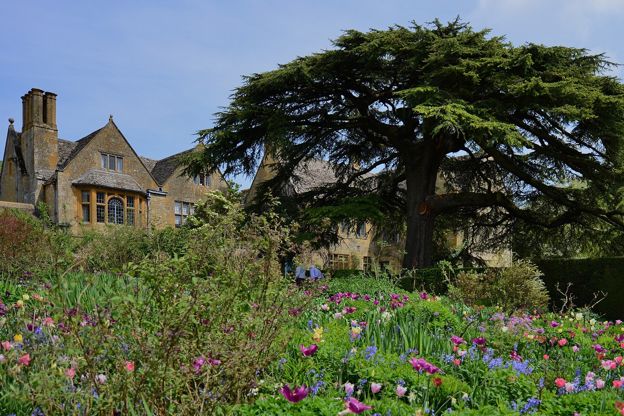
Three Arts and Crafts gardens are open. Hidcote, begun by Lawrence Johnston in 1907 at Hidcote Bartrim, is a series of outdoor rooms divided by hedges and walls, with wilder planting inside a formal plan, and it has belonged to the National Trust since 1948. It is the most famous garden in the region and busiest from mid-morning; come at opening and allow three hours. Dogs on short fixed leads can go everywhere but the Old Garden and the house. Its best months are June, when the borders fill, and October for the autumn colour, and winter tickets from November are cheaper. There is no bus; the walk up from Mickleton is the car-free way.
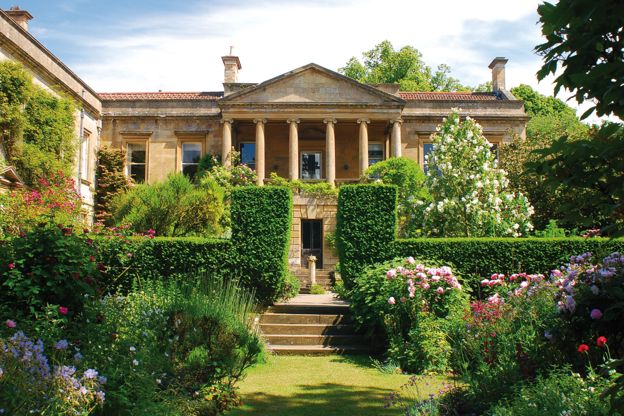
Kiftsgate Court, half a mile away, was made by three generations of women. Heather Muir began it after 1920, a friend of Johnston's, letting it grow rather than planning it on paper; her daughter Diany Binny and her granddaughter Anne Chambers have kept and extended it, with a water garden and a bluebell wood along the drive. It gives its name to the Kiftsgate rose, which the garden says flowers in early to mid July, and that is its month; the bluebells by the drive flower in early May. Allow an hour and a half and pay by card in the tea room. Dogs are not allowed in the garden, though there is a grassy area by the overflow car park where they can stretch their legs. It opens on its own calendar, published each year, from April to September, and also on its National Garden Scheme days.
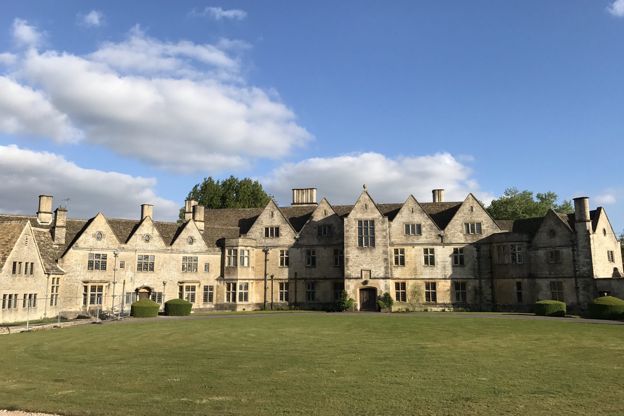
Rodmarton Manor, between Cirencester and Tetbury, is the house the Cotswold Arts and Crafts movement built: Ernest Barnsley and the local craftsmen made it and its furniture for Claud and Margaret Biddulph from 1909 to 1929, and the family still lives there. Its eight-acre garden is laid out as outdoor rooms, and it opens from May to September on Wednesday and Saturday afternoons and bank holidays only (in 2026, 2pm to 5pm, and 11am to 4pm in June and July). Allow two hours for house and garden; no dogs. Our story on the Arts and Crafts movement in the Cotswolds puts the three in context.
The private gardens of the north
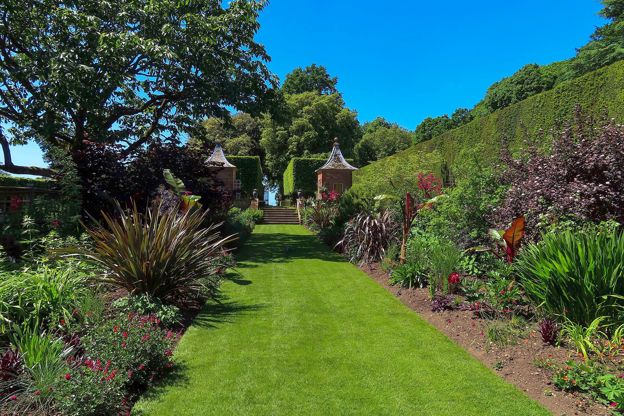
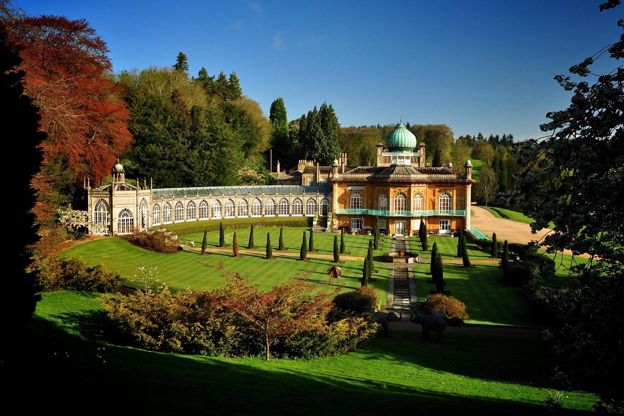
Sezincote, just west of Moreton-in-Marsh, is a Mughal-style house of 1805 with a copper dome, and its garden follows a stream down a valley past pools, an Indian bridge with Brahmin bulls, the Snake Pond and a temple to Surya, the sun god, to the Island Pool. The register of historic parks and gardens thinks Humphry Repton probably designed the park and lake, though no plan of his survives. Sir Cyril and Lady Kleinwort restored it in 1968 with Graham Stuart Thomas's advice. The garden opens from March to November on Wednesdays, Thursdays, Fridays and bank holiday Mondays, pay on arrival; the house, by booked tour, and the Orangery Tearoom open from May to September only. Best in spring and autumn; allow an hour and a half; no dogs, and the banks are slippery when wet and the pools unfenced.
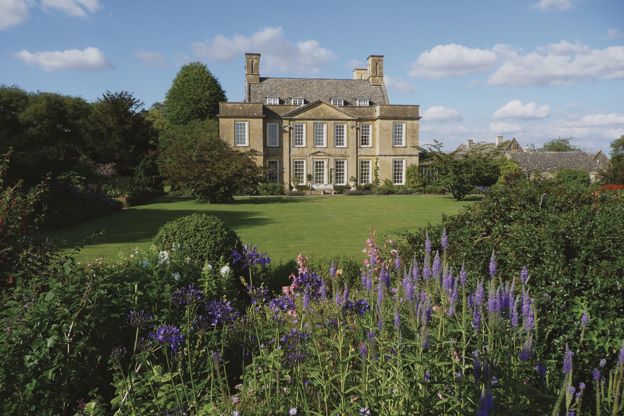
Bourton House Garden at Bourton-on-the-Hill, 2 miles west of Moreton, was a neglected wilderness when Mr and Mrs R Paice bought the house in 1983; they made the garden, it first opened for the National Garden Scheme in 1987, later won the HHA and Christie's Garden of the Year award, and passed to new owners in 2010. It is a late-summer garden of terraces, wide borders of tender perennials and pots, a topiary walk and a White Garden, at its fullest in August and September, and it opens Tuesday to Friday, not on public holidays, from April to mid-October (7 April to 16 October in 2026). Allow an hour and a half plus the seven-acre field of specimen trees opposite; under-16s go free; no dogs.
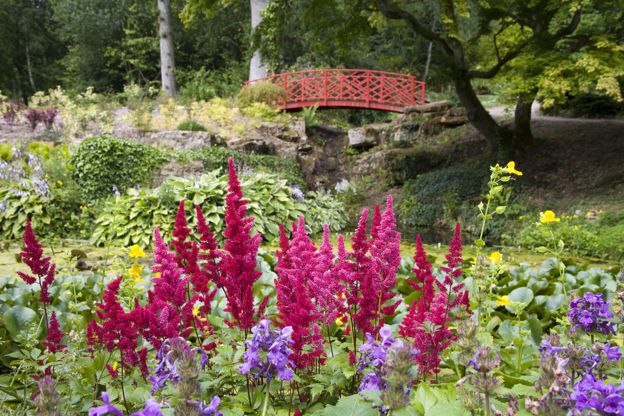
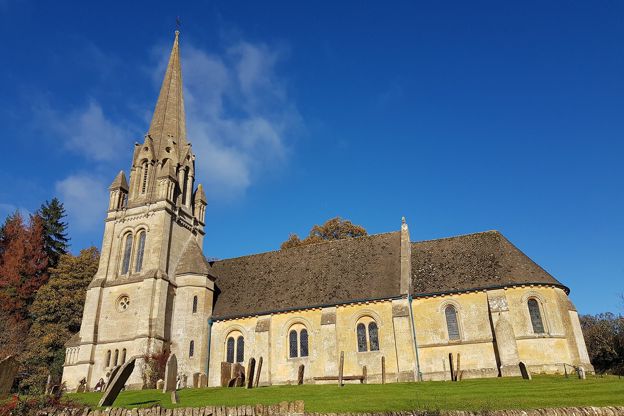
Batsford Arboretum, across the A44, is the garden to bring the dog and the children to, both on short leads in the dog's case. Algernon Freeman-Mitford, later the first Lord Redesdale, laid out a wild garden in the Japanese and Chinese taste here from 1886, with a 600m watercourse, a rest house and a bronze Buddha; the second Lord Dulverton replanted it as an arboretum from 1956, and the Batsford Foundation has run it since 1992. It opens every day but Christmas Day, with a café and garden centre in the free visitor centre, and its months are April for the magnolias and late October for the maples. Allow two hours, and walk there from Moreton station on the stile-free route past Batsford or the loop from Blockley.
Westonbirt, the Rococo Garden and the west
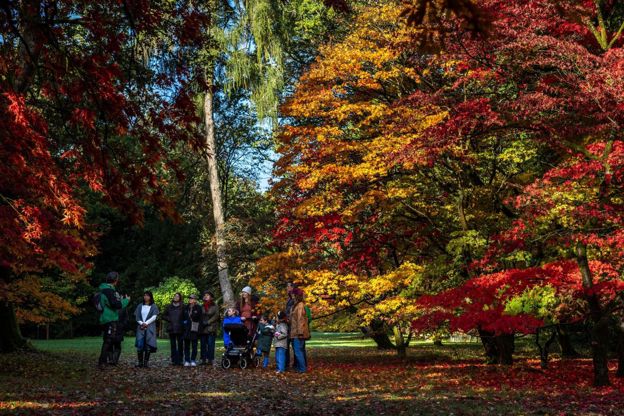
Westonbirt, the National Arboretum, near Tetbury, is the biggest tree collection on this page and is open every day but Christmas Day. Robert Stayner Holford began the Old Arboretum in 1829 and bought Silk Wood in 1840; Forestry England runs it now, with about 15,000 trees of 2,500 species and a 300m treetop walkway opened in 2016. Its month is October, for the maples, when prices rise and booking ahead is strongly advised. Allow a day. Dogs run off the lead in Silk Wood and stay out of the Old Arboretum, and the Silk Wood walk is the loop to follow with one.
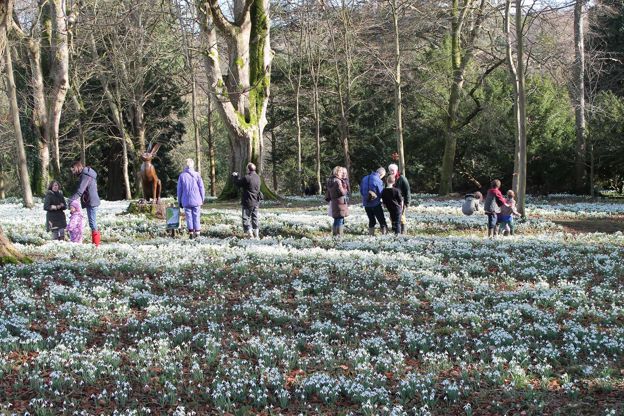
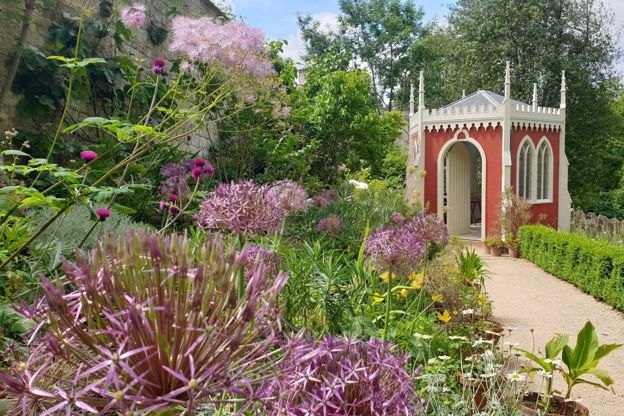
Painswick Rococo Garden, above Painswick, is a different thing: a pleasure garden of the 1740s made for the owner of Painswick House, painted by Thomas Robins in 1748 for Benjamin Hyett, abandoned and planted with timber in the 1950s, and restored from Robins's painting by Lord and Lady Dickinson, then the owners, after an exhibition of his work in 1984. A charitable trust has worked on it since 1988 and calls it the UK's only complete surviving Rococo garden. It sits in a steep combe with follies, a maze and a play area. February is its month, for the snowdrops, by booked ticket; allow an hour and a half; dogs on short leads are welcome all year, in the café and shop too.
Highgrove, outside Tetbury, is the King's private garden, made since 1980 and managed organically, and the only one here you cannot simply turn up to. It opens by booked guided tour from April to September; tickets go on sale in March and often sell out, and tours last about an hour and a half. Children under nine cannot come, nor can dogs, and every visitor needs photo ID. Allow three hours with lunch in the Orchard Room.
Snowdrops and the gardens of the middle hills
Colesbourne Park, on the A435 between Cheltenham and Cirencester, is the Cotswolds' snowdrop garden, and it opens only for them. Henry John Elwes, the naturalist who found Galanthus elwesii in the mountains near Smyrna in April 1874, was born and died here, and the rare trees of the arboretum have been collected privately over the past 120 years. The gardens open on the Saturdays and Sundays of late January and February, eight days in all, gates at 11am and last entry at 4pm, by ticket bought ahead online only at about £15 a head, with children of school age free. Dogs on a short lead are welcome, a different charity serves the tea each weekend, and there are about 10 acres of snowdrop walks round the house and the lake. Allow two hours.
Miserden, on the high ground above the Frome valley north-east of Stroud, is a seventeenth-century garden around a house of 1620, with a loggia by Edwin Lutyens, who also redesigned a wing. It is known for its long mixed borders, a topiary yew walk, a mulberry planted in 1620, a rill and a dahlia spiral, with a view over the deer park. It opens Wednesday to Sunday and bank holidays from April to the autumn, 10am to 5pm (closed for the winter until April), with under-16s free, a food trailer for refreshments and no dogs. Its months are June for the borders and September for the dahlias; allow an hour and a half.
Cerney House Gardens at North Cerney, up the Churn valley from Cirencester, is the easiest of the three to visit: the Angus family opens its walled Victorian garden, herbaceous borders, organic kitchen garden and woodland walks through 40 acres of parkland 364 days a year, closing only when the forecast is bad, 10am to 7pm or daylight in winter, for £7 (2026) by cash or contactless at the gate, with a self-service tea room in the bothy. Dogs on leads are welcome. The walled garden is at its fullest in early summer; allow an hour and a half.
The National Trust and the castle gardens
Three of these gardens come with a house attached. Snowshill Manor, above Broadway, has a garden Charles Wade laid out after 1919 with M. H. Baillie Scott as a series of terraced outdoor rooms down the hillside, with the Priest's House, Wolf's Cove, a model village, and a wildflower meadow. The National Trust has owned it since 1951. Best from April to June; allow two hours with the house; dogs on short leads can go in the orchards, the meadow and the front lawns, but not the formal garden.
Sudeley Castle, at Winchcombe, has ten gardens inside and around its ruins, among them the Queen's Garden, reworked in 1989 to designs by Jane Fearnley-Whittingstall and planted with more than 80 varieties of rose, and a knot garden of 1995, near the chapel where Katherine Parr is buried. Allow half a day; pet dogs can go only to the visitor centre and the Pavilion Café; it opens daily from mid-March to the start of November (14 March to 1 November in 2026). Kelmscott Manor, William Morris's house by the Thames near Lechlade, belongs to the Society of Antiquaries, so Trust members pay, but its gardens, meadows, shop and tearoom are free. It opens Thursday to Saturday from April to October, best in June, and dogs on leads can go in the grounds but not the house or the walled garden. Our guide to Cotswold houses and castles has the houses themselves.
Blenheim, Barnsley House and Abbey House
Blenheim Palace at Woodstock has the grandest formal gardens on this page, the Water Terraces, the Secret Garden and the Walled Garden with the Marlborough Maze, inside Capability Brown's park. A day ticket converts to a 12-month pass, so come back by season. Allow a day; dogs on leads in the park and the first part of the Walled Garden only.
Barnsley House, near Cirencester, was Rosemary Verey's garden, registered Grade II* as a historic garden; the house is now a hotel trading as THE PIG in the Cotswolds, so ask the hotel whether a non-resident can see the garden, and eat at the Village Pub opposite either way. Abbey House Gardens at Malmesbury, beside the abbey, were made by Ian and Barbara Pollard, who bought the house in 1994 and opened the gardens in 1996; Kim and Whit Hanks bought it in 2021. They are now open on a few set days only: the owners listed two in 2025 and none since when we checked in October 2026, so do not count on getting in. Check Barnsley House before you plan around it too.
Cotswold Lavender, a flower farm
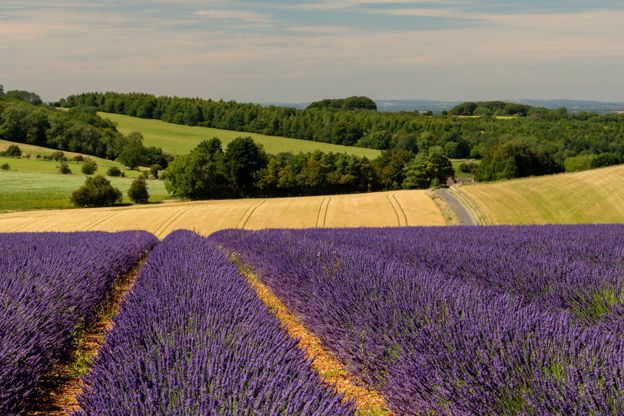
Cotswold Lavender at Snowshill is not a garden but a crop. The family planted the first lavender on their hill farm in 1999, and about 45 acres now run in rows on the limestone about 300m up, looking over the Vale of Evesham. The fields open daily from mid-June to early August, when the lavender is in flower, with tickets by card on arrival and no booking; the peak weeks are the end of June and July. Come early, bring water and a hat, because there is little shade, and allow an hour. Dogs on leads are welcome, though not in the play area. The loop round Snowshill and Snowswood starts under a mile away.

The Cotswolds Info newsletter
Events, new places and the best of the season, about once a month. Unsubscribe at any time.
A calendar of the garden year
Snowdrops open the year: Colesbourne's weekends run from late January through February and Painswick Rococo Garden's snowdrop season is mid to late February, both by booked ticket. April is for the magnolias at Batsford and the spring bulbs at Hidcote, early May for the bluebell wood at Kiftsgate, and the first openings of the private gardens, most of which start between Easter and the end of April.
June is the month if you can choose only one: Hidcote's Red Borders, Miserden's borders, Kelmscott, Rodmarton and the first weeks of lavender at Snowshill. July and August belong to Cotswold Lavender, to the Kiftsgate rose in early July and to Bourton House, whose tender planting peaks in late summer, with Highgrove's kitchen garden and the dahlias at Miserden running into September. October is Westonbirt's, for the maples, with Batsford and Hidcote close behind, and then most of the private gardens shut: Kiftsgate at the end of September, Bourton House in mid-October, Kelmscott at the end of October, Sudeley and the Rococo Garden on 1 November, and Sezincote at the end of November. Through the winter Westonbirt, Batsford, Cerney House and Hidcote stay open, at lower prices where they charge.
Gardens with good cafés
Batsford's Garden Terrace Café, in the visitor centre, which is free to enter, bakes its own cakes and seats 184, and Hidcote's Winthrop's Café serves lunches in the garden. Kiftsgate's tea room takes cards only; Bourton House has a café in the Tithe Barn from May to September, with a pop-up café in April and October; Kelmscott's tearoom is free to enter and serves lunch from midday to 2pm. Sudeley's Pavilion Café needs no ticket and lets dogs in, and Westonbirt has a restaurant and a café. Sezincote's Orangery Tearoom opens only with the house, from May to September, Miserden has a food trailer, Cerney House a self-service bothy and Colesbourne a charity tea.
Gardens you can reach by train or bus
Batsford is the easiest garden without a car: Moreton-in-Marsh station is about 1.5 miles away and the stile-free walk passes the gate. Westonbirt has the 620 bus from Bath and the 69 from Stroud, with cheaper entry for arriving by bus, train or bike; Painswick Rococo Garden is a short walk from the 66 bus from Cheltenham and Stroud; Blenheim's gate is on the S3 and S7 from Oxford, with 20 per cent off; Kelmscott is a 3-mile walk along the Thames Path from Lechlade. Hidcote and Kiftsgate have no bus, and the rest need a car or a taxi. Our guide to the Cotswolds without a car has the routes.
The National Garden Scheme open days
Beyond the 18 above, hundreds of private Cotswold gardens open for an afternoon or two a year under the National Garden Scheme, which has raised money for nursing and health charities this way for nearly a century. The rule is simple: the owner sets a date and an entry price with the county organiser, usually a few pounds, often with tea and cake sold for the charity and plants by the gate, and the garden is otherwise private. Kiftsgate still opens for the scheme, and Bourton House first opened for it in 1987. The dates change every year, so find them on the scheme's own Find a Garden (opens in a new tab) site, by county and by week. Rules on dogs and children are the owner's, printed with each entry.
Mentioned in this story
The places, sights and walks in this story, each with a page of its own: what it is, when to go and how to get there.
-
Hidcote
Parks and gardens · Chipping Campden
-
Kiftsgate Court Gardens
Parks and gardens · Chipping Campden
-
Sezincote House and Garden
Parks and gardens · Moreton-in-Marsh
-
Bourton House Garden
Parks and gardens · Moreton-in-Marsh
-
Batsford Arboretum
Parks and gardens · Moreton-in-Marsh
-
Rodmarton Manor
Historic houses and heritage · Tetbury
-
Painswick Rococo Garden
Parks and gardens · Painswick
-
Westonbirt, The National Arboretum
Parks and gardens · Tetbury
-
St Mary's Church, Batsford
Sight · Church · Moreton-in-Marsh
-
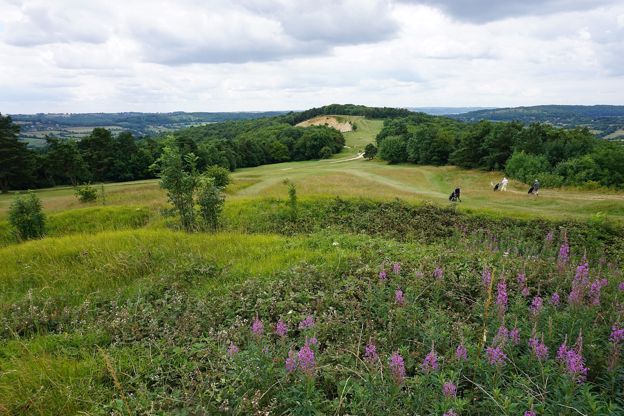
Painswick Beacon
Sight · Hill fort or barrow · Painswick
-
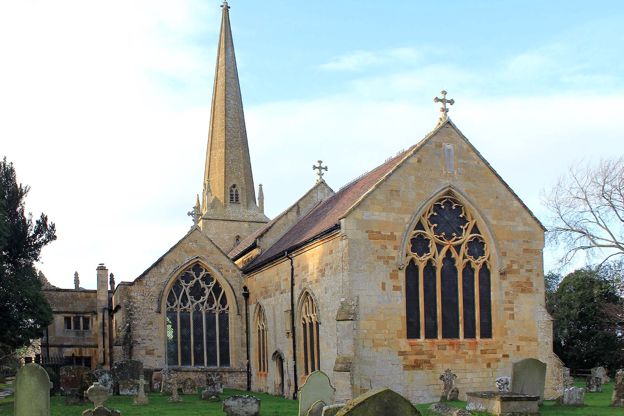
Mickleton, Hidcote and Kiftsgate
Walk · Starts in Chipping Campden · 2 hrs, 15 mins · Circular · Dog-friendly
-
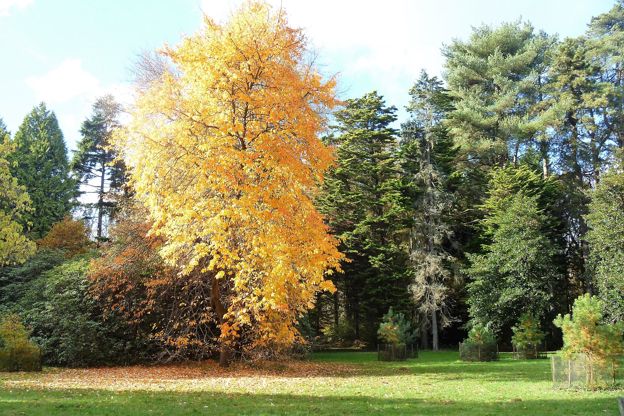
Silk Wood at Westonbirt Arboretum
Walk · Starts in Tetbury · 1 hr · Circular · Dog-friendly
-
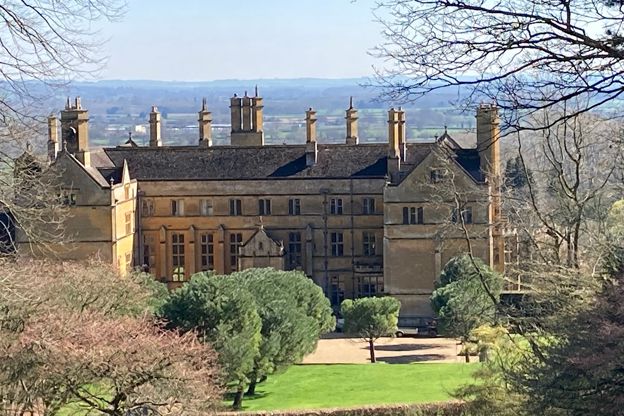
Moreton-in-Marsh and Batsford
Walk · Starts in Moreton-in-Marsh · 2 hrs · Circular
Places to stay near Chipping Campden
-
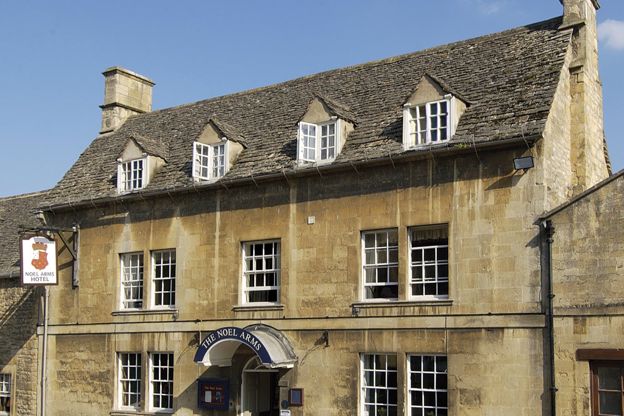
The Noel Arms Hotel
Inn · Chipping Campden
A Grade II listed inn with 27 rooms on Chipping Campden's High Street, with a restaurant, parking, accessible rooms and dogs by arrangement.
Dog-friendly
Verified Oct 2026
-
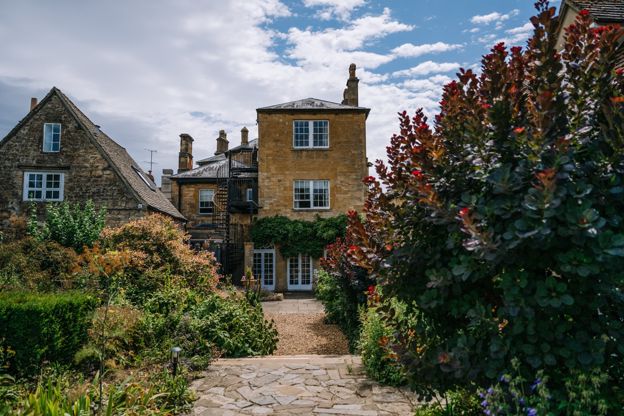
Cotswold House Hotel and Spa
Hotel · Chipping Campden
A Grade II listed Regency town house on Chipping Campden's Upper High Street, now a hotel and spa with the Hidcote restaurant.
Hot tubs · Wedding venues
Verified Nov 2026
-
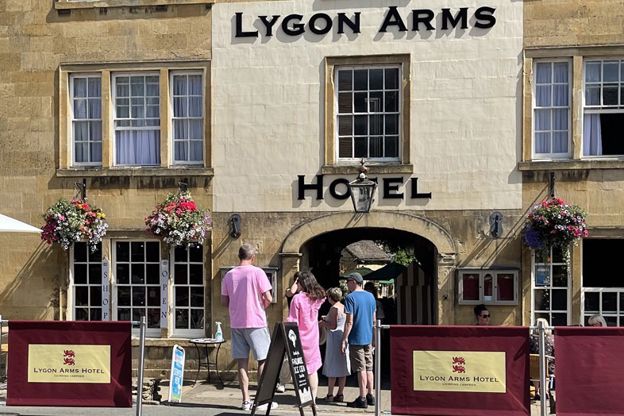
The Lygon Arms, Chipping Campden
Inn · Chipping Campden
A coaching inn with ten rooms on Chipping Campden's High Street, with family rooms, bike storage, free parking at the rear and dogs welcome.
Dog-friendly
Verified Oct 2026
Read next
-
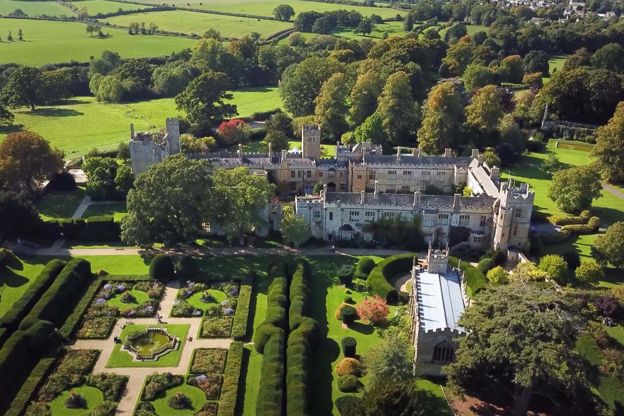
Country houses and castles of the Cotswolds
Story · Guides · 11 minute read
Blenheim, Sudeley, Berkeley, Snowshill, Chastleton, Stanway, Kelmscott, Rodmarton, Dyrham, Lacock and the ruins: the Cotswolds' great houses and castles, who built them, when they open, and which suit children, gardeners or a day by train.
-
The Arts and Crafts movement in the Cotswolds
Story · History · 10 minute read
How Ashbee's Guild of Handicraft, Gimson and the Barnsleys, Rodmarton Manor, Gordon Russell and the gardens at Hidcote made the Cotswolds a home of Arts and Crafts, and where to see it now.
-
When to visit the Cotswolds, month by month
Story · Guides · 13 minute read
The best months to visit the Cotswolds are May, September and October. June to August and the bank holidays are the busiest, January the quietest. Here is the year month by month, with what is in flower, the customs, the weather and what to book ahead.