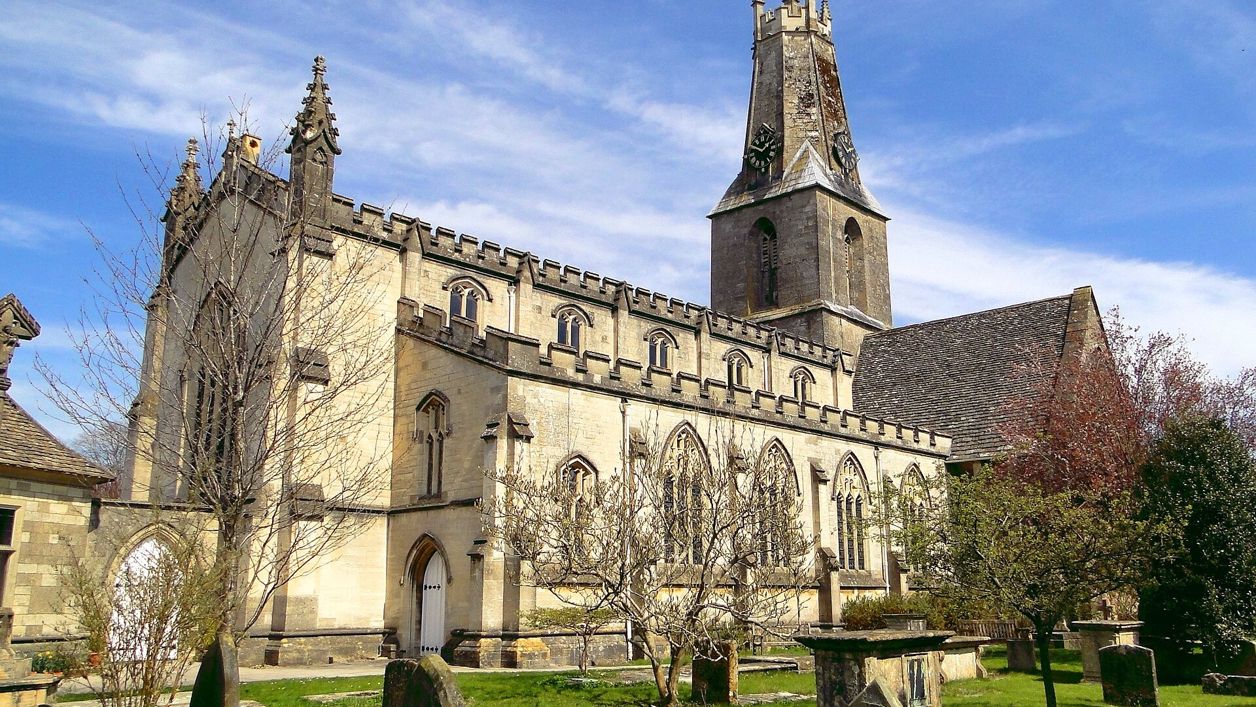
Philip Pankhurst, CC BY-SA 2.0, via Wikimedia Commons
Holy Trinity Church, Minchinhampton
Holy Trinity is Minchinhampton's Grade I parish church, known for its fourteenth-century tower whose spire was cut short in 1563 and crowned with a stone coronet, a south transept lit by a great rose window, and the grave of the astronomer James Bradley.
Church
MinchinhamptonHoly Trinity is the parish church of Minchinhampton, on Bell Lane a few steps from the Market Square. Its central tower and transepts are fourteenth century, the rest was rebuilt in 1842, and it is listed Grade I. Its odd silhouette, a tower with a short crown where a spire should be, is the town's landmark from the common.
History
The church is far older than anything you can see. William the Conqueror gave it, with the manor of Hampton, to the nuns of Holy Trinity at Caen, the abbey his wife Matilda had founded; that is where the "Minchin" in the town's name comes from, an old word for nuns. The church passed with the manor to the nuns of Syon Abbey in the early fifteenth century. There was a major rebuilding in the twelfth century, but Historic England notes that no trace of it survives.
The tower and the coronet
What survives from the Middle Ages is the fourteenth century: the central tower, with tall two-light belfry openings, and both transepts. The tower first carried a broach spire. In 1563 its upper part was taken down and the stump finished with a crenellated coronet set with crocketed pinnacles, which is what you see today. An octagonal stair turret climbs the north-east corner.
Rebuilding in 1842 and after
By the nineteenth century the nave was replaced. Thomas Foster of Bristol rebuilt it in 1842 in the Perpendicular style, with aisles, a clerestory and a four-light west window. Between 1869 and 1871 William Burges, one of the boldest Victorian Gothic architects, reworked the chancel and gave it its big five-light east window. The church was reseated in 1875, F. C. Eden added the timber rood screen in 1920 and painted the chancel's barrel vault in 1931, and a porch room by Peter Falconer followed in 1973.
James Bradley
The astronomer James Bradley, Astronomer Royal, who discovered the aberration of starlight, died at Chalford in July 1762 and was buried in this churchyard. Gloucestershire Archives tells how thieves were caught trying to prise the oval brass plate from his tomb in the early nineteenth century; the brass, with its Latin inscription to Jacobus Bradley, aged 70, is now kept inside the church. Bradley was born at Sherborne, near Northleach, so his life began and ended in the Cotswolds.
What to see
The south transept is the reason to come, and Historic England calls it the most remarkable part of the interior. A large five-light rose window fills the end wall, and the pitched roof is made of stone slabs carried on closely set stone cross-arches, braced like scissors: a rare way to roof a medieval building, and worth looking up at for a while.
Under the rose window are two tomb recesses with ogee arches, rich with crockets and pinnacles. In them lie the effigies of a knight in armour of his day and his lady, each on a chest panelled with quatrefoils. A third recess of the same kind, in the north transept, is now hidden by the organ.
Under the tower, the crossing has tierceron vaulting on slender corner shafts with carved foliage capitals, and traces of medieval painting survive on the nave arch. Look high in the nave between the clerestory windows for the monuments, many of them of the cadaver type, most to the Sheppard family of Gatcombe Park, the lords of the manor who built the Market House. The best is to Samuel Sheppard, who died in 1770, by Ricketts of Gloucester. There are brasses at the west end, a memorial in the south transept to Jeremy Buck, an officer for Parliament in the Civil War, and glass that is almost complete: Hardman made the east and rose windows, and Herbert Bryans, a pupil of Kempe, most of the rest between 1899 and 1922.
Outside, at least eight monuments in the churchyard are listed in their own right. Bradley's tomb is among the graves; the brass that once marked it is the one now inside.
Visiting
Holy Trinity is a working parish church with a sung Eucharist at 10am on most Sundays (all-age worship on the first Sunday of the month) and a Eucharist at 11am on Wednesdays; entry is free. We have not found published weekday opening hours: the church's page on A Church Near You directs visitors to its latest news for times, so check there or ring the church office on 01453 889004 before travelling far. The church lists accessible parking, an accessible toilet, baby changing, a hearing loop and large print, and the parish council lists a public toilet suitable for disabled visitors in Bell Lane, off the Market Square beside the Crown Inn. The rose window is at its best on a bright afternoon, when the low sun comes round to the south.
Getting there
By car, Stroud District Council's Friday Street car park at Parsons Court (GL6 9JL) is a few minutes' walk, and the church is at GL6 9BP. Stagecoach West's 620 bus from Stroud to Tetbury and Bath stops in the Market Square, a few steps from the church, about seven times a day each way, Monday to Saturday. On foot, the church is on the edge of Minchinhampton Common: Bell Lane runs past the churchyard wall onto the open grass, and the Bulwarks are a short walk west.
Nearby
The Market House of 1698 is round the corner in the Market Square. West of the town the common holds the Iron Age Bulwarks and the long barrow called Whitfield's Tump, and the pierced standing stone known as the Long Stone is in farmland to the south-east. For a drink, the Old Lodge is out on the common, and our guide to Stroud and the Five Valleys covers the country round about.
Stay and eat near Holy Trinity Church, Minchinhampton
-
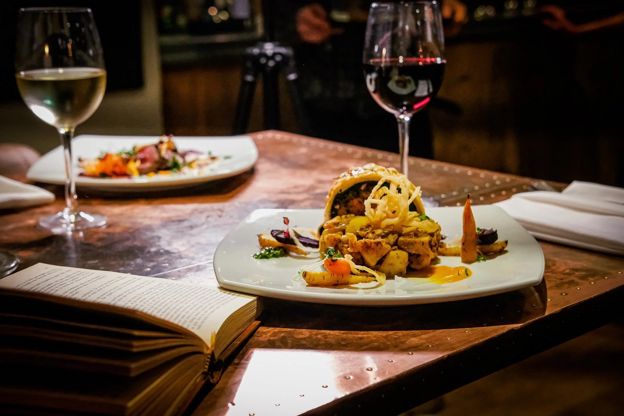
The Old Lodge
Inn · Nailsworth
An inn with six rooms on Minchinhampton Common, about two miles by road from Nailsworth, breakfast included and food all day.
Walker-friendly
Verified Nov 2026
-
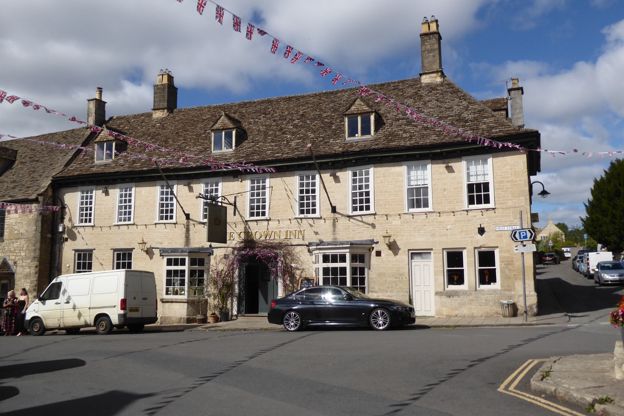
The Crown Inn, Minchinhampton
Pubs · Minchinhampton
A Young's pub in the old coaching inn on Minchinhampton's High Street, opposite the Market House, with a hidden garden, Sunday roasts and a monthly quiz.
Verified Nov 2026
-
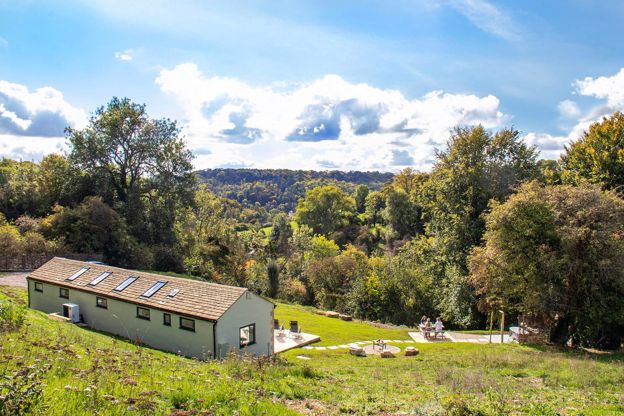
Wild View
Self-catering · Minchinhampton
A two-bedroom lodge for four in three acres of meadow at the end of a lane below Minchinhampton, with an outdoor bath, a fire pit and dogs welcome.
Dog-friendly · Family-friendly · Walker-friendly
Verified Oct 2026
More sights to see
-
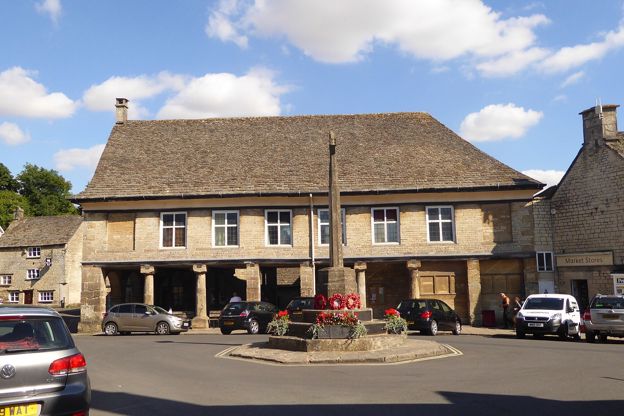
Market House, Minchinhampton
Sight · Historic building · Minchinhampton
Minchinhampton's Market House was built in 1698 by the lord of the manor, Philip Sheppard, for the wool and yarn trade: an open arcade on stone piers with a hall above. Listed Grade II*, it still holds a country market on Wednesday mornings.
-
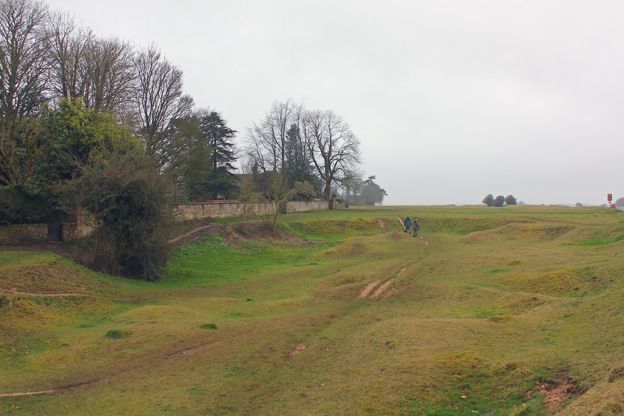
The Bulwarks, Minchinhampton
Sight · Hill fort or barrow · Minchinhampton
The Bulwarks is a Late Iron Age bank and ditch that sweeps across Minchinhampton Common north and north-west of the town: a bank 10m to 12m wide with a stone face, dated by pottery found in the 1937 excavation. It lies on free National Trust common land.
-
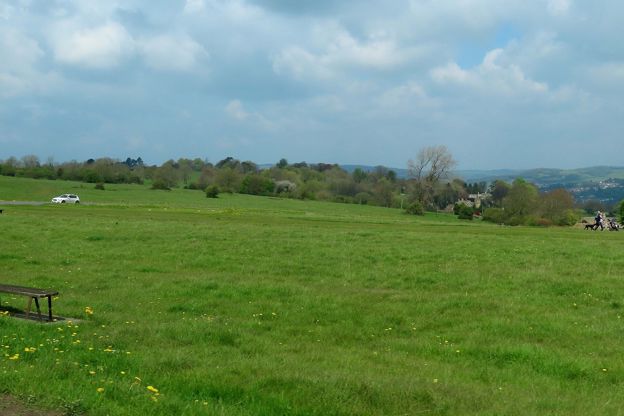
Minchinhampton Common
Sight · Common or park · Minchinhampton
Minchinhampton Common is a wide sweep of limestone grassland above Stroud and Nailsworth, in the care of the National Trust since 1913, where commoners' cattle graze and an Iron Age bank, a long barrow, pillow mounds and wartime trenches lie in the turf. Free to wander.