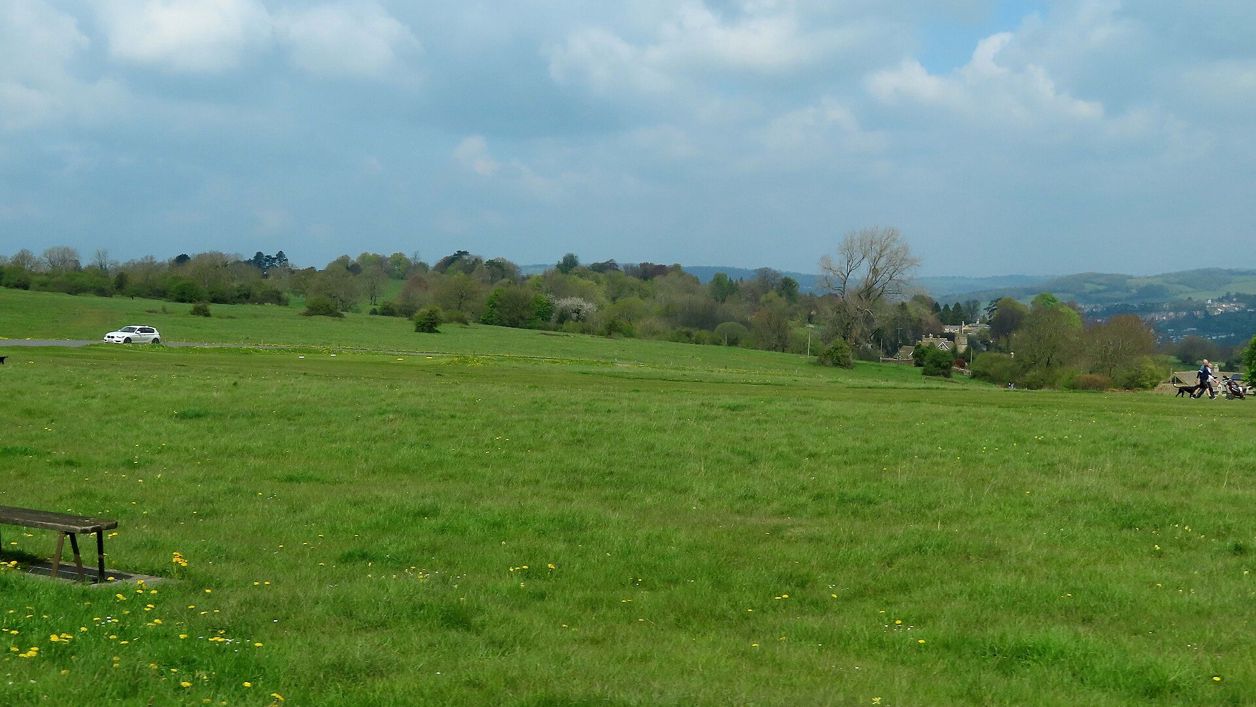
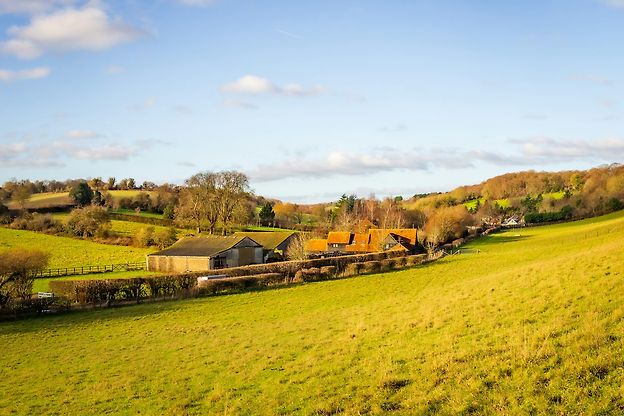
Steve Daniels, CC BY-SA 2.0, via Wikimedia Commons
Minchinhampton Common
Minchinhampton Common is a wide sweep of limestone grassland above Stroud and Nailsworth, in the care of the National Trust since 1913, where commoners' cattle graze and an Iron Age bank, a long barrow, pillow mounds and wartime trenches lie in the turf. Free to wander.
Common or park
MinchinhamptonMinchinhampton Common is the high, open grassland that spreads west of Minchinhampton towards Amberley and Nailsworth, with Rodborough Common to the north. The National Trust has held it since 1913. Commoners still graze cattle on it, and its turf hides one of the richest archaeological landscapes in the Cotswolds.
History
The common has been common for as long as there are records. The Victoria County History describes more than 500 acres that survived enclosure, where the tenants of the manor grazed their animals. A tradition says that Alice Hampton, who died in 1515, gave the common to the people of the town; the Victoria County History says the story appears to be a fiction. The tenants guarded their rights all the same: a Chancery suit between the lord and the tenants over pasture was heard in 1620.
The archaeology
Historic England schedules the whole common as one monument, for remains that run from prehistory to the Second World War. The oldest is Whitfield's Tump, a Neolithic long barrow, scheduled on its own. The best known are the Bulwarks, a Late Iron Age bank and ditch that sweeps across the common, with a second Iron Age bank near Amberley and the traces of at least twelve prehistoric fields, seen mostly from the air. The Middle Ages left Amberley Camp, an arc-shaped enclosure, ridge and furrow from a short spell of ploughing, hollow ways and a deer park first mentioned in 1176.
Later centuries added a rabbit warren of about 49 pillow mounds, the long low mounds built for breeding rabbits, with round buries and two vermin traps, probably of the sixteenth or seventeenth century; 37 old quarries, from 10m to 250m long; and the line of the Cirencester to Stroud turnpike. In the Second World War 22 anti-glider trenches were dug across the open ground to stop enemy aircraft landing, and a military camp stood in the area called the Park.
Racing, golf and the National Trust
The common was a playground as well as a pasture. Horse races were run on it until the elder David Ricardo of Gatcombe Park stopped them early in the nineteenth century, and the Minchinhampton golf club was formed in 1889, with the Old Lodge inn as its clubhouse from about 1895. In 1913, after quarrying had begun to alarm the town, the lord of the manor, H. G. Ricardo, sold his rights in the common to the National Trust.
Tom Long's Post
Tom Long's Post stands where the Tetbury road meets the Cirencester road and several lanes. Tradition says it takes its name from a suicide buried at the crossroads; it is a story, not a record. The standing stone there is included in the scheduling. In 1785 the Thames and Severn Canal Company built a road from the post down to Brimscombe Port.
What to see
The common is limestone grassland, and Natural England protects it as a Site of Special Scientific Interest of about 194 hectares. Come in late spring and summer for the wild flowers and butterflies in the turf; the conservation leaflet from Stroud District Council and its partners names early purple and green-winged orchids among them.
The earthworks need low light. On a winter afternoon the Bulwarks show as a long bank with its ditch on the east side, the pillow mounds rise like rows of low loaves, and the quarry pits break up the turf near the roads. From the western edge the views run down into the valleys towards Nailsworth and Stroud.
George Whitefield
The long barrow takes its name, so tradition says, from George Whitefield, the evangelist. Historic England records the story that he preached from the mound in 1743.
Visiting
The common is free to wander, with no gates or opening hours. Commoners' cattle graze it in the grazing season, from mid-May to October by Stroud District Council's account, and they wander across the open roads. The speed limit across the commons is 40mph, and the council and its partners ask drivers to go slower. After several cows died in 2026, one hit by a car near the Bear on Rodborough Common, the parish council said in September that road safety was under review, so drive slowly and expect animals on the tarmac. Dogs are welcome under close control; the National Trust asks for a short lead around livestock and from March to August, to protect skylarks and other birds nesting on the ground. The ground is rough and uneven, with no surfaced paths over most of it. There are no public toilets on the common; the Cotswolds National Landscape lists public toilets in Bell Lane in the town.
Getting there
Small National Trust car parks sit beside the roads that cross the common, open from dawn to dusk, and the parish council says parking in the parish is free; do not park on the grass. The Reservoir car park is on level ground, and the Trust says the land beside it suits wheelchairs. Stagecoach West's 620 from Stroud to Tetbury and Bath stops at Tom Long's Post six or seven times a day, Monday to Saturday, with no Sunday service. On foot, Bell Lane leads from Holy Trinity Church and the Market House in the town straight onto the grass.
Nearby
The Old Lodge, the inn on the common itself, and the Amberley Inn, on its western edge, are the obvious stops; the Bear of Rodborough is on the road north to Rodborough Common. South-east of the town stands the Long Stone. Our guide to Stroud and the Five Valleys covers the valleys below, and The Cotswolds with a dog has more open ground like this.
Walks past Minchinhampton Common
-
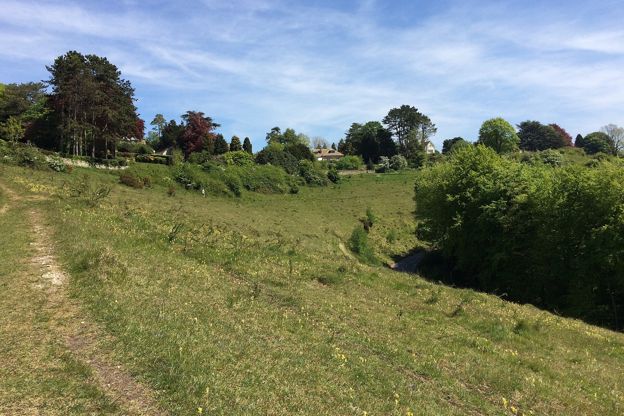
Rodborough Common and the fort
Walk · Starts in Stroud and the Five Valleys · 45 mins · Circular · Dog-friendly
A 2-mile (3.4km) circular walk on Rodborough Common above Stroud, easy, nearly level and about 45 minutes: up to the battlemented folly of Rodborough Fort, down the open western edge, and back past the Bear and an ice-cream stop. Grassy, and grazed by cattle.
Stay and eat near Minchinhampton Common
-

The Old Lodge
Inn · Nailsworth
An inn with six rooms on Minchinhampton Common, about two miles by road from Nailsworth, breakfast included and food all day.
Walker-friendly
Verified Nov 2026
-
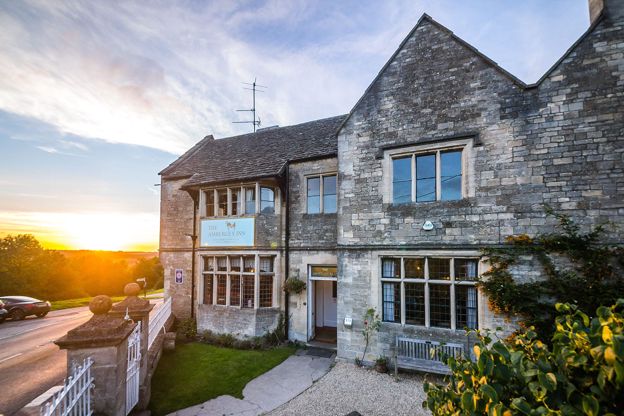
The Amberley Inn
Inn · Nailsworth
An inn with 13 en-suite rooms on the hillside above the Woodchester valley at Amberley, near Nailsworth and Stroud, which describes itself as a restored 16th-century inn.
Dog-friendly · Family-friendly
Verified Nov 2026
-
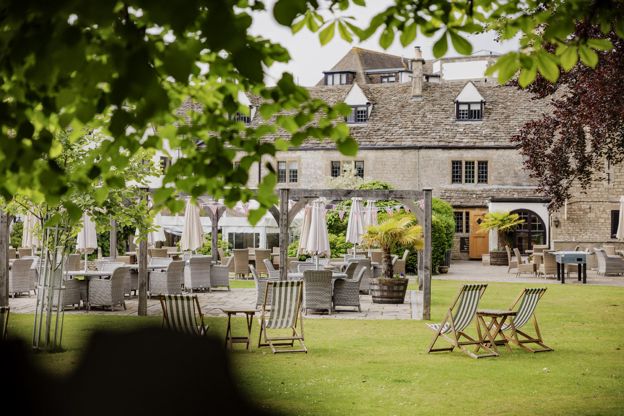
The Bear of Rodborough
Hotel · Stroud
A seventeenth-century former coaching inn on the National Trust's Rodborough Common above Stroud, now a hotel in the Cotswold Inns and Hotels group, with dogs welcome.
Dog-friendly · Walker-friendly · Wedding venues
Verified Oct 2026
Stories about Minchinhampton Common
-
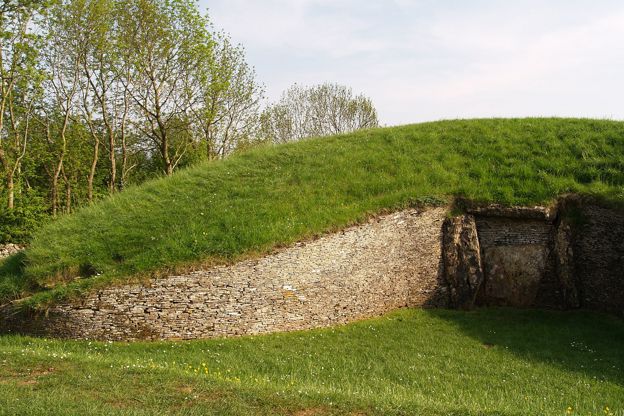
Free things to do in the Cotswolds
Story · Guides · 11 minute read
Free things to do in the Cotswolds: open commons and viewpoints, Neolithic tombs and hill forts, ruins, wool churches, free museums in Malmesbury, Stroud, Woodstock and Burford, the Cotswold Way and Blenheim's public footpaths.
-
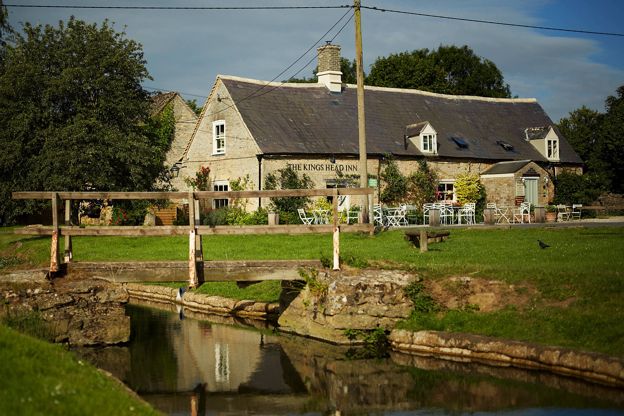
The best pubs in the Cotswolds
Story · Guides · 11 minute read
The best pubs in the Cotswolds: village pubs on the green at Biddestone and Guiting Power, medieval inns at Castle Combe and Lacock, riverside pubs at Lechlade and Swinbrook, pubs with rooms round Kingham, and the pubs at the end of our walks.
-
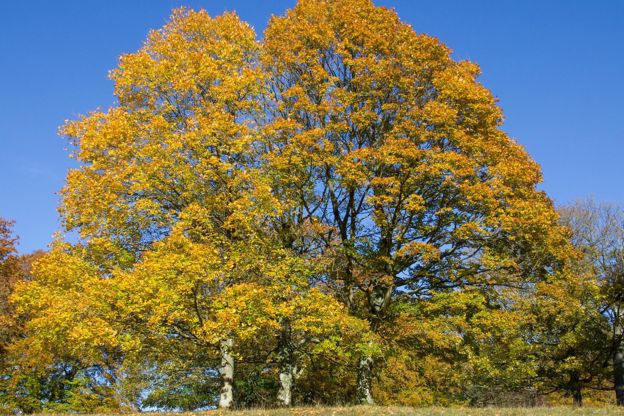
The Cotswolds in November
Story · Guides · 8 minute read
The Cotswolds in November: the wettest month and one of the quietest, the last of the beech colour, the November Meeting at Cheltenham, the light trails and late-night shopping that start Christmas, what stays open in winter, firm walks for wet weather and inns with fires.
More sights to see
-
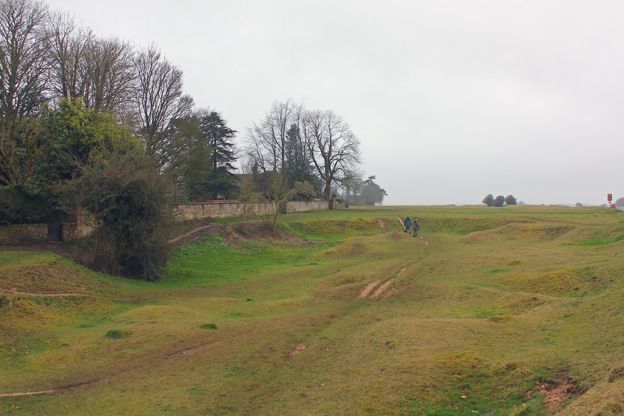
The Bulwarks, Minchinhampton
Sight · Hill fort or barrow · Minchinhampton
The Bulwarks is a Late Iron Age bank and ditch that sweeps across Minchinhampton Common north and north-west of the town: a bank 10m to 12m wide with a stone face, dated by pottery found in the 1937 excavation. It lies on free National Trust common land.
-
Whitfield's Tump, Minchinhampton Common
Sight · Hill fort or barrow · Minchinhampton
Whitfield's Tump is a Neolithic long barrow on Minchinhampton Common, a low mound 26m long where early farmers buried their dead, named from the tradition that the preacher George Whitefield spoke from it in 1743. A scheduled monument on free National Trust land.
-
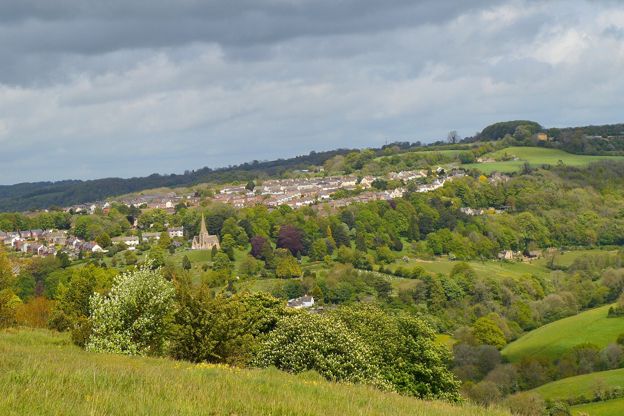
Rodborough Common
Sight · Common or park · Stroud and the Five Valleys
Open limestone grassland on the hill between Stroud and the Golden Valley, owned by the National Trust, known for rare pasqueflowers in spring, early purple orchids in May and over 30 kinds of butterfly, grazed by commoners’ cattle, with Rodborough Fort on its brow.