don cload, CC BY-SA 2.0, via Wikimedia Commons
Rodborough Fort
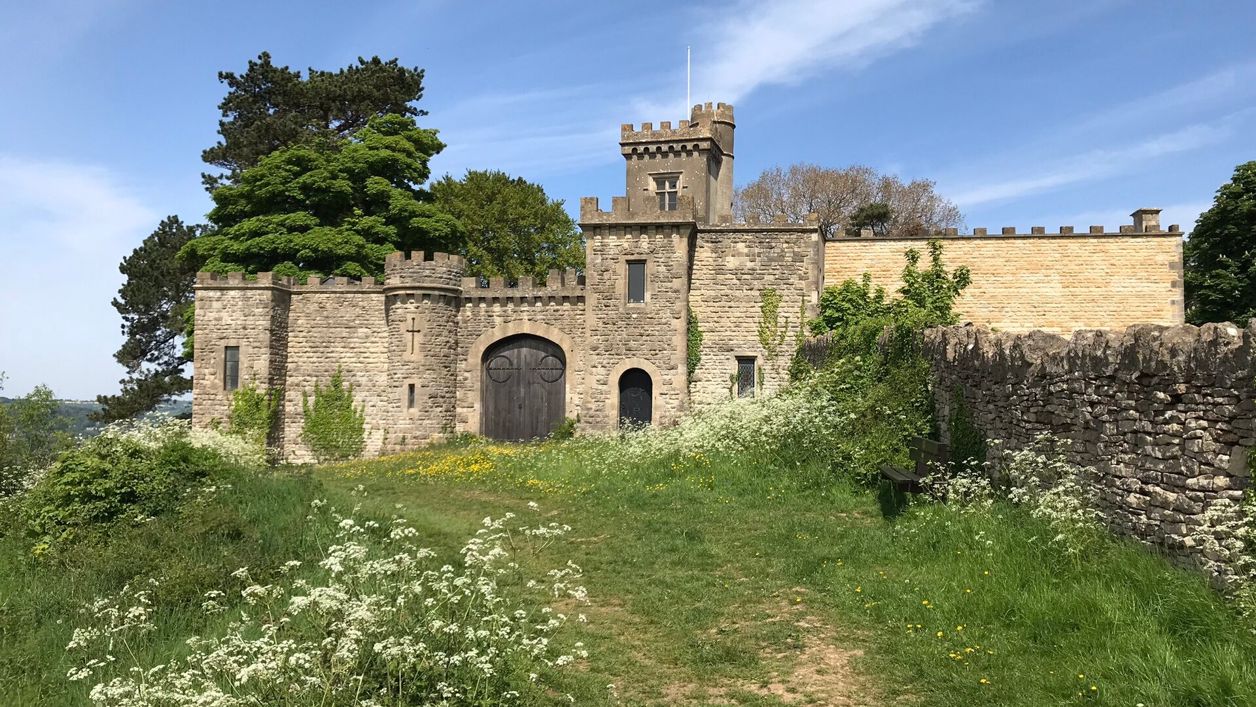
Rodborough Fort is a battlemented house on the brow of Rodborough Common above Stroud, begun as a folly for Captain Hawker in 1761 and enlarged in 1870 with a four-storey tower, turreted curtain walls and a small chapel. Grade II; a private house, seen from the common.
Historic building
Stroud and the Five ValleysRodborough Fort is the castellated house on the brow of Rodborough Common, looking straight down on Stroud in the Five Valleys. It began as a folly built in 1761 for Captain Hawker, became a house in 1870, and is listed Grade II with its turreted curtain walls. It is privately owned, and seen from the common around it.
History
Rodborough Fort began as an eighteenth-century folly and grew into a Victorian house. Historic England's listing records that it was built as a folly for Captain Hawker in 1761, on the hill above the town.
The folly of 1761
The curtain walls with their turrets and gateways survive from Hawker's folly. They are of rough-faced limestone rubble with dressed stone trim, and enclose courtyards to the north-east and south-west of the house, with crenellated parapets, machicolated on the south-west side, that make the whole group read as a small castle from the town.
The house of 1870
In 1870 the folly was enlarged into a house for Alexander Holcombe, with a four-storey tower on the south-west side and two rear wings. A small chapel, probably of about the same date, was built along the inside of the north-west wall of the south-west courtyard, with four lancet windows and a larger east window with Decorated tracery. In the middle of the twentieth century the house was heavily restored, and much of its north-east front was rebuilt in artificial stone.
What to see
Rodborough Fort is a landmark, and the listing calls it an important feature of the landscape on a lofty eminence above Stroud.
- The four-storey tower, with its Tudor-arched doorway, a cross window on each floor and a machicolated, crenellated parapet, and a round stair turret rising at one corner.
- The south-west curtain wall, with a great four-centred arched gateway between a tall square turret and a lower round one.
- The north-east wall, enclosing three sides of a courtyard, with a large square turret and smaller ones.
- The view from the common beside it, over Stroud and the Frome valley.
Visiting
The fort is a private house and is not open; please keep to the common and respect the residents' privacy. The National Trust common around it is free and open at all times, with roadside parking nearby. Cattle graze the common from May to October, so keep dogs on a lead or close by when they are out.
Getting there
Drive up to the top of Rodborough Common on the road from Stroud to Minchinhampton and park beside it on the top of the common; the fort is a short walk across the grass, on the brow above Stroud. On foot, our Rodborough Common and the fort walk passes close to it before turning down the western edge of the common.
Nearby
The Prince Albert, a pub and music venue at the top of Rodborough Hill, is about 600m from the fort, and the Bear of Rodborough is at the far end of the common. Below in Stroud are the Subscription Rooms and the River Frome, and across the valley All Saints, Selsley faces it from its own hillside. South across the road, Minchinhampton Common carries on the open grassland.
Walks past Rodborough Fort
-
Rodborough Common and the fort
Walk · Starts in Stroud and the Five Valleys · 45 mins · Circular · Dog-friendly
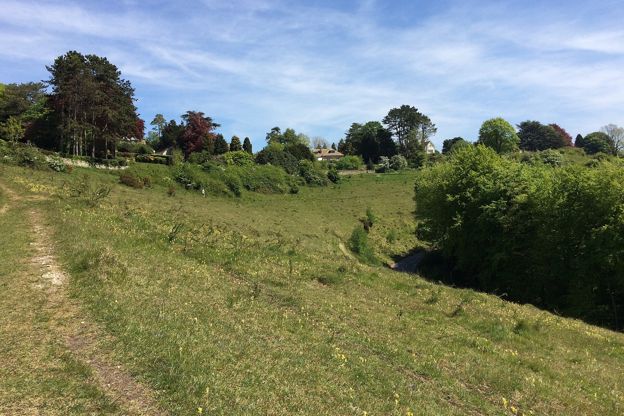
A 2-mile (3.4km) circular walk on Rodborough Common above Stroud, easy, nearly level and about 45 minutes: up to the battlemented folly of Rodborough Fort, down the open western edge, and back past the Bear and an ice-cream stop. Grassy, and grazed by cattle.
-
Stroud, Capel's Mill and Rodborough Common
Walk · Starts in Stroud · 1 hr, 30 mins · Circular
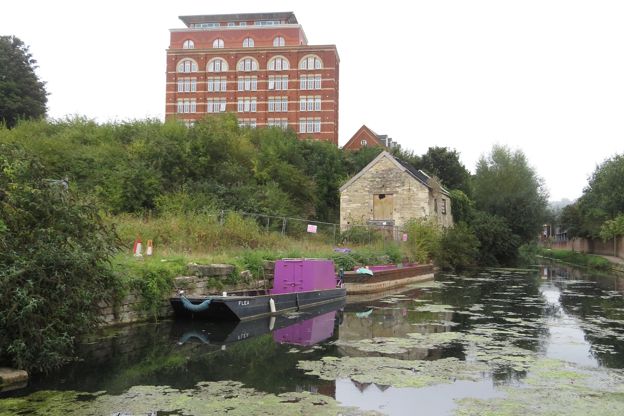
A 3-mile (5km) circular walk from the Subscription Rooms in Stroud, graded strenuous, of about an hour and a half: along the Frome Banks to the Capel's Mill viaduct, up over Rodborough Common past the fort, down through Butterow and back along the canal towpath.
Stay and eat near Rodborough Fort
-

The Prince Albert
Pubs · Stroud
A pub and music venue at the top of Rodborough Hill, Stroud, serving pizzas and burgers, where dogs on a short lead are welcome in the day.
Dog-friendly · Family-friendly
Verified Nov 2026
-
The Bear of Rodborough
Hotel · Stroud
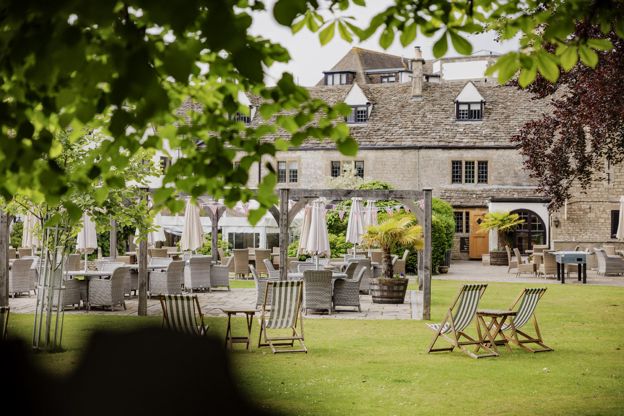
A seventeenth-century former coaching inn on the National Trust's Rodborough Common above Stroud, now a hotel in the Cotswold Inns and Hotels group, with dogs welcome.
Dog-friendly · Walker-friendly · Wedding venues
Verified Oct 2026
-
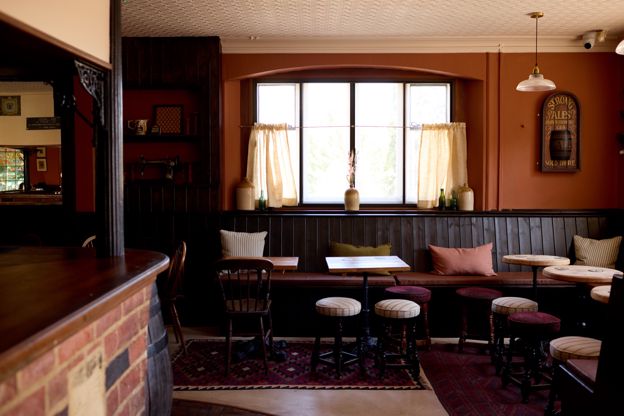
The Clothiers Arms
Inn · Stroud
A pub with seven rooms at the bottom of Rodborough Hill in Stroud, a pub since 1891, with a beer garden, an adventure play area next door and a family suite.
Family-friendly · Car-free
Verified Nov 2026
Stories about Rodborough Fort
-
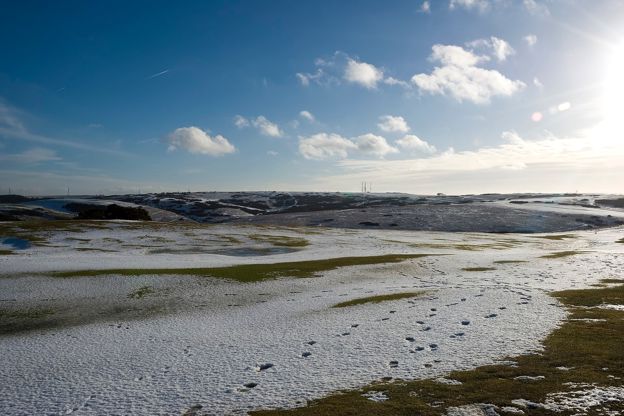
The Cotswolds in January
Story · Guides · 8 minute read
The Cotswolds in January: the quietest month, with frost on the wolds, the first snowdrops at Colesbourne and Painswick, wassails, New Year's Day racing, what is open and shut, four winter walks and the pubs with fires.
More sights to see
-
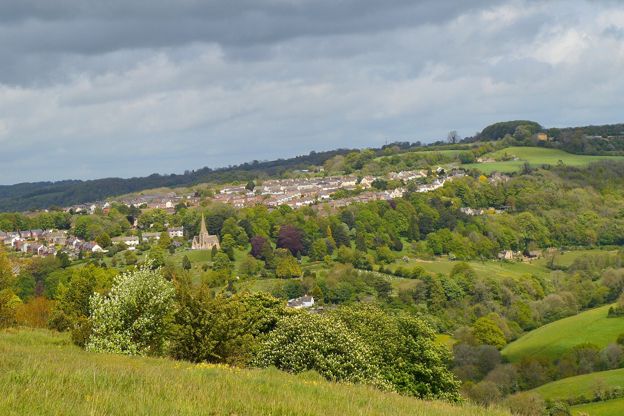
Rodborough Common
Sight · Common or park · Stroud and the Five Valleys
Open limestone grassland on the hill between Stroud and the Golden Valley, owned by the National Trust, known for rare pasqueflowers in spring, early purple orchids in May and over 30 kinds of butterfly, grazed by commoners’ cattle, with Rodborough Fort on its brow.
-
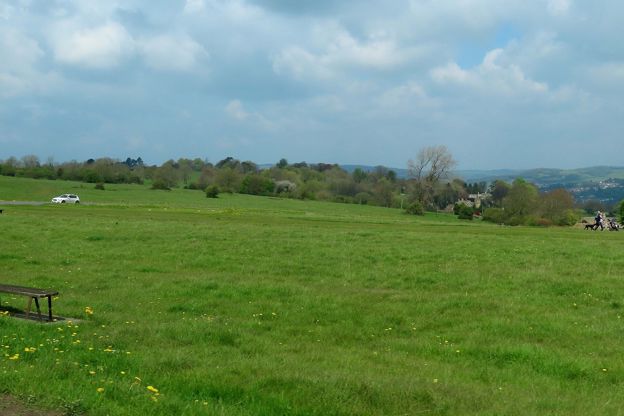
Minchinhampton Common
Sight · Common or park · Minchinhampton
Minchinhampton Common is a wide sweep of limestone grassland above Stroud and Nailsworth, in the care of the National Trust since 1913, where commoners' cattle graze and an Iron Age bank, a long barrow, pillow mounds and wartime trenches lie in the turf. Free to wander.
-
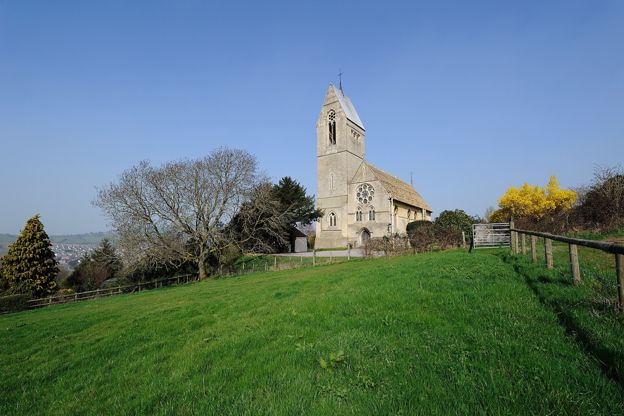
All Saints' Church, Selsley
Sight · Church · Stroud and the Five Valleys
All Saints, Selsley is a Grade I church of 1862 by G F Bodley on the hillside above Stroud, with some of the first church glass made by Morris and Company: windows by Morris, Burne-Jones, Rossetti, Madox Brown and Philip Webb, among them a Creation rose window. Open in daylight.