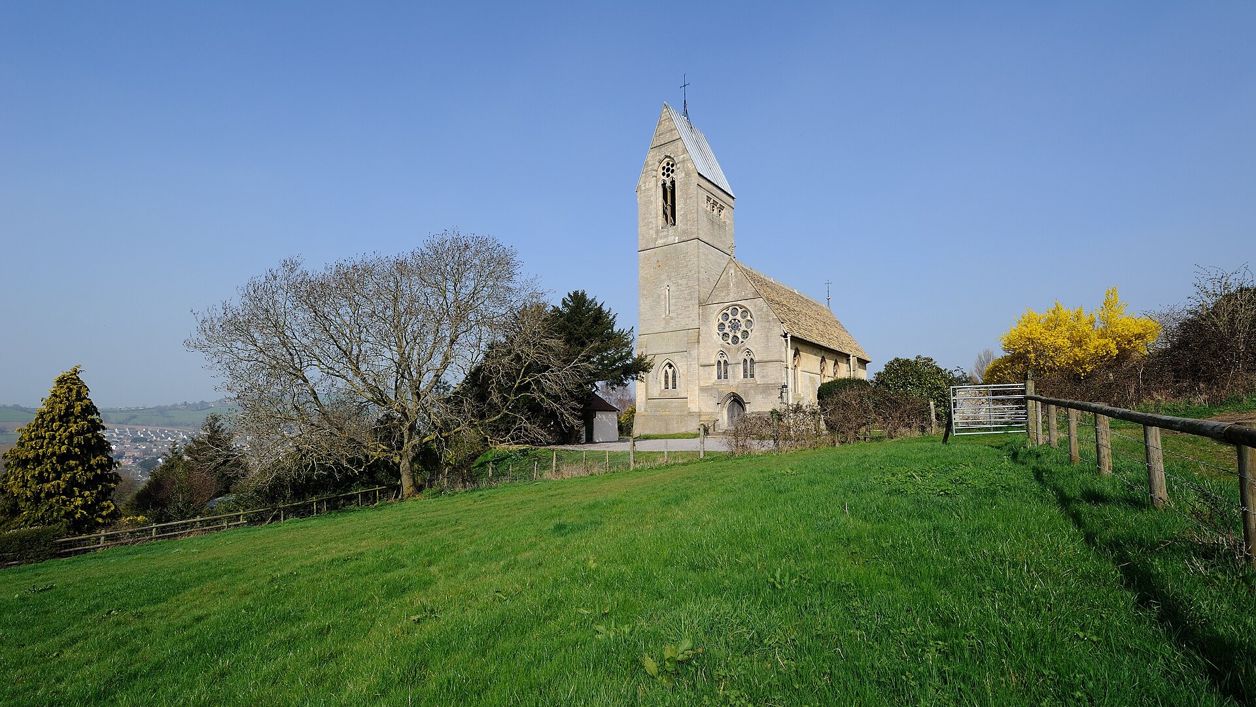
Saffron Blaze, CC BY-SA 3.0, via Wikimedia Commons
All Saints' Church, Selsley
All Saints, Selsley is a Grade I church of 1862 by G F Bodley on the hillside above Stroud, with some of the first church glass made by Morris and Company: windows by Morris, Burne-Jones, Rossetti, Madox Brown and Philip Webb, among them a Creation rose window. Open in daylight.
Church
Stroud and the Five ValleysAll Saints' Church stands on the hillside at Selsley, above the Frome valley south-west of Stroud, in the Five Valleys. Built in 1862 by the young architect G F Bodley for Samuel Stephens Marling, it holds some of the first church glass made by William Morris's firm, with windows by Morris, Burne-Jones, Rossetti, Ford Madox Brown and Philip Webb. It is listed Grade I.
History
All Saints was built in 1862 for Samuel Stephens Marling, who commissioned it.
Bodley and the Tyrol
Marling is said to have wanted a copy of the church at Marling, now Marlengo, in the Tyrol, and Historic England records a watercolour of that church at Selsley. What George Frederick Bodley produced instead was French Gothic, in limestone ashlar, with a saddleback tower at the north-west corner. Bodley, who had trained under George Gilbert Scott, was at the start of his career, and Historic England counts Selsley one of his most important early works.
An early Morris and Company church
Bodley brought in the decorating firm of William Morris and his friends. Historic England counts Selsley among the firm's first church commissions, all for churches by Bodley, with others at Brighton and Scarborough; the church itself calls it the first, and says it is the only church in Britain whose windows were all designed by Morris and his colleagues. Philip Webb planned the scheme and drew all the animals; the figures were shared out among Morris, Edward Burne-Jones, Dante Gabriel Rossetti and Ford Madox Brown. The windows follow thirteenth-century models, above all the chapel glass at Merton College, Oxford.
Marling's memorial
Sir Samuel Stephens Marling died in 1883. A large mortuary recess in the style of the fourteenth century, with a railed enclosure, marks his vault. Tablets to the Marling family line the south wall of the nave. A panelled north chapel and a west lobby with linenfold panels were added later.
What to see
The rose window over the west door is the one people come for: the Creation, designed by Morris and Webb, with a richly coloured Adam and Eve that the church counts among Morris's best small designs in stained glass.
- In the nave's south wall, three windows set in clear glass: Rossetti's Sermon on the Mount nearest the altar, Morris's St Paul preaching at Athens in the middle, and Burne-Jones's Christ blessing the children.
- In the apse, a sequence of the life of Christ: the Nativity and the Crucifixion by Madox Brown, the Visitation by Rossetti, the Resurrection by Burne-Jones and the Ascension by Morris, with Morris's Annunciation in the south chancel.
- A marble pulpit inlaid with coloured stone, marble shafts on the chancel arch, a boarded barrel roof over the chancel and a crown-post roof over the nave.
- Choir stalls with poppy-head and fleur-de-lys ends, and an octagonal font.
- Sir Samuel Marling's tomb recess, with a small panel of the life of Christ above it.
- Outside, the saddleback tower at the north-west corner, and the view over the Frome valley.
Visiting
All Saints is open in daylight hours, the church says, and entry is free. The main lych-gates are locked except for services, but the small gate to their right is always open. The church sits at the bottom of a long, steep drive from the road, which may be hard going with a wheelchair or pushchair; there is no published access statement. The church sells printed guides, £6 in 2026. Groups and coach parties are welcome and can book a guide and refreshments through the PCC Secretary. Sunday services are at 11.15am on the first three Sundays of the month, with evensong at 3pm on the fourth. Come on a bright afternoon, when the west sun lights the Creation rose.
Getting there
The church is on Pooles Lane in Selsley, on the hill road from Stroud to King's Stanley (satnav GL5 5LG or GL5 5LE). From the A419, turn up Selsley Hill at the roundabout by Sainsbury’s and bear right onto New Road towards King's Stanley; the church is about half a mile on the right. Park on the road beside the lych-gate. On foot, the Cotswold Way crosses Selsley Common, just above the church.
Nearby
The Bell Inn is in Selsley, a few hundred metres away. Across the valley stands Rodborough Fort on Rodborough Common, and south are the woods and lakes of Woodchester Park. In Stroud, St Laurence's is the town church. For the wider story of the firm, read William Morris and the Cotswolds and the Arts and Crafts movement in the Cotswolds.
Walks past All Saints' Church, Selsley
-
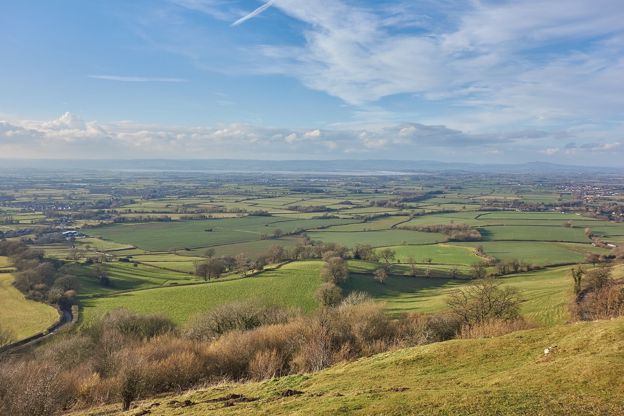
Cotswold Way: King's Stanley to Dursley
Walk · Starts in Stroud · 4 hrs, 15 mins · Dog-friendly
A 6.7-mile (10.8km) one-way walk on the tenth section of the Cotswold Way, moderate and about four and a quarter hours: from Middleyard up through Stanley Wood to Coaley Peak, along the edge past two long barrows, over Cam Long Down and down into Dursley.
-
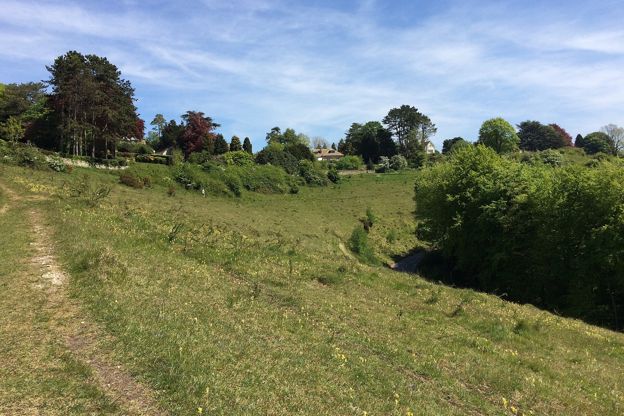
Rodborough Common and the fort
Walk · Starts in Stroud and the Five Valleys · 45 mins · Circular · Dog-friendly
A 2-mile (3.4km) circular walk on Rodborough Common above Stroud, easy, nearly level and about 45 minutes: up to the battlemented folly of Rodborough Fort, down the open western edge, and back past the Bear and an ice-cream stop. Grassy, and grazed by cattle.
-
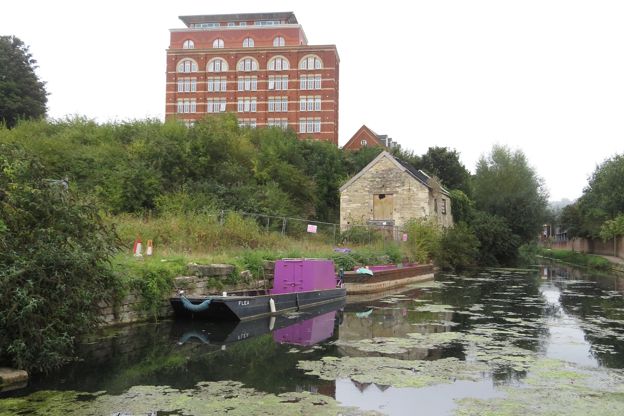
Stroud, Capel's Mill and Rodborough Common
Walk · Starts in Stroud · 1 hr, 30 mins · Circular
A 3-mile (5km) circular walk from the Subscription Rooms in Stroud, graded strenuous, of about an hour and a half: along the Frome Banks to the Capel's Mill viaduct, up over Rodborough Common past the fort, down through Butterow and back along the canal towpath.
Stay and eat near All Saints' Church, Selsley
-
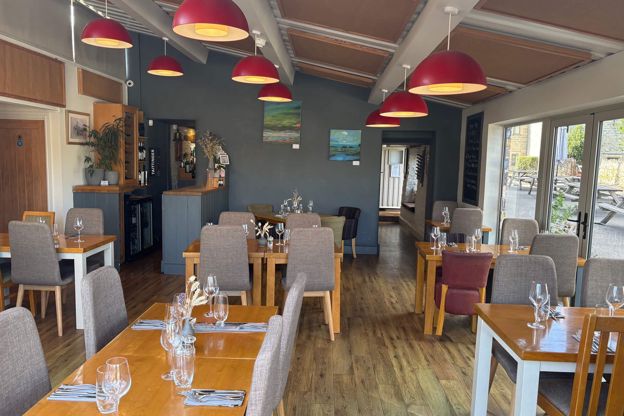
The Bell Inn, Selsley
Inn · Stroud
A chef-owned 17th-century inn, listed Grade II, with two bedrooms at Selsley, two miles from Stroud, with two AA Rosettes and dogs welcome throughout.
Dog-friendly
Verified Nov 2026
-
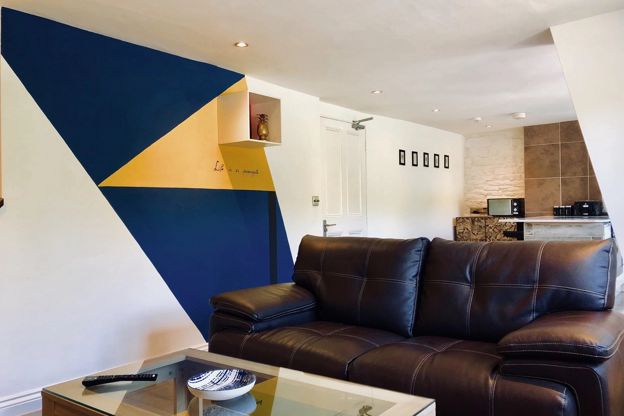
Old Fleece apartments
Self-catering · Nailsworth
Three self-catering apartments behind the Old Fleece pub at Rooksmoor, between Nailsworth and Stroud, with an EV charging point and the garden.
EV charging
Verified Nov 2026
-

The Prince Albert
Pubs · Stroud
A pub and music venue at the top of Rodborough Hill, Stroud, serving pizzas and burgers, where dogs on a short lead are welcome in the day.
Dog-friendly · Family-friendly
Verified Nov 2026
More sights to see
-
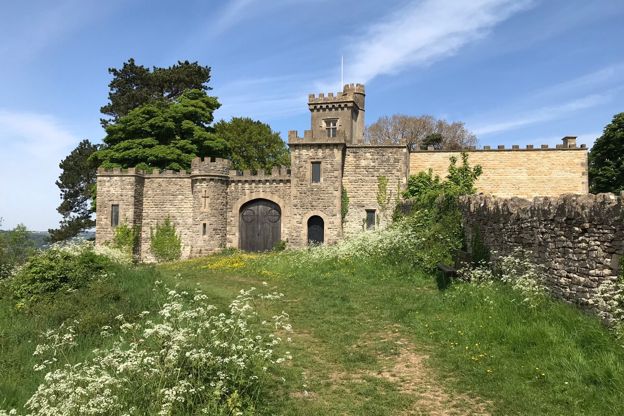
Rodborough Fort
Sight · Historic building · Stroud and the Five Valleys
Rodborough Fort is a battlemented house on the brow of Rodborough Common above Stroud, begun as a folly for Captain Hawker in 1761 and enlarged in 1870 with a four-storey tower, turreted curtain walls and a small chapel. Grade II; a private house, seen from the common.
-
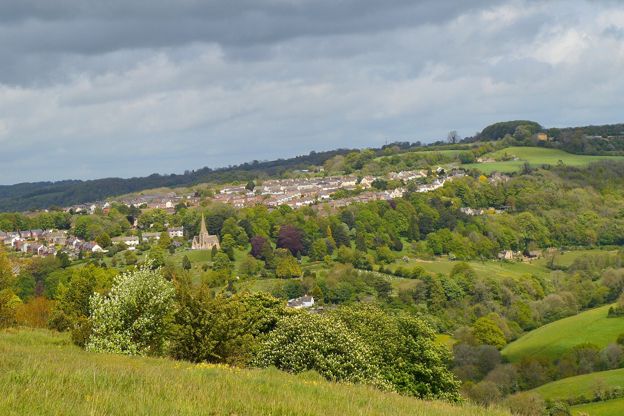
Rodborough Common
Sight · Common or park · Stroud and the Five Valleys
Open limestone grassland on the hill between Stroud and the Golden Valley, owned by the National Trust, known for rare pasqueflowers in spring, early purple orchids in May and over 30 kinds of butterfly, grazed by commoners’ cattle, with Rodborough Fort on its brow.
-
Woodchester Park
Sight · Common or park · Nailsworth
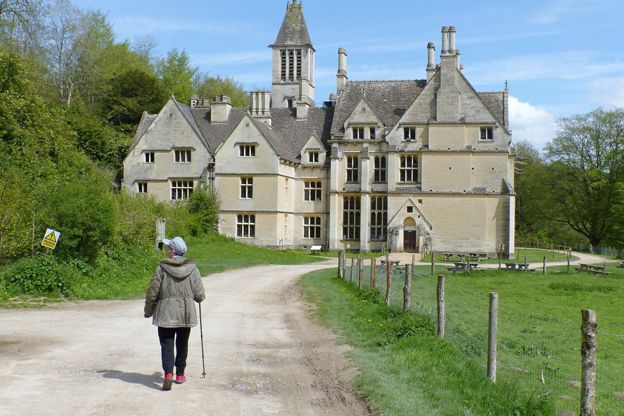
A steep wooded valley west of Nailsworth, National Trust since 1994: a deer park walled by the Huntleys after a grant of 1564, with five lakes of the early nineteenth century, a boathouse of about 1820 and the unfinished Woodchester Mansion at its head.