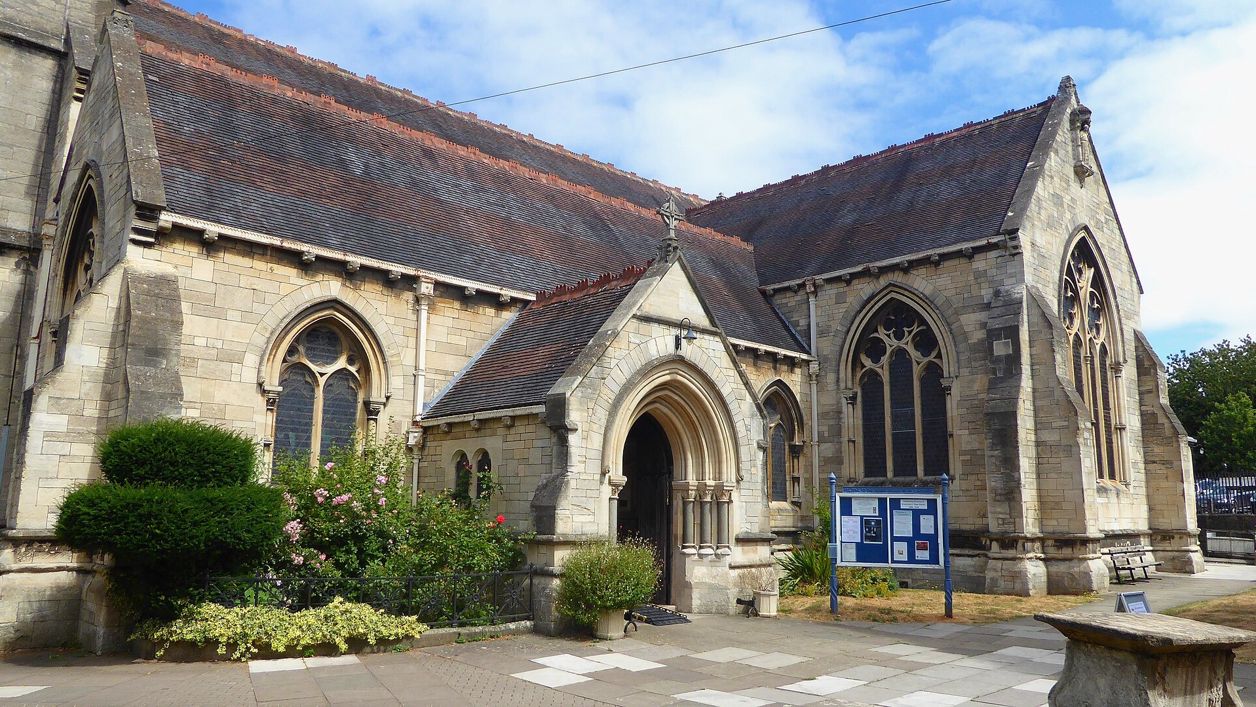
Ethan Doyle White, CC BY-SA 4.0, via Wikimedia Commons
St Laurence's Church, Stroud
Stroud's parish church, beside the Shambles: a fourteenth-century tower and spire with a High Victorian church of 1866 to 1868 behind it, carved by Joshua Wall, with a Weatherley rood screen, a screen by Peter Waals and about 80 brass plates on its north wall.
Church
StroudSt Laurence's is the parish church of Stroud, standing by the Shambles market place at the top of the old town. Its fourteenth-century tower and slim spire are the oldest building in the middle of Stroud, and behind them is a High Victorian church of 1866 to 1868 that the listing ranks Grade II* for its carving, its fittings and its glass.
History
St Laurence's began as a chapel of Bisley: there was a church at Stroud by 1279, and in 1304 an agreement gave it a resident chaplain to serve the scattered hamlets of Lypiatt, Paganhill and Bourne as well as the town. The first chaplain on record, William, appeared before the royal justices in 1306. It stayed a chapel of Bisley, served by curates, until the 1720s, and was called a vicarage from 1868.
The medieval and Georgian church
The first church had only a nave and chancel, and the west tower and broach spire were added in the fourteenth century. In 1491 Thomas Whittington left £40 for a south chapel, and a south aisle and porch followed. As the town grew, the church was stretched again and again: a north aisle in 1759, more work in 1787 and 1788, a new chancel with a round-headed east window in about 1790, a vestry over the porch in 1806, and an organ by John Avery of Westminster in 1798.
The rebuilding of 1866 to 1868
In 1866 all but the tower and spire came down. Wilson and Willcox of Bath rebuilt the church in local stone from Bisley and Painswick with Bath stone dressings, at a cost of £10,000 to £11,000 raised by subscription and a £1,000 grant from the Stroud feoffees, and it was consecrated on 4 August 1868. Joshua Wall of Stroud carved the capitals and made the pulpit and font. The church kept growing in the twentieth century: a rood screen in 1910 to 1914 and an Arts and Crafts screen in the tower arch in 1927. A fire in 2005 meant a new altar.
What to look for
The listing quotes Verey and Brooks calling it the best High Victorian town church in the Cotswolds. Outside, the three east windows, filled with tracery of foiled circles, face the street; the top of the old spire stands in the churchyard; and about 80 brass inscription plates from eighteenth-century tombstones, many with Rococo ornament, are fixed to the north wall. Inside, look for:
- The five-bay nave arcades on round piers of blue Pennant sandstone, with Joshua Wall's richly carved capitals and his roundels in the chancel
- The reredos of 1872, designed by George Gilbert Scott junior, with carved panels of Gethsemane, the Crucifixion and the Deposition, coloured and gilded in 1970
- W S Weatherley's light rood screen of 1910 to 1914, with a large rood group
- The oak screen of 1927 in the tower arch, designed by Thomas Falconer and made by Peter Waals, with a painting of St George of 1929 by E R Payne
- The kneeling alabaster figure of Thomas Stephens of Over Lypiatt, who died in 1613, in the south transept, attributed to Samuel Baldwin of Stroud
- The glass: Heaton, Butler and Bayne's east window of 1866, Lavers and Barraud in the south chapel, and an unusual gold and blue window of 1922 by J Bewsey at the west end of the north aisle
The ring of bells goes back to the seventeenth century; there were eight by about 1775, two of them by Abraham Rudhall, and two more were added in 1815.
Visiting
St Laurence's is a working church and home to the Stroud Centre for Peace and the Arts, so it is open for services, concerts, talks and festivals, and it names the Stroud Sacred Music Festival among its creative partners. Its Christmas Tree Festival, with trees from more than 100 community groups, runs from 27 November to 6 December in 2026. Otherwise the church is open to the public on Saturday mornings, 10.30am to 12.30pm, and says it cannot open regularly at other times, so check the church's website or ring the parish office before a special trip; the brasses and the churchyard can be seen at any time. There is ramped access, though the floor is uneven in places, and the toilets are next door in Shambles Hall. Market days are the liveliest time to come: the Shambles market is held beside the church every Friday and Saturday, and on Saturday mornings the farmers' market fills Cornhill and the streets around.
Getting there
St Laurence's is in the Shambles, off the High Street in the middle of Stroud (the church gives its postcode as GL5 1JL). Stroud station, with direct trains to London Paddington, is about 10 minutes' walk, and buses stop at Merrywalks. There is no church car park; Church Street short stay car park is next door, and Parliament Street long stay is about 5 minutes' walk up a steep hill. None of our live walks passes the church, though the walk on Rodborough Common is a short drive south.
Nearby
The Old Town Hall of the 1590s stands in the Shambles next door, and the Subscription Rooms are two minutes away on George Street. For coffee or lunch, Woodruffs is a few steps away and Salt Bakehouse close by, and on Saturdays Stroud Farmers' Market is round the corner. Up the hill, All Saints' at Uplands has more oak by Peter Waals, and the River Frome runs along the bottom of the town. Our story on the Arts and Crafts movement has more on Waals and his circle.
Walks past St Laurence's Church, Stroud
-
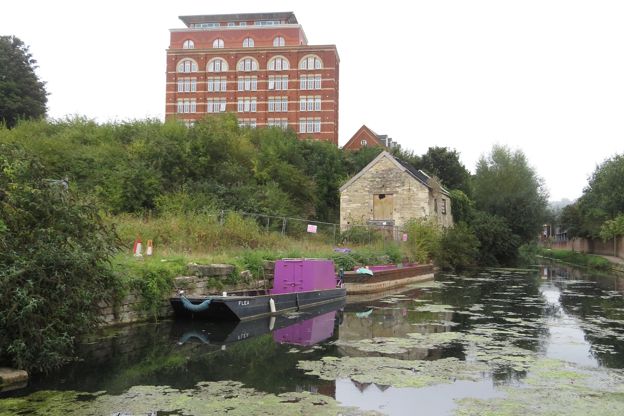
Stroud, Capel's Mill and Rodborough Common
Walk · Starts in Stroud · 1 hr, 30 mins · Circular
A 3-mile (5km) circular walk from the Subscription Rooms in Stroud, graded strenuous, of about an hour and a half: along the Frome Banks to the Capel's Mill viaduct, up over Rodborough Common past the fort, down through Butterow and back along the canal towpath.
-
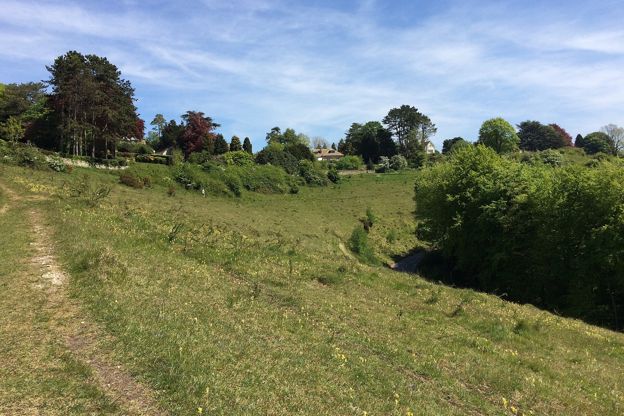
Rodborough Common and the fort
Walk · Starts in Stroud and the Five Valleys · 45 mins · Circular · Dog-friendly
A 2-mile (3.4km) circular walk on Rodborough Common above Stroud, easy, nearly level and about 45 minutes: up to the battlemented folly of Rodborough Fort, down the open western edge, and back past the Bear and an ice-cream stop. Grassy, and grazed by cattle.
Stay and eat near St Laurence's Church, Stroud
-
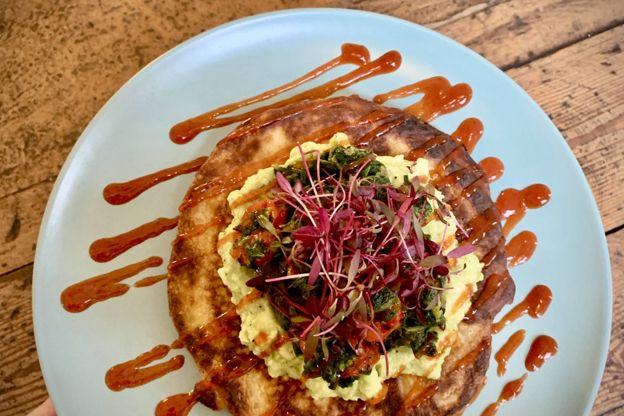
Woodruffs
Cafes and tearooms · Stroud
A café on Stroud's High Street for brunch, lunch, coffee and cake, open every day, with dogs welcome.
Dog-friendly · Family-friendly · Car-free
Verified Oct 2026
-
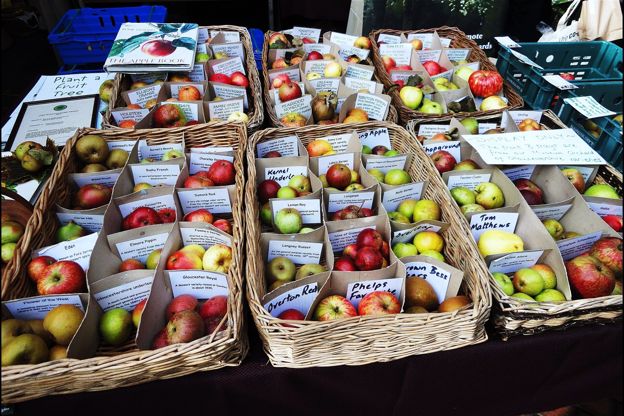
Stroud Farmers' Market
Farm shops and delis · Stroud
A farmers' market on Cornhill Market Place and the streets round it in Stroud every Saturday from 9am to 2pm, run by Made in Stroud and nominated for the FRA's Best Farmers' Market of the Year.
Verified Nov 2026
-
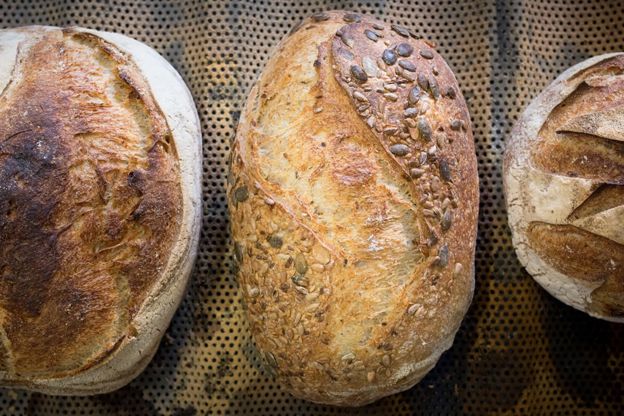
Salt Bakehouse
Farm shops and delis · Stroud
A bakery on Slad Road, Stroud, Baker of the Year 2016 at the BIA awards, selling from a kiosk on Union Street and at the Saturday farmers' market.
Verified Nov 2026
Stories about St Laurence's Church, Stroud
-
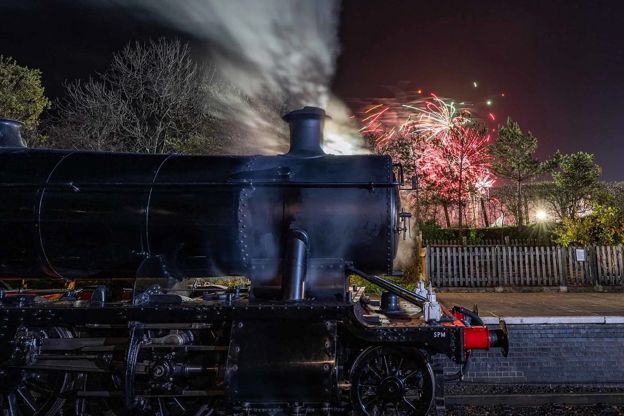
Christmas in the Cotswolds
Story · Guides · 10 minute read
Christmas in the Cotswolds: Blenheim's and Sudeley's light trails, Christmas markets at Cogges and Stroud, steam trains to Broadway's late-night shopping, candlelit carols, Boxing Day mummers, winter walks and inns with fires.
More sights to see
-
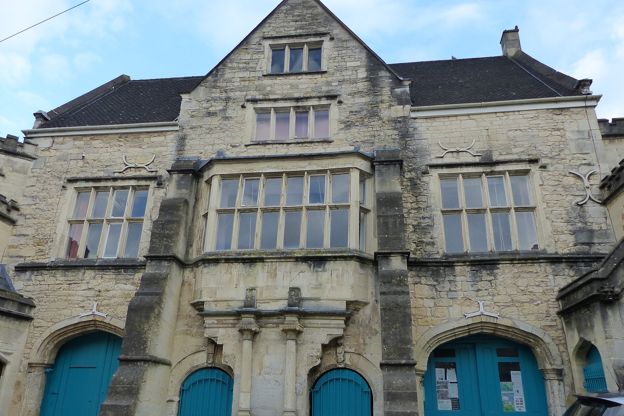
Old Town Hall, Stroud
Sight · Historic building · Stroud
Stroud's market house of the 1590s in the Shambles beside St Laurence's, with an eight-light oriel on scrolled brackets, lion-mask arches and Victorian battlemented stair towers. Grade II*; seen from the market place.
-
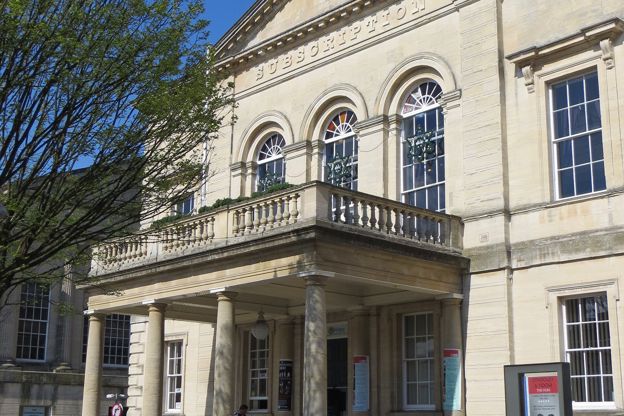
Subscription Rooms, Stroud
Sight · Historic building · Stroud
Stroud's Subscription Rooms on George Street, paid for by public subscription in 1833 and now an arts venue run by a charity: a pedimented stone front with a carriage porch and balcony, where election results were once read out, and a bar open daily.
-
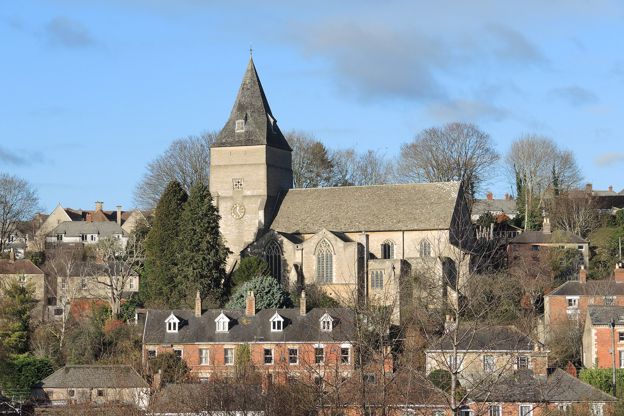
All Saints' Church, Uplands, Stroud
Sight · Church · Stroud
Temple Moore's Grade I church on the hillside at Uplands, above Stroud: built 1907 to 1910 and finished by Leslie Moore in 1932, with a tiled broach spire uncommon in Gloucestershire, a cool ashlar interior and oak stalls made by the Arts and Crafts cabinetmaker Peter Waals.