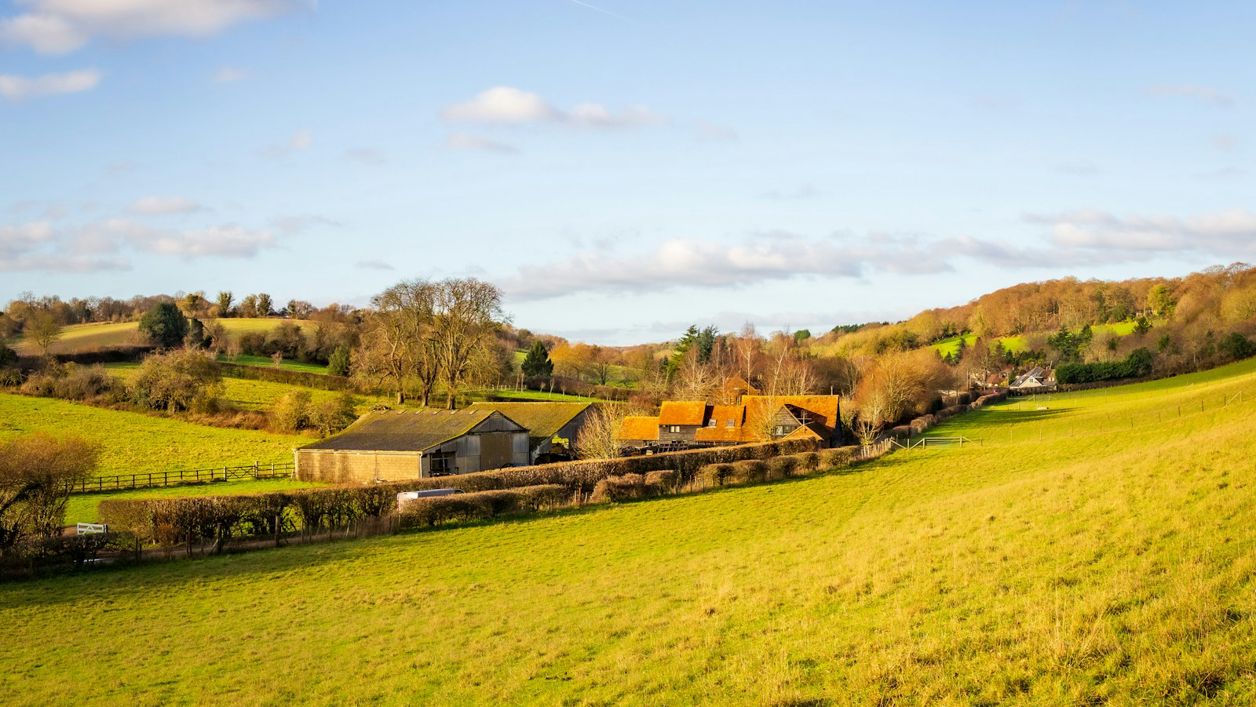
St James' Chapel, Postlip
St James' Chapel is a small Norman chapel of about 1140 beside Postlip Hall below Cleeve Common, with a chevron-carved doorway, used as a farm building for centuries and restored for Catholic worship in 1891. Grade I; seen from the Cotswold Way.
Church
WinchcombeSt James' Chapel stands about 25m north of Postlip Hall, in the valley of the River Isbourne below Cleeve Common, about 3km west of Winchcombe. It is a two-cell Norman chapel of the twelfth century, listed Grade I, that served as a farm store for centuries before it was restored for Catholic worship in 1891.
History
St James' is said to have been founded by William de Solers in about 1139, in the reign of King Stephen, according to the Catholic Diocese of Clifton's record of the chapel. Historic England dates the building to the twelfth century.
Farm store
For several centuries the chapel served the estate as a farm building, the diocese's record says. The hall beside it went the same way: Historic England's listing records that in the early 1860s it was occupied by four tenants, among them a bailiff, a carter and a shepherd, with the middle of the house used for farming, and that its great hall served in the nineteenth century as a farm store with a granary above.
Back to worship
In 1890 to 1891 the chapel was restored for Mr and Mrs Stuart Forster, Catholic converts and friends of Cardinal Manning, who had bought Postlip Hall. Their architect was H. A. Prothero of the Cheltenham firm Middleton, Prothero and Phillott; the sculptor Alfred B. Wall carved the decoration of the chancel wall and the altar, and Bishop Clifford of Clifton consecrated it again on 16 June 1891. It is thought to have been only the third medieval church in England returned to Catholic use. (The listing gives the restoration as about 1880; the diocesan record's 1890 to 1891 fits the consecration date.) The Forster family later left it to the Catholic parish of Winchcombe and it fell out of use again: Historic England's listing records it in considerable decay and used as an implement house for the estate in the 1960s. A Friends group formed in 1990 raised money for repairs, including a grant of £25,000 from English Heritage.
What to look for
From the path you see a small limestone chapel of nave and chancel under a stone-slate roof, with a stone bell turret and ball finial over the chancel arch. The north doorway is the treasure: Norman chevron and ball ornament over shafts with cushion capitals, and a tympanum carved with fish scales, closed by a Victorian plank door with strap hinges. Look too for:
- the small slit windows beside the north doorway and in the chancel, which the diocese's record takes to be original Norman openings;
- the larger three-light Perpendicular windows inserted in the east and west walls;
- the sacristy at the north-west, added in 1890 to 1891, the diocese's record says;
- the group it makes with Postlip Hall, a Grade I house mostly of the seventeenth century, and the medieval tithe barn a little to the south.
Inside, which visitors rarely see, are the Norman chancel arch with chevron, star and billet ornament, the carved work of 1891, and an east window of 1895 by Ward and Hughes.
Visiting
St James' is a private chapel and has no regular opening; the Catholic diocese's record notes that it is served only irregularly and that no services had been held for some time. Please see it from the Cotswold Way, which passes close by, and respect the privacy of the hall, which is now divided into several homes. The way in is on foot: the Cotswold Way here is an unsurfaced track on a slope.
Getting there
There is no public parking at Postlip. From Winchcombe, the Cotswold Way climbs past Belas Knap and drops to Postlip, about 7.5km from Back Lane car park (GL54 5PZ); from Cleeve Hill it is a steep walk down from the golf club and Quarry car parks, and Stagecoach West's W bus runs from the main road below the golf club to Winchcombe about hourly, Monday to Saturday only.
The Cotswold Way's section from Winchcombe to Cleeve Hill passes the chapel before its last climb, as does the long-distance Cotswold Way. The loop by Belas Knap and Cleeve Common comes back past it, and it is a short detour from Cleeve Common and Cleeve Cloud.
Nearby
The tithe barn is about 130m south, and Cleeve Common rises above the valley. Back in town, St Peter's Church is the great fifteenth-century church of Winchcombe, and Hailes Church, another small Norman church, is on the other side of the town. The Cleeve Hill Hotel is the nearest place to stay, on the main road above.
Walks past St James' Chapel, Postlip
-
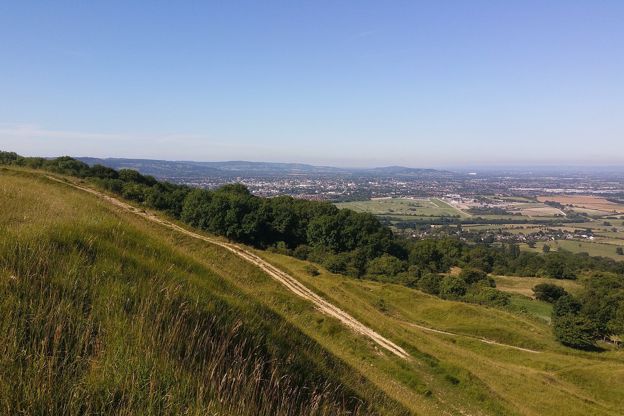
Cleeve Common and Cleeve Cloud
Walk · Starts in the Cotswold Edge · 1 hr, 45 mins · Circular · Dog-friendly
A 4-mile (6.4km) moderate loop of about an hour and three quarters on the highest ground in the Cotswolds: from the main road at Cleeve Hill past the golf club, across Cleeve Common, back along the scarp by the hill fort and Cleeve Cloud, and down through Thrift Wood.
-
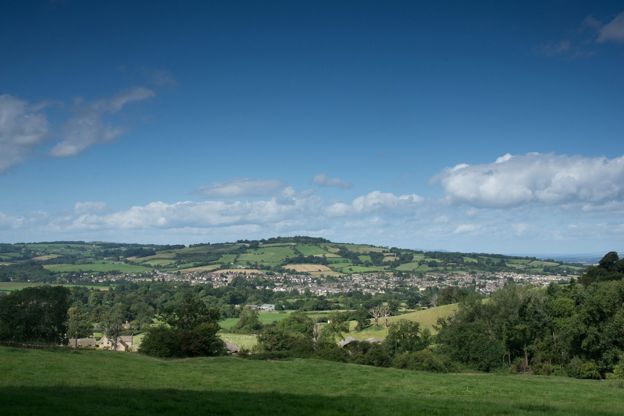
Cotswold Way: Winchcombe to Cleeve Hill
Walk · Starts in Winchcombe · 2 hrs, 45 mins · Dog-friendly
A 5.6-mile (9km) one-way walk on the fourth section of the Cotswold Way, moderate and two and a half to three hours: from Winchcombe by Sudeley up to Belas Knap, down through Breakheart Plantation to Postlip's Norman chapel, then up to the golf club on Cleeve Hill.
-
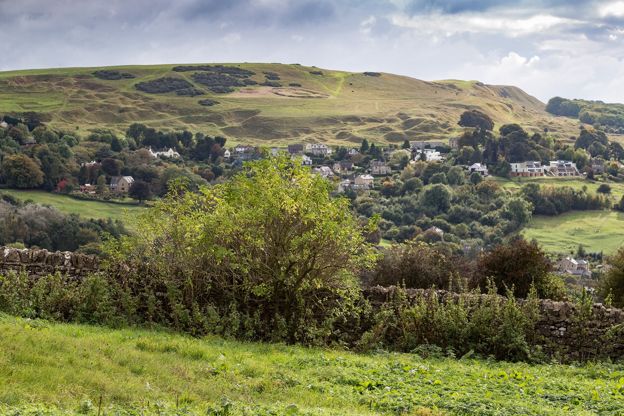
Winchcombe, Belas Knap and Cleeve Common
Walk · Starts in Winchcombe · 4 hrs, 15 mins · Circular · Dog-friendly
A 9.2-mile (14.8km) moderate loop of four to four and a half hours from Winchcombe: up the Cotswold Way through the Sudeley estate to Belas Knap, west along the byways to the top of Cleeve Common, then down by Postlip's Norman chapel and Breakheart Plantation.
Stay and eat near St James' Chapel, Postlip
-
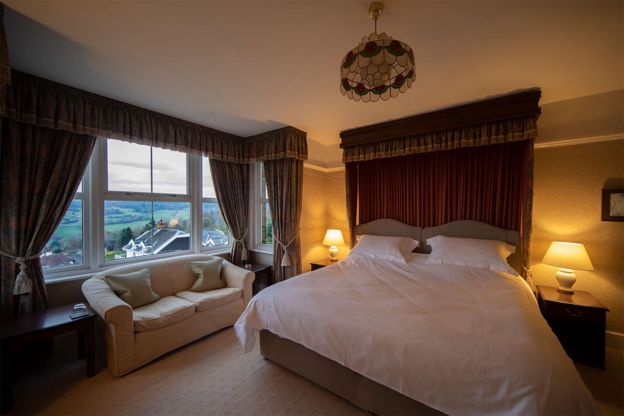
Cleeve Hill Hotel
B&B · Winchcombe
A 12-room bed and breakfast hotel on Cleeve Hill, about three miles south-west of Winchcombe, with views over the Severn Vale and a door onto Cleeve Common and the Cotswold Way.
Walker-friendly · Dog-friendly
Verified Oct 2026
-
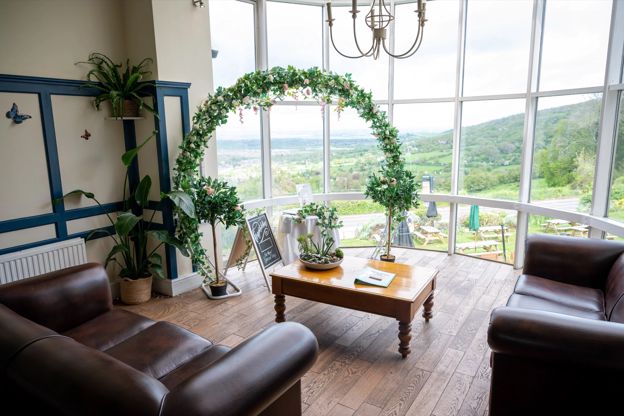
The Rising Sun Hotel
Hotel · Cleeve Hill
A Greene King Inns hotel, pub and restaurant with 23 bedrooms near the top of Cleeve Hill, with views over five counties from its beer garden.
Dog-friendly · Walker-friendly
Verified Nov 2026
-
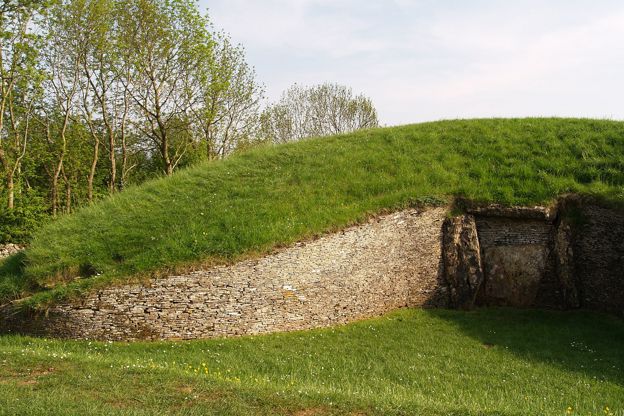
Belas Knap Long Barrow
Historic houses and heritage · Winchcombe
A Neolithic long barrow on the hill above Winchcombe, with a false entrance and side chambers, free to visit and on the Cotswold Way.
Walker-friendly
Verified Oct 2026
More sights to see
-
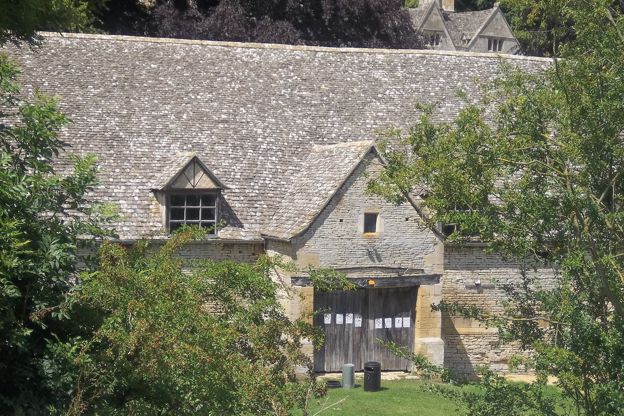
Tithe barn, Postlip
Sight · Historic building · Winchcombe
The tithe barn at Postlip is an eight-bay stone barn, probably of the fifteenth century, below Cleeve Common near Winchcombe, with raised crucks inside, said to have dried the town's tobacco in the 1600s and home every July to the Cotswold Beer Festival.
-
River Isbourne
Sight · River · Winchcombe
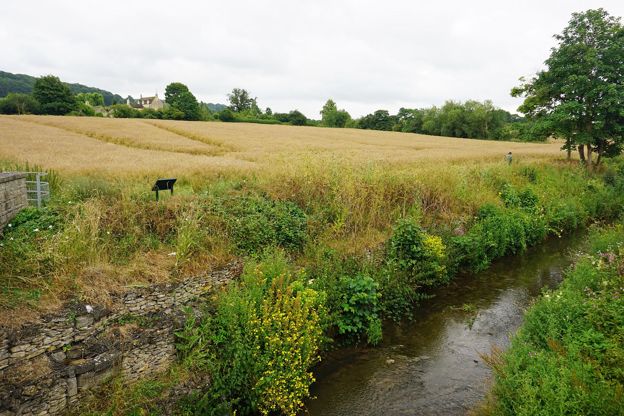
The River Isbourne rises at a spring on Cleeve Hill above Winchcombe and runs north past Postlip, Winchcombe, Toddington and Sedgeberrow to join the Avon at Evesham. A waymarked path of some 14 miles, the Isbourne Way, follows it.
-
St Peter's Church, Winchcombe
Sight · Church · Winchcombe
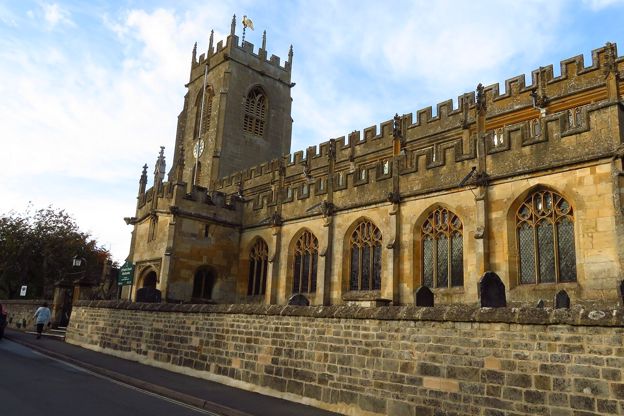
St Peter's is Winchcombe's Grade I parish church, built in one campaign in about 1458 to 1468, with some 40 carved grotesques round its walls, a fan-vaulted tower and two stone coffins tied to the St Kenelm story. Usually open daily.