Saffron Blaze, CC BY-SA 3.0, via Wikimedia Commons
Cleeve Common
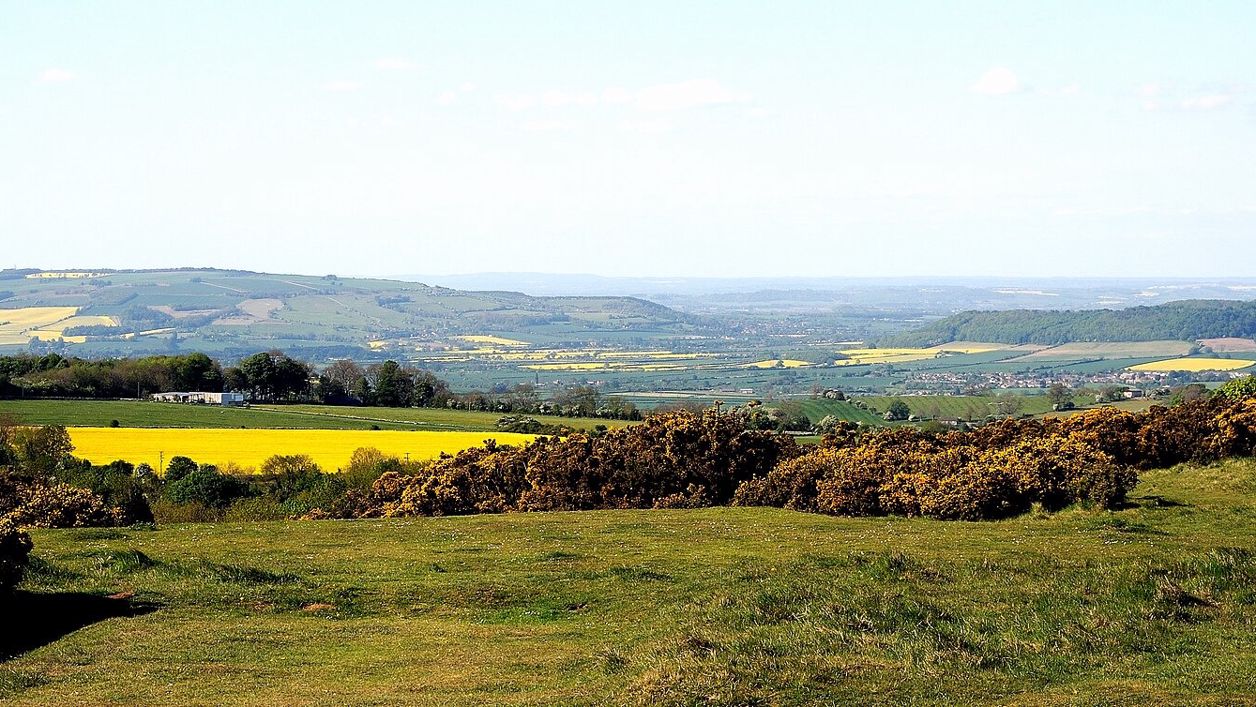
Gloucestershire’s largest common: more than 400 hectares of open limestone grassland on the Cotswold Edge above Cheltenham, with the highest point of the Cotswolds at 330m, an Iron Age hillfort, a Bronze Age cross dyke and views to the Malverns and the Black Mountains.
Common or park
The Cotswold EdgeCleeve Common is the great open hilltop of the Cotswold Edge between Cheltenham and Winchcombe: more than 400 hectares of grassland, scarp and old quarries, the largest common in Gloucestershire and the highest ground in the Cotswolds, at 330m. It is a Site of Special Scientific Interest with three scheduled monuments, and walkers can roam it freely on foot.
History
Cleeve Common has been open grazing land for thousands of years. The Cleeve Common Trust says the hill was wooded until it was cleared for farming about 6,000 years ago; the thin, stony soil and the exposed climate kept it from the plough, and seasonal grazing made the grassland that covers it now.
Bronze Age, Iron Age and Roman
The oldest earthwork is probably the cross dyke, a long bank and ditch that climbs the escarpment from near Rising Sun Lane and swings round into Dry Bottom and the Postlip quarries; it is thought to be Bronze Age, later became a manorial boundary, and the parish boundary between Southam and Woodmancote still follows it. The hillfort above Nutterswood, Cleeve Hill camp, was built in the Iron Age, around 500 BC, one of some 35 forts along the Cotswold scarp. The Ring, a round earthwork about 50m across on the upper slope, was probably a Romano-British stock enclosure, a sign that the hill was already pasture.
A common and its Conservators
The common is privately owned. It is a common because local landowners hold registered rights to graze set numbers of sheep, cattle and other animals between April and November. In 1890 an Act of Parliament set up Conservators to manage the hill, with the power to make bylaws, and the charity that does the work today, the Cleeve Common Trust, still answers to them; its trustees are appointed by the local councils, the parishes and the landowner. The public has had the right to walk anywhere on it since the Countryside and Rights of Way Act 2000.
Quarries, races and golf
The scarp was quarried for building stone, gravel and sand, which left the rock faces of Cleeve Cloud and the old workings behind the golf clubhouse. The hill was used for the Cheltenham races in the 1830s and for training racehorses through the nineteenth century. The Trust places the figure-of-eight racecourse and its grandstand close to where the radio masts are now, and volunteers from Gloucestershire Archaeology have found the foundations of the stone grandstand of the 1830s. A golf course was laid out over the top in 1891, and its landscaping cut into the hillfort; Cleeve Hill Golf Club still plays across the common. In 1897 a stone sheep dip, the Washpool, was built, fed from a pool just above it made by damming the stream; the Trust restored it between 2018 and 2020.
What to see
The view from the western edge is the reason most people climb Cleeve Hill: Cheltenham directly below, the Vale of Evesham, the Malverns, the Black Mountains and, on the clearest days, the Shropshire hills. To the east the land falls gently away over the high wolds.
The two tops
There are two trig points. The one on the escarpment edge, at about 317m, has the view; the other, beyond the radio masts and about 13m higher at 330m, is the official top of the Cotswolds, but it sits on a flat plateau with little to see. A lone beech near the edge, at about 317m, is said to be the highest tree in the Cotswolds.
Monuments and stones
- The ramparts of Cleeve Hill camp on the cliff top at Cleeve Cloud, a third of a circle left by the quarries.
- The cross dyke running up the scarp towards Postlip, and the Ring on the upper slope.
- Huddlestone's Table, a square stone block at the foot of the cliff below the Twins. A legend links it to a farewell after the dedication of Winchcombe Abbey in 811, but the Trust points out that the Huddlestone family did not arrive in Southam until the 1520s.
- The Washpool, the keyhole-shaped sheep dip of 1897.
- Rolling Bank Quarry by the golf clubhouse, where a board by the Gloucestershire Geology Trust explains the limestone and fossils turn up in the scree.
Flowers, butterflies and birds
The grassland has never been ploughed, reseeded or fertilised. The Trust notes that wildflower-rich grassland covered about 40% of the Cotswolds in the 1930s and less than 1.5% now, which makes Cleeve one of its last large strongholds. Look for wild thyme, rock-rose, fairy flax and small scabious, the endangered purple milk-vetch, and orchids: early purple, bee, common spotted and pyramidal, with the rarer frog and musk orchids. Dark green fritillary, dingy skipper and common blue butterflies thrive on the grassland, and green hairstreaks keep to the scrub. Glow-worms live in the grass, and skylarks sing high overhead all summer, while meadow pipits sing as they parachute down in their display flight. Stonechats, linnets and yellowhammers can be seen all year on the gorse and scrub. Most years ring ouzels stop for a week or two on passage in spring, and the Trust's 2022 bird survey recorded 42 stonechats on passage in a single October day. In winter look for flocks of redwings and fieldfares on the hawthorn berries and, with luck, a short-eared owl.
Visiting
Cleeve Common is open at all times and free to walk on. Belted Galloway cattle graze it all year and the commoners' sheep from April to November, so keep dogs on a short lead near stock, and by law on a lead of 2m or less from 1 March to 31 July; the Trust loses sheep to dogs every year. Mountain bikes are allowed only on the byways and main tracks, riders need an annual licence from the Trust, and fires, barbecues, camping and powered model aircraft are banned. Take care crossing the golf fairways.
The only toilets and café are at Cleeve Hill Golf Club, where Flynn's on the Hill serves brunch, lunch, daily specials and coffee and welcomes dogs in the bar; ring the golf club on 01242 672025 for its hours. The clubhouse is reached by two steps. For visitors with limited mobility, the Trust offers an all-terrain Tramper through Countryside Mobility, booked ahead on Eventbrite and collected at the clubhouse, on a waymarked route of about 2 miles over short grass and Cotswold stone track with four benches. The Trust advises staying off the common in fog or low cloud, when even regular visitors lose their way. Come in spring and summer for the orchids, on a clear winter day for the longest views, or at sunset for the light over the Severn Vale; it is exposed and can be cold and windy at any time of year.
Getting there
The main car parks are by Cleeve Hill Golf Club on the B4632 between Cheltenham and Winchcombe: the Quarry car park (GL52 3PW) and the golf club car park, both £2 for 24 hours and free to Trust members. Free parking is at the radio masts (from Cheltenham by Harp Hill and Aggs Hill), at Wardens' Wood on West Down (GL54 5TL), at the end of Wickfield Lane and in the laybys on Stockwell Lane. Stagecoach bus W between Cheltenham and Winchcombe, about hourly from Monday to Saturday, stops on Cleeve Hill by the Rising Sun Hotel and at Stockwell Lane.
On foot, the Cotswold Way crosses the whole common along the escarpment, and its stage from Winchcombe to Cleeve Hill ends at the golf club. The next stage, from Cleeve Hill to Dowdeswell, crosses the common and drops through Dowdeswell Wood to the reservoir. Our circuit of Cleeve Common and Cleeve Cloud starts on the main road at Cleeve Hill, and the loop from Winchcombe by Belas Knap crosses the top.
Nearby
Below the northern edge are the medieval tithe barn and St James's Chapel at Postlip, and the River Isbourne runs down to Winchcombe and St Peter's Church. The Cleeve Hill Hotel is on the main road below the common. Further south along the scarp, Leckhampton Hill shows the same limestone in its quarry faces. For the wider picture, see where the Cotswolds are and our guide to the accessible Cotswolds.
Walks past Cleeve Common
-
Cotswold Way: Cleeve Hill to Dowdeswell
Walk · Starts in the Cotswold Edge · 3 hrs, 15 mins · Dog-friendly
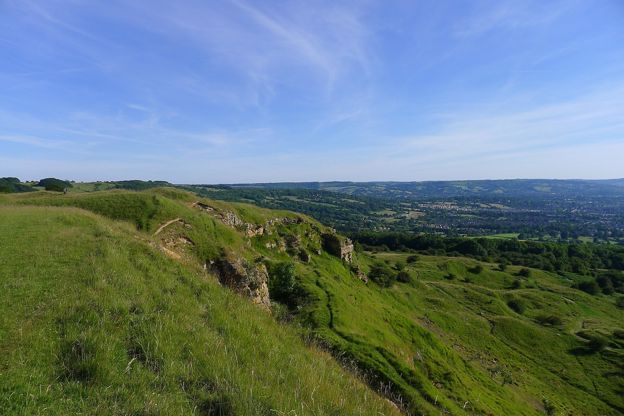
A 5.5-mile (8.8km) one-way walk on the fifth section of the Cotswold Way, from the golf club on Cleeve Hill to Dowdeswell reservoir, moderate and about three and a quarter hours: along Cleeve Cloud and across the common, then quiet lanes and a wood down to the A40.
-
The Cotswold Way
Walk · Dog-friendly
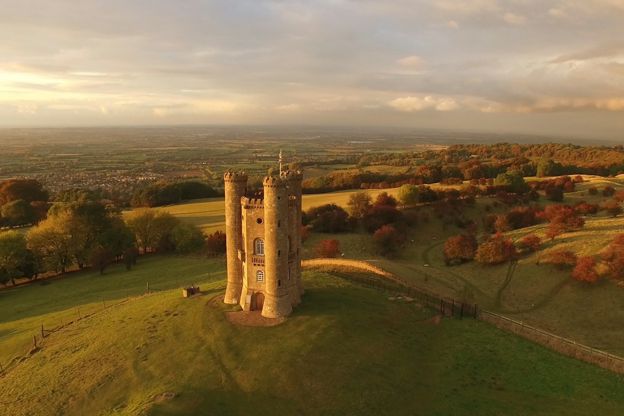
The Cotswold Way is a 102-mile (164km) National Trail walk from Chipping Campden to Bath along the escarpment, in 15 sections; the official guidebook suggests seven to ten days, and its frequent steep climbs make it hard going.
-
Winchcombe, Belas Knap and Cleeve Common
Walk · Starts in Winchcombe · 4 hrs, 15 mins · Circular · Dog-friendly
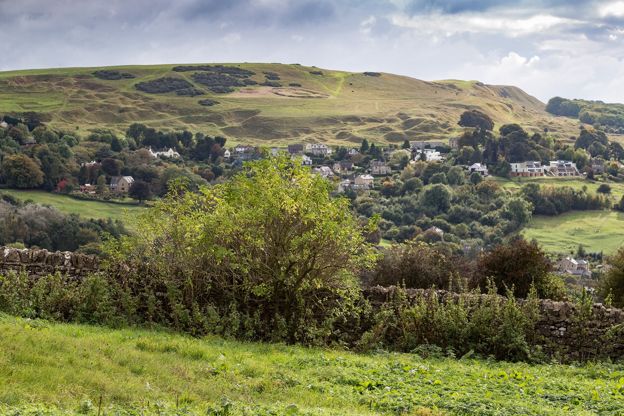
A 9.2-mile (14.8km) moderate loop of four to four and a half hours from Winchcombe: up the Cotswold Way through the Sudeley estate to Belas Knap, west along the byways to the top of Cleeve Common, then down by Postlip's Norman chapel and Breakheart Plantation.
Stay and eat near Cleeve Common
-
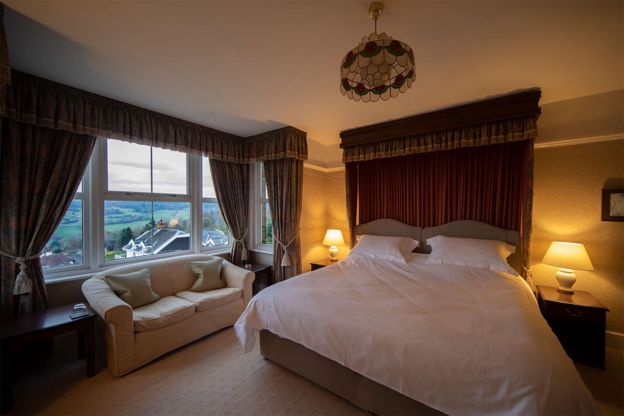
Cleeve Hill Hotel
B&B · Winchcombe
A 12-room bed and breakfast hotel on Cleeve Hill, about three miles south-west of Winchcombe, with views over the Severn Vale and a door onto Cleeve Common and the Cotswold Way.
Walker-friendly · Dog-friendly
Verified Oct 2026
-
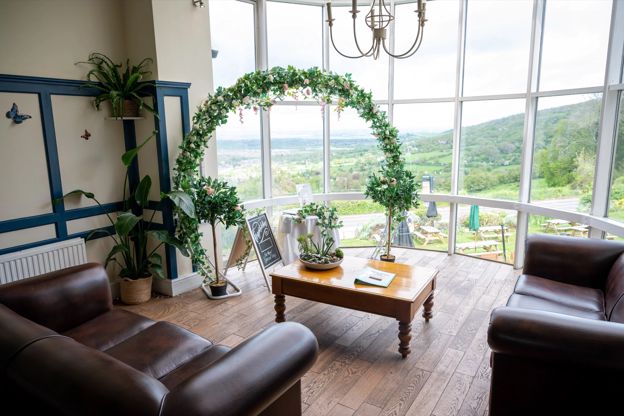
The Rising Sun Hotel
Hotel · Cleeve Hill
A Greene King Inns hotel, pub and restaurant with 23 bedrooms near the top of Cleeve Hill, with views over five counties from its beer garden.
Dog-friendly · Walker-friendly
Verified Nov 2026
-
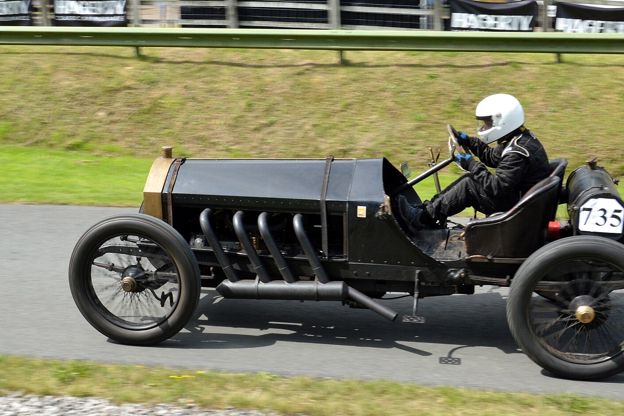
Prescott Speed Hill Climb
Sport and activity · Winchcombe
The Bugatti Owners' Club's hill climb course near Gotherington, between Cheltenham and Winchcombe, holding competitions since 1938, with spectator events from spring to November.
Verified Nov 2026
Stories about Cleeve Common
-
The accessible Cotswolds
Story · Guides · 12 minute read
The honest picture of access in the Cotswolds: which villages are level and which are cobbles and hills, the step-free days out, every Changing Places toilet we can confirm, Blue Badge parking, stile-free walks, accessible stays and getting about by train, bus and taxi.
-
The best viewpoints in the Cotswolds
Story · Guides · 11 minute read
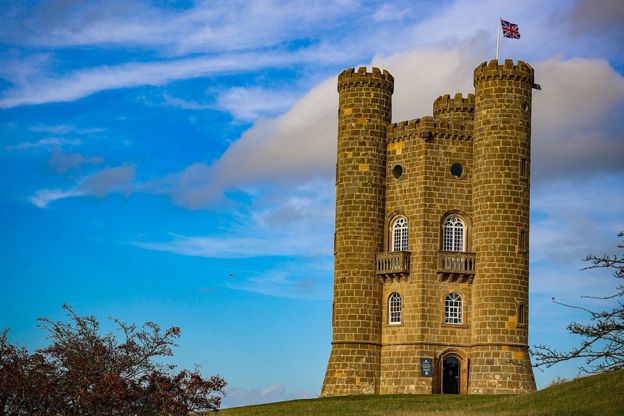
The best viewpoints in the Cotswolds, from Broadway Tower, Dover's Hill and Cleeve Hill to Haresfield Beacon, Crickley Hill and the Tyndale Monument: what you see from each, where to park and the walk that gets you there.
-
The Cotswolds in August
Story · Guides · 8 minute read
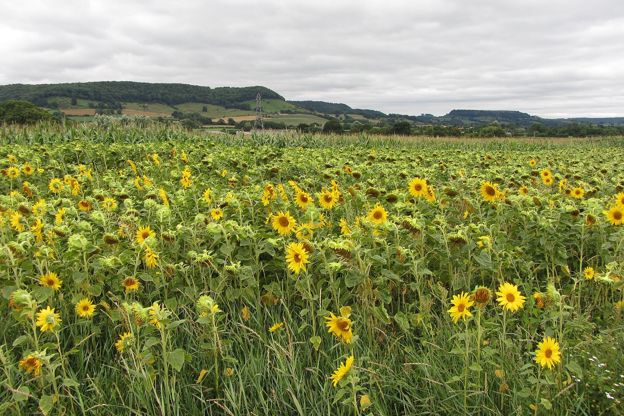
The Cotswolds in August: the busiest month in the famous villages, the football in the river at Bourton, Big Feastival, sunflowers and pick-your-own, the last weeks of the summer-only houses, quiet valley walks, and how to plan round the school holidays and the bank holiday.
More sights to see
-
Cleeve Hill camp
Sight · Hill fort or barrow · The Cotswold Edge
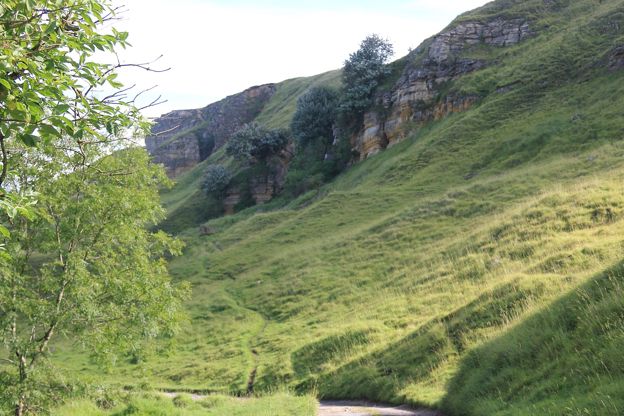
Cleeve Hill camp is a small Iron Age hillfort of about 500 BC on the cliff top at Cleeve Cloud, above Cheltenham, with two rings of rampart up to 2.5m high and the scarp as its western wall. Cut by quarries and a golf course, it is a scheduled monument on Cleeve Common.
-
Tithe barn, Postlip
Sight · Historic building · Winchcombe
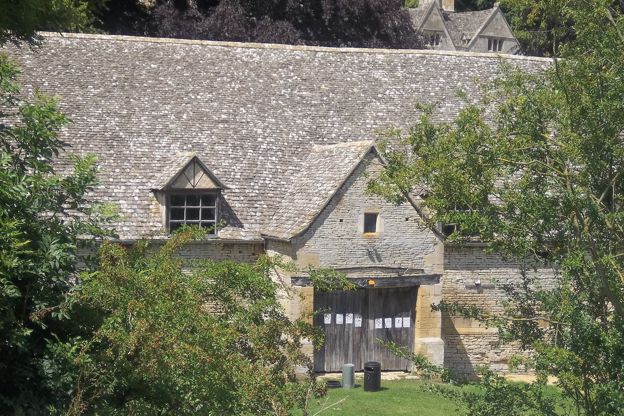
The tithe barn at Postlip is an eight-bay stone barn, probably of the fifteenth century, below Cleeve Common near Winchcombe, with raised crucks inside, said to have dried the town's tobacco in the 1600s and home every July to the Cotswold Beer Festival.
-
St James' Chapel, Postlip
Sight · Church · Winchcombe
St James' Chapel is a small Norman chapel of about 1140 beside Postlip Hall below Cleeve Common, with a chevron-carved doorway, used as a farm building for centuries and restored for Catholic worship in 1891. Grade I; seen from the Cotswold Way.